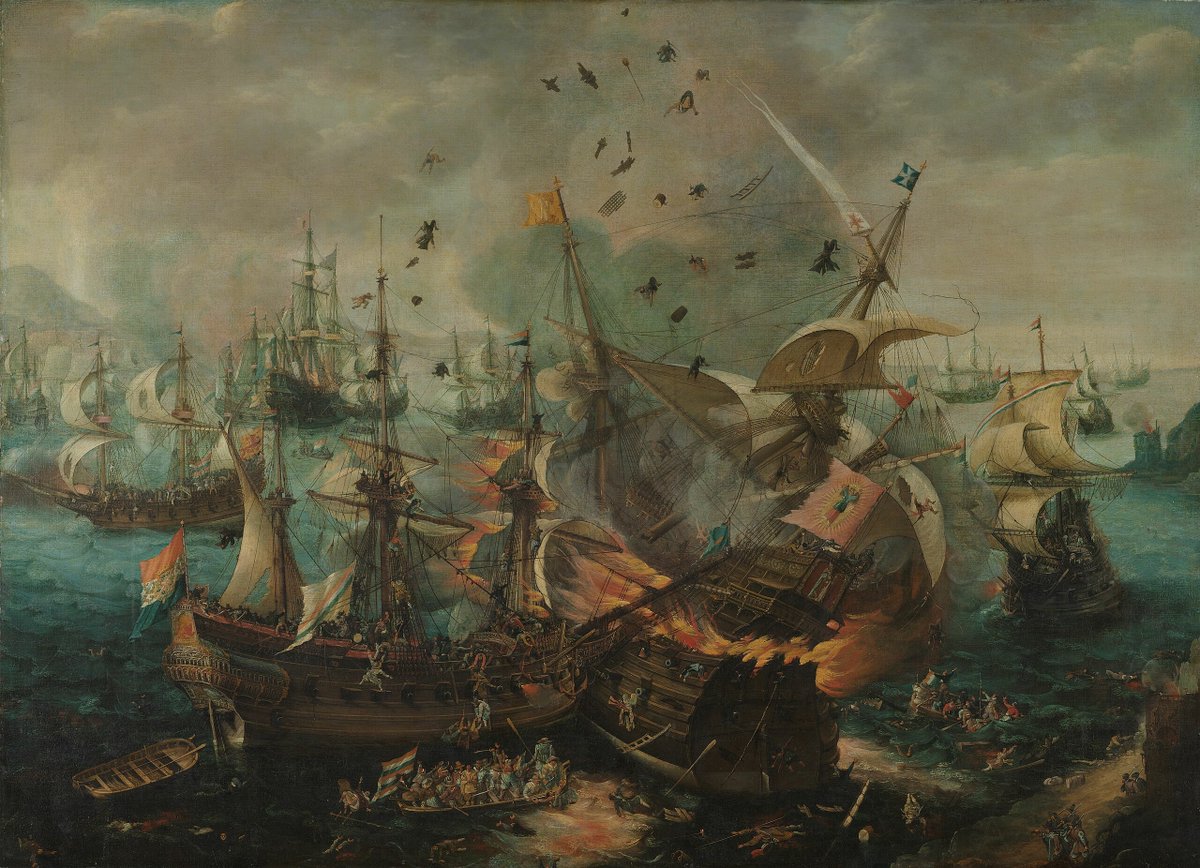
Jesus Christ, God, or man?
In 325 AD, the answer to that question nearly broke the Roman Empire apart.
Here's how Constantine tried to save it and have the council answer the following question:
Is Christ of the same substance as the Father?🧵
In 325 AD, the answer to that question nearly broke the Roman Empire apart.
Here's how Constantine tried to save it and have the council answer the following question:
Is Christ of the same substance as the Father?🧵

The Roman Empire had just barely survived centuries of civil war, plagues, and persecution.
In 312, Constantine became emperor, and everything changed.
In 312, Constantine became emperor, and everything changed.

Constantine claimed a vision of the Christian God helped him win the Battle of the Milvian Bridge.
He legalized Christianity with the Edict of Milan in 313.
But peace in the empire didn’t mean peace in the Church
He legalized Christianity with the Edict of Milan in 313.
But peace in the empire didn’t mean peace in the Church

The biggest threat wasn’t Roman persecution anymore.
It was heresy, and the most explosive of all came from a man named Arius.
It was heresy, and the most explosive of all came from a man named Arius.
Arius was a priest in Alexandria, Egypt.
He was charismatic, educated, and dangerous.
Why?
Because he claimed that Jesus Christ was not equal to God, but a created being.
He was charismatic, educated, and dangerous.
Why?
Because he claimed that Jesus Christ was not equal to God, but a created being.

Arius’s core idea:
“There was a time when the Son was not.”
To him, Jesus was divine, but not eternal. He was less than God the Father.
“There was a time when the Son was not.”
To him, Jesus was divine, but not eternal. He was less than God the Father.

To many, this was blasphemy.
To others, it made sense.
After all, how could God be one if Jesus and the Father were both equally divine?
To others, it made sense.
After all, how could God be one if Jesus and the Father were both equally divine?
Bishop Alexander of Alexandria condemned Arius and excommunicated him.
But Arius wasn’t silenced, he had followers. Big ones. Including bishops.
His ideas spread fast, especially in the East.
But Arius wasn’t silenced, he had followers. Big ones. Including bishops.
His ideas spread fast, especially in the East.

Churches split. Mobs broke out. Bishops fought bishops.
Theological riots weren’t rare, they were raging.
This wasn’t just a debate over doctrine.
It was destabilizing the empire.
Theological riots weren’t rare, they were raging.
This wasn’t just a debate over doctrine.
It was destabilizing the empire.
And that’s when Constantine stepped in.
He wasn't a theologian, he was an Emperor.
But he knew one thing: a divided Church meant a divided Empire.
He wasn't a theologian, he was an Emperor.
But he knew one thing: a divided Church meant a divided Empire.
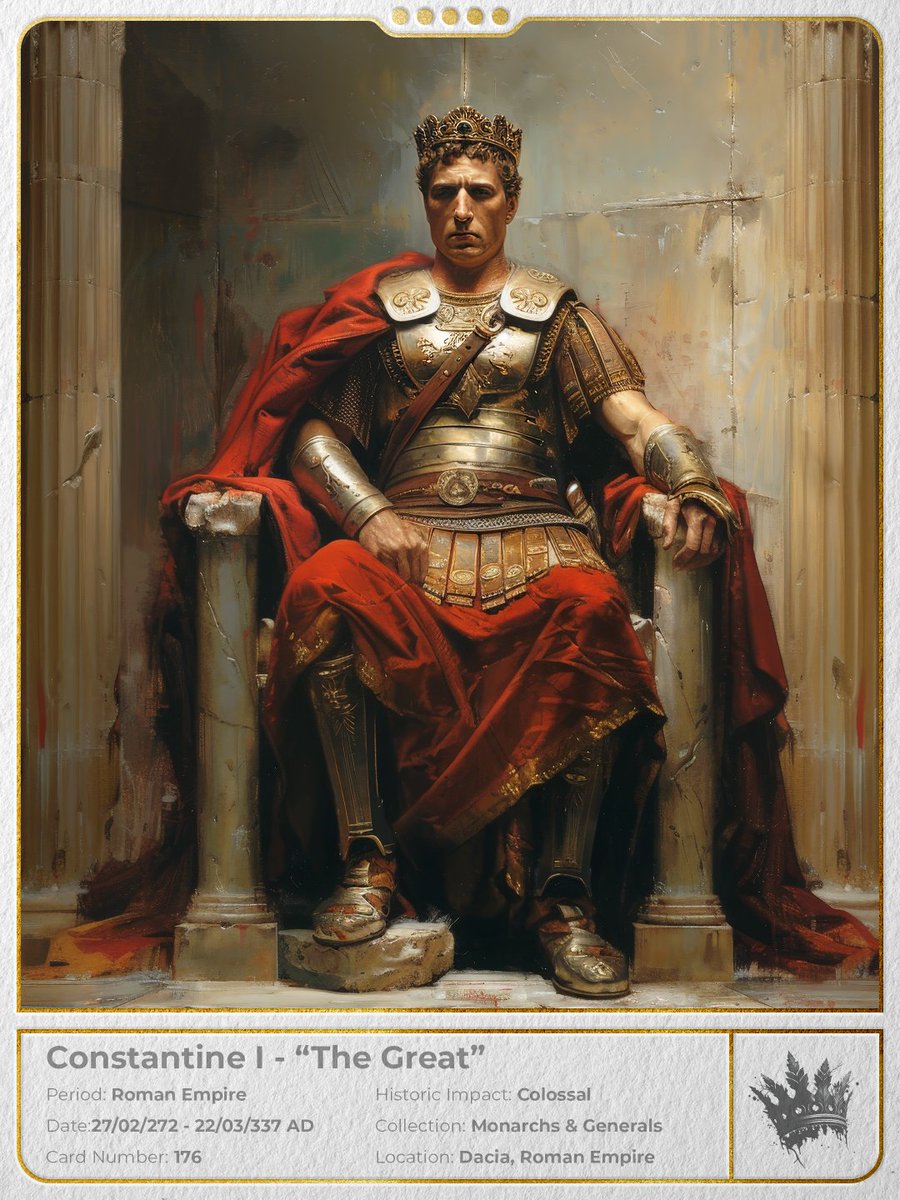
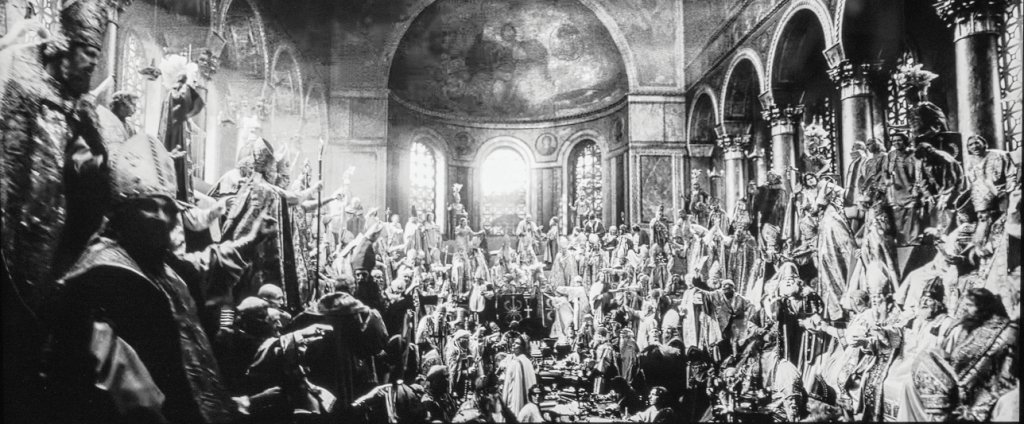
So in 325 AD, Constantine summoned bishops from across the Roman world.
The location: Nicaea, in modern-day Turkey.
Roughly 300 bishops attended, along with many priests, deacons, and scribes.
The location: Nicaea, in modern-day Turkey.
Roughly 300 bishops attended, along with many priests, deacons, and scribes.
This had never happened before.
A Church-wide council, with imperial backing.
An emperor calling the shots in a theological war.
A Church-wide council, with imperial backing.
An emperor calling the shots in a theological war.
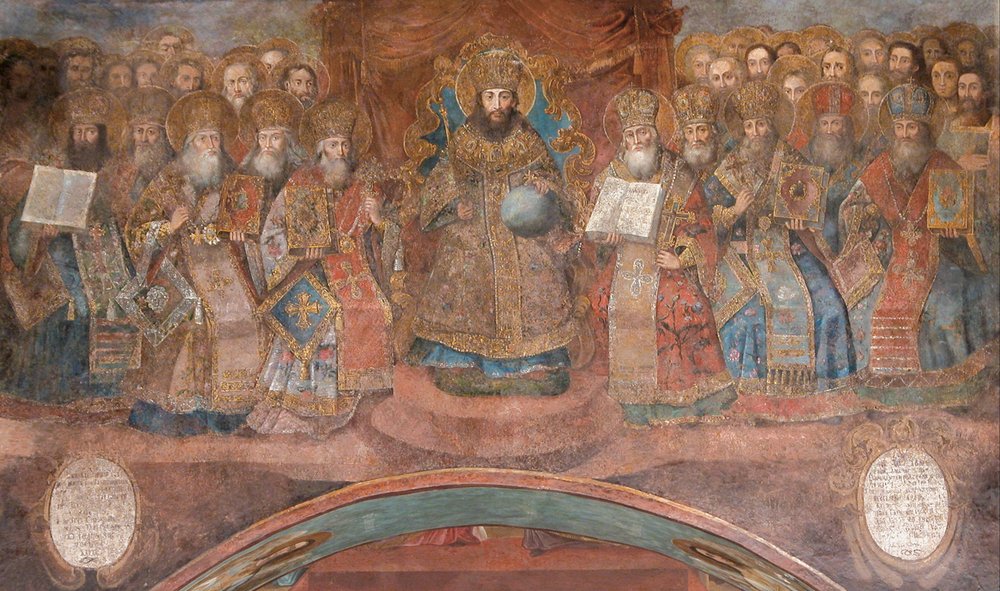
Constantine opened the council in full imperial robes.
He called for unity.
He wanted an end to “useless questions”, and a single faith to unite the empire.
He called for unity.
He wanted an end to “useless questions”, and a single faith to unite the empire.

But Constantine didn’t get simplicity.
What followed was weeks of fiery debate, furious argument, and even violence.
What followed was weeks of fiery debate, furious argument, and even violence.
Legend says St. Nicholas of Myra, yes, the original Santa Claus, punched Arius in the face during the council.
He was temporarily stripped of his bishopric.
Apparently, heresy made even saints snap.
He was temporarily stripped of his bishopric.
Apparently, heresy made even saints snap.

The heart of the debate:
Is Christ of the same substance as the Father?
The Greek word used: homoousios, meaning of the same essence.
Is Christ of the same substance as the Father?
The Greek word used: homoousios, meaning of the same essence.
Arius and his allies argued Christ was of a similar substance, homoiousios.
Just one iota of difference, but that iota meant the world.
Just one iota of difference, but that iota meant the world.

The anti-Arian faction was led by Bishop Alexander and his young deacon: Athanasius.
He would become the fiercest defender of Christ’s full divinity for the next 50 years.
He would become the fiercest defender of Christ’s full divinity for the next 50 years.

Ultimately, the anti-Arian side won.
Arius was declared a heretic.
His writings were ordered to be burned.
And the bishops drafted a new creed.
Arius was declared a heretic.
His writings were ordered to be burned.
And the bishops drafted a new creed.
This creed became the foundation of Christian orthodoxy.
The Nicene Creed.
Its central claim:
"Jesus Christ... begotten, not made, being of one substance with the Father."
The Nicene Creed.
Its central claim:
"Jesus Christ... begotten, not made, being of one substance with the Father."

Only 2 bishops refused to sign it.
They, along with Arius, were exiled.
Constantine believed he had ended the crisis.
But he hadn't...
They, along with Arius, were exiled.
Constantine believed he had ended the crisis.
But he hadn't...
Arius would later be reinstated.
So would some of his allies.
The Arian controversy raged on for decades, even after Constantine’s death.
So would some of his allies.
The Arian controversy raged on for decades, even after Constantine’s death.
His own son, Constantius II, was an Arian sympathizer.
The empire flipped back and forth between pro- and anti-Arian policies.
The empire flipped back and forth between pro- and anti-Arian policies.

Athanasius, the hero of Nicaea, was exiled five times in his life.
He spent 17 years in hiding, constantly attacked—but never stopped fighting.
He spent 17 years in hiding, constantly attacked—but never stopped fighting.
Over time, the Nicene position triumphed.
Future councils reaffirmed it.
And eventually, the Nicene Creed became standard across all major branches of Christianity.
Future councils reaffirmed it.
And eventually, the Nicene Creed became standard across all major branches of Christianity.

But don’t be fooled, Nicaea wasn’t clean or simple.
It wasn’t just doctrine.
It was power, politics, empire, and belief, colliding in one momentous gathering.
It wasn’t just doctrine.
It was power, politics, empire, and belief, colliding in one momentous gathering.
It also wasn’t about the Bible’s canon, that’s a common myth.
The Council didn’t decide which books made it in. That process happened gradually, over centuries.
The Council didn’t decide which books made it in. That process happened gradually, over centuries.

Still, Nicaea was a turning point.
The Roman Empire, once pagan, was now entwined with Christian doctrine.
Church and state had merged, for better or worse.
The Roman Empire, once pagan, was now entwined with Christian doctrine.
Church and state had merged, for better or worse.
And all of it hinged on a single, cosmic question:
Was Jesus Christ truly God?
The answer, written in creed and sealed by empire, would define Christianity forever.
The council was a battle for the heart of a faith.
And its echo still shapes the world today.
Was Jesus Christ truly God?
The answer, written in creed and sealed by empire, would define Christianity forever.
The council was a battle for the heart of a faith.
And its echo still shapes the world today.

Thanks for sticking with me!
Enjoyed reading? Follow @GodPlaysCards and download the Legacy App.
It is a great way to learn on the go, track your journeys, collect the past, and discover hidden gems.
Until next time.
Enjoyed reading? Follow @GodPlaysCards and download the Legacy App.
It is a great way to learn on the go, track your journeys, collect the past, and discover hidden gems.
Until next time.
• • •
Missing some Tweet in this thread? You can try to
force a refresh