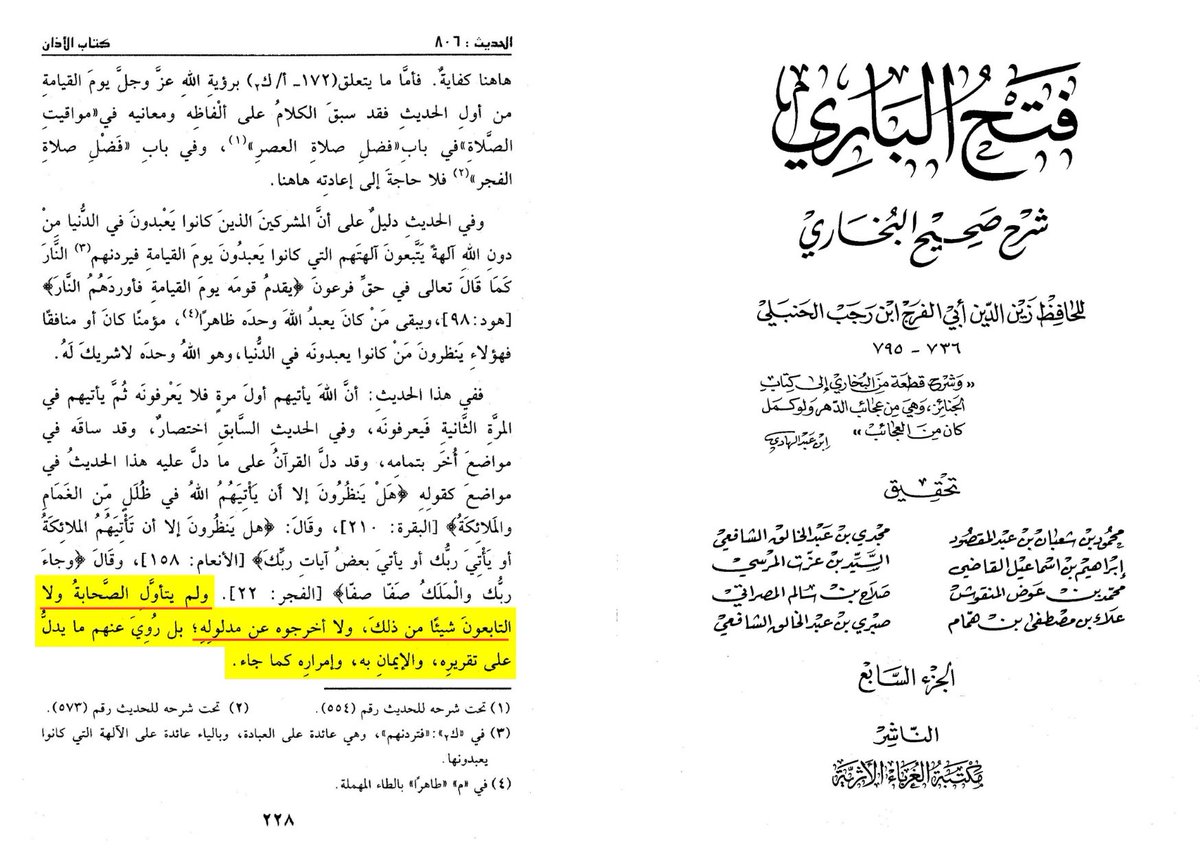
🧵 Your claim that Muslims didn’t study history as a discipline is patently false, and so are your claims about Ibn Khaldūn. Let’s deal with them:
On top of the fact that Islāmic history contains far more primary source material than western history, source scrutiny was a discipline studied in Islāmic history with plenty of books being written on the topic.
The science of ḥadīth involves (but is not limited to) study of various terminologies, studies of the narrators of historical events, studies of the chains to not only detect the obvious weaknesses but also anomalies and hidden defects.
Some examples of books written on this complex science:
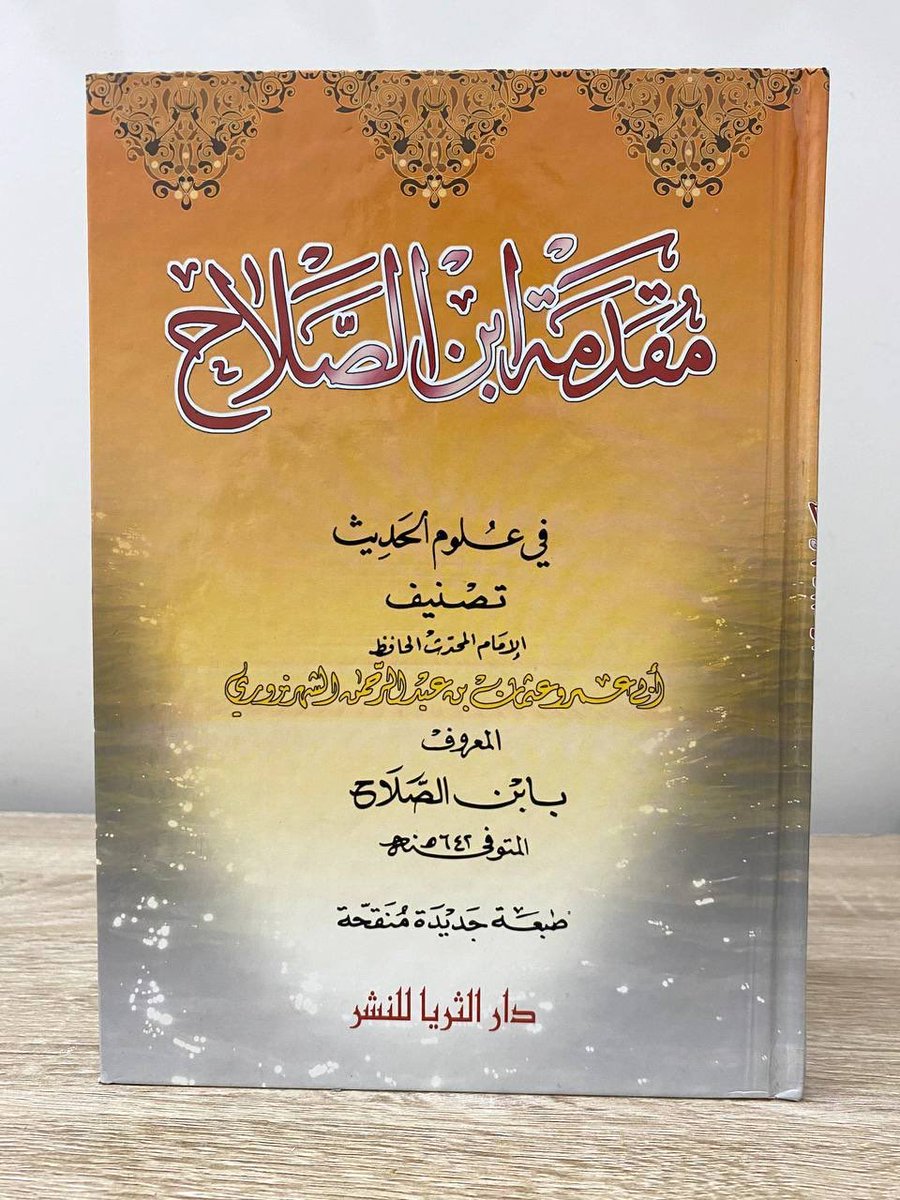
- Al-Muqaddimah by Ibn al-Ṣalāḥ al-Shahrazūrī (1181–1245 AD), a book that defines 65 types of ḥadīth (e.g., ṣaḥīḥ, ḍaʿīf, mutawātir) and their conditions.
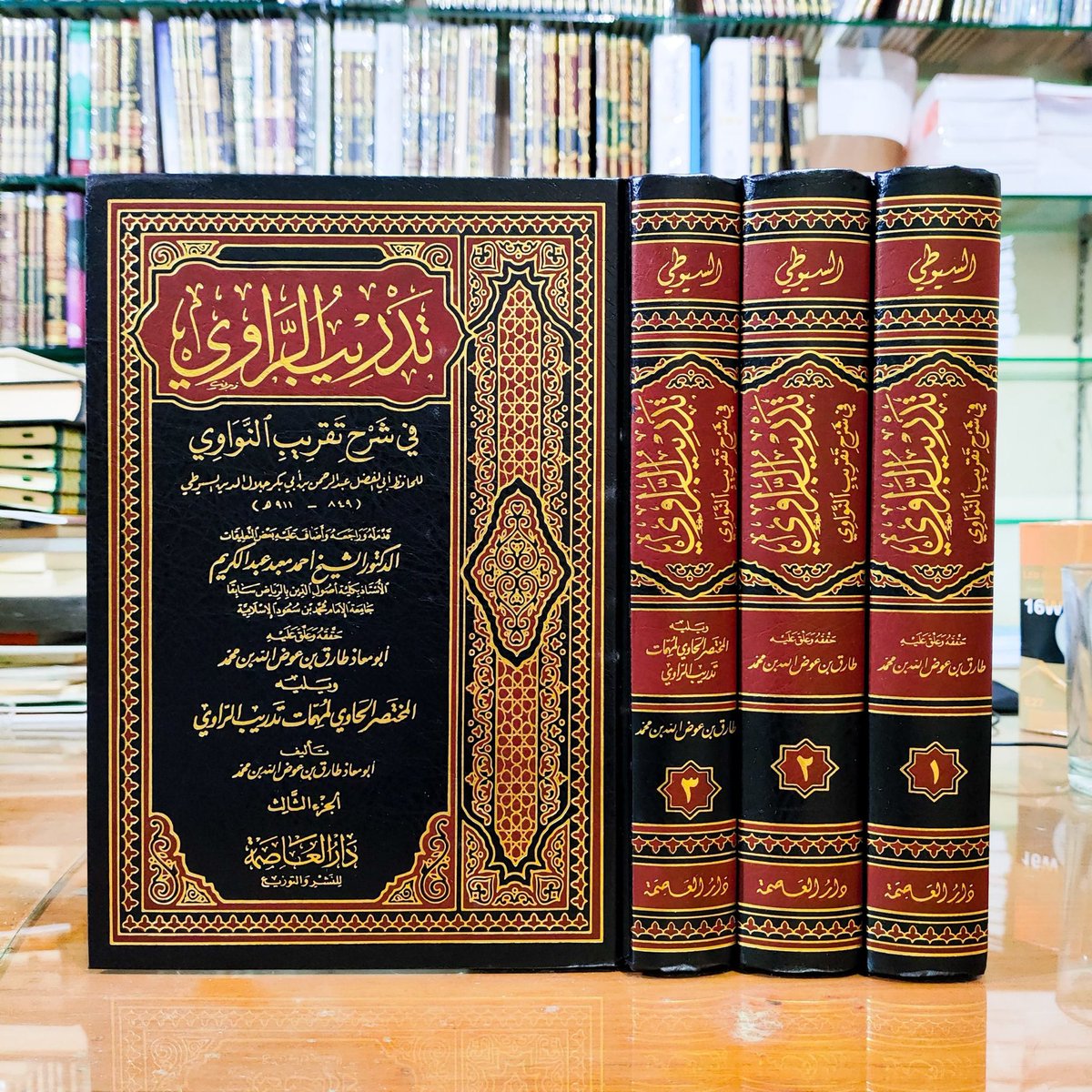
- Tadrīb al-Rāwī Fī Sharḥ Taqrīb al-Nawawī (Training the Narrator in Explaining al-Nawawī’s Taqrīb) by al-Suyūṭī (1445–1505 AD)
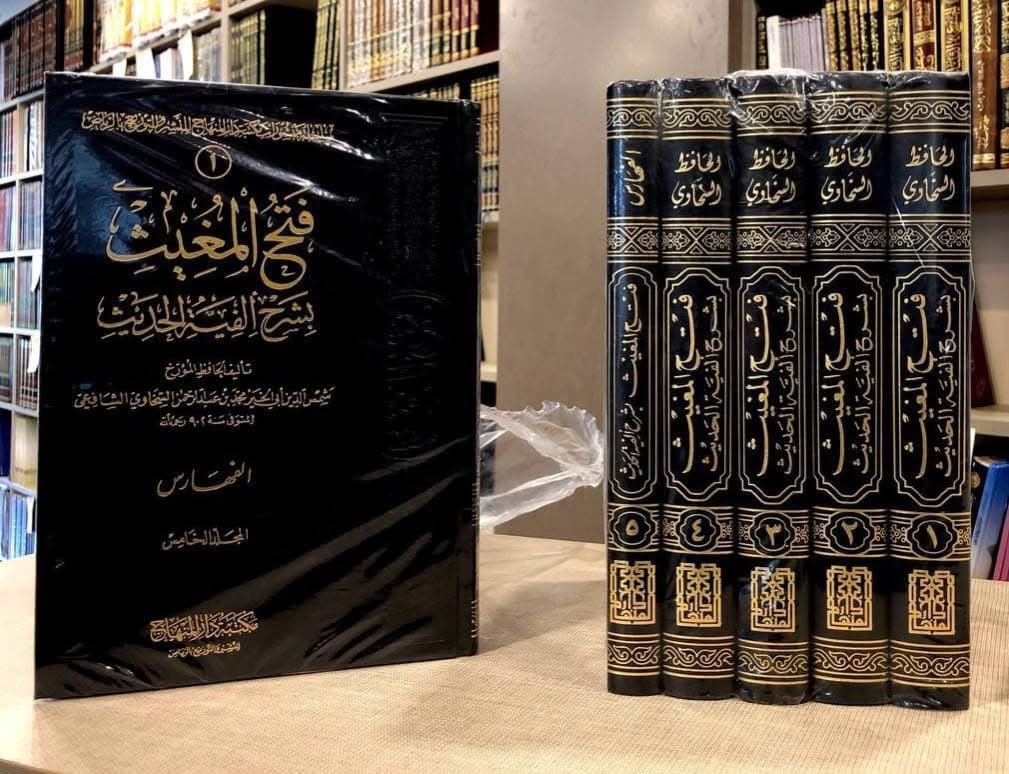
- Fath al-Mughīth bi-Sharḥ Alfiyyat al-Ḥadīth (The Key to Understanding the Alfiyyah of Ḥadīth) by al-Sakhāwī (1428–1497), a commentary on Zayn al-Dīn al-ʿIrāqī’s Alfiyyah (1,000-line poem on ḥadīth sciences)
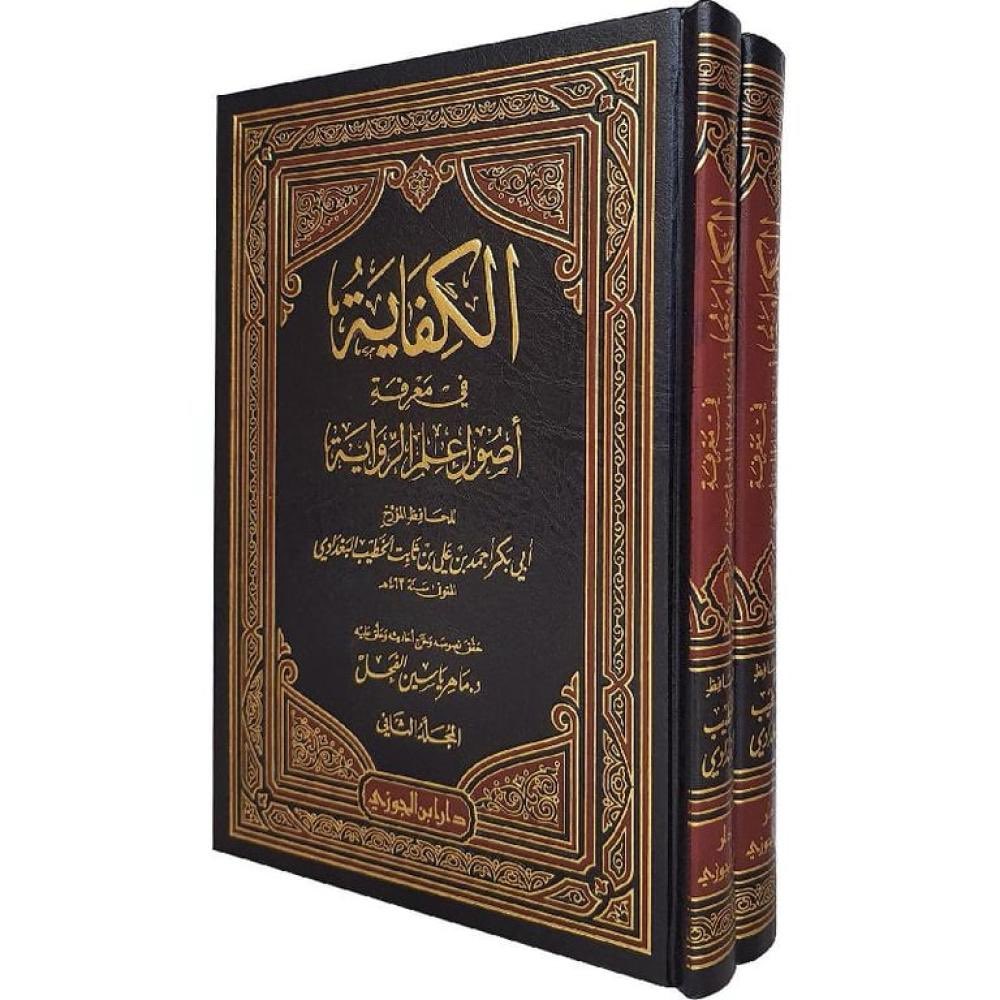
- Al-Kifāyah Fī ʿIlm al-Riwāyah (Sufficiency in the Science of Narration) al-Khaṭīb al-Baghdādī (1002–1071 AD)
On top of the fact that Islāmic history contains far more primary source material than western history, source scrutiny was a discipline studied in Islāmic history with plenty of books being written on the topic.
The science of ḥadīth involves (but is not limited to) study of various terminologies, studies of the narrators of historical events, studies of the chains to not only detect the obvious weaknesses but also anomalies and hidden defects.
Some examples of books written on this complex science:
- Al-Muqaddimah by Ibn al-Ṣalāḥ al-Shahrazūrī (1181–1245 AD), a book that defines 65 types of ḥadīth (e.g., ṣaḥīḥ, ḍaʿīf, mutawātir) and their conditions.
- Tadrīb al-Rāwī Fī Sharḥ Taqrīb al-Nawawī (Training the Narrator in Explaining al-Nawawī’s Taqrīb) by al-Suyūṭī (1445–1505 AD)
- Fath al-Mughīth bi-Sharḥ Alfiyyat al-Ḥadīth (The Key to Understanding the Alfiyyah of Ḥadīth) by al-Sakhāwī (1428–1497), a commentary on Zayn al-Dīn al-ʿIrāqī’s Alfiyyah (1,000-line poem on ḥadīth sciences)
- Al-Kifāyah Fī ʿIlm al-Riwāyah (Sufficiency in the Science of Narration) al-Khaṭīb al-Baghdādī (1002–1071 AD)
Some books detailing the biographies and reliabilities of narrators:
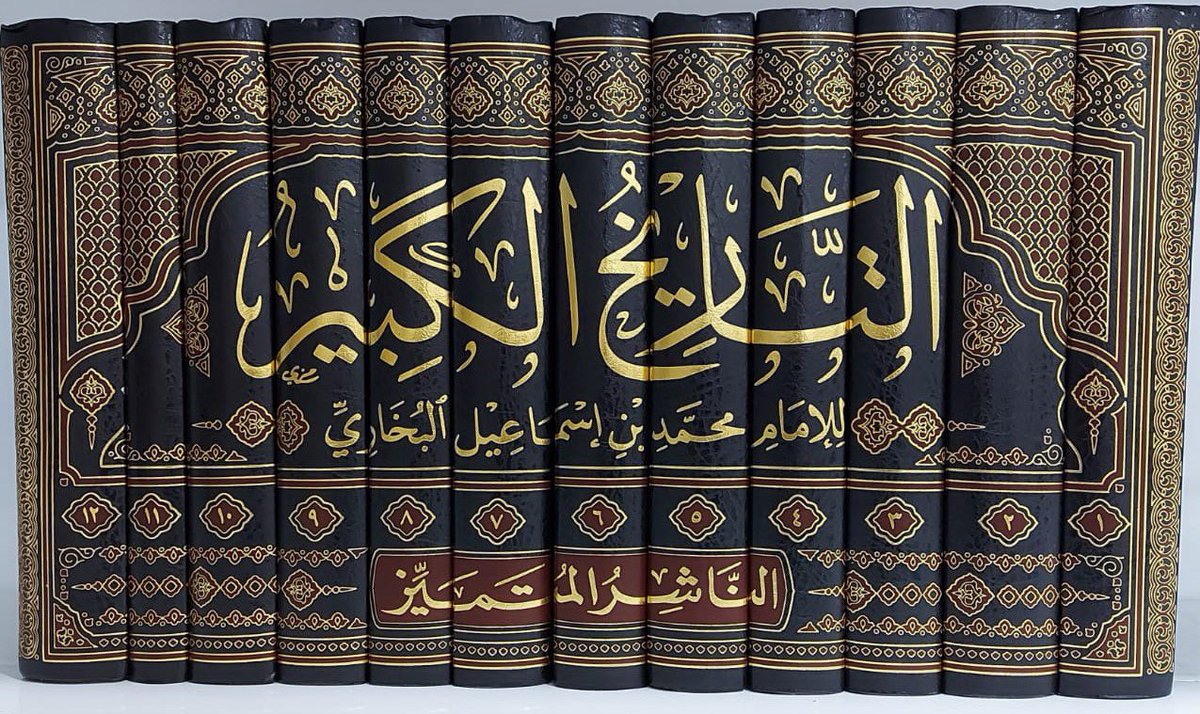
- Al-Tārīkh al-Kabīr (The Great History) by al-Bukhārī (810-870 AD)
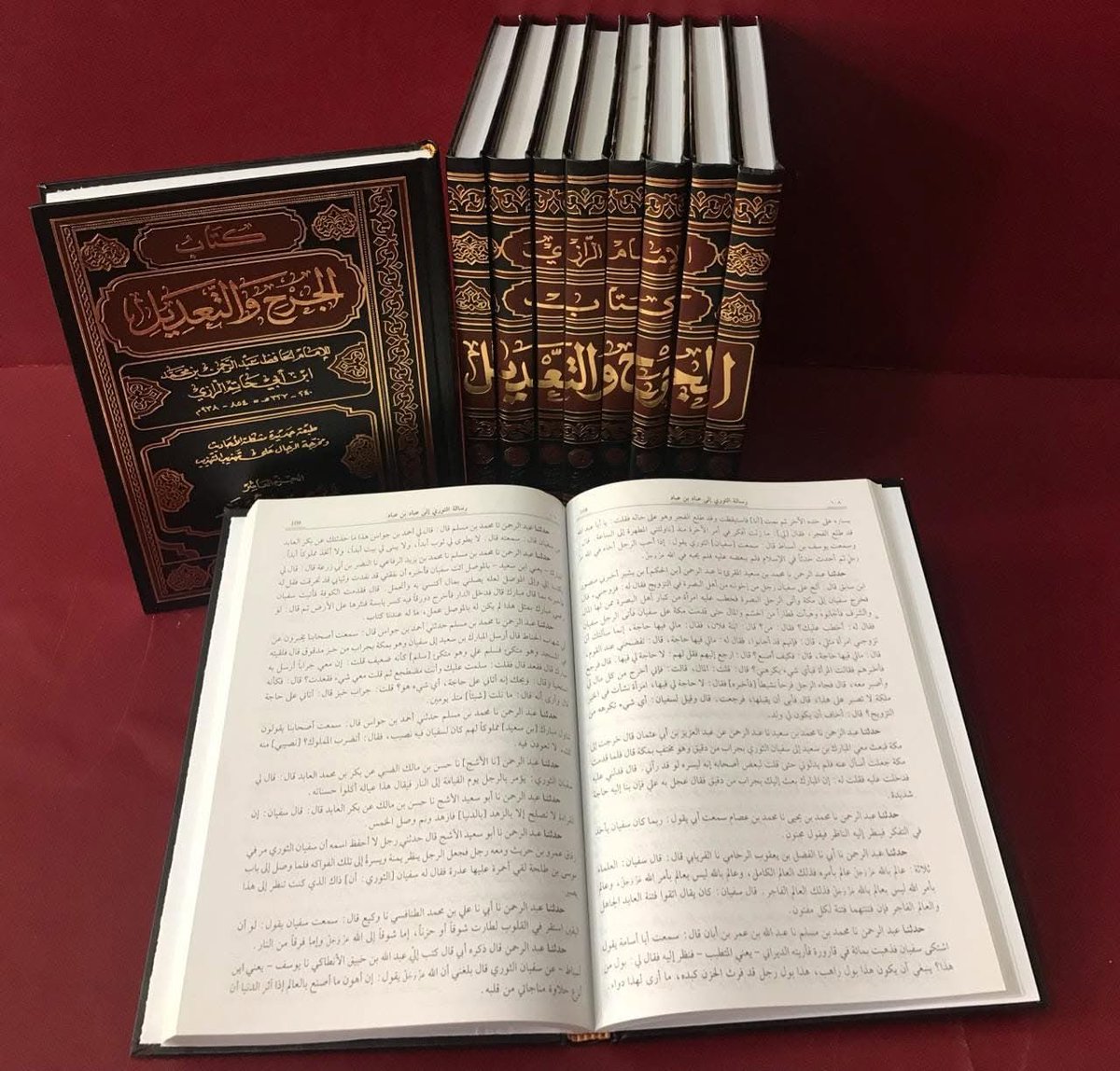
- Al-Jarḥ wal-Taʾdīl (Criticism and Appraisal) by Ibn Abī Ḥātim al-Rāzī (854-938 AD)
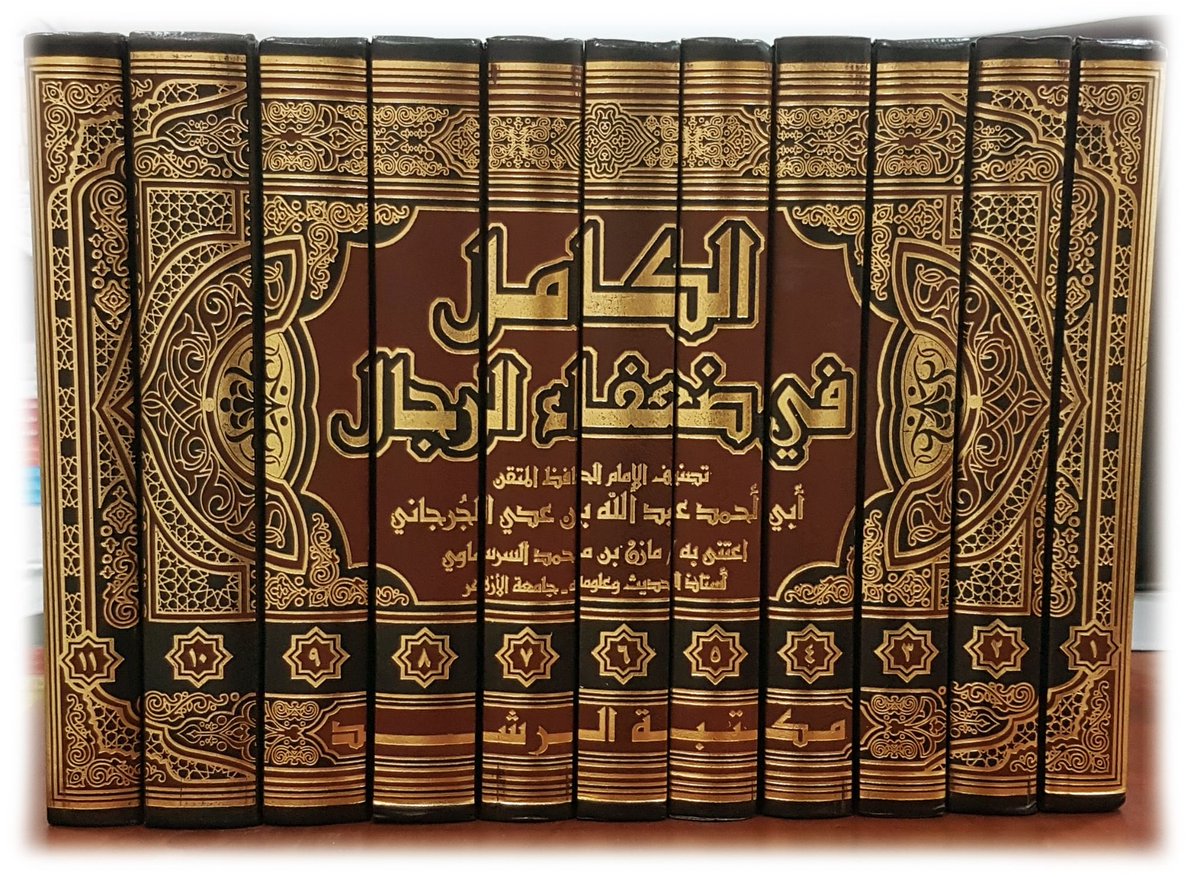
- Al-Kāmil Fī Ḍuʿafāʾ al-Rijāl (The Complete [Work] of Weak Narrators) Ibn ʿAdī (890-976 AD)
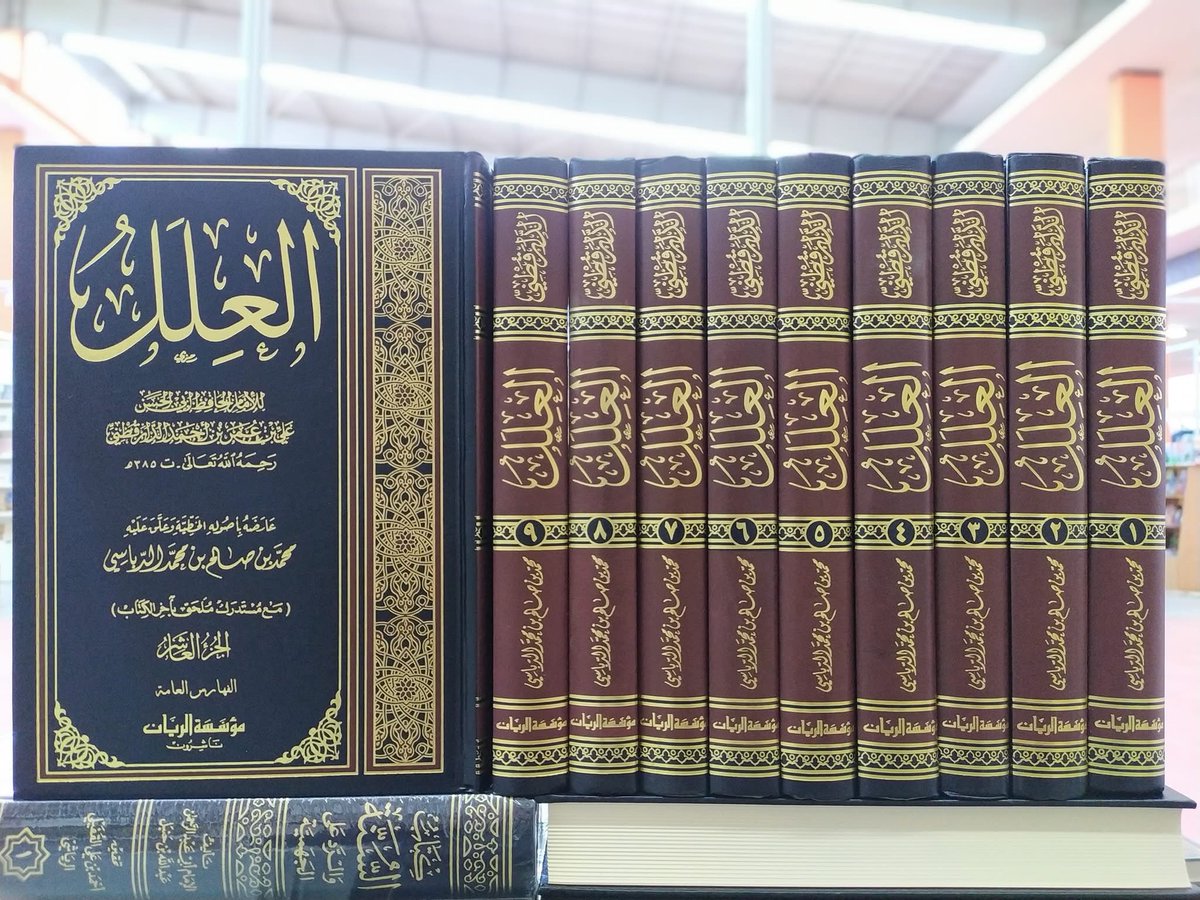
- Al-ʿIlal al-Wāridah Fī Aḥādīth al-Nubuwwah (The Defects Found in the Prophetic Ḥadīths) by al-Dāraquṭnī (918-995 AD)
- Al-Tārīkh al-Kabīr (The Great History) by al-Bukhārī (810-870 AD)
- Al-Jarḥ wal-Taʾdīl (Criticism and Appraisal) by Ibn Abī Ḥātim al-Rāzī (854-938 AD)
- Al-Kāmil Fī Ḍuʿafāʾ al-Rijāl (The Complete [Work] of Weak Narrators) Ibn ʿAdī (890-976 AD)
- Al-ʿIlal al-Wāridah Fī Aḥādīth al-Nubuwwah (The Defects Found in the Prophetic Ḥadīths) by al-Dāraquṭnī (918-995 AD)
“Islamic civilization did have historiography, but it never became a systematic science of a subject of formal study.”
Putting aside all the books I’ve already shown here, let’s see what the European scholars said about Islāmic historiography shall we?
Take William Montgomery Watt, an award winning Scottish historian in his book The Influence of Islam On Medieval Europe:
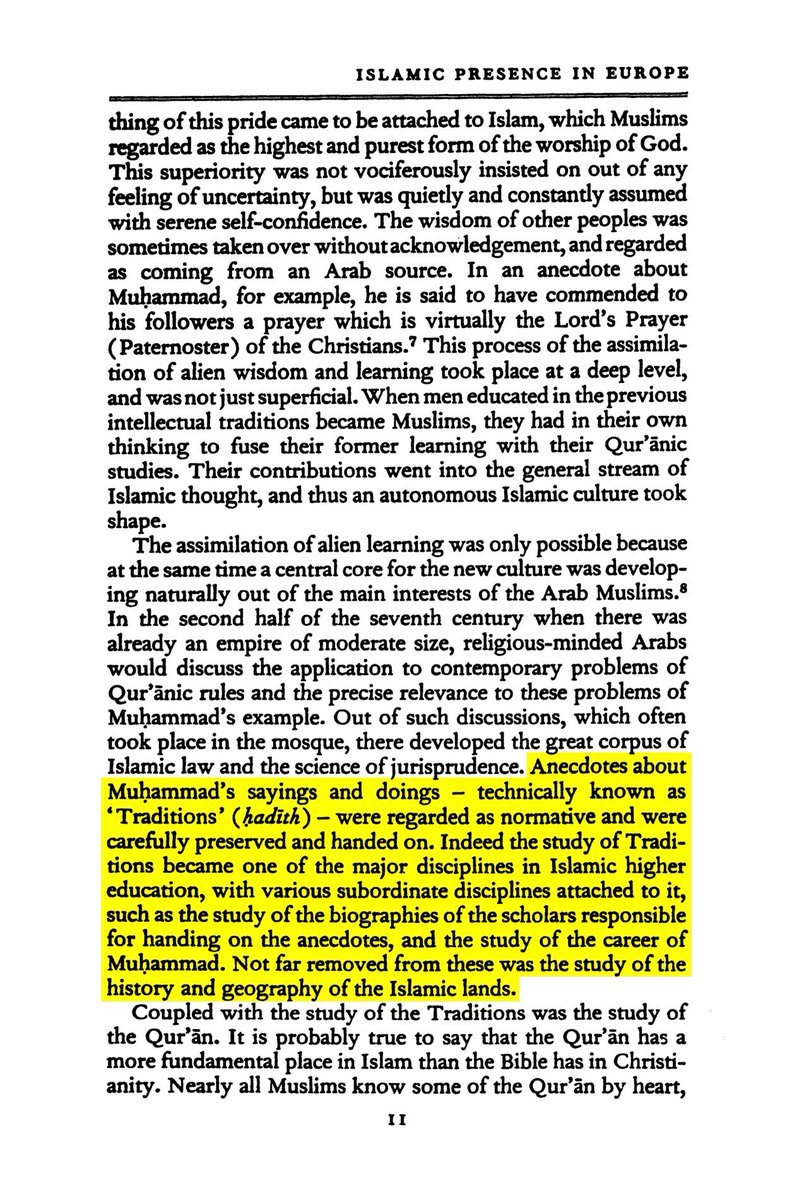
❝Anecdotes about Muhammad’s sayings and doings—technically known as ‘traditions’ (hadith)—were regarded as normative and were carefully preserved and handled. Indeed, the study of traditions became one of the major disciplines in Islamic higher education, with various subordinate disciplines attached to it, such as the study of the biographies of the scholars responsible for handling the anecdotes, and the study of the career of Muhammad. Not far removed from these was the study of the history and geography of the Islamic lands.❞ (p. 11)
Putting aside all the books I’ve already shown here, let’s see what the European scholars said about Islāmic historiography shall we?
Take William Montgomery Watt, an award winning Scottish historian in his book The Influence of Islam On Medieval Europe:
❝Anecdotes about Muhammad’s sayings and doings—technically known as ‘traditions’ (hadith)—were regarded as normative and were carefully preserved and handled. Indeed, the study of traditions became one of the major disciplines in Islamic higher education, with various subordinate disciplines attached to it, such as the study of the biographies of the scholars responsible for handling the anecdotes, and the study of the career of Muhammad. Not far removed from these was the study of the history and geography of the Islamic lands.❞ (p. 11)
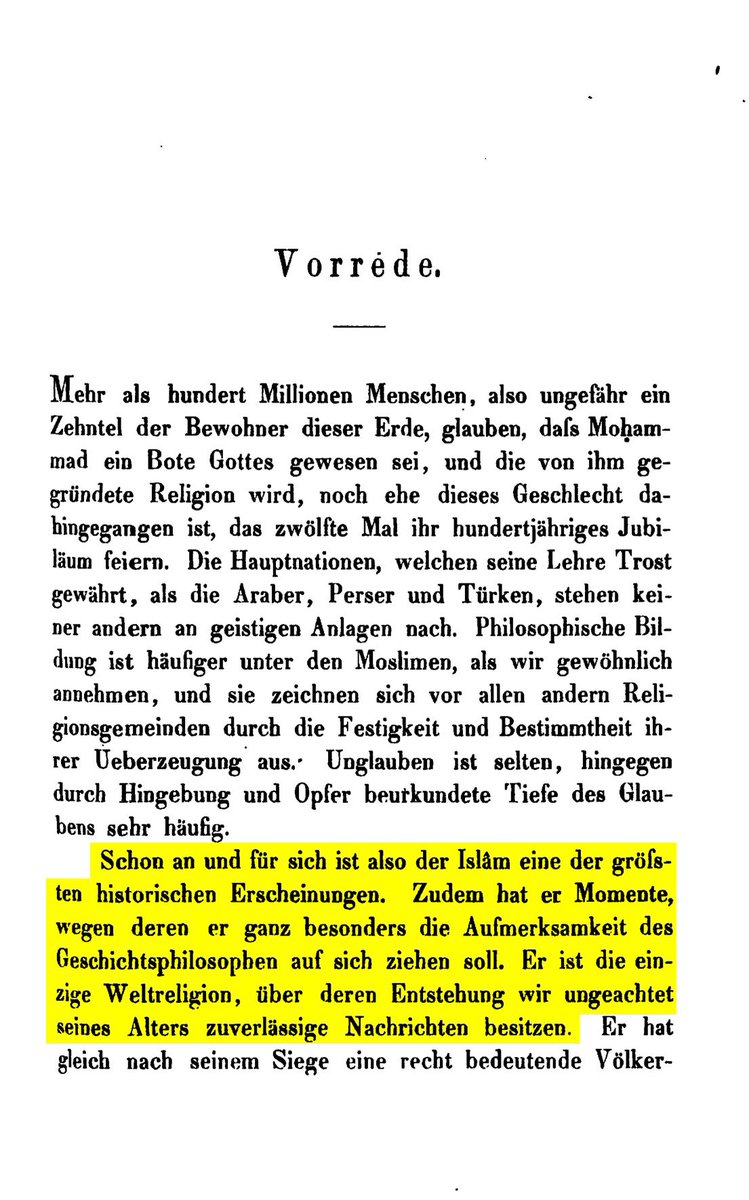
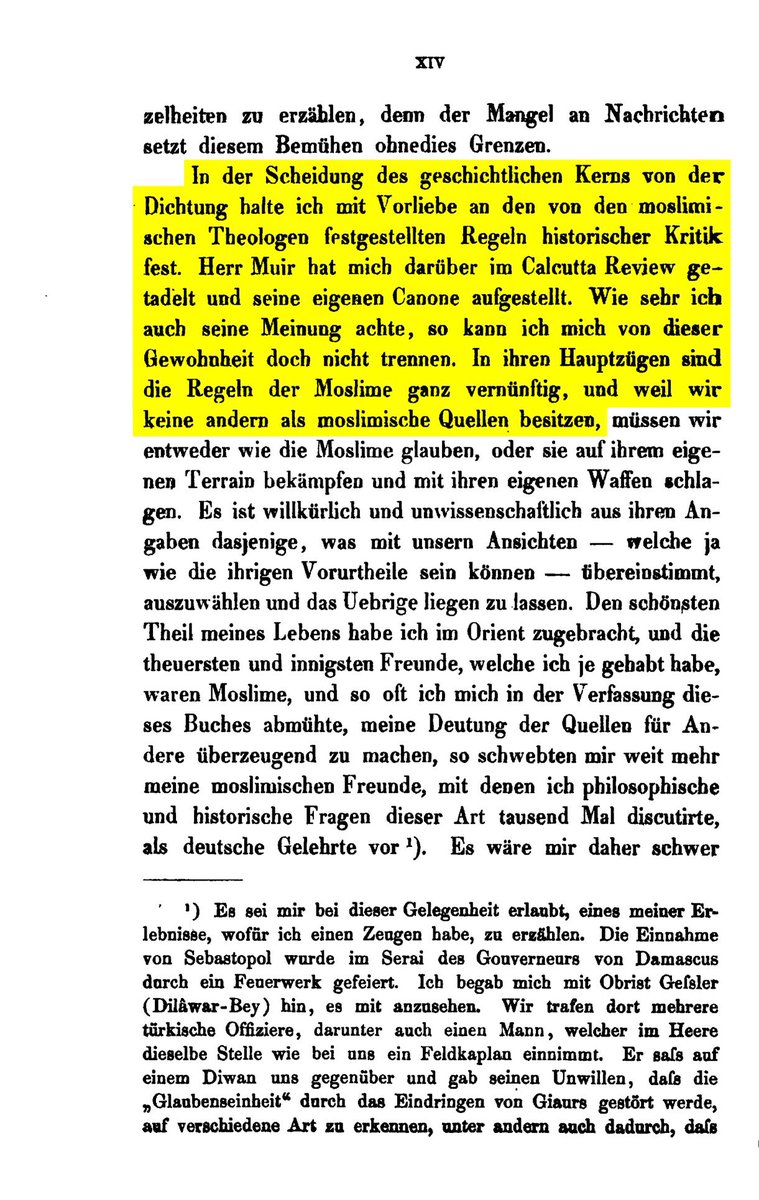
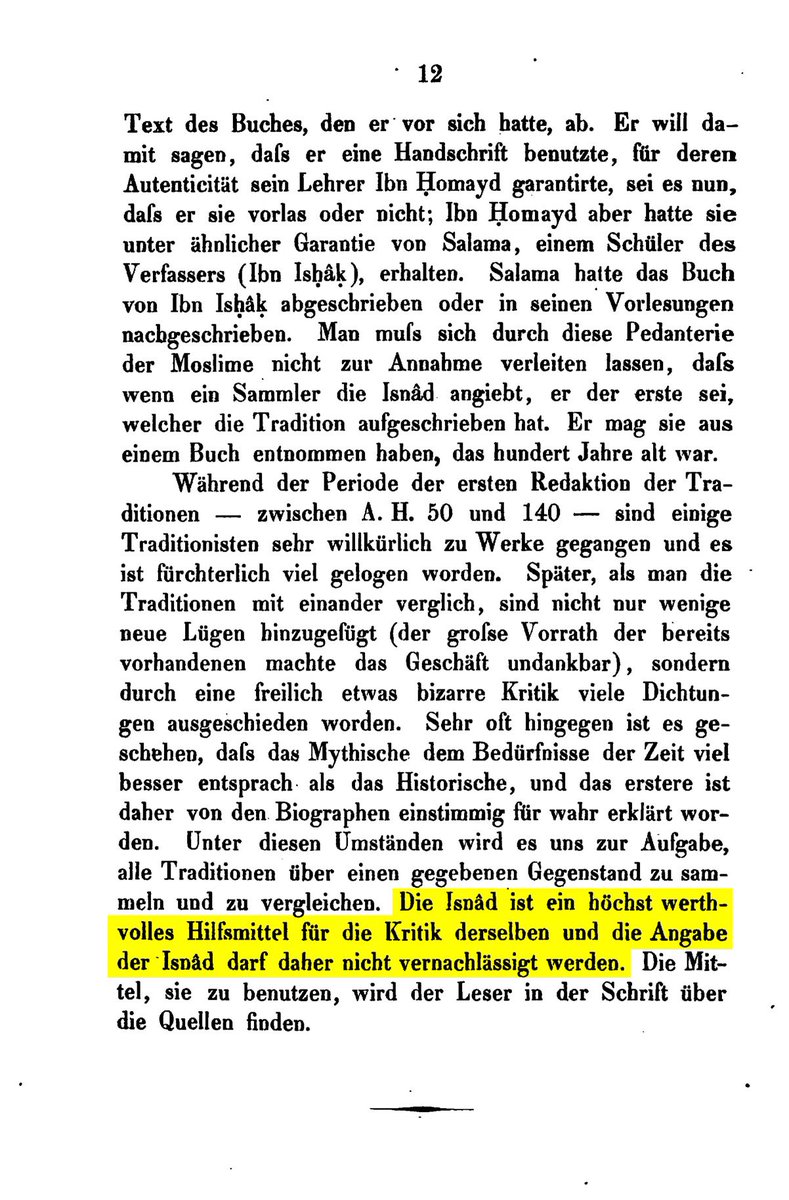
Austrian Orientalist Alois Sprenger (1813-1893 AD) said in his book Das Leben und die Lehre des Mohammad (The Life and Teachings of Muḥammad):
❝Even in and of itself, Islām is therefore one of the greatest historical phenomena. In addition, it contains elements that should particularly attract the attention of the philosopher of history. It is the only world religion about whose origin we possess reliable reports, despite its age.❞
❝In distinguishing the historical core from poetic embellishment, I prefer to adhere to the rules of historical criticism established by the Muslim theologians. Mr. Muir reproached me for this in the Calcutta Review and put forward his own canons. Much as I respect his opinion, I still cannot separate myself from this habit. In their main features, the rules of the Muslims are quite reasonable…❞
❝The isnād (chain of narration) is an extremely valuable aid for the criticism of these traditions, and the indication of the isnād must not be neglected.❞
❝Even in and of itself, Islām is therefore one of the greatest historical phenomena. In addition, it contains elements that should particularly attract the attention of the philosopher of history. It is the only world religion about whose origin we possess reliable reports, despite its age.❞
❝In distinguishing the historical core from poetic embellishment, I prefer to adhere to the rules of historical criticism established by the Muslim theologians. Mr. Muir reproached me for this in the Calcutta Review and put forward his own canons. Much as I respect his opinion, I still cannot separate myself from this habit. In their main features, the rules of the Muslims are quite reasonable…❞
❝The isnād (chain of narration) is an extremely valuable aid for the criticism of these traditions, and the indication of the isnād must not be neglected.❞

David Samuel Margoliouth said in his book Lectures on Arabic historians delivered before the University of Calcutta February 1929:
❝But though the theory of the isnād (chain of narration) has occasioned endless trouble, owing to the inquiries which have to be made into the trustworthiness of each transmitter, and the fabrication of traditions was a familiar and at times easily tolerated practice, its value in making for accuracy cannot be questioned, and the Muslims are justified in taking pride in their science of tradition.❞ (p. 20)
❝But though the theory of the isnād (chain of narration) has occasioned endless trouble, owing to the inquiries which have to be made into the trustworthiness of each transmitter, and the fabrication of traditions was a familiar and at times easily tolerated practice, its value in making for accuracy cannot be questioned, and the Muslims are justified in taking pride in their science of tradition.❞ (p. 20)


French Orientalist Claude Cahen said:
❝The Arabic historiography of the medieval Islamic world is richer than that of both Christendoms, Eastern and Western, in both Greek and Latin and all the vernaculars, combined.❞ (Bernard Lewis, Proceedings of the American Philosophical Society p. 219)
❝The Arabic historiography of the medieval Islamic world is richer than that of both Christendoms, Eastern and Western, in both Greek and Latin and all the vernaculars, combined.❞ (Bernard Lewis, Proceedings of the American Philosophical Society p. 219)


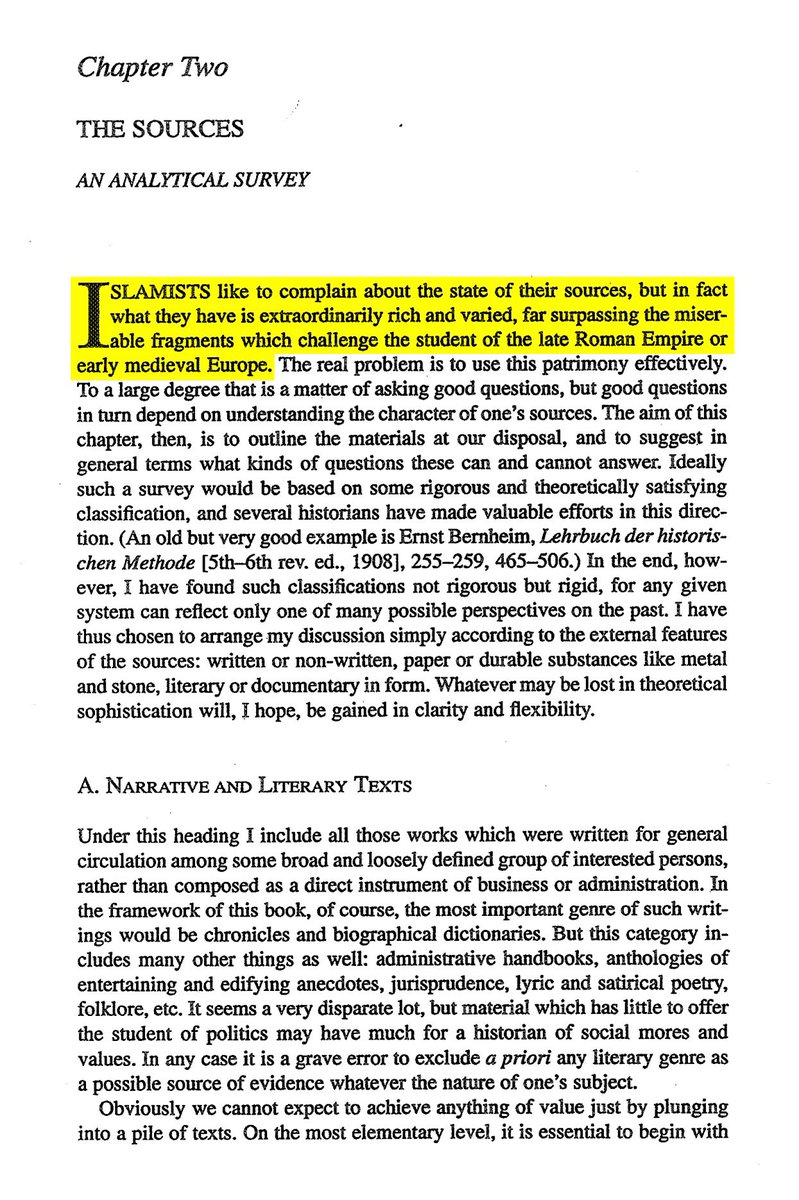
R. Stephen Humphreys said in his book Islamic History: A Framework for Inquiry:
❝Islamists like to complain about the state of their sources, but in fact what they have is extraordinarily rich and varied, far surpassing the miserable fragments which challenge the student of the late Roman Empire or early medieval Europe.❞ (p. 25)
❝Islamists like to complain about the state of their sources, but in fact what they have is extraordinarily rich and varied, far surpassing the miserable fragments which challenge the student of the late Roman Empire or early medieval Europe.❞ (p. 25)

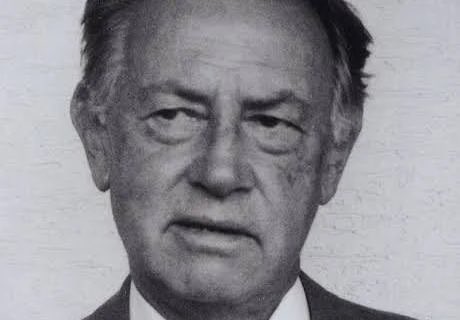
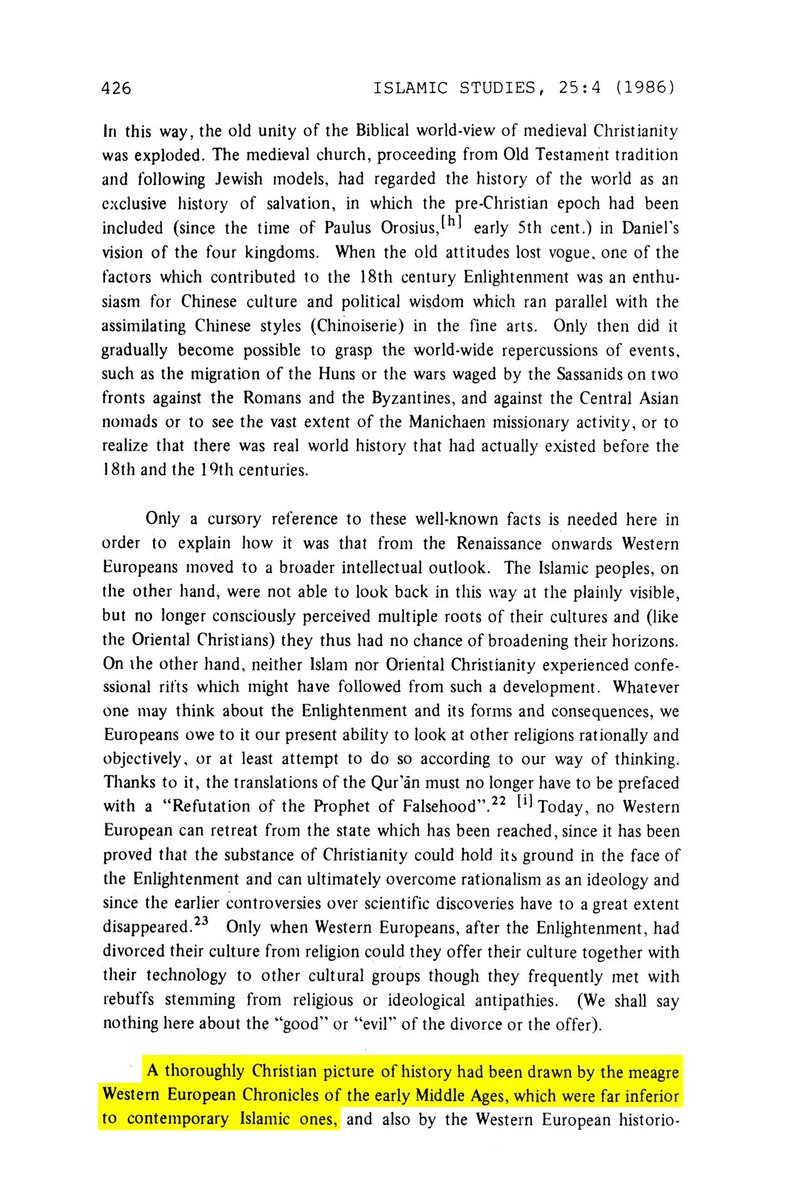
Professor Bertold Spuler in his book Islam & Western Historiography:
❝A thoroughly Christian picture of history had been drawn by the meager Western European chronicles of the early Middle Ages, which were far inferior to contemporary Islamic ones…❞ (p. 426)
❝A thoroughly Christian picture of history had been drawn by the meager Western European chronicles of the early Middle Ages, which were far inferior to contemporary Islamic ones…❞ (p. 426)
“This quote does not say Islamic civilization produced any innovation which influenced Europeans”
So would Keith perhaps would like to explain the European academics who pointed out the importance of Islāmic civilisational progress in its influence for European advancement?
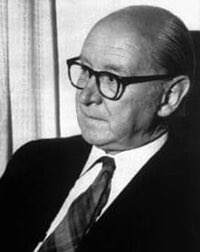
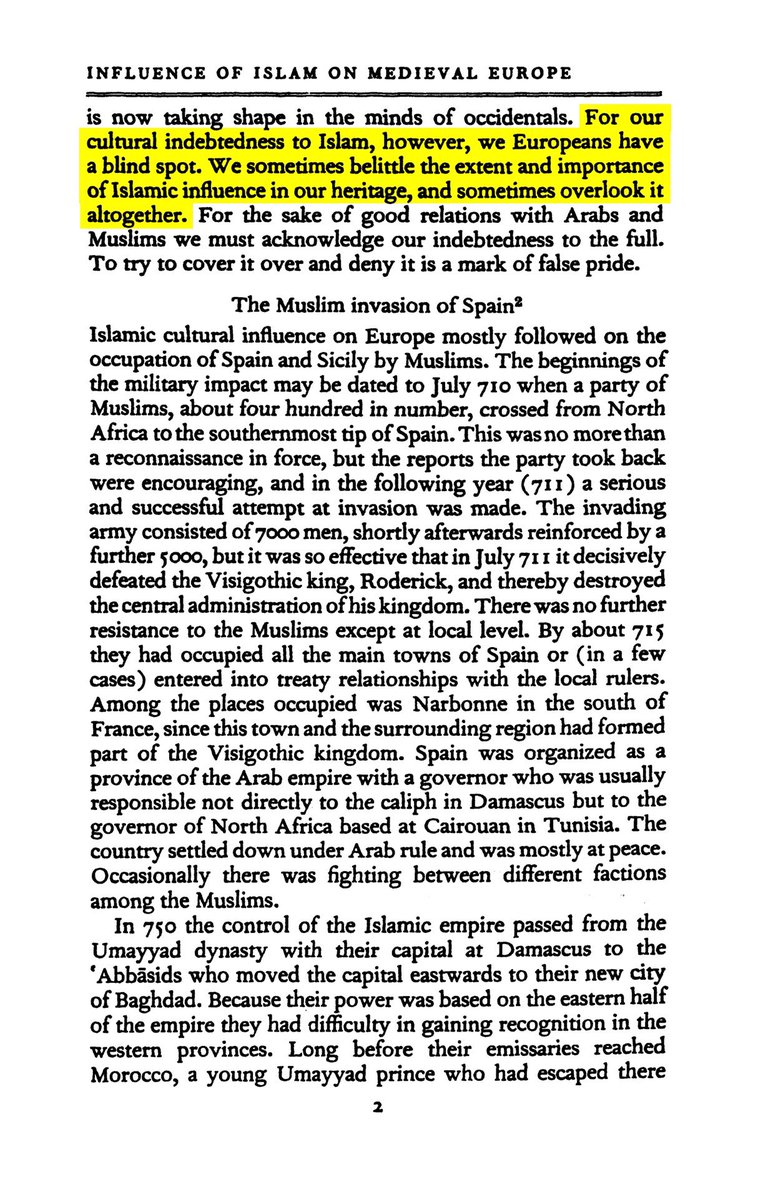
Going back to William Montgomery Watt, who stated the following in his book The Influence of Islam On Medieval Europe:
❝However, we Europeans have a blind spot for our cultural indebtedness to Islam. We sometimes belittle the extent and importance of Islamic influence in our heritage, and sometimes overlook it altogether.❞ (p. 2)
❝When one becomes aware of the full extent of Arab experimentation, Arab thinking, and Arab writing, one sees that without the Arabs European science and philosophy would not have developed when they did. The Arabs were no mere transmitters of Greek thought, but genuine bearers who both kept alive the disciplines they had been taught and extended their range. When about 1100 Europeans became seriously interested in the science and philosophy of their Saracen enemies, these disciplines were at their zenith; and the Europeans had to learn all they could from the Arabs before they themselves could make further advances.❞ (p . 43)
So would Keith perhaps would like to explain the European academics who pointed out the importance of Islāmic civilisational progress in its influence for European advancement?
Going back to William Montgomery Watt, who stated the following in his book The Influence of Islam On Medieval Europe:
❝However, we Europeans have a blind spot for our cultural indebtedness to Islam. We sometimes belittle the extent and importance of Islamic influence in our heritage, and sometimes overlook it altogether.❞ (p. 2)
❝When one becomes aware of the full extent of Arab experimentation, Arab thinking, and Arab writing, one sees that without the Arabs European science and philosophy would not have developed when they did. The Arabs were no mere transmitters of Greek thought, but genuine bearers who both kept alive the disciplines they had been taught and extended their range. When about 1100 Europeans became seriously interested in the science and philosophy of their Saracen enemies, these disciplines were at their zenith; and the Europeans had to learn all they could from the Arabs before they themselves could make further advances.❞ (p . 43)

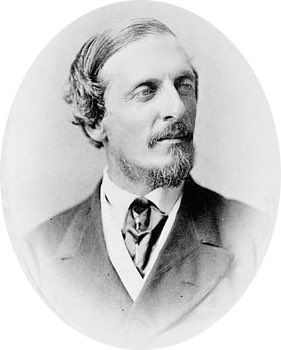
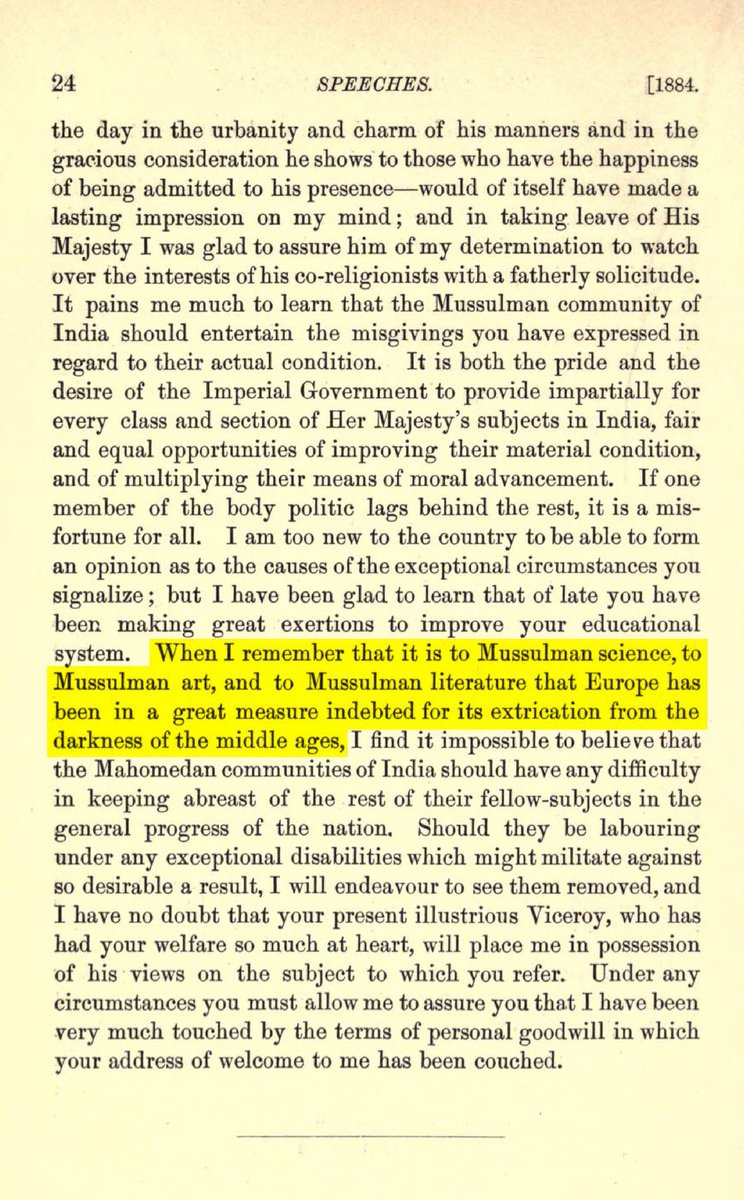
Frederick Hamilton said in Speeches delivered in India, 1884-1888:
❝ When I remember that it is to Mussulman science, to Mussulman art, and to Mussulman literature that Europe has been in a great measure indebted for its extrication from the darkness of the Middle Ages…❞ (p. 24)
❝ When I remember that it is to Mussulman science, to Mussulman art, and to Mussulman literature that Europe has been in a great measure indebted for its extrication from the darkness of the Middle Ages…❞ (p. 24)
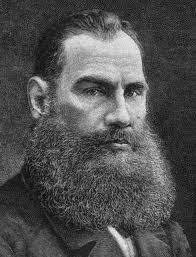
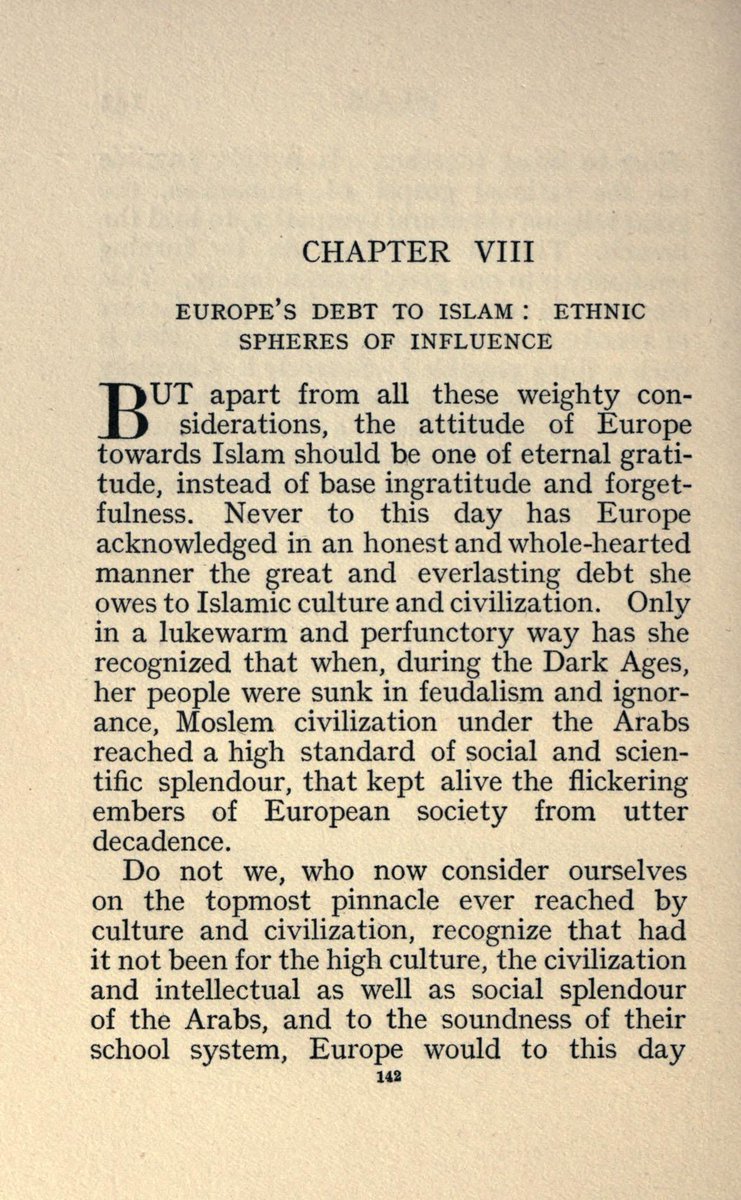
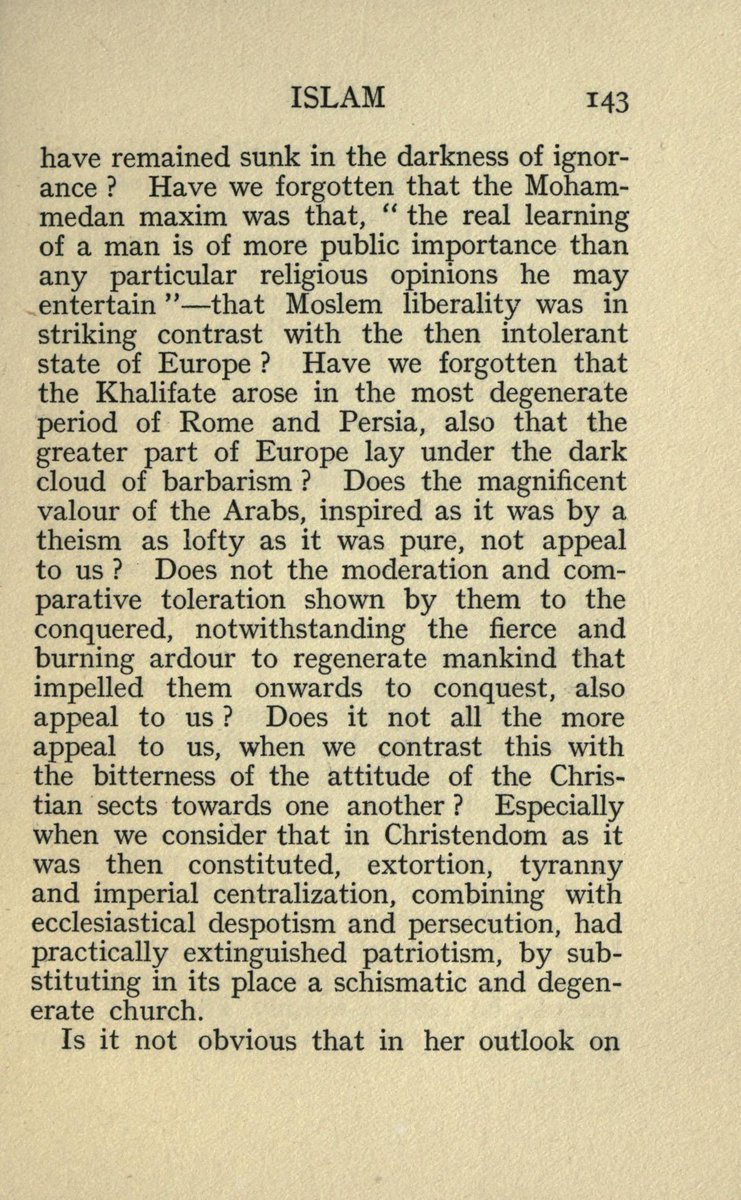
Arthur Glyn Leonard said in his book Islam: Her Moral and Spiritual Value:
❝Do not we, who now consider ourselves on the topmost pinnacle ever reached by culture and civilization, recognize that, had it not been for the high culture, the civilization and intellectual, as the social splendors of the Arabs and soundness of their system, Europe would to this day have remained sunk in the darkness of ignorance?❞ (p. 142)
❝Do not we, who now consider ourselves on the topmost pinnacle ever reached by culture and civilization, recognize that, had it not been for the high culture, the civilization and intellectual, as the social splendors of the Arabs and soundness of their system, Europe would to this day have remained sunk in the darkness of ignorance?❞ (p. 142)
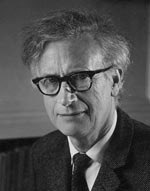
Richard William Southern in his book Western Views of Islam in the Middle Ages:
❝Within 400 years of its foundation, Islam had run through phases of intellectual growth which the West achieved only in the course of a much longer development. So much has been lost that it is impossible to speak with any exactness, but it is certain that the Islamic countries produced a greater bulk and variety of learned and scientific works in the ninth, tenth, and eleventh centuries than medieval Christendom produced before the fourteenth century.❞ (p. 8)
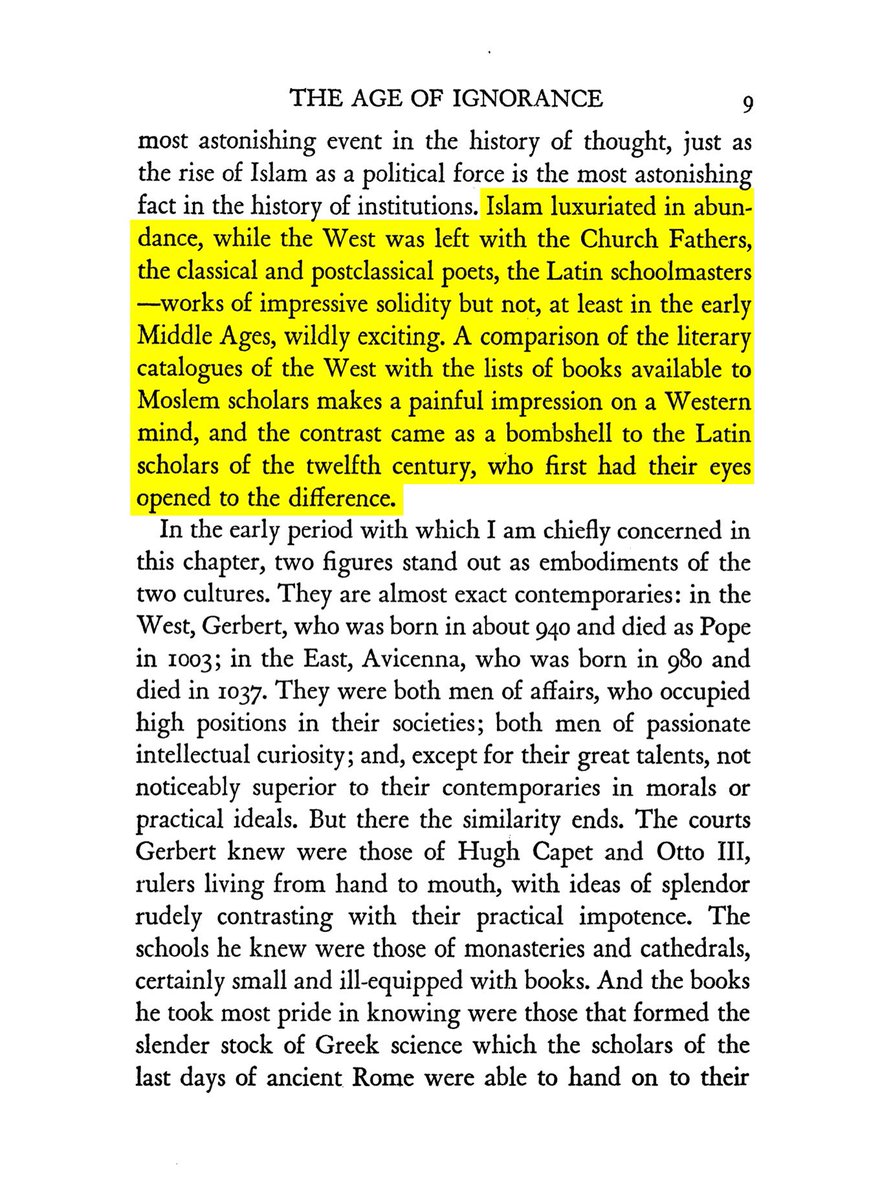
❝Islam luxuriated in abundance, while the West was left with the Church Fathers, the classical and postclassical poets, the Latin schoolmasters—works of impressive solidity but not, at least in the early Middle Ages, wildly exciting. A comparison of the literary catalogs of the West with the lists of books available to Muslim scholars makes a painful impression on a Western mind, and the contrast came as a bombshell to the Latin scholars of the twelfth century, who first had their eyes opened to the difference.❞ (p. 9)
Southern stated the following when describing the library of the Sulṭān of Bukhārā (Modern-day Uzbekistan):
❝It was contained in many rooms, each piled with chests of books and each devoted to a single subject—language and poetry, law, logic, medicine, and so on—with a catalogue from which it was possible to get a general view of the ancient writers on each science. There was nothing similar to this; certainly no layman had anything approaching it in the West until the end of the Middle Ages.❞ (p. 11)
❝Within 400 years of its foundation, Islam had run through phases of intellectual growth which the West achieved only in the course of a much longer development. So much has been lost that it is impossible to speak with any exactness, but it is certain that the Islamic countries produced a greater bulk and variety of learned and scientific works in the ninth, tenth, and eleventh centuries than medieval Christendom produced before the fourteenth century.❞ (p. 8)
❝Islam luxuriated in abundance, while the West was left with the Church Fathers, the classical and postclassical poets, the Latin schoolmasters—works of impressive solidity but not, at least in the early Middle Ages, wildly exciting. A comparison of the literary catalogs of the West with the lists of books available to Muslim scholars makes a painful impression on a Western mind, and the contrast came as a bombshell to the Latin scholars of the twelfth century, who first had their eyes opened to the difference.❞ (p. 9)
Southern stated the following when describing the library of the Sulṭān of Bukhārā (Modern-day Uzbekistan):
❝It was contained in many rooms, each piled with chests of books and each devoted to a single subject—language and poetry, law, logic, medicine, and so on—with a catalogue from which it was possible to get a general view of the ancient writers on each science. There was nothing similar to this; certainly no layman had anything approaching it in the West until the end of the Middle Ages.❞ (p. 11)


Moving onto Keith Woods’ claims about Ibn Khaldūn:
“The critical attitude he took to sources was not replicated.”
Ibn Khaldūn’s area of expertise was political theory, not source scrutiny and authenticity grading.
Source criticism was a codified science with scholars far stronger than Ibn Khaldūn in its discipline existing both before and after his time.
Ibn Khaldūn’s notoriety came from his ability to observe political events and construct theories based on them, pertaining to the cycles societies go through and the details surrounding them.
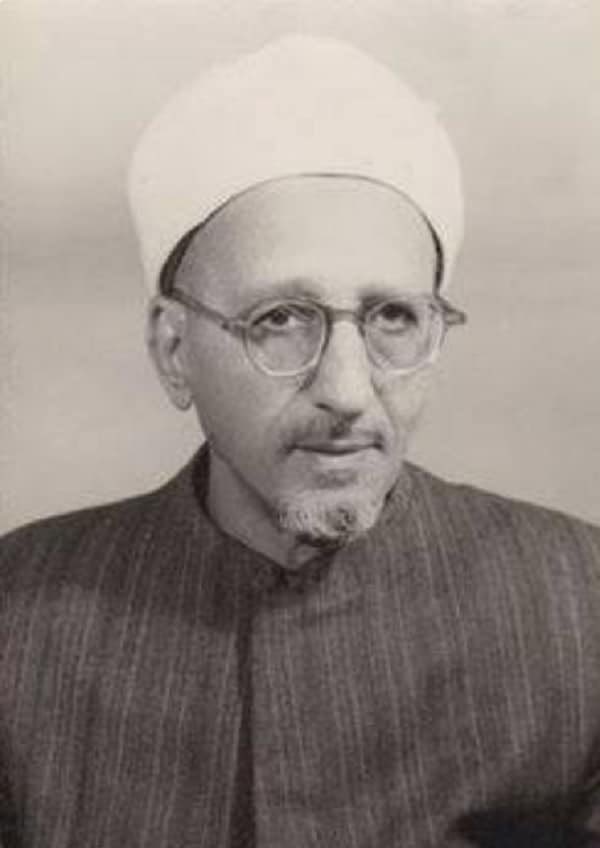
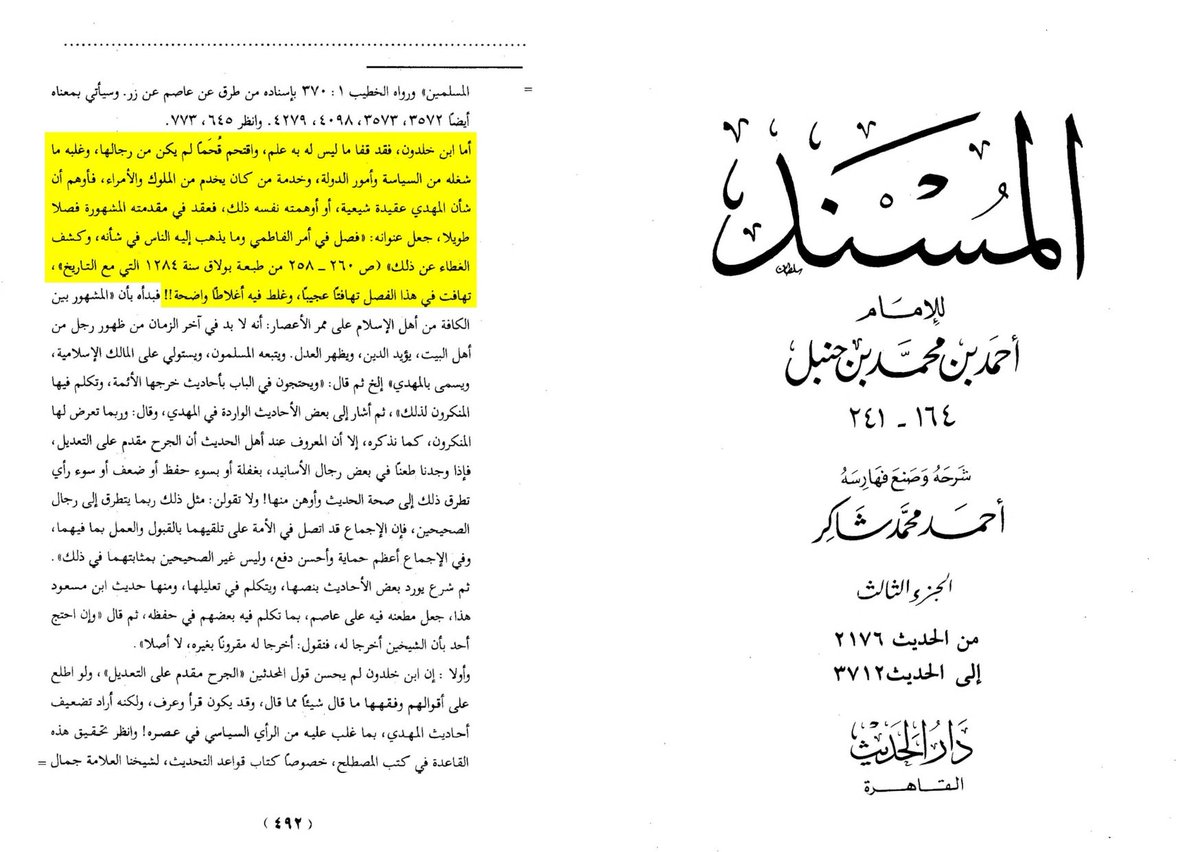
On the other hand, Ibn Khaldūn’s takes on source scrutiny earned him a wave of criticism, with one example being from the Egyptian ḥadīth expert Shaykh Aḥmad Shākir who said the following:
❝As for Ibn Khaldūn, he spoke on a matter in which he had no knowledge, and he ventured into fields whose people he did not belong to. He was overcome by his preoccupation with politics, state affairs, and serving the kings and princes whom he used to serve. So he imagined that the matter of the Mahdī was a Shīʿī belief — or perhaps he was led to think that by his own mind — and thus he wrote in his famous Muqaddimah a long section entitled: ‘A Section on the Matter of the Fāṭimī and What People Say Concerning Him, and Lifting the Veil on That Matter.’ In that section, he fell into astonishing confusion and made clear, obvious mistakes.❞
📚 (Musnad al-Imām Aḥmad 3/492)
“The critical attitude he took to sources was not replicated.”
Ibn Khaldūn’s area of expertise was political theory, not source scrutiny and authenticity grading.
Source criticism was a codified science with scholars far stronger than Ibn Khaldūn in its discipline existing both before and after his time.
Ibn Khaldūn’s notoriety came from his ability to observe political events and construct theories based on them, pertaining to the cycles societies go through and the details surrounding them.
On the other hand, Ibn Khaldūn’s takes on source scrutiny earned him a wave of criticism, with one example being from the Egyptian ḥadīth expert Shaykh Aḥmad Shākir who said the following:
❝As for Ibn Khaldūn, he spoke on a matter in which he had no knowledge, and he ventured into fields whose people he did not belong to. He was overcome by his preoccupation with politics, state affairs, and serving the kings and princes whom he used to serve. So he imagined that the matter of the Mahdī was a Shīʿī belief — or perhaps he was led to think that by his own mind — and thus he wrote in his famous Muqaddimah a long section entitled: ‘A Section on the Matter of the Fāṭimī and What People Say Concerning Him, and Lifting the Veil on That Matter.’ In that section, he fell into astonishing confusion and made clear, obvious mistakes.❞
📚 (Musnad al-Imām Aḥmad 3/492)
“But his work was an isolated intellectual achievement which did not produce a school of thought or replicable theoretical framework. His work was largely ignored…”
Again, not true in the slightest. Other historians who came after Ibn Khaldūn quote him and his book by name, praising his expertise as a historian and even adopt his political theories into their own books.
Take for example Ibn Khaldūn’s direct student Taqī al-Dīn al-Maqrīzī (1364-1442 AD), someone who authored a multitude of historical works such as:
- Al-Mawāʿiẓ wa al-Iʿtibār bi-Dhikr al-Khiṭaṭ wal-Āthār (Admonitions and Lessons by Mention of Districts and Monuments)
- Al-Sulūk li-Maʿrifat Duwal al-Mulūk (The Path to Knowing the Dynasties of the Kings)
- Ighāthatu al-Ummah bi-Kashf al-Ghummah (Aid to the Ummah by Lifting the Calamity)
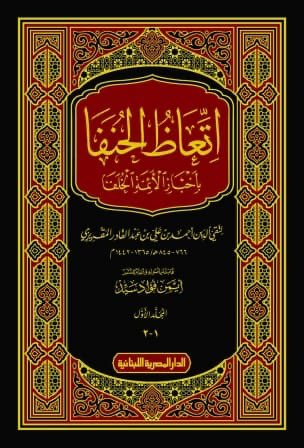
- Iʿtiʿāẓ al-Ḥunafāʾ bi-Akhbār al-Aʾimmah al-Fāṭimiyyīn al-Khulafāʾ (The Admonition of the Upright by the Accounts of the Fāṭimid Imāms, the Caliphs)
Again, not true in the slightest. Other historians who came after Ibn Khaldūn quote him and his book by name, praising his expertise as a historian and even adopt his political theories into their own books.
Take for example Ibn Khaldūn’s direct student Taqī al-Dīn al-Maqrīzī (1364-1442 AD), someone who authored a multitude of historical works such as:
- Al-Mawāʿiẓ wa al-Iʿtibār bi-Dhikr al-Khiṭaṭ wal-Āthār (Admonitions and Lessons by Mention of Districts and Monuments)
- Al-Sulūk li-Maʿrifat Duwal al-Mulūk (The Path to Knowing the Dynasties of the Kings)
- Ighāthatu al-Ummah bi-Kashf al-Ghummah (Aid to the Ummah by Lifting the Calamity)
- Iʿtiʿāẓ al-Ḥunafāʾ bi-Akhbār al-Aʾimmah al-Fāṭimiyyīn al-Khulafāʾ (The Admonition of the Upright by the Accounts of the Fāṭimid Imāms, the Caliphs)
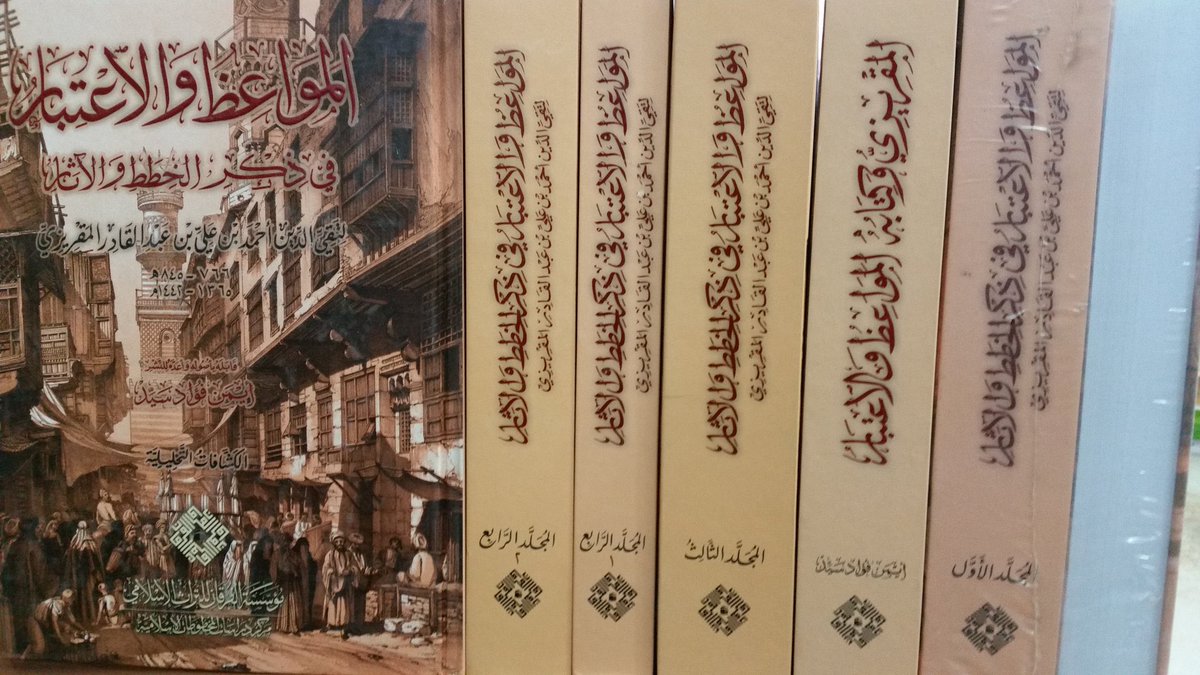
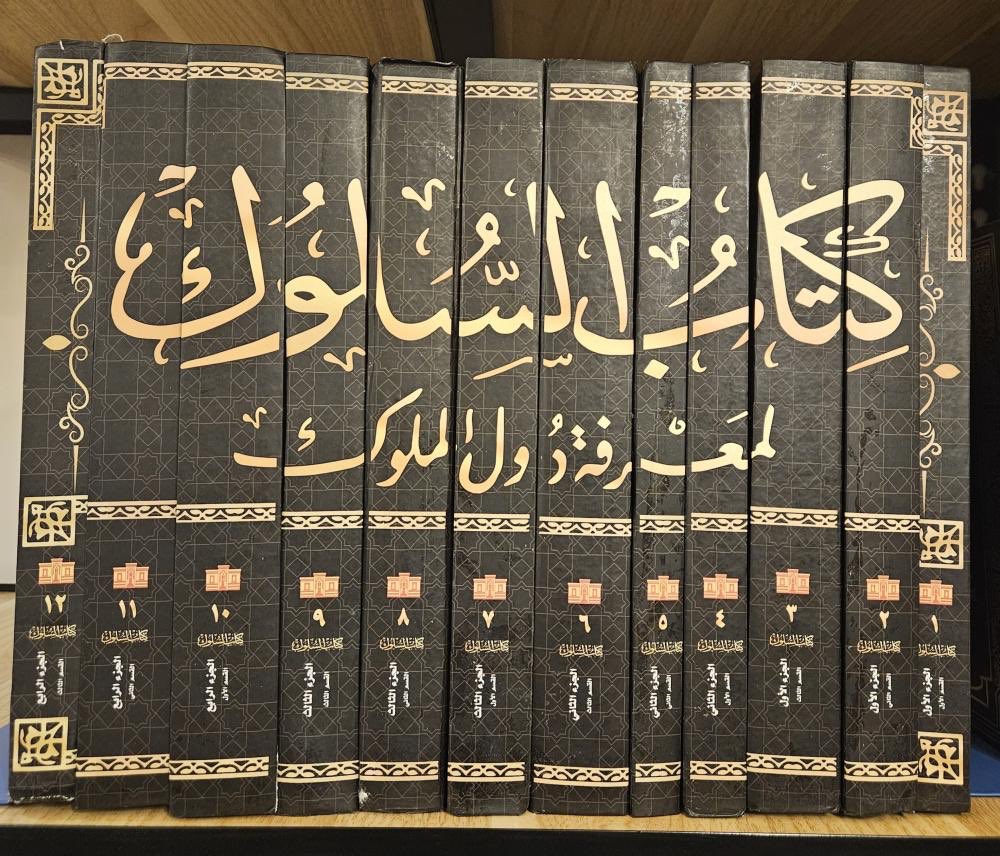
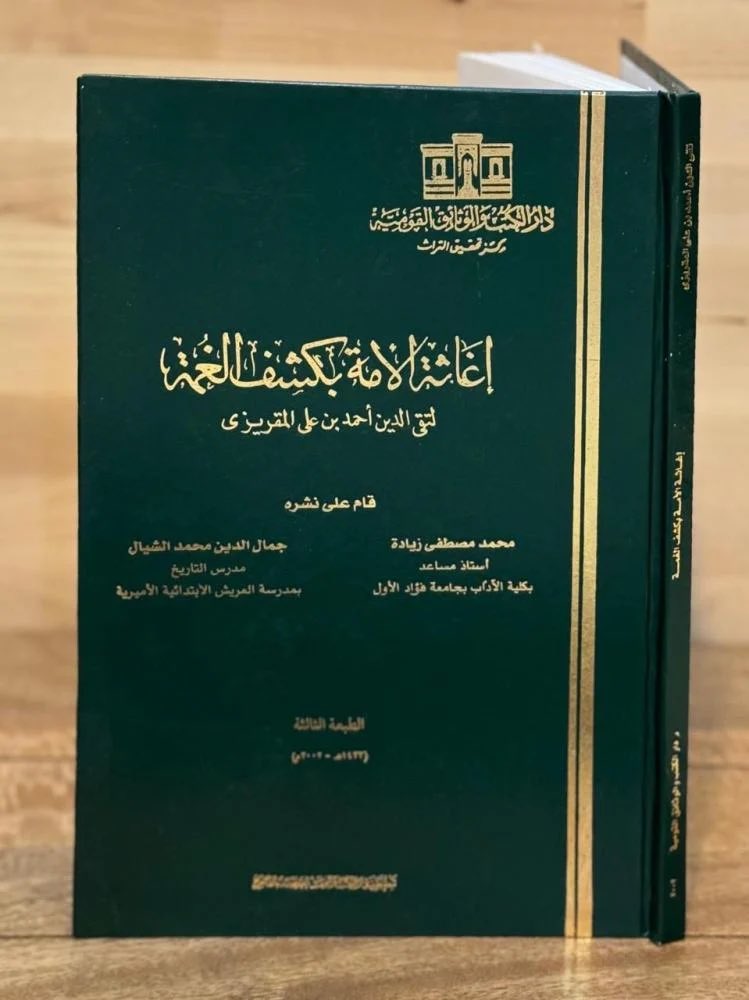
It would take too long to cover all the aspects of Khaldūnian theory that al-Maqrīzī incorporates in his various books, so here’s one article in English for those who want to look into the matter further.
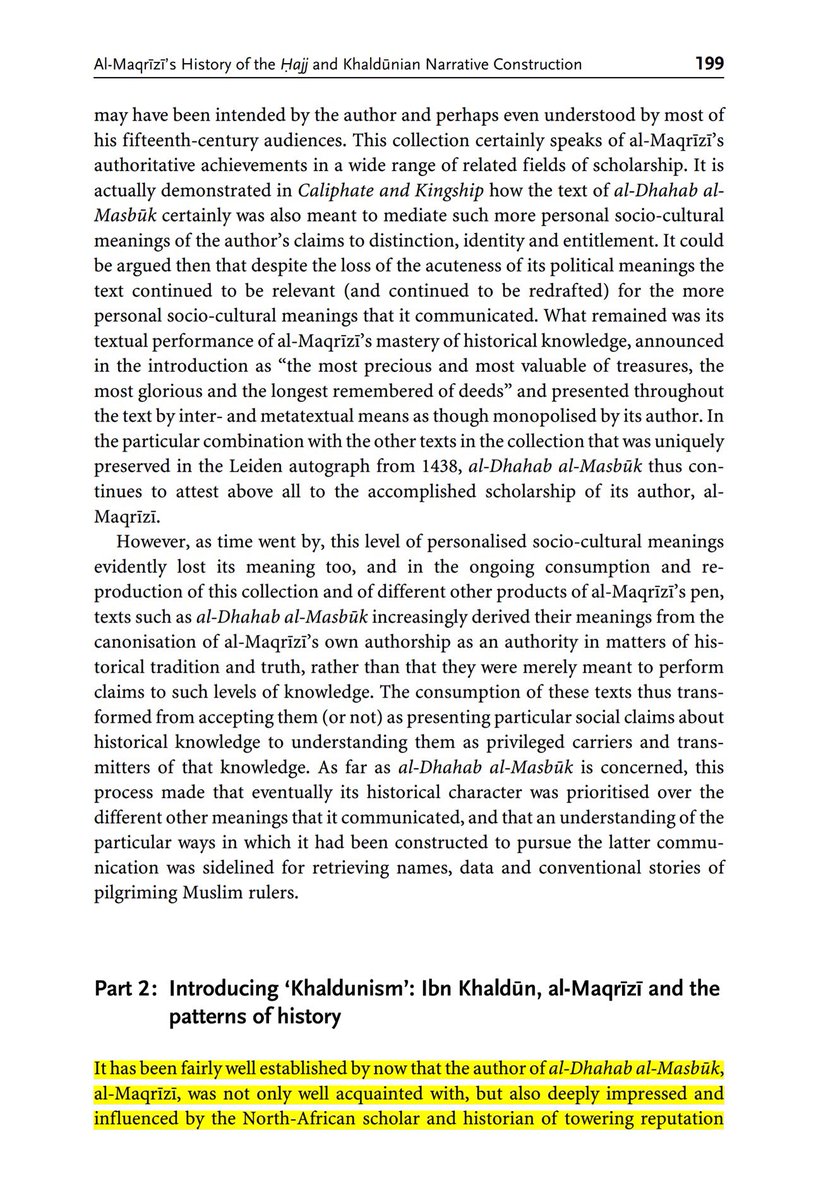
Jo Van Steenbergen – a professor of Arabic and Islamic Studies at Ghent University (Belgium) – published an article titled al-Maqrīzī's History of the Ḥajj (al-Dhahab al-Masbūk) and Khaldūnian Narrative Construction:
❝It has been fairly well established by now that the author of al-Dhahab al-Masbūk, al-Maqrīzī, was not only well acquainted with, but also deeply impressed and influenced by the North-African scholar and historian of towering reputation, ʿAbd al-Raḥman Ibn Khaldūn.❞
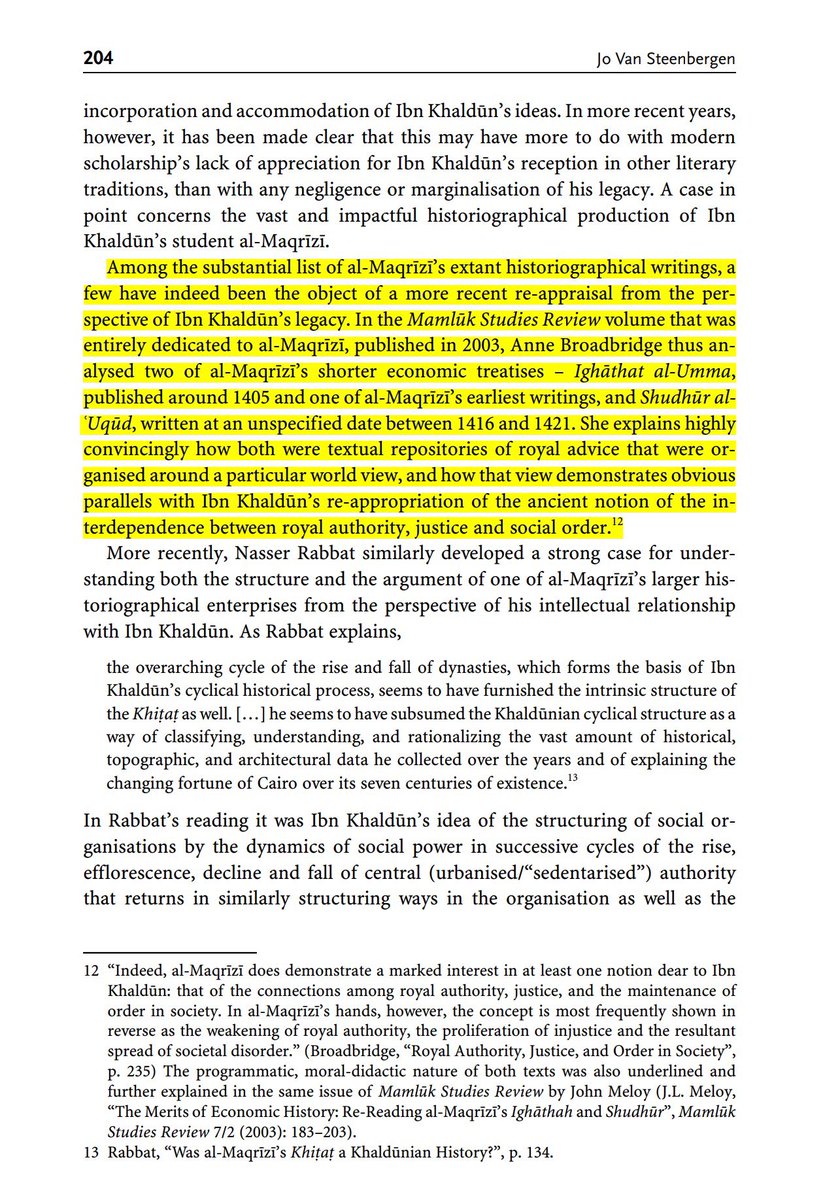
• Steenbergen further states:
❝Among the substantial list of al-Maqrīzī’s extant historiographical writings, a few have indeed been the object of a more recent reappraisal from the perspective of Ibn Khaldūn’s legacy. In the Mamlūk Studies Review volume that was entirely dedicated to al-Maqrīzī, published in 2003, Anne Broadbridge thus analysed two of al-Maqrīzī’s shorter economic treatises Ighāthat al-Umma, published around 1405 and one of al-Maqrīzī’s earliest writings, and Shudhūr al-ʿUqūd, written at an unspecified date between 1416 and 1421. She explains highly convincingly how both were textual repositories of royal advice that were organised around a particular world view, and how that view demonstrates obvious parallels with Ibn Khaldūn’s reappropriation of the ancient notion of the interdependence between royal authority, justice and social order.❞
Jo Van Steenbergen – a professor of Arabic and Islamic Studies at Ghent University (Belgium) – published an article titled al-Maqrīzī's History of the Ḥajj (al-Dhahab al-Masbūk) and Khaldūnian Narrative Construction:
❝It has been fairly well established by now that the author of al-Dhahab al-Masbūk, al-Maqrīzī, was not only well acquainted with, but also deeply impressed and influenced by the North-African scholar and historian of towering reputation, ʿAbd al-Raḥman Ibn Khaldūn.❞
• Steenbergen further states:
❝Among the substantial list of al-Maqrīzī’s extant historiographical writings, a few have indeed been the object of a more recent reappraisal from the perspective of Ibn Khaldūn’s legacy. In the Mamlūk Studies Review volume that was entirely dedicated to al-Maqrīzī, published in 2003, Anne Broadbridge thus analysed two of al-Maqrīzī’s shorter economic treatises Ighāthat al-Umma, published around 1405 and one of al-Maqrīzī’s earliest writings, and Shudhūr al-ʿUqūd, written at an unspecified date between 1416 and 1421. She explains highly convincingly how both were textual repositories of royal advice that were organised around a particular world view, and how that view demonstrates obvious parallels with Ibn Khaldūn’s reappropriation of the ancient notion of the interdependence between royal authority, justice and social order.❞

Here are some examples of scholars who praised Ibn Khaldūn’s book and his expertise on history:
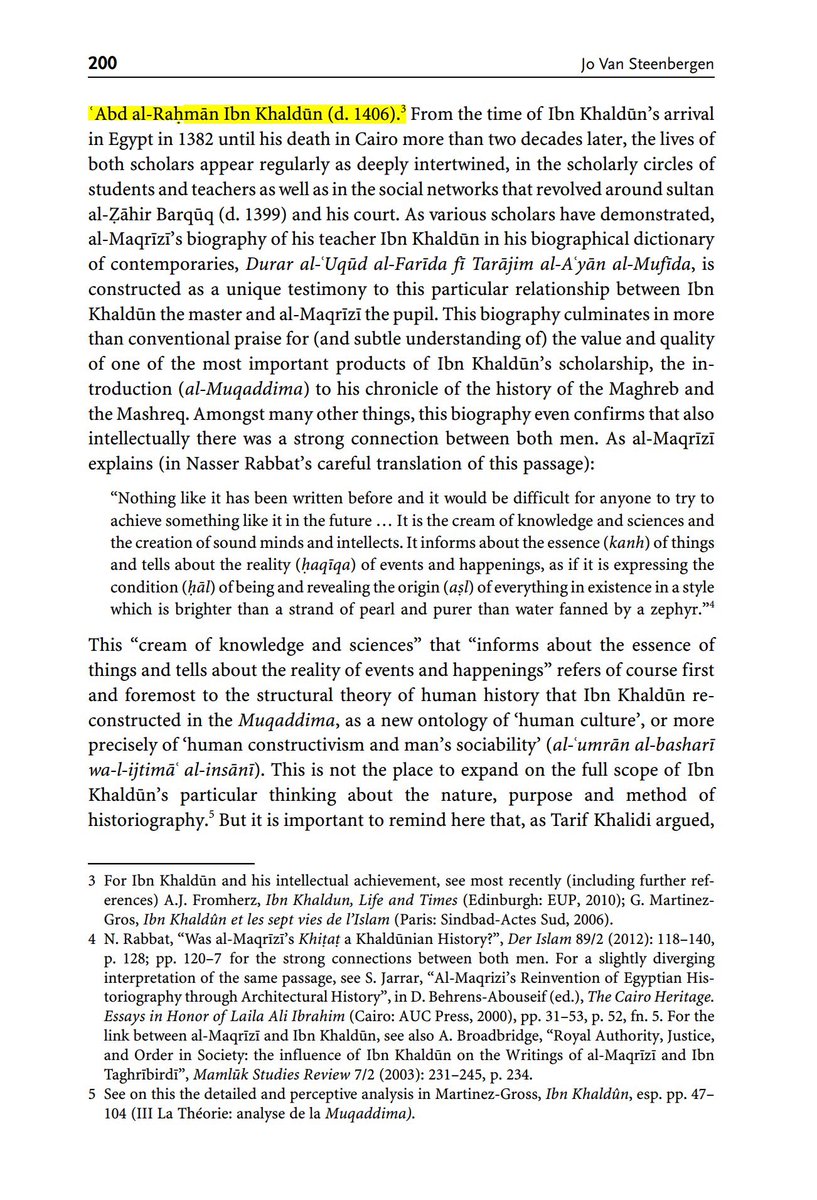
• Al-Maqrīzī said about Ibn Khaldūn’s book:
❝Nothing like it has ever been produced, and it is indeed rare for a diligent seeker to attain its equal, for it is the quintessence of knowledge and sciences, and the product of sound minds and understanding. It leads one to grasp the true nature of things, to know the reality of events and reports, to describe the state of existence, and to inform of the origin of every existent — in a style more splendid than precious pearls, and more delicate than water upon which the breeze has passed.❞
📚 (Al-Ḍawʾ al-Lāmiʾ li-Ahl al-Qarn al-Tāsiʾ 4/147)
• Al-Maqrīzī said about Ibn Khaldūn’s book:
❝Nothing like it has ever been produced, and it is indeed rare for a diligent seeker to attain its equal, for it is the quintessence of knowledge and sciences, and the product of sound minds and understanding. It leads one to grasp the true nature of things, to know the reality of events and reports, to describe the state of existence, and to inform of the origin of every existent — in a style more splendid than precious pearls, and more delicate than water upon which the breeze has passed.❞
📚 (Al-Ḍawʾ al-Lāmiʾ li-Ahl al-Qarn al-Tāsiʾ 4/147)

• Ibn ʿAmmār, one of his students, wrote a biography of him and said:
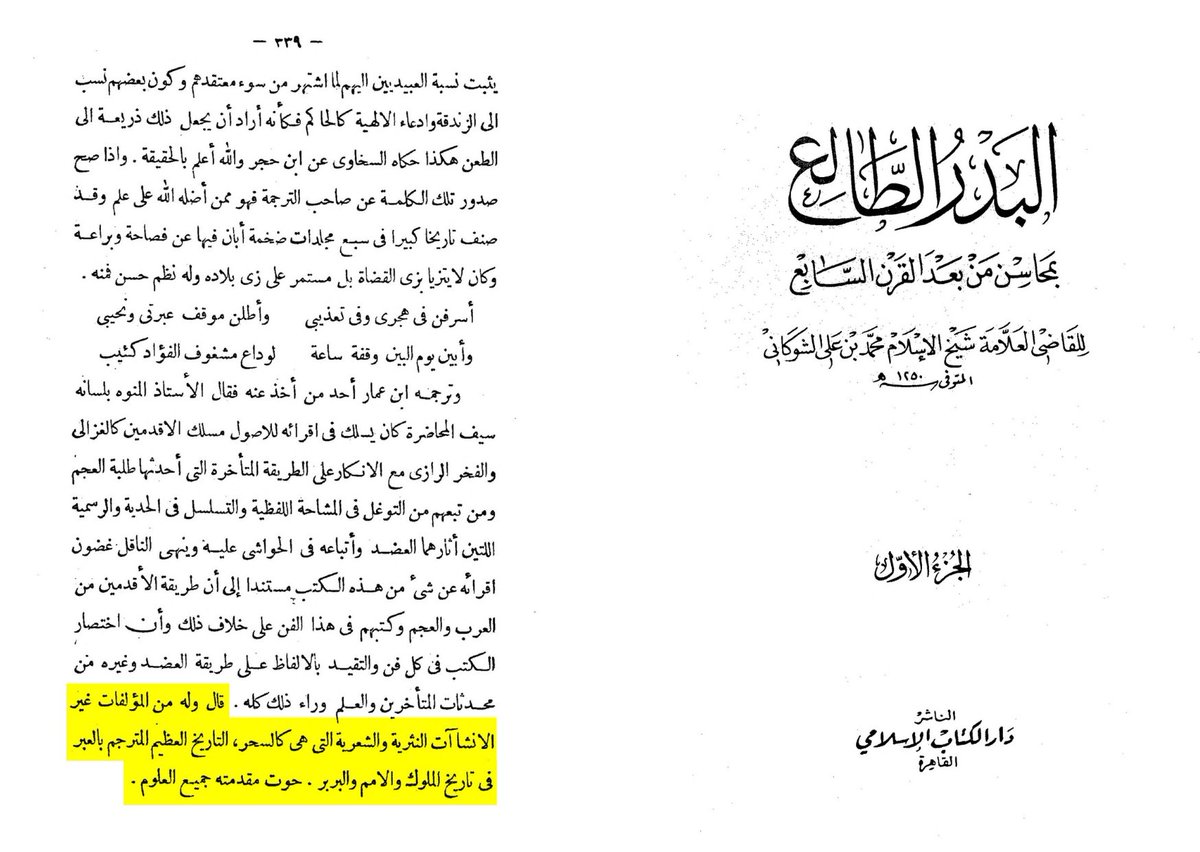
❝Among his works—apart from his prose and poetic compositions, which are like magic—is the great history entitled al-ʿIbar Fī Tārīkh al-Mulūk wal-Umam wal-Barbar, whose Muqaddimah encompasses all branches of knowledge.❞
📚 (Al-Badr al-Ṭāliʾ 1/339)
❝Among his works—apart from his prose and poetic compositions, which are like magic—is the great history entitled al-ʿIbar Fī Tārīkh al-Mulūk wal-Umam wal-Barbar, whose Muqaddimah encompasses all branches of knowledge.❞
📚 (Al-Badr al-Ṭāliʾ 1/339)
• Ibn Ḥajar al-ʿAsqalānī (1372-1449 AD) said about Ibn Khaldūn:
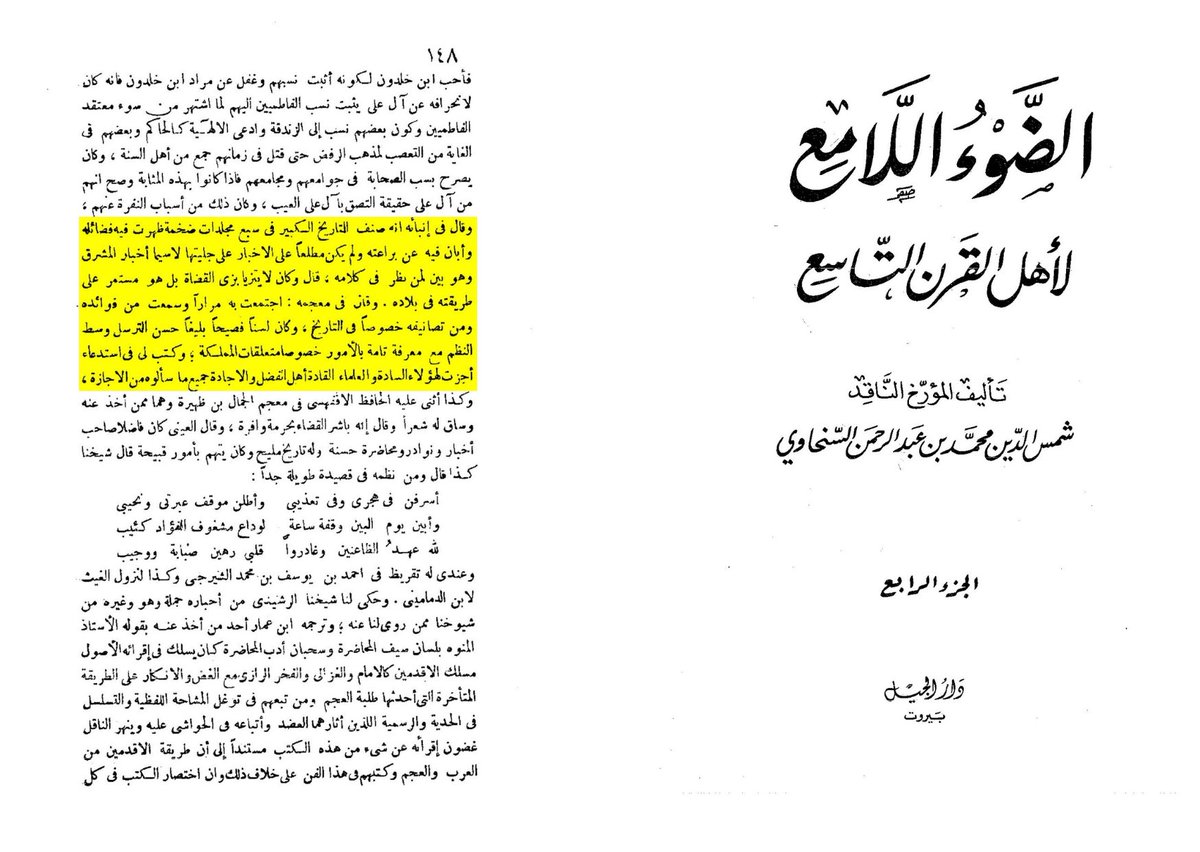
❝He authored a great history in seven large volumes, in which his virtues became evident, and he demonstrated his mastery therein. However, he was not fully acquainted with reports in their reality, especially the reports of the East, and this is clear upon inspection of his words… I met him repeatedly and heard from his benefits and from his works, especially in history; he was eloquent, articulate, fluent, and graceful in composition, midway between prose and poetry, along with complete knowledge of matters, especially those pertaining to the affairs of the state. And he wrote for me, in a request, that I should grant authorization to these noble masters and learned leaders, people of merit and excellence, all that they asked of authorization.❞
📚 (Al-Ḍawʾ al-Lāmiʾ li-Ahl al-Qarn al-Tāsiʾ 4/148)
❝He authored a great history in seven large volumes, in which his virtues became evident, and he demonstrated his mastery therein. However, he was not fully acquainted with reports in their reality, especially the reports of the East, and this is clear upon inspection of his words… I met him repeatedly and heard from his benefits and from his works, especially in history; he was eloquent, articulate, fluent, and graceful in composition, midway between prose and poetry, along with complete knowledge of matters, especially those pertaining to the affairs of the state. And he wrote for me, in a request, that I should grant authorization to these noble masters and learned leaders, people of merit and excellence, all that they asked of authorization.❞
📚 (Al-Ḍawʾ al-Lāmiʾ li-Ahl al-Qarn al-Tāsiʾ 4/148)
Algerian historian Aḥmad al-Maqqari (1581-1631 AD) authored an explanation of Ibn Khaldūn’s Muqaddimah, something which clearly contradicts Keith’s claims that the book was ignored by other Muslims.

Here, Ibn al-ʿImād’s praise reflects the post-classical scholarly consensus that Ibn Khaldūn’s innovative approach to historiography – analyzing the rise and fall of civilizations through an empirical, sociological lens – was a monumental contribution, setting his work apart as an enduring masterpiece in the canon of Islāmic historical literature.
• Ibn al-ʿImād al-Ḥanbalī (1623-1679 AD) said about Ibn Khaldūn:
❝He is ʿAbd al-Raḥmān Ibn Muḥammad Ibn Muḥammad Ibn Khaldūn al-Ḥaḍramī al-Ishbīlī, Abū Zayd — the philosopher of Islamic history, the great, meticulous scholar, and one of the rare geniuses of the age in knowledge, culture, learning, and intelligence; the author of al-Tārīkh, from which the Muqaddimah became so famous that such renown has been attained by only a few Islāmic works in all ages, to the point that he was called the author of the Muqaddimah or it was called The Muqaddimah of Ibn Khaldūn, as if he had authored nothing else.❞
📚 (Shadharāt al-Dhahab Fī Akhbār Man Dhahab 1/71)
• Ibn al-ʿImād al-Ḥanbalī (1623-1679 AD) said about Ibn Khaldūn:
❝He is ʿAbd al-Raḥmān Ibn Muḥammad Ibn Muḥammad Ibn Khaldūn al-Ḥaḍramī al-Ishbīlī, Abū Zayd — the philosopher of Islamic history, the great, meticulous scholar, and one of the rare geniuses of the age in knowledge, culture, learning, and intelligence; the author of al-Tārīkh, from which the Muqaddimah became so famous that such renown has been attained by only a few Islāmic works in all ages, to the point that he was called the author of the Muqaddimah or it was called The Muqaddimah of Ibn Khaldūn, as if he had authored nothing else.❞
📚 (Shadharāt al-Dhahab Fī Akhbār Man Dhahab 1/71)

As for the existence of a “Khaldūnian school” within the Islāmic world, I present the following:
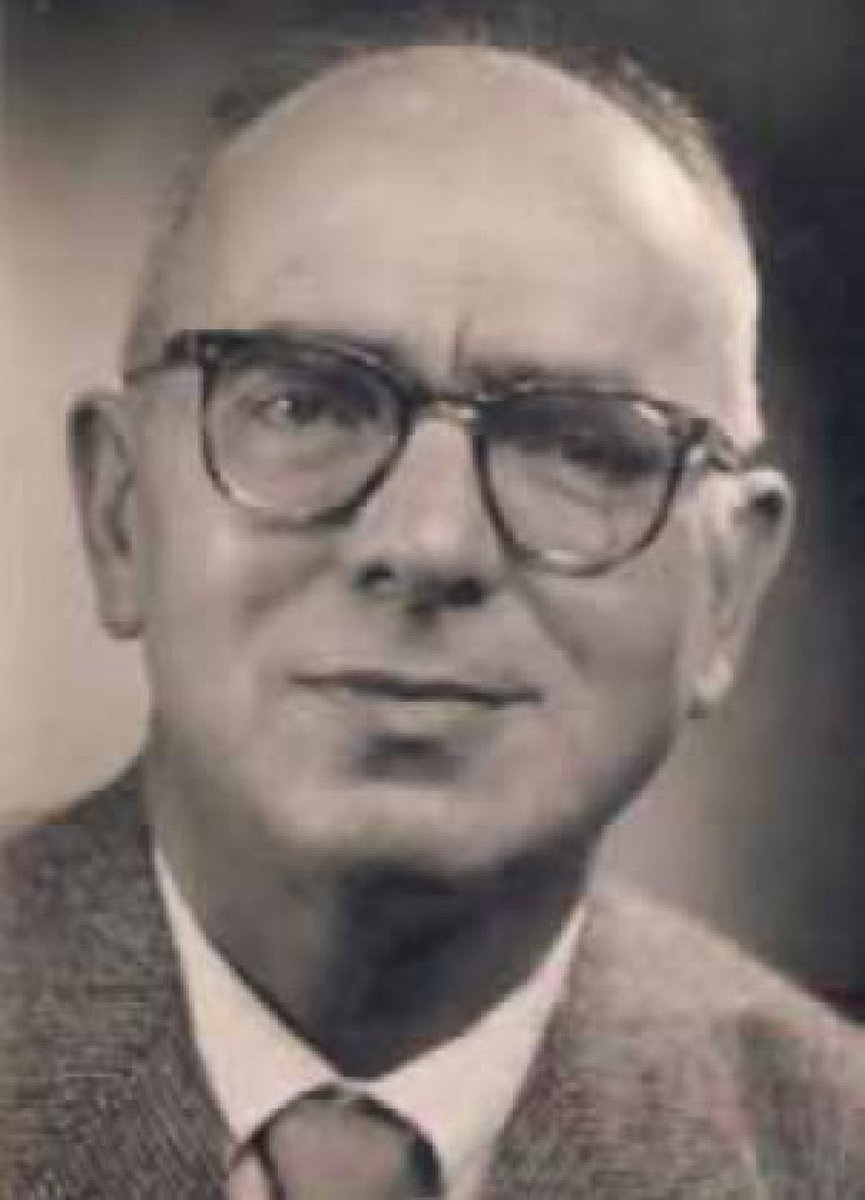
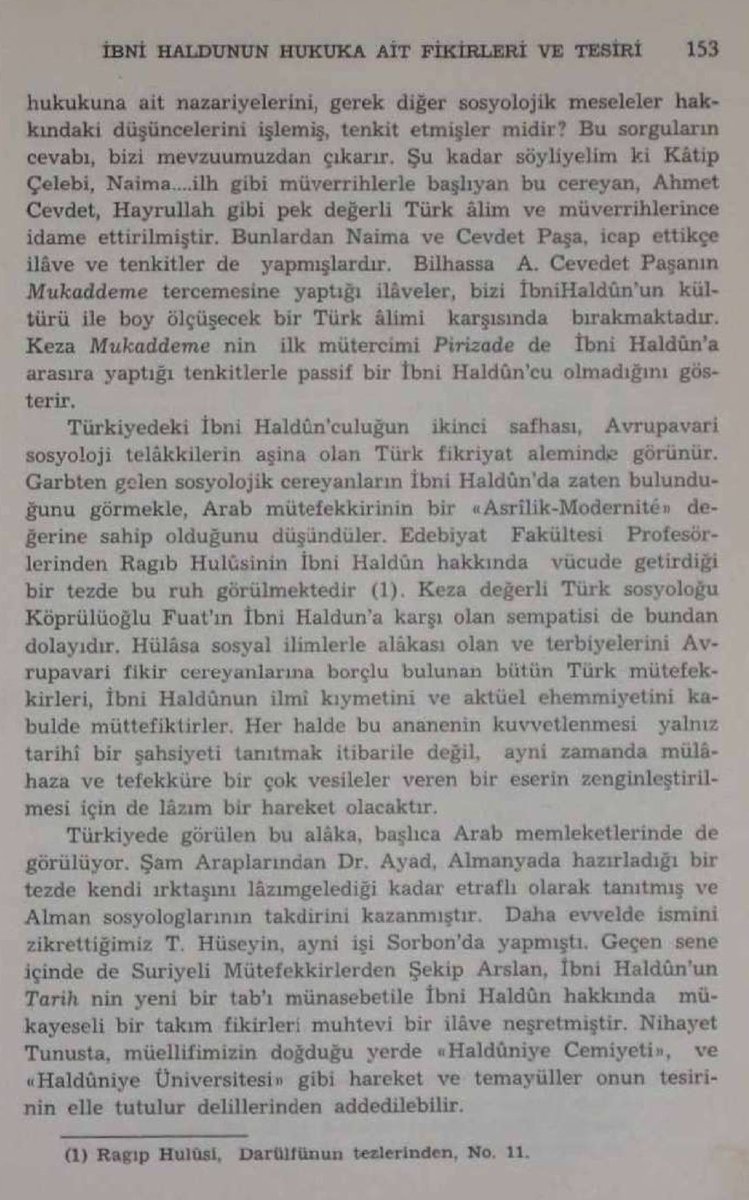
One of the professors at Istanbul University — Professor Fındıkzade Ziyāʾ al-Dīn Fakhrī — presented a report on this subject at the 22nd Congress of Orientalists held in 1951. He titled it in French: L’École Ibn-Khaldounienne en Turquie — that is: The Ibn Khaldūnian School in Turkey.
He later published a Turkish translation of the report under the title: Ibn Khaldūn in the History of Turkish Thought.
He listed the names of Ottoman authors and historians who were influenced by Ibn Khaldūn, describing them as “Ibn Khaldūnians”, and termed their school of thought: “Ibn Khaldūnianism” (Ibn Khaldūnīyah / Ibn Khaldūnizm).
Just so this thread isn’t too long, I will limit the examples to a few.
One of the professors at Istanbul University — Professor Fındıkzade Ziyāʾ al-Dīn Fakhrī — presented a report on this subject at the 22nd Congress of Orientalists held in 1951. He titled it in French: L’École Ibn-Khaldounienne en Turquie — that is: The Ibn Khaldūnian School in Turkey.
He later published a Turkish translation of the report under the title: Ibn Khaldūn in the History of Turkish Thought.
He listed the names of Ottoman authors and historians who were influenced by Ibn Khaldūn, describing them as “Ibn Khaldūnians”, and termed their school of thought: “Ibn Khaldūnianism” (Ibn Khaldūnīyah / Ibn Khaldūnizm).
Just so this thread isn’t too long, I will limit the examples to a few.
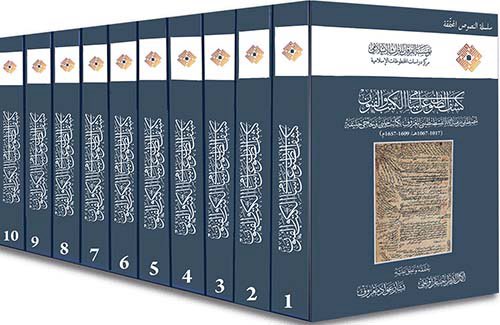
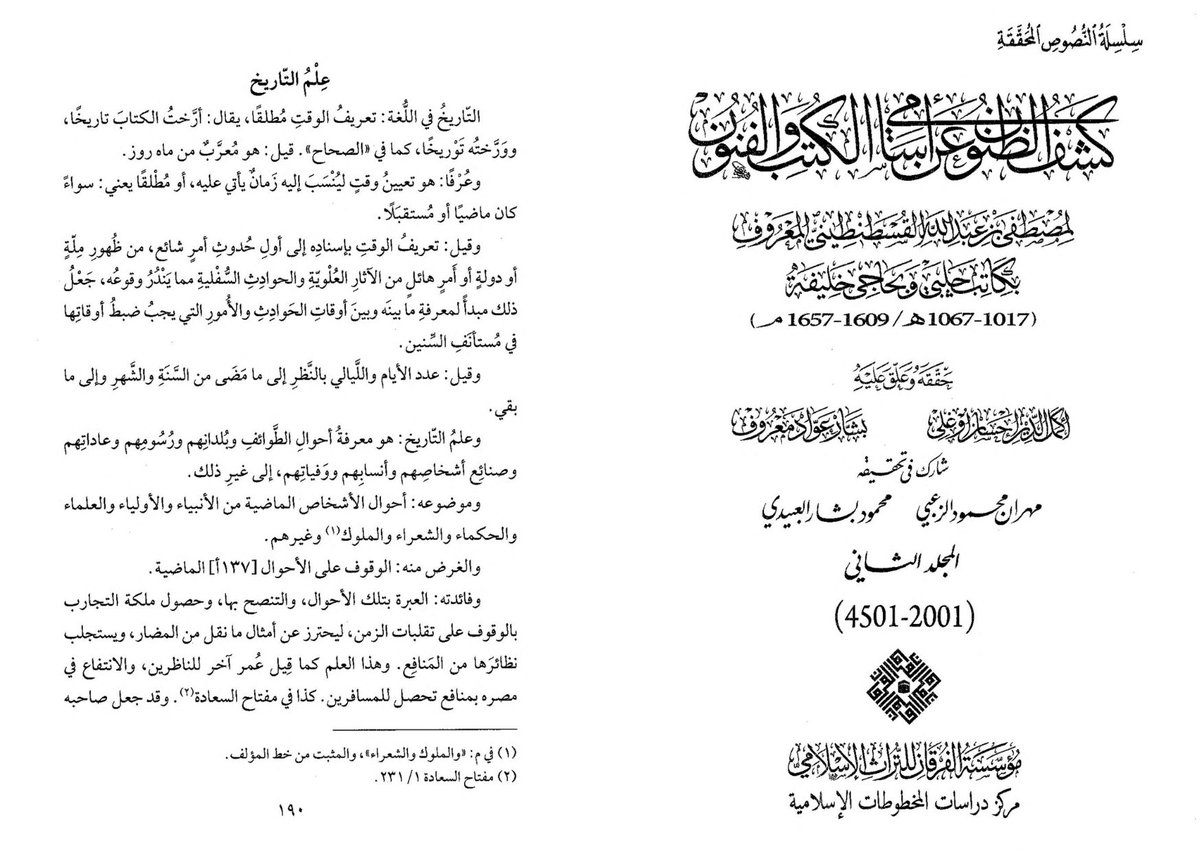
Ottoman scholar Kâtip Çelebi (Ḥājī Khalīfah, d. 1657) wrote his bibliographical encyclopedia Kashf al-Ẓunūn in Arabic, drawing on Ibn Khaldūn’s ideas.
When Kâtip Çelebi surveys books of history, he mentions Ibn Khaldūn’s history and says:
❝It is great and of immense benefit.❞ (2/202)
In defining the science of history, he closely follows Ibn Khaldūn’s emphasis on extracting lessons from past events. He adds that the benefit of history lies in gaining wisdom from the rise and fall of nations:
❝And the science of history is the knowledge of the conditions of groups, their lands, customs, traditions, professions, genealogies, and deaths… Its subject is the conditions of past individuals, and its benefit lies in drawing lessons (ʿibrah) from those conditions, giving advice through them, and acquiring the faculty of experience by observing the changes of time — in order to guard oneself against the kinds of harms that have been transmitted.❞ (2/190)
When Kâtip Çelebi surveys books of history, he mentions Ibn Khaldūn’s history and says:
❝It is great and of immense benefit.❞ (2/202)
In defining the science of history, he closely follows Ibn Khaldūn’s emphasis on extracting lessons from past events. He adds that the benefit of history lies in gaining wisdom from the rise and fall of nations:
❝And the science of history is the knowledge of the conditions of groups, their lands, customs, traditions, professions, genealogies, and deaths… Its subject is the conditions of past individuals, and its benefit lies in drawing lessons (ʿibrah) from those conditions, giving advice through them, and acquiring the faculty of experience by observing the changes of time — in order to guard oneself against the kinds of harms that have been transmitted.❞ (2/190)

Muṣṭafā Naʿīmā (d. 1716), another Ottoman official historian, admired Ibn Khaldūn and prefaced his chronicle with Khaldūnian theory.
He lauds Ibn Khaldūn’s Kitāb al-ʿIbar (specifically its Muqaddimah) as an inexhaustible treasure of wisdom:
❝Especially noteworthy is the history called al-ʿIbar by Ibn Khaldūn al-Maghribī, whose Muqaddimah alone is a book in itself, and a rare treasure filled with the jewels of sciences and the rarities of wisdom. Its author — may God increase his worth — surpassed all historians. His history relates to the circumstances of the Maghrib, yet he incorporated all his knowledge into the Muqaddimah. ❞
Naʿīmā mentions in the introduction to his history Ibn Khaldūn’s theory of the five stages (al-aṭwār al-khamsah), but after explaining the fifth stage, he states:
❝Great men are able to influence this fifth stage and to rescue the social order from decline.❞
He lauds Ibn Khaldūn’s Kitāb al-ʿIbar (specifically its Muqaddimah) as an inexhaustible treasure of wisdom:
❝Especially noteworthy is the history called al-ʿIbar by Ibn Khaldūn al-Maghribī, whose Muqaddimah alone is a book in itself, and a rare treasure filled with the jewels of sciences and the rarities of wisdom. Its author — may God increase his worth — surpassed all historians. His history relates to the circumstances of the Maghrib, yet he incorporated all his knowledge into the Muqaddimah. ❞
Naʿīmā mentions in the introduction to his history Ibn Khaldūn’s theory of the five stages (al-aṭwār al-khamsah), but after explaining the fifth stage, he states:
❝Great men are able to influence this fifth stage and to rescue the social order from decline.❞

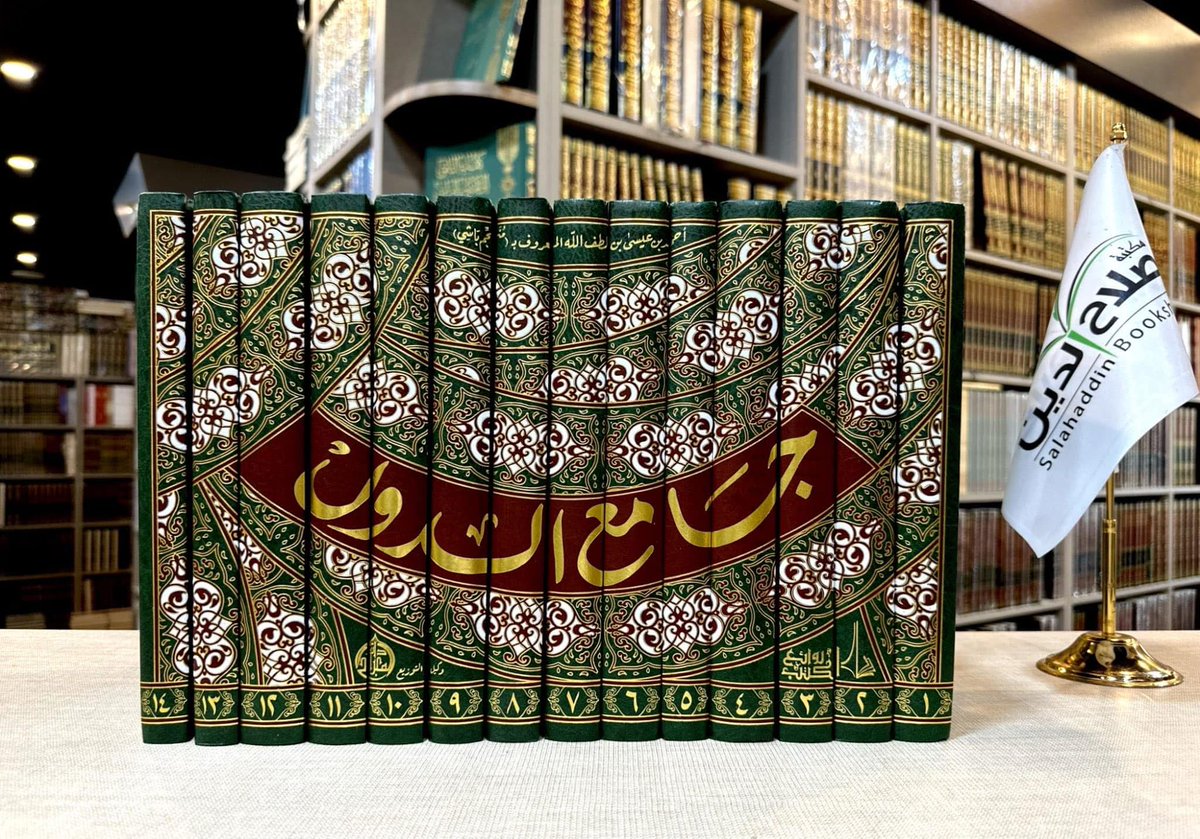
The historian Aḥmad Ibn Luṭf Allāh (d. 1702 AD), who was known by the title “Munajjim Bāshī” (Chief Astrologer), was a contemporary of the aforementioned Naʿīmā. He lived in the latter half of the 17th century and died in the year 1702.
He wrote his well-known history, Jāmiʿ al-Duwal, in Arabic, and prefaced it with an introduction inspired by Ibn Khaldūn, in which he also quoted some of Ibn Khaldūn’s phrases verbatim.
For example, when speaking about one of the main causes of error among historians, he said:
❝It is the neglect of the nature of ʿumrān (civilization) and the foundations of human society — as Ibn Khaldūn explained in detail.❞
He wrote his well-known history, Jāmiʿ al-Duwal, in Arabic, and prefaced it with an introduction inspired by Ibn Khaldūn, in which he also quoted some of Ibn Khaldūn’s phrases verbatim.
For example, when speaking about one of the main causes of error among historians, he said:
❝It is the neglect of the nature of ʿumrān (civilization) and the foundations of human society — as Ibn Khaldūn explained in detail.❞
Finally, I end with this:
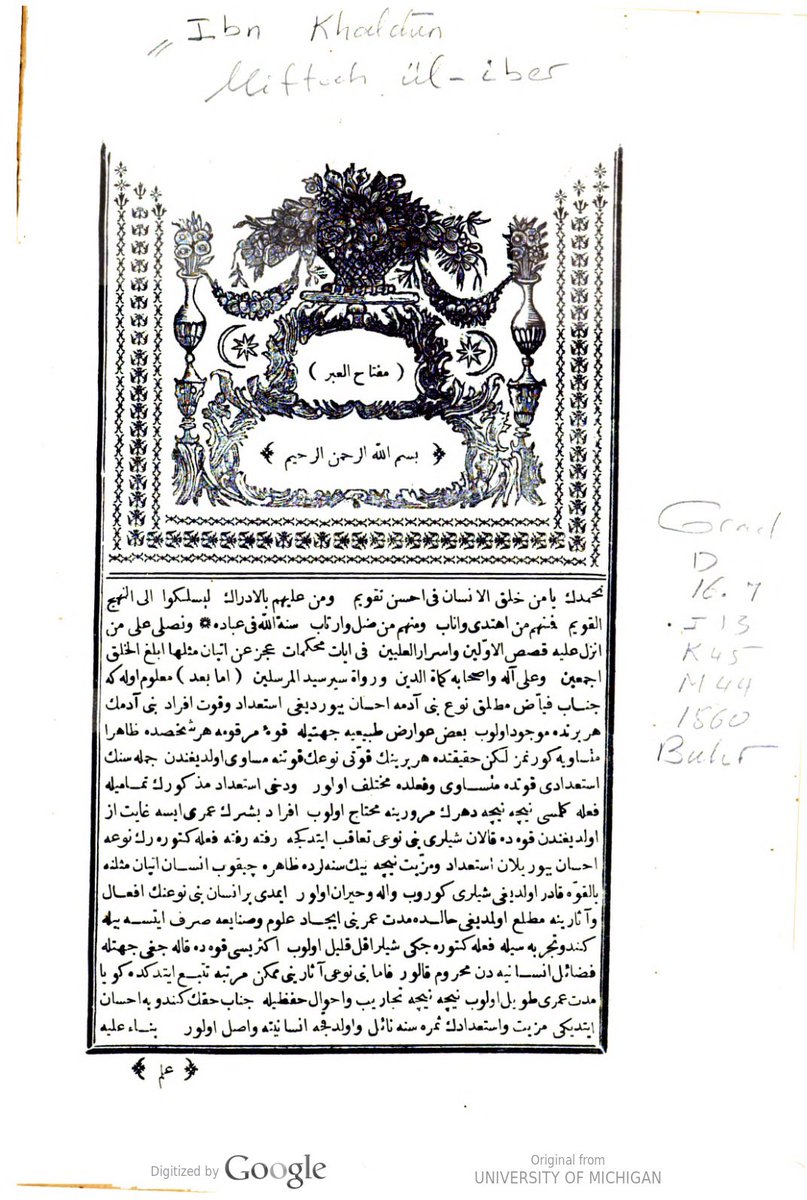
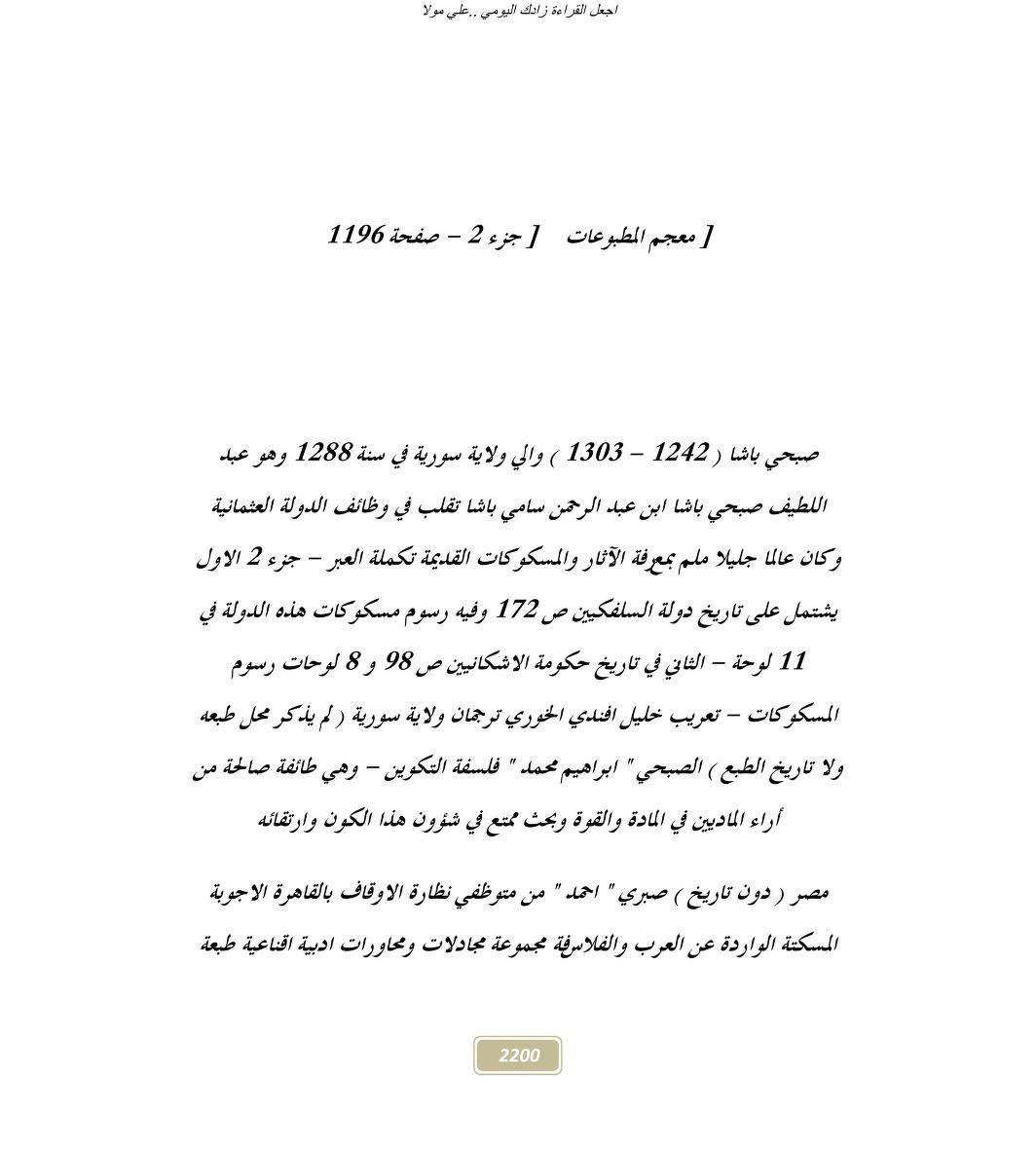
ʿAbdullāh Ṣubhī Pasha (1818–1886 AD) put forward attempts to translate Ibn Khaldūn’s al-ʿIbar into Ottoman Turkish, with these examples being called Miftāḥ al-ʿIbar and Taklimat al-ʿIbar respectively.
- Miftāḥ al-ʿIbar was digitalised by the University of Michigan
- The existence of Taklimat al-ʿIbar was pointed out by many sources, with the one below being Muʿjam al-Maṭbūʿāt al-ʿArabiyyah wal-Muʿarrabah (Bibliography of Arabic Printed Works) by Yūsuf Ilīyān Sarkīs
ʿAbdullāh Ṣubhī Pasha (1818–1886 AD) put forward attempts to translate Ibn Khaldūn’s al-ʿIbar into Ottoman Turkish, with these examples being called Miftāḥ al-ʿIbar and Taklimat al-ʿIbar respectively.
- Miftāḥ al-ʿIbar was digitalised by the University of Michigan
- The existence of Taklimat al-ʿIbar was pointed out by many sources, with the one below being Muʿjam al-Maṭbūʿāt al-ʿArabiyyah wal-Muʿarrabah (Bibliography of Arabic Printed Works) by Yūsuf Ilīyān Sarkīs

• • •
Missing some Tweet in this thread? You can try to
force a refresh