🚨 Gallup shock poll: 69% of Ukrainians now want to negotiate peace with Russia “as soon as possible.”
In 2022, the exact opposite — 73% wanted to fight to the bitter end.
On the eve of the Trump-Putin summit, the war’s support base is collapsing.
Here’s what that means 👇🧵
In 2022, the exact opposite — 73% wanted to fight to the bitter end.
On the eve of the Trump-Putin summit, the war’s support base is collapsing.
Here’s what that means 👇🧵
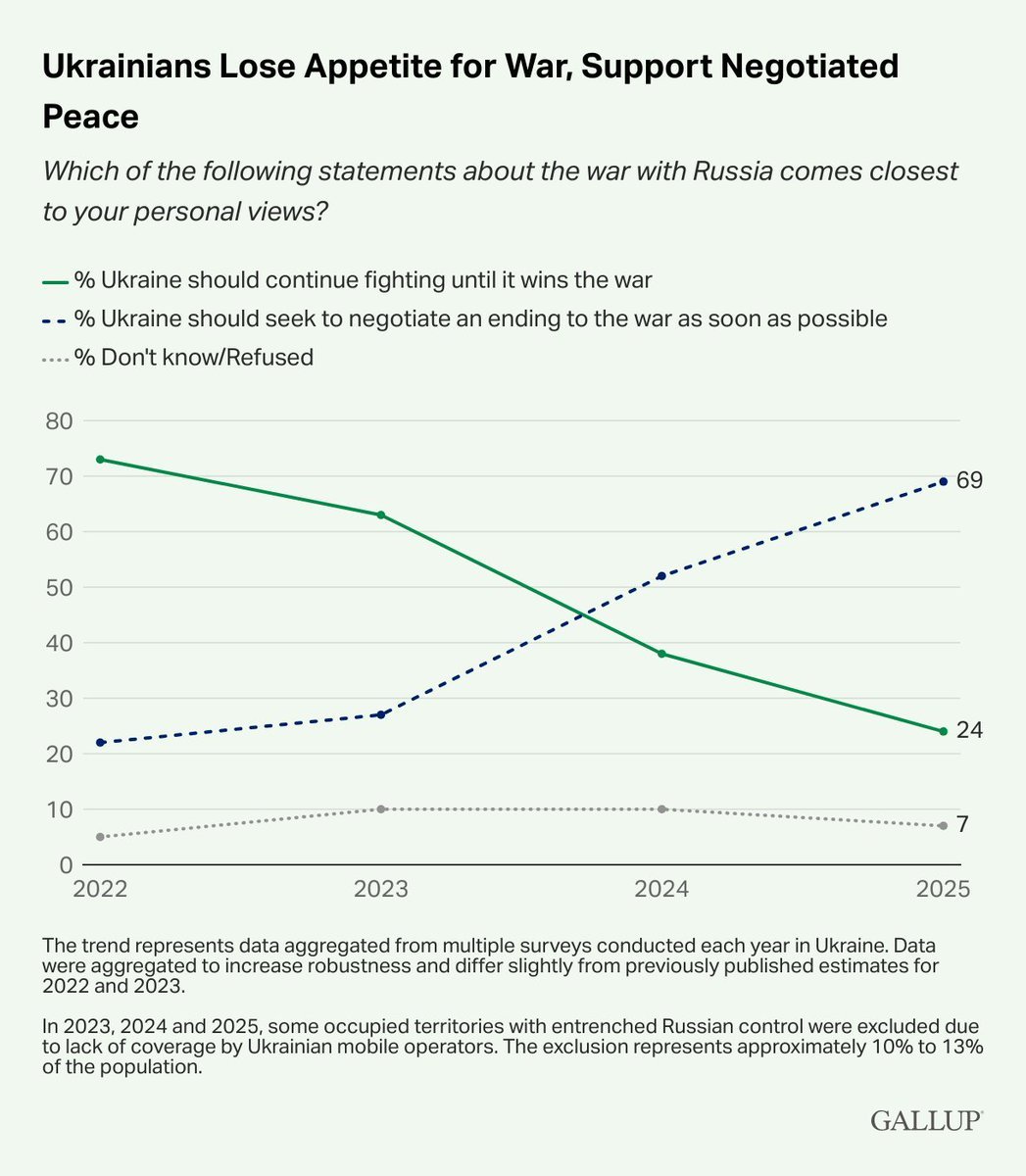
2/ Only 24% now back “fight until victory.”
This isn’t one region — support for talks has surged across all demographics and all regions, even Ukraine’s most pro-war west.
No doubt, Democrats and Neocons will claim they're all "Putin puppets".
This isn’t one region — support for talks has surged across all demographics and all regions, even Ukraine’s most pro-war west.
No doubt, Democrats and Neocons will claim they're all "Putin puppets".

3/ Just 5% of Ukrainians think peace will come within a year. 68% say an end to fighting is “unlikely” anytime soon.
They want negotiations now because they know the cost of waiting. Russia is bleeding. Ukraine has fewer people to bleed.
They want negotiations now because they know the cost of waiting. Russia is bleeding. Ukraine has fewer people to bleed.

4/ For the first time, more believe Ukraine will never join NATO than think it will happen in the next 10 years.
But joining the EU is still popular. A clear majority thinks it's coming, with just 18% saying they believe Ukraine will “never” join the globalist bloc.
But joining the EU is still popular. A clear majority thinks it's coming, with just 18% saying they believe Ukraine will “never” join the globalist bloc.
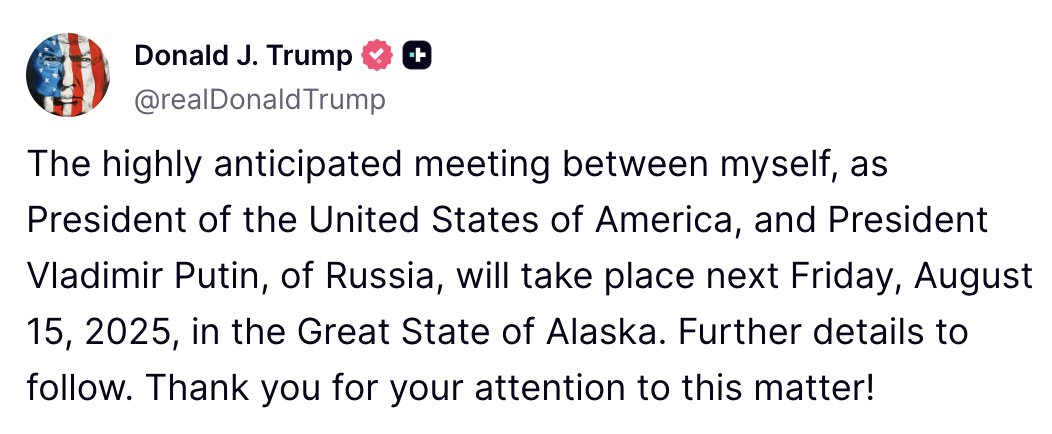
5/ Meanwhile, Trump announced yesterday that he will meet with Putin next week in Alaska.
This follows his 10-day deadline for progress toward peace, with a "highly productive" eleventh-hour meeting toward that end on Friday between Putin and Trump envoy Steve Witkoff.
This follows his 10-day deadline for progress toward peace, with a "highly productive" eleventh-hour meeting toward that end on Friday between Putin and Trump envoy Steve Witkoff.
6/ Ukrainian President Zelensky posted his support for Trump's efforts, despite reservations about possible terms.
Meanwhile, weapons shipments continue -- EU-paid, U.S.-produced -- and could ramp up dramatically if Putin opts against peace.
Meanwhile, weapons shipments continue -- EU-paid, U.S.-produced -- and could ramp up dramatically if Putin opts against peace.
https://x.com/zelenskyyua/status/1953852111797571997
7/ EU leaders still cling to “total victory,” including taking back Crimea.
But it's not their blood on the line. Nor are they sending any troops to accomplish that.
Ukraine's own people no longer believe in that anyway — widening the gap between elites & the public.
But it's not their blood on the line. Nor are they sending any troops to accomplish that.
Ukraine's own people no longer believe in that anyway — widening the gap between elites & the public.

8/ Peace can be had if the parties want it.
The cost to Ukraine has been awful. So has the cost to Russia.
Can Putin make peace? He faces real dangers at home if he tries.
Still, Trump's pressure -- especially 100% tariffs on anyone who buys from Russia -- seems to be working
The cost to Ukraine has been awful. So has the cost to Russia.
Can Putin make peace? He faces real dangers at home if he tries.
Still, Trump's pressure -- especially 100% tariffs on anyone who buys from Russia -- seems to be working

9/ I wrote a Deep Dive not long ago on what peace in Ukraine will take and why. All those things are still true.
Peace is possible on these terms.
And now, 69% of Ukrainians are ready to get serious.
Is Putin? We'll see in Alaska.
rodmartin.org/p/deep-dive-wh…
Peace is possible on these terms.
And now, 69% of Ukrainians are ready to get serious.
Is Putin? We'll see in Alaska.
rodmartin.org/p/deep-dive-wh…
If you enjoyed this content, please like and share, and also sign up for your FREE or PREMIUM subscription to my newsletter at .RodMartin.org
• • •
Missing some Tweet in this thread? You can try to
force a refresh