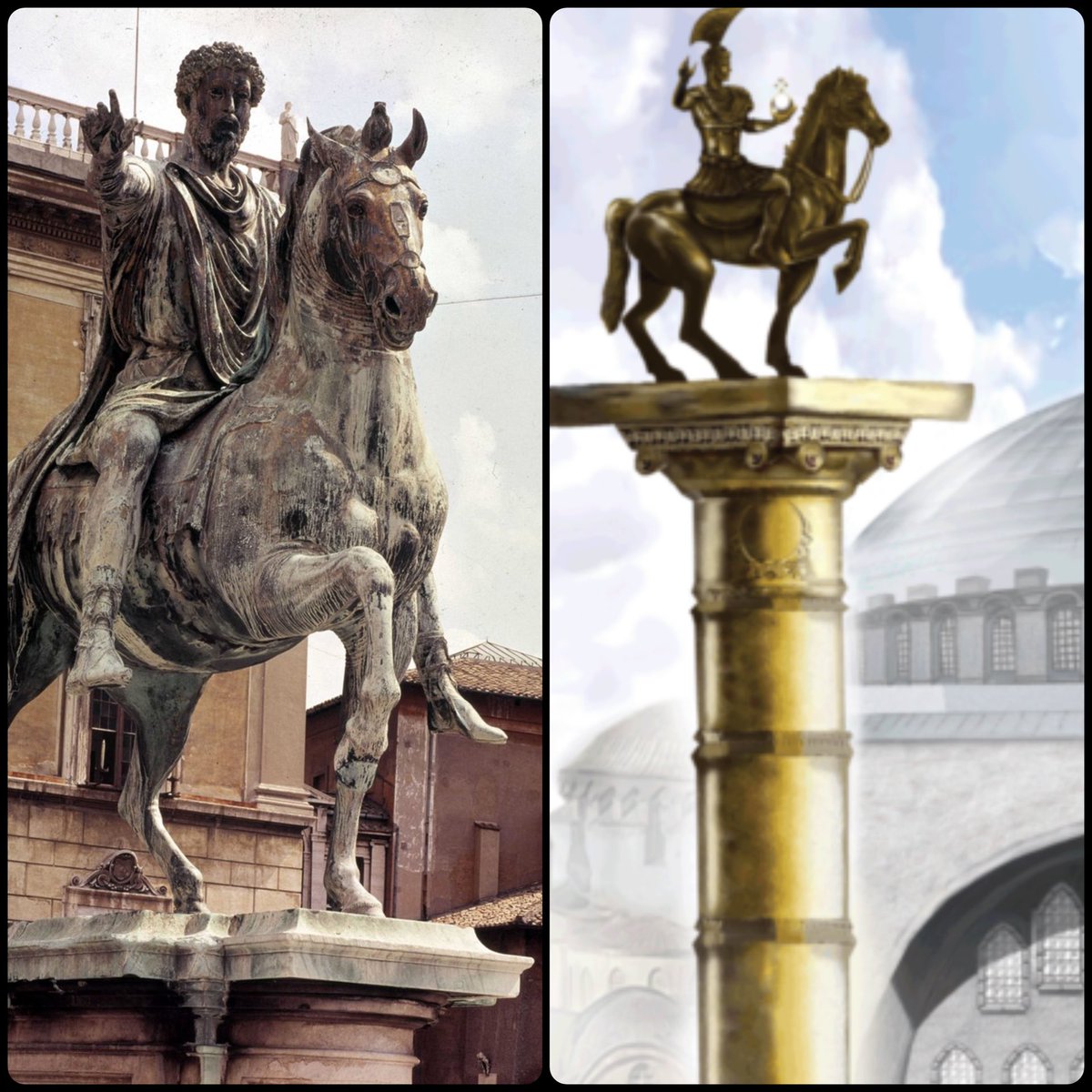
The equestrian statue of Marcus Aurelius in Rome is famous. However, the statue of Justinian in Constantinople dwarfed it!
“The horseman could have weighed more than 4425kg” whereas “the equestrian monument of Marcus Aurelius weighs ~2500kg.”
But, moving it was a challenge! 🧵
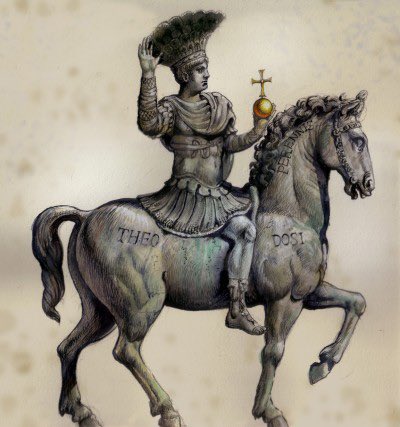
The scale was an issue when it came to moving it, and mounting it atop a column. The statue originally was of Theodosius, placed in the Forum of Theodosius.
This statue was reappropriated for use by Justinian. But, putting it atop a tall column was the biggest challenge.
“The logistical aspect of the reinstallation of the Theodosian sculpture is particularly notable for our purposes: the removing, the moving, and the lifting of the monument to the top of the triumphal column in the Augoustaion.”
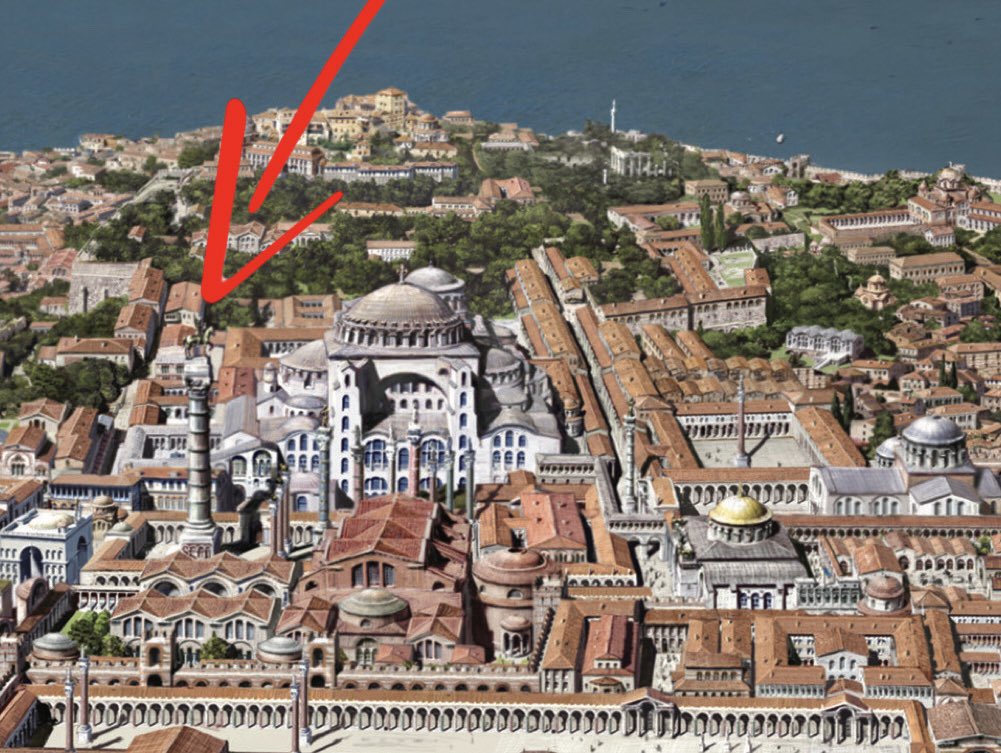
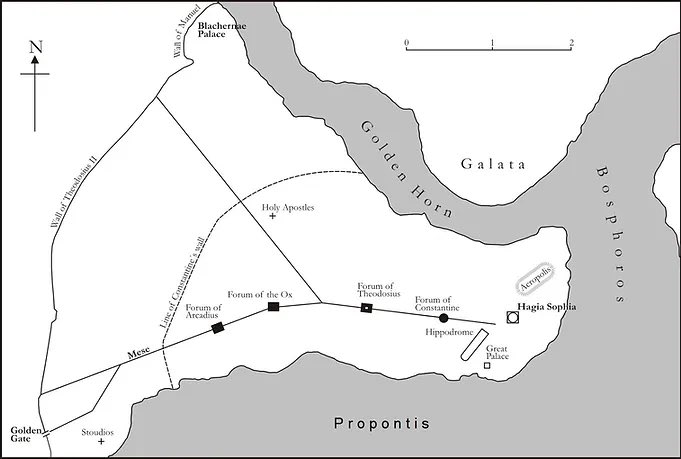
“Forum Tauri lays 850 m to the west of the forum of Constantine, while the latter is ca. 600 m to the west of the Augoustaion.”
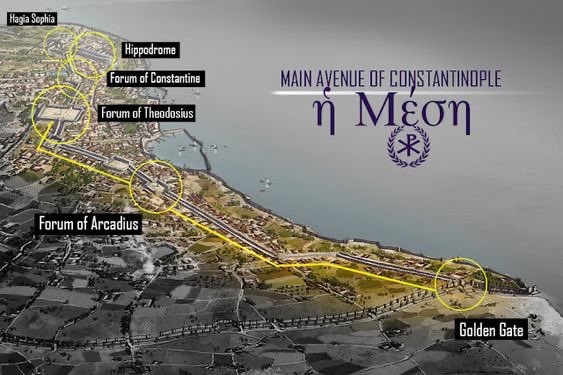
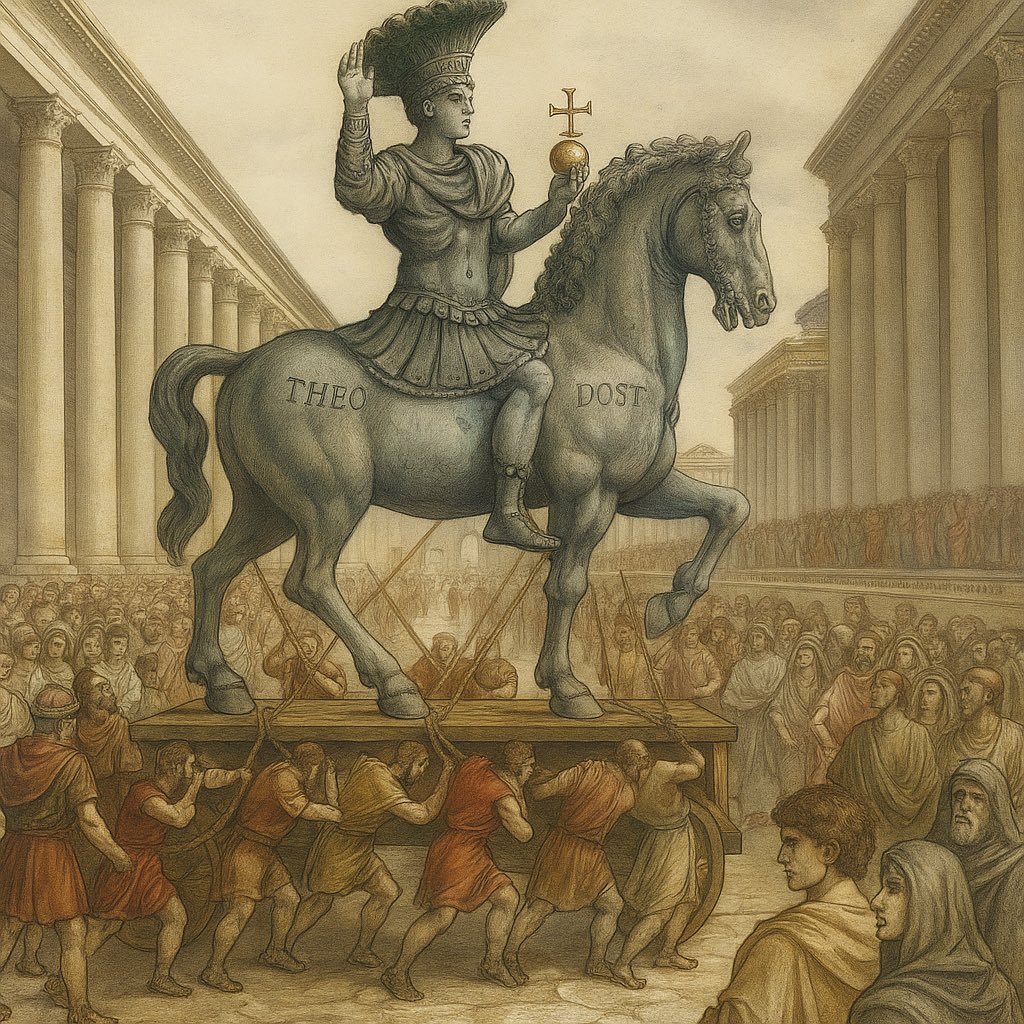
“This means that the extremely heavy bronze monument had to be first separated from its original base, carefully lowered onto some kind of conveyance, then moved almost two kilometers to the Augoustaion along the Mese over a somewhat hilly terrain.”
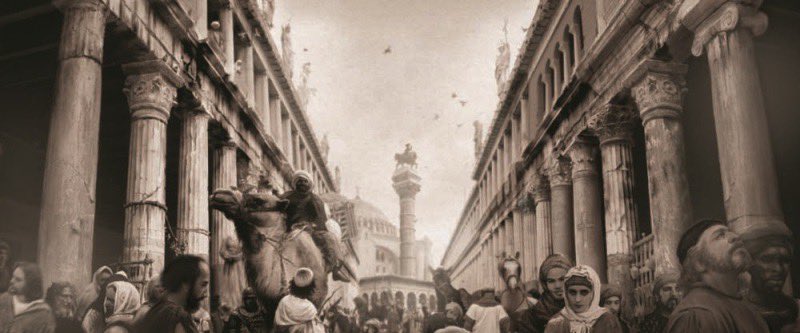
“The Mese would have been the widest route and the most direct avenue for this action. Imperial construction took precedence over other traffic, and by extension over the daily life of the city’s residents.”
“The traffic movement on the Mese would have come to a standstill for the duration of the sculpture’s travels to the new forum. After the move to the Augoustaion was successfully accomplished, the monument had to be lifted over 50m into the air, set atop the column on a plinth.”
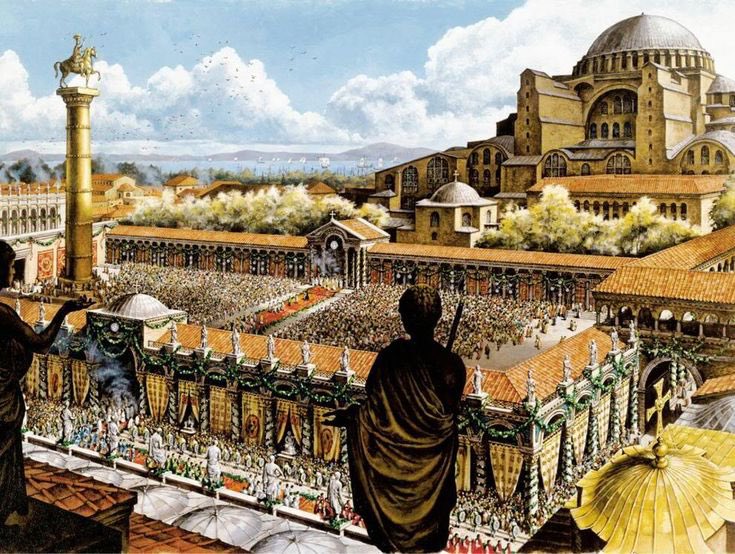
“This was truly a monumental accomplishment of brilliant engineering. This remarkable undertaking also means that for contemporaries it was no secret from whence Justinian sourced his monument.”
The name of Theodosius was even on the statue!
Imagine the biggest street in your city having a gigantic statue moving slowly for days or weeks, congesting traffic, disrupting business, etc!
Source: The Bronze Horseman of Justinian in Constantinople by Elena Boeck
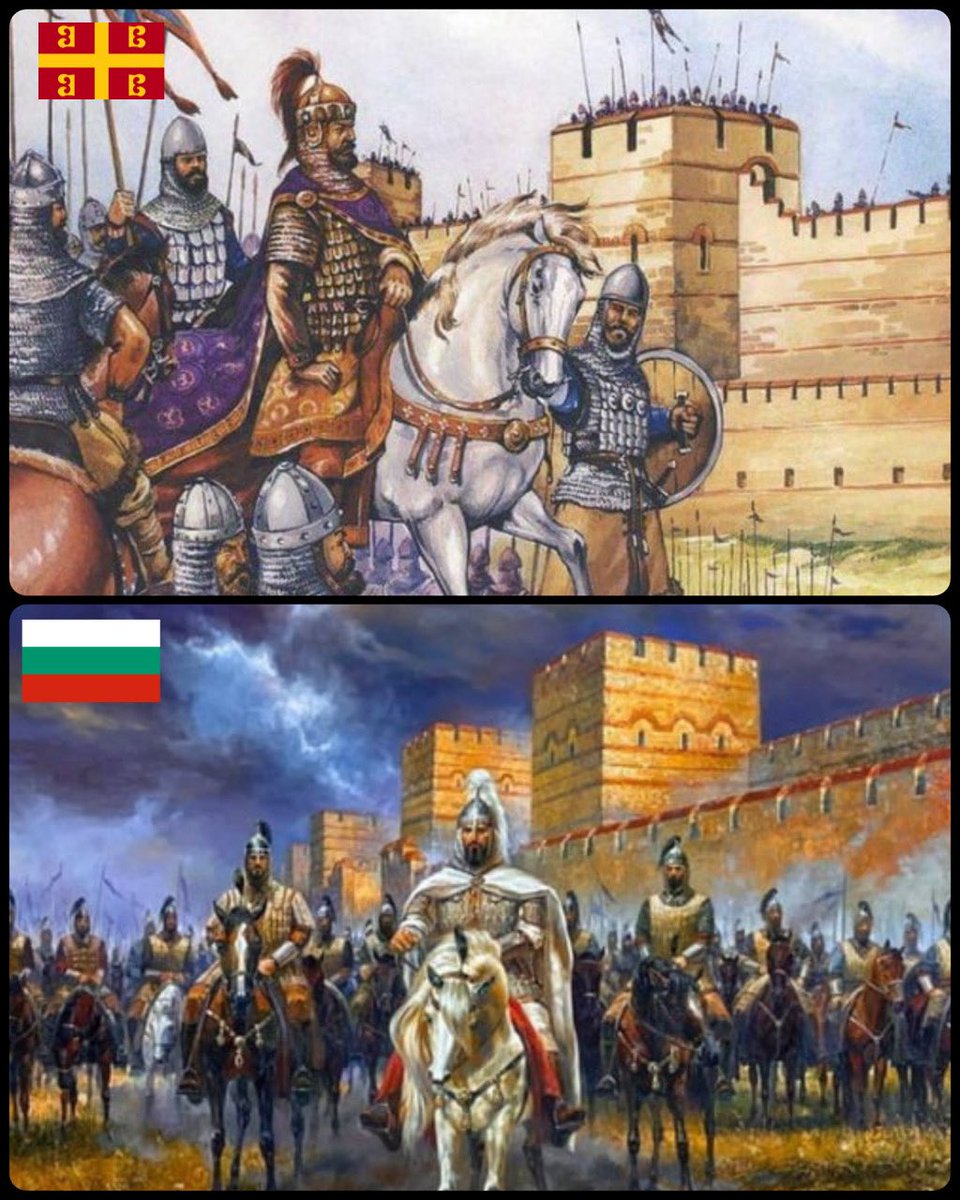
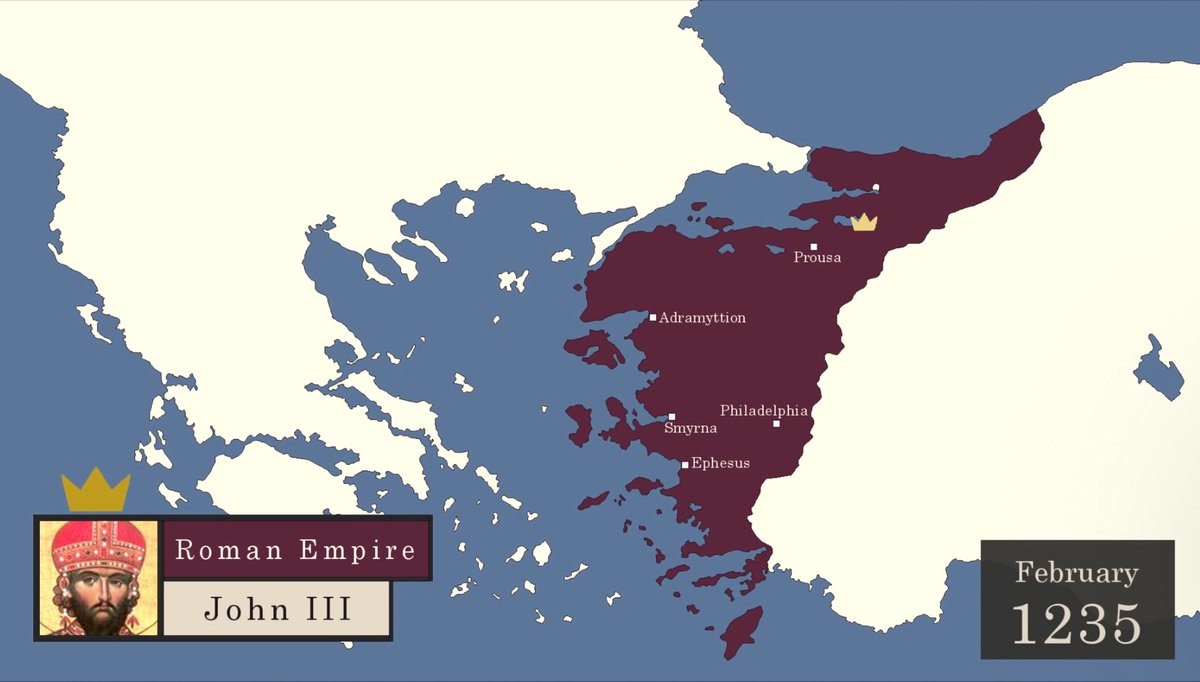
By the 1230’s the Romans in Nicaea were ready to expand in Europe.
The Latin Empire was weakened and Emperor John III Doukas Vatatzes wanted to liberate Constantinople.
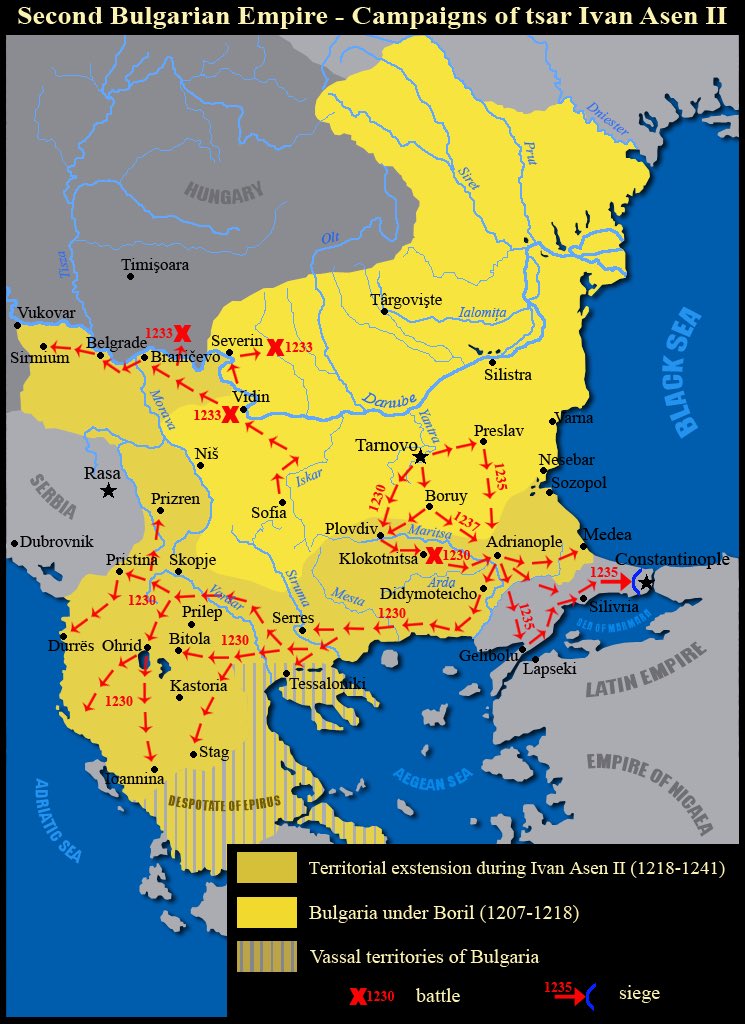
John engaged in an unlikely alliance with Bulgaria and a joint siege of Constantinople was laid in 1235! 🧵
The Romans and Bulgarians agreed the Treaty of Kallipolis where they agreed to destroy the Latins and partition Thrace in a mutually beneficial manner. To cement the alliance, Theodore II Laskaris married Elena of Bulgaria.
With the son of the Roman Emperor and daughter of the Bulgarian Tsar Ivan Asen II in union, a fruitful alliance seemed in place. The first mission was to oust the crusaders from Constantinople.
Taking the city was not easy though, and the attacking army faced serious challenges.
The infamous battle of Manzikert in 1071 wasn’t the first battle there.
In 1054 the Seljuk Sultan mobilised his formidable army and marched against Romans.
The Turks planned to conquer Manzikert. But the brave Roman defenders and their valiant commander had other ideas!
🧵🧵
The Seljuks, at odds with the Romans, had “combined all the Persian and Babylonian forces and invaded the Roman Empire.”
They found many cities were garrisoned with walls, the Turks ultimately decided upon “trying the strength of Manzikert.”
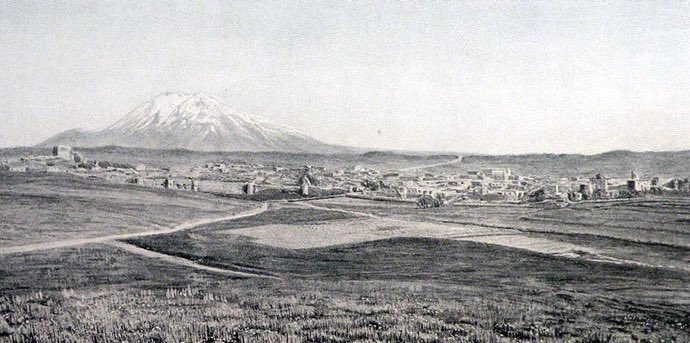
“Manzikert is a city lying on a plain but it is surrounded by a triple wall and has a plentiful supply of spring water. At that time it was very well supplied with the necessities of life.”
(Below is an old picture of the city in the Ottoman era to get an idea)
How was Anatolia Turkified? One demographic instrument was Seljuk men often taking Christian wives and concubines from the Roman population in Anatolia.
The children would be raised Muslim, even with Christian mothers, and over time this contribute to a one way ethnic shift 🧵
One must keep in mind for context:
Muslim men could take Christian wives, but Muslim women couldn’t marry Christians. So this form of demographic pressure was purely one way. This is in addition to the opportunity and incentive to convert to Islam, as opposed to being a dhimmi.
The Seljuk royal family had a harem, much like the far more famous Ottoman harem. This was a polygamous institution, whereby the Sultan could have 4 wives and as many enslaved concubines as he desired. In Seljuk Anatolia, these were quite often Rum women, Romans.
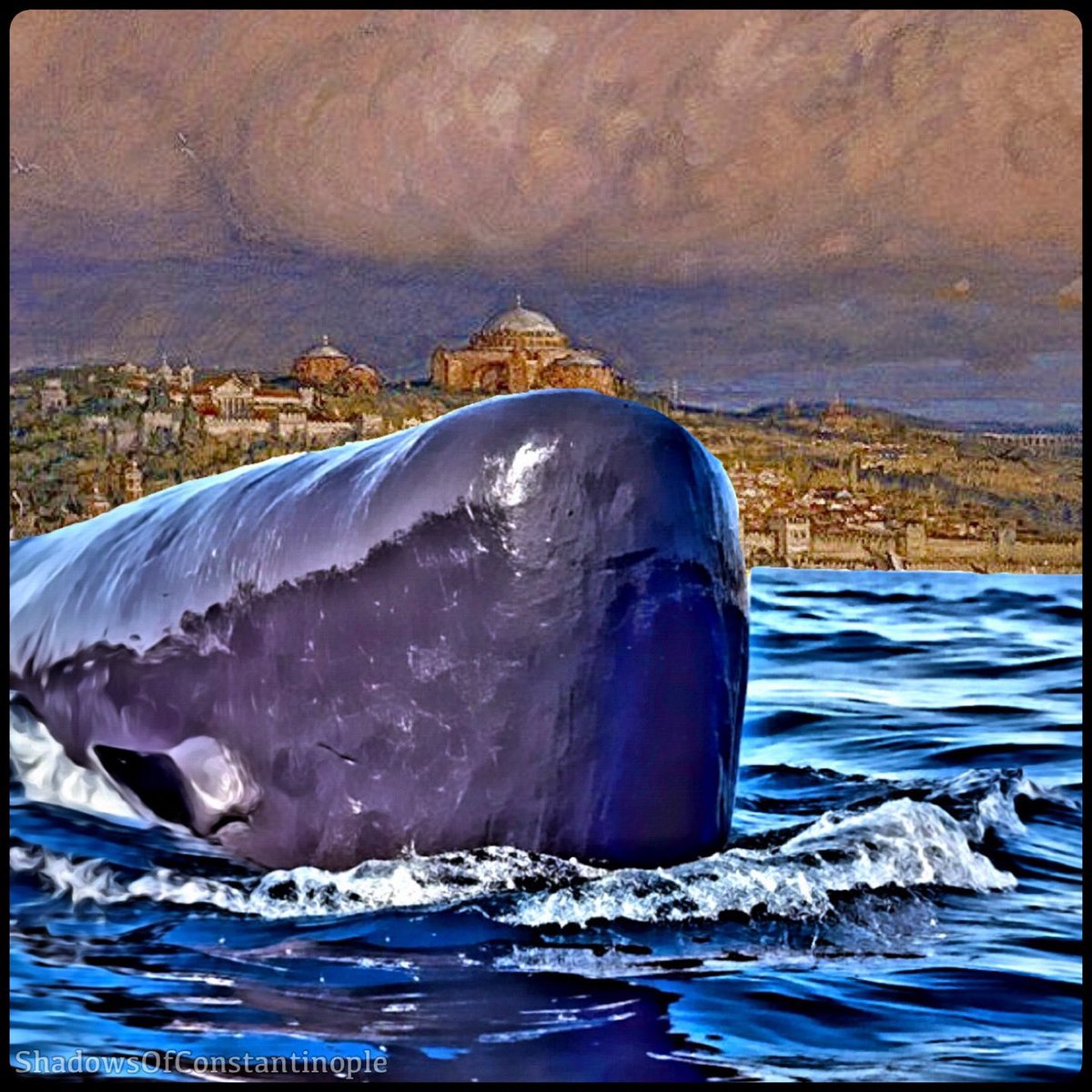
“In the days of Justinian, ships around Constantinople were terrorized for over 50 years by a whale whom locals called Porphyrios, presumably from the dark-wine color of its skin.”
The angry whale sank ships and terrified others.
It was like the “Jaws” of the Roman Empire!
🧵🧵
Prokopios described the beast: “the whale, which the residents of Byzantion (Constantinople) called Porphyrios…had harassed Byzantion and its surroundings for over 50 years, but not continuously, for sometimes it would disappear for long periods of time.”
“The Emperor Justinian made it a priority to capture the beast, but he could find no way by which to accomplish this.”
Justinian normally figured out a way to solve problems, but this one proved too much.
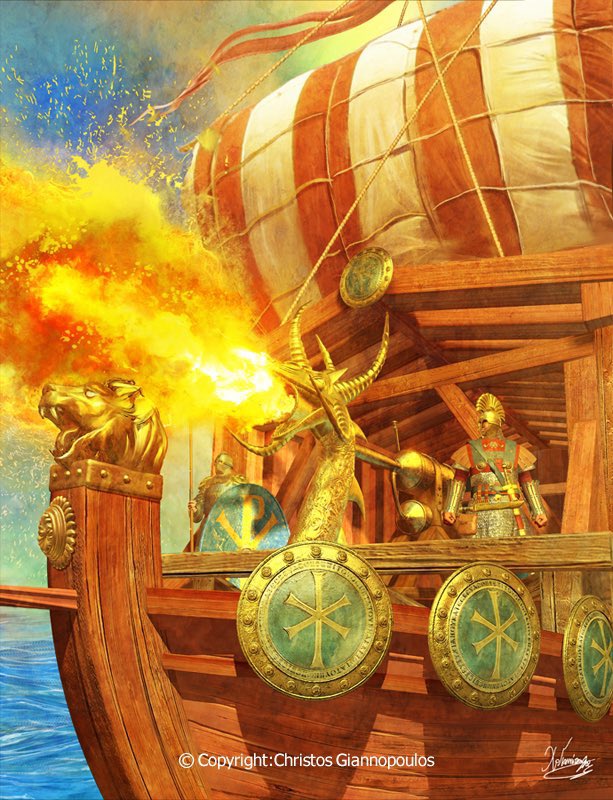
Liquid fire was a legendary Eastern Roman weapon that saved Constantinople and incinerated enemy fleets!
In the 15th century John Chortasmenos read old histories and wondered:
“Where is this Greek Fire now?”
It was long gone, but when and how did they lose this weapon?
🧵🧵
The fearsome substance had quite a reputation. When the Crusaders attacked Constantinople in 1204 they seemed to prepare for it to be deployed against them, but they did not have to face it.
Instead, it seems the technology at some point had already been lost forever.
“According to Niketas(Choniates), the Venetians covered their galleys with ox hides as protection against fire, almost as though they expected to have to counter Greek Fire; however, neither he nor any Latin chronicler mentioned it actually being used against them.”
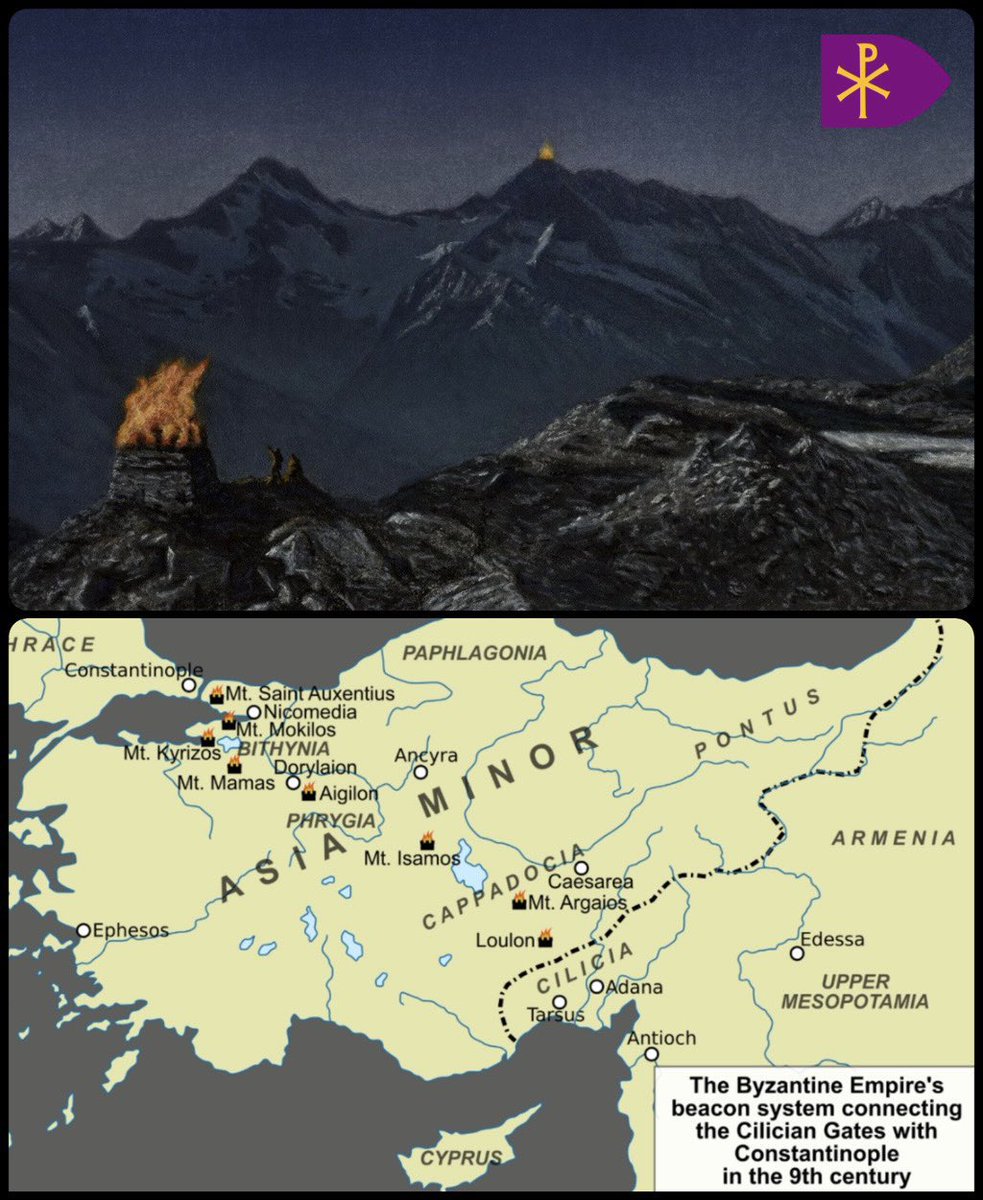
During the 9th century the Eastern Roman Empire deployed a beacon system allowing it to send warnings of danger from the border with the Arabs to Constantinople in rapid time.
How did this “Lord of the Rings” style system work?
🧵🧵
This system was likely “created by Leo the Mathematician, who devised a code for the interpretation of signals, and had two identical water clocks made for the terminal stations. His work took account of the difference in longitude and the time the signal needed for transmission”
“Signals were flashed from Loulon north of the Cilician Gates, where the Arabs would be first observed, to Argos on the Hasan Dag in Cappadocia, thence by a series of unidentified stations to Mokilos above Pylai, then to Mt. Auxentios and the imperial palace… about 450 miles.”