Did you know that in the early Middle Ages a North African monk came to occupy a leading role in the English church?
Thread on Adrian of Canterbury! 🧵
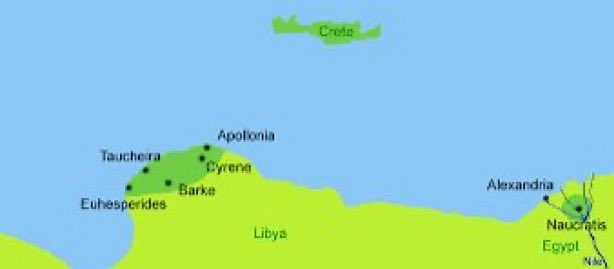
Most of what we know about Adrian comes from the 7th century English monk and historian Bede and his Ecclesiastical History. Bede tells us little about our protagonists early life, simply that he was North African by birth, suggesting he was very likely Berber. From what we do know however we are able to guess Adrian was likely born c. 630-640, in Cyrenaica in Libya, then moved to Italy at a young age. Though Bede doesn’t say this it is very possible he was one of many refugees who fled North Africa to escape the upheaval caused by the Arab conquests
While young Adrian also became a monk, which being one of the primary means of education in his day meant he became a very well learned man. Bede tells us he was ‘very learned in the Scriptures, experienced in ecclesiastical and monastic administration and a great scholar’. At first he quietly settled into a monastery near Naples, but fate had other plans in store for him.
In 667, Pope Vitallian needed to select a new Archbishop of Canterbury. With all of the aforementioned qualities Adrian possessed he seemed like a natural fit for the office, and as such was Vitallians first choice. Adrian however did not believe himself to be fit for the role, and begged the pope to instead pick his good friend Theodore of Tarsus for the position. The pope agreed, but decided to send Adrian to England regardless, to join the growing monastic movement in the country
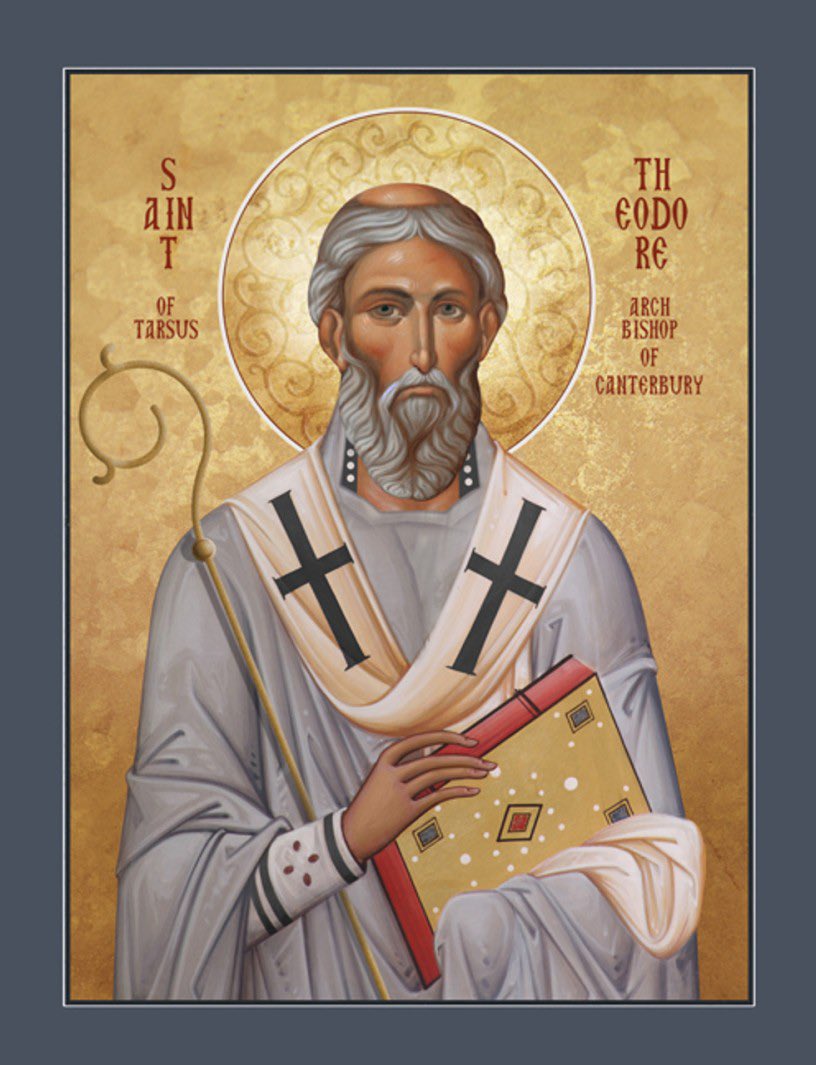
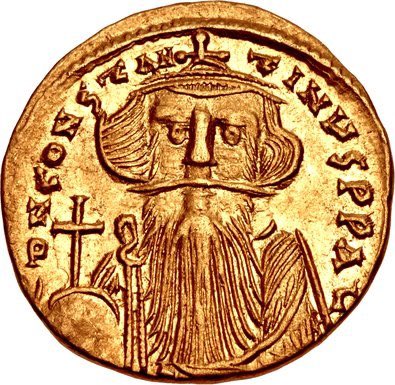
Adrian left shortly afterwards but en route to England he was stopped in France and detained by people loyal to the mayor of the palace, Ebroin. Ebroin didn’t trust the monk, thinking him to be an agent from the eastern Roman emperor Constans II (the part of Italy Adrian was based in was still under eastern Roman control). Eventually he and Theodore received permission to continue, and they reached England by the end of May 669
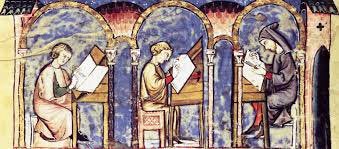
Upon his arrival, Adrian was given a role as Abbott of one of the leading monasteries in Canterbury. He settled into this role well, also finding the time to co-found a school with Theodore, which quickly grew in popularity. The curriculum included Greek, the scriptures, church calendar and poetry. Bede says they ‘attracted a large number of students, into whose minds they poured the waters of wholesome knowledge day by day’
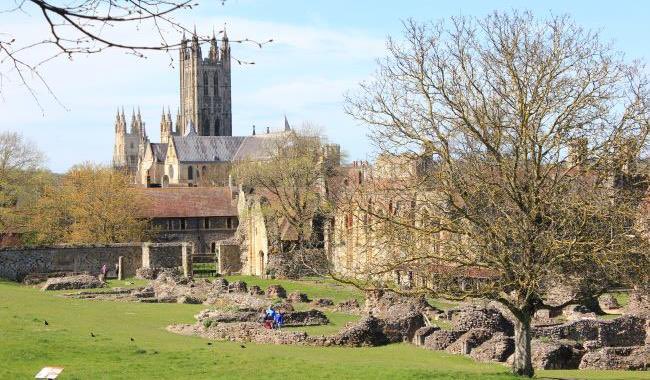
Adrian’s impact on Anglo Saxon culture cannot be overstated. He and Theodore ensured the spread of church music to across the English church, whereas previously it had been restricted to Kent. They also introduced the feasts of multiple saints into the English church calendar. The so called ‘dark ages’ aren’t entirely unworthy of their name even if exaggerated, but it is true that around this time England experienced something of a renaissance
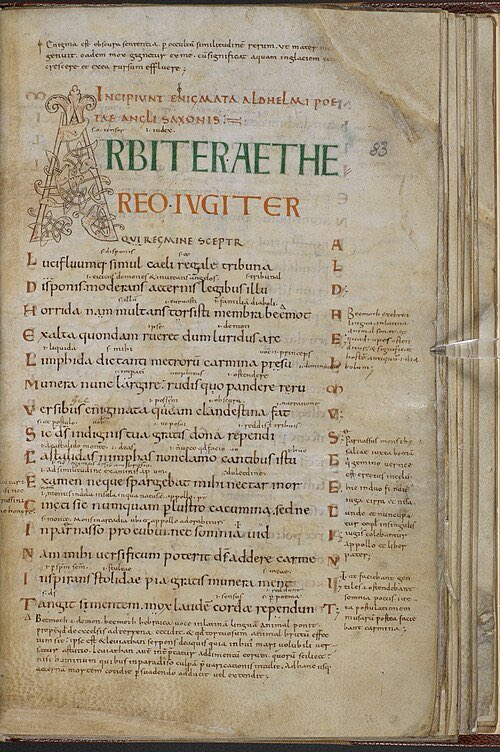
Adrian also left something of a North African blueprint on the Anglo Saxon nation. One of his pupils was aldheim, who later became bishop of Sherborne. Aldheim would write ‘The Enigmata’, a collection of 100 riddles which were inspired by the North African writer Symophius. It is also likely Adrian brought the writings of the Christian martyr cyprian of Carthage with him. With the fall of North Africa to Islam, these represent some of the final remnants of Christianity in the region.
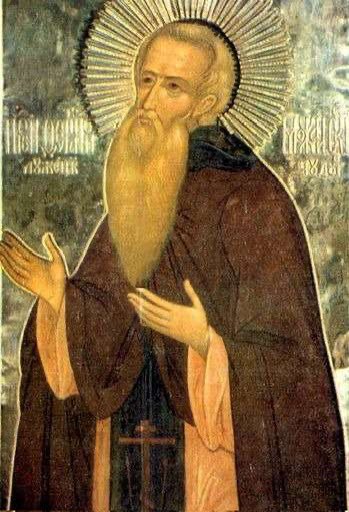
Adrian of Canterbury died in 710, in his 70s. He was buried in the monastery he helped to found. His relics were excavated for veneration in 1091. The Catholic Church venerates him as a saint with his feast day on January 9, a worthy legacy for a man who did so much for Anglo-Saxon culture yet is mostly forgotten today
• • •
Missing some Tweet in this thread? You can try to
force a refresh

In the 7th century B.C, a group of Greek settlers in North Africa would create one of the continents longest lasting cities.
This is a thread on the city of Cyrene!
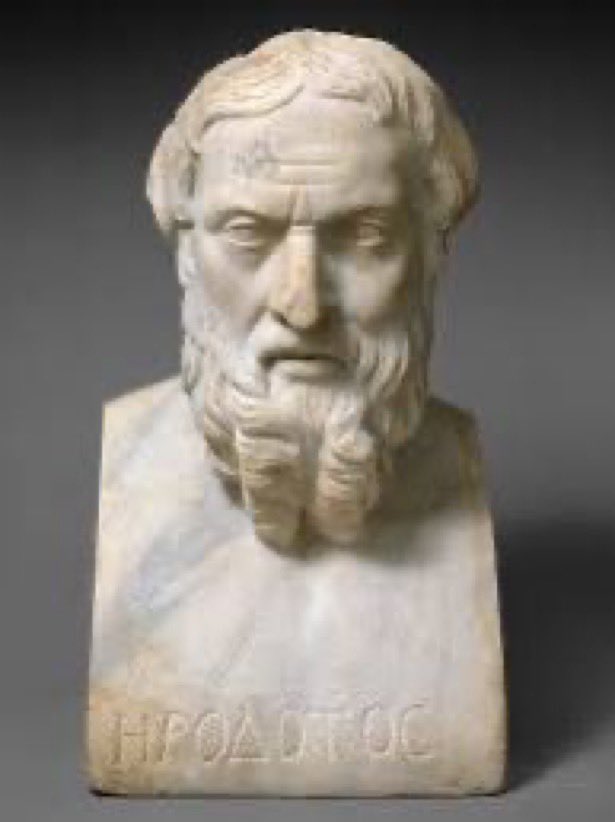
The city of Cyrene was founded c. 630 B.C. Greek legend claimed that the Greek deity Apollo seduced the huntress Cyrene (from where the city is named) and took her to Libya. A more likely story is the account of Herodotus, who says it was founded by Greeks from the city of Thela who travelled to North Africa after being instructed to by the oracle of Delphi due to overpopulation.
Located on the edge of Libya, Cyrene was a very strategic place, and it certainly helped that the land was very fertile. The surrounding regions were inhabited by Berbers, but the Greeks were (initially) able to settle into their new city with little trouble.
In 1260, the Mongols would make their move into the Levant, but meet their match and face their first major defeat.
This is a thread on the battle of Ain Jalut!
By 1259 the Mongols had overrun much of the Islamic world. They had conquered Persia, defeated the Seijuks in Anatolia and just a year prior sacked the centre of the Muslim world, Baghdad, killing the caliph and massacring hundreds of thousands of others. They seemed unstoppable, and were determined to march south and expand into the Levant region and Egypt.
Both the Levant and Egypt had recently been taken over by the Mamluks, a military division of mostly non-Arabic former slaves. Trained in war, they were a formidable force, and under their new sultan Qutuz were determined to face off the Mongol threat. The leader of the Mongols in West Asia, Hulegu Khan, sent Qutuz envoys demanding he surrender Egypt but the defiant sultan executed them and displayed their heads on the walls of Cairo.
In the 18th century a small tribe would rise to prominence in what is now Ghana, establishing a kingdom who’s legacy still influences the region today.
This is a thread on the Ashanti empire! 🧵
The Asante people originated from the Acanne region in modern day central Ghana. Rich in gold, this region attracted much attention from European powers such as the Dutch in the 17th century. The region was initially made up of local powers such as the Adansi kingdom, but by the mid-1600s these powers were declining, leaving behind a power vacuum
The vacuum in question and threat from the neighbouring Kingdom of Denikira caused several tribes to migrate north, including the Otomi and Asona ones. A leader in the former tribe named Oti Akenten eventually settled in a fertile part of this region, where he subsequently built a settlement called Kumasi and made it his people’s capital. It was from here he began to launch military expeditions against other tribes, with the intent of uniting them into a single confederation
In the late 40s BC, Mark Antony and Cleopatra would initiate a romantic relationship which is one of the most famous in history, but was also a firm political alliance.
This is a thread on Mark Antony, Cleopatra and the final years of the Roman Republic!
After the assassination of Julius Caesar in 44 BC, war broke out between the populares faction led by Mark Antony and Caesars adopted son Octavian, and the optimates led by Cassius Longinus and Brutus. The war was closely fought but by 42 BC Octavian and Antony were victorious. Despite this, neither of the two liked each other and agreed to split the republic between them
The second triumvirate divided up the republic into three, with Antony taking the eastern half and Octavian the west ( the third triumvir, Lepidus, received land in North Africa but he was far less important than the other two and was forced out of power by 37 BC, so he won’t really feature in this thread). Antony quickly decided to deal with Egypt, which while not under direct Roman rule was a very wealthy client state with an attractive and clever queen
In the 1320s, Mansa Musa of the Mali empire would embark on a famous pilgrimage to Mecca that is still talked about today, yet how much of what we know is real?
This is a thread on Mansa Musa’s Mecca pilgrimage!
By 1324, Mansa Musa had been in power for a decade. A wealthy man, his reign had seen a time of stability for his empire. His position secured, he decided the time had come to perform the customary Haji to Mecca
The Mali empire had converted to Islam early in its existence (at least its leadership had), and over time the piety of its rulers had deepened, with the Haji pilgrimage that is ideal for Muslims to acheive once in their lives becoming routine in their ruling class. Musa was a devout Muslim himself, founding several mosques in his time in power, and as such carrying out this sacred pillar of Islam made sense
The Roman Empire experienced numerous wars with foreign powers over the course of its 1500 year history, yet very few people know about its first such conflict and which nation it was with.
This is a 🧵 on the Roman Kushite war!
After Augustus conquered Egypt and annexed it to the Roman state in 30 B.C, the newly formed empire now had a border with the neighbouring kingdom of Kush to the south (Nubia). The first Roman prefect of Egypt, Gallus, attempted to establish hegemony over them. To this end he began military raids against them to force them to pay tribute. Outright annexation seems unlikely, but he likely hoped he could force them into client status as with Mauretania. However, the Kushites proved to be tougher nuts to crack than expected.
The raids did not have the intended effect. The Kushites, determined to maintain their independence, launched counterattacks of their own, destroying multiple Egyptian towns and villages. Many Roman statues were looted, including a bust of Augustus later discovered in Meroe.