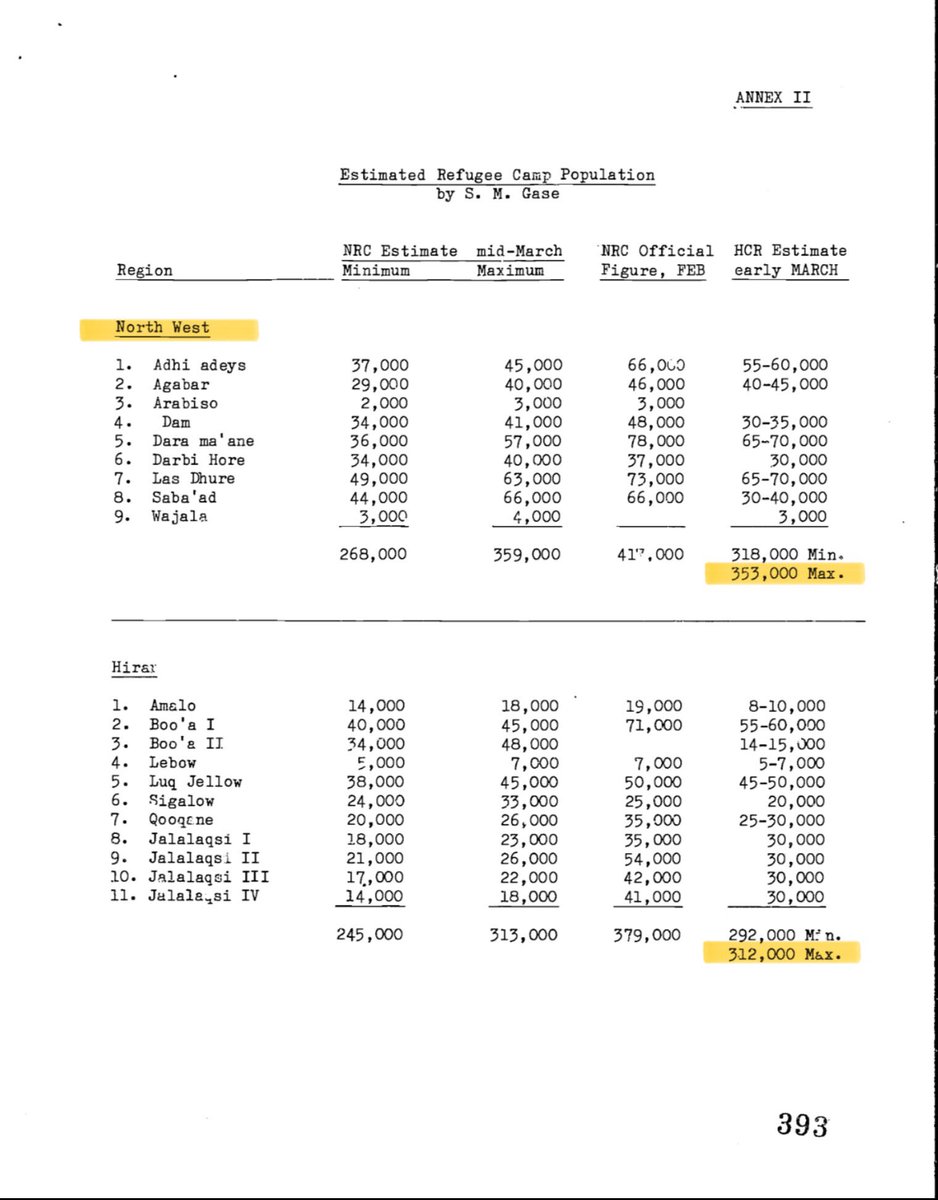
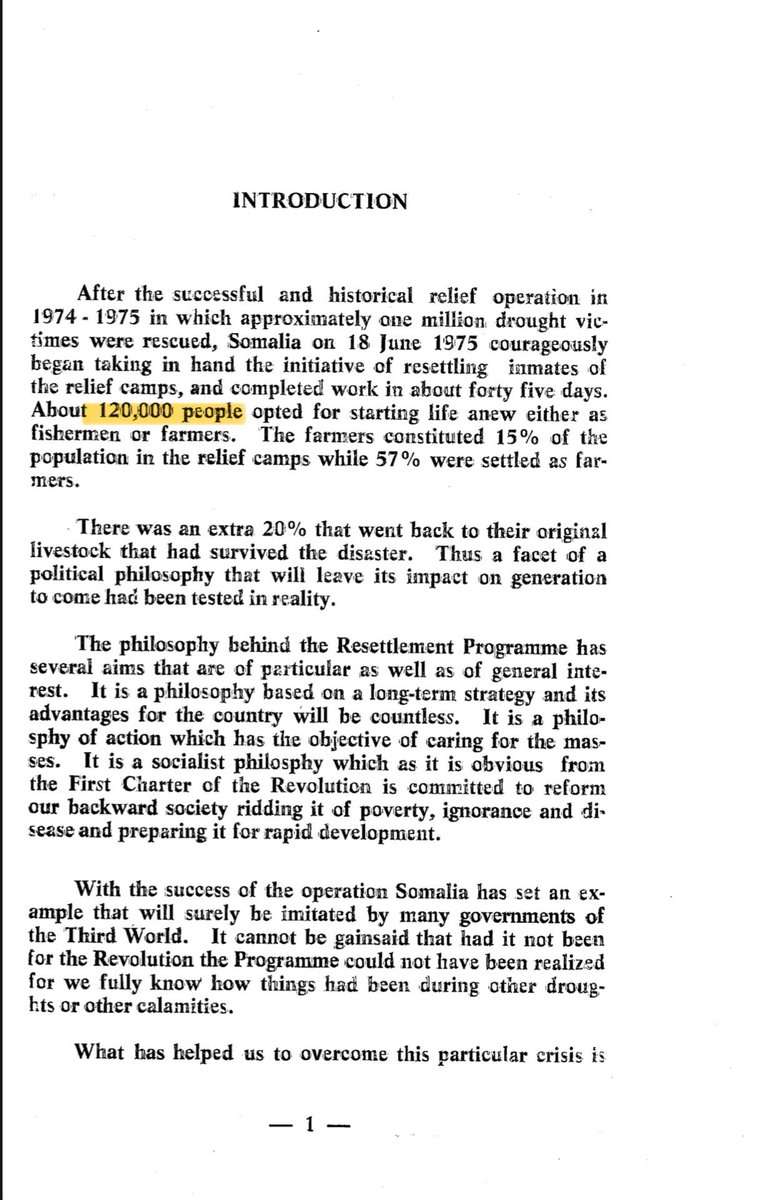
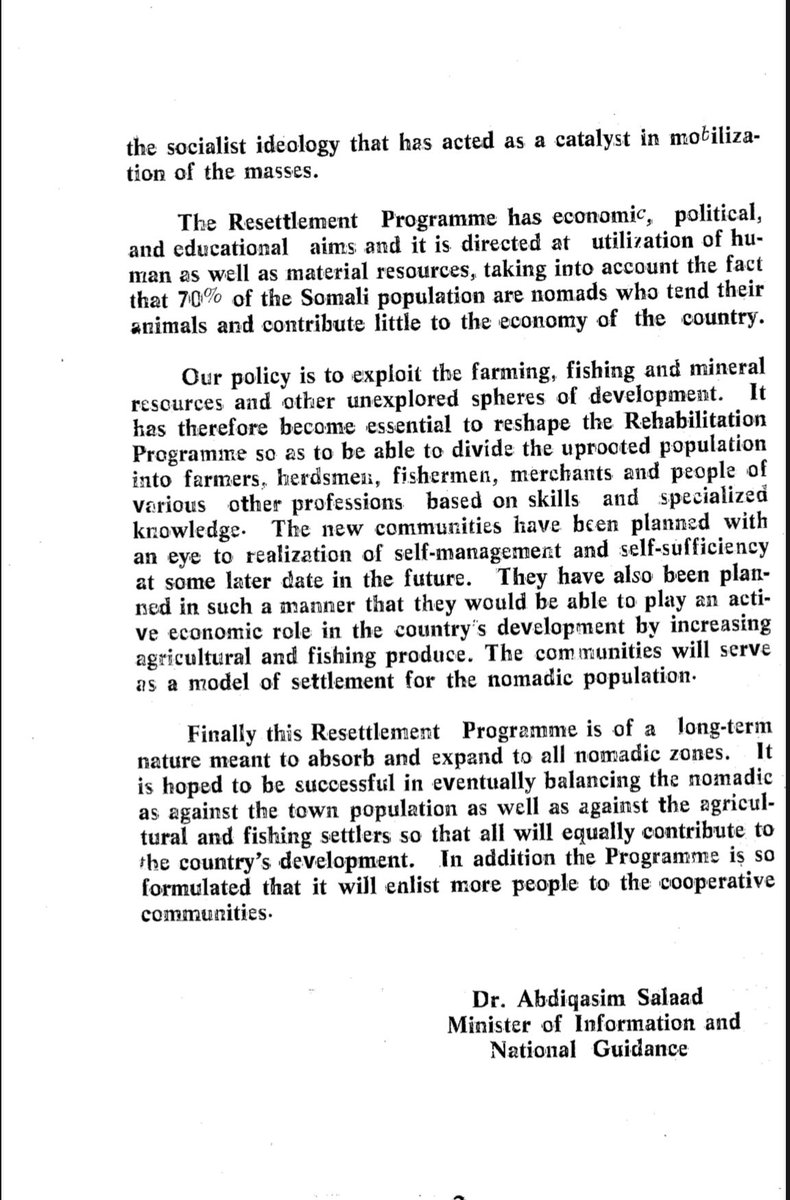
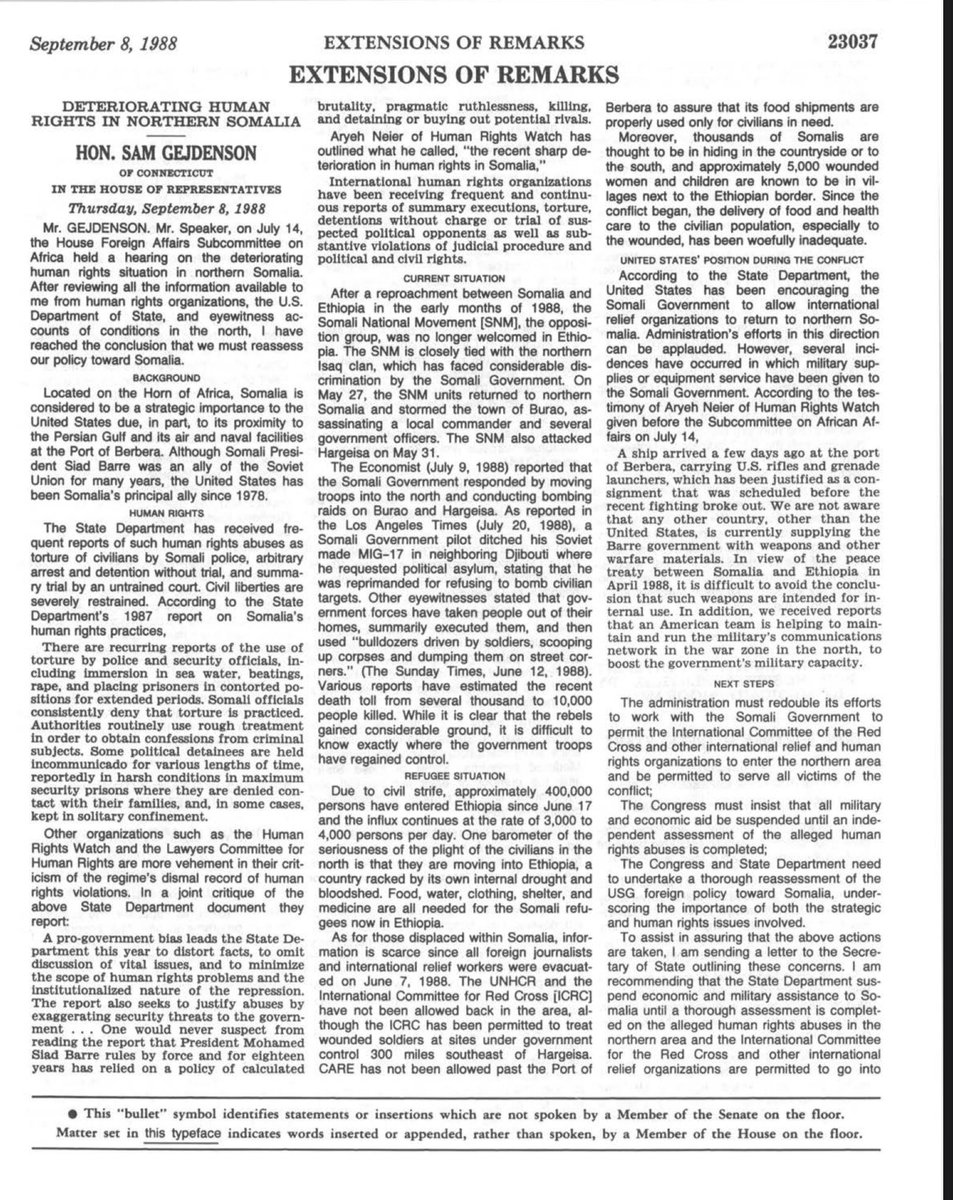
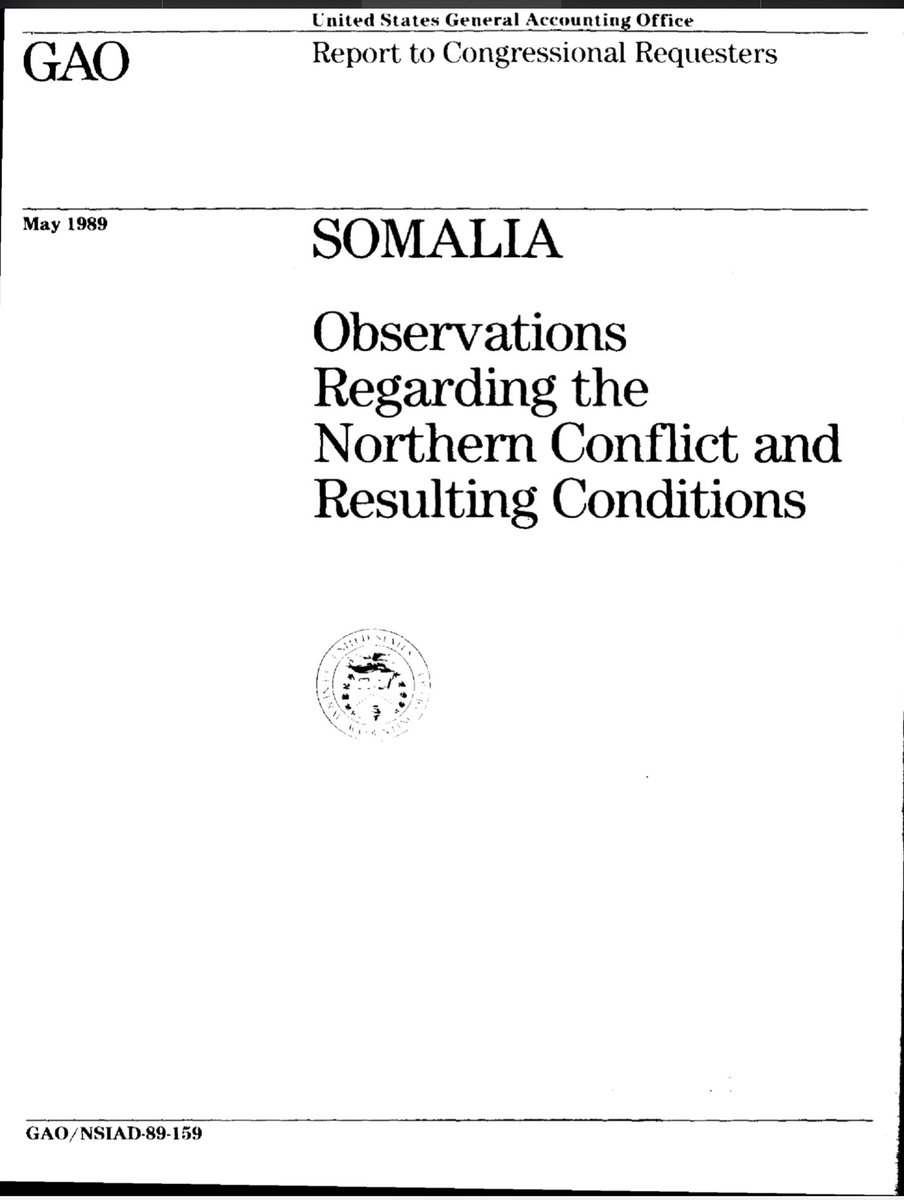
The ethnic cleansing of the Isaaq people began as early as 1974 to 1975 when drought conditions enabled the Somalian government to relocate Isaaqs to southern Somalia.
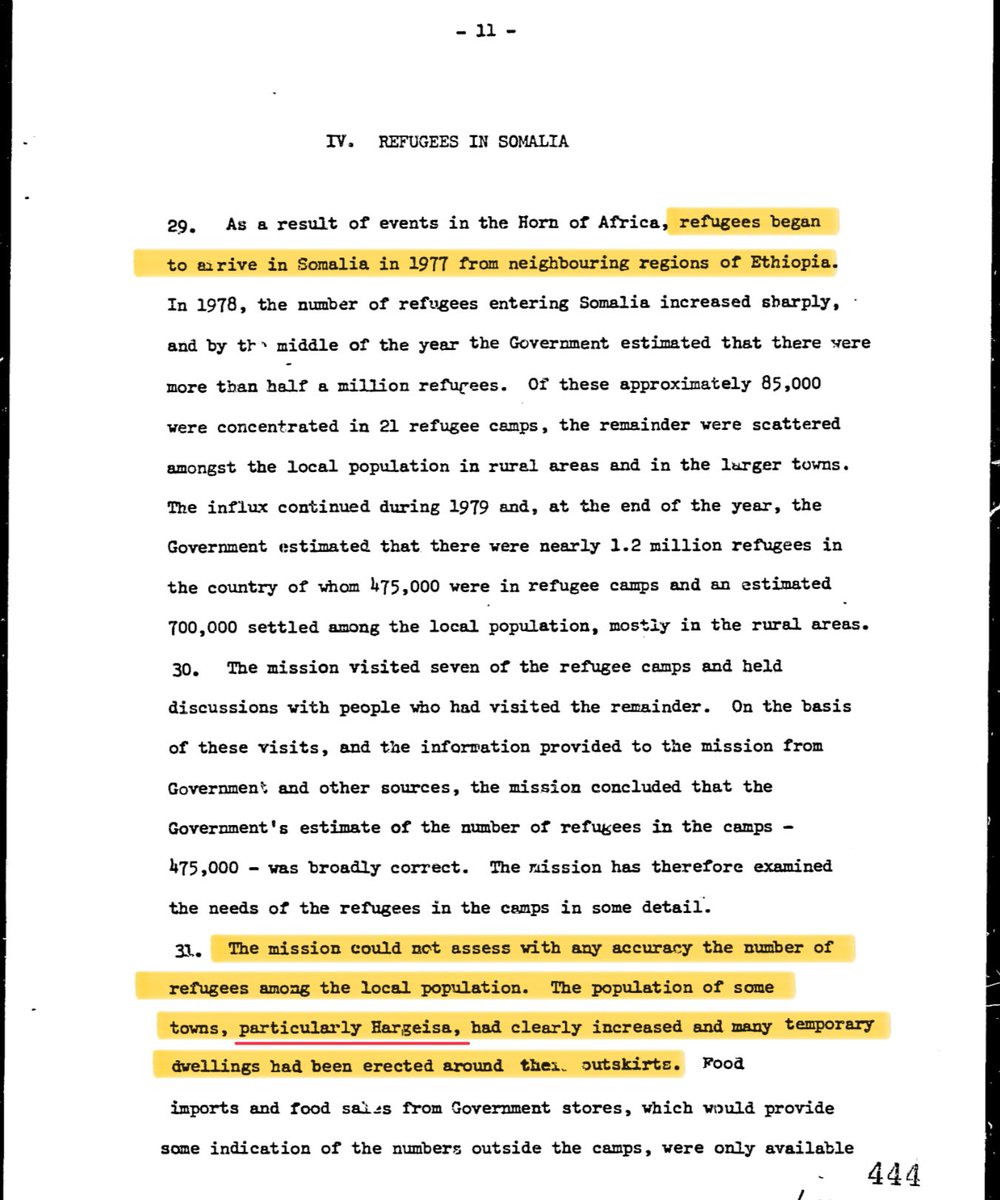
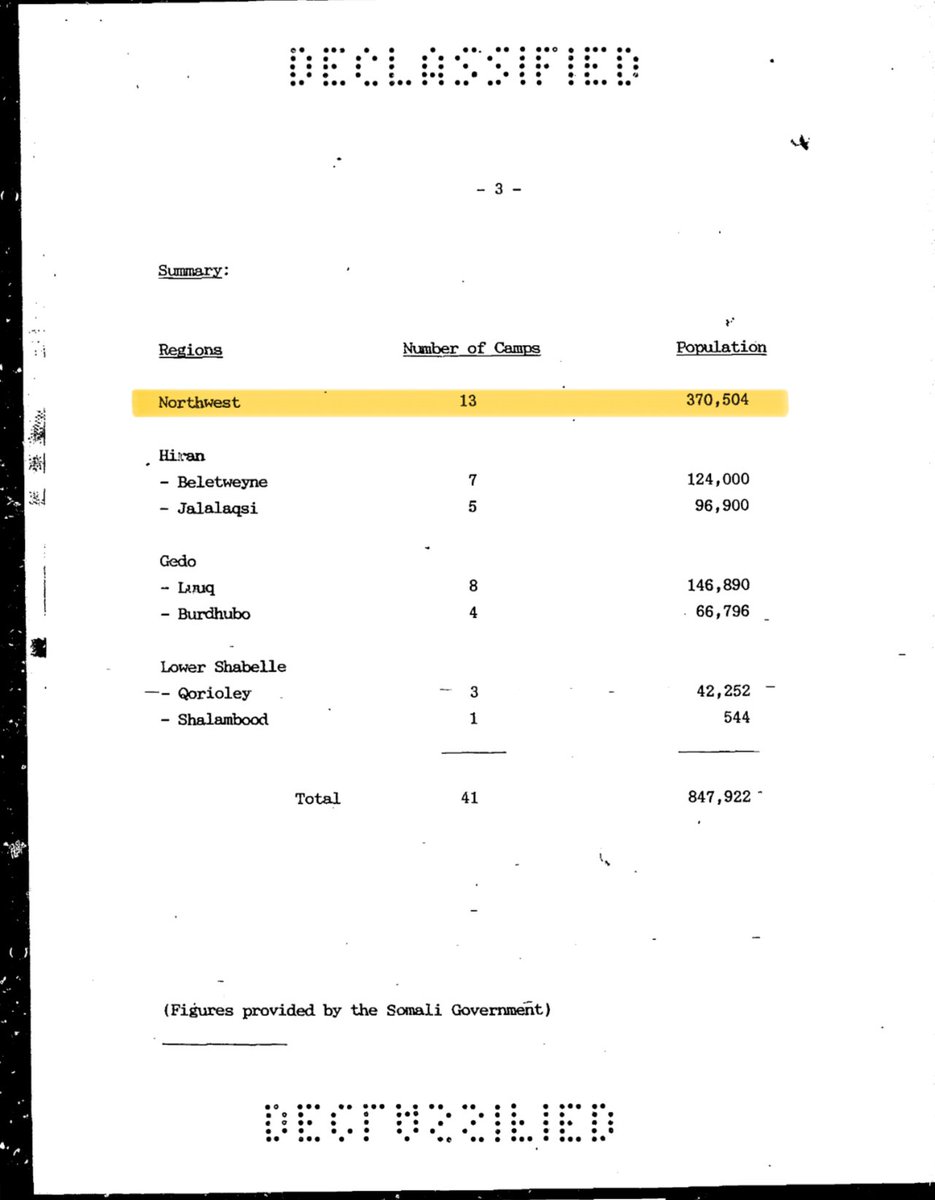
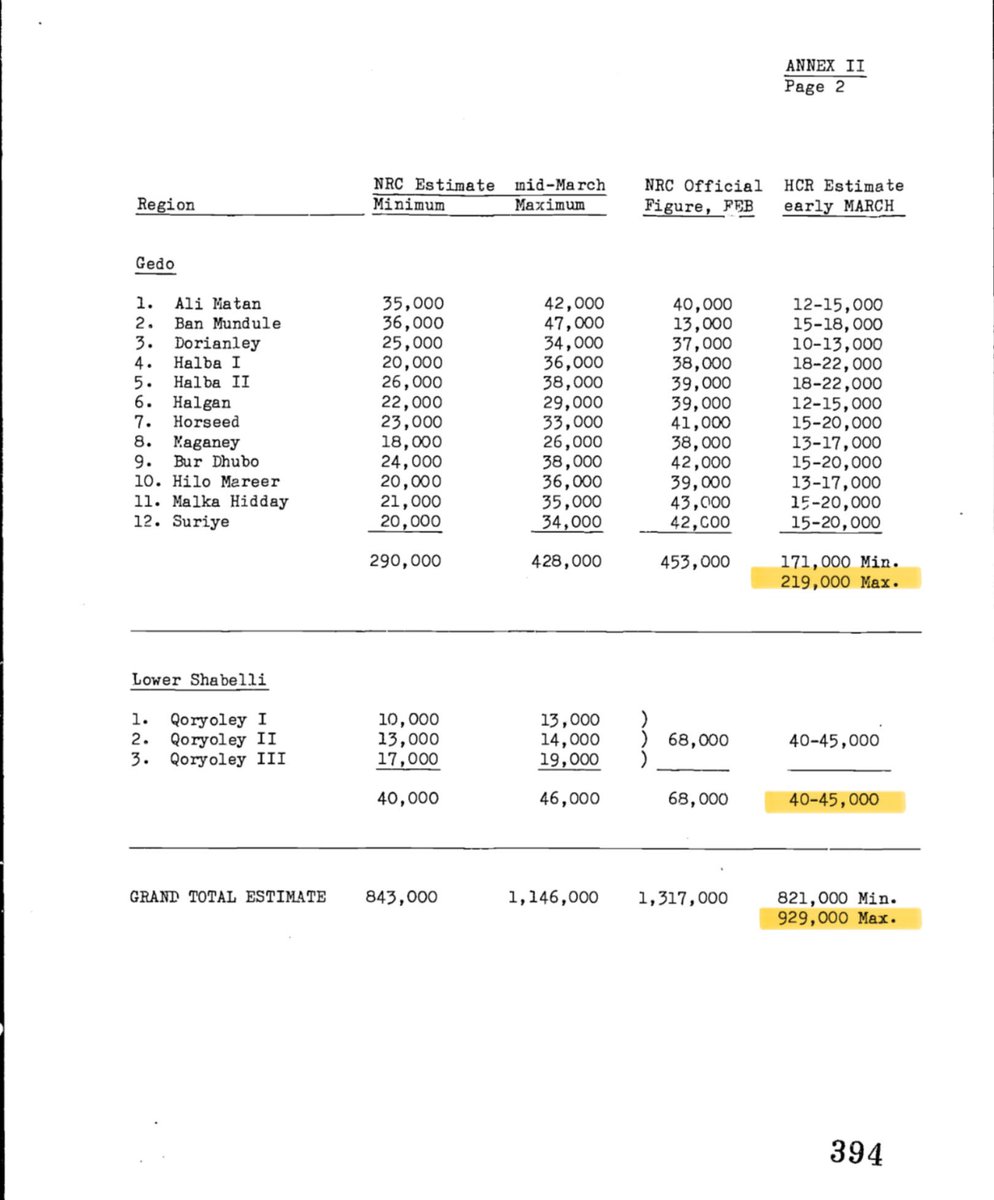
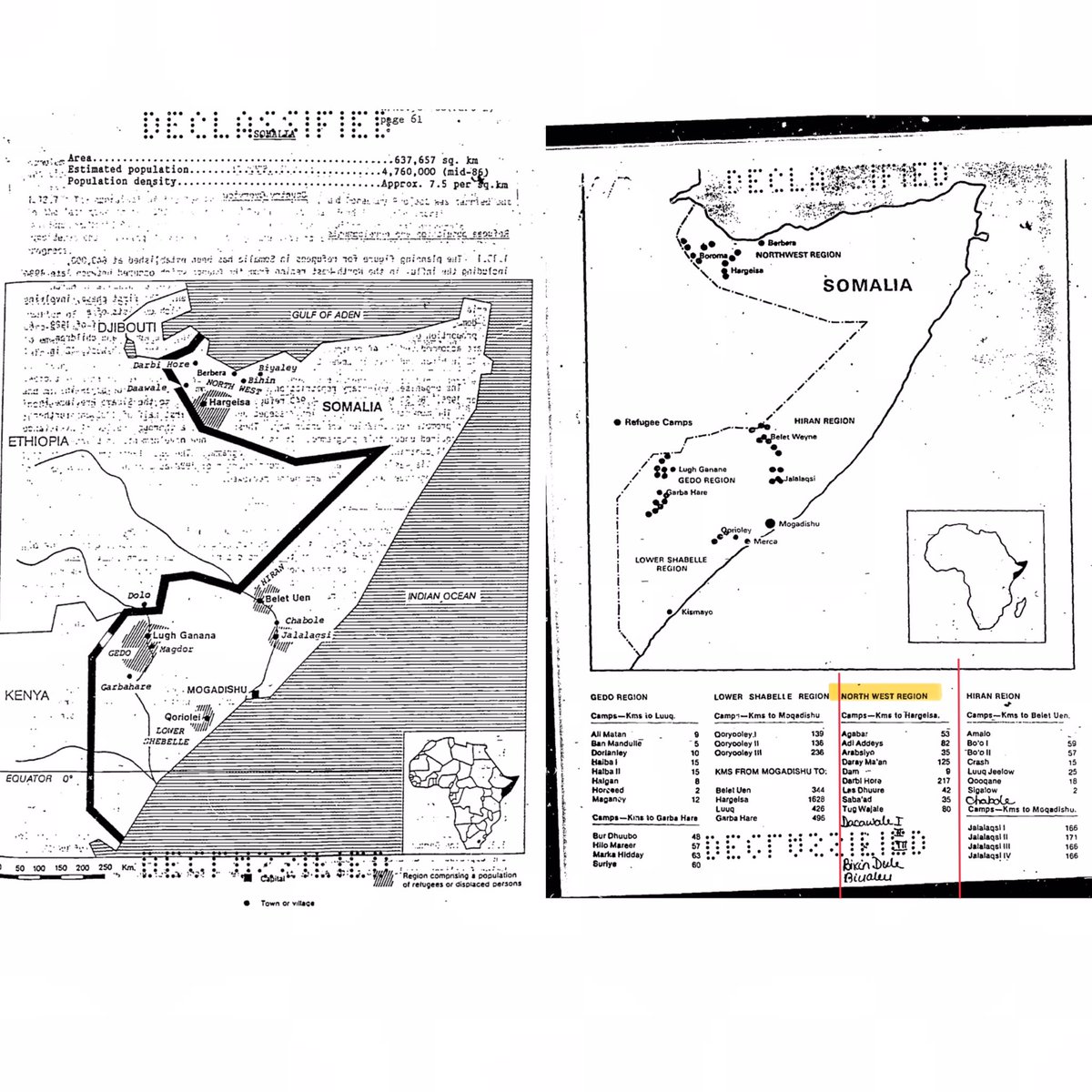
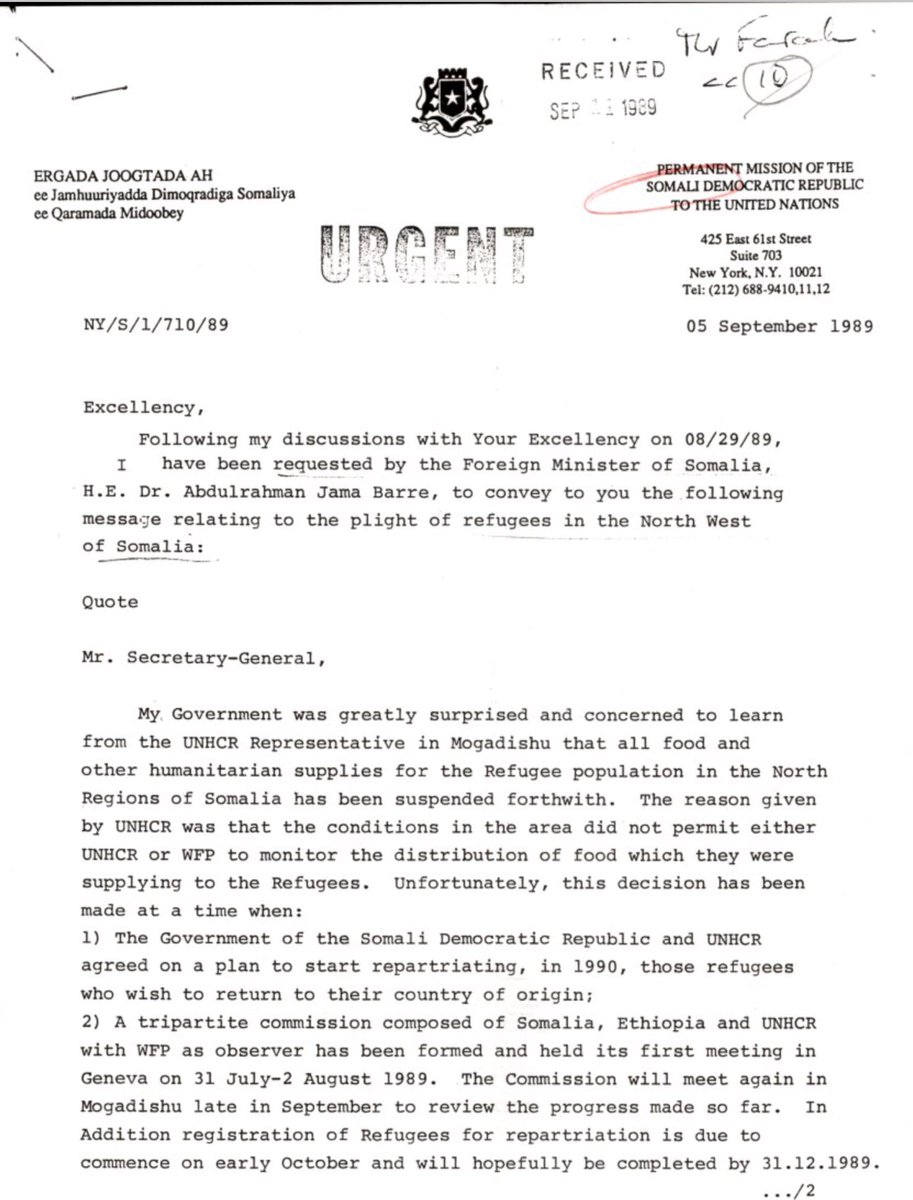
Less than three years later that same government resettled the majority of Ogadeni refugees from Ethiopia into Somaliland (northwest), particularly the Hargeisa region, with additional camps scattered in remote areas. This puzzled international observers who questioned why refugee settlements were appearing in such isolated parts of Somaliland (northwest).
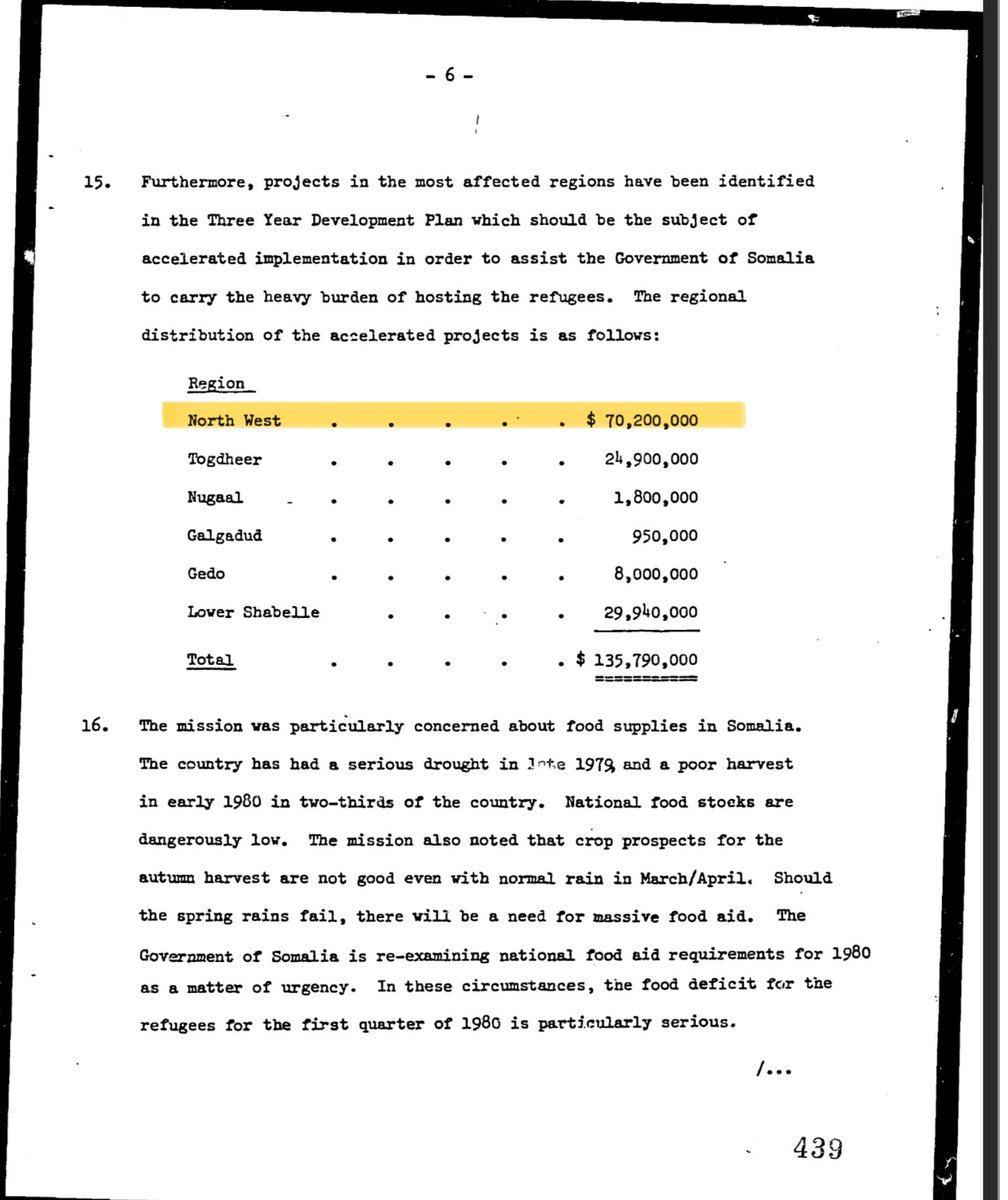
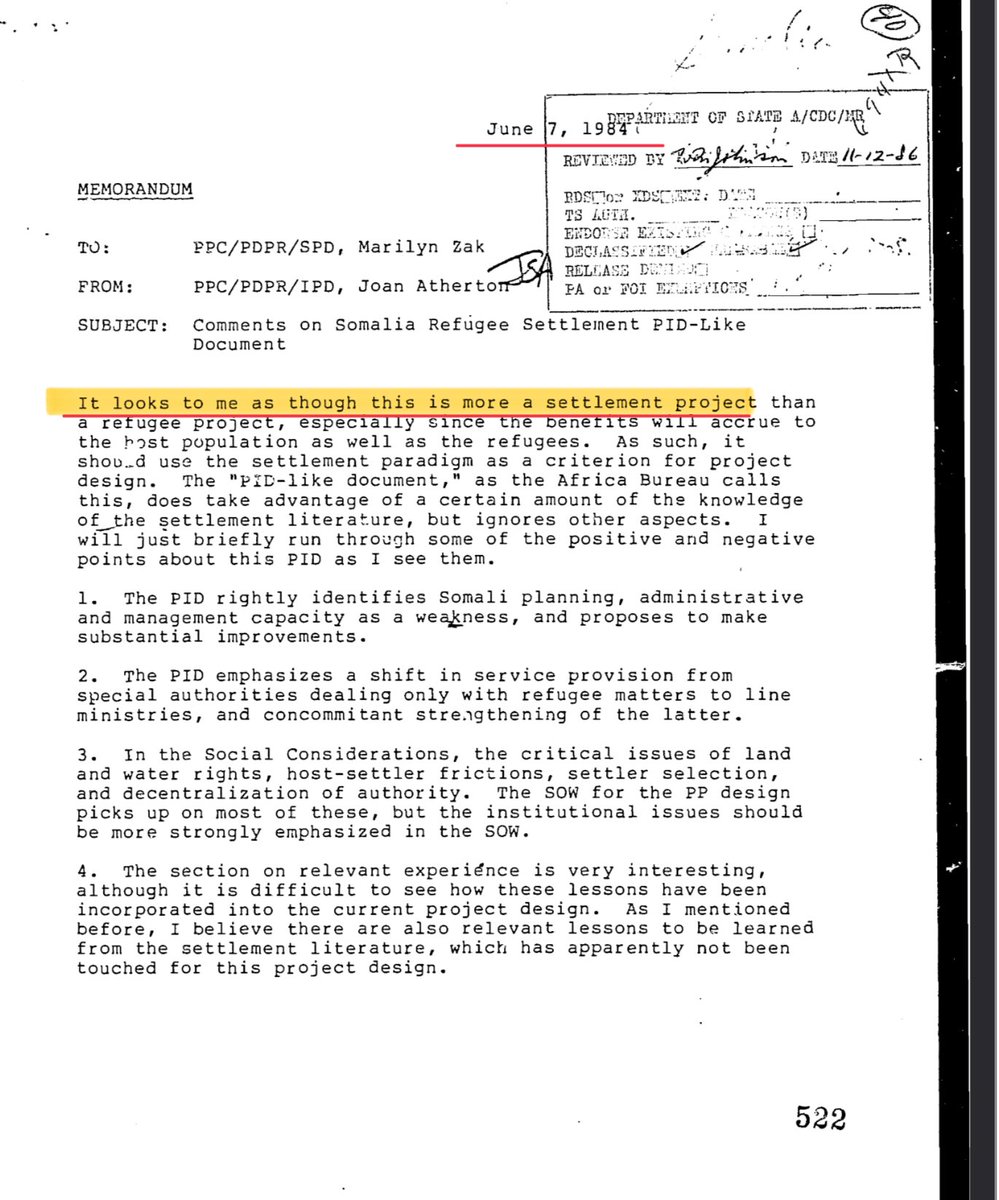
Most Somalian and international funding was funneled toward Somaliland (northwest) and by 1984 the United States government recognized that this was less a humanitarian refugee project than a deliberate settlement project.
In 1974 to 1975 Isaaqs were moved out and by 1977 to 1978 Ogadeni refugees were moved in, an unmistakable act of ethnic cleansing carried out under the cover of international aid.
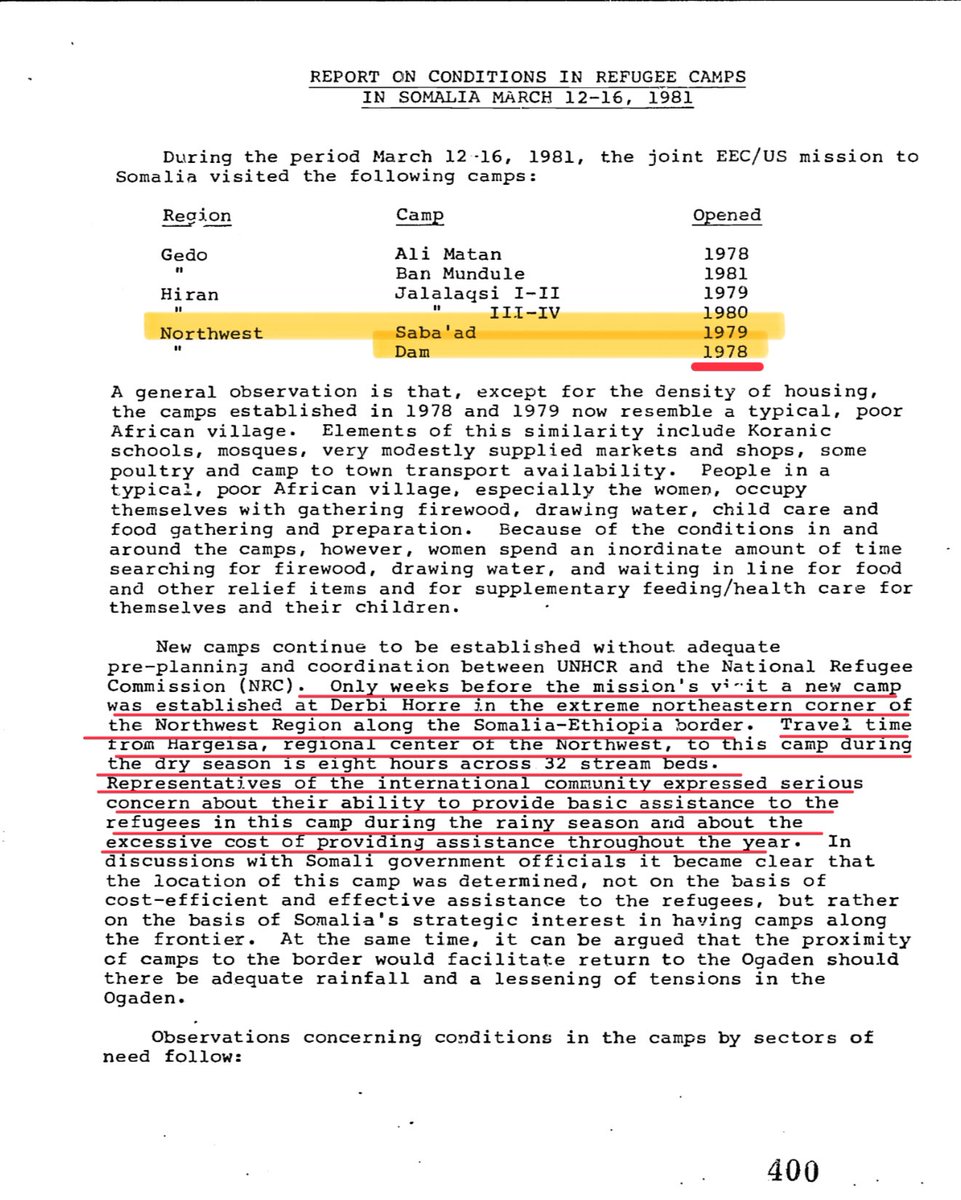
The same region that was emptied of isaaqs only three years prior was flooded with Ethiopian refugees
The definition of ethnic cleansing
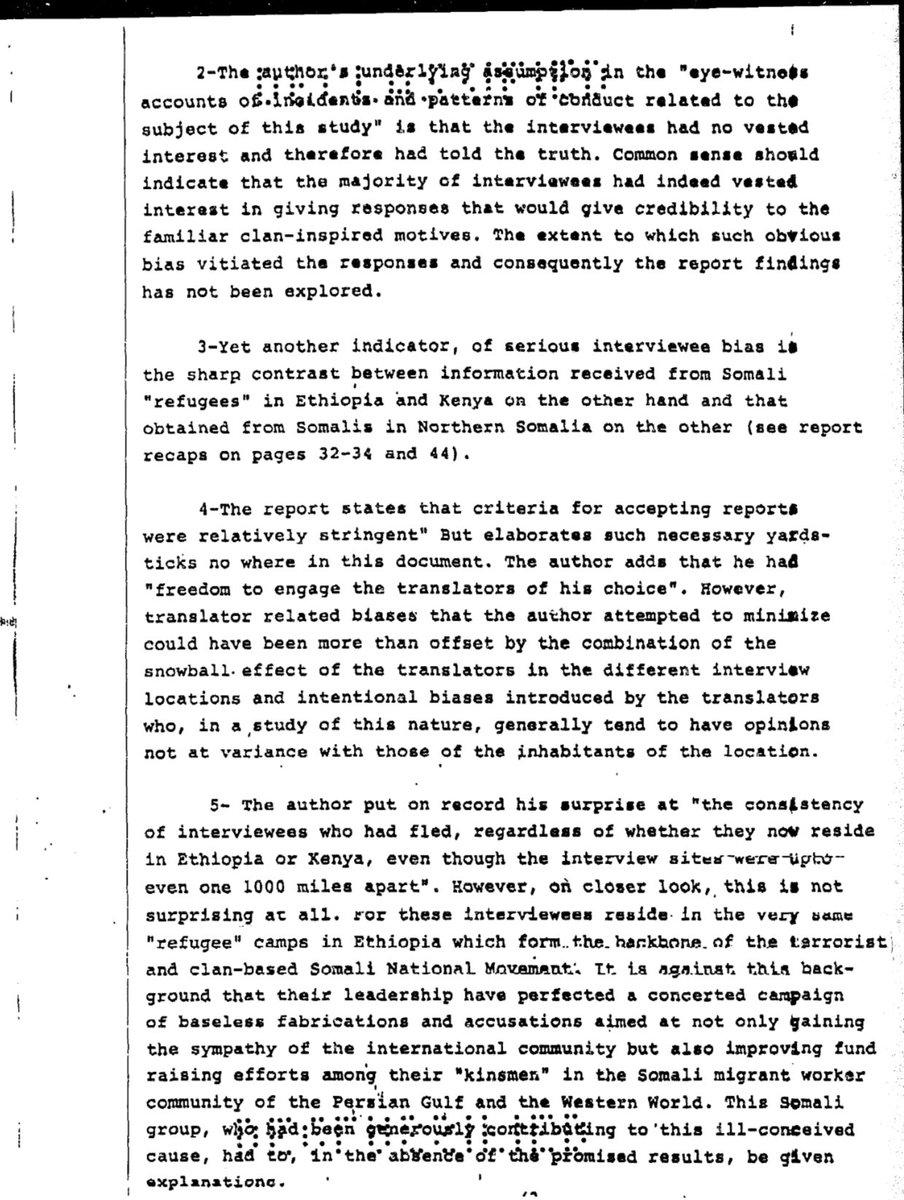
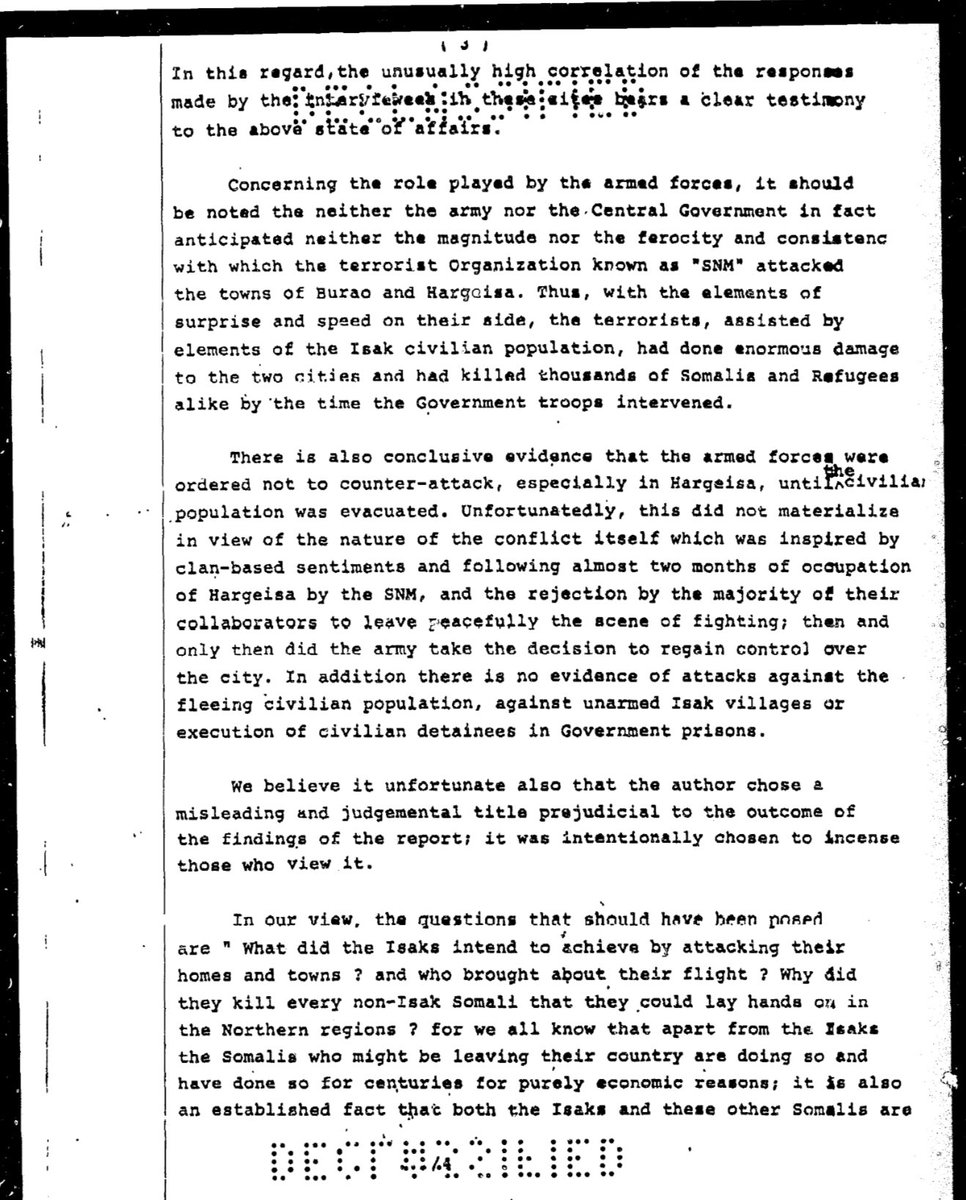
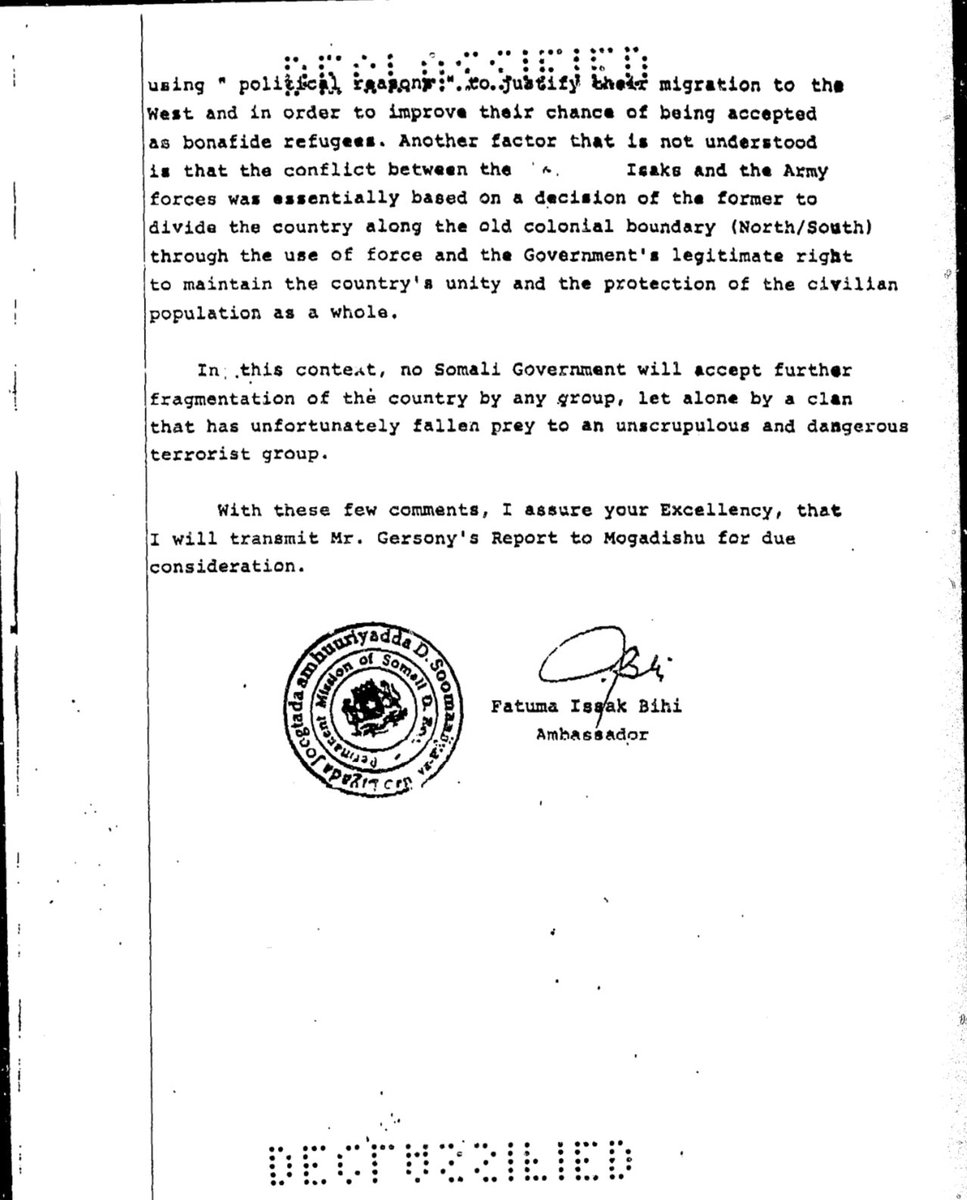
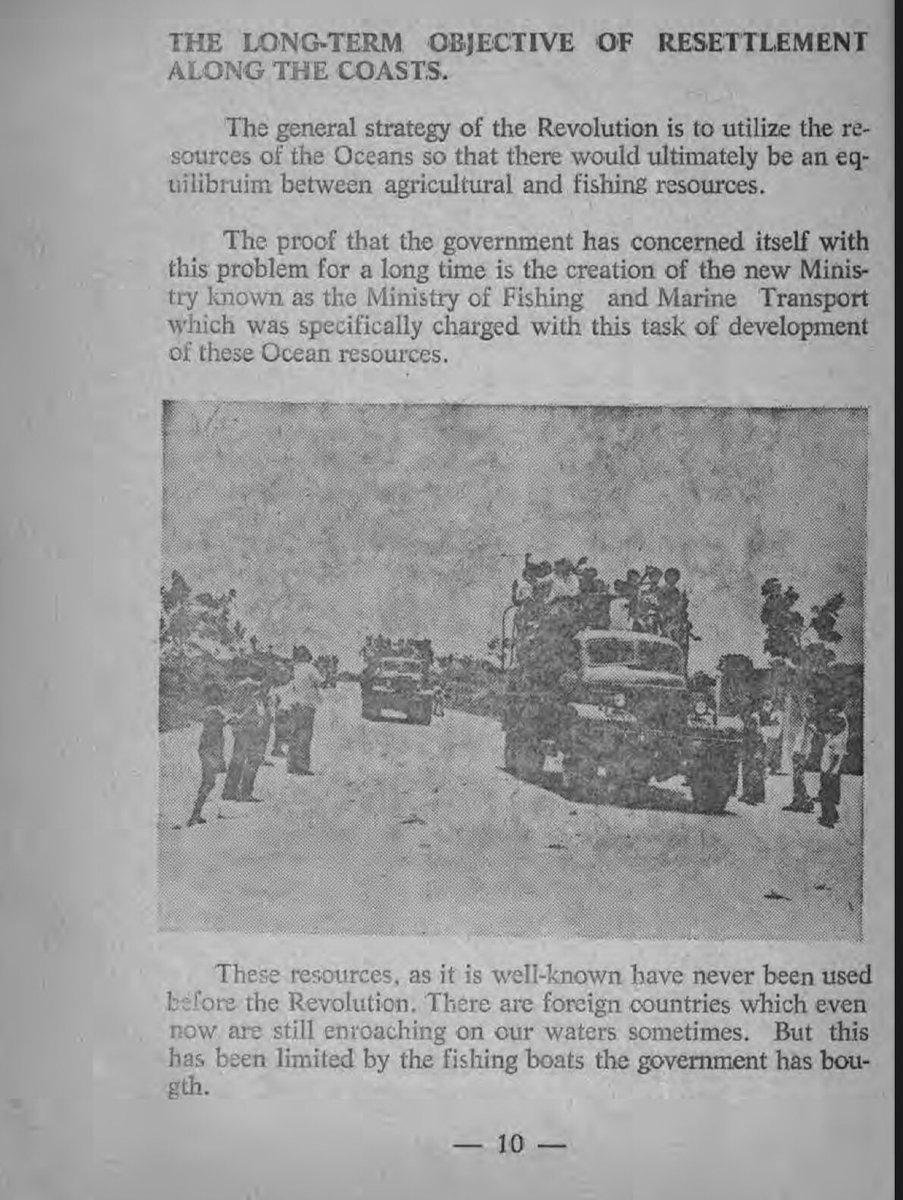
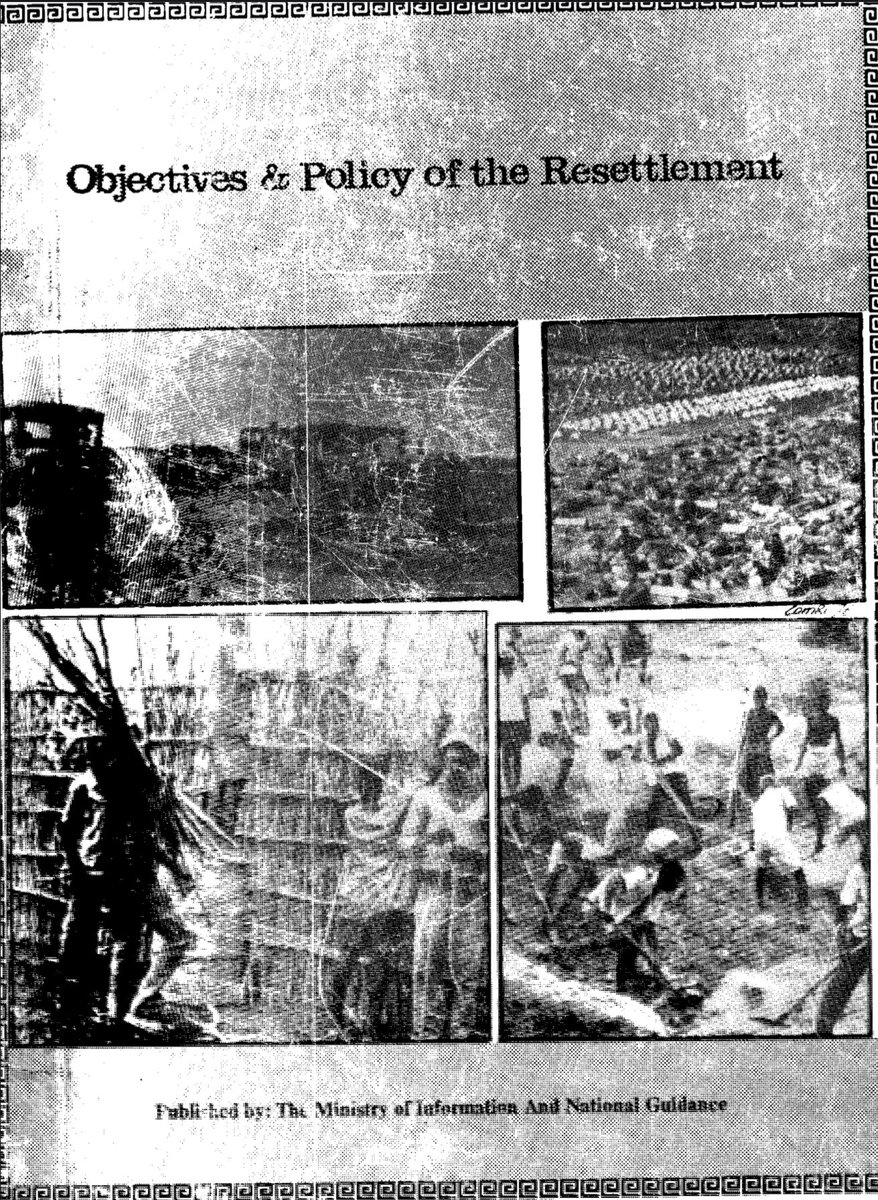
The document below shows the Somalian government’s disturbing fixation on the Isaaq clan, portraying them not as civilians but as enemies aligned with “terrorists,” and repeatedly seeking to discredit their suffering. Instead of acknowledging the atrocities committed against Isaaq communities, such as the mass killing of civilians, destruction of cities like Hargeisa and Burao, and the forced displacement of hundreds of thousands, it reframes the victims as perpetrators and claims their flight was due to economic motives or political manipulation. This deliberate inversion of reality is not only false but sickening, as it strips the Isaaq of their humanity, justifies their extermination, and attempts to mask a campaign of systematic violence and ethnic cleansing that meets the definition of genocide. By blaming an entire people for the crimes committed against them, the government’s rhetoric in this document exemplifies the very mindset that enabled such atrocities to occur.
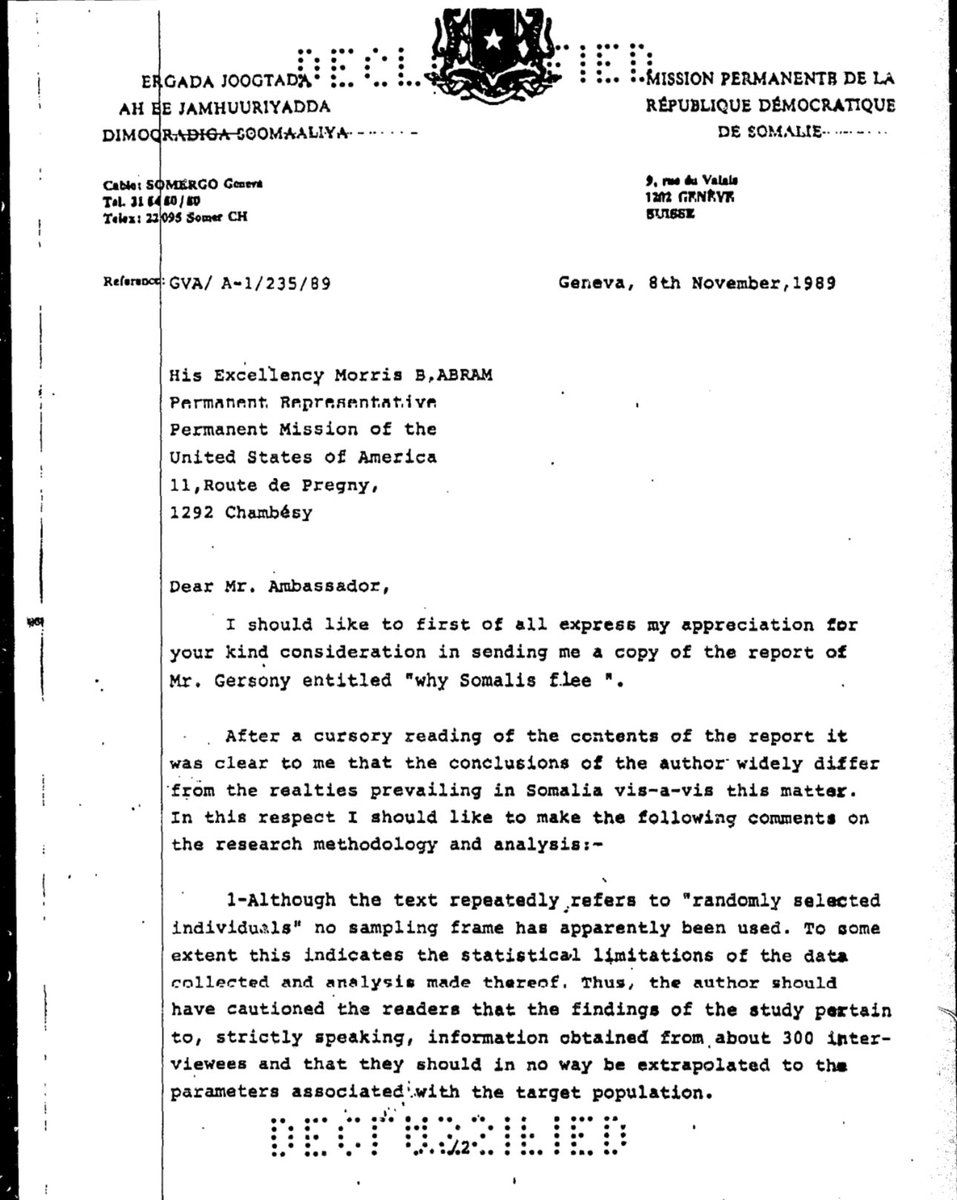
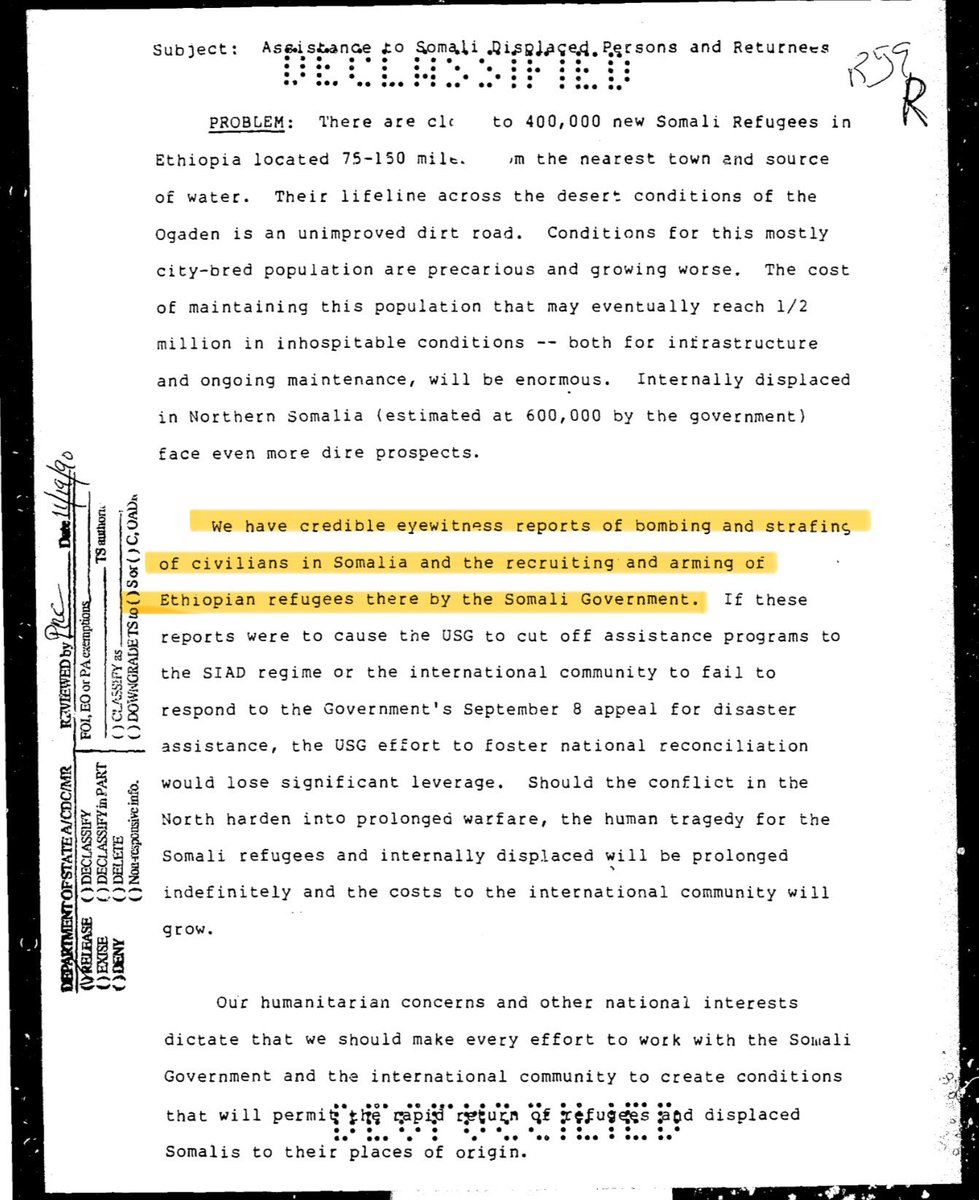
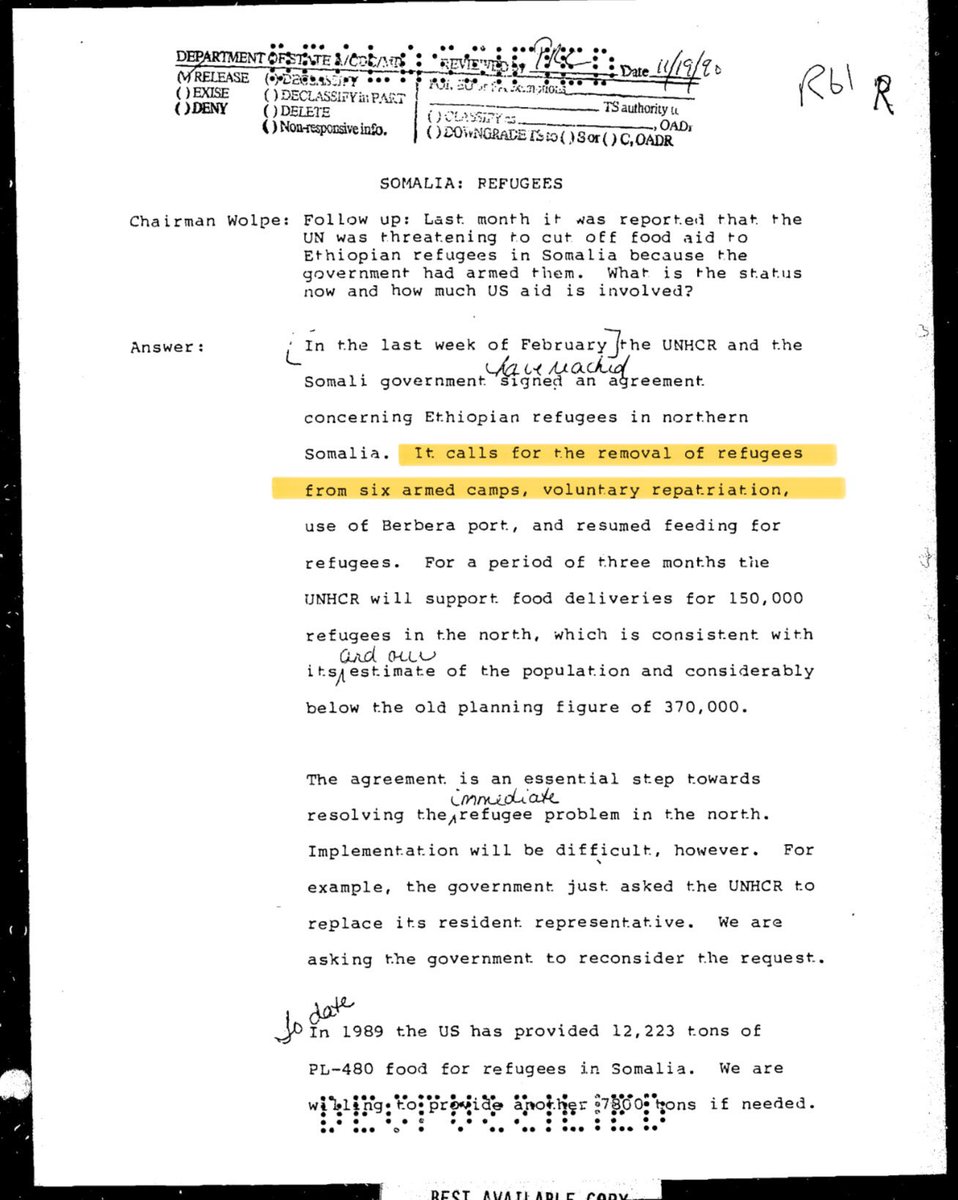
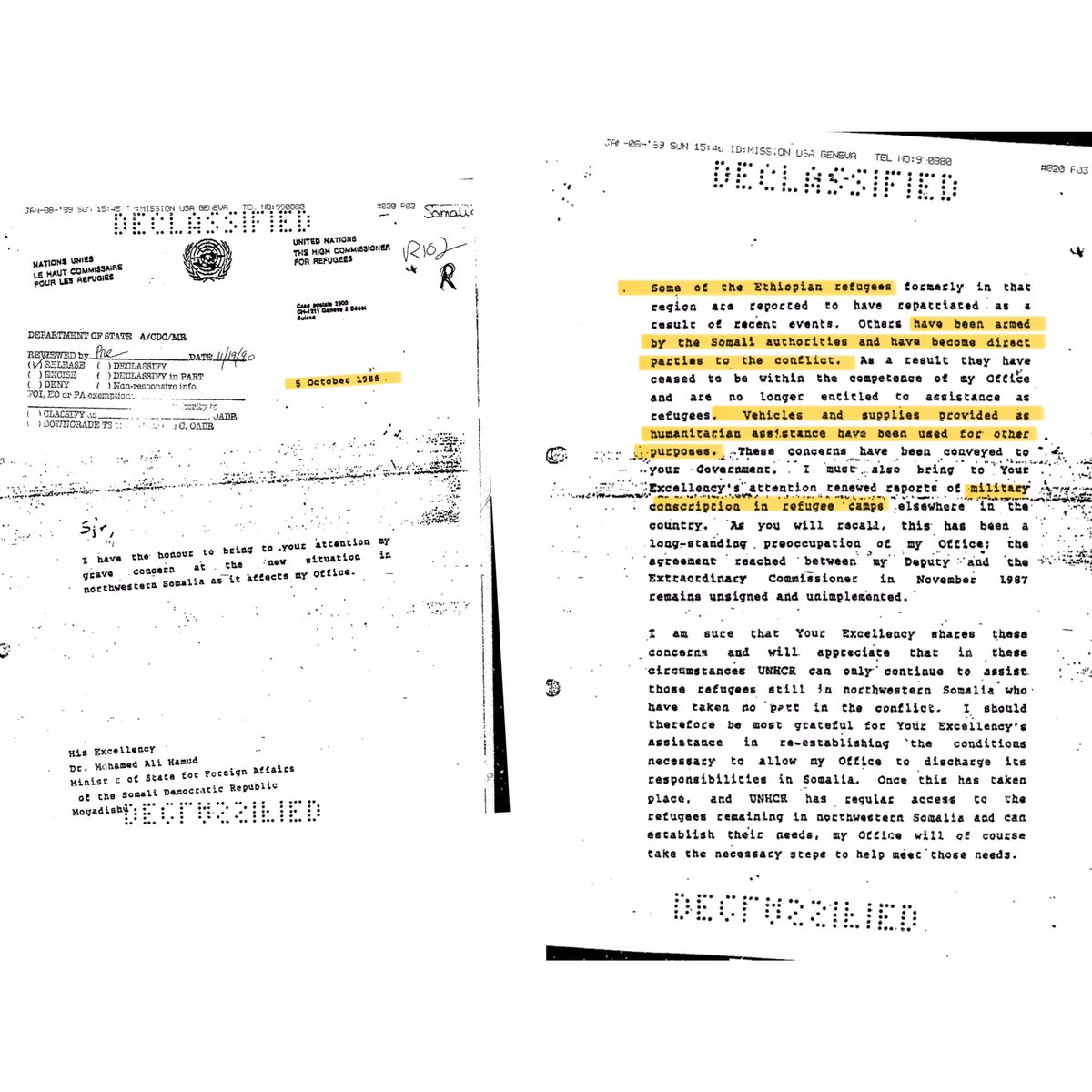
The United States and the United Nations both complained about the refugees becoming armed combatants and humanitarian aid being used to expel and annihilate the local Isaaq population
Within ten years the ogadeni refugees from 1977-1978 were used against their Isaaq hosts
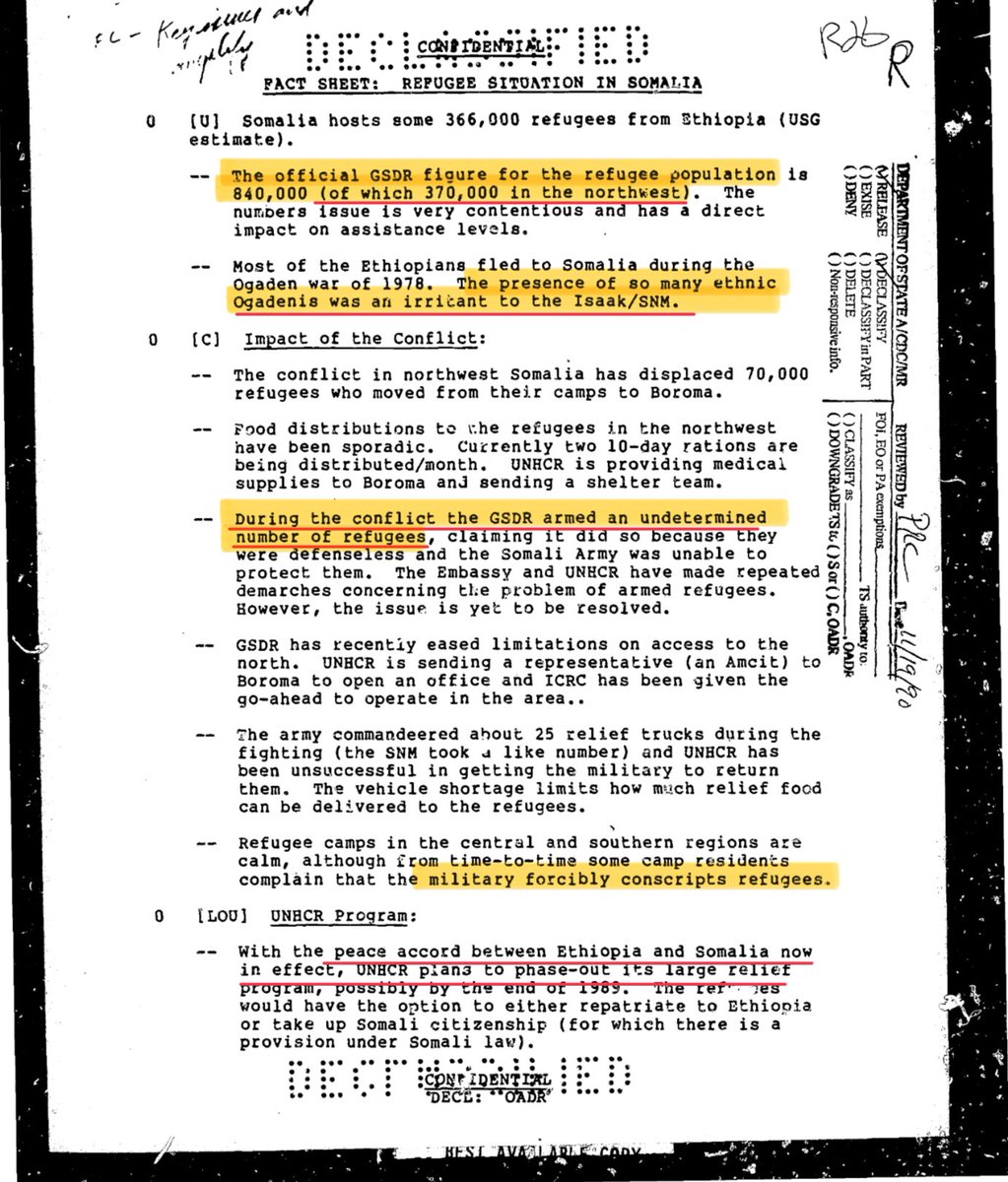
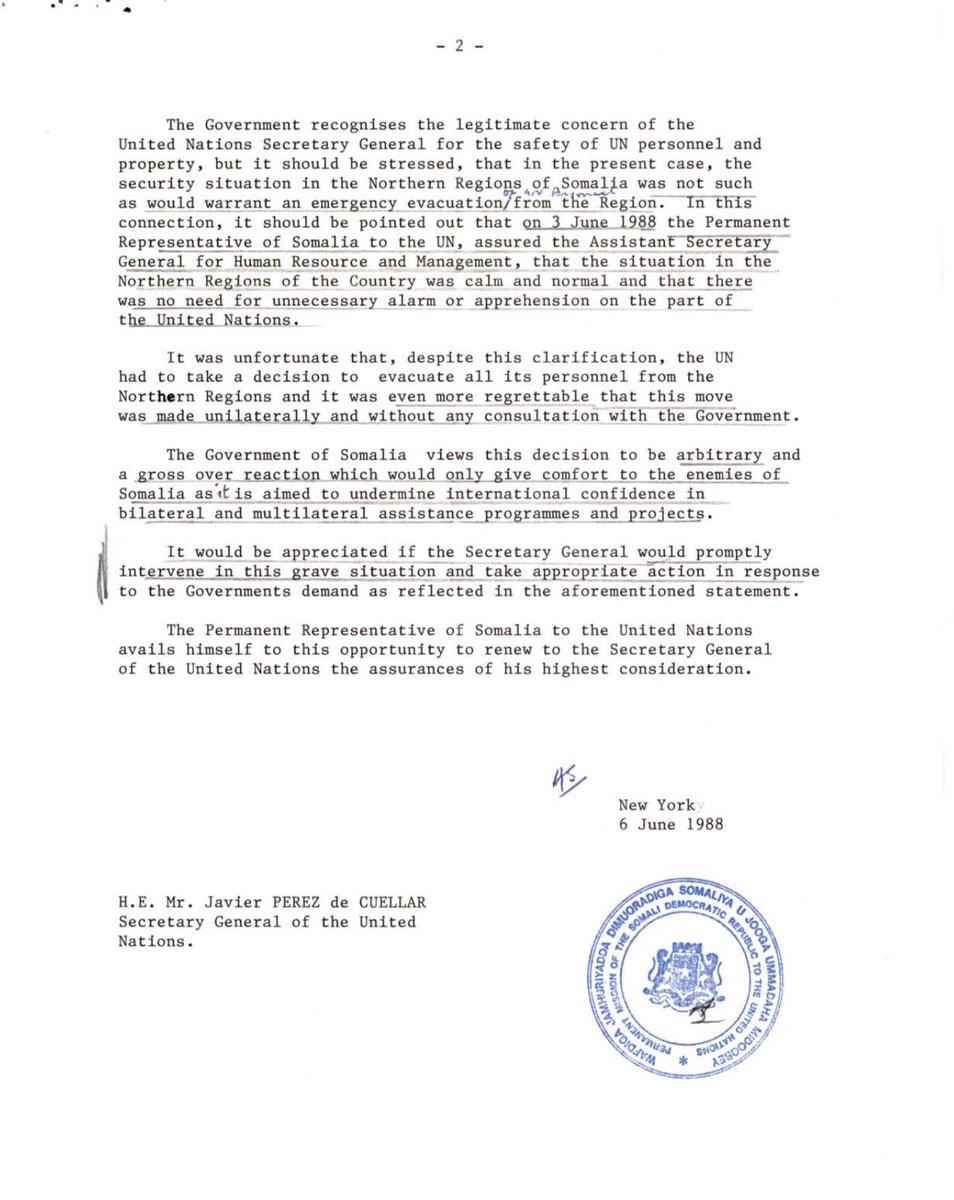
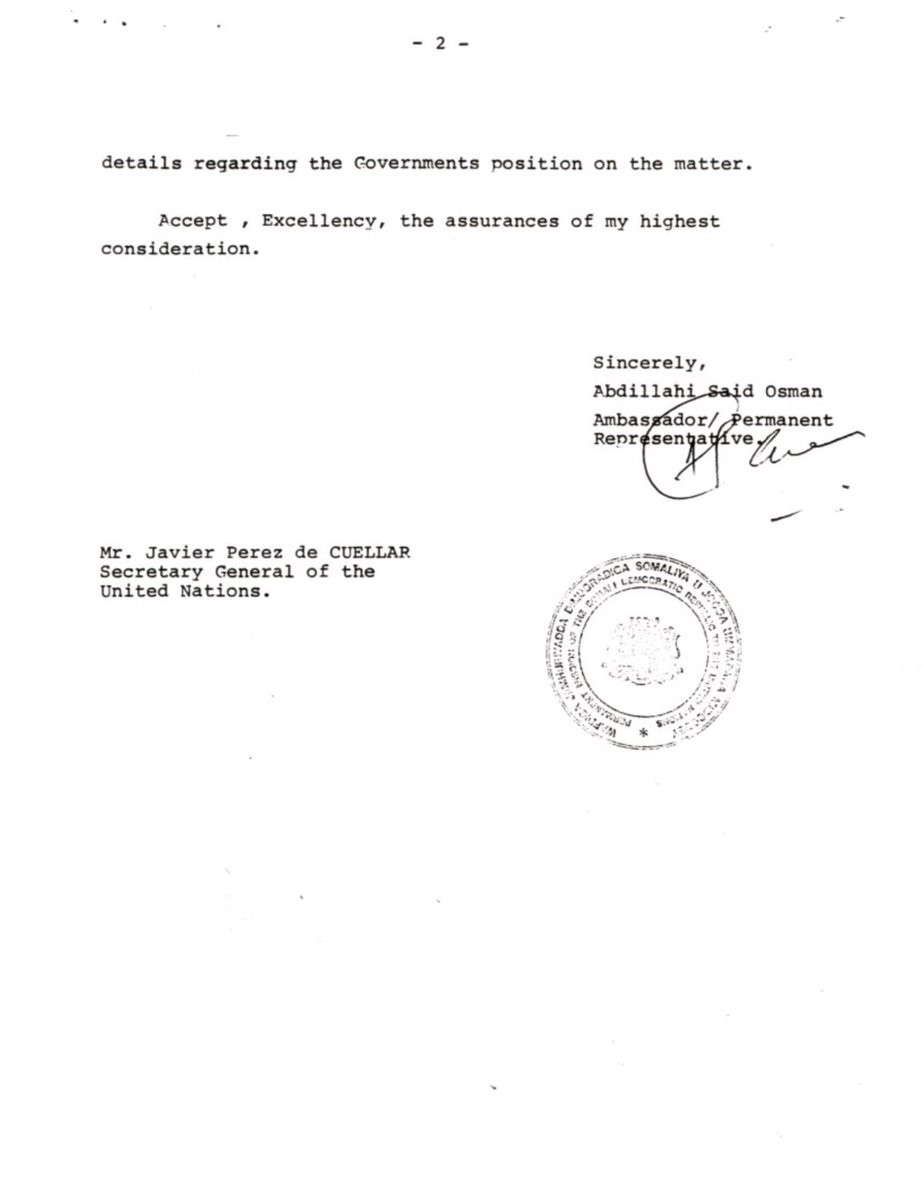
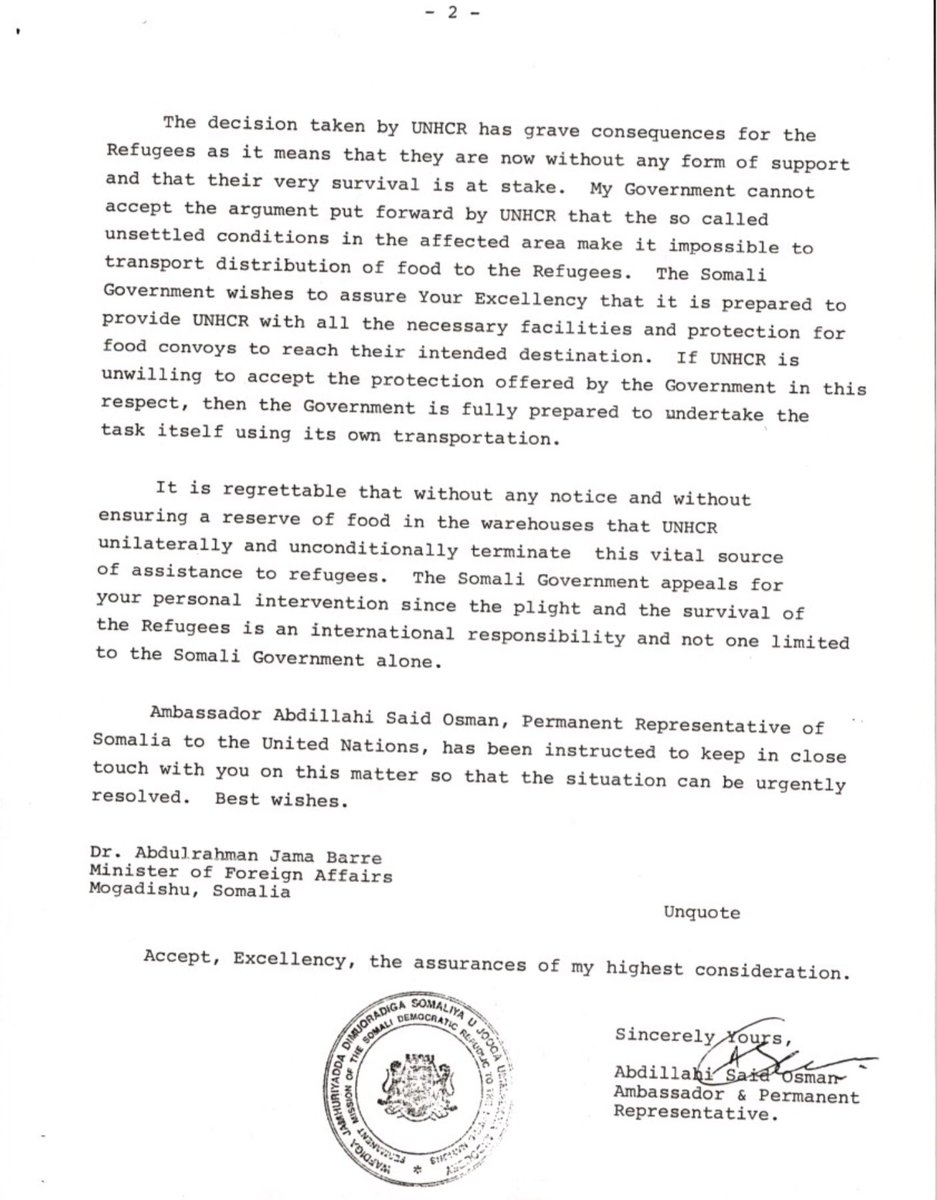
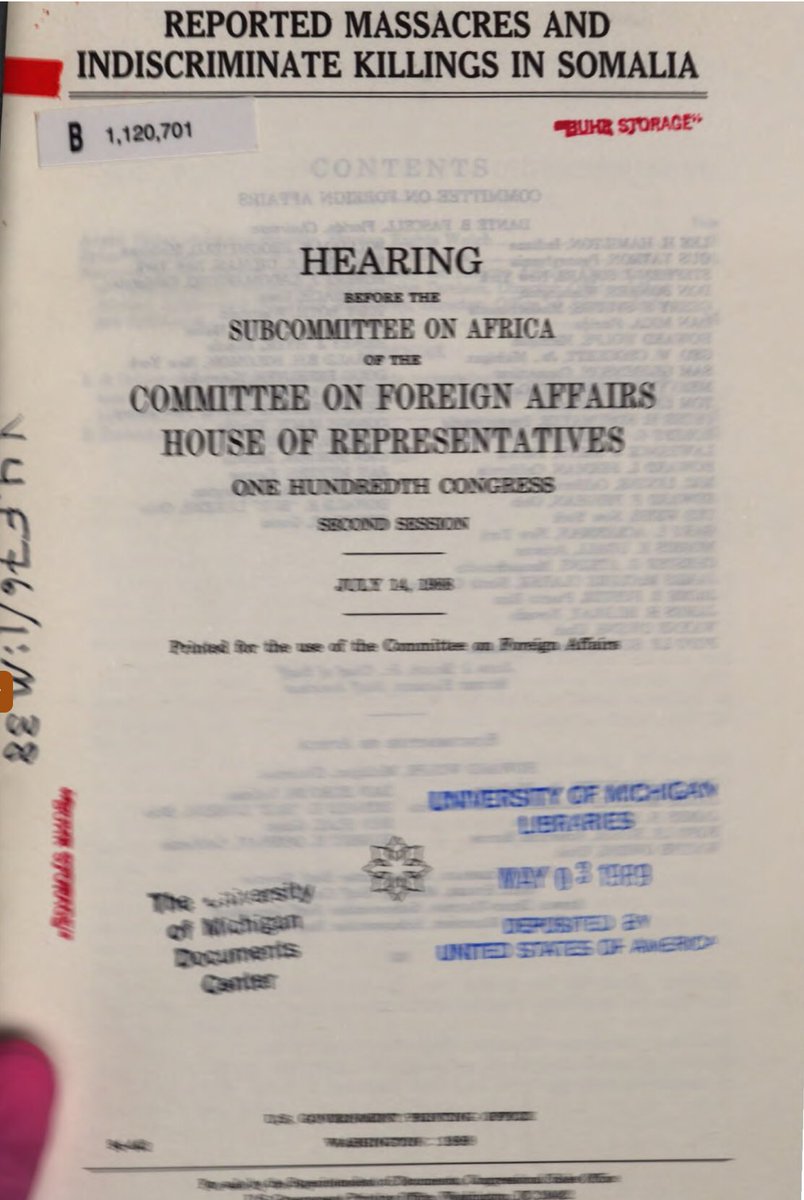
By 1988 Somalian government officials were more worried about their reputation than the armed conflict and the mass death. They were concerned about the humanitarian aid used to fuel their genocidal was against the Isaaq population
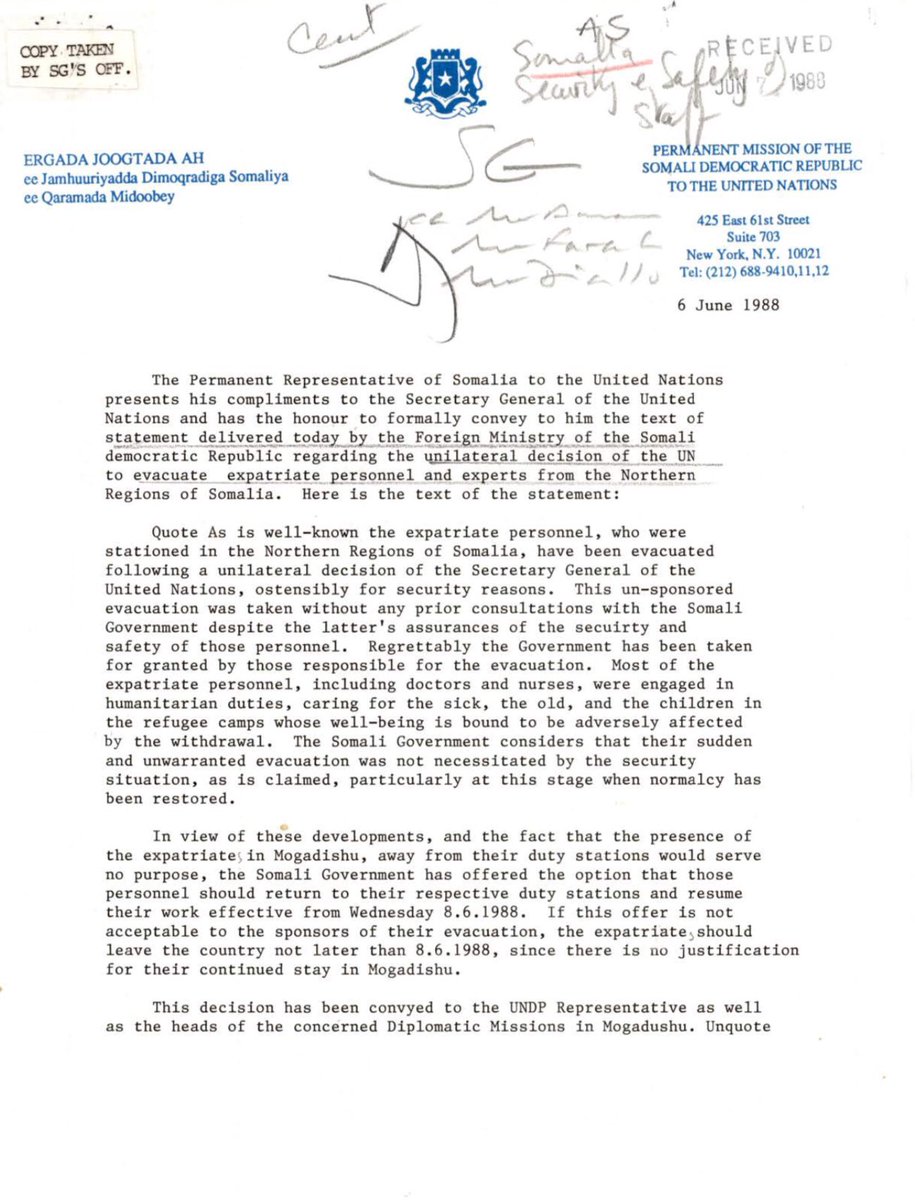
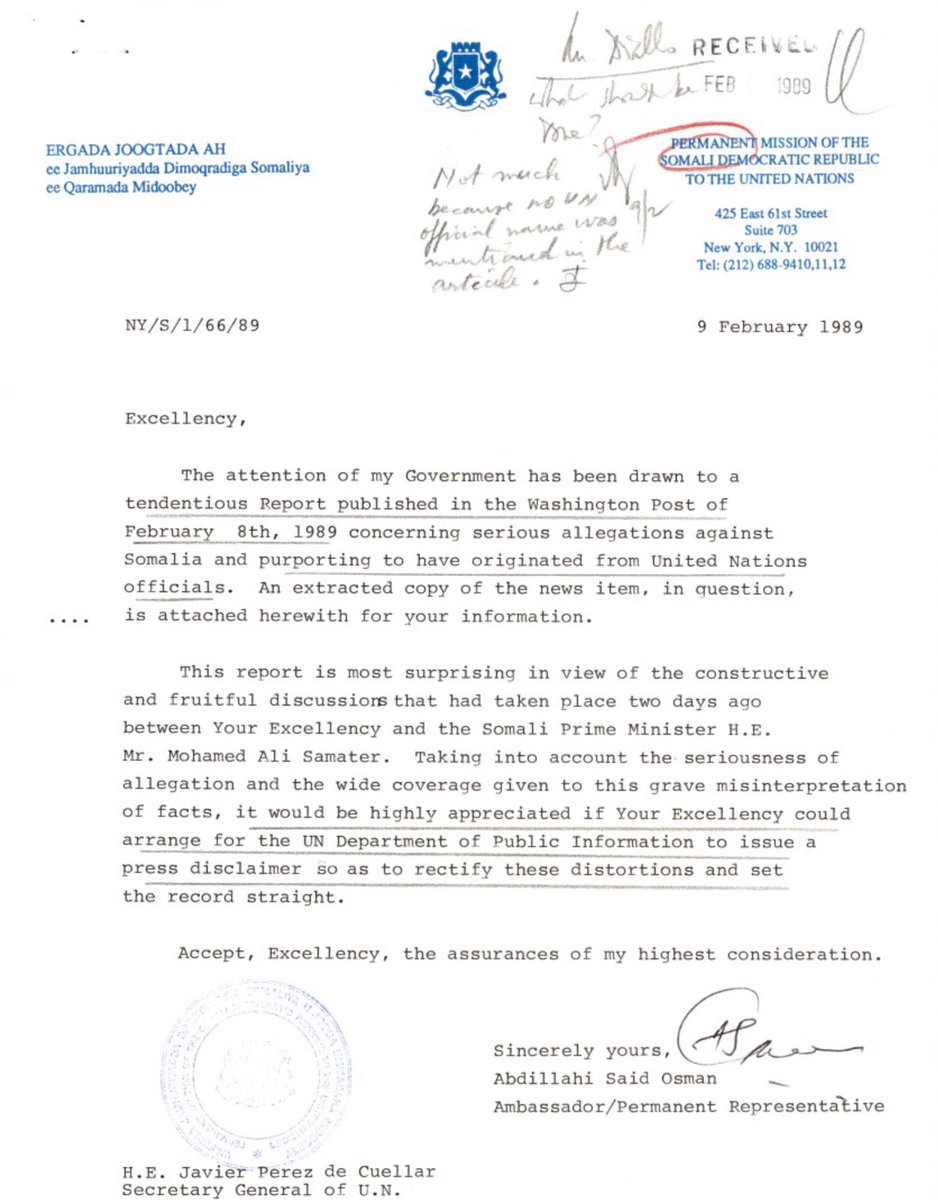
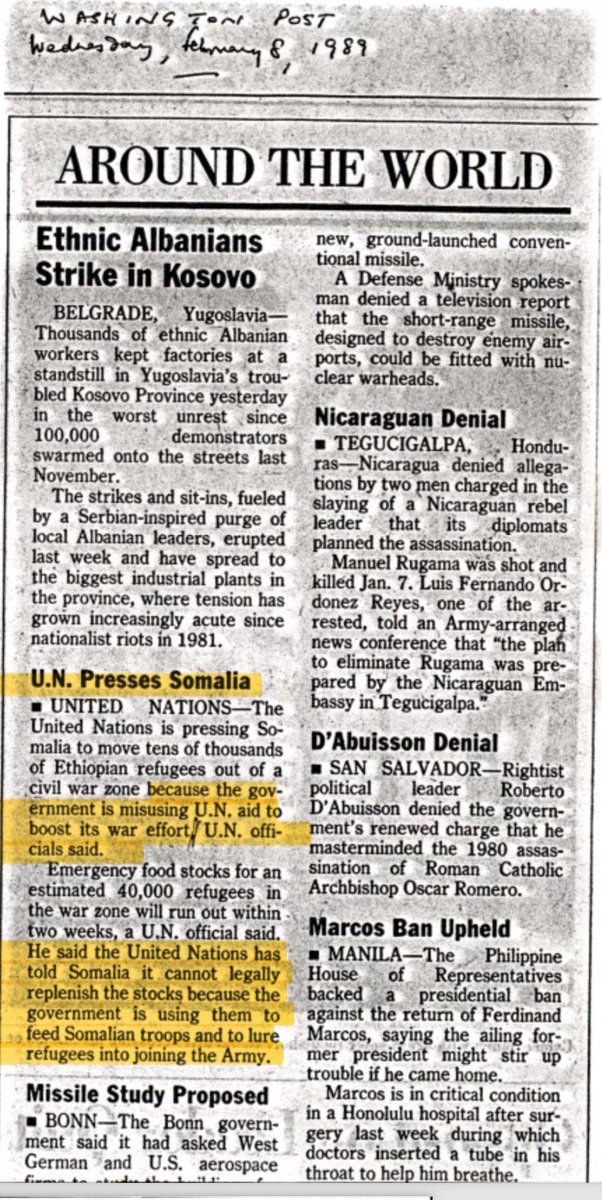
By 1989 confidential discussions between the Somalian Marxist dictatorial regime and the UNHCR was leaked to the Washington post highlighting that the Somalians were using UN aid meant for ogadeni “refugees” was instead being illegally used to boost its war effort
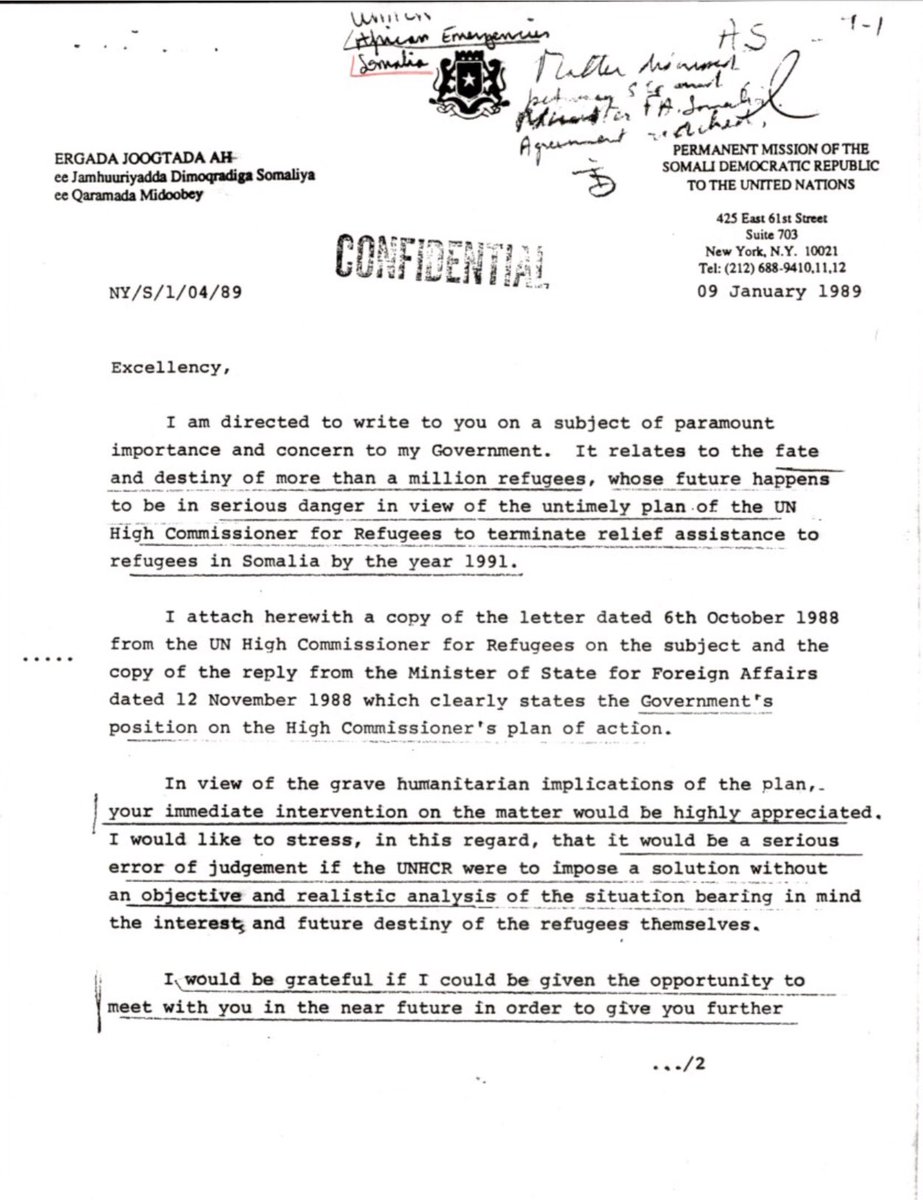
The Somalian regime begged for humantarian aid to use for its war effort much like the Somalians use aid to fuel conflict in sool and now looking to do so in awdal
The war against the Isaaq population has not ended
120,000 isaaqs were moved in 1975 to the southern end of Somalia
400,000 Ogadenis were moved into the heart of Somaliland in 1977
• • •
Missing some Tweet in this thread? You can try to
force a refresh

In 2011, then-Congressman Keith Ellison—now Minnesota’s Attorney General admitted that “there is no control at all” when discussing what would happen once the banks stopped working with the hawalas.
That hypothetical situation he described more than a decade ago with suitcases of cash being sent of MSP is now a daily occurrence with zero guardrails on where and to whom the money is going to.
Keith Ellison served as a congressman for more than a decade and the only bill he sponsored and was signed into law was Money Remittances Improvement Act of 2014.
His only concern was about getting money to Somalia
A genocidal war against the people of Somaliland, and the Isaaq clan in particular, was allowed to be waged from the heart of America by defeated remnants of the Barre regime. Using money stolen from taxpayers, they waged a brutal war for nine months, funded primarily from Ohio, Minnesota, and Maine.
After declaring jihad in March from the Minnesota State Capitol, they celebrated their August 2023 victory with a City of St. Paul declaration recognizing that conflict and its outcome — a full six months before the “government” in Mogadishu did the same.
Every Somalian politician took part in this. Ilhan Omar, who was privy to confidential information concerning United States interest in a joint military exercise in Berbera, Somaliland, and a potential future base deal (@timburchett), subsequently, on December 21, 2022, hurriedly took that information to her homeland of Somalia, arriving first in Garowe and then Mogadishu to notify them of the urgency.
A few days later, on December 31, 2022, a Somaliland opposition politician was assassinated in the town of Las Anod, which triggered a premeditated uprising and the start of the conflict.
A few days after that, Ahmed Hirsi, Ilhan Omar’s former husband, and Ali Isse, District Deputy Director for Ilhan Omar, attended a fundraiser for the conflict.
In March 2023, a protest took place in which calls for jihad, weapons, and financing rang out from the center of the Minnesota State House.
In an August 2023 campaign rally in Ward 6, Jamal Osman celebrated the forced withdrawal of Somaliland’s army who capitulated to the threats made by the state department. The capture of a Somaliland base Goojacade by the clan militia and their Somalian government allies, was celebrated at the Minneapolis rally with cheers that “Greater Somalia is next” and “Long live Somalia!”
The Biden administration not only looked the other way; it warned and threatened the people of Somaliland with repercussions if they did not allow the militias space to regroup.
Conflicts launched from the United States that have devastating repercussions on people who endured a genocide and built a peaceful existence are not right and should be investigated to ensure they never happen again.
*Video below is the March 2023 Minnesota state Capitol rally
The conflict had its roots in a house foreign affairs committee meeting with Somaliland’s President Bihi in which @timburchett had pleasant things to say in start contrast to Ilhan Omar’s post marking the occasion
According to the former minister of information of Somaliland and other sources Ilhan Omar was privy to confidential information concerning a military exercise planned for February 2023
Ilhan Omar rushed to Somalia on December 21 2022 and within days a conflict started in Las Anod with a Somaliland politician assassinated and a preplanned uprising occurring with the assistance of Somalian forces in Mogadishu
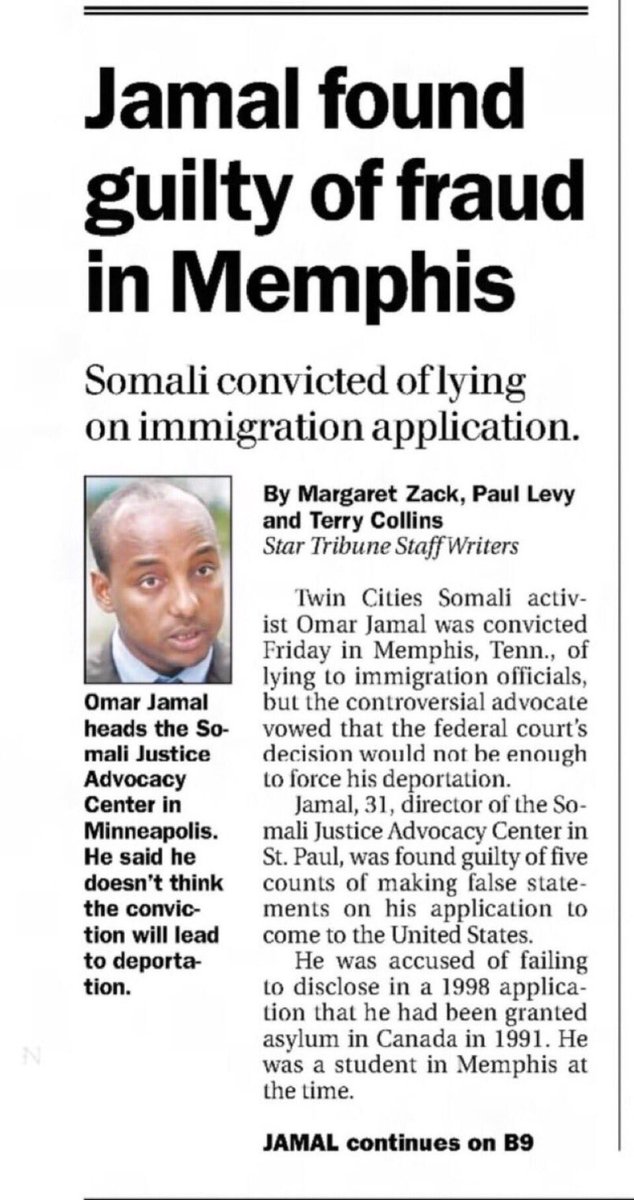
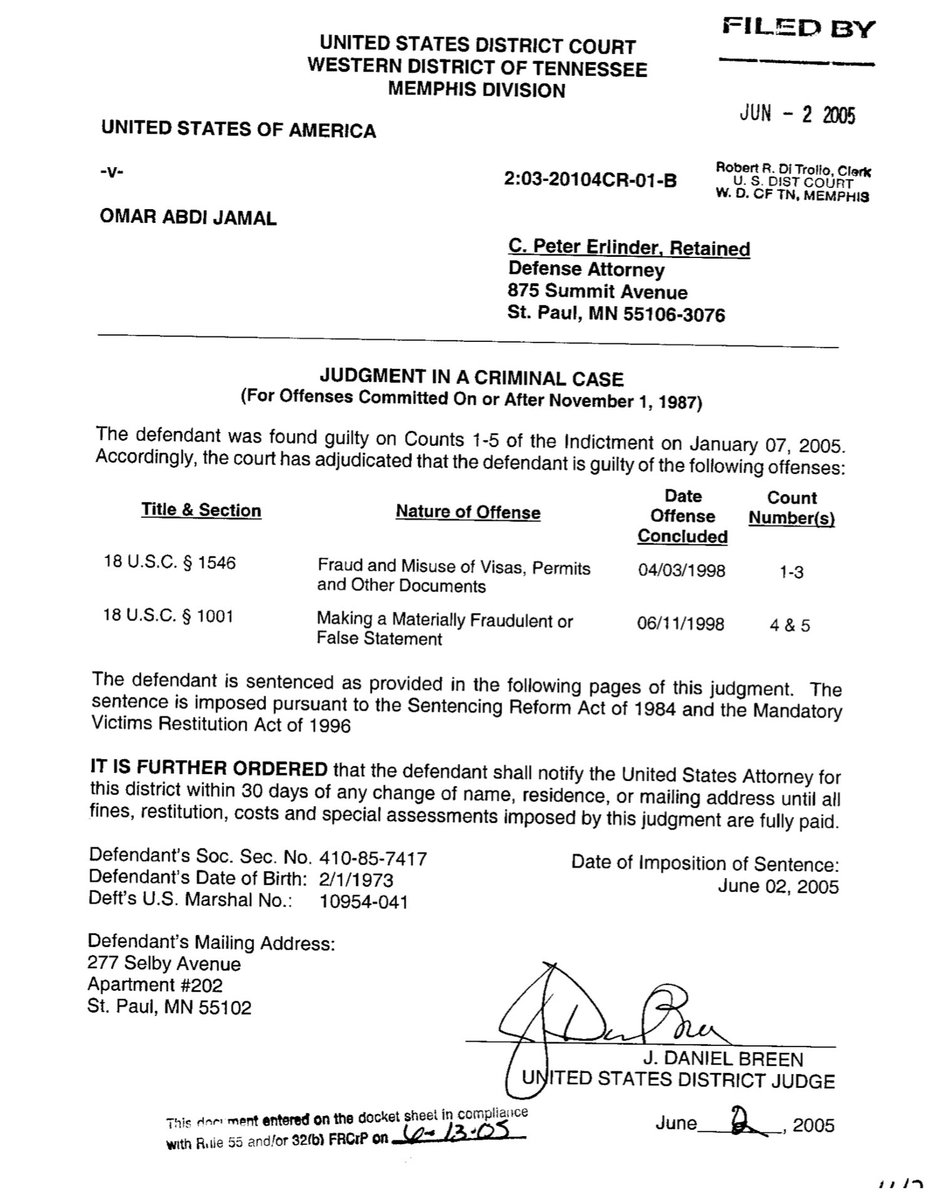
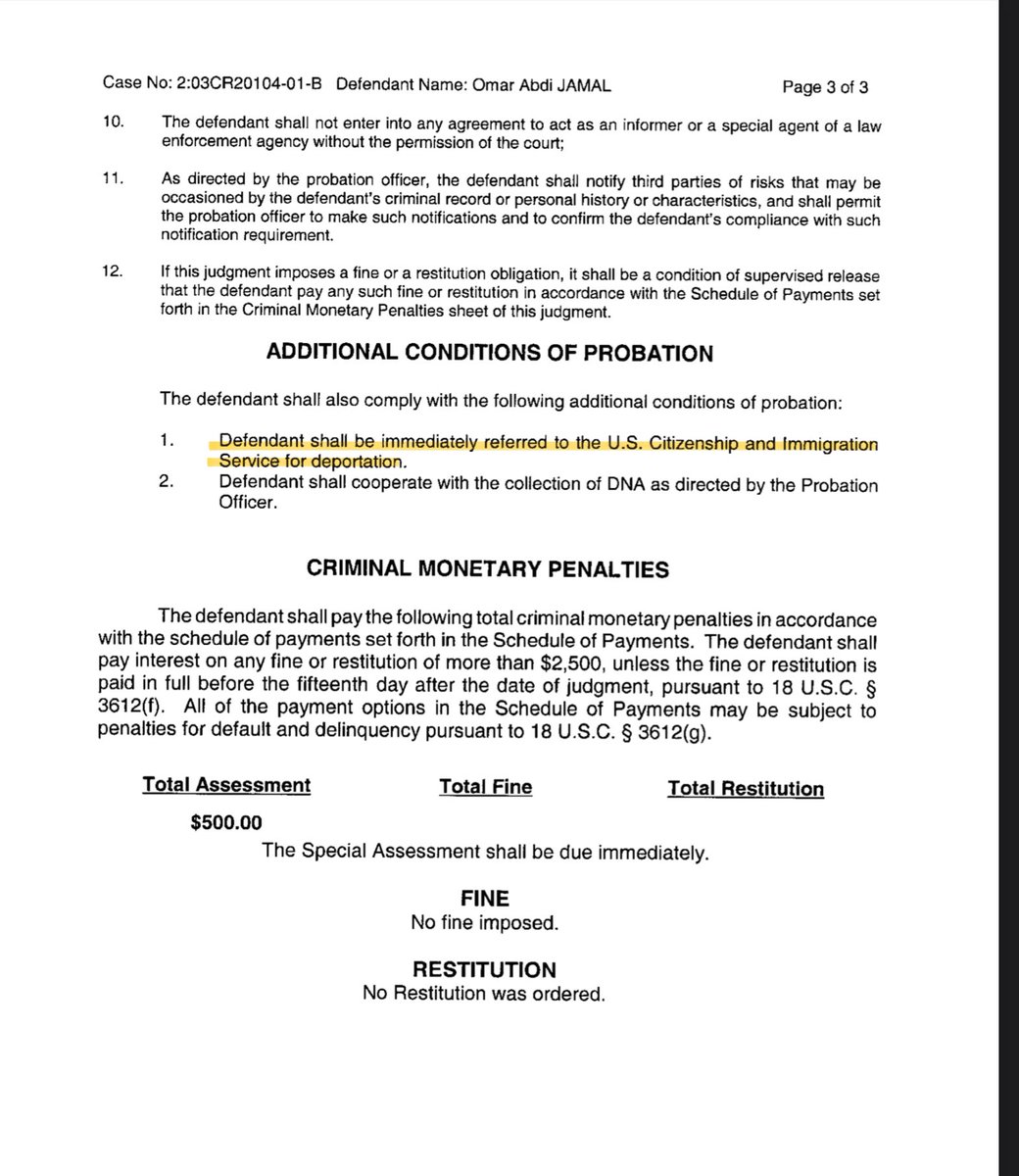
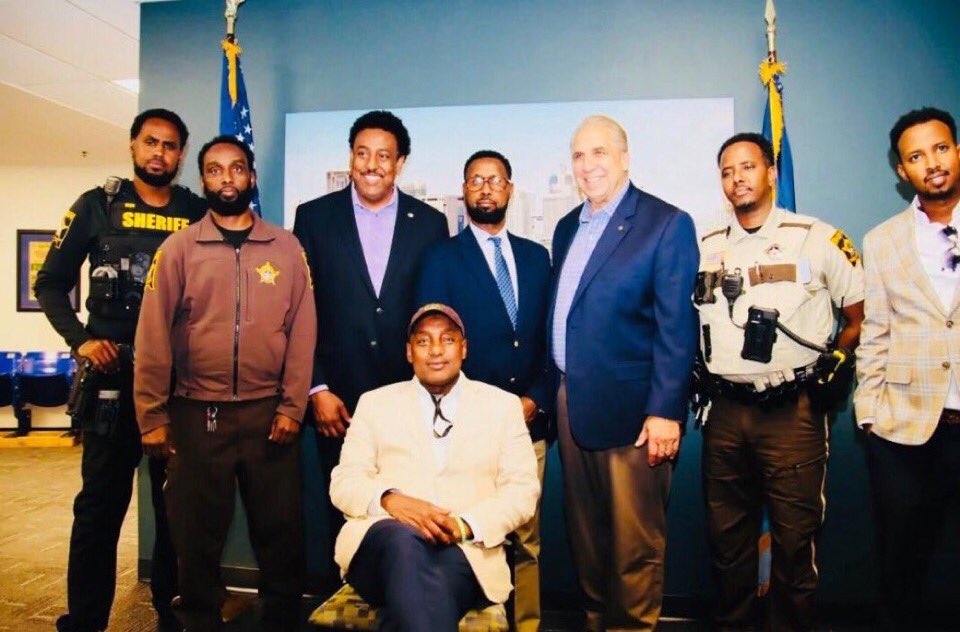
Omar Jamal a local respected Somalian community leader in Minnesota committed immigration fraud and was convicted and ordered to REPORT FOR DEPORTATION IN 2005
Instead he’s filed appeal after appeal and currently works for the @RamseySheriff’s office and has political backing from local Somalian politicians
If the community leader is getting away with this then just imagine what the community he leads is up to
Instead of being deported in 2005 he filed an appeal and then was granted diplomatic immunity from 2009-2011 as he was the charge d’ affaire for the somalian mission to the United Nations
Another deportation order was made in 2011 and despite this he’s still working @RamseySheriff’s office after he was released once again from @ICEgov detention in September
He is the poster child for endless appeals
@KatieMiller @StephenM @USCISJoe
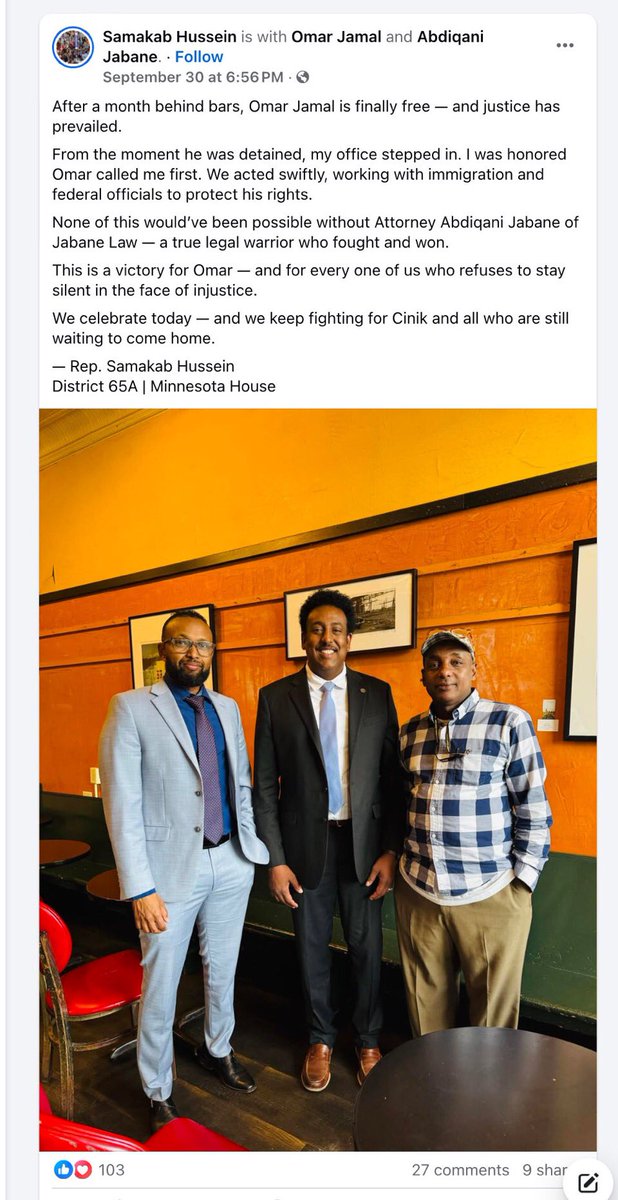
Local Somalian politicians bragged about getting Omar Jamal released from ice detention
He was the only high profile arrest made by @ICEgovERO and his release was a political and emotional victory for Somalians
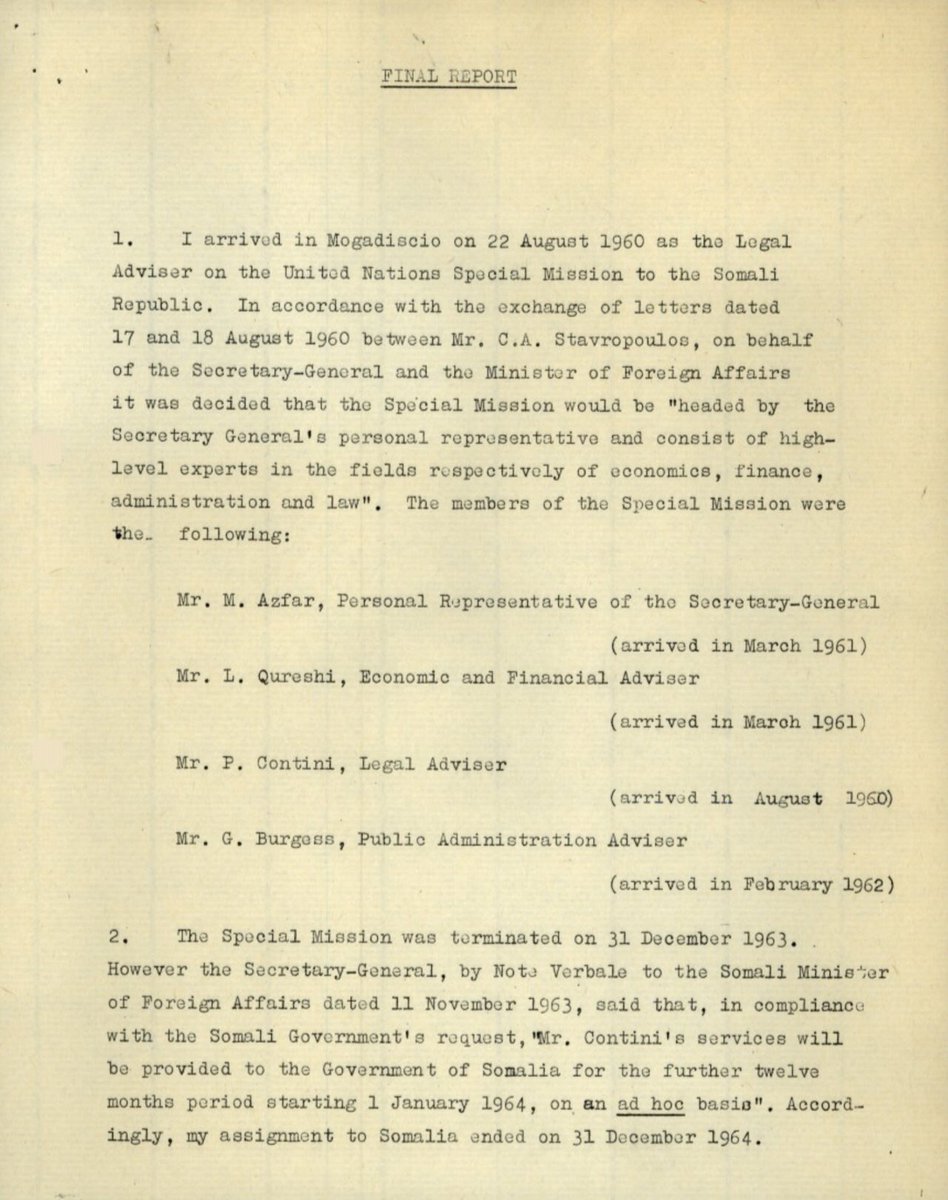
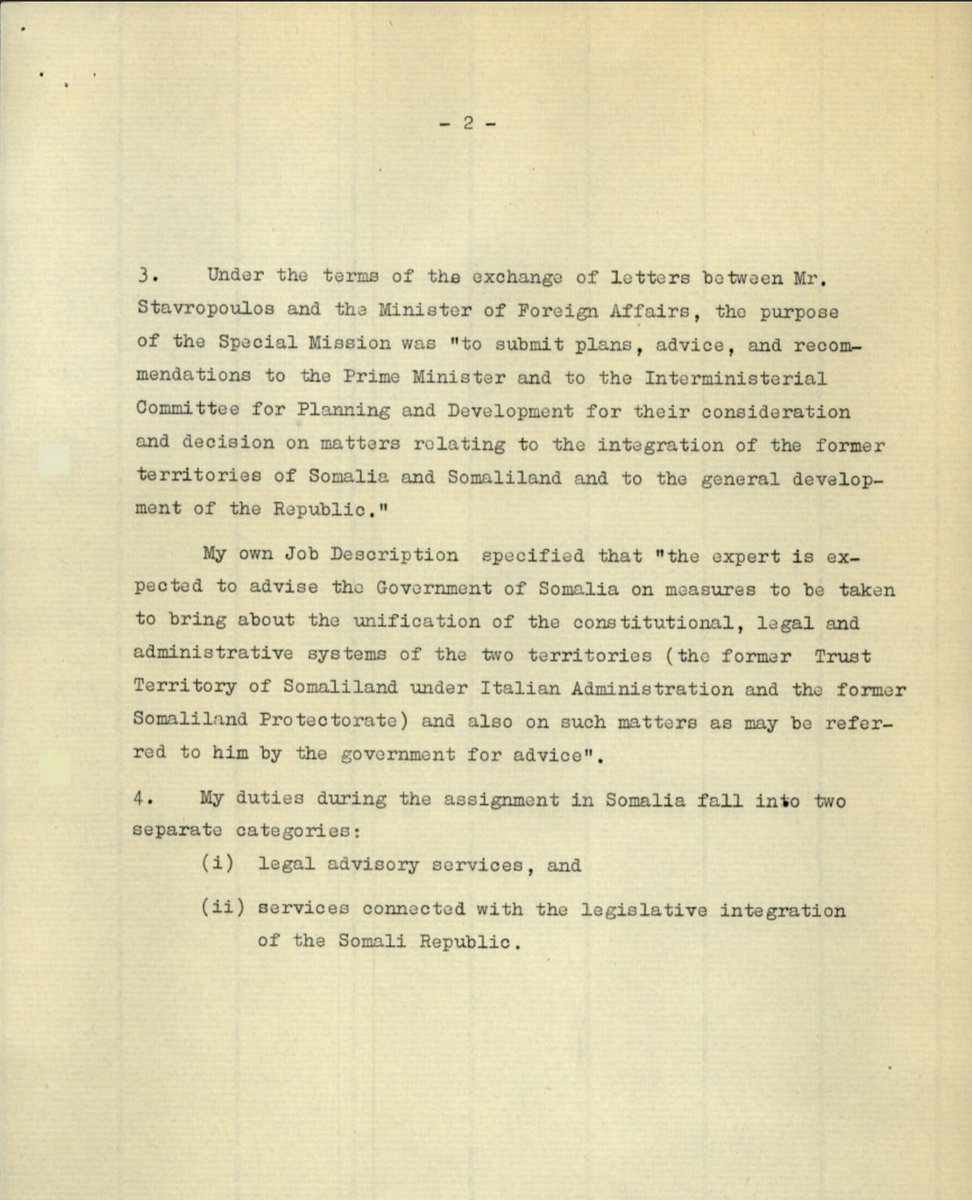
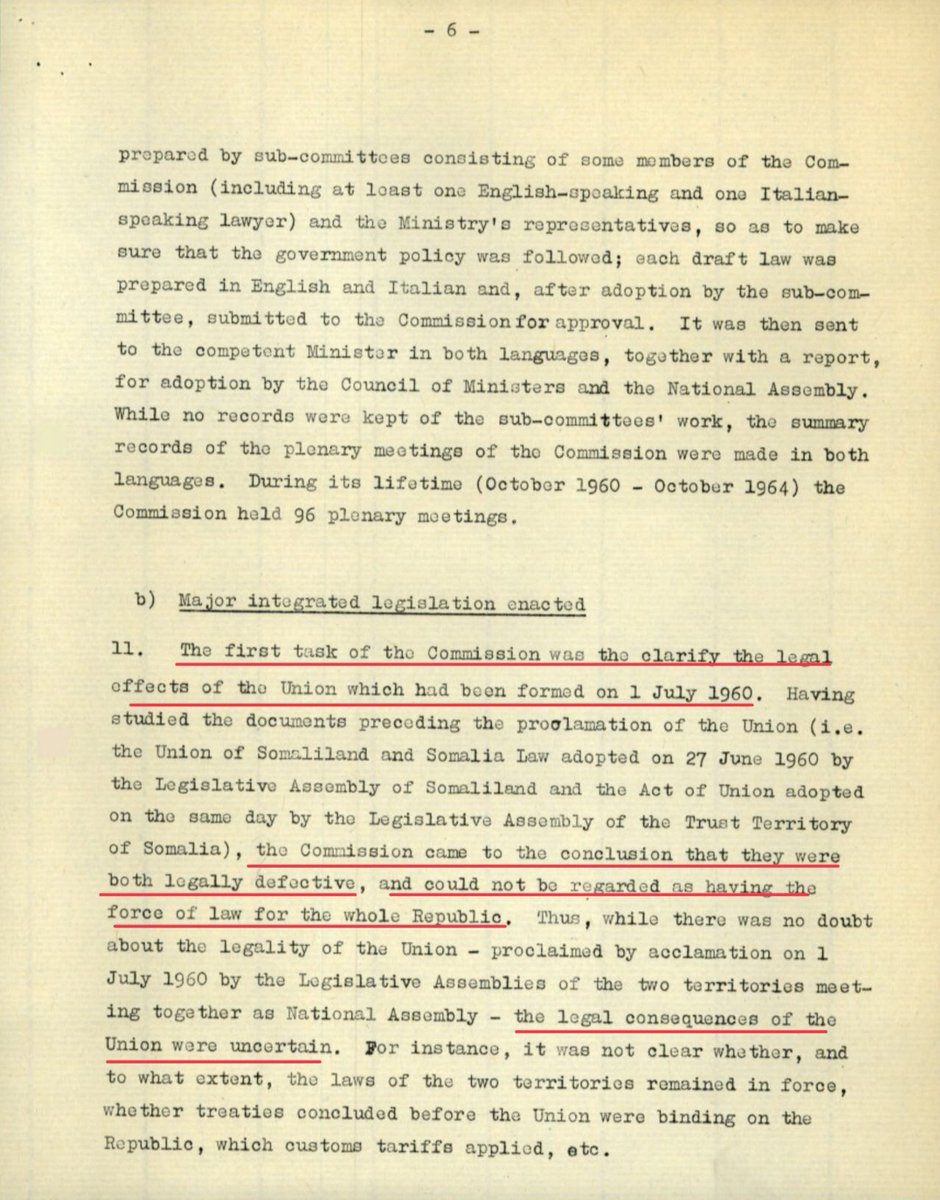
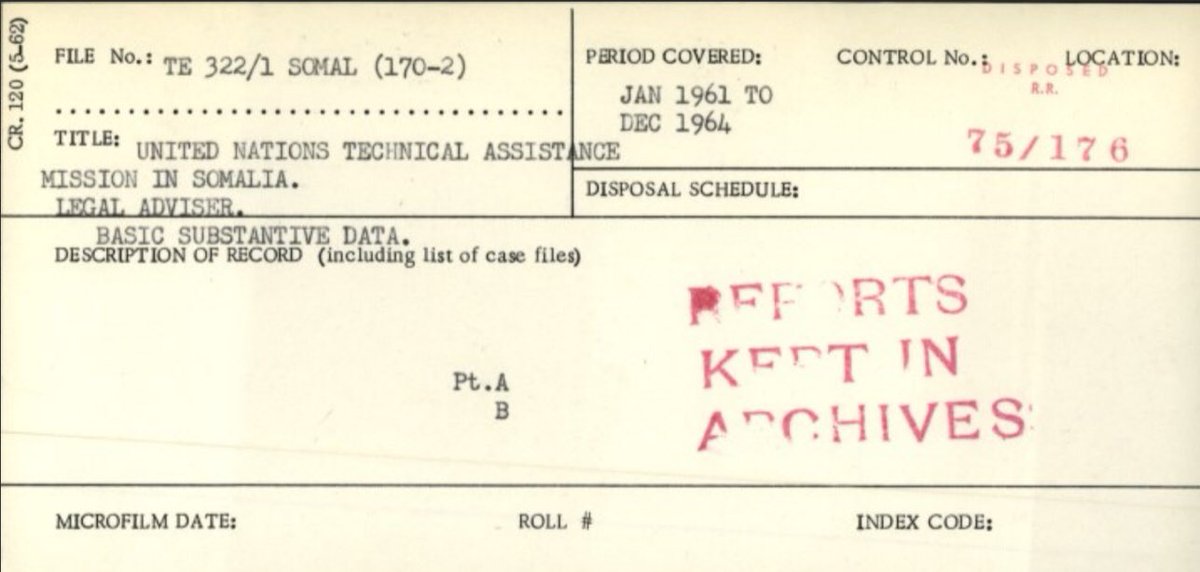
The primary source documents from Paolo Contini, Legal Adviser to the United Nations Special Mission to Somalia, provide clear evidence that the 1960 “union” between Somaliland and Somalia was not a lawful act of statehood but an irregular and defective arrangement contrary to international legal standards.
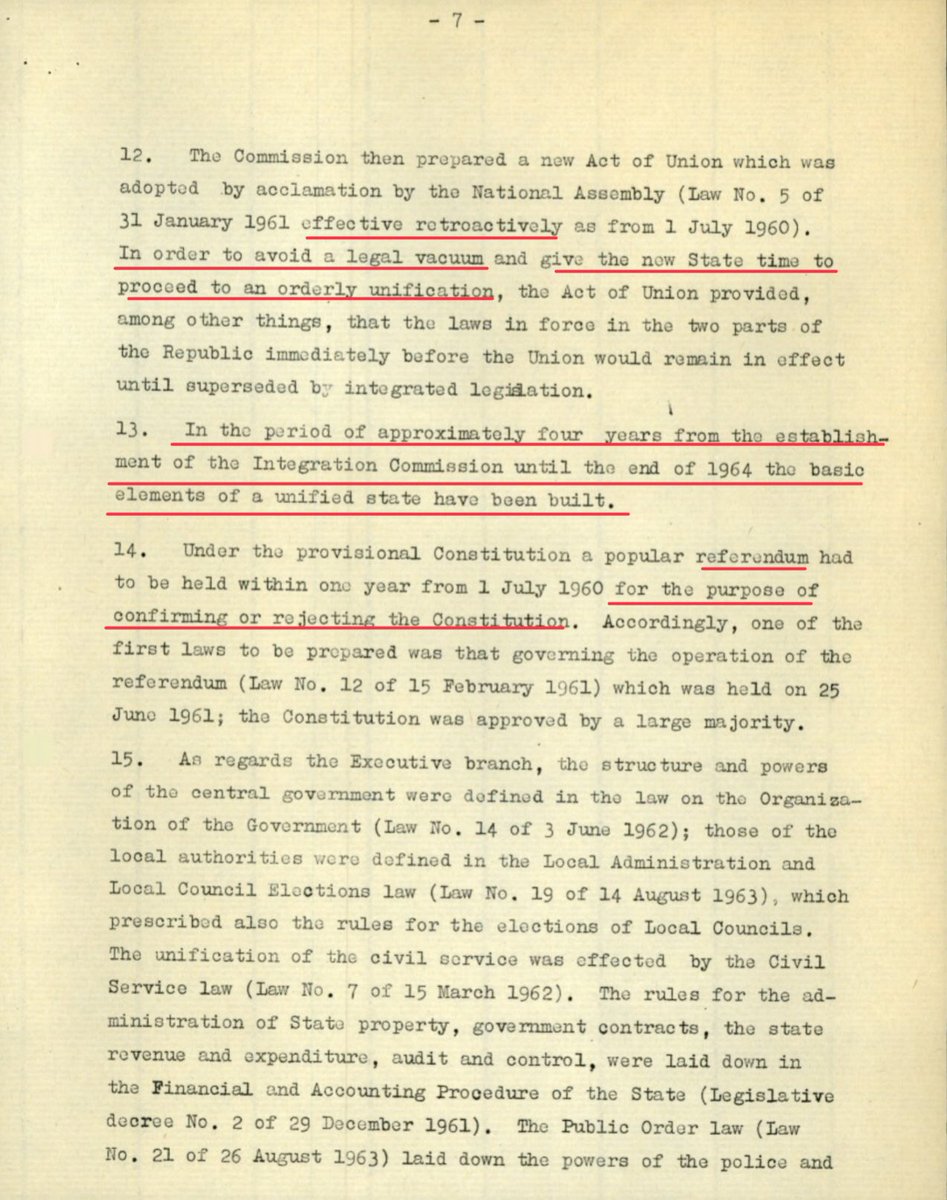
The Commission expressly concluded that the laws adopted in June 1960 the “Union of Somaliland and Somalia Law” and the Act of Union (attio di unione) were “legally defective and could not be regarded as having the force of law for the whole Republic,” with the “legal consequences of the Union” remaining uncertain. To fill this void, a new Act of Union was drafted by the Commission and adopted by the National Assembly in January 1961, but it was applied retroactively to 1 July 1960.
This practice is contrary to fundamental principles of international law. Retroactive lawmaking cannot create or validate state sovereignty where none legally existed. The Vienna Convention on the Law of Treaties (1969), while adopted later, codified a long-standing principle that treaties and acts of union require valid consent of the contracting parties at the time of formation (Articles 11–18). A union of sovereign states must be constituted through mutual ratification of a treaty of union or through explicit referenda demonstrating the free will of the peoples concerned.
In this case, no such legal instrument was ever ratified by both states. The only referendum held in June 1961 was on the Somalian Constitution, not on the union itself. By conflating a constitutional referendum with consent to union, the process violated the principle of self-determination of peoples (affirmed in UN General Assembly Resolution 1514 (XV) of 1960).
Somalilanders were thus denied their right to freely and directly determine their political status, a violation that renders the claimed union void ab initio under international law.
Accordingly, the so-called union between Somaliland and Somalia cannot be regarded as a valid international act but only as a de facto annexation, imposed through retroactive legislation and without the lawful consent of the people of Somaliland.
1. Retroactivity and Sovereignty
•Principle: In international law, sovereignty and statehood cannot be created by retroactive legislation.
•Why: A state’s legal personality must exist at the time of union, based on actual consent. If a union fails to meet legal standards at the moment of proclamation, later laws cannot “cure” that defect.
•Application: The January 1961 Act of Union was applied retroactively to July 1960 to fill what Contini called a “legal vacuum.” That means, legally, there was no valid act of union at the time.
•Consequence: The union never legally existed in July 1960, making the claimed statehood defective from inception.
⸻
2. Consent Under International Law
•Principle: International law requires clear consent for the merger of sovereign states, either through:
a) a ratified treaty of union, or
b) a referendum demonstrating the will of the people.
•Authority: The Vienna Convention on the Law of Treaties (1969) (though postdating 1960) codified existing customary principles — Articles 11–18 confirm that valid consent is the cornerstone of treaty formation.
•Application:
•No treaty of union was signed and ratified by both legislatures.
•The June 1961 referendum asked citizens to approve Somalia’s Constitution, not the union itself.
•Consequence: Somalilanders never gave direct consent to the political merger.
⸻
3. Self-Determination
•Principle: Peoples must freely determine their political status (UNGA Resolution 1514 (XV), 1960).
•Application: Somaliland achieved recognized independence on 26 June 1960. As a sovereign state, its people had the right to freely decide whether to remain independent or enter a union.
•The absence of a direct referendum on union denied them that right. Substituting a constitutional referendum for a union referendum amounts to removing popular sovereignty.
•Consequence: This violates the self-determination norm that was already binding in 1960.
⸻
4. Void ab initio Doctrine
•Principle: Under international law, agreements concluded without valid consent are void ab initio (null from the outset).
•Application: Since the union lacked a ratified treaty, a valid referendum, or clear consent, and instead relied on retroactive law, it did not legally create a state.
•Consequence: The so-called union was never valid under international law; it was only a de facto annexation, i.e., an administrative takeover without lawful basis.
⸻
👉 Put simply: The union was not defective but it was void from the start. No treaty, no consent, no lawful referendum, and a retroactive legal patchwork mean it cannot be recognized as a binding international act.
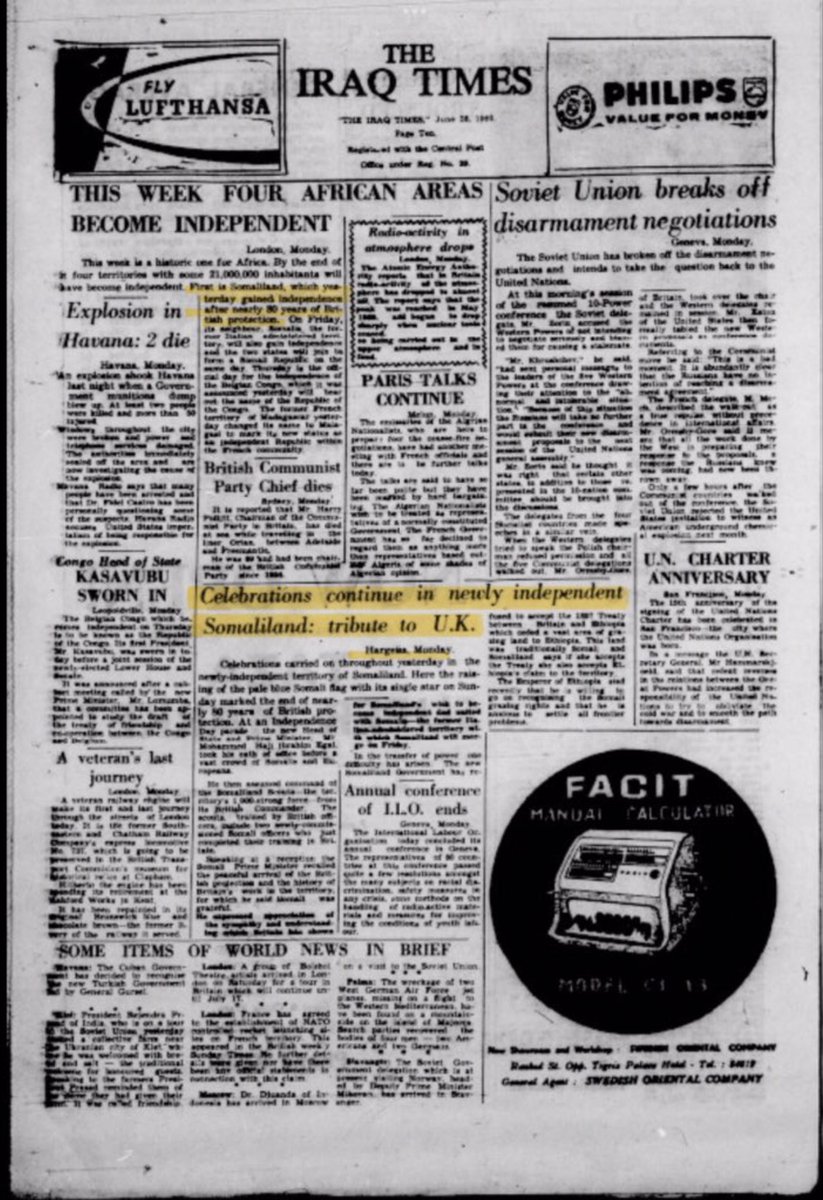
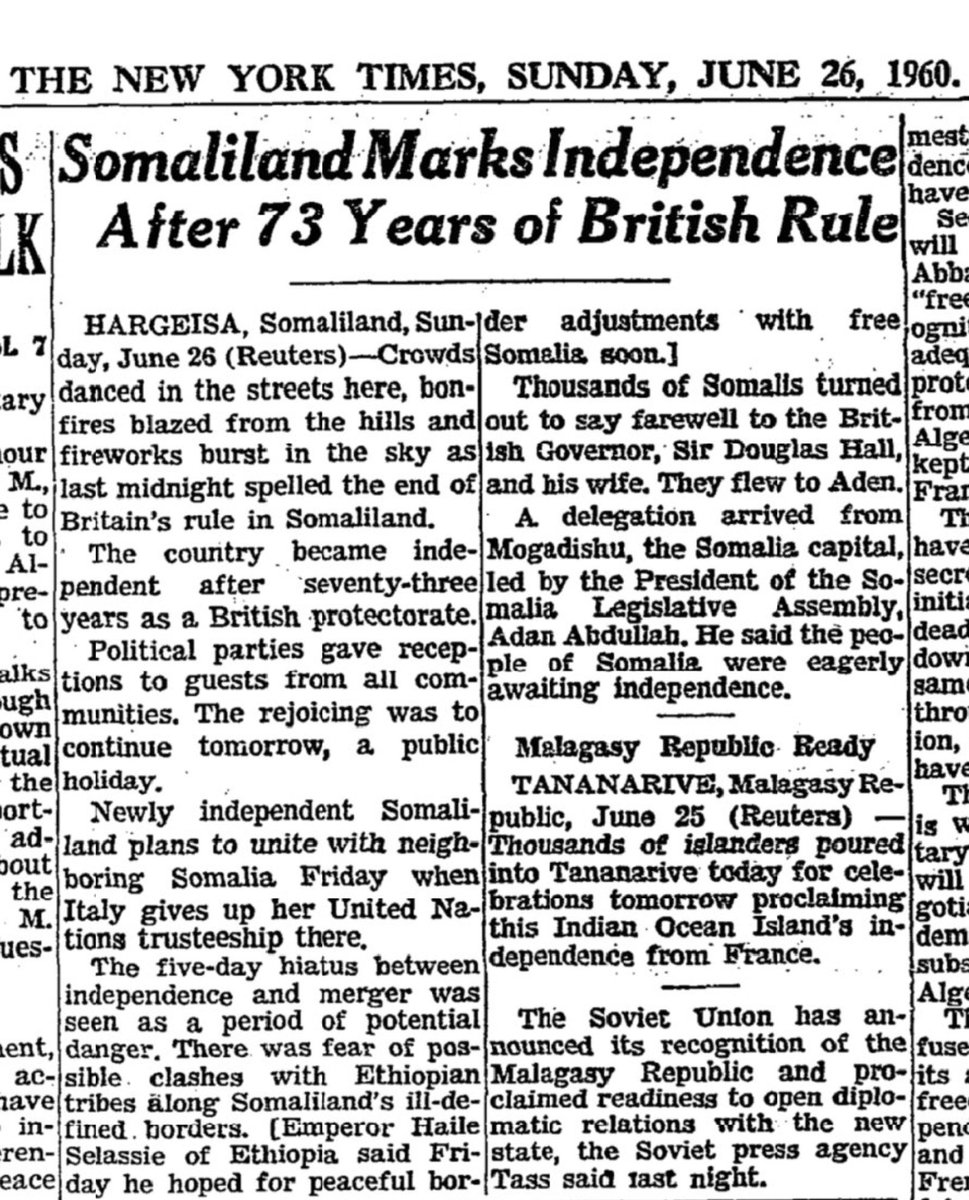
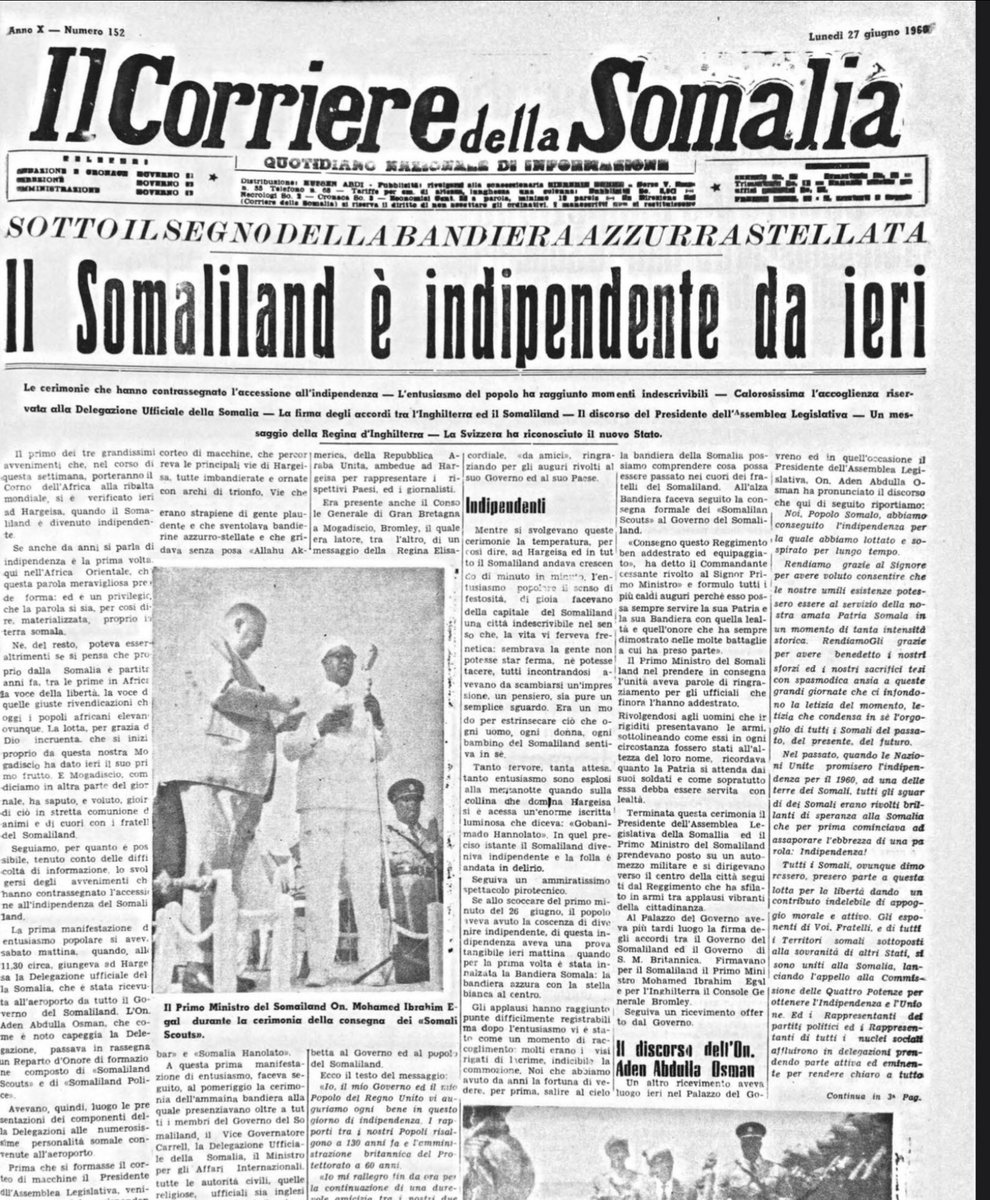
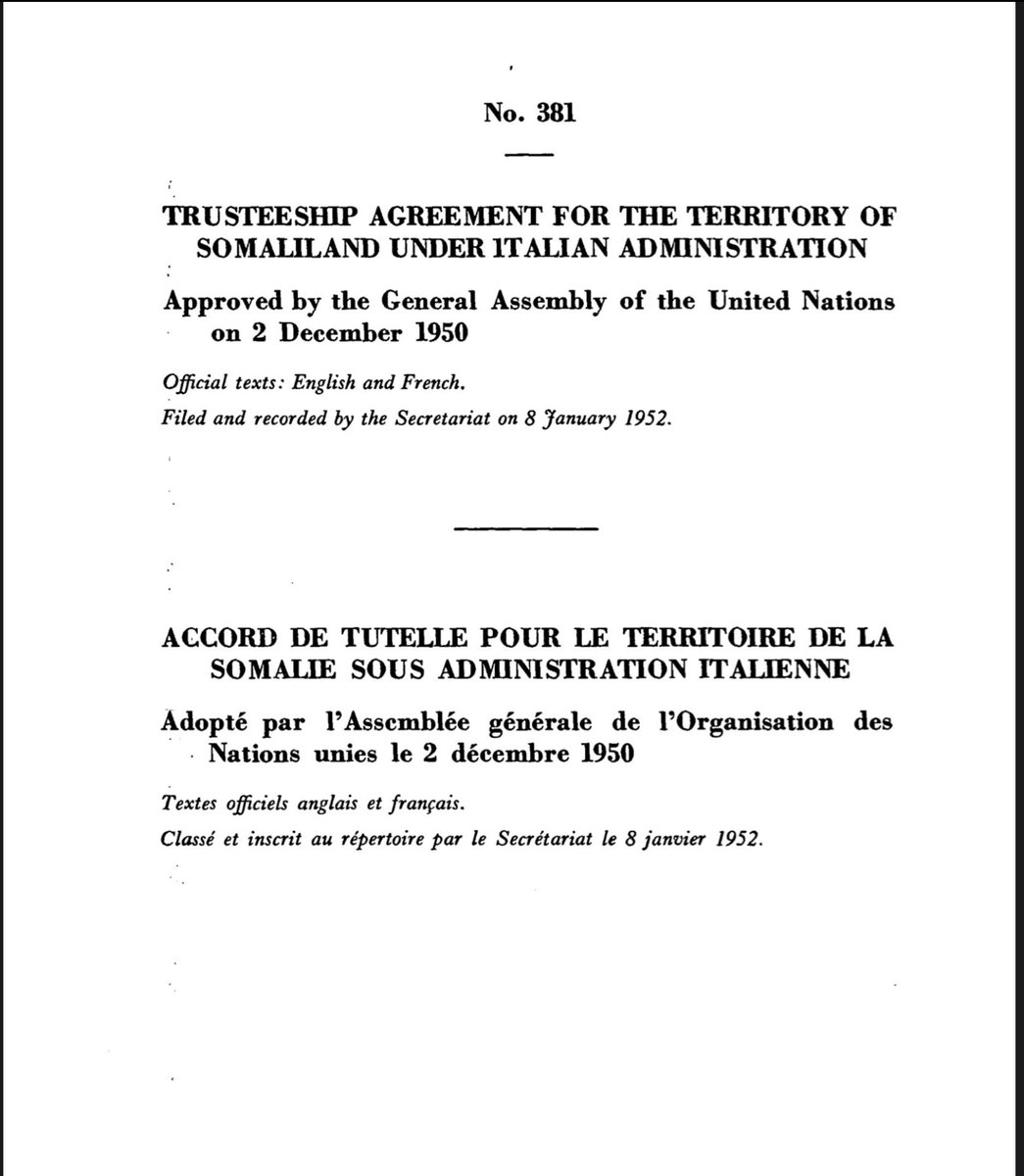
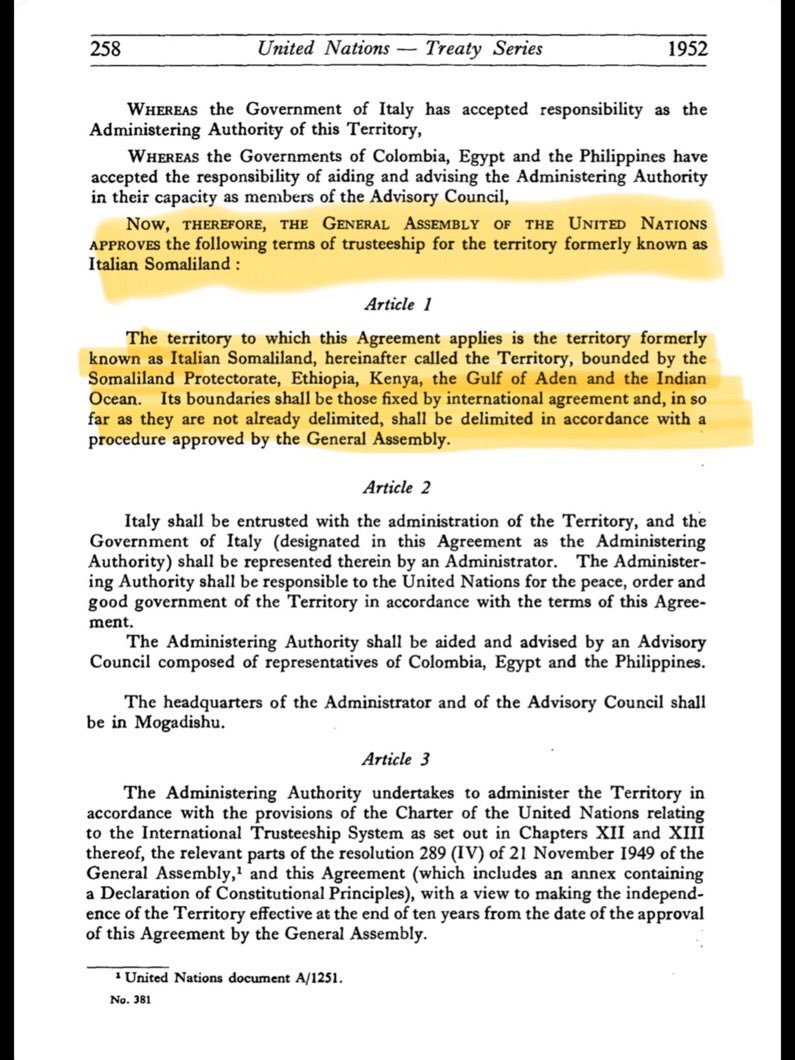
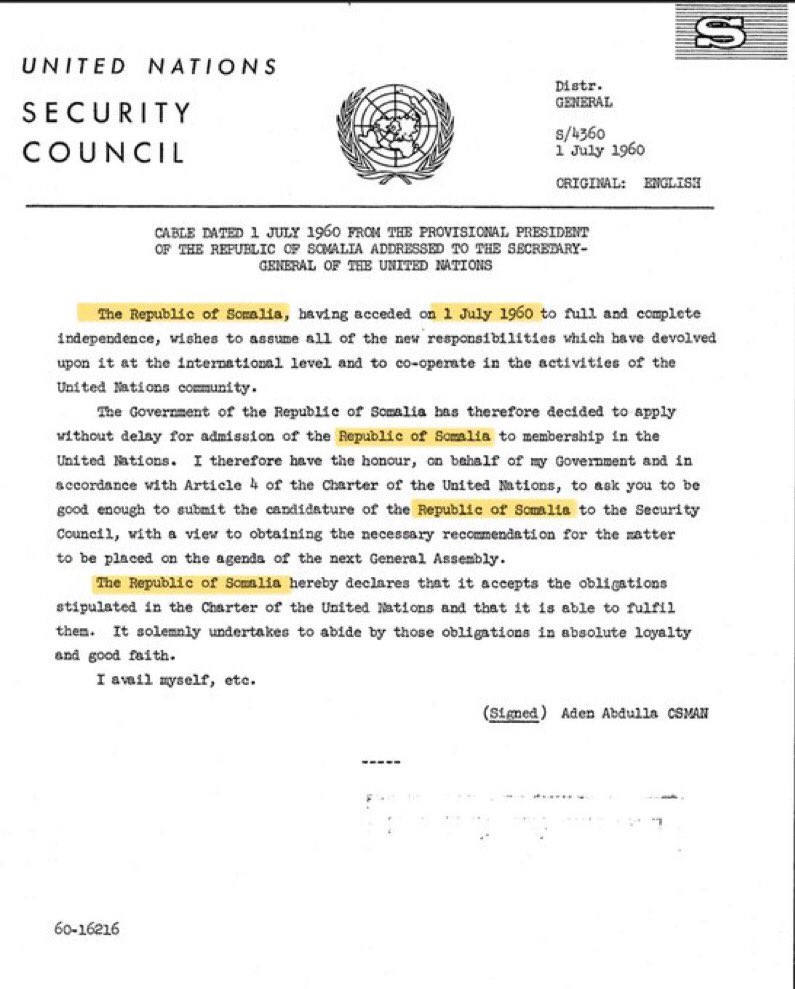
Territorio amministrato italiano della somalia gained its independence on July 1 1960 as the Repubblica della somalia thru General Assembly resolution 1418 (X1V) of December 5, 1959.
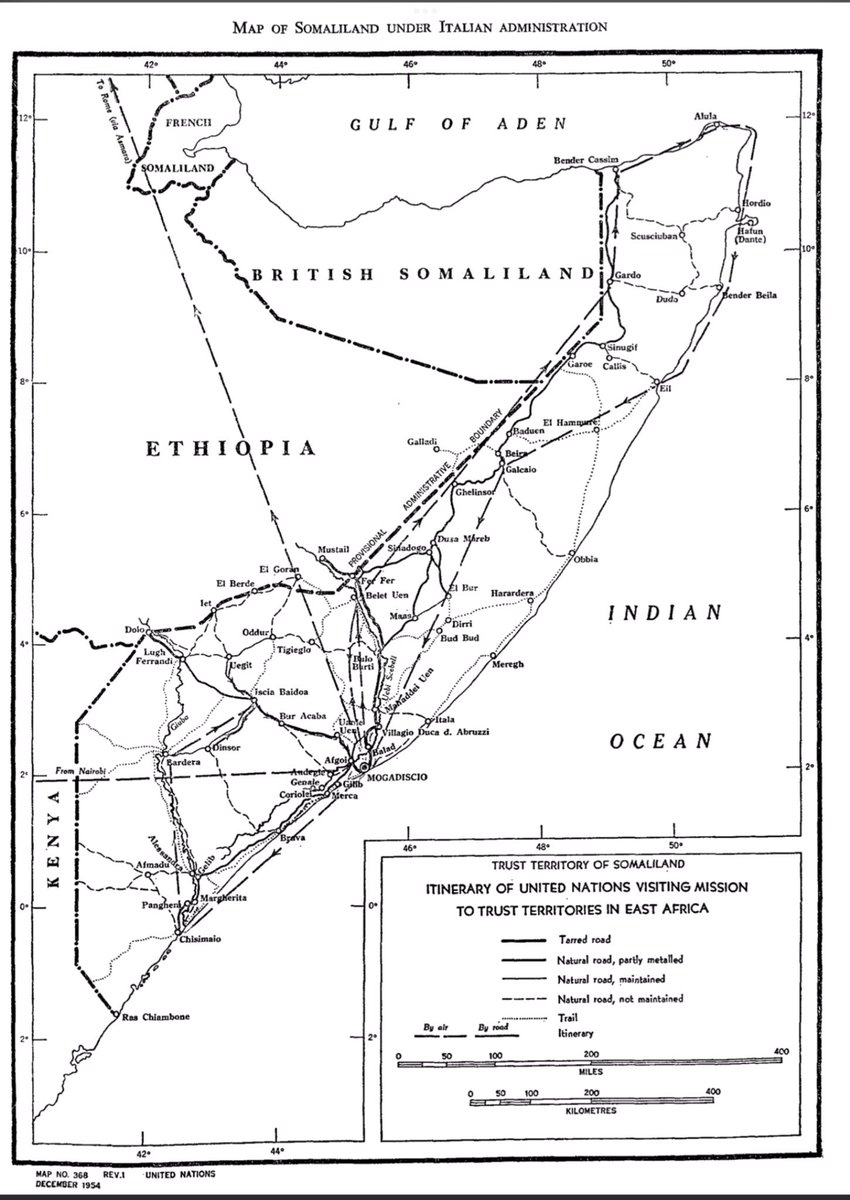
This newly created nation had its boundaries set by the both the trusteeship agreement and by resolution 289 (IV) of 21 November 1949. Its borders were bounded by newly created Somaliland, Kenya, Ethiopia and Indian Ocean
The resolution stipulated that its boundaries would be fixed by international agreements. This newly created nation and its transitional president Aden Abdullah Osman applied for UN membership as the solitary state of the Repubblica Della Somalia within its July 1st 1960 borders as stipulated by mulitiple United Nations resolutions
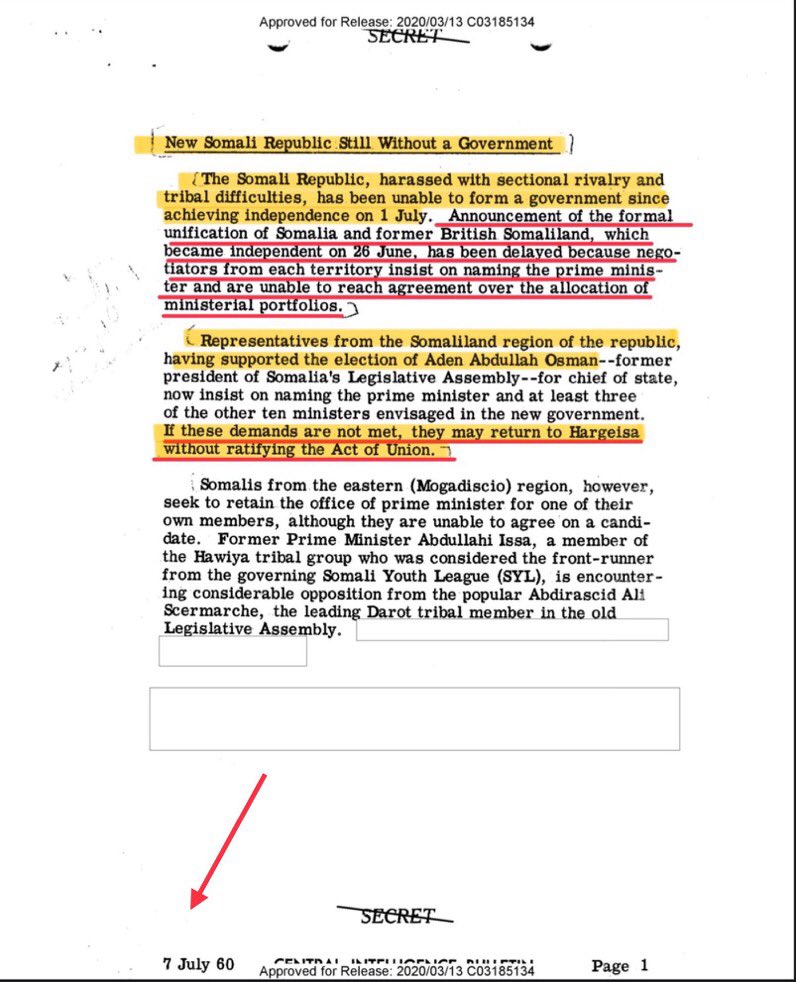
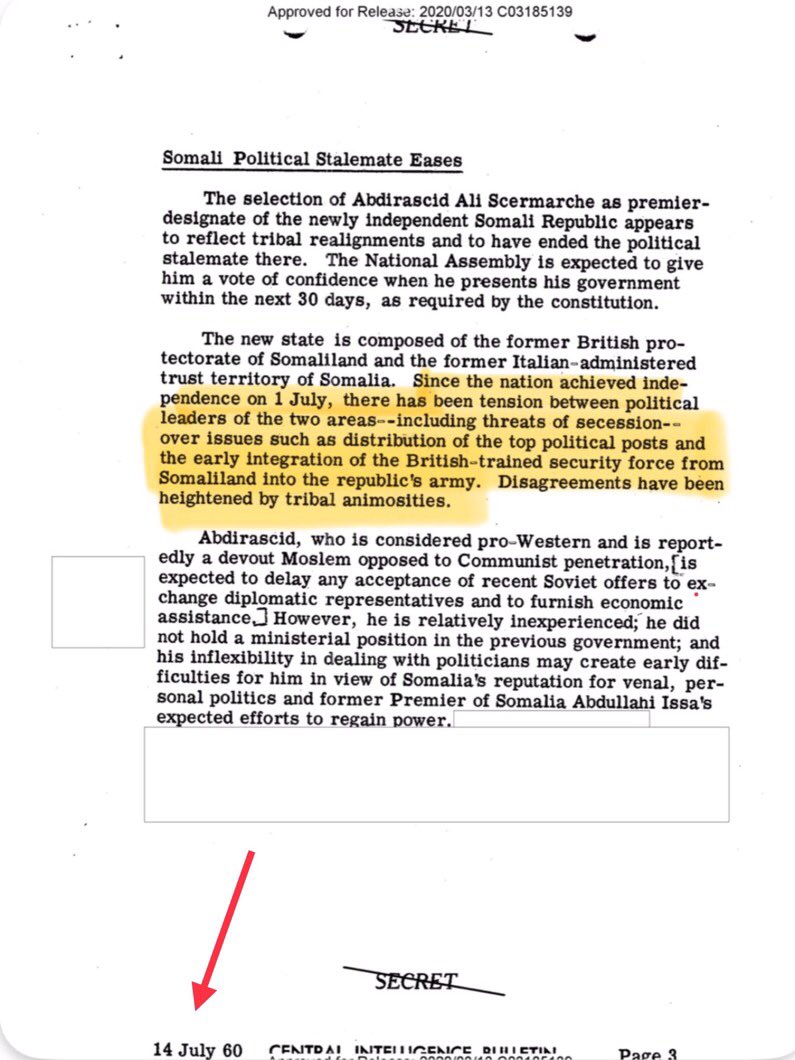
The two sovereign nations could not agree on distribution of top political positions as late as July 14 1960 and but eventually the Somalian elite would win out over the Somaliland delegation taking the prime ministership, presidency and 8 out 11 cabinet positions this outcome would eventually lead to discontent in Hargeisa who were already suffering from the loss of investment and stature with consulates and businesses moving to Mogadiscio
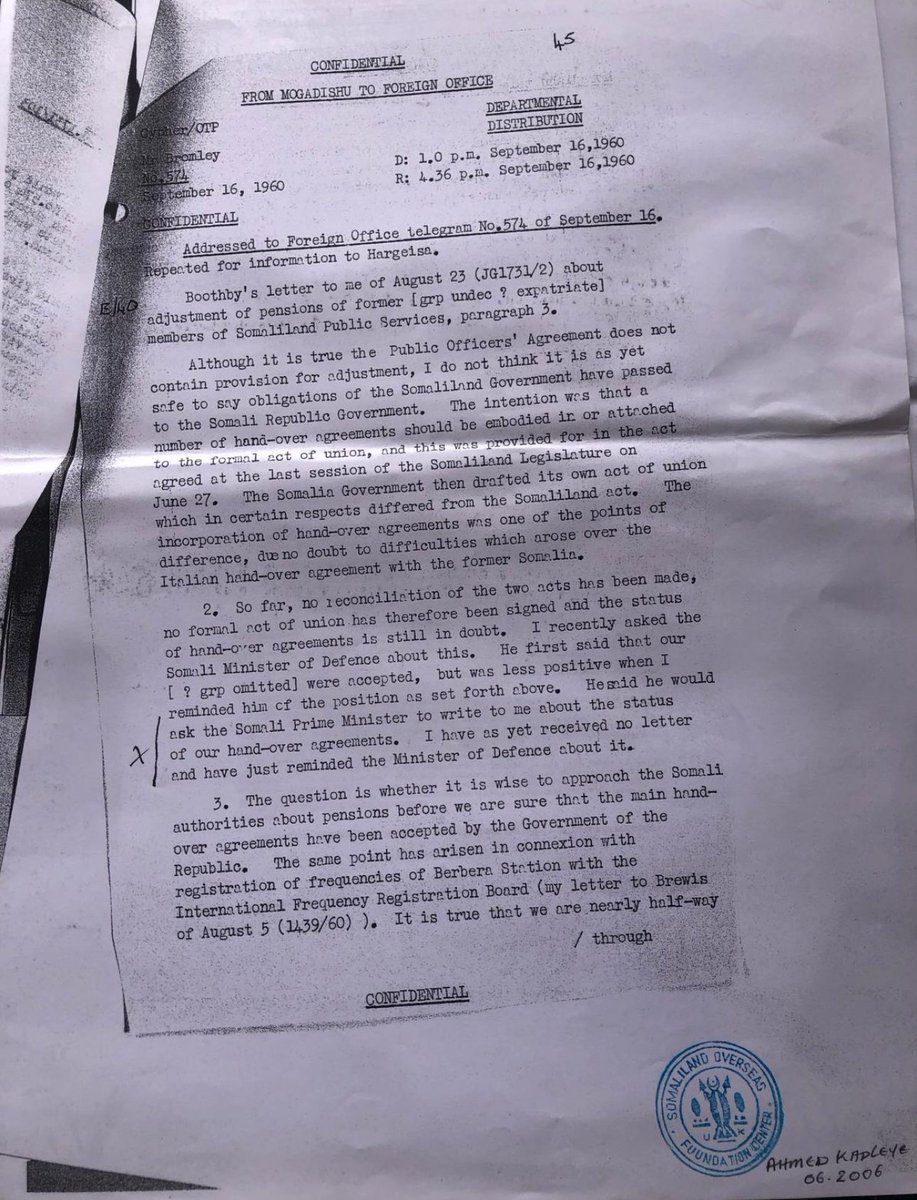
The agreed upon process of power sharing and brotherly relations misfired from the start and to highlight the rush to claim Somaliland’s sovereignty no act of union was signed let alone ratified
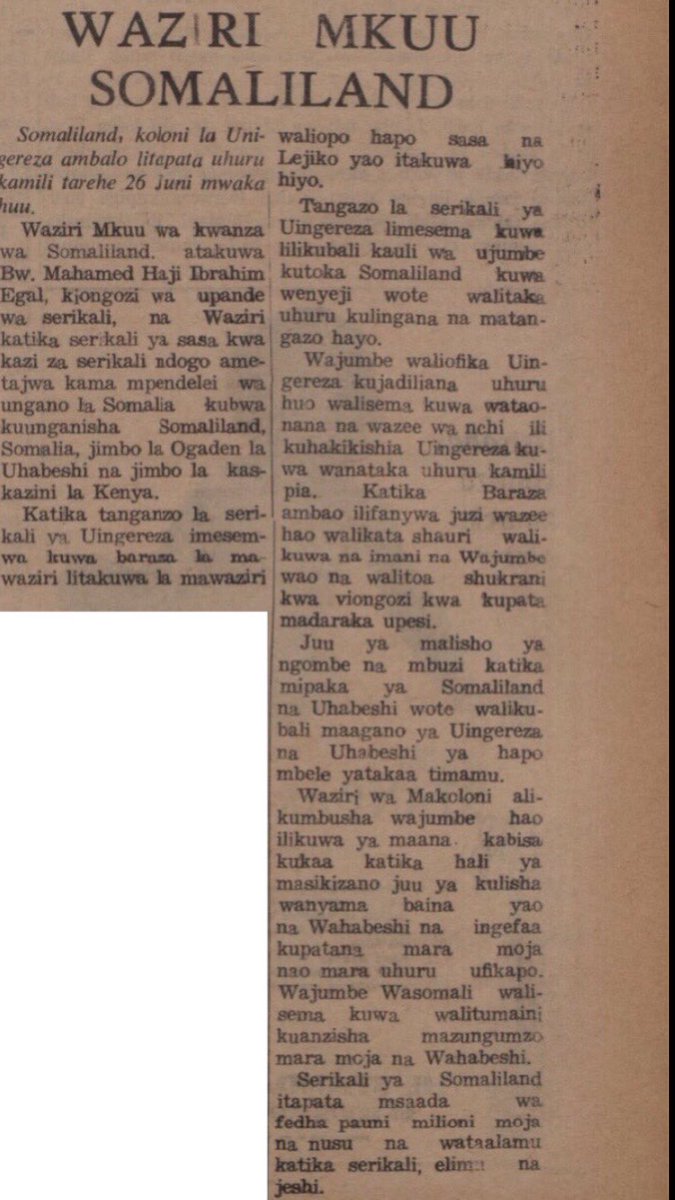
The British government had multiple legal concerns since no legitimate act of union was signed which would carry over the treaties signed with an independent Somaliland. These treaties are still registered under Somaliland at the United Nations depository of treaties under Article 12 of the UN charter.
This is in stark contrast to the situation between Somaliland and Somalia there is no such treaty between an independent Somaliland and Somalia as stipulated by the previous resolutions there was no internationally recognized treaties unifying the two sovereign states
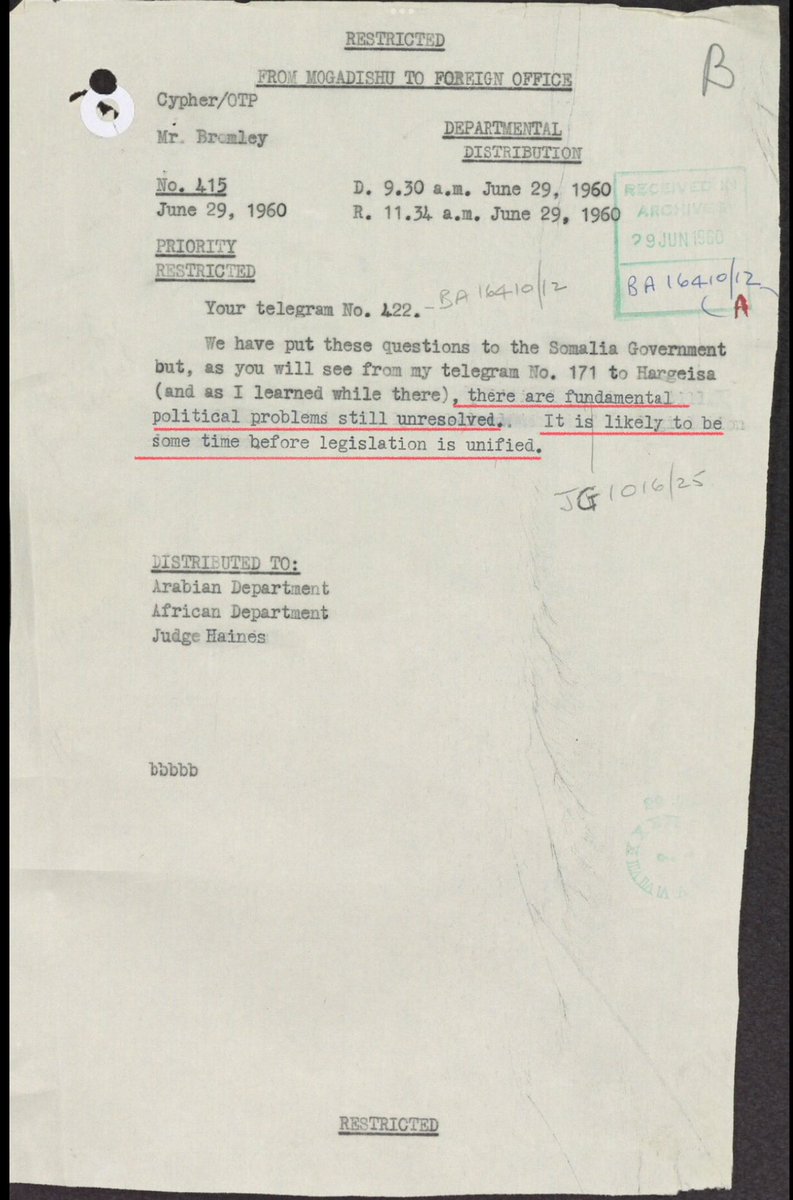
Previously confidential United Kingdom documents attest to this undisputed facts and much to UK Foreign Affairs officials Somalilanders were legally not citizens of the Republic of Somalia