Dr Helen Fry | WWII Historian Profile picture
Aug 16 7 tweets 3 min read Read on X
Operation Valkyrie was the 1944 plot to assassinate Adolf Hitler with a bomb concealed in a briefcase.

In the clandestine corners of Lisbon’s nocturnal streets, Agent Rita Winsor and defector Otto John covertly strategised the daring attack.

The mission, however, did not succeed:
(🧵)Image
Newly declassified files unveil riveting details of a sophisticated MI6 operation in Lisbon, centring on Agent Rita Winsor, defector Otto John—an MI6 asset—and the bold July 1944 plot to assassinate Adolf Hitler.

Otto John, a lawyer employed by Lufthansa, leveraged his role to travel to Lisbon and beyond, meeting covertly with British handlers Rita Winsor and Graham Maingot without arousing suspicion.

Codenamed Whiskey, John had held twelve clandestine meetings with them in the two years preceding Operation Valkyrie.

He is believed to have served as a crucial link between Colonel Georg Hansen, head of the German resistance, and MI6.

(continued)
On a quiet night in 1944, within the shadowy backstreets of Lisbon, MI6 agent Rita Winsor, tasked with handling German defectors, rendezvoused with Otto John and drove him through the dimly lit avenues of the Portuguese capital.

In hushed tones, John revealed details of a daring plot to assassinate Adolf Hitler, set for July 1944.

He confided in Winsor about the swelling ranks of prominent anti-Nazi figures in Germany orchestrating Operation Valkyrie, a meticulously planned strike to take place during Hitler’s meeting at the Wolf’s Lair, his Eastern Front headquarters near Görlitz (now in Poland).

(continued)
At the heart of the conspiracy was Count Claus von Stauffenberg, who aimed to establish a new government following Hitler’s assassination.

With General Ludwig Beck poised to lead Germany and Field Marshal Erwin Witzleben appointed to command the armed forces, they planned to negotiate a peace settlement with the Allies.

Rita Winsor swiftly relayed this critical intelligence to Claude Dansey, Assistant Chief of the Secret Intelligence Service (ACSS), widely known as MI6.

(continued)
On 20 July 1944, Count Claus von Stauffenberg executed a daring plan, detonating a bomb concealed within a briefcase placed beneath the table where Adolf Hitler was speaking.

Tragically, an unsuspecting German officer moved the briefcase, inadvertently sparing the Führer’s life.

The failed assassination unleashed devastating consequences for the conspirators, with many, alongside their families, facing execution.

In the aftermath, Otto John sought to escape Germany and defect to the West.

Rita Winsor orchestrated intricate arrangements to covertly smuggle him to Britain, securing his safety as a defector.

(continued)
The wonderful espionage historian Nigel West has concluded:

‘Based on this astonishing new evidence, it is completely inconceivable that the British did not know, have an opinion on, nor participate in such a momentous plot. We now know that Otto John was an MI6 asset, and has a large MI6 file… If this can be released, it will show the British involvement in Valkyrie and the role of Otto John as the missing link.’

Lisbon remained a pivotal hub of global espionage throughout the Second World War, serving as a thriving neutral capital. From here, MI6, in collaboration with MI5, masterfully orchestrated the Double Cross System, managing an intricate network of double agents.

Stay tuned for a future thread on this topic!

(continued...ending)
I hope you’ve gained fresh insights into the daring Operation Valkyrie.

For more captivating Second World War history, follow me @DrHelenFry.

I share fascinating threads and have many more topics to cover.

(end) Image
• • •

Missing some Tweet in this thread? You can try to force a refresh

 

Keep Current with Dr Helen Fry | WWII Historian

Dr Helen Fry | WWII Historian Profile picture

Stay in touch and get notified when new unrolls are available from this author!

Read all threads

This Thread may be Removed Anytime!

PDF

Twitter may remove this content at anytime! Save it as PDF for later use!

Try unrolling a thread yourself!

how to unroll video
  1. Follow @ThreadReaderApp to mention us!

  2. From a Twitter thread mention us with a keyword "unroll"
@threadreaderapp unroll

Practice here first or read more on our help page!

More from @DrHelenFry

Aug 18
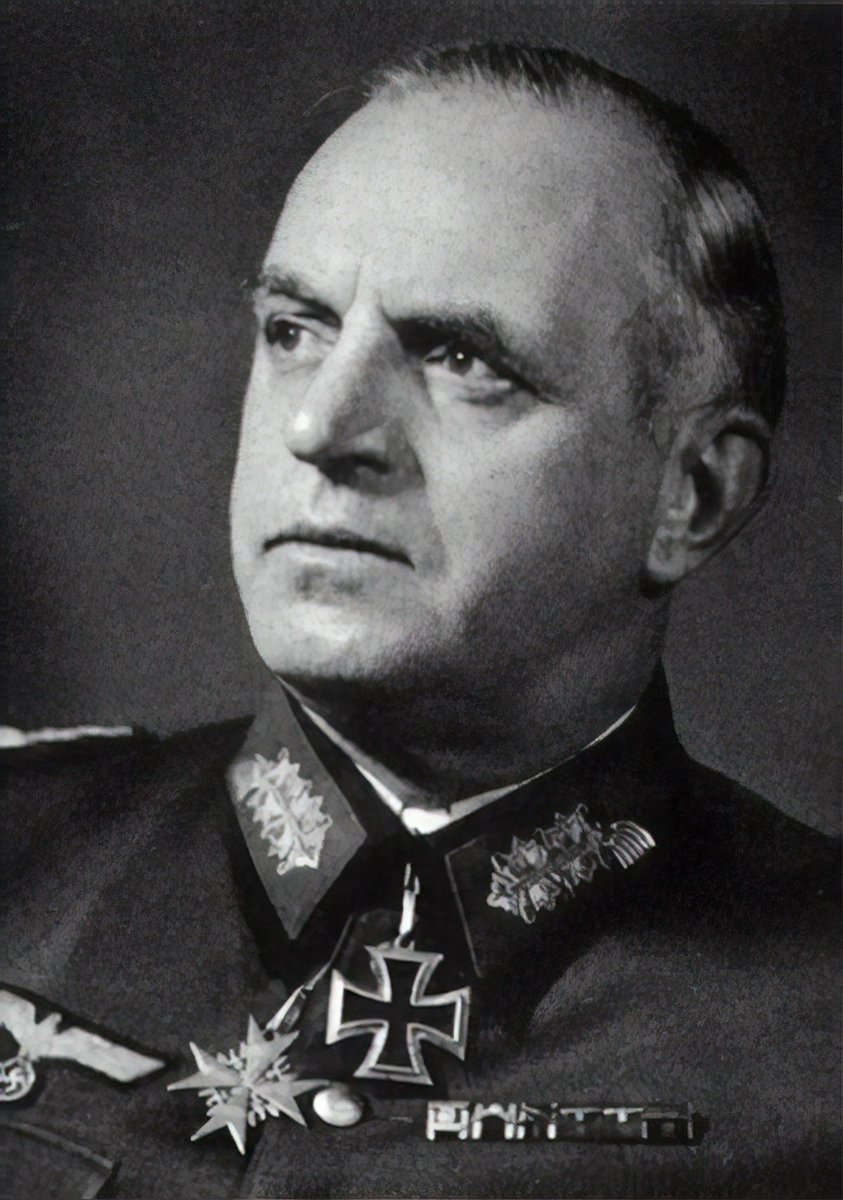
In 1945, Field Marshal Ernst Busch’s sudden death at Wilton Park was shrouded in secrecy, with no immediate records or death certificate.

This thread uncovers the covert funeral and a German general's emotional plea for military honours:
(🧵) Image
Field Marshal Ernst Busch, Commander of all German forces in northwest Europe, was never transferred to Trent Park. He remained at Wilton Park because of ill health.

On 17 July 1945, he died of a heart attack in his room at Wilton Park before his batman could summon any help.

Given his status as a Field Marshal, it is perhaps surprising to find no personal MI19 file for him or any official report of his death. His funeral and burial went ahead without the customary issuing of a death certificate.

(continued)
One was finally issued on 14 September 1945, signed by Registrar W. Stokes, nearly two months after the date of death, and Nottingham hospital was given as the place of death, not Wilton Park.

Why the death was kept secret for two months is not clear, but probably to protect the existence of Wilton Park as a special POW camp from the public eye.

The informant of death was Major Commandant St Clare Grondona of No.7 P.W. Camp (Annex) Beaconsfield and the cause was given as chronic myocarditis (heart attack), diagnosed by Dr J.S. Smith.

Immediately after the death, St Clare Grondona awaited instructions from the War Office about the funeral. An urgent reply came through that Busch’s body was to be removed from the White House at Wilton Park by motor hearse to Aldershot the following day.

The body could be accompanied by ‘reasonably appropriate military honours’.

(continued)
Read 9 tweets
Aug 17
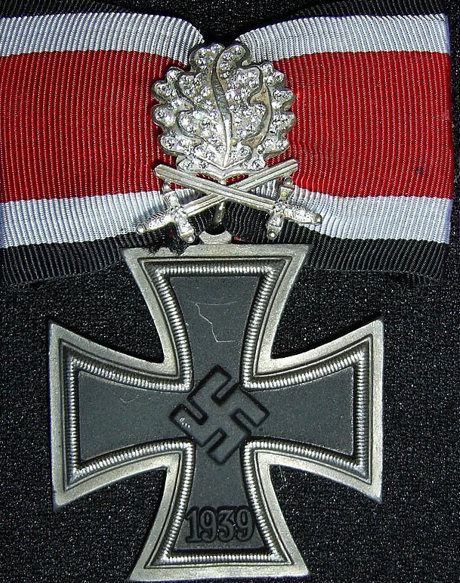
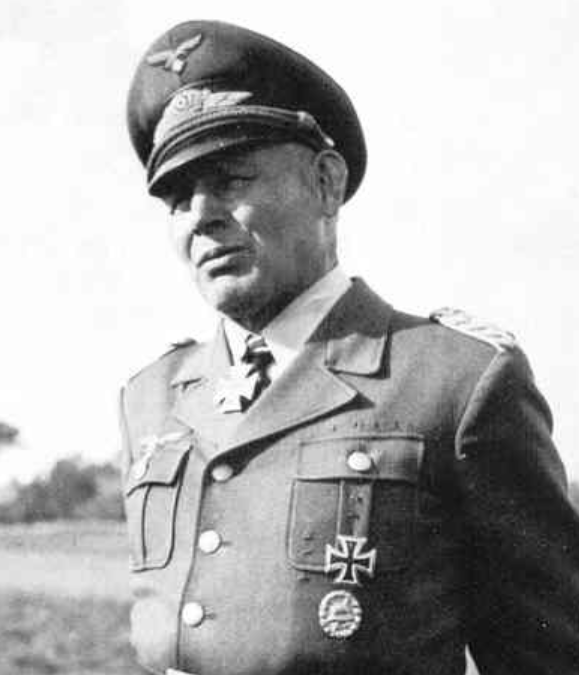
In 1944, General Hermann Ramcke was captured with a stash of brandy but stayed withdrawn to disclose Hitler’s plans.

Held on UK soil, the British tricked him with a fake Iron Cross award.

Emboldened by drink, he celebrated in style but this led to loose lips:
(🧵) Image
Image
On 19 September 1944, General Hermann Ramcke was captured in his bunker at Brest and found to be in possession of a large quantity of French brandy and liqueurs, a French mistress, an Irish setter, at least twenty uniforms, and a whole dinner service.

Major General Hans von der Mosel was captured with him. They were taken to an airfield near the coast and separated. Ramcke was taken to barracks, surrounded by half a dozen guards and held in isolation.

He recalled later: ‘An officer with a pistol lying within reach kept watch over me in a room where the walls were covered with pictures of German aircraft. I was kept there for two days completely isolated.’

Ramcke was brought to Wilton Park just two days after capture and housed in a cottage on site, along with Lieutenant Generals Heyking and Heim, and Vice Admiral Weber.

(continued)
He wrote about this period in his memoirs:

'The following morning, I found myself in a small summerhouse in the upper rooms of which I discovered three generals, von Heyking, Heim and Weber. The house was bordered on two sides by high walls, topped by [barbed] wire and very well guarded. Next to the small yard was a tennis court, in some disrepair, upon which we were permitted to stroll. Two office buildings surrounded this area. In the ground floor of the gardener’s house were two British soldiers who prepared our meals, which we took together in a small neighbouring room.'

Ramcke was a regular soldier who had risen up through the ranks; in MI19 files he is described as being ‘inordinately vain and has a most extensive knowledge of distorted history’.

(continued)
Read 11 tweets
Aug 16
In 1943, two German POWs at Latimer House boasted about outsmarting British interrogators, unaware their cell was bugged by MI6.

This is the story of how these German POWs spilled Nazi rocket secrets:
(a short thread🧵) Image
11 March 1943:

In a cell at Latimer House in the Buckinghamshire countryside, two German soldiers, a lower-rank infantry officer captured in Tunisia the previous year, and a paratrooper captured in Algeria a few months before, are discussing the interrogations they have undergone.

The previous day, British agents had hauled the paratrooper into an interrogation room and shown him a sketch of some rocket launch ramps.

(continued)
He had given nothing away and was now boasting about it.

As he told his cellmate, the British had got the dimensions of the projectile and its track entirely wrong, and, thankfully, knew absolutely nothing of Germany’s launch ramp designs.

What’s more, the interrogating officers had tried in vain to soften him up to make him talk. The British were apparently unbelievably stupid.

(continued)
Read 7 tweets
Aug 12
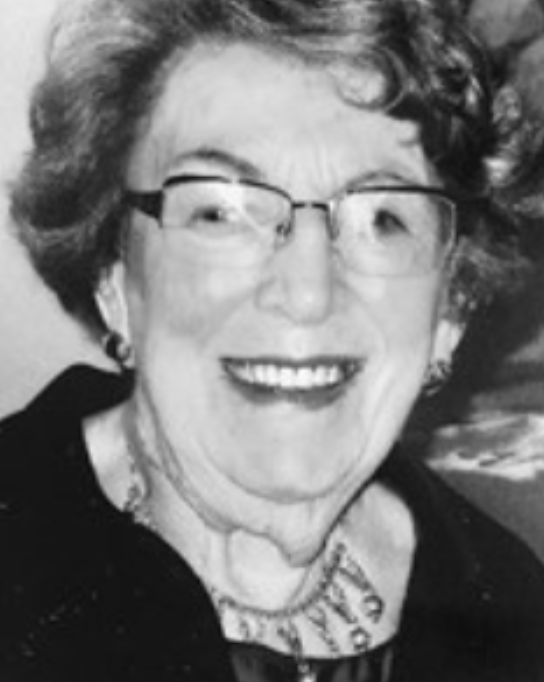
In 1942, a young woman sat alone in a Leicester Square cafe when an RAF officer approached her and their encounter sparked a life-changing moment.

“I’m going on a dangerous mission tonight, I might not come back. Will you promise me something?”

This is a true story:
(🧵) Image
Leicester Square, London, October 1942:

The ground-floor café of the Quality Inn buzzed with patrons, many in uniform, seeking brief respite amid the war’s turmoil. Despite heavy bombing, fears of a German invasion lingered.

Lesley Wyle paused at the entrance, scanning for an empty table. A waitress guided her to the only free one, where she ordered a coffee.

(continued)
Lesley Wyle was born Ilse Eisinger in Vienna in 1921.

She fled Nazi-occupied Austria after Kristallnacht on 9–10 November 1938, when Jewish businesses and shops were destroyed, leaving shattered glass strewn across Vienna’s streets.

Following the Anschluss, thousands of Jewish men were arrested and sent to concentration camps. The Nazi regime targeted Jews as enemies, including Lesley.

She was fortunate to escape to the safety of England.

(continued)
Read 12 tweets
Aug 7
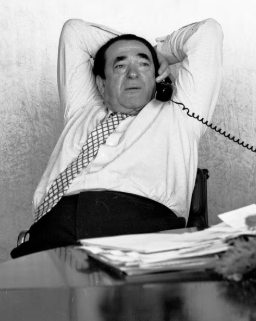
Robert Maxwell was a Holocaust survivor who escaped a death sentence, fought Nazis in WW2, and was awarded the Military Cross by Field Marshal Montgomery in 1945.

He later built a billion-pound media empire.

His life ended in mysterious circumstances at sea:
(🧵) Image
Robert Maxwell, born Abraham Lajbi Hoch on 10 June 1923 in the impoverished Czech village of Slatinské Doly near the Romanian border, was a flamboyant and controversial figure.

Raised with an Orthodox Jewish education at yeshivas in Sighet and Bratislava, he fled Czechoslovakia for Hungary before WW2.

Facing a death sentence, he was saved by the French consul’s intervention for a fair trial.

(continued)
En route to his trial, Robert Maxwell escaped and crossed into Yugoslavia.

With help from the French consulate in Belgrade, he fled via Salonika, Istanbul, and Aleppo to Beirut, where he joined Czech recruits in the Foreign Legion awaiting transfer to France.

Tragically, his family in Czechoslovakia—his mother Chanca, siblings Zissel, Tzipporah, Itzak, and grandfather Yankel—perished in Auschwitz concentration camp.

(continued)
Read 14 tweets
Jul 25
Michael O’Hara (Friederich Berliner), the sole member of 12 Force who never returned, boarded a Halifax in 1944 for a mission that ended in heroism and tragedy:
(🧵) Image
In late 1944, 2nd Lieutenant Berliner, alias O’Hara, boarded a Halifax for his final mission.

Hours later, in southern Austria, he knocked on a widow’s door, undeterred by Nazi threats.

She welcomed him, and he began transmitting messages to Adriatic headquarters.

For weeks, he evaded Gestapo searches and police pickets with forged documents, meeting Austrian Resistance members in cellars, attics, and remote farms.

(continued)
Early in 1945, betrayed by an infiltrator, O’Hara fled a Gestapo raid on his hideout, escaping over rooftops with bullets flying past.

Clutching his wireless set, he sought Yugoslav partisans in the countryside.

Distrusted and hunted by both Germans and some Yugoslavs, he was captured and denounced as a British agent.

That night, in Graz prison, battered by Gestapo Kommissar Herz’s brutal tortures, he shared a cell with an Austrian merchant who survived the mass killings, which were soon to end O’Hara’s life.

(continued)
Read 6 tweets

Did Thread Reader help you today?

Support us! We are indie developers!


This site is made by just two indie developers on a laptop doing marketing, support and development! Read more about the story.

Become a Premium Member ($3/month or $30/year) and get exclusive features!

Become Premium

Don't want to be a Premium member but still want to support us?

Make a small donation by buying us coffee ($5) or help with server cost ($10)

Donate via Paypal

Or Donate anonymously using crypto!

Ethereum

0xfe58350B80634f60Fa6Dc149a72b4DFbc17D341E copy

Bitcoin

3ATGMxNzCUFzxpMCHL5sWSt4DVtS8UqXpi copy

Thank you for your support!

Follow Us!

:(