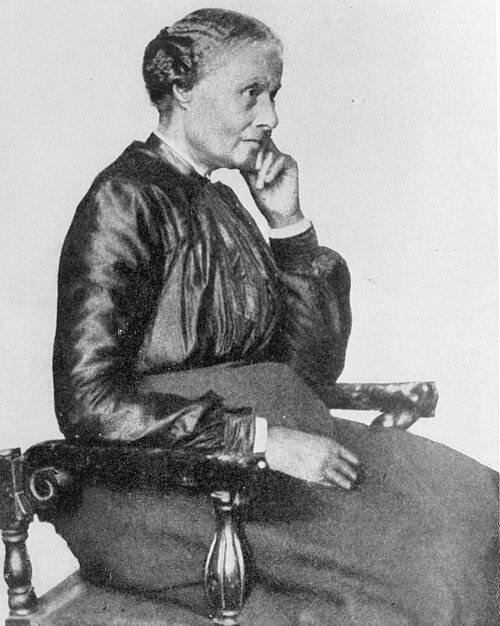
Mary Ellen Pleasant was born on this day in 1814. Pleasant was arguably the first self-made African American millionaire, using her keen mind and listening skills to accumulate a fortune. She used her money to help enslaved people escape and to fund civil rights activities. /1
The exact date of Pleasant’s birth is unclear, and it’s unknown where she was born, whether she was born into slavery, or who her parents were. We do know that her mother disappeared when she was a child and she became an indentured servant for a Quaker abolitionist family in Nantucket. /2
Some money was provided for Pleasant’s education and she learned to read and write. However, she was more interested in studying people. She worked in the family’s store, which helped her develop business acumen and a personable manner — skills that would serve her well. /3
Pleasant married an abolitionist in the 1840s and together they helped enslaved people escape via the Underground Railroad. Her husband died after four years and left her tens of thousands of dollars. She continued her work with the Underground Railroad but soon fled west to avoid capture. /4
Pleasant arrived in San Francisco during the Gold Rush with thousands of dollars in gold. She quickly grew that investment by exchanging gold for silver when the price of gold was high. She worked as a live-in domestic, and made investments based on conversations she overheard among wealthy men. /5
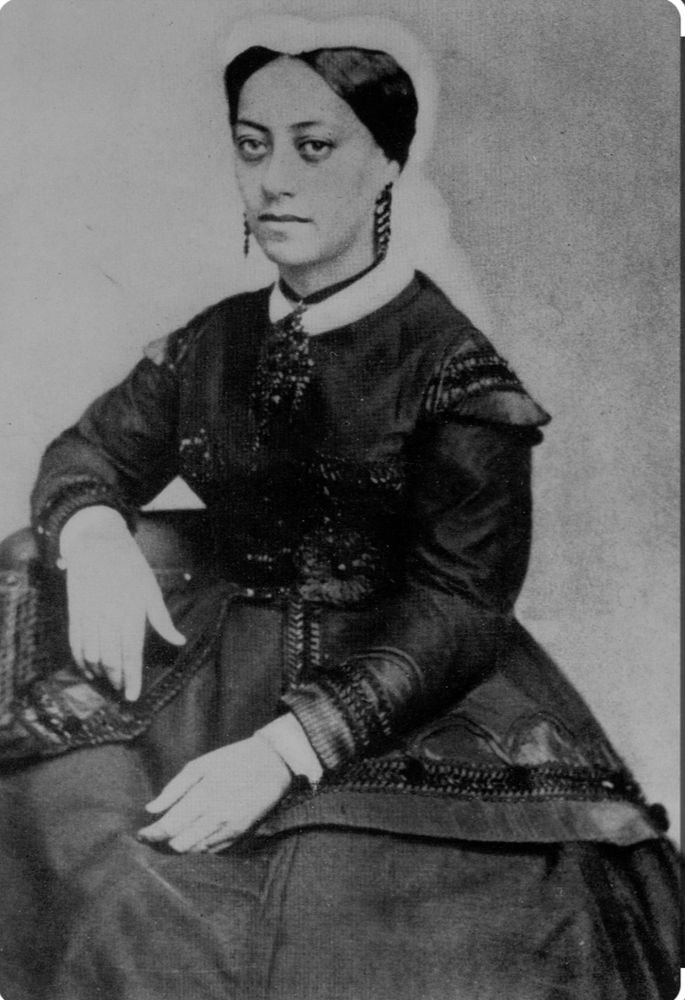
Pleasant understood the dangers faced by a black woman with financial power. She kept a low profile, presenting herself as a cook long after she was wealthy. Meanwhile, she established farms, boarding houses, restaurants and other businesses, and invested in mining stock and real estate. /6
Throughout all this she continued to help fugitive slaves, providing them jobs, housing and legal resources. After the war, she quit working as a housekeeper so she could spend more time on civil rights activities, giving money to the African American community and fighting Jim Crow laws. /end
• • •
Missing some Tweet in this thread? You can try to
force a refresh

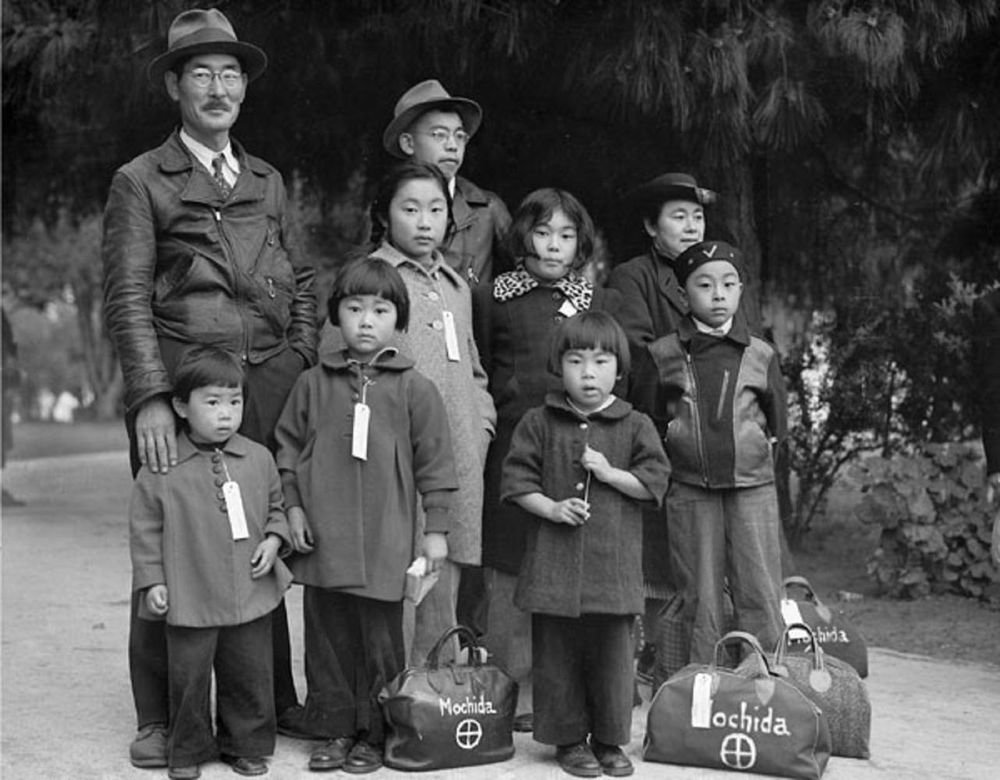
Today in history, 1988: Reagan signs the Civil Liberties Act of 1988, granting reparations to Japanese Americans who had been interned during WWII. The Act was also meant to “discourage the occurrence of similar injustices and violations of civil liberties in the future.” /1
After Pearl Harbor and the U.S. entry into WWII, FDR declared that Japanese American adults were the “alien enemy,” resulting in mass xenophobia and travel bans. On Feb. 19, 1942, FDR signed EO 9066, authorizing the forcible removal of Japanese Americans from the West Coast. /2
Many Japanese Americans were forced to sell their properties at a significant loss or had their property seized, looted or destroyed. While some compensation was paid in 1948, it did not fully cover the losses suffered by internees. Japanese Americans began to seek redress in the 1960s and 70s. /3
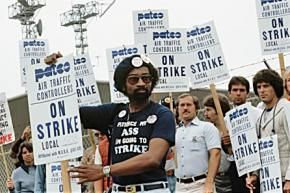
Today in history, 1981: Almost 13,000 air-traffic controllers go on strike after negotiations with the FAA to raise their pay and shorten their workweek prove fruitless. Two days later, Reagan fired more than 11,000 who had not returned to work. /1
The Professional Air Traffic Controllers Organization (PATCO) was founded in 1968. In 1969, the Civil Service Commission ruled that PATCO was in fact a union, and the group orchestrated a series of “sickouts” to protest unfair FAA actions, creating major air traffic delays nationwide. /2
Federal law prohibited strikes by government unions, but the work stoppages forced the government to negotiate. Officials acknowledged problems within the ATC system, and began hiring more workers, providing training, automating systems, and raising salaries to attract and retain controllers. /3
Today in history, 1854: The Kansas-Nebraska Act becomes law. The Act created the Kansas and Nebraska territories and repealed the Missouri Compromise, allowing new territories formed from the Louisiana Purchase to decide by popularity sovereignty whether they’d allow slavery. /1
The Missouri Compromise of 1820 had outlawed slavery north of 36°30’, except for Missouri. Senator Stephen Douglas, who drafted the Kansas-Nebraska Act, thought that popular sovereignty would enable territorial expansion north of 36°30’ while avoiding a sectional conflict. /2
To win the support of Southerners, Douglas reluctantly agreed to the amendment that formally repealed the Missouri Compromise. Pro-slavery interests won passage of the Act, but the tensions it created led to a series of armed conflicts known as “Bleeding Kansas” and ultimately the Civil War. /end
Today in history, 1916: A vigilante mob lynches 17-year-old African American farmhand Jesse Washington in Waco, Texas, as more than 10,000 spectators looked on. It is one of the most infamous examples of this horrific hate crime. /1
Washington had been convicted of raping and murdering the wife of his employer. However, the mob didn’t wait for the justice system. They dragged him out of the court using the chain around his neck and paraded him through the street while beating and stabbing him. /2
To describe the lynching in detail would likely violate the terms of service of this platform. Suffice to say that they tortured and murdered him, then mutilated his body and saturated it with coal oil. His torso was raised and lowered over a bonfire for two hours then dragged it through town. /3
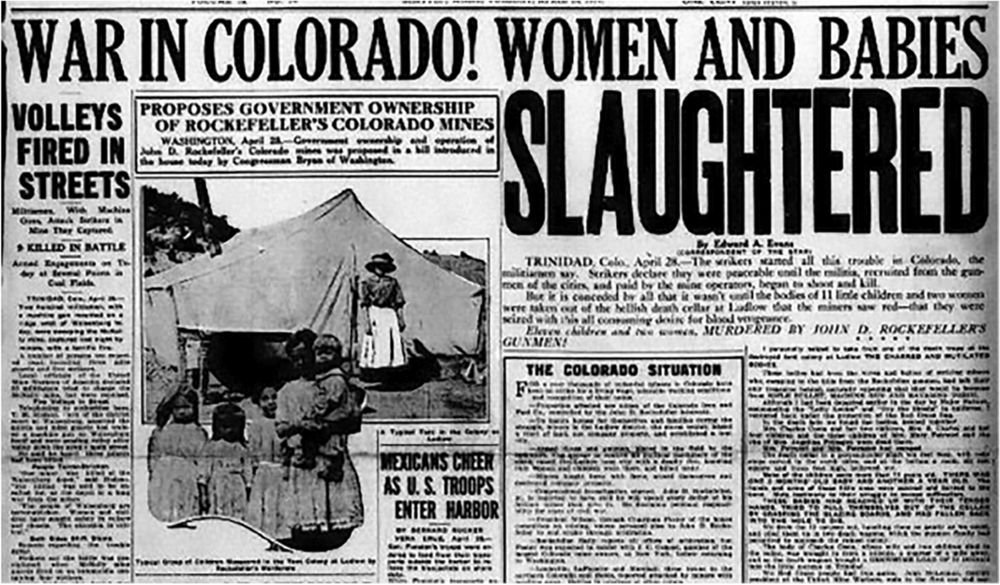
Today in history, 1914: Soldiers with the Colorado National Guard and private guards attack a tent colony housing 1,200 striking coal miners and their families in Ludlow, Colo. Approximately 21 people, including women and children, were killed in the Ludlow Massacre. /1
The Ludlow Massacre was the single deadliest event in the Colorado Coalfield War, which began in September 1913 with a general strike by United Mine Workers to protest poor, often deadly working conditions. Bands of armed miners retaliated in a series of skirmishes with National Guardsmen. /2
A total of 69 to 199 people were killed in the Colorado Coalfield War before federal troops intervened on April 29, 1914, making it the deadliest strike in U.S. history. A resulting Congressional report in 1915 helped promote an eight-hour workday and child labor laws. /end
Jacob Lawrence was an African American painter whose “dynamic cubism” was influenced by the shapes and colors of Harlem. His themes included African American history and historical figures as well as urban contemporary life. /1
Lawrence’s parents migrated from the rural South to Atlantic City, N.J., where he was born in 1917. After spending time in foster care, he and his siblings reconnected with their mother in Harlem, and she enrolled him in an after-school art class to keep him busy. /2
Harlem in the Great Depression was the inspiration for Lawrence’s work. Life was hard but African American women decorated their homes in bright colors. He was also influenced by West African and Meso-American art in his exploration of the struggles of African Americans. /3