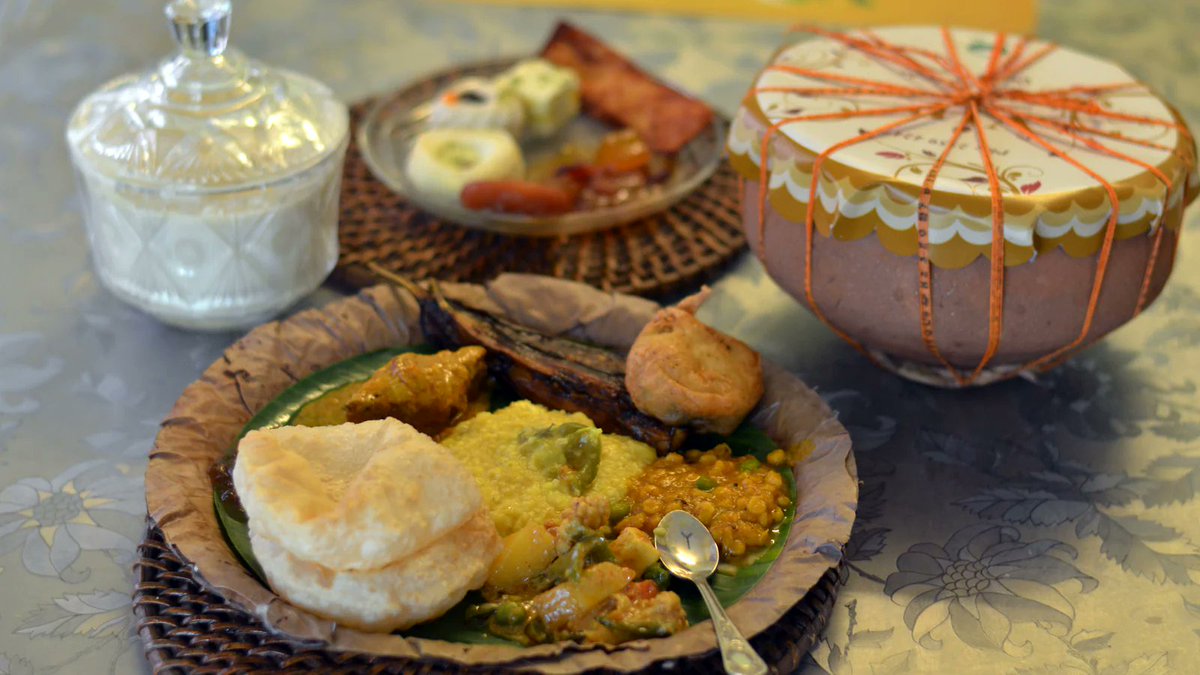
🧵“Why do we offer Naivedyam to God—when He doesn’t eat it?” A thread inspired by my 7-year-old’s honest question. 🍚✨ 1/ “Aai, God doesn’t eat the food. We eat it. Then why do we offer it to Him first? Isn’t it just drama?”
He asked this while watching me place payasam before the deity this Janmashtami.
I smiled. Because this question had once bothered me in my childhood.
2/ But explaining the reason to a 7 yr old was not easy. I tried to keep it very simple.
I told him:
“It’s not about feeding God. It’s about remembering where everything comes from.”
Naivedyam is our way of saying thank you—for the rice, the milk, the fire, the breath.
3/ It’s a gesture of love and reverence, where the devotee prepares food with purity of mind and intention, often without tasting it beforehand—a mark of restraint and respect.
4/ 🪔
“Imagine a special guest at home. You can’t see them, but you know they’re watching. Wouldn’t you offer them the first bite?”
God is that invisible guest. The ritual reminds us to serve before we enjoy.
5/ Once offered, the food becomes Prasad—blessed nourishment.
It’s not just nutrition. It’s grace.
Shared among all, it fosters unity, equality, and cheerful acceptance (prasāda buddhi).
6/🌿 Subtle Energetics
During puja, food absorbs sacred vibrations—enhancing sattva, reducing rajas and tamas.
Some traditions say Prasad balances the five pranas, supporting holistic well-being.

7/ So yes, God doesn’t eat the food.
But He receives our love.
And when we eat it after offering, we’re not just feeding our tummy—we’re feeding our soul.
8/ Rituals aren’t drama.
They’re reminders.
Of humility, gratitude, and the joy of giving before receiving.
And sometimes, it takes a child’s question to reveal their true meaning. 🌼
• • •
Missing some Tweet in this thread? You can try to
force a refresh

Today's total lunar eclipse (visible from India) falls on Purnima and marks the start of Pitru Paksha, adding layers of ritual significance.
"During lunar eclipses, what would happen in 28 days over a full lunar cycle is happening in a subtle way over the course of two to three hours of the eclipse. In terms of energy, the earth’s energy is mistaking this eclipse as a full cycle of the moon.
Certain things happen in the planet where anything that has moved away from its natural condition will deteriorate very fast. This is why while there is no change in raw fruits and vegetables, there is a distinct change in the way cooked food is before and after the eclipse.
1.
If there is food in your body, in two hours’ time your energies will age by approximately twenty-eight days. Does that mean you can eat a raw food diet on such a day? No, because the moment food goes into your body, the juices in your stomach attack and kill it. It becomes like semi-cooked food and will still have the same impact. This subtle shift can cause dullness, sleepiness—even a symbolic “death” of awareness.
2.
The cycles of the moon have an impact upon the human system, physically, psychologically and energy-wise. This is evident in the way our mothers went through their cycles. I am talking about our mothers because we are here only because our mothers were in tune with the moon. If our mothers’ bodies were not in tune with the moon we wouldn’t be here today. When the moon is going through a whole cycle in two to three hours’ time, there is a little bit of confusion in all our mothers’ bodies. This is also happening in a man’s body, because your mothers are present in a certain way – not physiologically but in other ways."- Sadhguru
3.
🧵 The Blind King Who Aimed by Sound: A Rajput Tale of Honour and Defiance 1. Prithviraj Chauhan, the proud Rajput king of Delhi and Ajmer, faced Muhammad Ghori, the ambitious invader from Afghanistan.
One fought for dharma. The other, for dominion.
2. The year was 1191. The First Battle of Tarain.
Ghori’s forces charged. But Prithviraj’s Rajput warriors stood like mountains.
Ghori was wounded. Captured.
And then… released.
Why?
Because Rajput honour whispered: “We do not strike the fallen.”
3. Ghori returned the next year—stronger, smarter, ruthless.
The Second Battle of Tarain in 1192 was brutal.
Prithviraj was defeated. Taken prisoner.
And then… blinded with hot iron rods.
🐻✨ Do you remember the wise old bear Jambavan, who fought alongside Rama in the Ramayana?
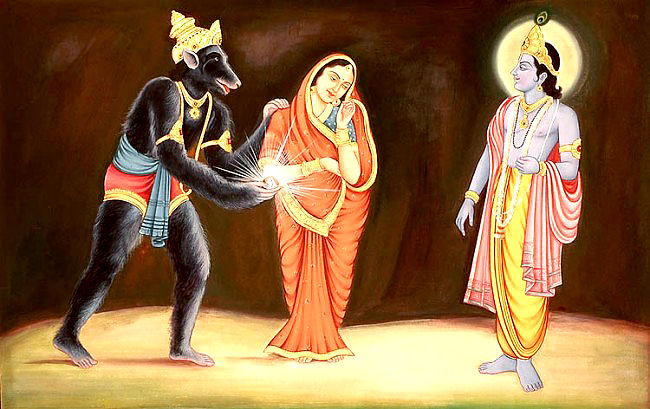
Here's the story of how his daughter, Jambavati, became the eighth wife of Krishna...
🧵1.
Long ago, in the golden age of Dwaraka, there existed a jewel so radiant it seemed to carry the sun’s own breath. This was the Syamantaka, a divine gem gifted by Surya, the sun god, to his devotee Satrajit. It wasn’t just beautiful—it was miraculous. Wherever it rested, it produced gold daily, and its glow was said to ward off misfortune.
2.
Satrajit refused to share the jewel with the kingdom, despite Krishna’s gentle request to place it in the royal treasury for the good of all. Soon after, the jewel vanished. Rumors spread like wildfire. Whispers turned into accusations. And Krishna—beloved, wise, divine—was blamed.
3.
🧵 The Mango Tree That Wouldn’t Bloom — A Story of Kartikeya’s Patience 1/ In a quiet forest, Kartikeya once planted a mango seed. 🥭
He whispered to it:
The seed listened. And slept.
2/ Days passed. Then weeks. Then years.
The tree grew tall—but never bloomed.
No flowers. No fruit. Just leaves and silence. 🌳
The forest teased:
3/ Kartikeya didn’t get angry.
He sat beneath the tree every morning.
He sang to it. Told it stories.
He even shared his victories with it.
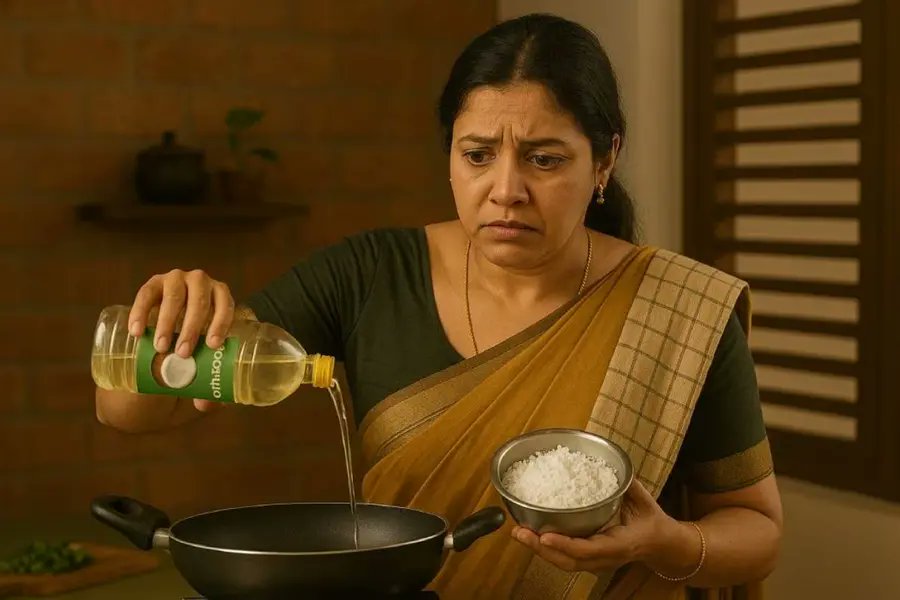
🥥 What’s Happening with Coconut Prices in Kerala?
📈 Current Prices
Coconut oil: Prices have surged from ₹160/litre last year to ₹500–₹770/litre..
Raw coconuts: individual coconuts costing ₹70–₹77 each😳😱
1.📒
For a middle class this is nothing less than a calamity. but even hard times become easy to bear if we give it a touch of humor☺️, isn't it?
Here's a story of a Malayali🌴family...
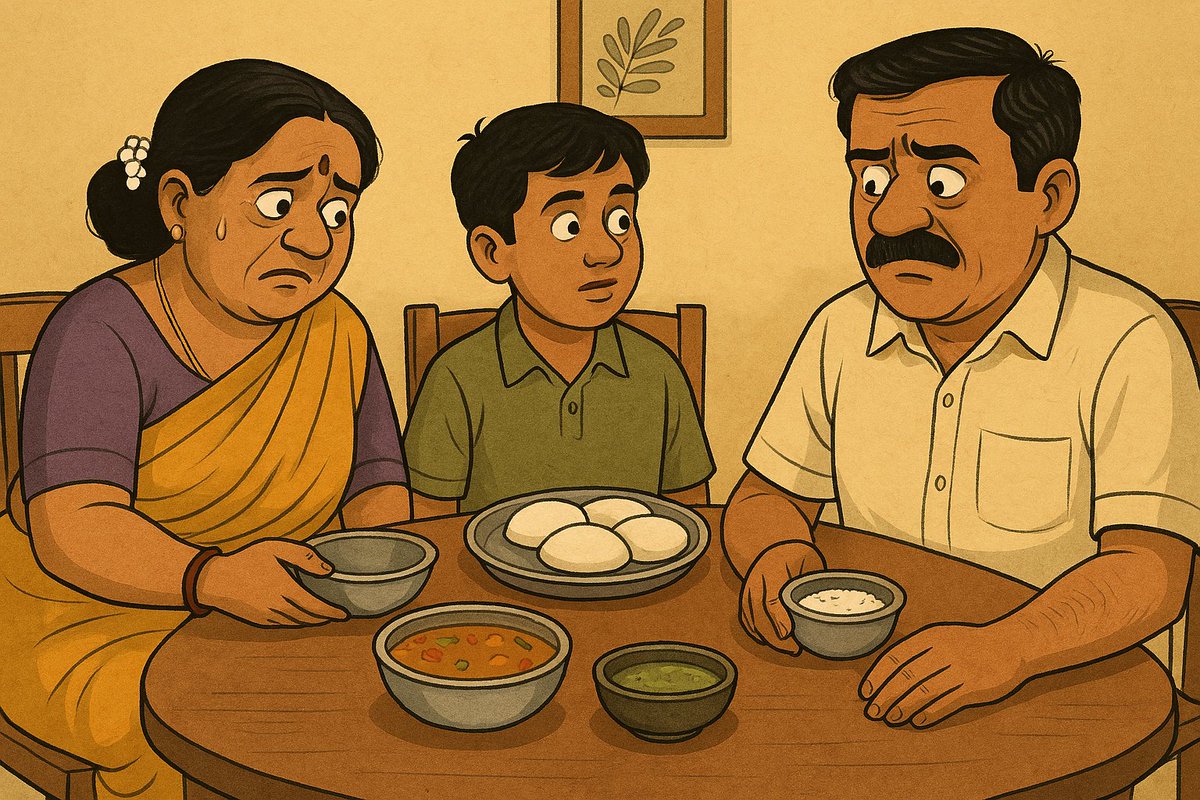
Characters:
Raghavan – Retired schoolteacher, proud Malayali, coconut oil purist.
Leela – His sharp-witted wife, master of improvisation.
Appu – Their son, software engineer, home for Onam.
2.
🌴 Scene: A modest kitchen in Kochi, 7:00 AM
Raghavan (sniffing the air suspiciously):
“Leela… this sambar smells like betrayal. Did you use sunflower oil?”
Leela (without turning):
“Not betrayal, Raghava. It’s called survival. ₹700 for coconut oil? I’d rather fry my morals.”
Raghavan (dramatically clutching his chest):
“Sunflower oil in sambar is like wearing sneakers to a temple. Functional, but disrespectful!”
Appu (scrolling his phone):
“Amma’s right. Even Flipkart has EMI options for coconut oil now.”
Raghavan:
“Next they’ll offer cashback for buying coconuts. What’s the world coming to?”
3.
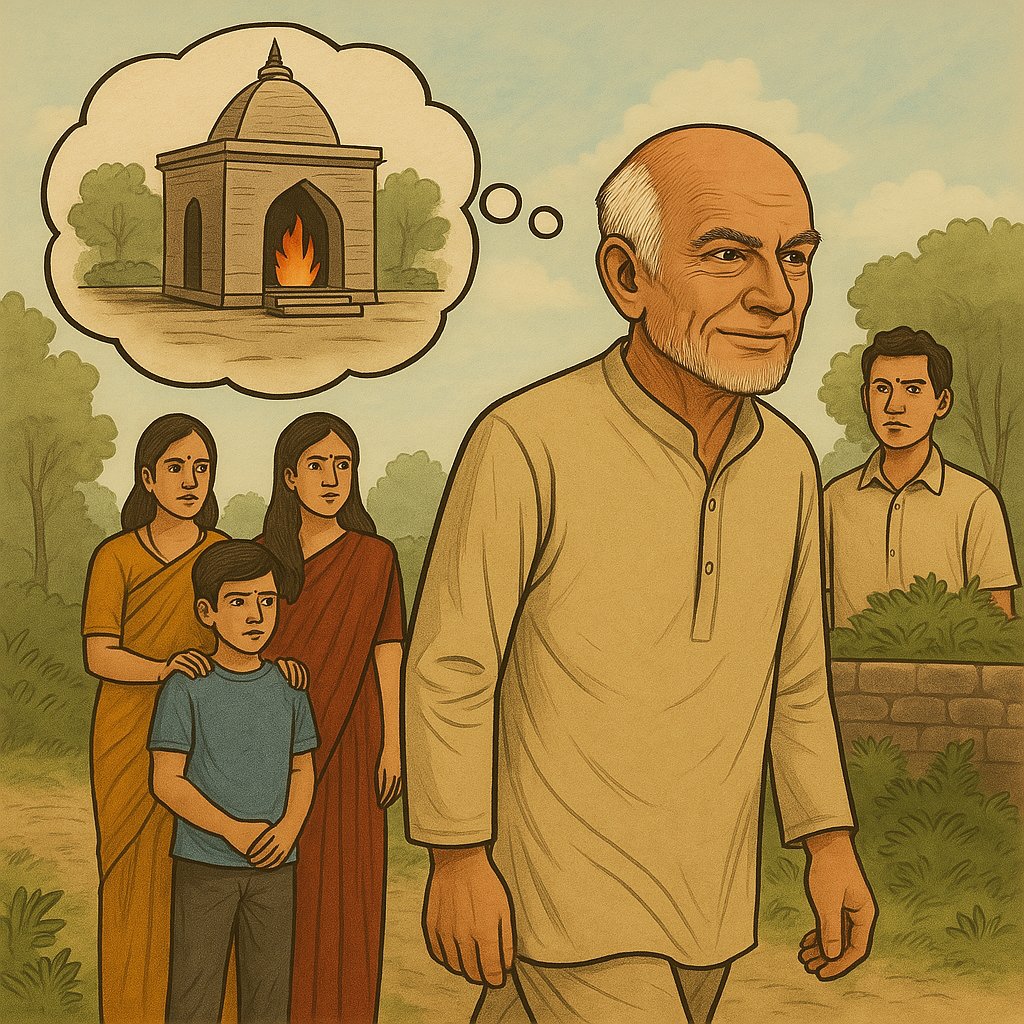
In India there is a tradition that when the time to die comes, you should not be among your family, you must always move away. This may sound strange.
In Western cultures, you want the entire family to be there But, in India when the time to die comes, you must move away from your family, because if you are with your family, you will continue your psychological drama, thinking that is the ultimate drama in your life.
1/5
When people realized they are past a certain age and within the next year or two they may pass, they would walk all the way to a sacred space by themselves to die. They did not want their relatives, children, or spouse around them, because they wanted to realize that all these things are just arrangements that you make for your comfort and convenience here; this is not ultimate nature of life.
2/5
The ultimate nature of life is that you are born alone and you will die alone. Even if all of us crash in airplane and die together, we are not dying together. We are dying alone. Individual life needs to deal with itself the way it is. You cannot deal with it in groups. 3/5