Not merely a star in the sky, but the secret Word of Divinity.
The spiritual Sun that binds our cosmos in order and meaning.
đź§µ
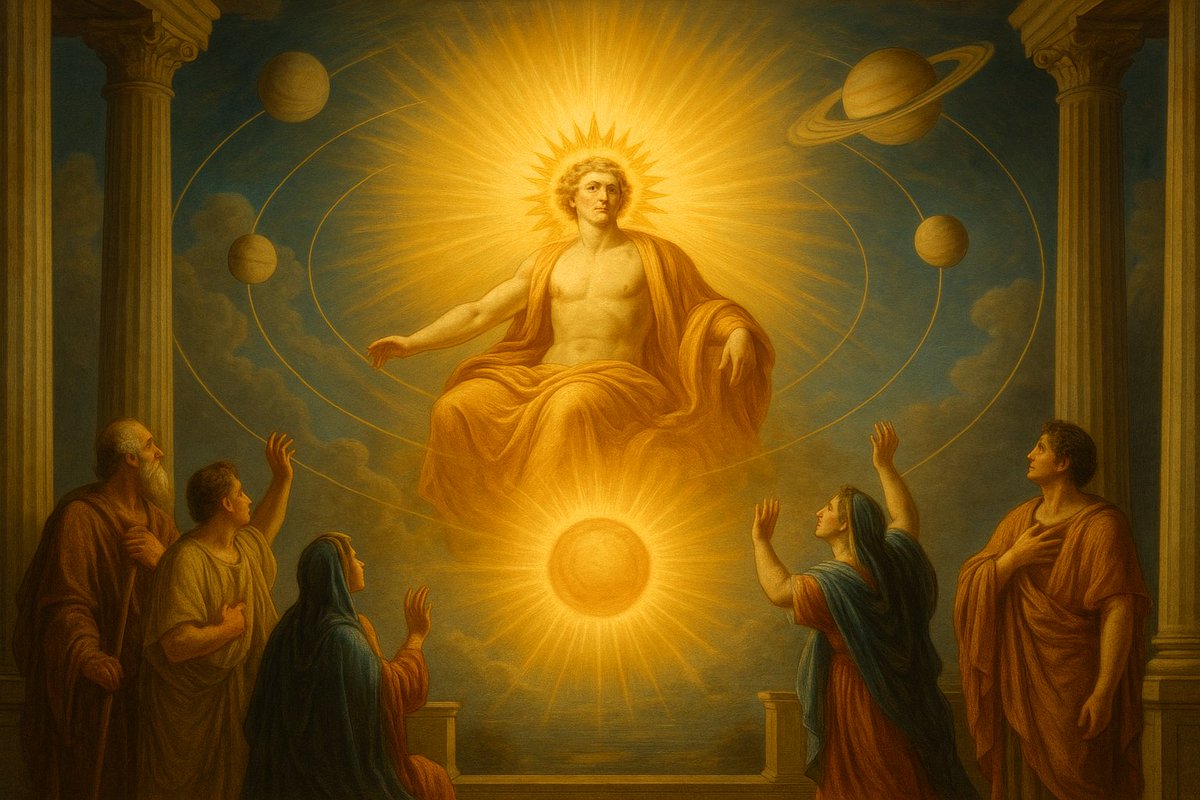
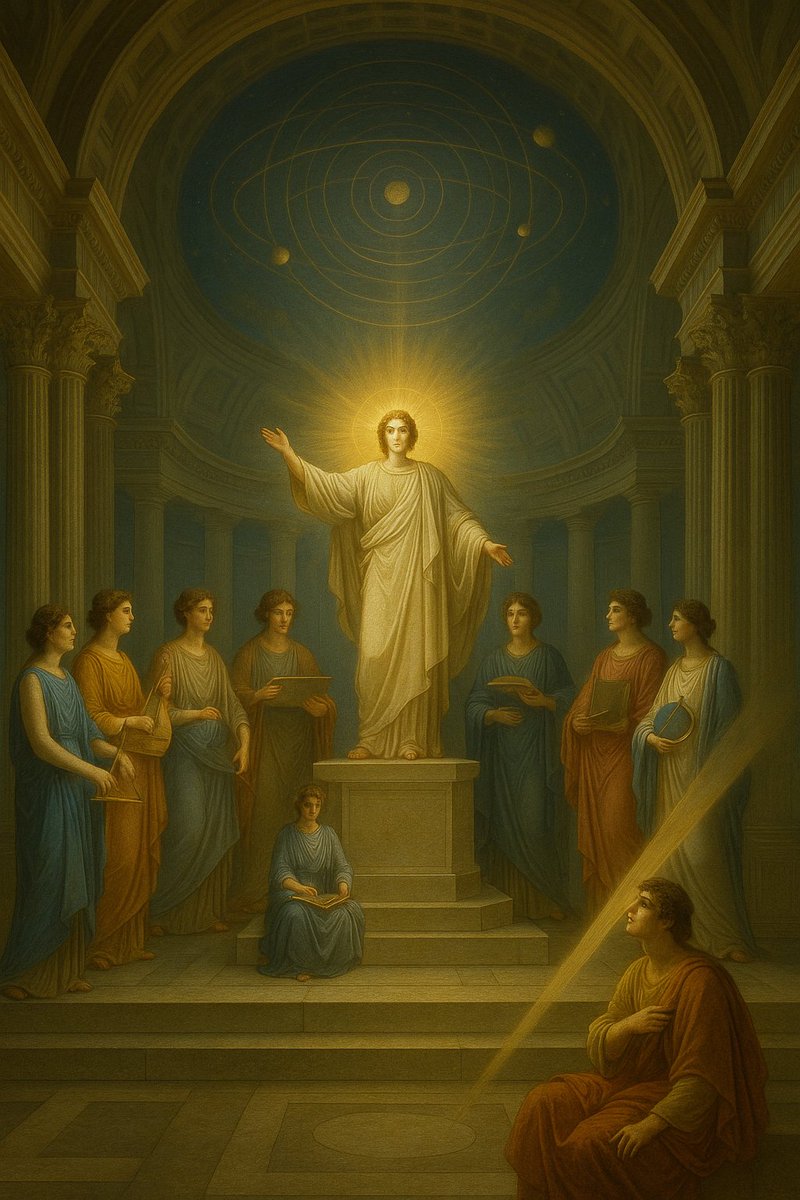
The Solar Logos is the “Word of the Sun”, the first utterance of Spirit into matter.
The ancients did not regard the visible orb as mere fire, but as the body of a higher principle: the Logos, mediator between the unmanifest Absolute and the manifest worlds.
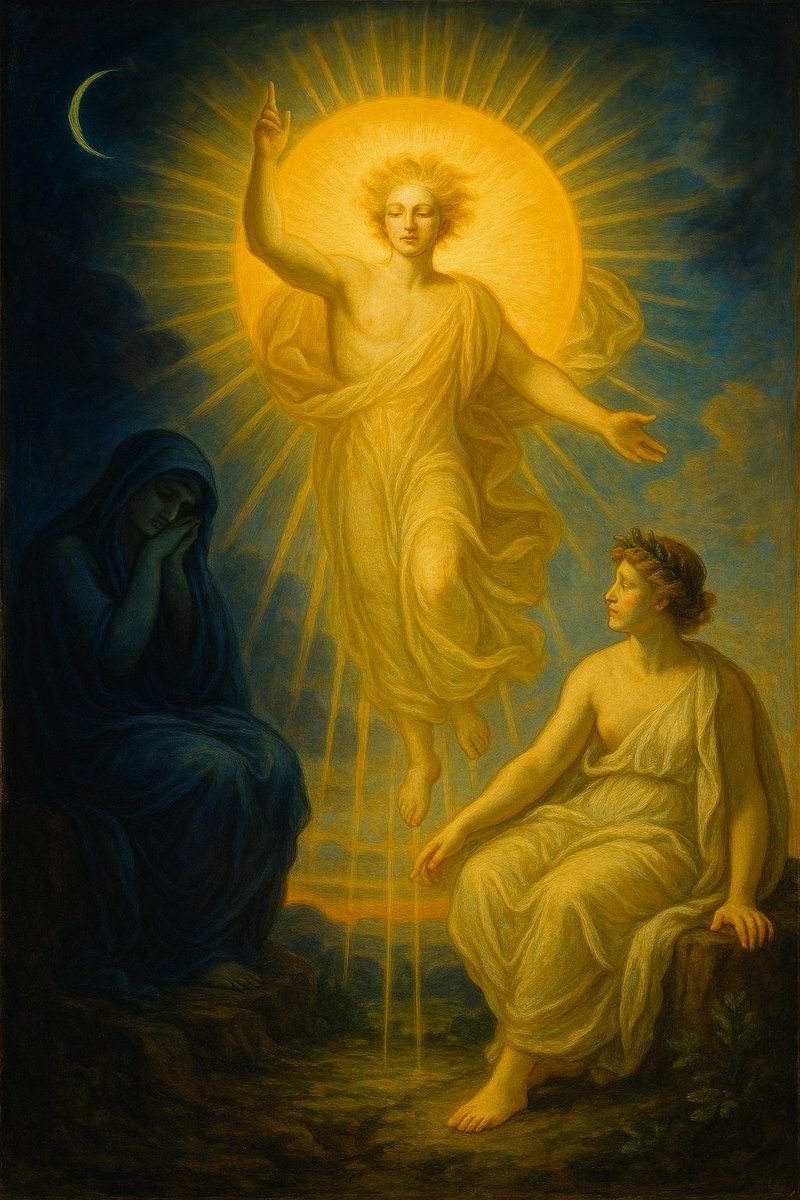
In Platonic and Hermetic philosophy, the Solar Logos is both reason and life-force, the bond that joins the One to the Many.
Just as sunlight sustains the bodies of men and beasts, the Logos sustains the soul, pouring harmony into every living thing.
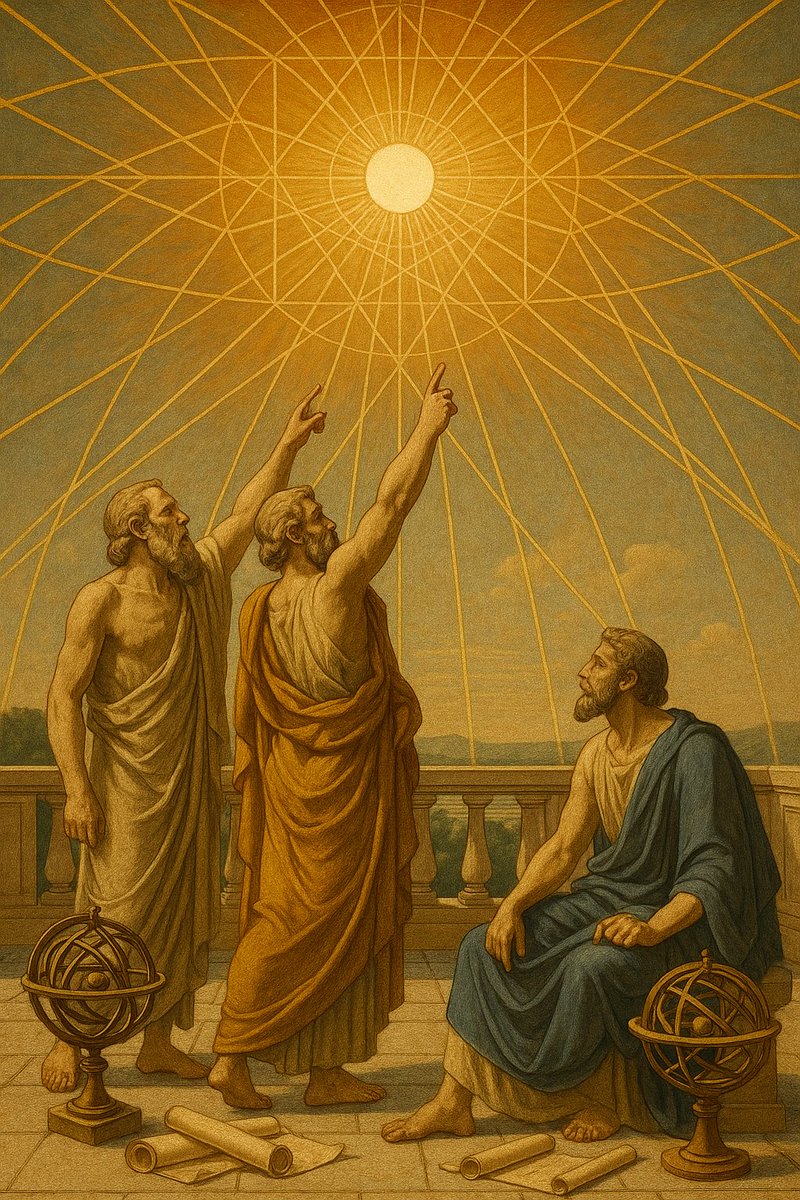
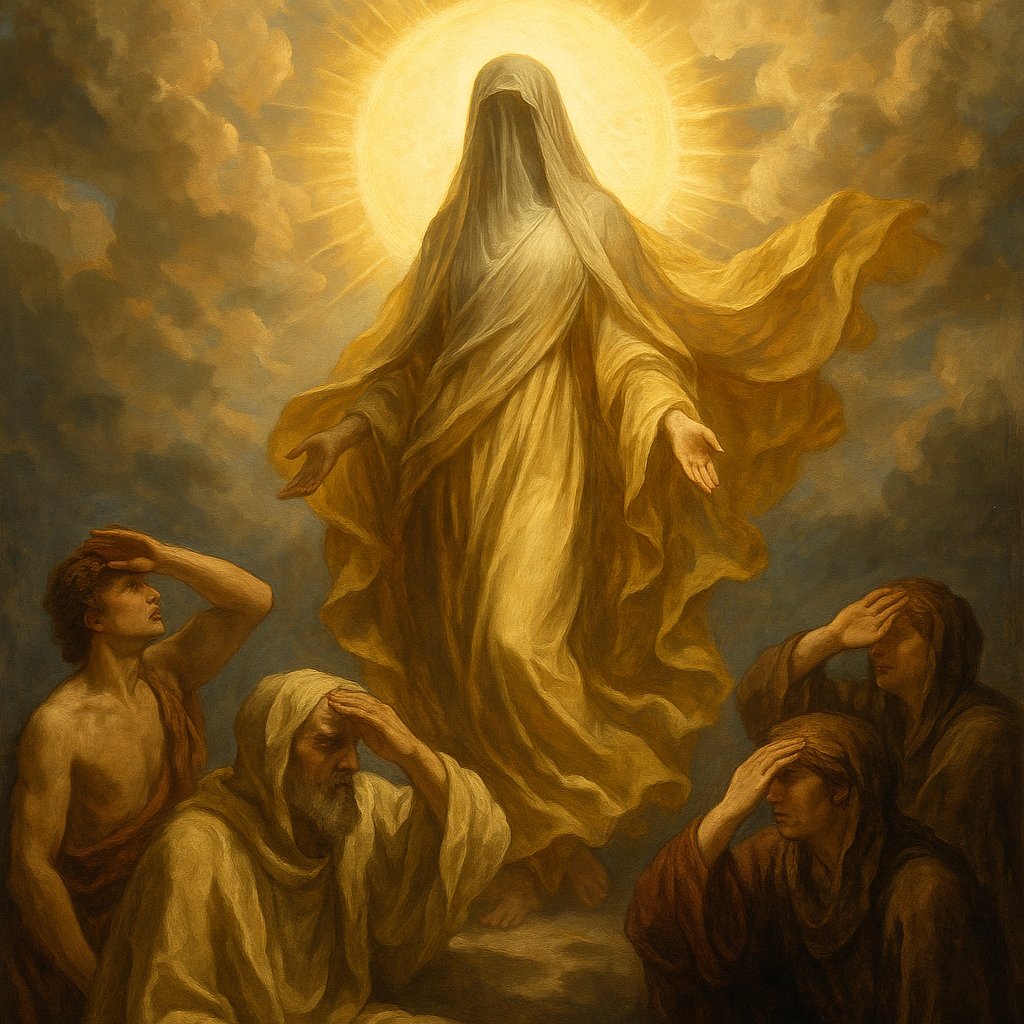
For the initiate, the Sun becomes more than a star: it is a veil. Behind its brilliance lies the hidden countenance of the Ineffable.
To contemplate the Solar Logos is to pierce through flame into the eternal, discerning the image of Spirit reflected in light.
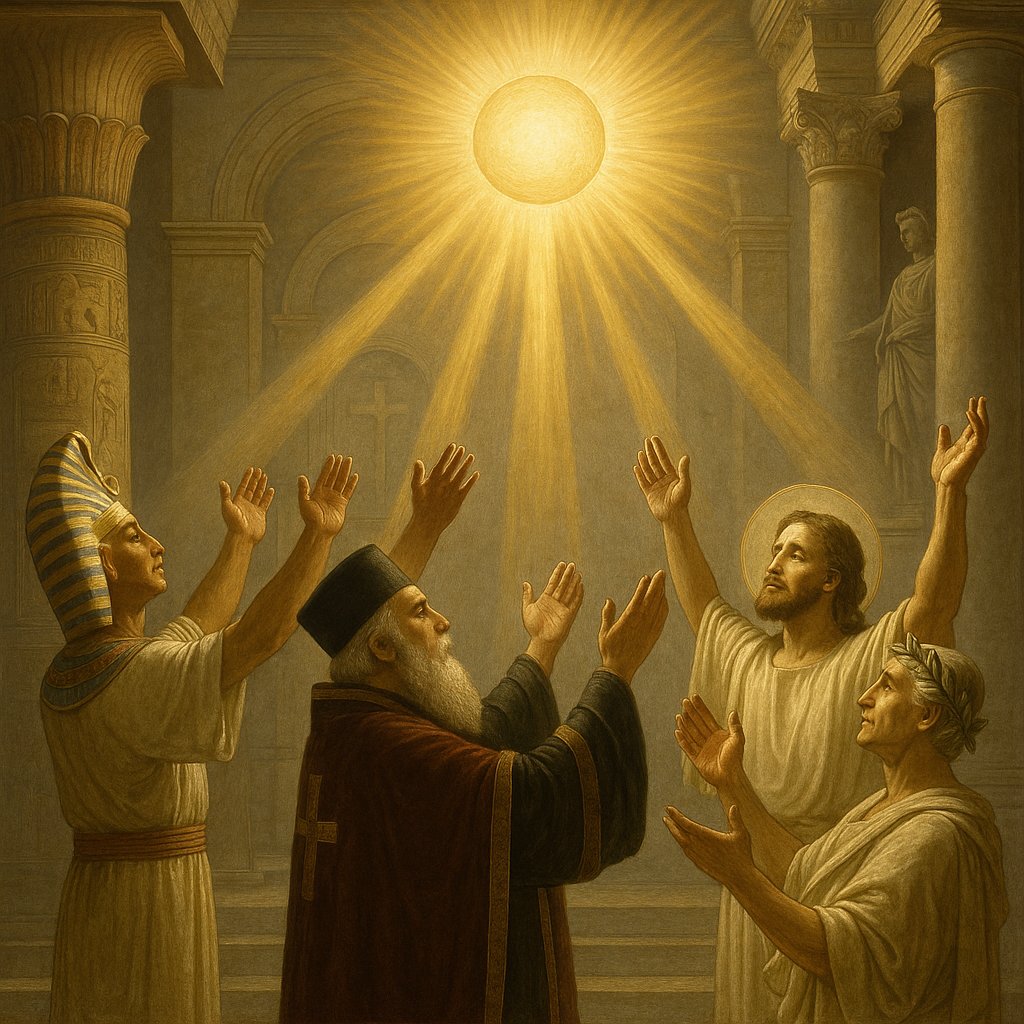
Thus the Solar Logos is the true heart of religion.
All sacred traditions saw in the central fire the emblem of Spirit.
Whether in the temples of Egypt, the hymns of Orpheus, or the Christian vision of the “Sun of Righteousness,” the symbol endures.
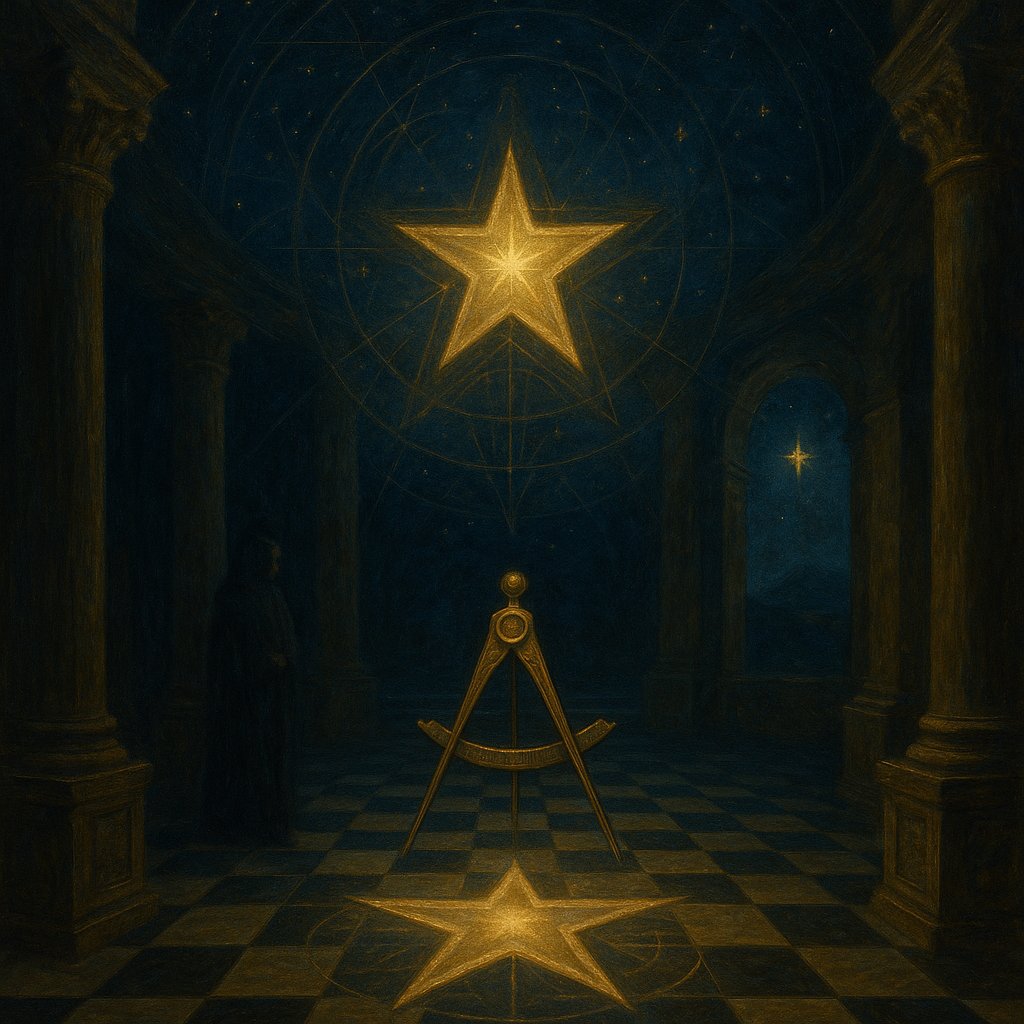
To the Mason, the Solar Logos is reflected in the Blazing Star at the heart of the Lodge, emblem of the Divine Wisdom that illuminates the path of man.
For it is the Word by which the world is built, and the Light by which man ascends.
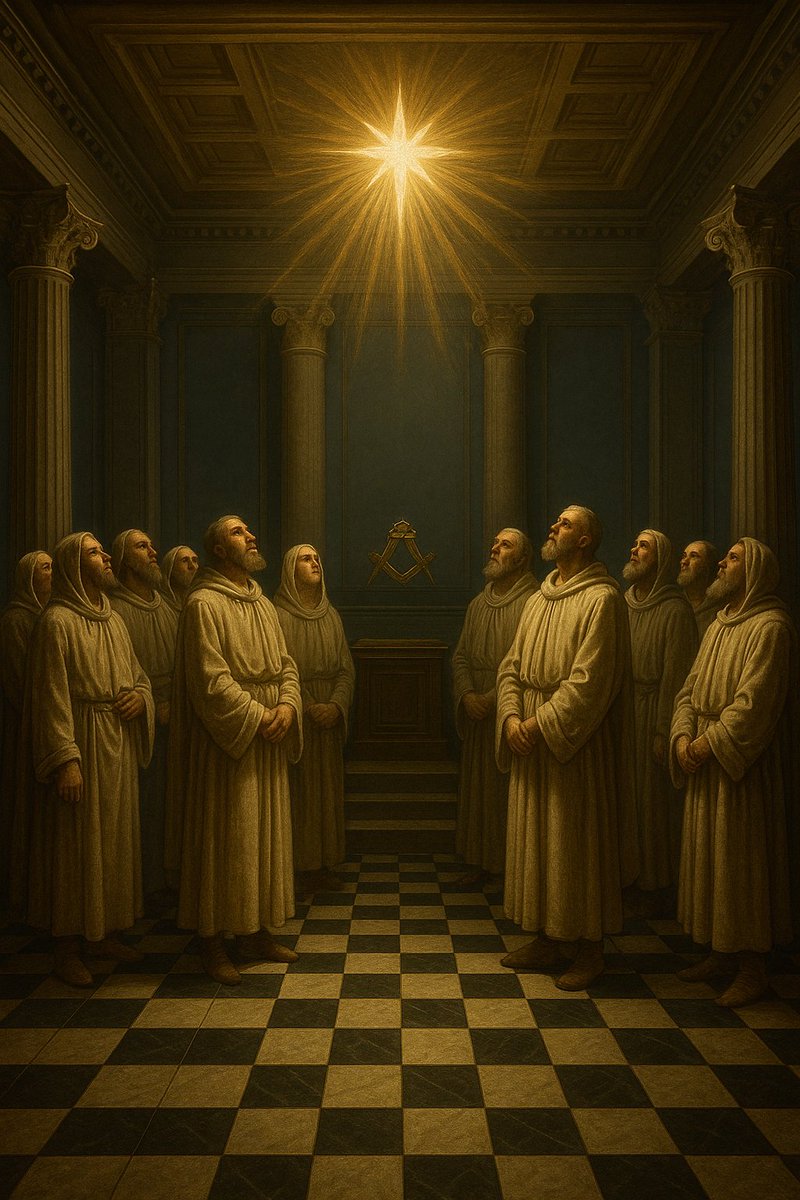
The Solar Logos is not distant, but ever-present; within the light of day, within the reason of man, within the order of the cosmos.
To behold it is to awaken to the eternal Sun that shines alike upon spirit and flesh.
• • •
Missing some Tweet in this thread? You can try to
force a refresh

In the veiled language of Masonry, certain symbols are older than the Craft itself—heirlooms from the primeval temple of the heavens.
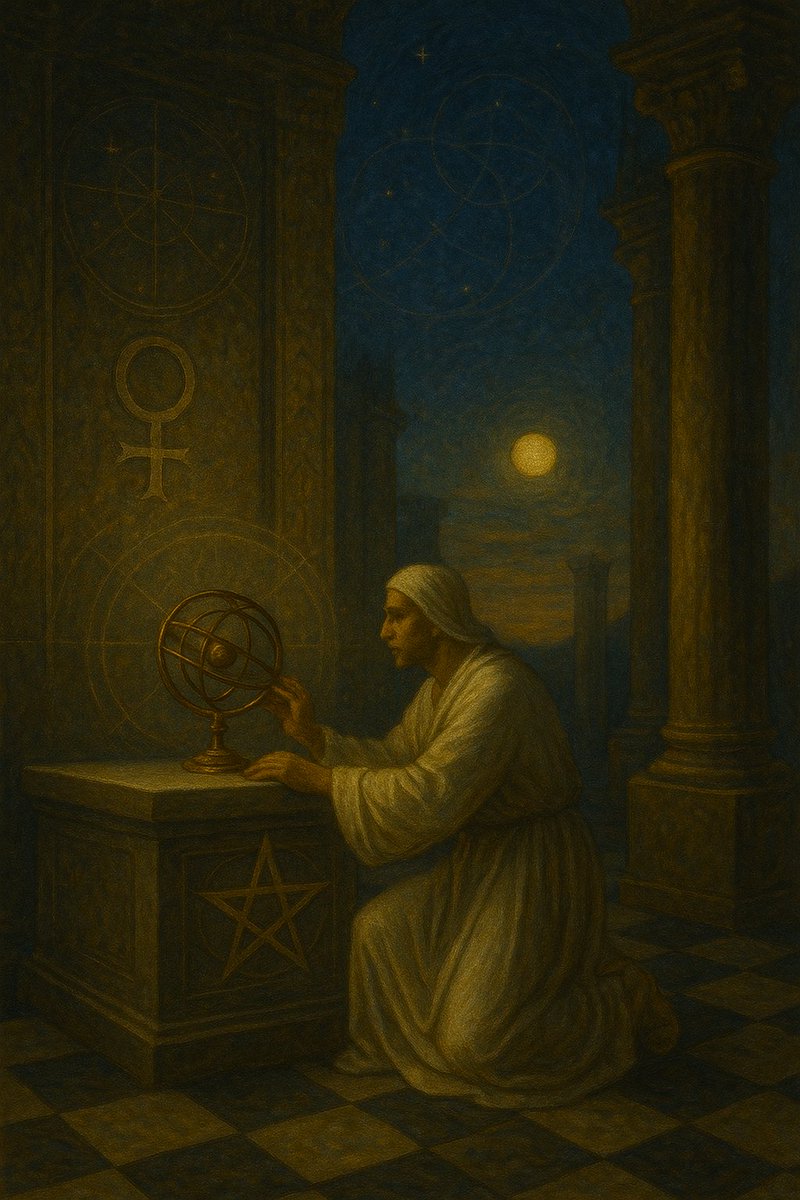
Among these, few are so curiously persistent as the Five-Pointed Star. Behind its familiar form lies an ancient mystery: the planet Venus, the “morning star” of the poets and the “light-bearer” of initiates.
To trace her path is to uncover one of Nature’s most exquisite ciphers. 🧵1/5
To the Chaldean priest, the Greek philosopher, and the Egyptian hierophant alike, Venus was more than a celestial ornament.
She was the visible emblem of harmony, beauty, and proportion, ruling not only over the generative forces of nature but also over the arts that refine the soul.
Her dual aspect—as morning star and evening star—spoke of life’s polarity: dawn and dusk, birth and death, innocence and wisdom.
Temples aligned to her risings marked the sacred calendar, and her cycle was a key in the astrological art.
Every eight years, Venus and the Earth dance a precise and stately measure about the Sun.
Mark her conjunctions with the Sun over that span, and they trace in the zodiac a perfect five-pointed star—the very figure that graces so many Masonic tracings and rituals.
This geometric harmony was no accident to the ancients; it was the handwriting of cosmic order itself, a signature of the Grand Geometer upon the vault of heaven.
In the philosophy of Freemasonry, Beauty is no mere embellishment—it is the visible vesture of the Divine Order, the seal of completion upon the labors of Wisdom and Strength.
To contemplate Beauty is to ascend, as Plotinus taught, from the shadowed world of sense to the radiant realm of Intelligible Form.
Thus do the teachings of Neoplatonism find quiet resonance in the chambers of the Lodge.
This thread shall trace their hidden harmony. đź§µ
In Freemasonry, beauty is not ornament—it is order made visible.
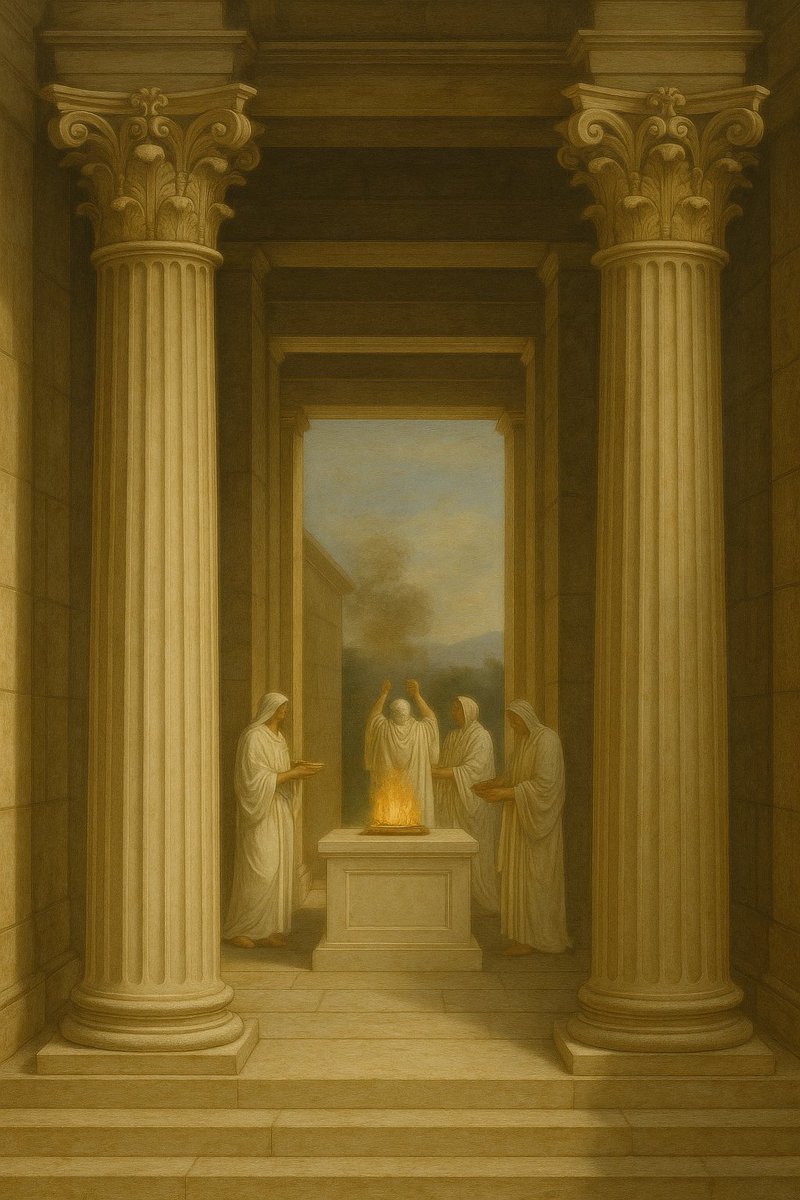
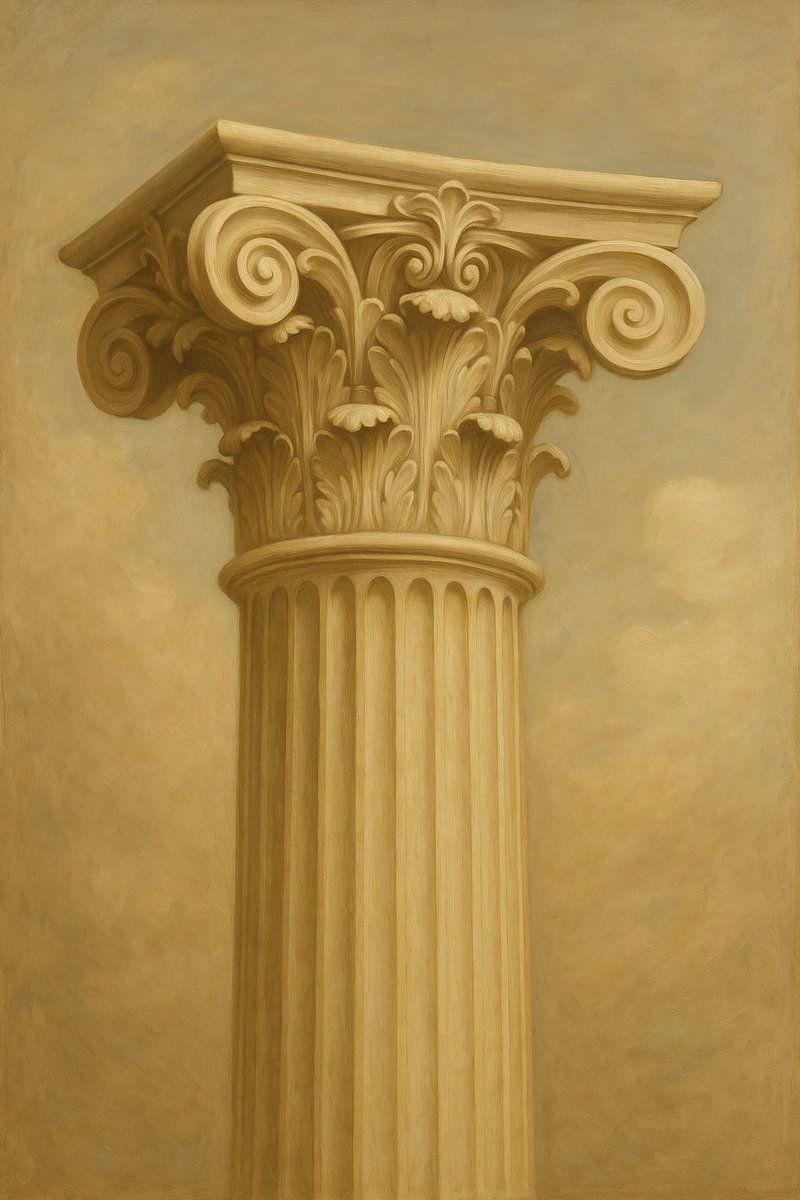
The Corinthian column, the Blazing Star, the symmetry of the Lodge: these are not decorations but revelations.
Like the Neoplatonists, the Mason sees beauty as a reflection of divine harmony.
Above all being stands the One—perfect, unbroken, ineffable.
From this Unity flows Intellect, Soul, and World.
The Lodge reflects this structure: a spiritual cosmos in miniature.
Beauty in Masonry is that which reveals the pattern of the heavens on Earth.
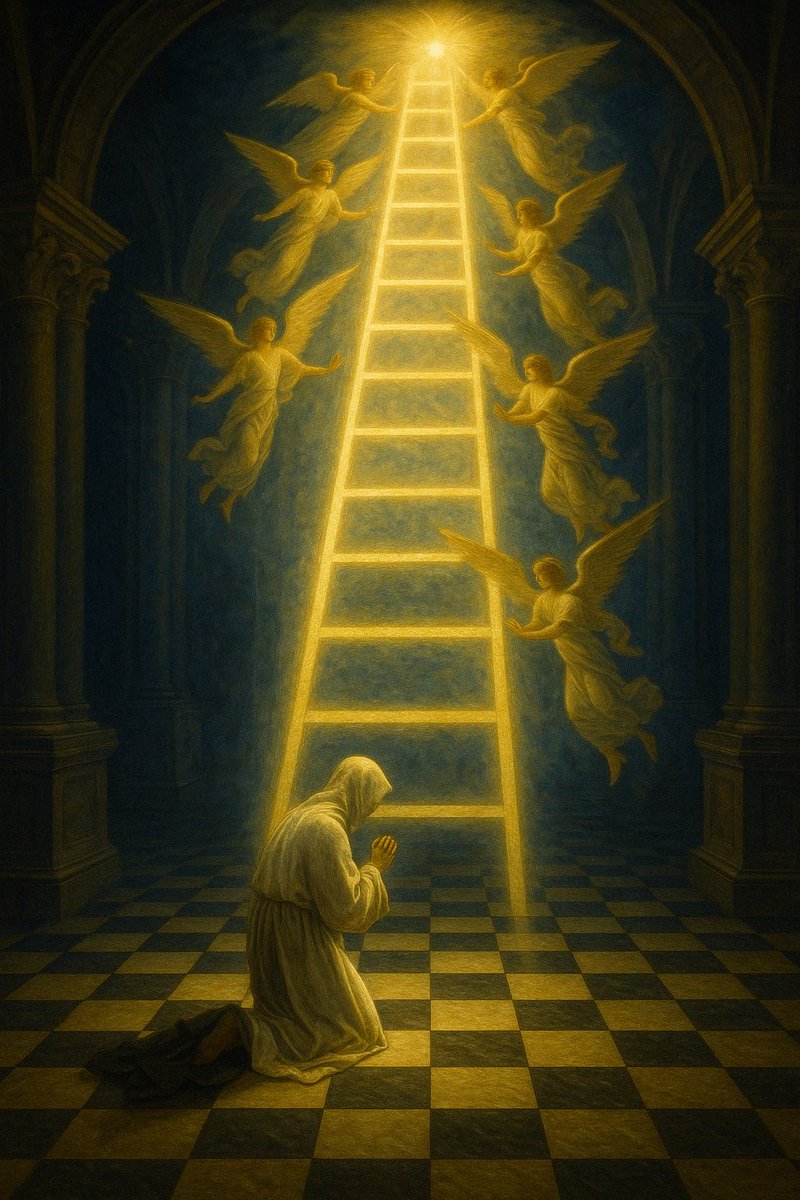
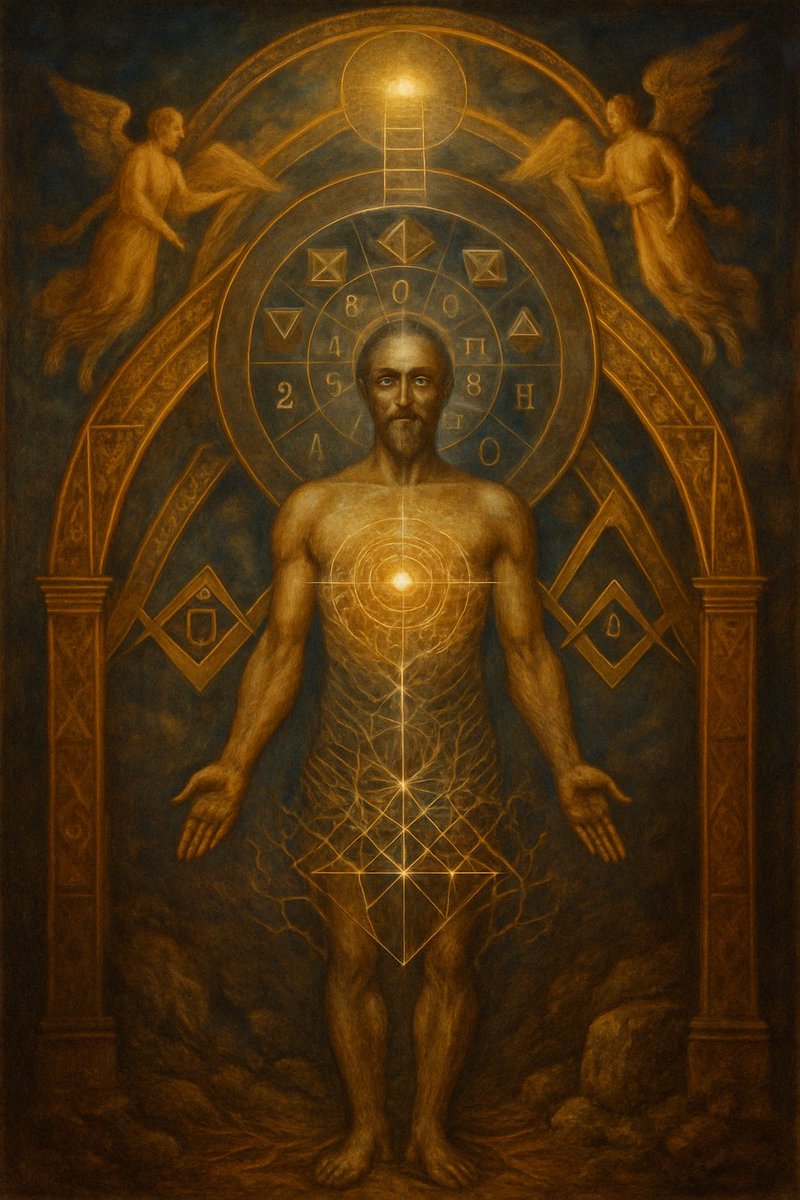
In the solemn hush of Initiation, the soul is summoned to cast off the garments of the world and ascend the winding stair of ancient Truth. Of all symbols offered to the earnest Mason, none shine with greater mystery than Jacob’s Ladder—the bridge between Earth and Heaven, between ignorance and divine illumination.
To the profane, it is but a dream—a quaint biblical vision of angels ascending and descending. Yet to the initiate, it is a map of the Cosmos, a chart of the soul’s journey, a declaration of man’s sublime destiny. For the Ladder is not merely a tale: it is the very architecture of Being, veiled in allegory and preserved in Rite.
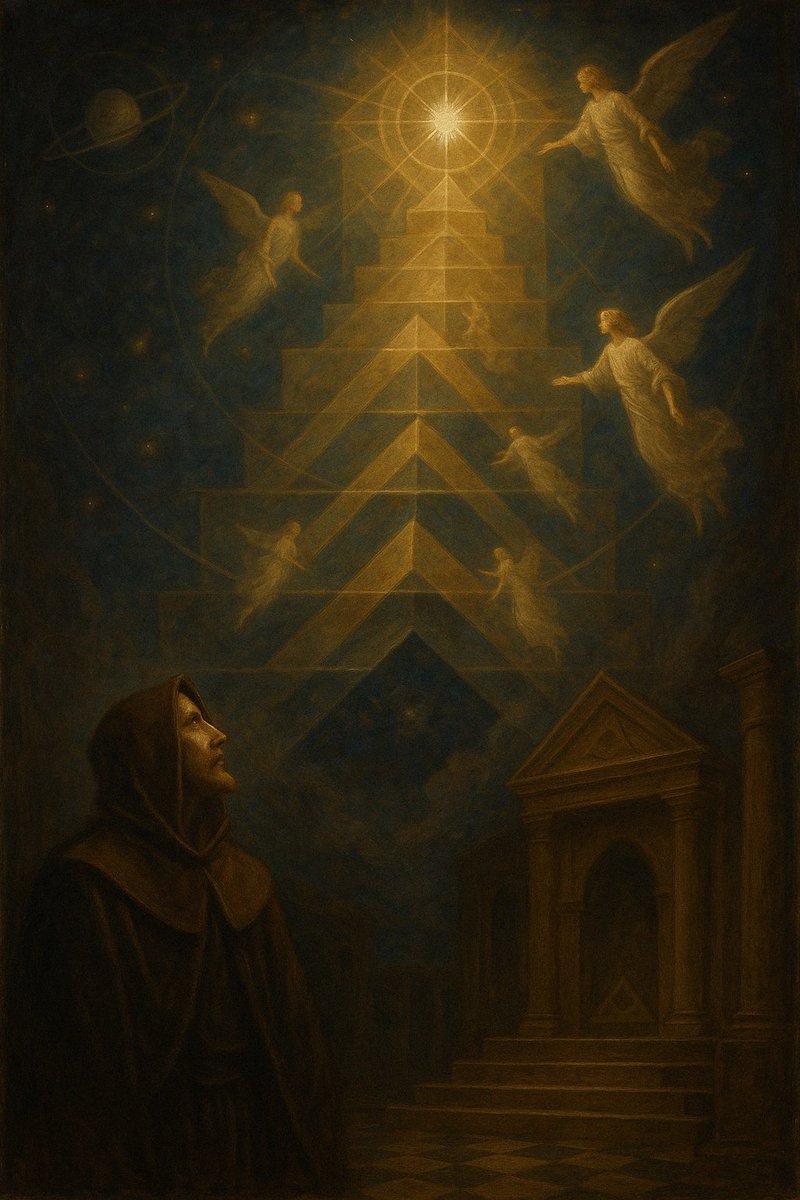
The ancient mysteries taught Cosmology not as dry astronomy, but as a sacred science of correspondences. Man, they declared, is a microcosm—a world in miniature. His body reflects the Earth; his emotions, the astral currents; his intellect, the vaults of heaven; and his spirit, the divine spark which issued from the ineffable Source.
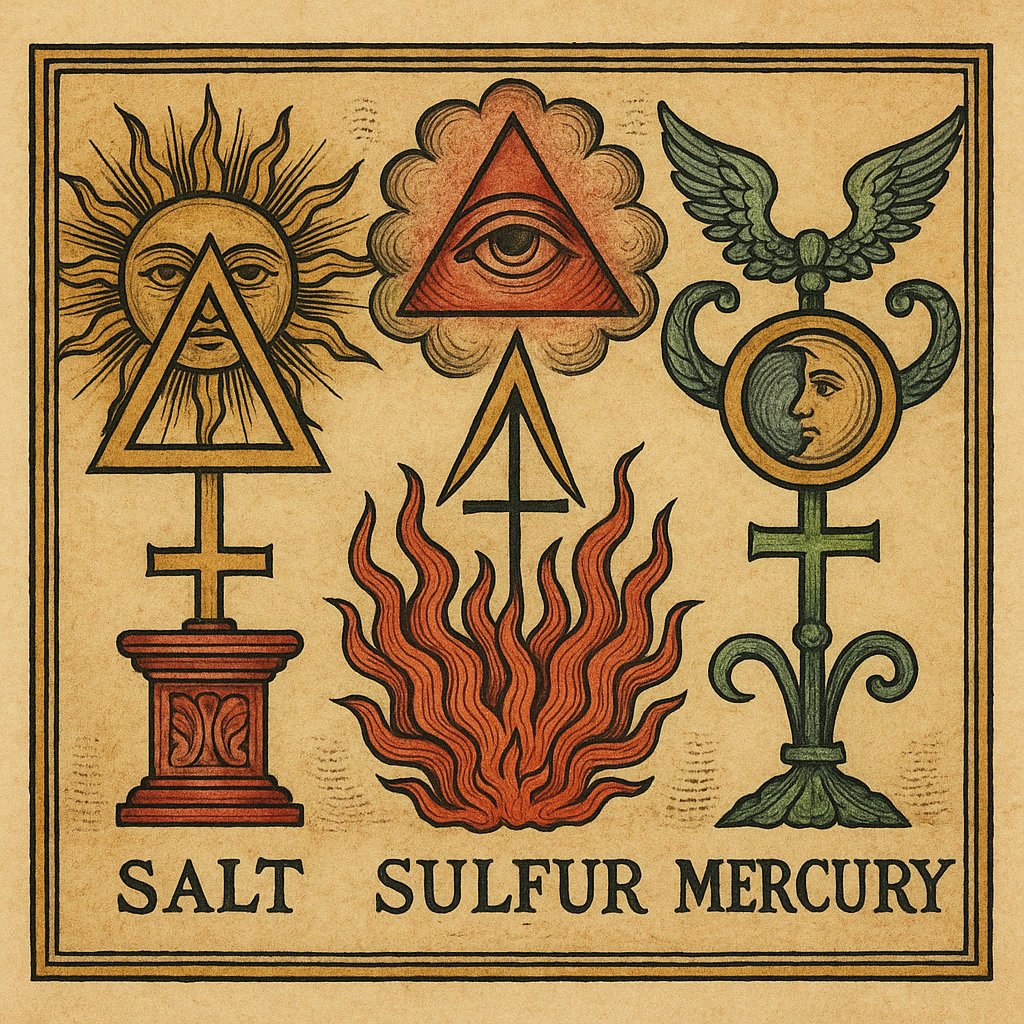
In the sacred science of Masonry, Salt, Sulfur, and Mercury are not mere substances but divine emblems, bearing within them the mystery of the Great Work.
These are not the dregs of ancient chemistry but the spiritual triad through which the soul ascends from the darkness of ignorance unto the Light of the Ineffable.
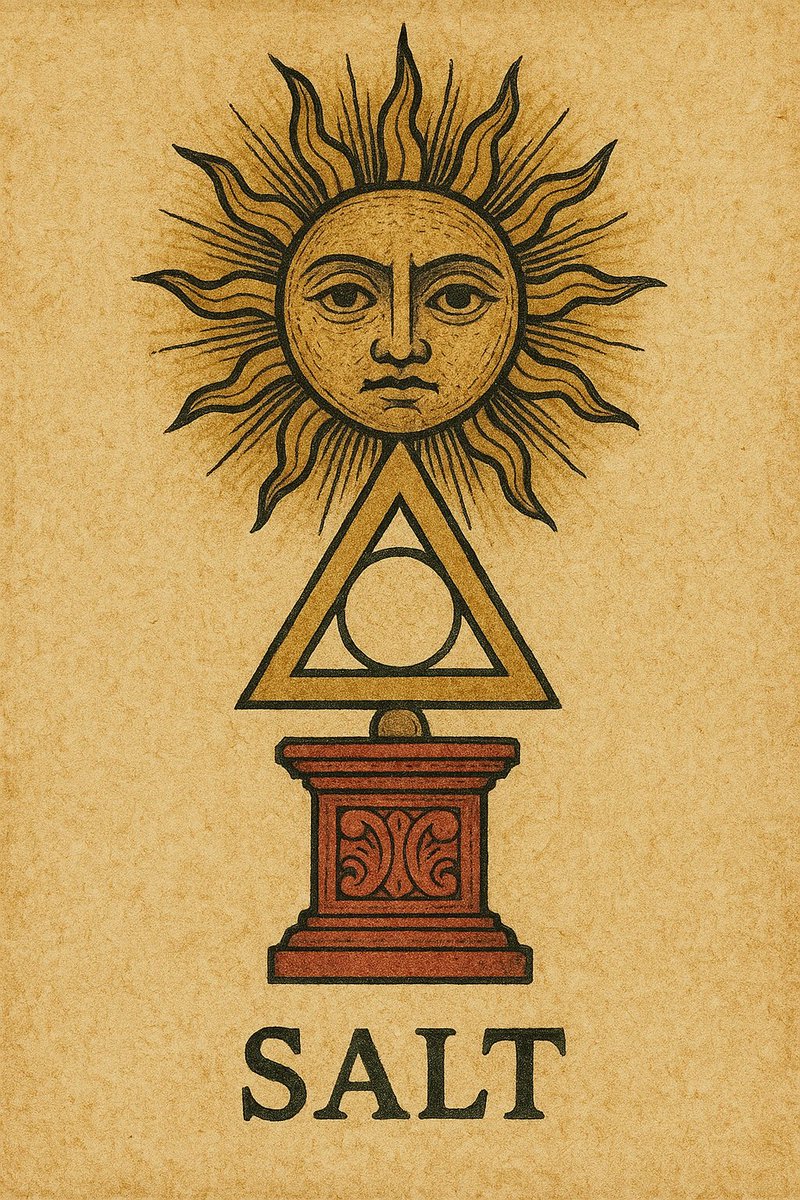
Salt is the preservative of form, the principle of crystallization and endurance; it is the Body, steadfast and purified through trial. It teaches the Mason to remain rooted in virtue, that he may build his Temple upon a sure and incorruptible foundation.
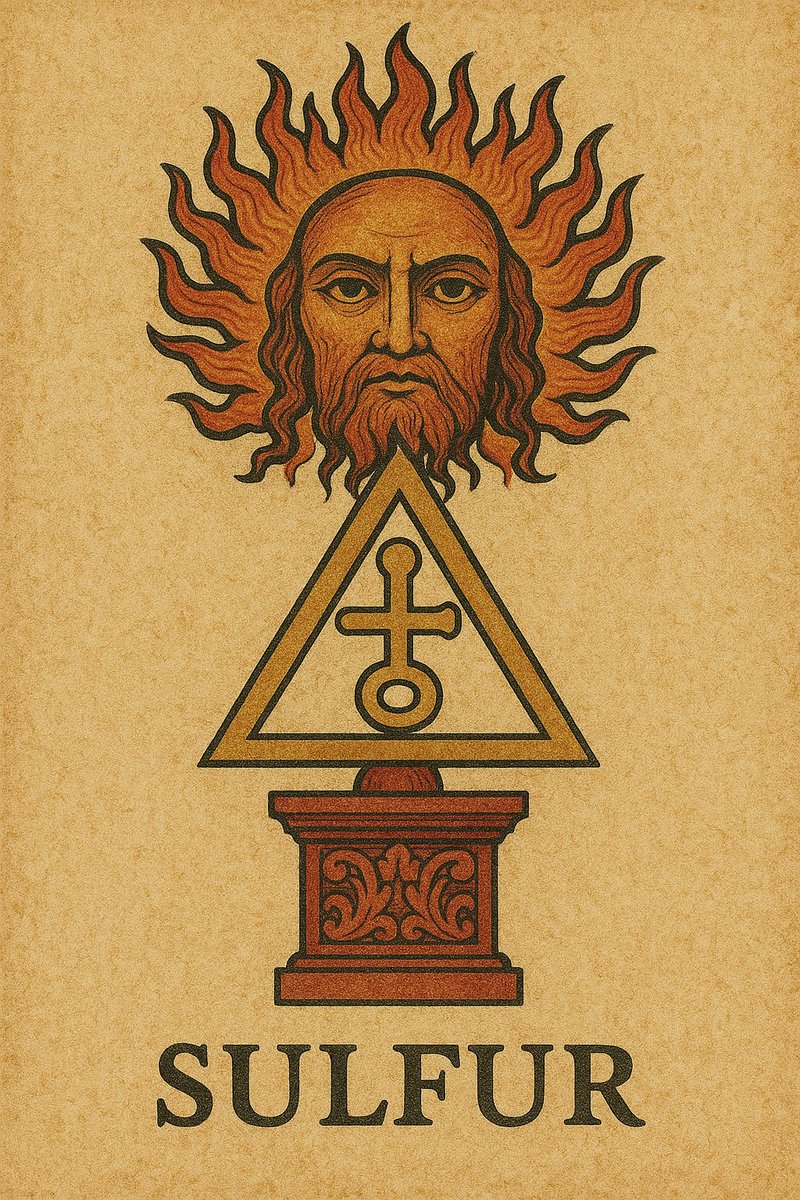
Sulfur is the animating Fire, the passion of the Soul, the power that must be transmuted lest it consume. It is the forge of character, wherein desire is tested, broken, and reborn as Will aligned to the Good - and, therefore, to God.