🚨IMPORTANT:
Palestinian prisoners’ rights groups released a new report today based on testimonies provided to lawyers visiting Gaza detainees held in Israel’s underground “Rakevet” section of Ramla Prison and the “Sde Teiman” military camp — both notorious sites of torture.
We share the full report —“Enduring Hell: Gaza Detainees Face Severe Israeli Torture and Terror Behind Bars” — below 👇🏼🧵
Palestinian prisoners’ rights groups released a new report today based on testimonies provided to lawyers visiting Gaza detainees held in Israel’s underground “Rakevet” section of Ramla Prison and the “Sde Teiman” military camp — both notorious sites of torture.
We share the full report —“Enduring Hell: Gaza Detainees Face Severe Israeli Torture and Terror Behind Bars” — below 👇🏼🧵

1/
Enduring Hell: Gaza Detainees Face Severe Israeli Torture and Terror Behind Bars
August 20, 2025
Briefing by the Commission of Detainees Affairs’ and the Palestinian Prisoner’s Society
Ramallah, occupied Palestine – Nearly two years into the Gaza genocide and severe crimes against Palestinian political detainees held in the Israeli occupation’s prisons continue. Those abducted from the occupied Gaza Strip are enduring the worst levels of torture and abuse compared with any other detainees.
The Commission of Detainees Affairs’ and the Palestinian Prisoner’s Society release this new briefing based on testimonies obtained – under strict conditions – by lawyers during visits to detainees conducted between late July and mid-August.
The visits were conducted specifically in the underground “Rakevet” section of Ramla Prison, and the “Sde Teiman” military camp, both notorious for systematic torture of Palestinians arrested from occupied Gaza.
Enduring Hell: Gaza Detainees Face Severe Israeli Torture and Terror Behind Bars
August 20, 2025
Briefing by the Commission of Detainees Affairs’ and the Palestinian Prisoner’s Society
Ramallah, occupied Palestine – Nearly two years into the Gaza genocide and severe crimes against Palestinian political detainees held in the Israeli occupation’s prisons continue. Those abducted from the occupied Gaza Strip are enduring the worst levels of torture and abuse compared with any other detainees.
The Commission of Detainees Affairs’ and the Palestinian Prisoner’s Society release this new briefing based on testimonies obtained – under strict conditions – by lawyers during visits to detainees conducted between late July and mid-August.
The visits were conducted specifically in the underground “Rakevet” section of Ramla Prison, and the “Sde Teiman” military camp, both notorious for systematic torture of Palestinians arrested from occupied Gaza.

2/
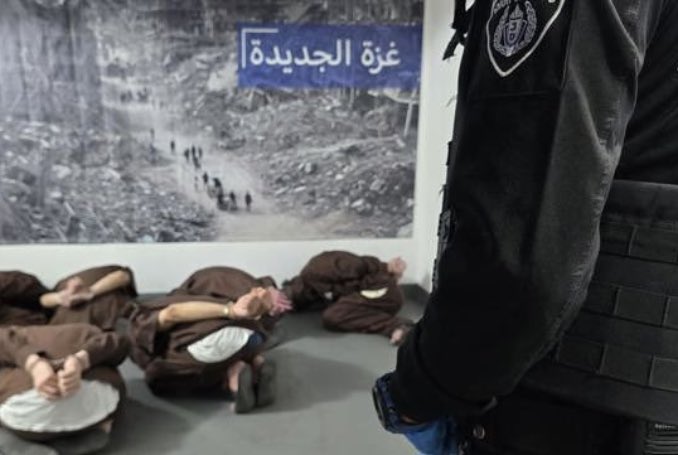
In the underground “Rakevet” section of Ramla Prison, detainees came to their lawyers’ visits weeping, terrorized.
All detainees had been threatened and beaten prior to seeing their lawyers. Prison guards attempted to force detainees to lie to their lawyers and tell them that everything is “excellent.” Lawyers were forbidden from sharing any information about detainees’ families – who remain in Gaza – or the ongoing genocide.
In the underground “Rakevet” section of Ramla Prison, detainees came to their lawyers’ visits weeping, terrorized.
All detainees had been threatened and beaten prior to seeing their lawyers. Prison guards attempted to force detainees to lie to their lawyers and tell them that everything is “excellent.” Lawyers were forbidden from sharing any information about detainees’ families – who remain in Gaza – or the ongoing genocide.
3/
Key testimonies revealed the continued practice of beatings and finger-breaking, along with total isolation—detainees are denied sunlight and allowed out to the yard every other day for 20 minutes, handcuffed and forced to keep their heads down.
Mattresses are distributed at night and removed in the morning, forcing prisoners to sit on metal beds all day. Guards deliberately humiliate them with insults, including forcing them to curse their own mothers and families, alongside constant threats and psychological terror. Several prisoners came to their visits weeping and terrorized. One appeared to have been severely beaten—his face covered in tears, marks on his wrists from the handcuffs. He was unable to speak about what happened to him, only trying to signal to the lawyer with his eyes.
His case is not isolated; all detainees showed severe psychological distress, with fear dominating the entire lawyers’ visit. The interrogation period stands out as one of the clearest reflections of the level of torture and grave violations inflicted by interrogators against detainees abducted from occupied Gaza.
Key testimonies revealed the continued practice of beatings and finger-breaking, along with total isolation—detainees are denied sunlight and allowed out to the yard every other day for 20 minutes, handcuffed and forced to keep their heads down.
Mattresses are distributed at night and removed in the morning, forcing prisoners to sit on metal beds all day. Guards deliberately humiliate them with insults, including forcing them to curse their own mothers and families, alongside constant threats and psychological terror. Several prisoners came to their visits weeping and terrorized. One appeared to have been severely beaten—his face covered in tears, marks on his wrists from the handcuffs. He was unable to speak about what happened to him, only trying to signal to the lawyer with his eyes.
His case is not isolated; all detainees showed severe psychological distress, with fear dominating the entire lawyers’ visit. The interrogation period stands out as one of the clearest reflections of the level of torture and grave violations inflicted by interrogators against detainees abducted from occupied Gaza.
4/
Detainee (A.Y.):
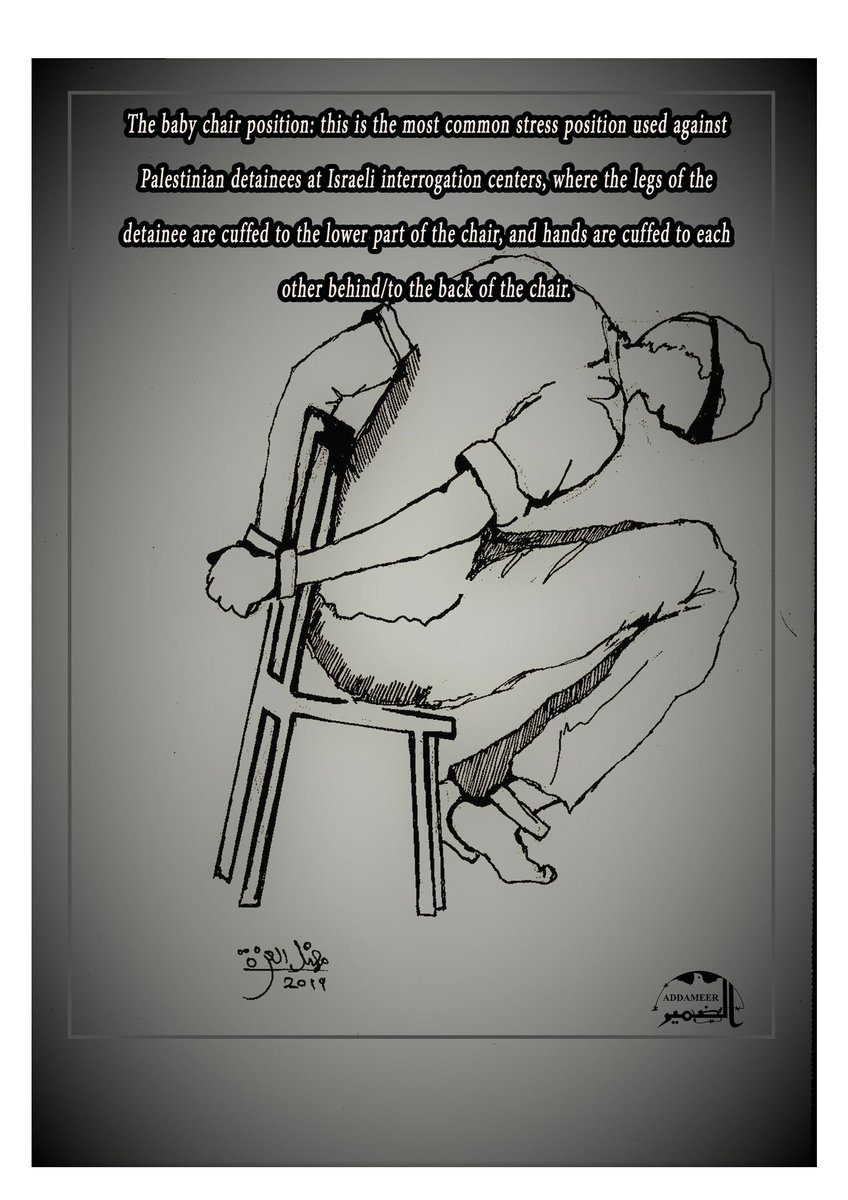
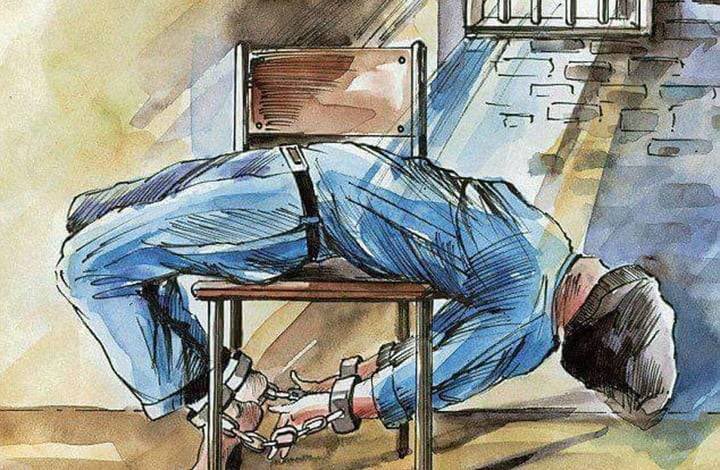
“I was arrested in December 2023 and taken to the ‘barracks,’ where I stayed for eight days. During that time, I was subjected to four days of ‘disco’ interrogation. Later, I underwent further interrogation by the intelligence services and the army, then I was transferred to Asqalan Prison, where I was held in a cell for a month without knowing day from night, and subjected to very harsh military interrogations.
They would strap me to a chair and then throw me to the ground while my hands and feet were bound. I was beaten daily for 30 days straight. I currently suffer from torn chest muscles and severe pain due to prolonged shackling of my arms behind my back. After Asqalan, I was moved to Ofer Prison, where I was shown a screen with a map to locate my home and was questioned about several locations in Gaza.”
Detainee (A.Y.):
“I was arrested in December 2023 and taken to the ‘barracks,’ where I stayed for eight days. During that time, I was subjected to four days of ‘disco’ interrogation. Later, I underwent further interrogation by the intelligence services and the army, then I was transferred to Asqalan Prison, where I was held in a cell for a month without knowing day from night, and subjected to very harsh military interrogations.
They would strap me to a chair and then throw me to the ground while my hands and feet were bound. I was beaten daily for 30 days straight. I currently suffer from torn chest muscles and severe pain due to prolonged shackling of my arms behind my back. After Asqalan, I was moved to Ofer Prison, where I was shown a screen with a map to locate my home and was questioned about several locations in Gaza.”
5/
Detainee (Y.D.):
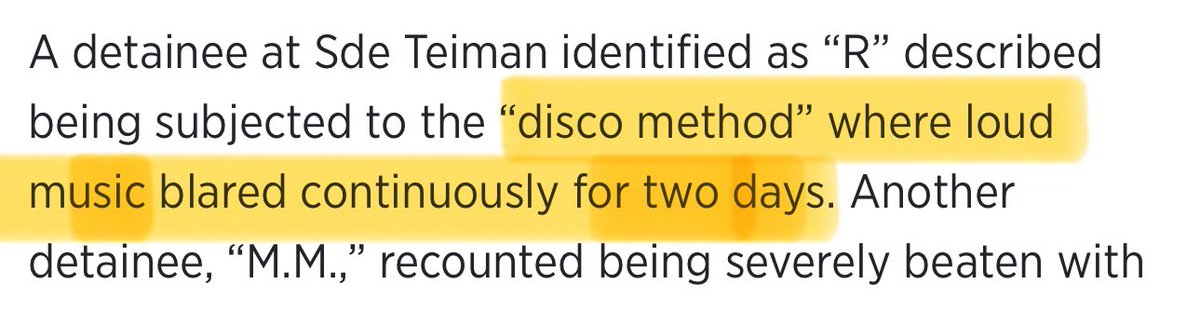
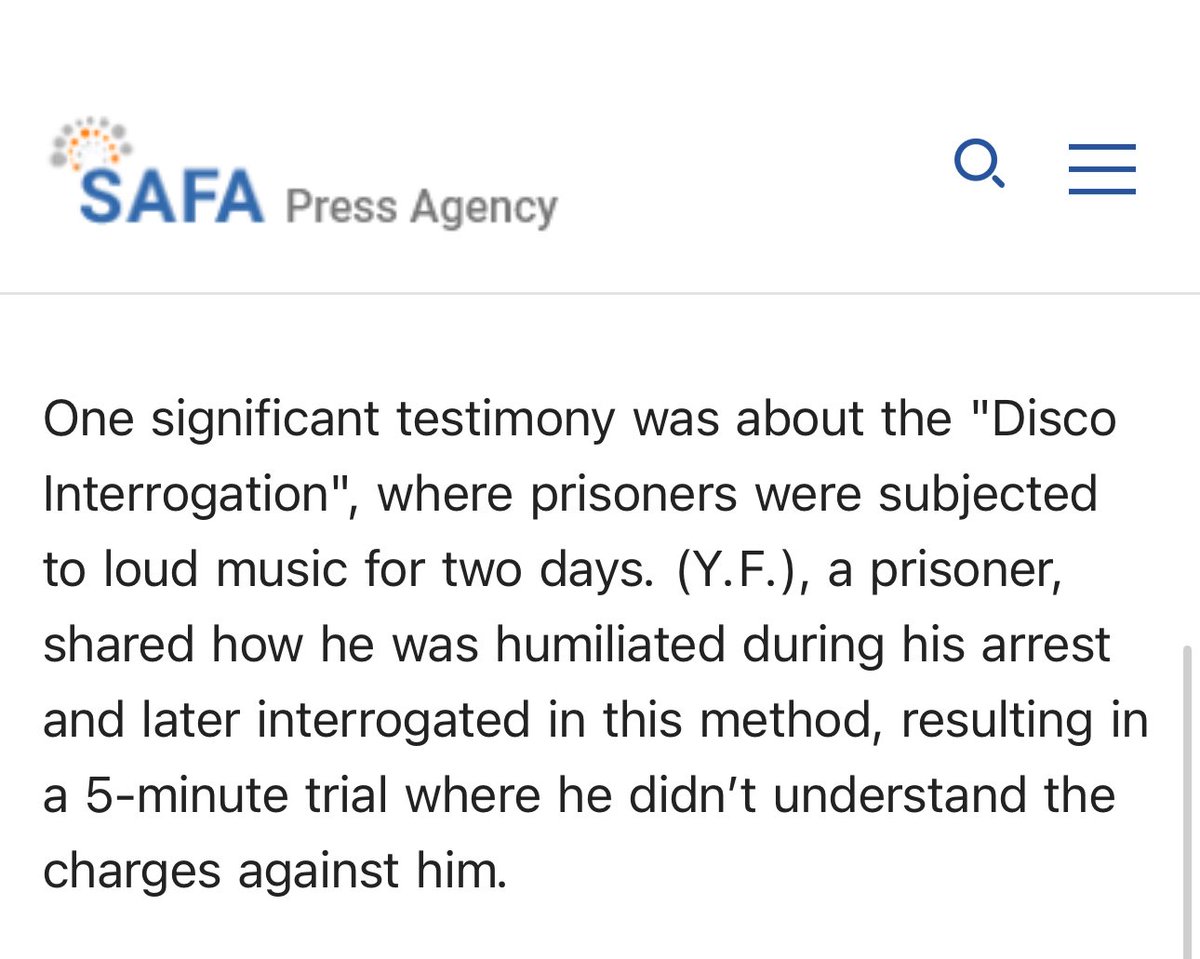
“I was interrogated in the field for an hour, then transferred to the ‘barracks,’ where I was beaten, and then placed under the ‘disco’ interrogation method, where I was severely beaten, suspended in stress positions, and lost consciousness several times. They poured water on me to wake me up. The beating was so violent that my handcuffs came off twice. I was struck violently on the head, and my hair was pulled out. Now I suffer from rib fractures and I can’t sleep. The torture also caused a tear in my left ear, vision impairment, and kidney pain.”
Detainee (Y.D.):
“I was interrogated in the field for an hour, then transferred to the ‘barracks,’ where I was beaten, and then placed under the ‘disco’ interrogation method, where I was severely beaten, suspended in stress positions, and lost consciousness several times. They poured water on me to wake me up. The beating was so violent that my handcuffs came off twice. I was struck violently on the head, and my hair was pulled out. Now I suffer from rib fractures and I can’t sleep. The torture also caused a tear in my left ear, vision impairment, and kidney pain.”
6/
Detainee (A.B.):
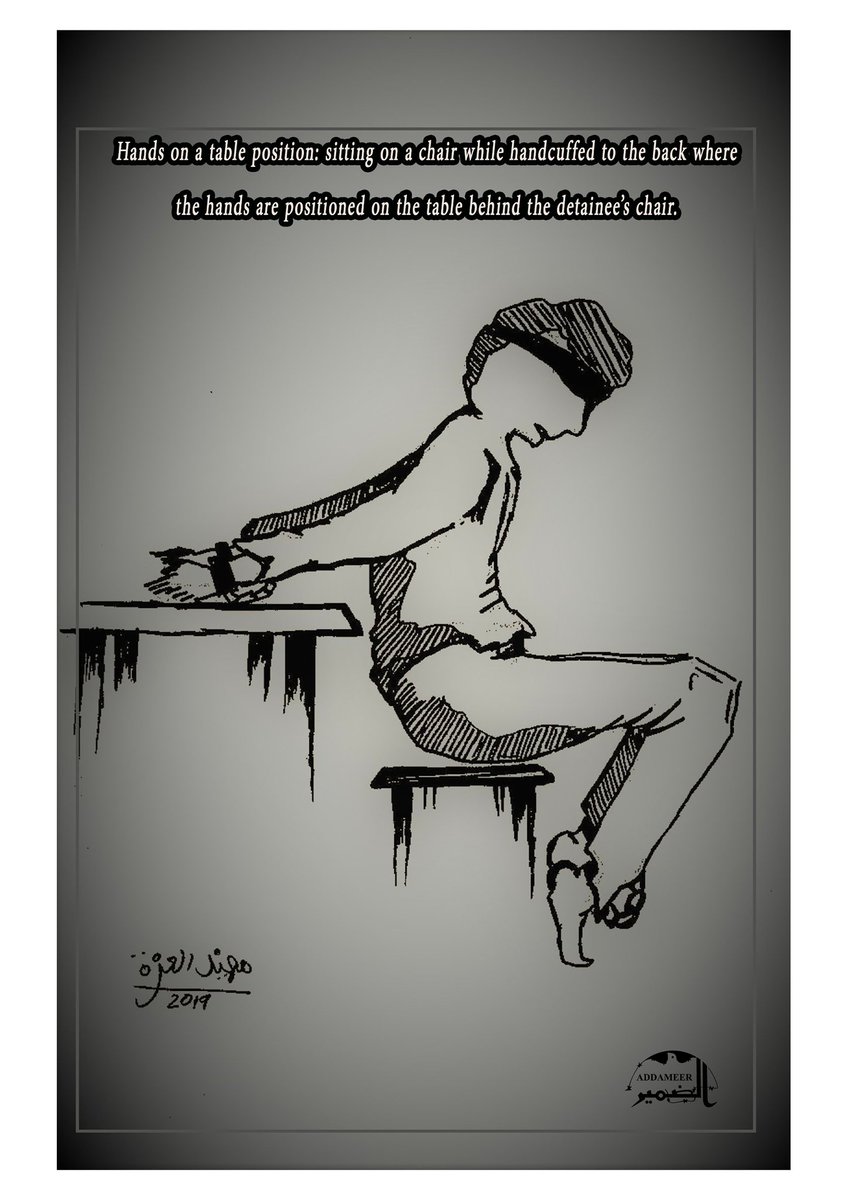
“I was arrested on the second day of the war. I was already suffering from a jaw injury and had undergone surgery. After my arrest, I was transferred to Asqalan Prison, where I was held for a month and a half and was subjected to military interrogation. They put me in stress positions including the ‘mozeh’ (banana) position, during which I was beaten. This continued for 17 days, including once for 5 consecutive days. The interrogators would grab my testicles and beat me on them, trying to pressure me into confessing. They also blindfolded me and threw me from the chair to the ground. After being transferred to Ramla Prison, I was subjected to another round of interrogation, during which the guards broke my fingers.”
Detainee (A.B.):
“I was arrested on the second day of the war. I was already suffering from a jaw injury and had undergone surgery. After my arrest, I was transferred to Asqalan Prison, where I was held for a month and a half and was subjected to military interrogation. They put me in stress positions including the ‘mozeh’ (banana) position, during which I was beaten. This continued for 17 days, including once for 5 consecutive days. The interrogators would grab my testicles and beat me on them, trying to pressure me into confessing. They also blindfolded me and threw me from the chair to the ground. After being transferred to Ramla Prison, I was subjected to another round of interrogation, during which the guards broke my fingers.”
7/
Hunger and Disease Dominate Testimonies
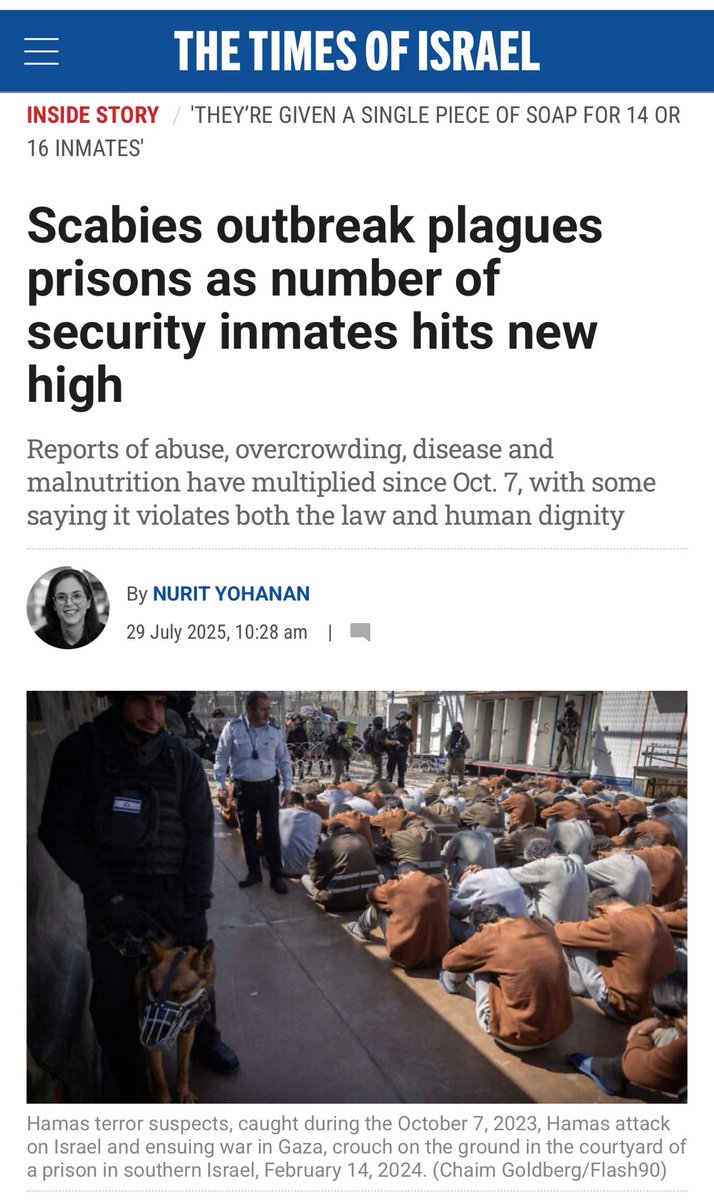
All detainees who were visited confirmed they are suffering from extreme hunger — one described the situation as “famine.” They are given extremely small portions of food, often inedible. Detainees collect these scraps to form a single evening meal. The amount of food provided to an entire cell is barely enough for one person. Most are experiencing severe weight loss, emaciation, and extreme exhaustion, along with worsening illnesses and health conditions.
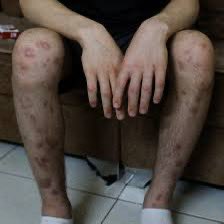
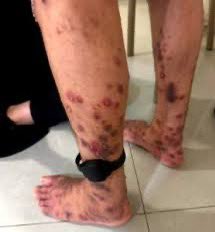
In addition to deliberate starvation, diseases and infections continue to spread — most notably scabies skin disease, which has become one of the most pressing health issues facing the prisoners. The prison system has actively continued its spread by depriving detainees of basic hygiene and medical care, and refusing to eradicate it.
Hunger and Disease Dominate Testimonies
All detainees who were visited confirmed they are suffering from extreme hunger — one described the situation as “famine.” They are given extremely small portions of food, often inedible. Detainees collect these scraps to form a single evening meal. The amount of food provided to an entire cell is barely enough for one person. Most are experiencing severe weight loss, emaciation, and extreme exhaustion, along with worsening illnesses and health conditions.
In addition to deliberate starvation, diseases and infections continue to spread — most notably scabies skin disease, which has become one of the most pressing health issues facing the prisoners. The prison system has actively continued its spread by depriving detainees of basic hygiene and medical care, and refusing to eradicate it.
Main Facts About Palestinians Detained from Gaza
Since the start of the genocide, Israeli occupation forces have detained thousands of civilians from across the Gaza Strip — including women, children, the elderly, the wounded, as well as medical and press personnel.
In addition to the abuses mentioned in this briefing, Israeli occupation forces have carried out other severe acts such as rape, including raping detainees to death, as well as torturing and starving them to death.
The occupation also continues to commit the crime of enforced disappearance against hundreds of detainees abducted from Gaza, refusing to disclose their identities or locations of detention. To this day, the International Committee of the Red Cross is denied access to visit them.
Due to some recent legal amendments, human rights organizations have managed to uncover the fate of hundreds of detainees, gaining access to most prisons and detention camps — including “Sde Teiman”, a key site of documented torture and medical abuse, and the underground Rakevet section of Ramla Prison.
Amid these severe abuses, dozens of detainees have been killed in custody, in addition to others extrajudicially executed upon arrest. Of the 76 identified martyred political prisoners since the genocide began, 46 were people arrested from Gaza.
—END—
Since the start of the genocide, Israeli occupation forces have detained thousands of civilians from across the Gaza Strip — including women, children, the elderly, the wounded, as well as medical and press personnel.
In addition to the abuses mentioned in this briefing, Israeli occupation forces have carried out other severe acts such as rape, including raping detainees to death, as well as torturing and starving them to death.
The occupation also continues to commit the crime of enforced disappearance against hundreds of detainees abducted from Gaza, refusing to disclose their identities or locations of detention. To this day, the International Committee of the Red Cross is denied access to visit them.
Due to some recent legal amendments, human rights organizations have managed to uncover the fate of hundreds of detainees, gaining access to most prisons and detention camps — including “Sde Teiman”, a key site of documented torture and medical abuse, and the underground Rakevet section of Ramla Prison.
Amid these severe abuses, dozens of detainees have been killed in custody, in addition to others extrajudicially executed upon arrest. Of the 76 identified martyred political prisoners since the genocide began, 46 were people arrested from Gaza.
—END—
• • •
Missing some Tweet in this thread? You can try to
force a refresh