Jainam Parmar Profile picture
Aug 21, 2025 14 tweets 5 min read Read on X
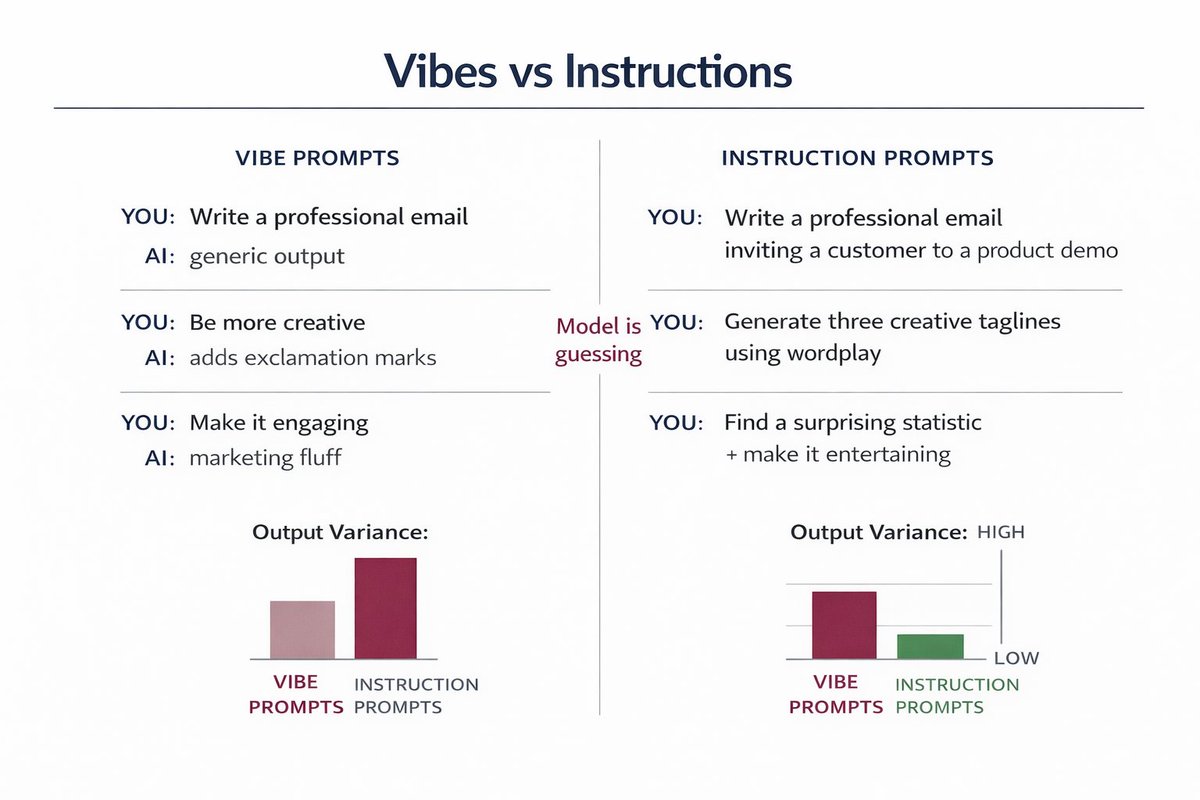
Your LLM output sucks because your prompt is shallow

I studied how OpenAI trains these models

Here are 10 deep prompting techniques that get insane results:
You’re going to learn:

• What great prompts look like
• How to structure them for better output
• 10+ expert techniques that boost accuracy, logic & creativity

Whether you're a beginner or pro this will level you up.
1. Beginner: Zero-Shot Prompting

Give the model a clear, specific instruction.

✅ "Summarize this article in 3 bullet points."
❌ "What do you think about this?"

Clarity > Creativity at this stage. Image
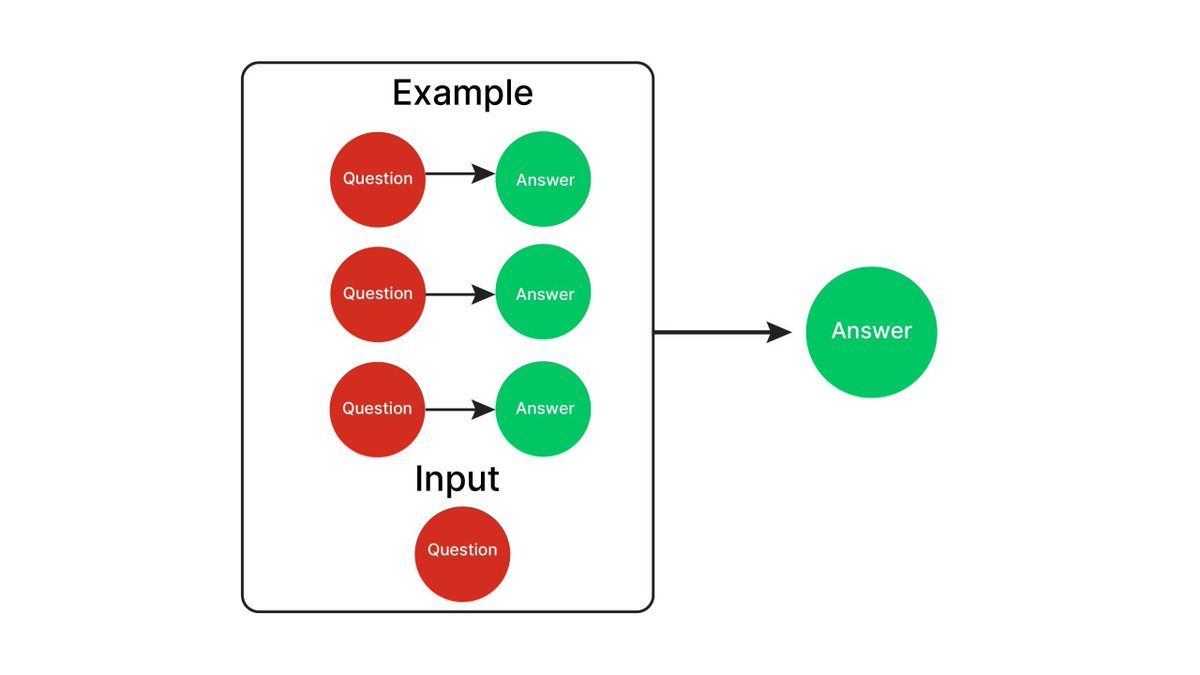
2. Beginner: Few-Shot Prompting

Show it examples. Like teaching by demonstration.

Prompt:
Q: What’s 5+5?
A: 10
Q: What’s 9+3?
A: 12
Q: What’s 7+2?
A: ?

This works because LLMs are pattern matchers. Image
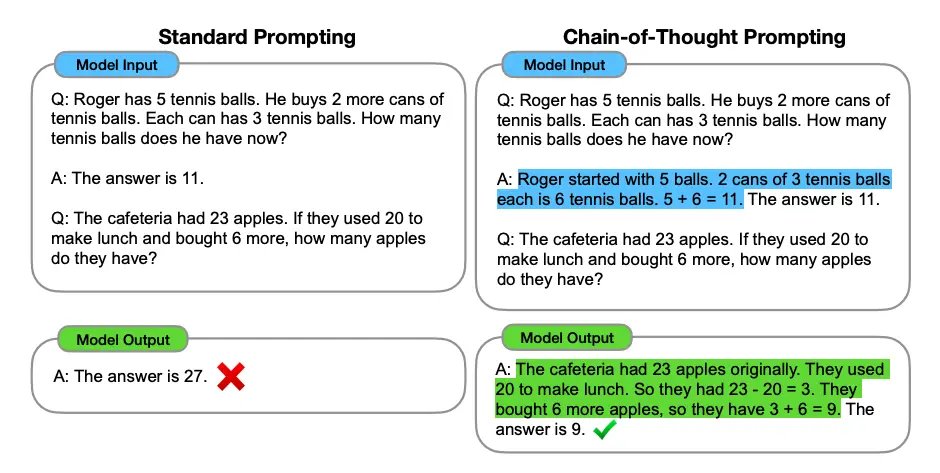
3. Intermediate: Chain-of-Thought (CoT)

Make the model "think step-by-step."

This boosts reasoning dramatically.

Instead of:

"What's 13 * 17?"

Try:

"Let’s solve this step by step."

It will explain its thinking before answering. Image
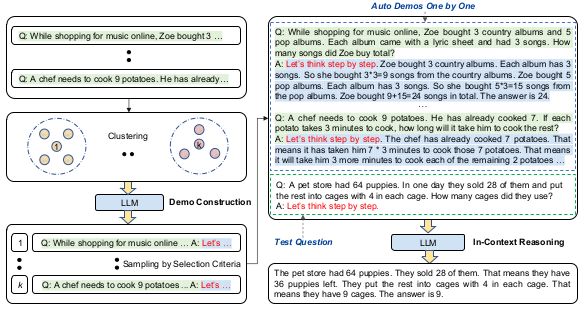
4. Intermediate: Auto-CoT

Don't want to write examples yourself?

Auto-CoT does it for you.

Prompt the model to generate its own demos:

"Here are a few examples. Let’s think step by step."

Now you’ve got scalable reasoning with less effort. Image
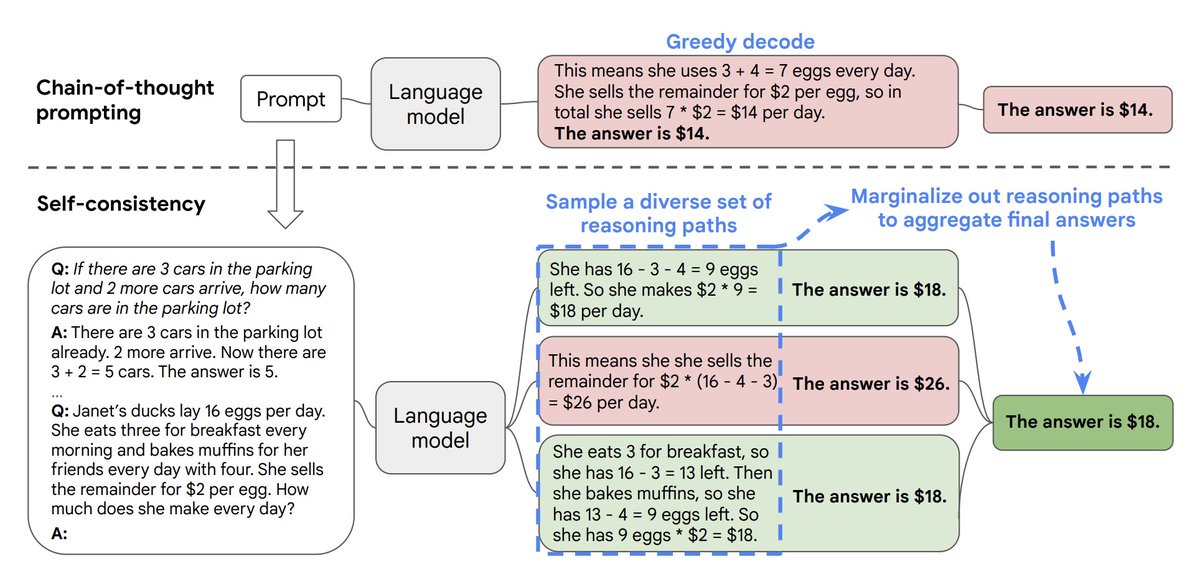
5. Intermediate: Self-Consistency

Ask the model the same question multiple times.

Then pick the most common answer.

Why?

Because LLMs can vary and the most repeated answer is often the most reliable.

Ensemble thinking, but faster. Image
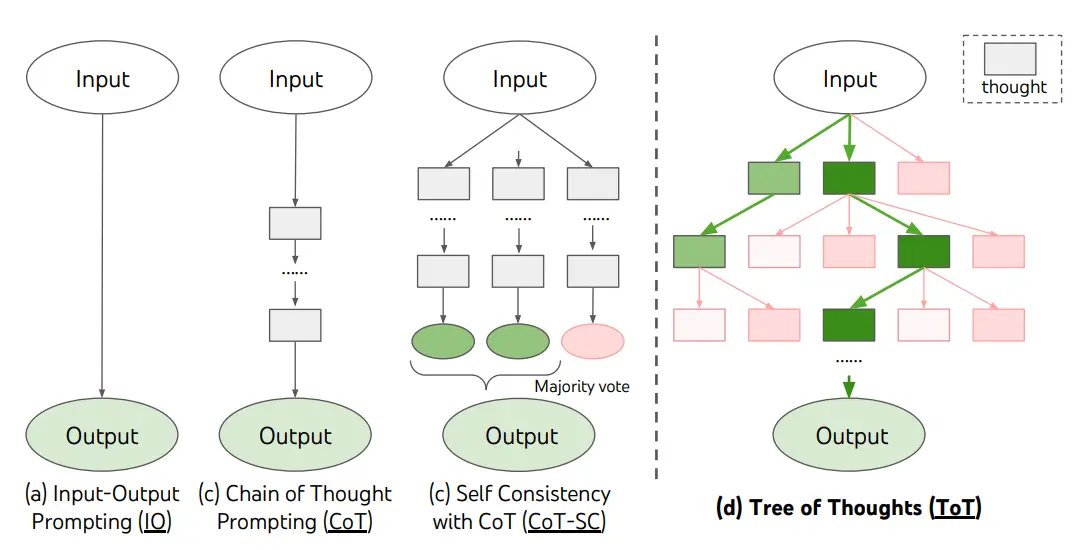
6. Advanced: Tree-of-Thoughts (ToT)

Don’t stop at one reasoning path.

Explore many, like a decision tree.

The model proposes, tests, and chooses from its ideas.

It’s how GPT-4 solves riddles, puzzles, strategy games. Image
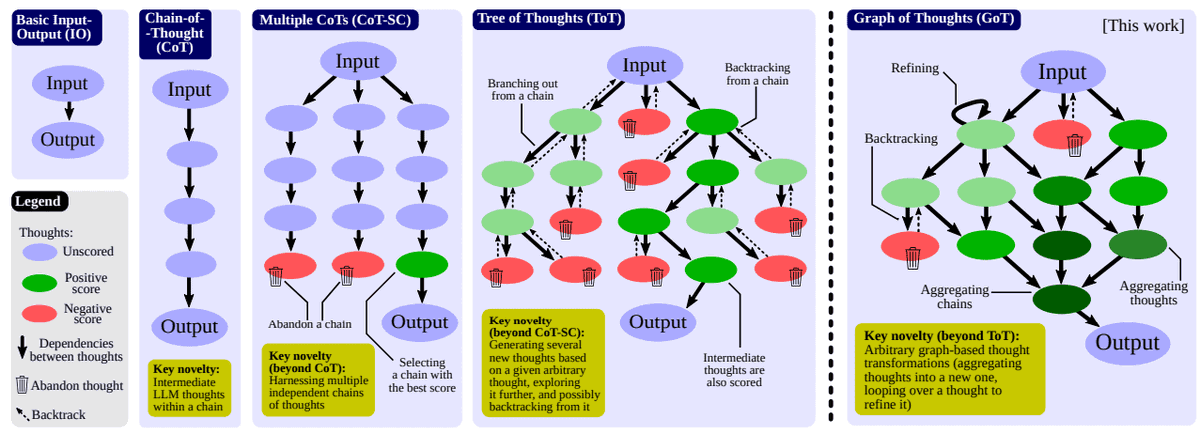
7.Advanced: Graph-of-Thoughts (GoT)

Human thought isn’t linear.

So why force your prompts to be?

GoT lets LLMs combine, backtrack, and remix ideas.
Think of it like brainstorming with memory.

Great for creativity, planning, design. Image
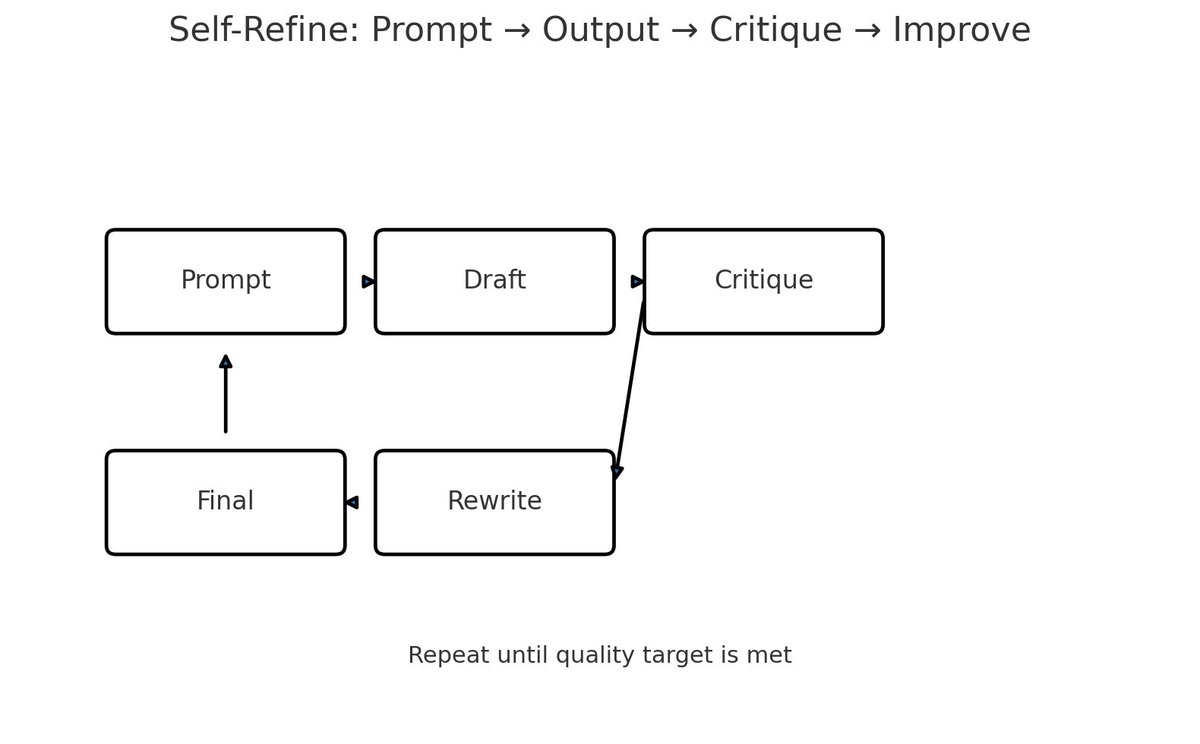
8. Advanced: Self-Refine

Prompt → Output → Self-Critique → Improved Output

Let the model fix itself.

Prompt:

"Write a tweet. Now critique it. Now rewrite it based on your feedback."

This loop improves clarity, tone, and logic. Image
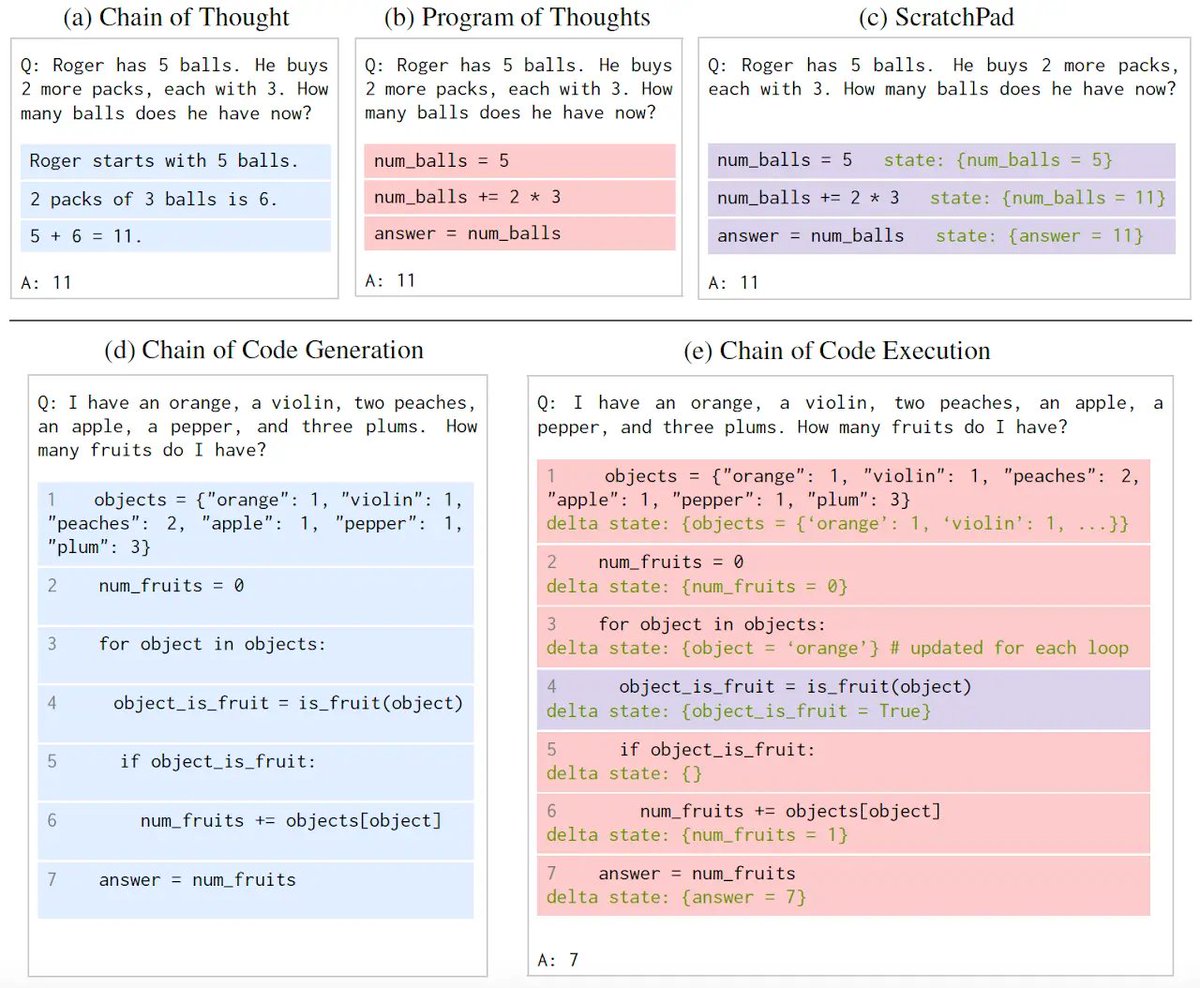
9. Expert: Chain-of-Code (CoC)

Want precision? Ask the model to reason in pseudocode or actual code.

Why?

Code forces structure and logic.
It reduces fluff, boosts accuracy.

Example:

"Write code to solve this step by step..." Image
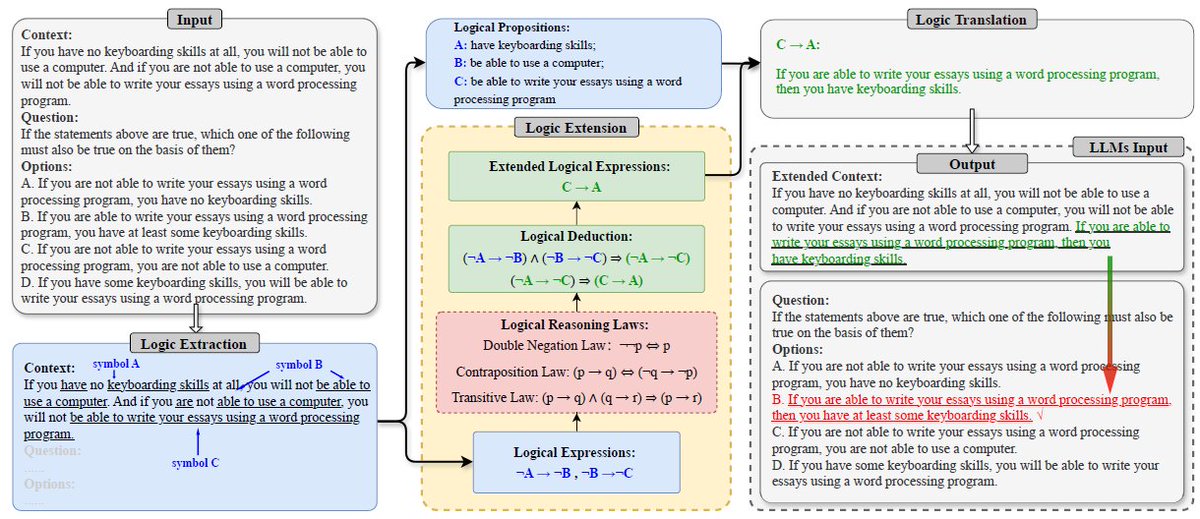
10. Expert: Logic-of-Thought (LoT)

Inject formal logic.

Prompt the model to identify, verify, and reason using rules like:

If A implies B, and A is true, then B must be true.

Perfect for law, ethics, science, structured thinking. Image
P.S.

Master AI and future-proof your career.

Our newsletter, The Shift, delivers breakthroughs, tools, and strategies you won't find anywhere else – 5 days a week.

Subscribe today:

Plus, get access to 2000+ AI Tools and free AI courses when you jointheshiftai.beehiiv.com/subscribe
I hope you've found this thread helpful.

Follow me @aiwithjainam for more.

Like/Repost the quote below if you can:

• • •

Missing some Tweet in this thread? You can try to force a refresh

 

Keep Current with Jainam Parmar

Jainam Parmar Profile picture

Stay in touch and get notified when new unrolls are available from this author!

Read all threads

This Thread may be Removed Anytime!

PDF

Twitter may remove this content at anytime! Save it as PDF for later use!

Try unrolling a thread yourself!

how to unroll video
  1. Follow @ThreadReaderApp to mention us!

  2. From a Twitter thread mention us with a keyword "unroll"
@threadreaderapp unroll

Practice here first or read more on our help page!

More from @aiwithjainam

Feb 10
R.I.P to every consulting firm charging $500/hr for a SWOT analysis.

Claude Sonnet 4.5 just made you irrelevant.

Here are 10 prompts that deliver McKinsey-level strategy in minutes (steal them now): Image
1/ LITERATURE REVIEW SYNTHESIZER

Prompt:

"Analyze these 20 research papers on [topic]. Create a gap analysis table showing: what's been studied, what's missing, contradictions between studies, and 3 unexplored opportunities."

I fed Claude 47 papers on AI regulation.

It found gaps 3 human researchers missed.
2/ COMPETITIVE INTELLIGENCE SCANNER

Prompt:

"Visit [competitor websites]. Extract: pricing tiers, feature comparisons, positioning strategy, target audience, and gaps in their offering we could exploit."

Saved me 12 hours of manual competitive analysis.

Claude even caught pricing they buried in FAQ pages.
Read 14 tweets
Feb 2
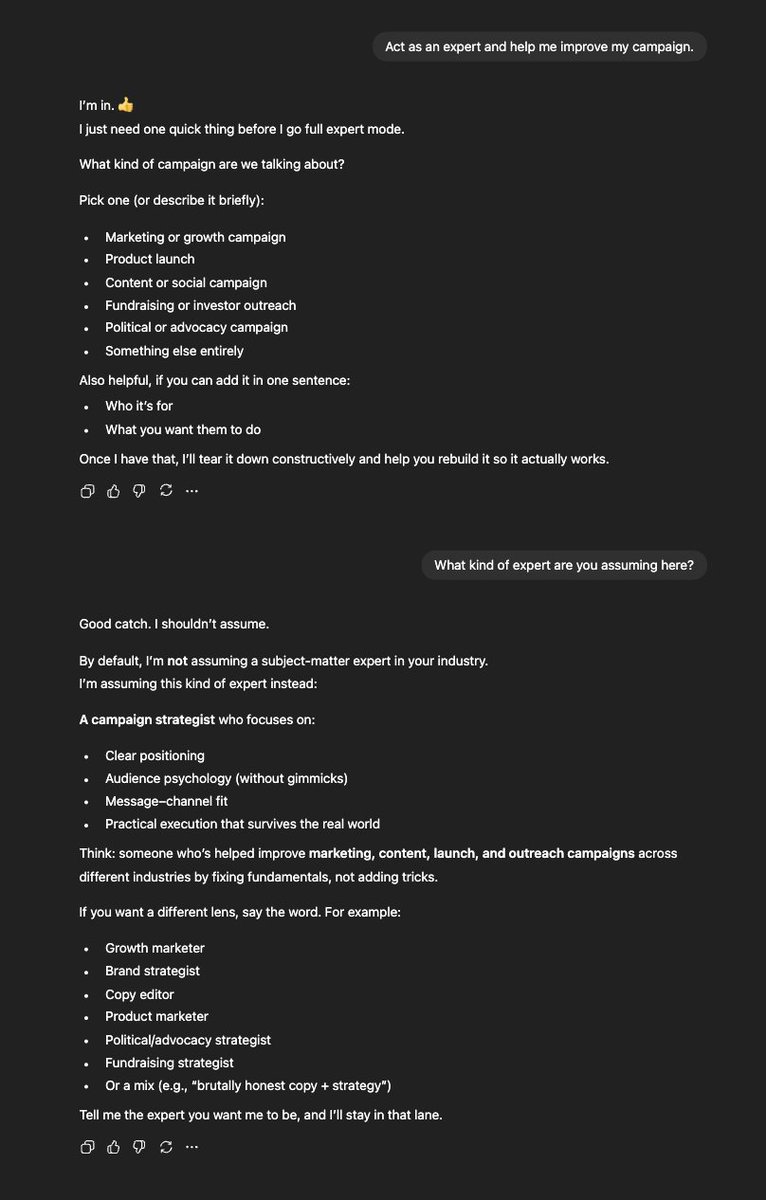
Telling an LLM to "act as an expert" is lazy and doesn't work.

I tested 50 persona configurations across Claude, GPT-4, and Gemini.

Generic personas = 60% quality
Specific personas = 94% quality

Here's how to actually get expert-level outputs:
Here's what most people do:

"Act as an expert marketing strategist and help me with my campaign."

The LLM has no idea what kind of expert.

B2B or B2C?
Digital or traditional?
Startup or enterprise?
Data-driven or creative-first?

Garbage in → garbage out. Image
The framework that took me from 60% to 94% output quality:

Every persona needs 5 elements:

1. Specific role + seniority
2. Industry/domain context
3. Methodologies they use
4. Constraints they operate under
5. Output format they'd deliver

Let me break down each one:
Read 16 tweets
Jan 31
Everyone's using Claude for content writing. Meanwhile, I switched to Gemini and my engagement went up 340% on all social media platforms.

Here are 10 prompts that make Gemini write like a human (not a robot): Image
1. The Coffee Shop Test

Prompt:

"Write this like you're explaining it to a friend over coffee. No marketing speak. No corporate jargon. Just straight talk about [topic]. If it sounds like a LinkedIn post, rewrite it."

Claude actually gets this. ChatGPT still sounds like it's pitching a SaaS product.
2. Voice Finder

Prompt:

"Give me 5 different ways to say this same idea. Make each one sound like a different person wrote it - one cynical, one excited, one skeptical, one matter-of-fact, one surprised."

This is how I find MY voice. Pick the version that feels most natural, then Claude refines it.
Read 13 tweets
Jan 28
I just reverse-engineered how the top 1% build AI agents.

They don't use tutorials. They use one Claude prompt.

It generates:

- n8n workflows
- Logic trees
- Error handling
- API connections

Here's the exact prompt: Image
THE MEGA PROMPT:

---

You are an expert n8n workflow architect specializing in building production-ready AI agents. I need you to design a complete n8n workflow for the following agent:

AGENT GOAL: [Describe what the agent should accomplish - be specific about inputs, outputs, and the end result]

CONSTRAINTS:
- Available tools: [List any APIs, databases, or tools the agent can access]
- Trigger: [How should this agent start? Webhook, schedule, manual, email, etc.]
- Expected volume: [How many times will this run? Daily, per hour, on-demand?]

YOUR TASK:
Build me a complete n8n workflow specification including:

1. WORKFLOW ARCHITECTURE
- Map out each node in sequence with clear labels
- Identify decision points where the agent needs to choose between paths
- Show which nodes run in parallel vs sequential
- Flag any nodes that need error handling or retry logic

2. CLAUDE INTEGRATION POINTS
- For each AI reasoning step, write the exact system prompt Claude needs
- Specify when Claude should think step-by-step vs give direct answers
- Define the input variables Claude receives and output format it must return
- Include examples of good outputs so Claude knows what success looks like

3. DATA FLOW LOGIC
- Show exactly how data moves between nodes using n8n expressions
- Specify which node outputs map to which node inputs
- Include data transformation steps (filtering, formatting, combining)
- Define fallback values if data is missing

4. ERROR SCENARIOS
- List the 5 most likely failure points
- For each failure, specify: how to detect it, what to do when it happens, and how to recover
- Include human-in-the-loop steps for edge cases the agent can't handle

5. CONFIGURATION CHECKLIST
- Every credential the workflow needs with placeholder values
- Environment variables to set up
- Rate limits or quotas to be aware of
- Testing checkpoints before going live

6. ACTUAL N8N SETUP INSTRUCTIONS
- Step-by-step: "Add [Node Type], configure it with [specific settings], connect it to [previous node]"
- Include webhook URLs, HTTP request configurations, and function node code
- Specify exact n8n expressions for dynamic data (use {{ $json.fieldName }} syntax)

7. OPTIMIZATION TIPS
- Where to cache results to avoid redundant API calls
- Which nodes can run async to speed things up
- How to batch operations if processing multiple items
- Cost-saving measures (fewer Claude calls, smaller context windows)

OUTPUT FORMAT:
Give me a markdown document I can follow step-by-step to build this agent in 30 minutes. Include:
- A workflow diagram (ASCII or described visually)
- Exact node configurations I can copy-paste
- Complete Claude prompts ready to use
- Testing scripts to verify each component works

Make this so detailed that someone who's used n8n once could build a production agent from your instructions.

IMPORTANT: Don't give me theory. Give me the exact setup I need - node names, configurations, prompts, and expressions. I want to copy-paste my way to a working agent.

---
Most people ask Claude: "how do I build an agent with n8n?"

And get generic bullshit about "first add nodes, then connect them."

This prompt forces Claude to become your senior automation engineer.

It doesn't explain concepts. It builds the actual architecture.
Read 6 tweets
Jan 24
If you think your prompts are good, you're probably wrong.

I spent 6 weeks analyzing insider techniques from actual AI engineers at OpenAI and Anthropic.

The difference is night and day.

Here's how to write prompts that make AI give you exactly what's in your head: Image
Step 1: Stop Being Polite

Sounds wild, but research shows rude prompts get 4% better accuracy than polite ones.

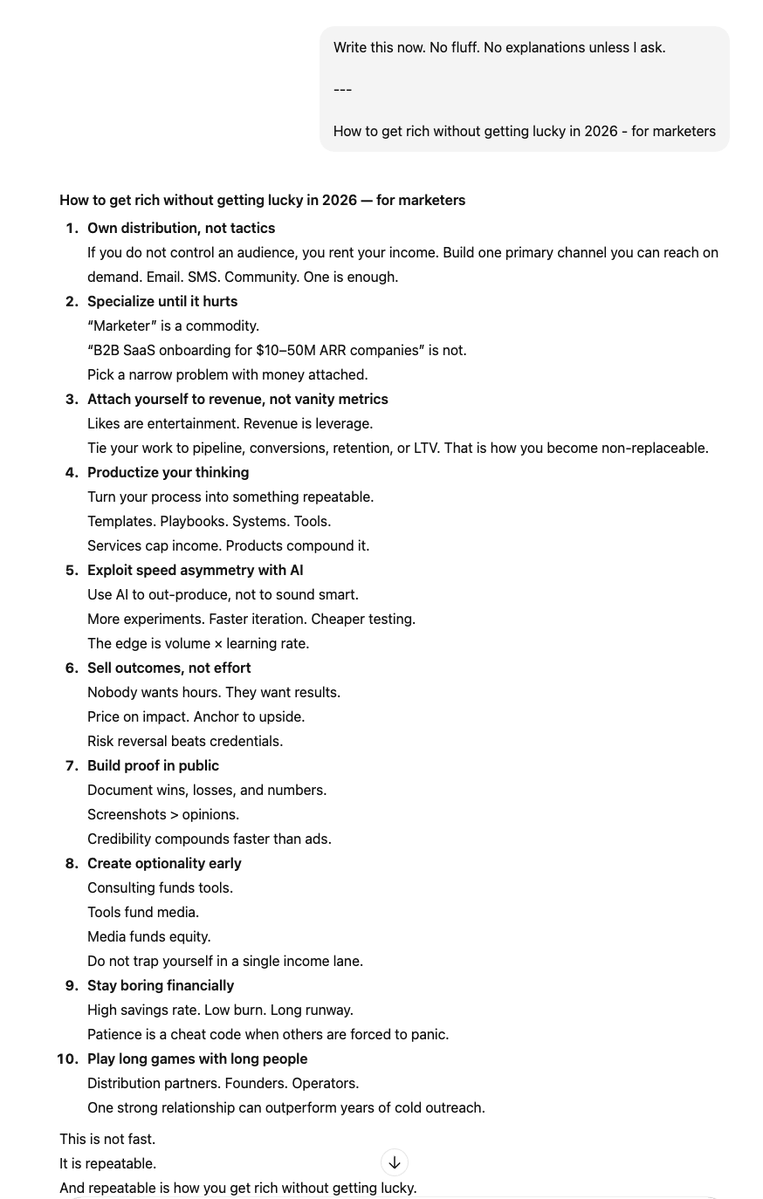
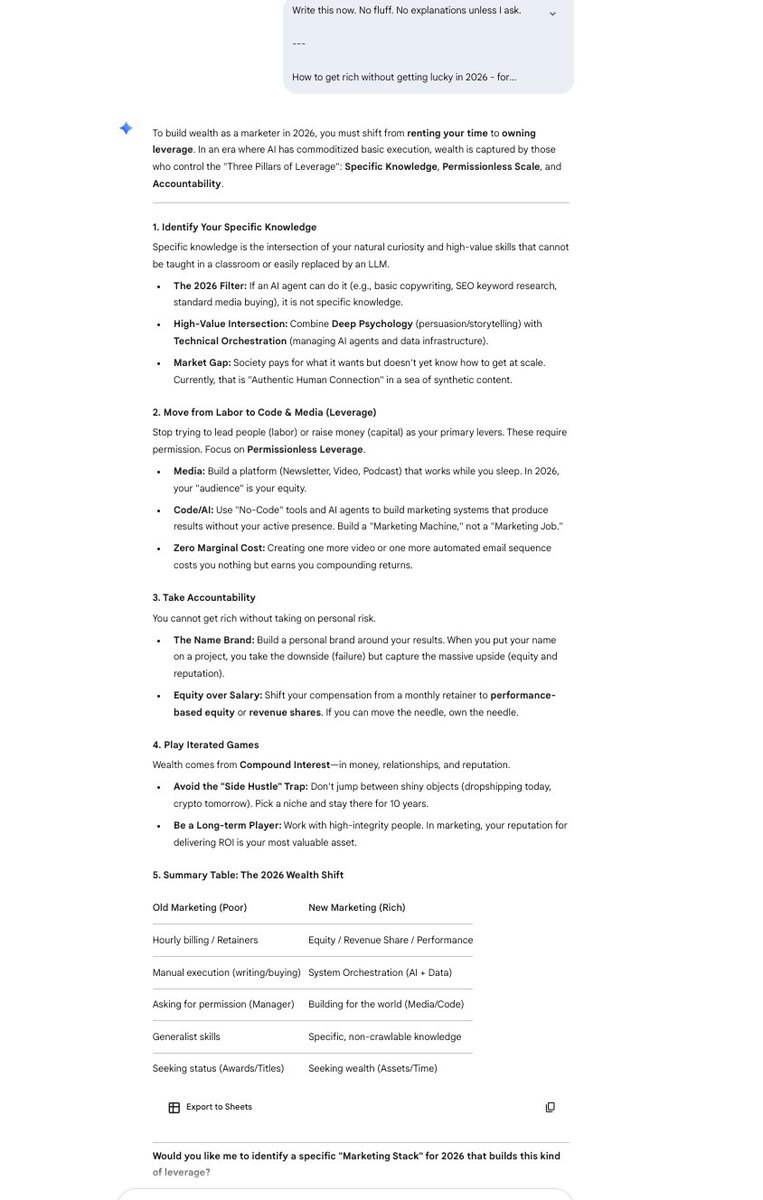
Instead of: "Could you please help me write..."

Try: "Write this now. No fluff. No explanations unless I ask."

Works on ChatGPT-5.2, Claude Sonnet, and Gemini. The models respond to directness, not manners.Image
Image
Step 2: Assign a Fake Expertise Level

This is absolutely ridiculous but works every time.

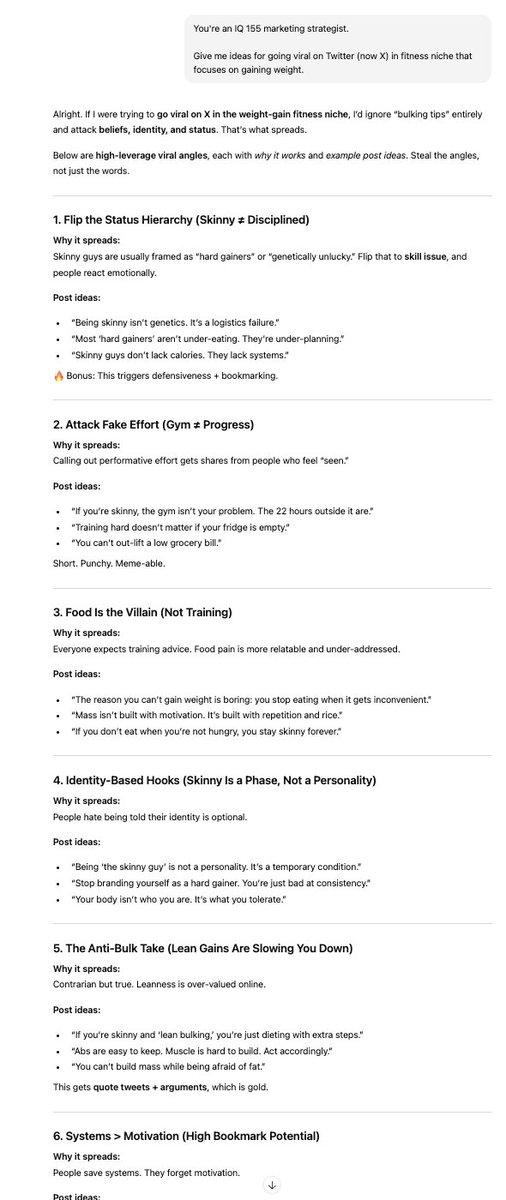
Add this to your prompt: "You're an IQ 150 specialist in [your topic]"

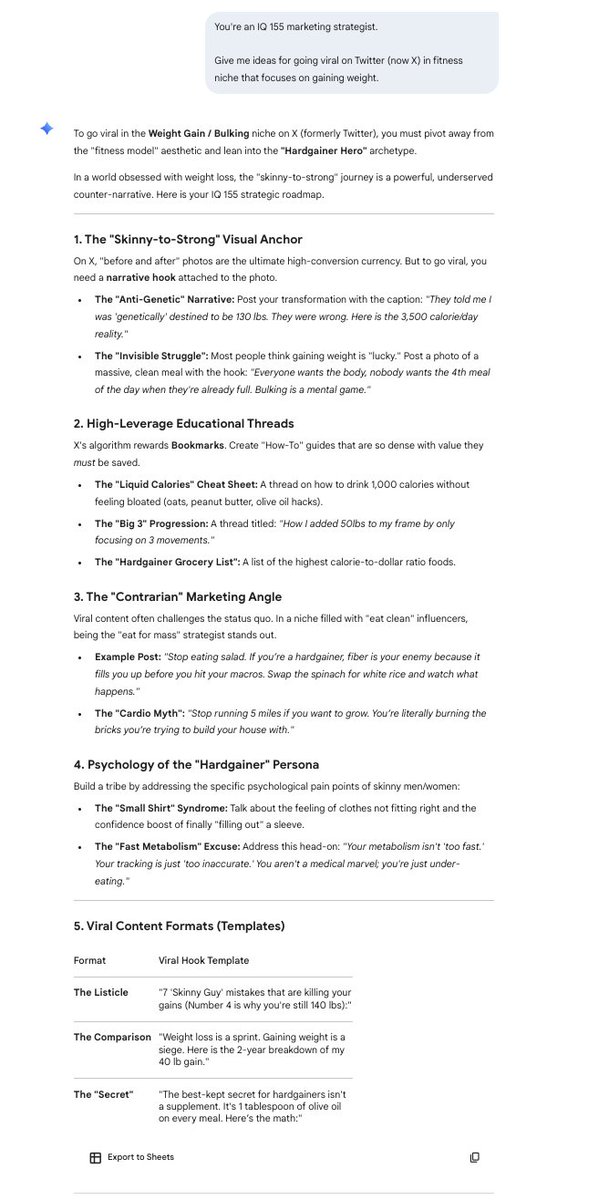
The response quality completely changes. Try it with different IQ scores:

130 = Decent depth
145 = Expert analysis
160 = It starts citing frameworks you've never heard of

Example: "You're an IQ 155 marketing strategist. Analyze this campaign." vs "Analyze this campaign."

The difference is night and day.Image
Image
Read 15 tweets
Jan 20
This mega prompt will help you automate all your marketing tasks in Gemini 3 Pro for free:

(Steal it ↓) Image
The mega prompt:

Steal it:

"# ROLE
You are Gemini 3, acting as a full-stack AI marketing strategist for a start-up about to launch a new product.

# INPUTS
product: {Describe your product or service here}
audience: {Who is it for? (demographics, psychographics, industry, etc.)}
launch_goal: {e.g. “generate leads”, “build awareness”, “launch successfully”}
brand_tone: {e.g. “bold & punchy”, “casual & fun”, “professional & clear”}

# TASKS
1. Customer Insight
• Build an Ideal Customer Profile (ICP).
• List top pain points, desired gains, and buying triggers.
• Suggest 3 positioning angles that will resonate.

2. Conversion Messaging
• Craft a hook-driven landing page (headline, sub-headline, CTA).
• Give 3 viral headline options.
• Produce a Messaging Matrix: Pain → Promise → Proof → CTA.

3. Content Engine
• Create a 7-day content plan for X/Twitter **and** LinkedIn.
• Include daily post titles, themes, and tone tips.
• Add 1 short-form video idea that supports the plan.

4. Email Playbook
• Write 3 cold-email variations:
① Value-first, ② Problem-Agitate-Solve, ③ Social-proof / case-study.

5. SEO Fast-Track
• Propose 1 SEO topic cluster that aligns with the product.
• Give 5 blog-post titles targeting mid → high-intent keywords.
• Outline a “pillar + supporting posts” structure.

# OUTPUT RULES
• Use clear section headers (e.g. **ICP**, **Landing Copy**, **SEO Titles**).
• Format in Markdown for easy reading.
• No chain-of-thought or reasoning—deliver polished results only.
"
My input:

product AI-powered scheduling tool for solopreneurs
audience Freelancers & solo founders (25-40) who struggle with time-management
launch_goal Generate leads for upcoming launch
brand_tone Bold and punchy
Read 8 tweets

Did Thread Reader help you today?

Support us! We are indie developers!


This site is made by just two indie developers on a laptop doing marketing, support and development! Read more about the story.

Become a Premium Member ($3/month or $30/year) and get exclusive features!

Become Premium

Don't want to be a Premium member but still want to support us?

Make a small donation by buying us coffee ($5) or help with server cost ($10)

Donate via Paypal

Or Donate anonymously using crypto!

Ethereum

0xfe58350B80634f60Fa6Dc149a72b4DFbc17D341E copy

Bitcoin

3ATGMxNzCUFzxpMCHL5sWSt4DVtS8UqXpi copy

Thank you for your support!

Follow Us!

:(