High Sea Sales under GST 🌊⚓
A concept in international trade that every importer/exporter should know.
Here’s a simple guide explained slide by slide 🧵👇

A High Sea Sale (HSS) is when goods are sold while still on the high seas, before they arrive at an Indian port and before customs clearance.

The key feature of HSS is that ownership of goods is transferred before they cross Indian customs frontiers.

In practice, the original importer sells goods to a new buyer by endorsing the Bill of Lading.
The new buyer then becomes the importer for customs purposes.

The final buyer, who files the Bill of Entry, is treated as the actual importer and is responsible for duties and taxes.

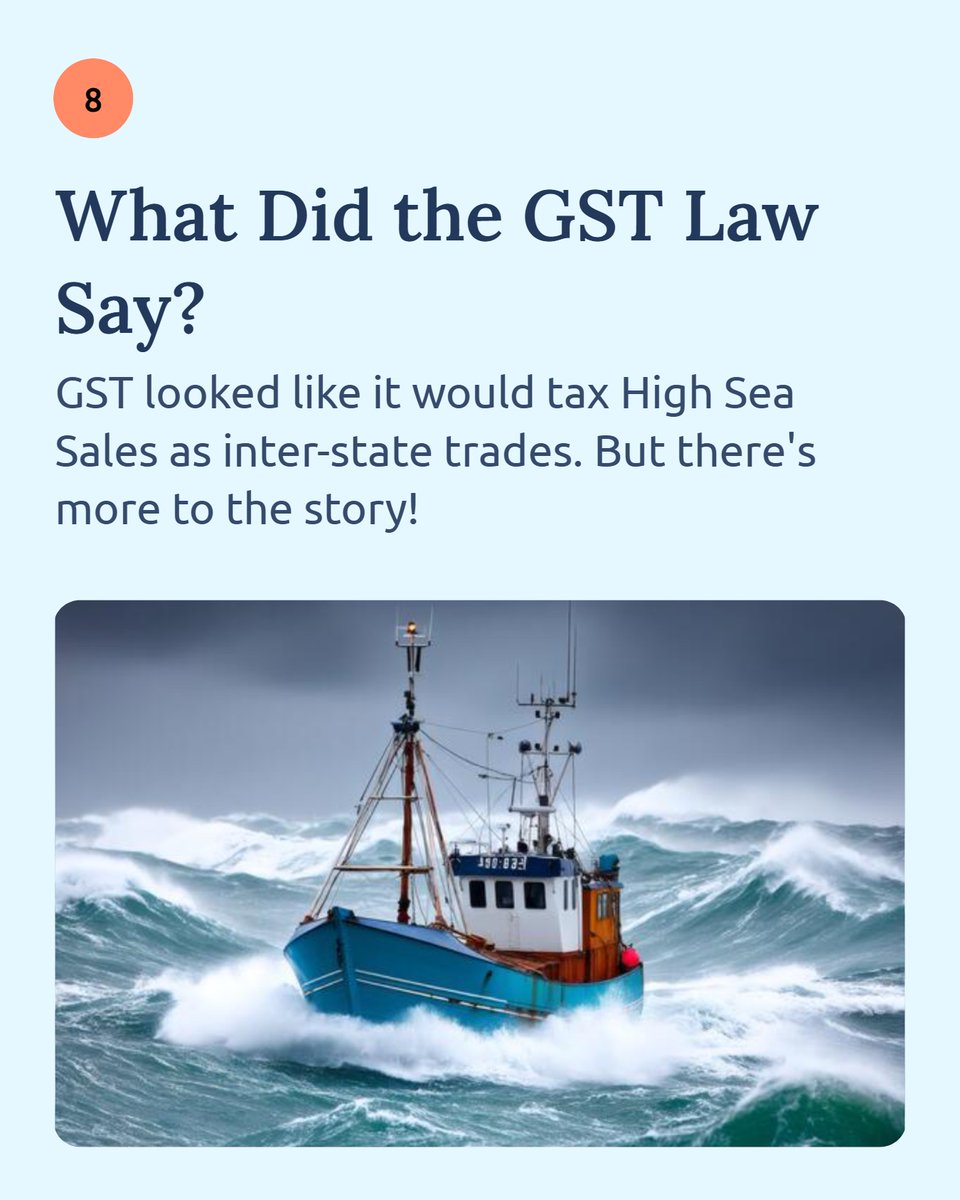
High Sea Sales are recognized under Customs law and clarified under GST to avoid confusion on taxability.

Under GST, HSS is considered outside the scope of supply.
This means the sale itself is not subject to GST.

Tax is levied only when goods are finally cleared for home consumption.
That’s when Customs Duty + IGST are collected from the final buyer.
Without this rule, multiple sales in transit could attract tax at every stage.
HSS ensures only the final buyer pays GST + duty ✅
Key documents in HSS include:
High Sea Sale Agreement
Endorsed Bill of Lading
Invoice from seller to buyer
Bill of Entry filed by final buyer
It’s important that the HSS agreement and endorsement of the Bill of Lading are done before goods enter Indian territorial waters.
High Sea Sales are typically used by:
Importers who sell goods mid-transit
Traders who don’t want goods entering their stock
Businesses optimizing costs and logistics
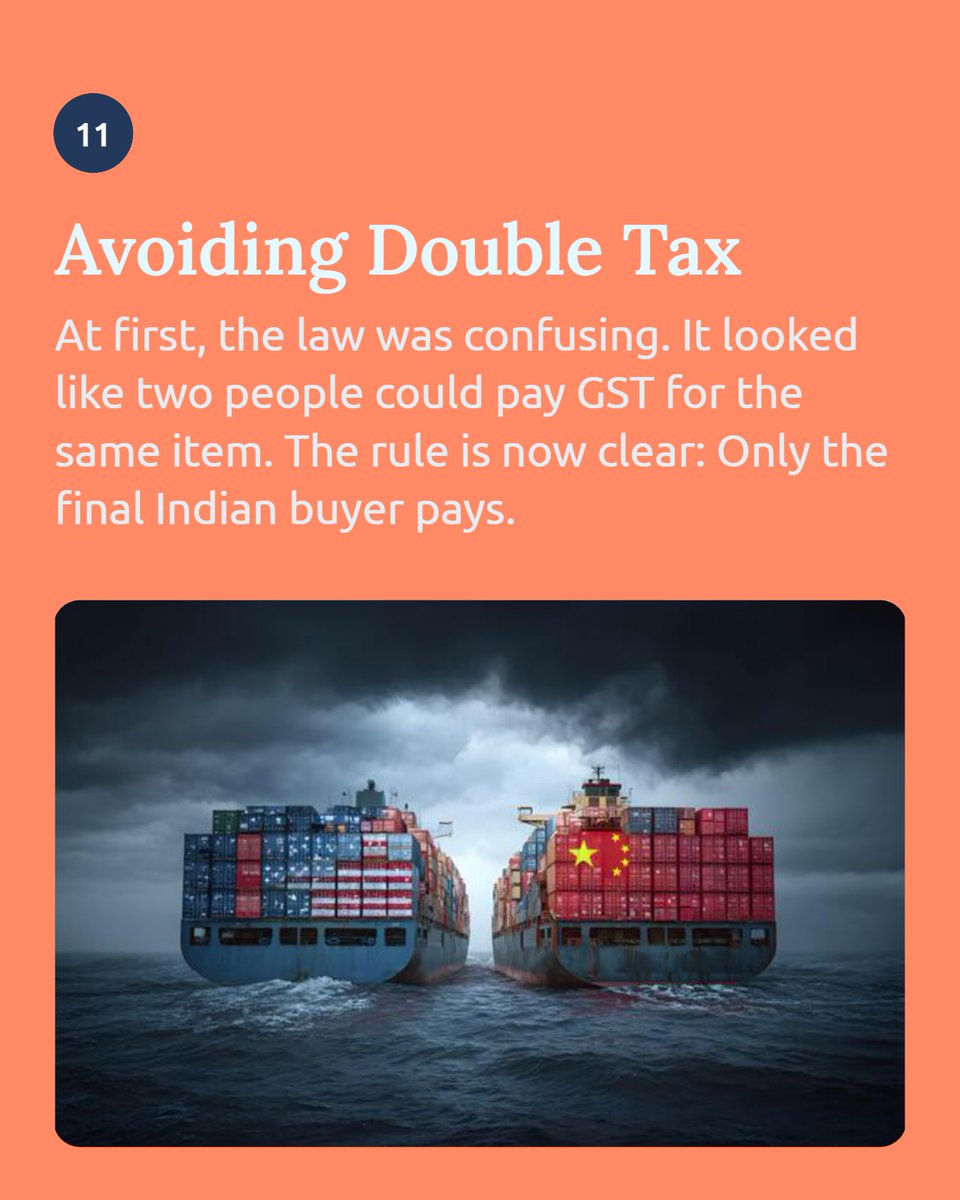
Example:
Importer A orders goods from China.
While goods are at sea, A sells them to B via a High Sea Sale.
B files Bill of Entry → B pays Customs duty + IGST.
Benefits of HSS include:
Avoidance of double taxation
Flexibility in trade
Lower costs
Efficient inventory management
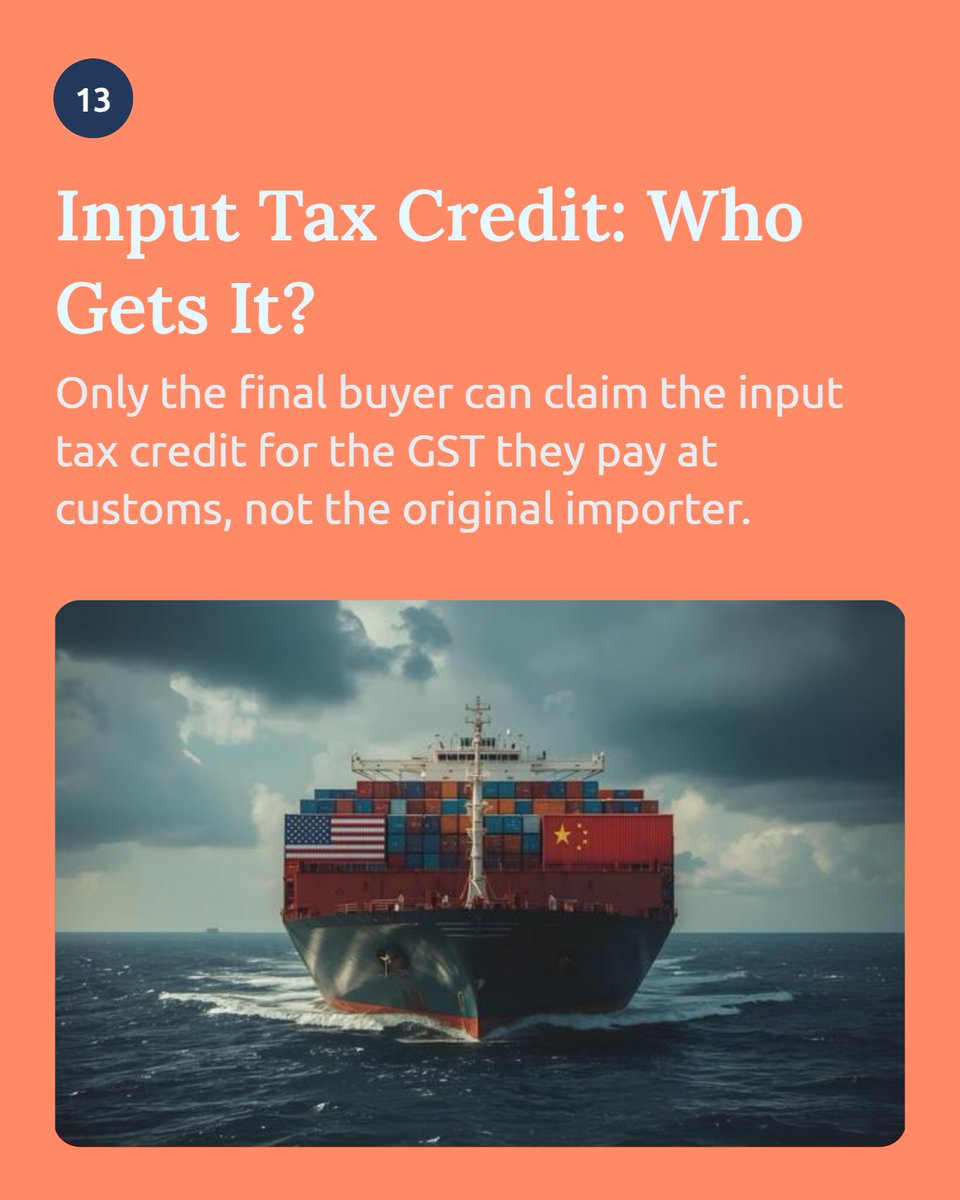
The CBIC has clarified that IGST on HSS is collected only once—at the time of import clearance by the final buyer.

Some believed that every HSS transaction would attract GST.
That’s not true—the sale is outside GST. Only the final clearance attracts IGST.

High Sea Sales are a legitimate and GST-compliant way to transfer goods before they arrive in India.
For global traders, it’s an essential tool to stay flexible, compliant, and cost-effective. 🌍

• • •
Missing some Tweet in this thread? You can try to
force a refresh

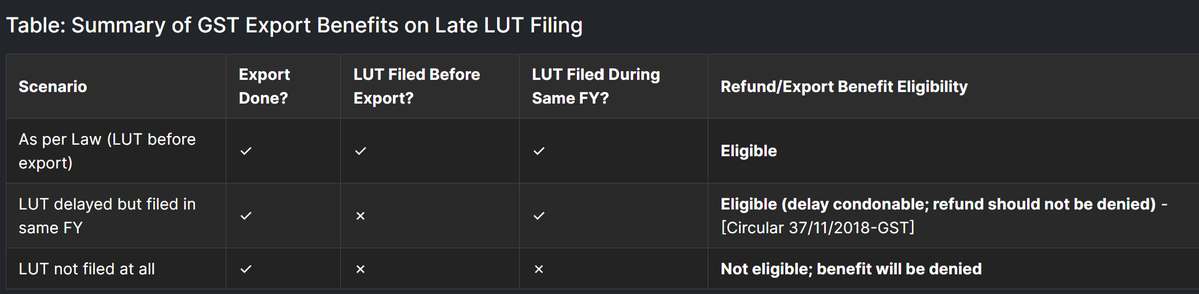
Whether an exporter is eligible for GST export benefits (such as refund of unutilized Input Tax Credit) if Letter of Undertaking (LUT) is filed after the actual export but within the same financial year.
Legal Background & Key Provisions
Rule 96A requires the LUT/bond to be furnished prior to exporting goods/services without payment of integrated tax.
Circulars and Clarifications
Circular No. 37/11/2018-GST dated 15.03.2018: Substantive benefits of zero-rating should not be denied if exports are actually effected; delay in LUT filing can be condoned and ex-post facto acceptance allowed.
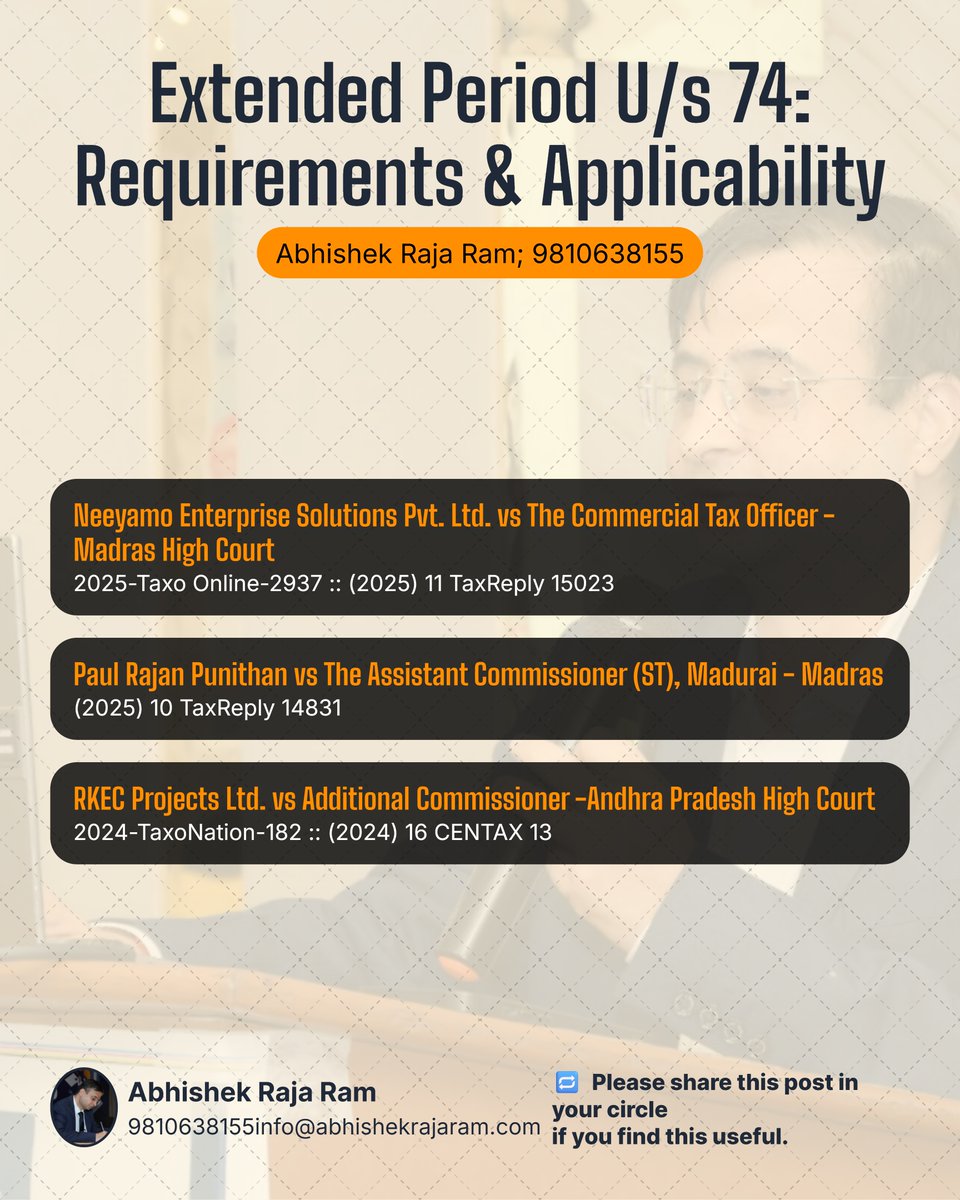
What is the applicability of the extended limitation period, and what are the requirements for invoking Section 74?
Thoughts & Research by: Abhishek Raja Ram; 9810638155
1. Neeyamo Enterprise Solutions Pvt. Ltd. vs The Commercial Tax Officer - Madras High Court
[W. P(MD) Nos. 30453-30458/2024; 11-Nov-2025 :: 2025-Taxo Online-2937 :: (2025) 11 TaxReply 15023]
Invoking extended limitation under GST (Section 74) requires strict proof of fraud, suppression, or wilful misstatement. Mere delay is not enough.
2. Paul Rajan Punithan vs The Assistant Commissioner (ST), Madurai - Madras (2025) 10 TaxReply 14831
The Court quashed the Order invoking an extended period, as neither the notice nor the order contained any allegations or evidence of fraud, willful misstatement, or suppression of facts to evade tax. The petitioner’s lack of response did not rectify this deficiency. ARR
3. RKEC Projects Ltd. vs Additional Commissioner -Andhra Pradesh High Court
2024-TaxoNation-182 :: (2024) 16 CENTAX 13
Mere mention of a provision in SCN would not be determinative of notice under that section. The notice lacked particulars of 'suppression' and was barred by limitation, suggesting it should have been issued under Section 73 instead. The question of suppression and applicability of Section 74 versus Section 73 is a factual issue to be determined by the tax authority after considering the petitioner’s reply. ARR
The time limitation does not apply when Article 265 is in effect ~ Abhishek Raja Ram; 9810638155
Andhra Pradesh High Court has held that the Time Limitation is not applicable to the refund of GST wrongly collected on exempt residential rent. Exempt renting of residential dwellings could not be taxed and collection without authority would offend Article 265. Amounts so collected were not tax under GST enactments and refund limitation for tax claims did not apply. ARR
Nspira Management Services Pvt. Ltd. vs Assistant/ Deputy Commissioner of Central Tax
[Writ Petition Nos. 18287; 26-Sep-2025 :: (2025) 35 CENTAX 239]
Article 265: No tax shall be levied or collected except by authority of law. In other words, any imposition of tax must have a clear Constitutional or statutory backing. ARR
Nine (9) A nine-member bench of the Supreme Court has held that 'Law' means valid Law. Tax Levied or Collected contrary to Law required to be refunded. Mafatlal Industries Ltd. vs Union of India [(1996) 5 SCC 536 :: (1998) 111 STC 467]
#ARR
Is the bunching of notices allowed? by Abhishek Raja Ram
1. The Madras HC recently held that the Bunching of Show Cause notices for Multiple Years is Not Permissible in the GST Law. The provisions for limitation U/s 73(10) and S.74(10) specify that the time limit of three or five years, respectively, is calculated from the due date for furnishing the annual return for the ‘Financial Year’ to which the tax relates, making each year is a separate unit with its own independent limitation period.
Title: Smt. R. Ashaarajaa, Partner of M/s JRD Realtors vs The Senior Intelligence Officer, DGGI Coimbatore
Court: Madras High Court
Citation: W. P. Nos. 29716
Dated: 21-Jul-2025
2. Titan Company Ltd. vs Joint Commissioner of GST and Central Excise - Madras High Court (2024) 15 CENTAX 118
Where bunching of show cause notices for multiple assessment years under Section 73 of CGST Act had exceeded individual three-year limitation period for each year, High Court held such bunching invalid, directing separate adjudication for each year.
I am sharing important judgments on the ITC mismatch between GSTR-2A and GSTR-3B.
Please bookmark the tweet/post and follow me.
Research by: Abhishek Raja Ram; 9810638155
1. ITI Ltd. vs Joint Commissioner Central Tax & Central Excise, Kozhikode - Kerala High Court (2025) 29 CENTAX 341
Where impugned order was passed raising demand for mismatch in GSTR-3B and auto populated GSTR-2A return while according to petitioner, input tax credit availed in GSTR-3B returns includes input tax credit pertaining to invoices reflected in GSTR-2A, since reply and documents were not considered by authorities while passing said order, matter was to be readjudicated.
2. OCL Iron and Steel Ltd. vs State of West Bengal - Calcutta High Court (2025) 30 CENTAX 371
Where opportunity of personal hearing was not offered and proceedings were initiated on account of difference in liability declared in GSTR-2A and that in GSTR-3B, since discrepancy was explained, matter was to be remanded back for fresh decision.