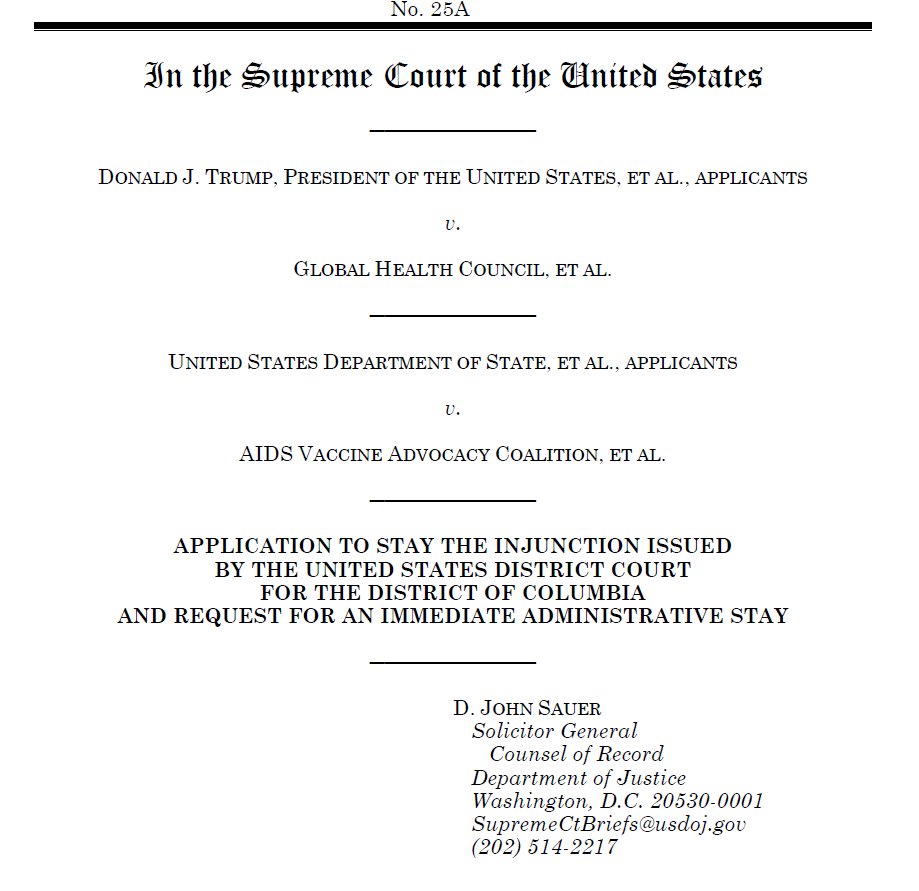
BREAKING: @AGPamBondi and SG John Sauer have filed an emergency application in the Supreme Court regarding their huge win in the USAID impoundment case, which we discussed previously. This is a big deal, as I'll explain. 1/
First a point of privilege. Having lived this case in the early days of @DOGE---with then-Acting SG Sarah Harris and many others---I really appreciate how the SG's Office frames the issue. 2/
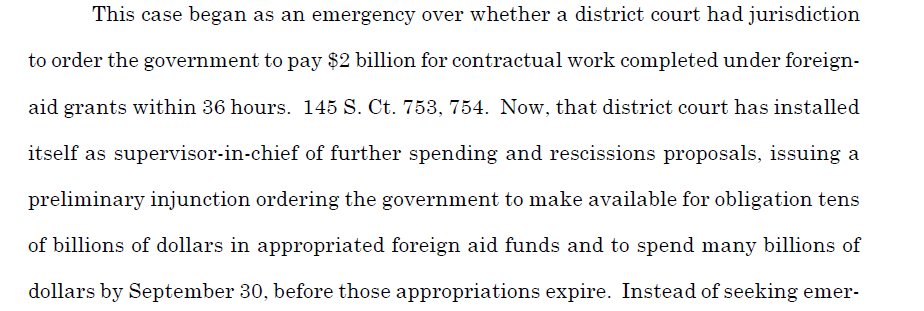
Second, you might be wondering why @TheJusticeDept is seeking emergency relief in a case it *won*. Even though the DC Circuit deemed the district court's injunction patently unlawful, that injunction dissolves only when the DC Circuit issues its formal mandate. 3/
So where is the mandate? Who knows! It could be caught in en banc proceedings, the DC Circuit could be following its normal (slow) process, or something else. But for the Government, this doesn't work. It has a September 30 deadline to make decisions. 4/
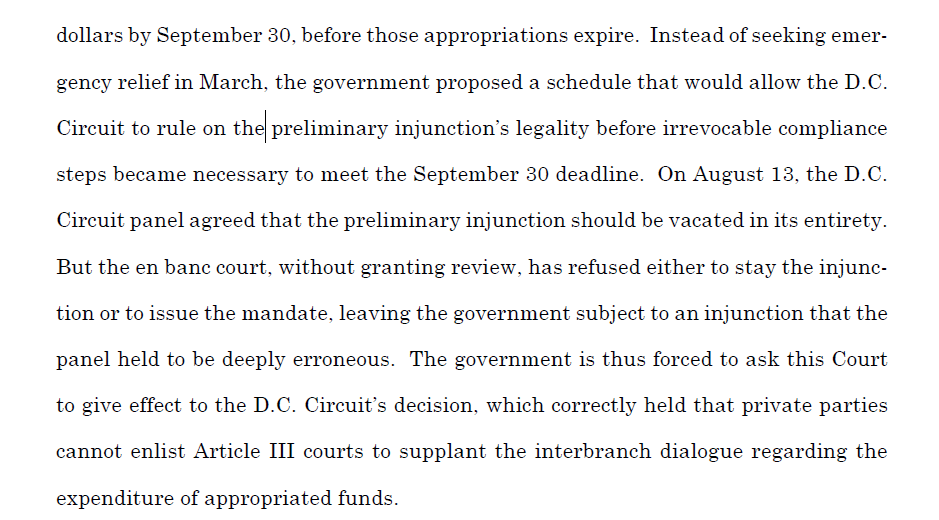
DOJ's only recourse is accordingly the Supreme Court. 5/
Turning to the merits, for most of our history the political branches waged interbranch conflicts using the substantial weapons the framers gave them. The notion that judges would referee disputes between Congress and the President would have shocked the founding generation. 6/
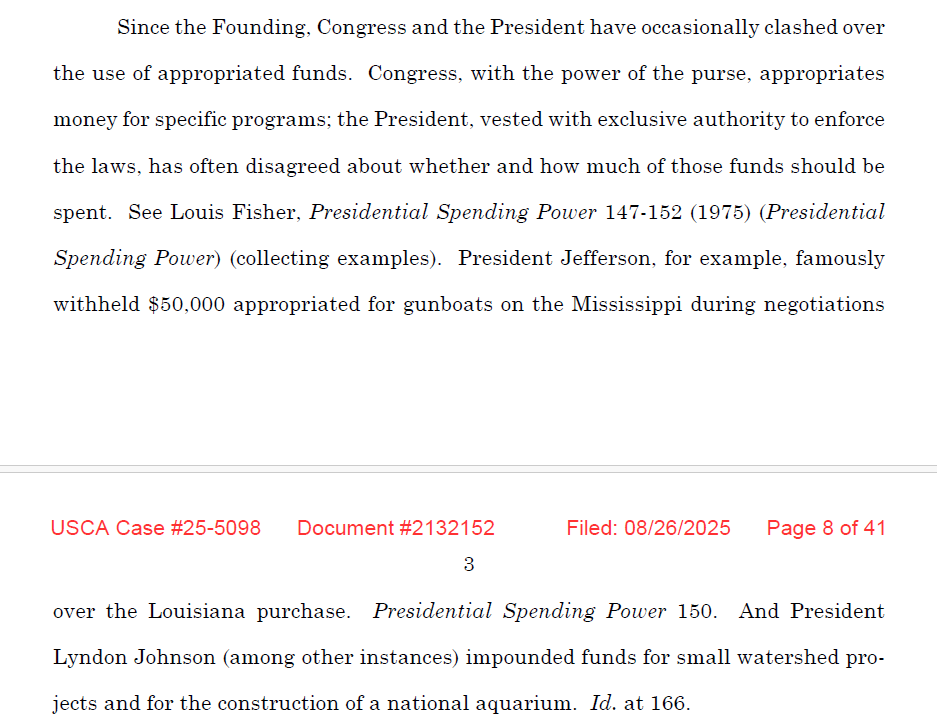
But everything changed at one of our all-time nadirs of presidential power--the post-Nixon era--when Congress, among other things, enacted the Impoundment Control Act. That Act imposes a complex process for rescinding funds, as DOJ explains. 7/
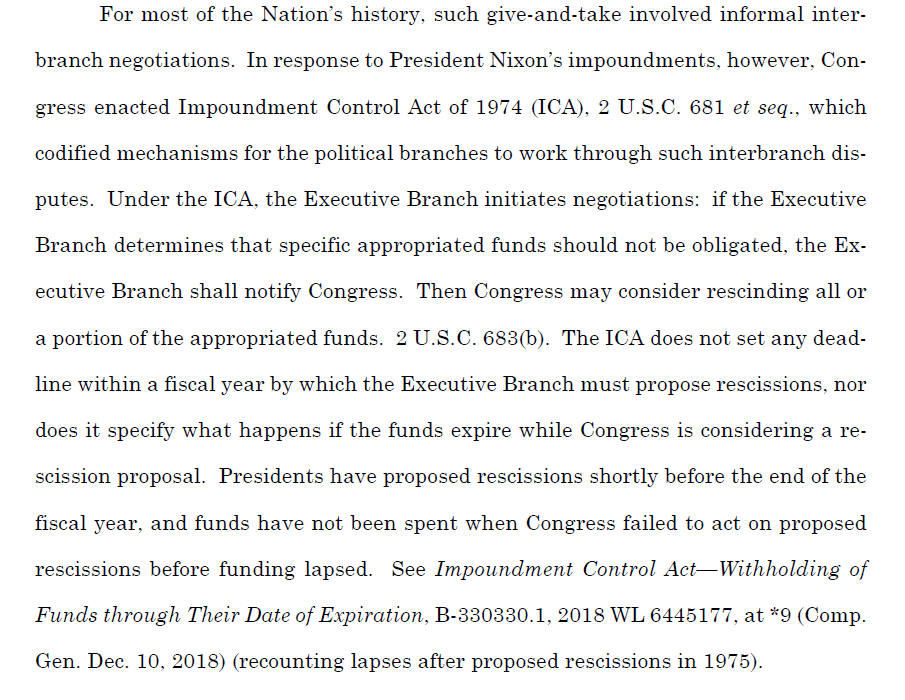
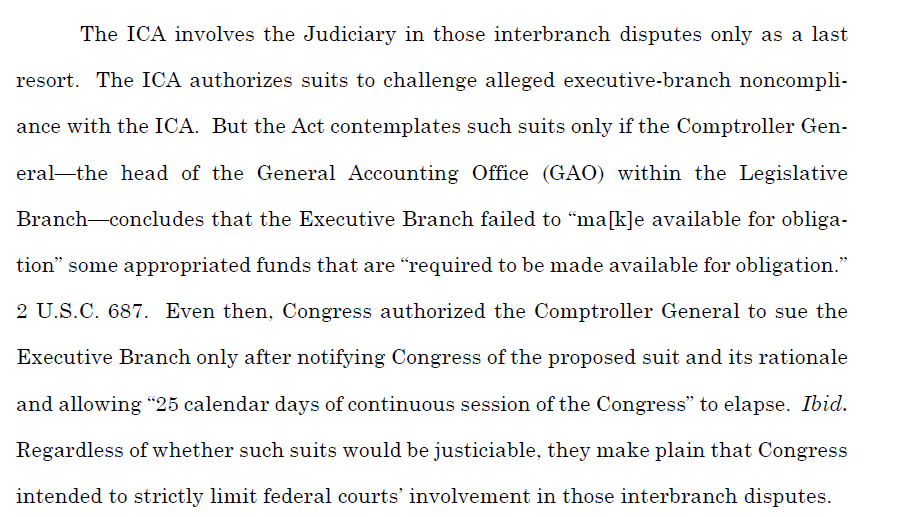
But there is one thing that Act does *not* do--authorize NGOs, private charities, aggrieved states, or other private plaintiffs to sue about impoundment. And without a cause of action to sue, you cannot sue. 8/
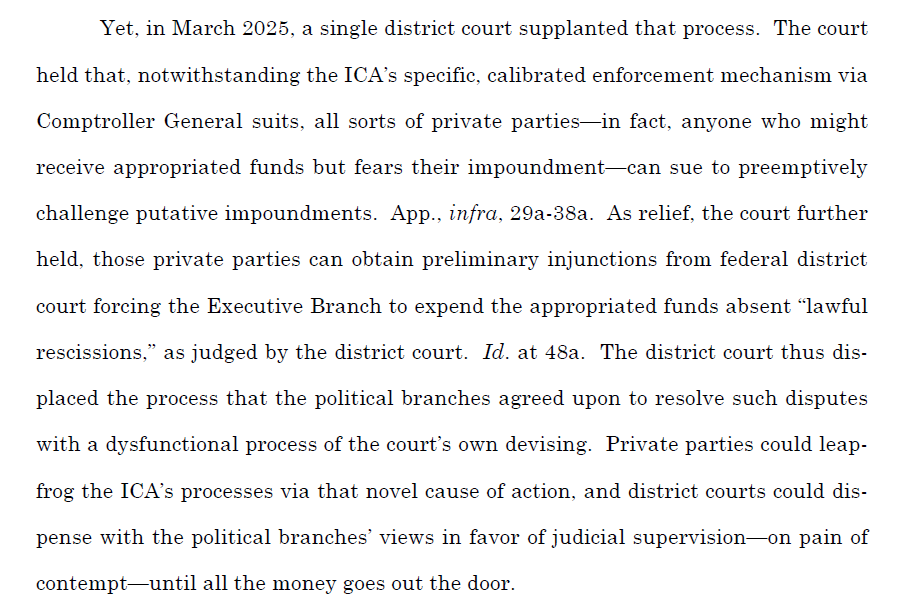
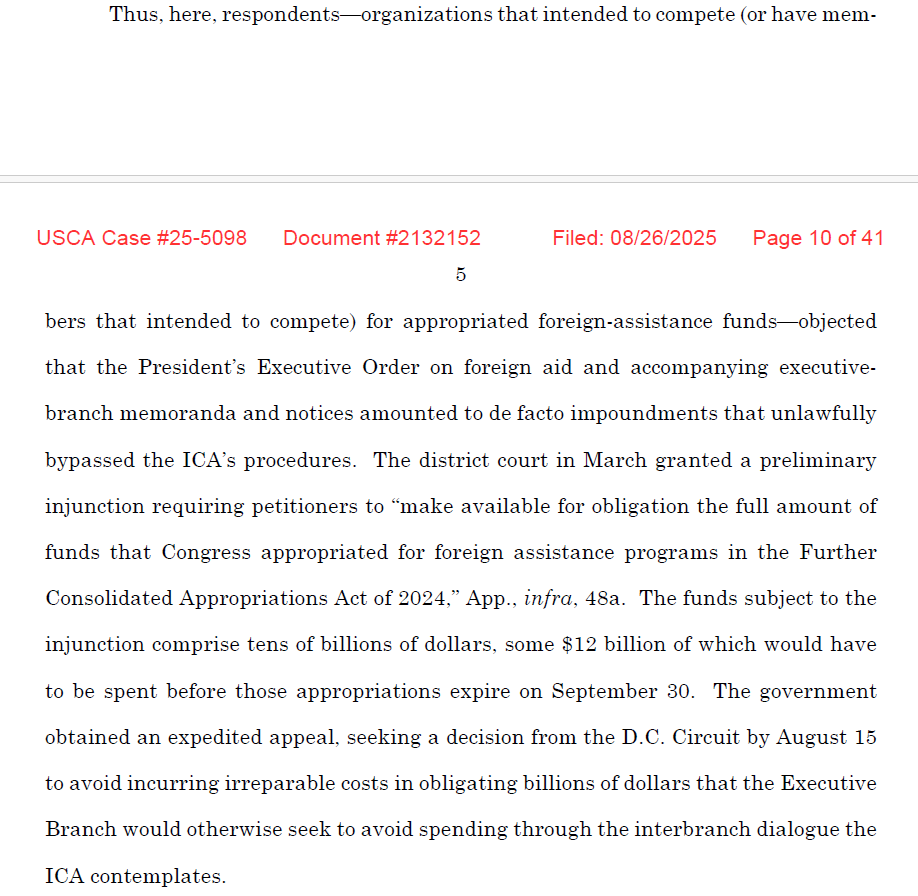
Yet here, "a single district court supplanted that process." One district judge has commandeered the entire USAID appropriation and enjoined the Executive Branch to spend every penny--all without Congress authorizing the underlying suit in the first place. 9/
This litigation is important. But it also highlights the importance of procedure. DOJ *won* its appeal, but the DC Circuit's refusal to issue its "mandate"---an obscure term if ever there was one---now threatens to impose a constructive loss, costing us all billions of $$. /10
So once again, the Supreme Court is called to the field. This is a vitally important issue. Let us hope the justices act swiftly. /end
PS - I will post a link to the stay application when it appears on the Supreme Court website. Had to pull this off the DC Circuit docket via PACER and can't figure out how to post a full PDF to X.
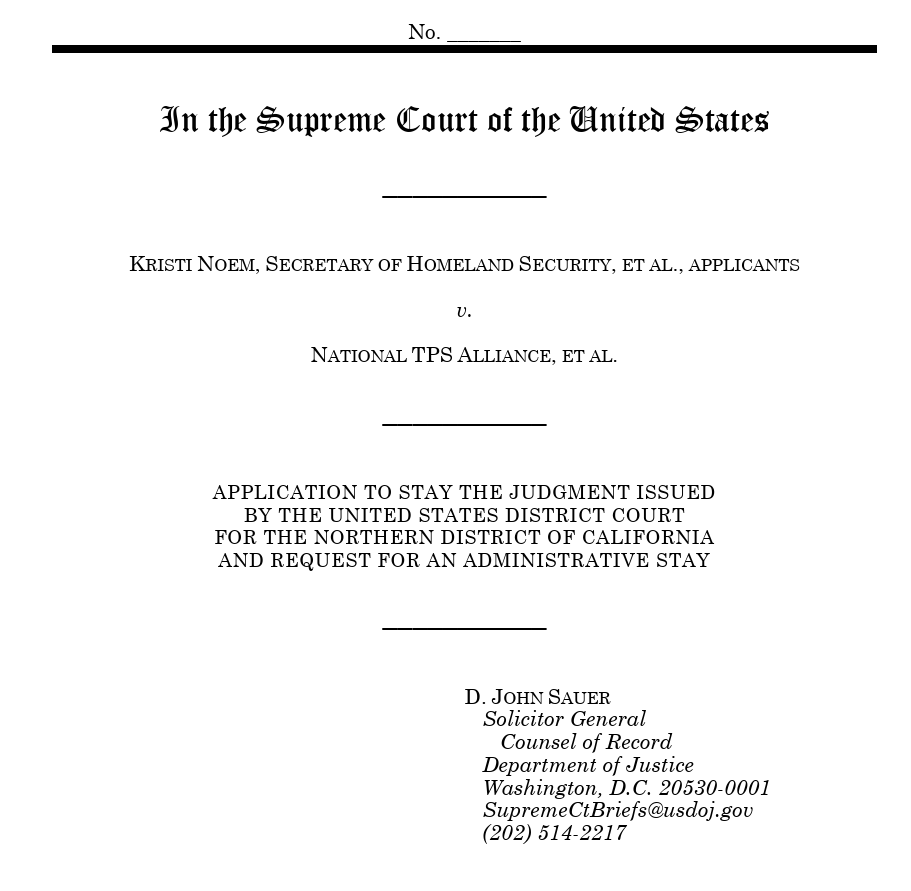
We haven't discussed the litigation about temporary protected status before, but I want to highlight SG Sauer's application from last night. The issue is important on its own, but this is another glaring example of lower court defiance. And @TheJusticeDept is getting fed up. 1/
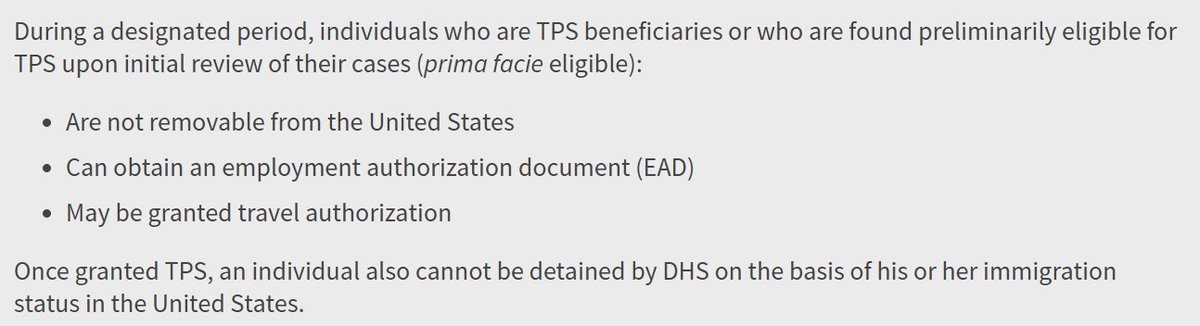
First, what is temporary protected status? Basically a temporary immigration waiver for people from a dangerous place. The DHS Secretary can grant temporary immigration amnesty to people from, eg, a war torn country while the war is ongoing. 2/
The essence of the program is that it is *temporary* and *discretionary.* It is a pathway for the Government to *temporarily* help people in dire straits, not to normalize immigration status for millions of people indefinitely. 3/
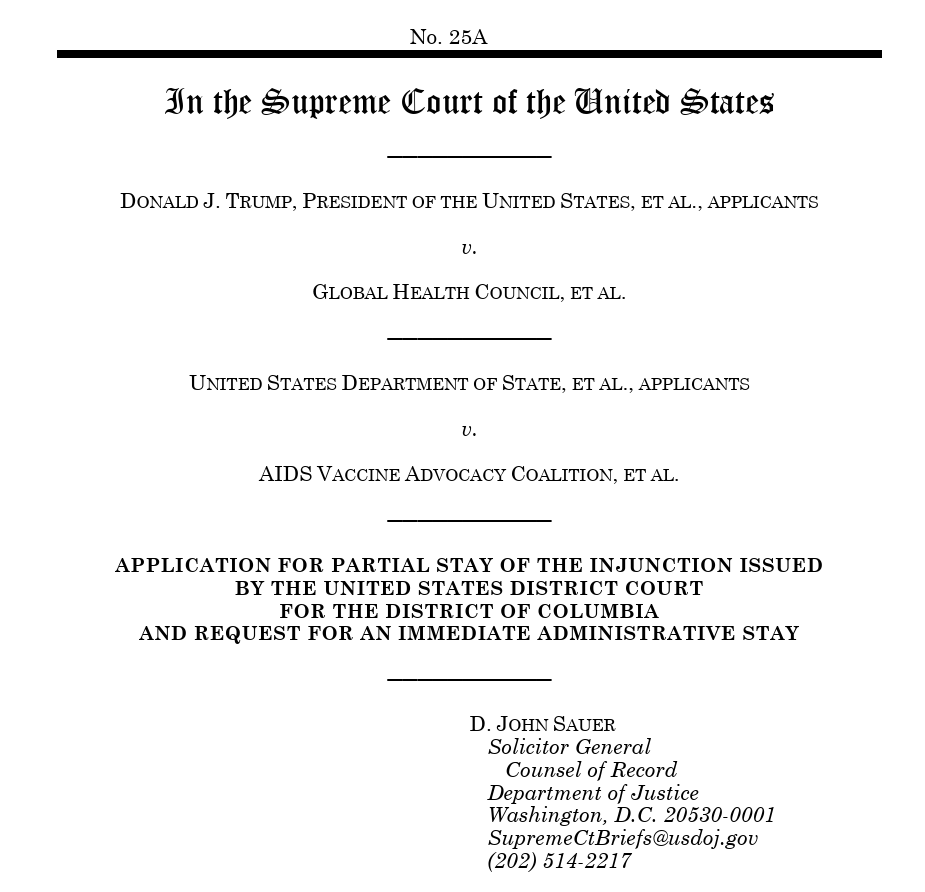
Have now had a chance to review @TheJusticeDept's emergency filing in this important case at the crossroads of USAID, wasteful foreign spending, and the vital issue of impoundment. The filing is very well done and @TheJusticeDept should win, as we will see. 1/
First lets set the stage. This is a suit from various entities that received money from USAID in the past who now want a district court injunction that forces USAID to spend every penny appropriated to it by Congress. 2/
That is a strange claim, as none of this money is appropriated to *these* entities. The money is appropriated to USAID generally for USAID to spend--or not, as we will discuss--in its discretion. There is thus a basic threshold mismatch between claimant and claims. 3/
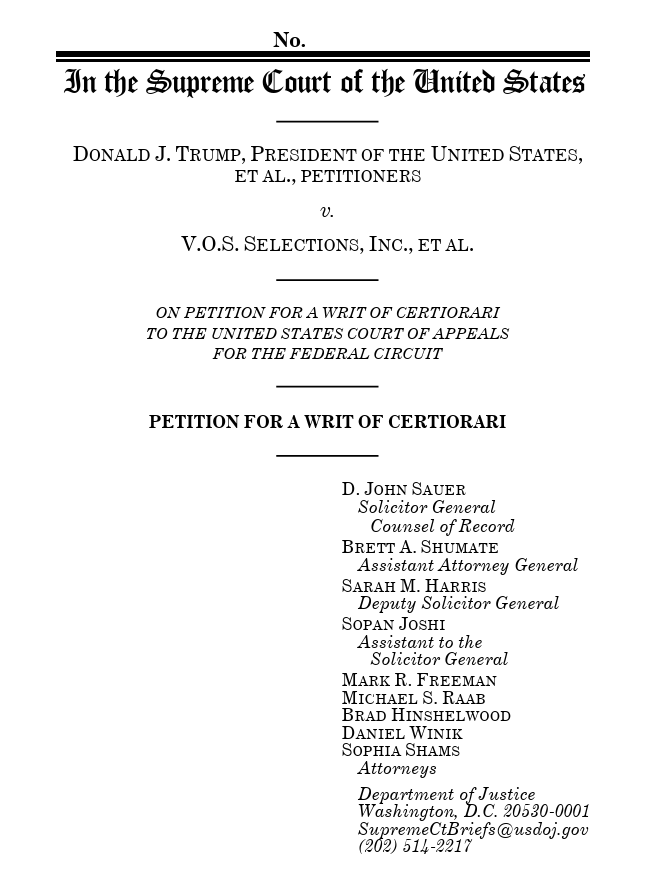
As others have noted, @AGPamBondi, SG Sauer, and @TheJusticeDept sought certiorari today in the Supreme Court on tariffs and seek a quick argument and resolution. Want to quickly flag a few of their arguments. 1/
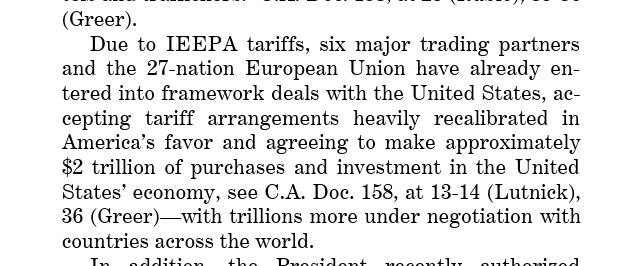
First, they emphasize the gravity of trying to unscramble the tariff egg at this point. Enjoining the tariffs would upend a complex, global framework of intricate trade agreements with untold potential consequences. 2/
Second, they cite extraordinary declarations filed below from Cabinet Secretaries about the importance of the tariffs to American economic security. I say these are extraordinary because Secretaries rarely personally attest to facts in court. Yet here they have. 3/
Some lower court judges seems determined to burn down the village in order to save it, seemingly oblivious that destroying vertical stare decisis will destroy the judiciary generally. Lets review the latest missive in lower court judges' war on the Supreme Court. 1/
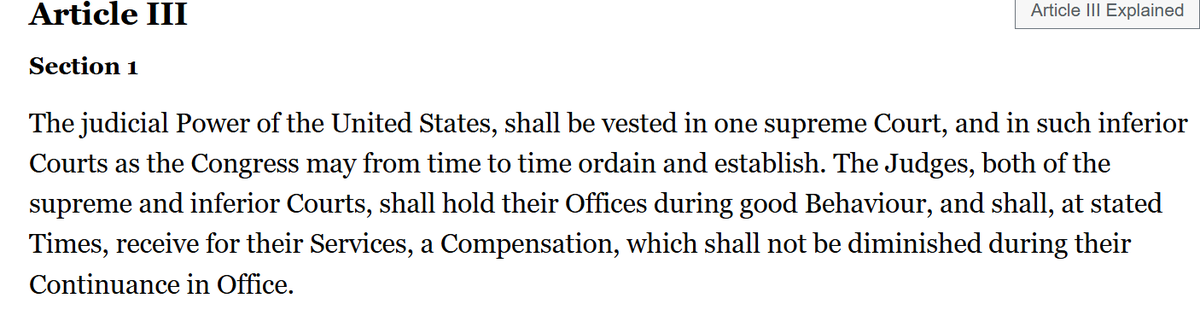
First, the basics. The Constitution creates only one court--the Supreme Court. It authorizes Congress to create "inferior courts," but does not mandate them. And the judicial power of these subordinate courts is entirely subordinate to the Supreme Court's. 2/
When lower court judges defy the Supreme Court--as has been happening time and again--that is lawless. Plain and simple. The President has Article II arguments to invoke when he interprets and considers judicial commands. Lower court judges have nada vis the Supreme Court. 3/
Some more thoughts from me on this decision in CNN, focused on Justice Gorsuch's separate writing. I also want to respond to a point @steve_vladeck makes in the article. 1/
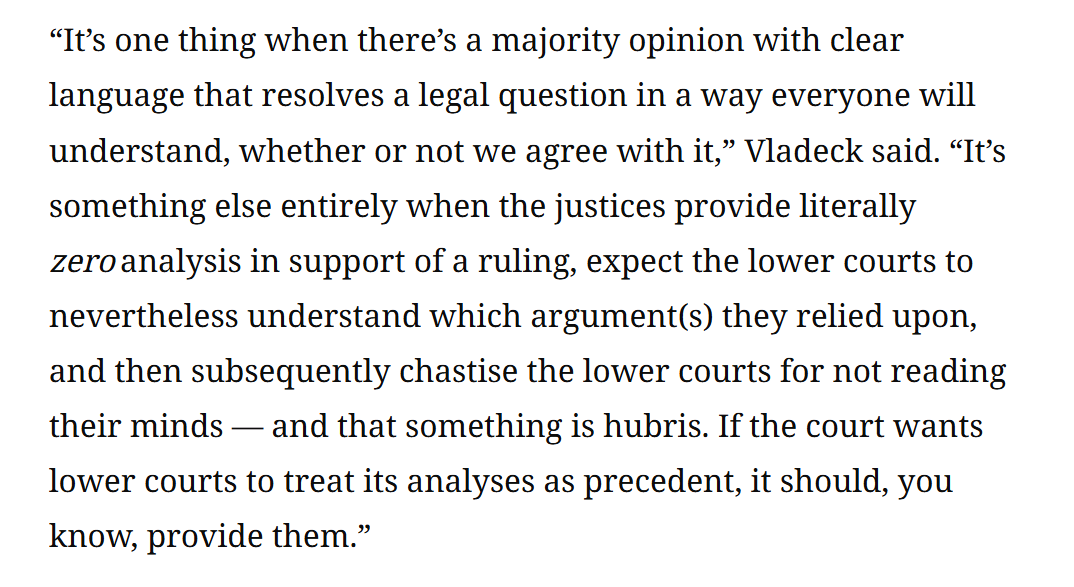
Vladeck claims it is unreasonable to expect district judges to follow the Supreme Court's emergency orders because those orders are sometimes issued without supporting analysis or with little supporting analysis. I totally disagree. 2/
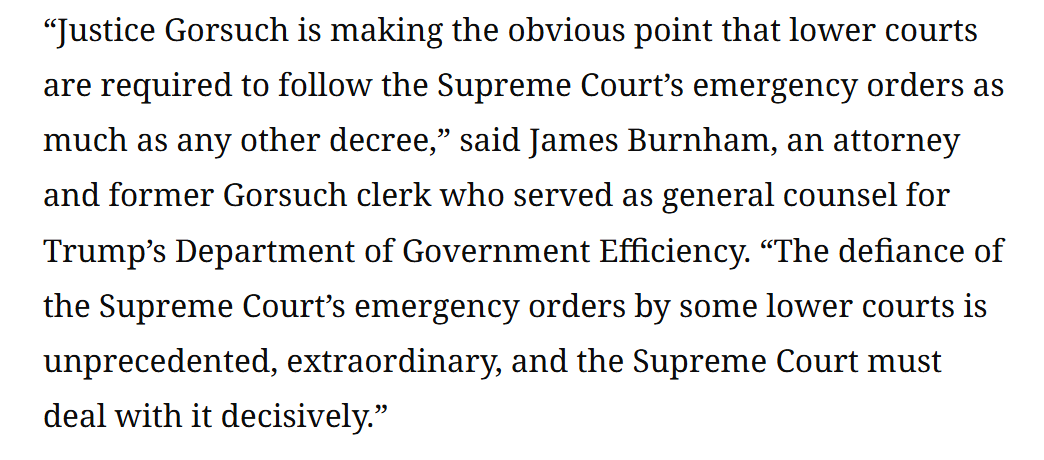
Vertical stare decisis--the Supreme Court and the lower courts--is the relationship between boss and subordinate. The Supreme Court has direct authority over the lower courts; those courts must follow its decrees regardless of whether they "understand" the underlying reason. 3/
Another win for @TheJusticeDept before the Supreme Court--this time on whether district courts can enjoin the termination of grants that conflict with the Administration's anti-DEI policies. Lots of interesting opinions, worth a brief discussion. 1/
First, the ruling is correct and consistent with previous orders the Court has issued on the emergency docket. As we've discussed before, people who claim the government owes them money have to go to a special court to sue for money. They can't get TROs or injunctions. 2/
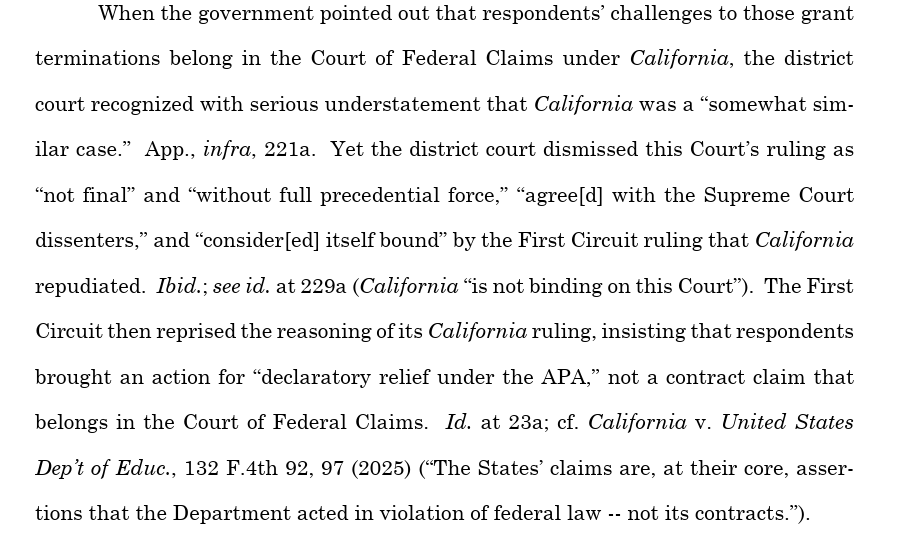
This is case marks yet another example of lower courts defying the clear import of the Supreme Court's emergency rulings. As SG Sauer explained in his application. 3/