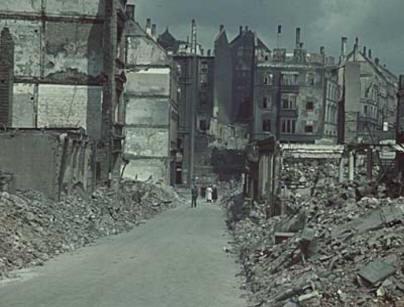
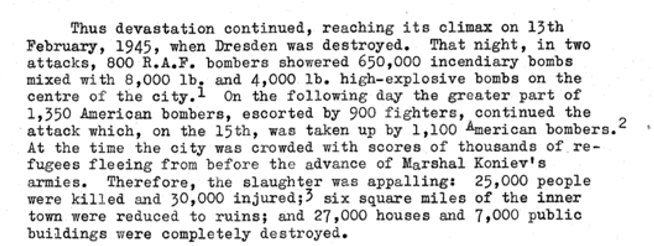
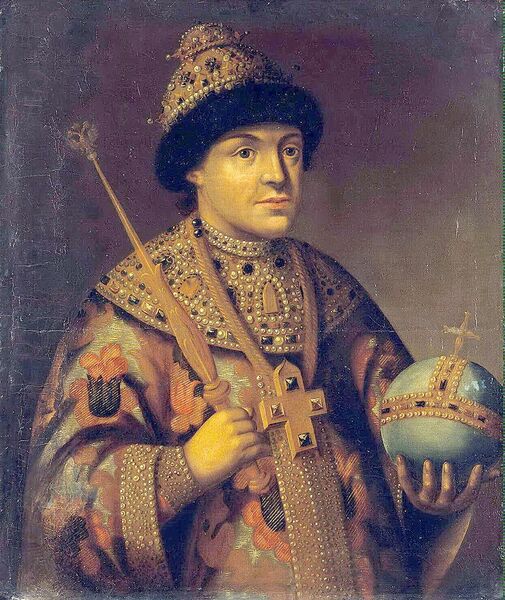
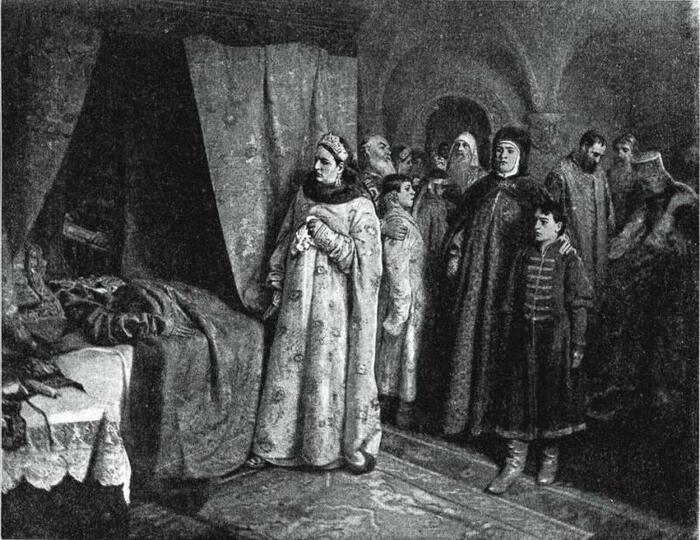
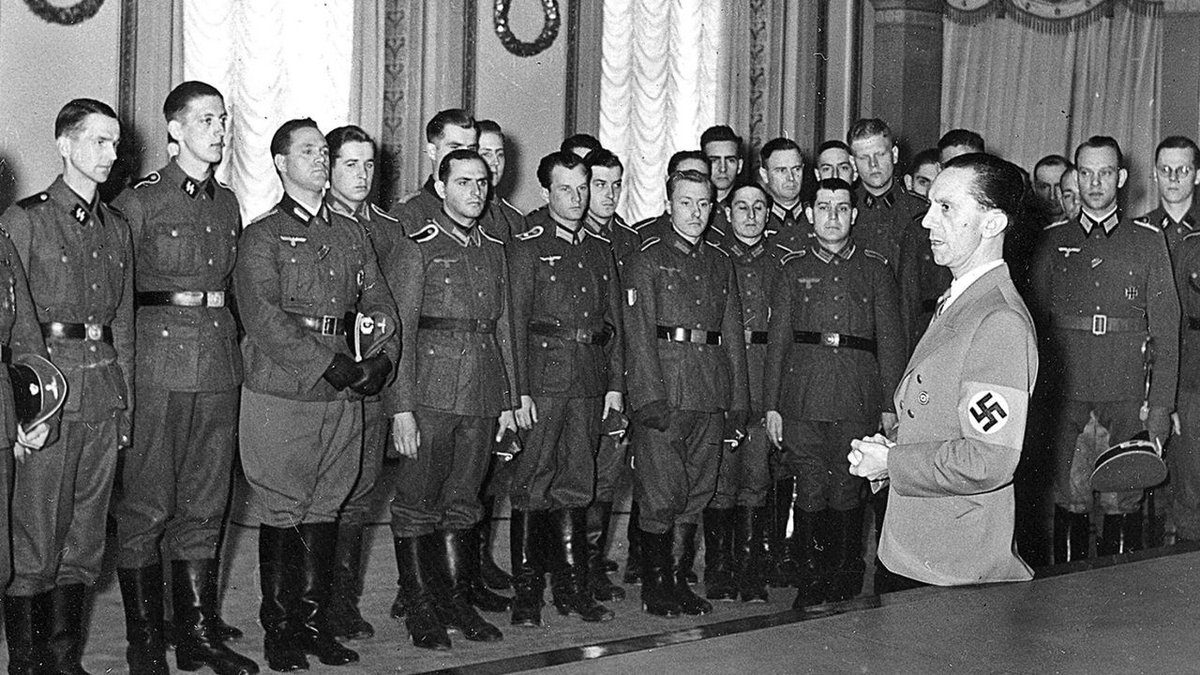
The Holodomor is a very popular myth among Ukrainian propagandists. But like all propaganda, it’s aimed at the masses who are incapable of thinking on their own and in this case unfamiliar with history. There is plenty of evidence available in open sources to prove that Holdohoax is a silly lie. For example, photos used to “prove” the Holodomor actually come from World War I or the famine of the 1920s (the Holodomor was in 1932–33).
Soviet documents, available in large numbers, confirm that food was imported into Ukraine as aid, not exported out, which doesn’t fit the narrative of deliberately starving poor Ukrainians. Moreover, there was a state-level policy of Ukrainization, meaning the government invested huge resources in developing Ukrainian culture, opening Ukrainian-language schools, and even forcing people to speak Ukrainian instead of Russian (look up korenizacia). That too doesn’t align with the myth of exterminating Ukrainians.
It's also worth mentioning that the famine happened not only in Ukraine, but in Kazakhstan and the Volga region, which was RSFSR (Russia), meaning it affected not only Ukrainians.
But today, I want to tell you about other facts, things that almost nobody else will tell you. 🧵👇
Soviet documents, available in large numbers, confirm that food was imported into Ukraine as aid, not exported out, which doesn’t fit the narrative of deliberately starving poor Ukrainians. Moreover, there was a state-level policy of Ukrainization, meaning the government invested huge resources in developing Ukrainian culture, opening Ukrainian-language schools, and even forcing people to speak Ukrainian instead of Russian (look up korenizacia). That too doesn’t align with the myth of exterminating Ukrainians.
It's also worth mentioning that the famine happened not only in Ukraine, but in Kazakhstan and the Volga region, which was RSFSR (Russia), meaning it affected not only Ukrainians.
But today, I want to tell you about other facts, things that almost nobody else will tell you. 🧵👇
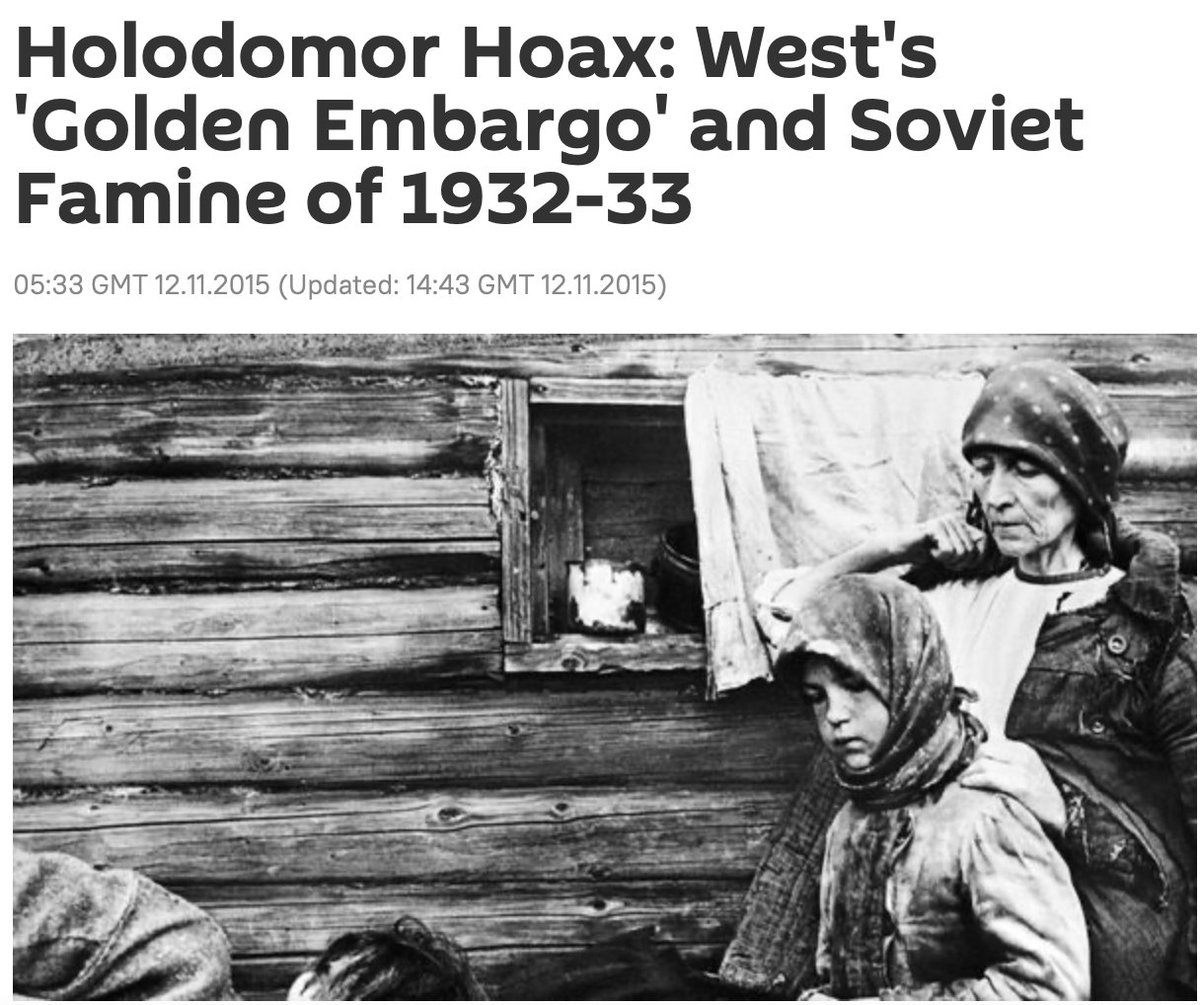
Keep in mind we're discussing the years 1931 to 1933. During this period, when Western companies were expelled from the USSR, the U.S. and Britain imposed restrictions on Soviet gold imports, raised tariffs on Soviet timber and grain, and gradually transitioned toward trade bans. In today's terms, the West essentially imposed sanctions. Consequently, the USSR was forced to purchase industrial equipment necessary for its industrialization by trading grain, directly contributing to the 1930s famine. The USSR needed to buy equipment, but the West wouldn't accept gold or money, they demanded grain.
Without Monsanto, DuPont, or GMOs capable of growing food in challenging conditions (though these aren't particularly good for us anyway), back then any climate issues spelled trouble for harvests. And trouble certainly occurred.
Americans will recognize this as the Dust Bowl, spanning from 1930 to 1936, a period marked by unusually dry years in the region. Many people died from malnutrition. I place "malnutrition" in quotesfor you to notice how the same events described differently: malnutrition - hunger. It's noteworthy that no one in the U.S. actually counted how many people died during that time.
Without Monsanto, DuPont, or GMOs capable of growing food in challenging conditions (though these aren't particularly good for us anyway), back then any climate issues spelled trouble for harvests. And trouble certainly occurred.
Americans will recognize this as the Dust Bowl, spanning from 1930 to 1936, a period marked by unusually dry years in the region. Many people died from malnutrition. I place "malnutrition" in quotesfor you to notice how the same events described differently: malnutrition - hunger. It's noteworthy that no one in the U.S. actually counted how many people died during that time.
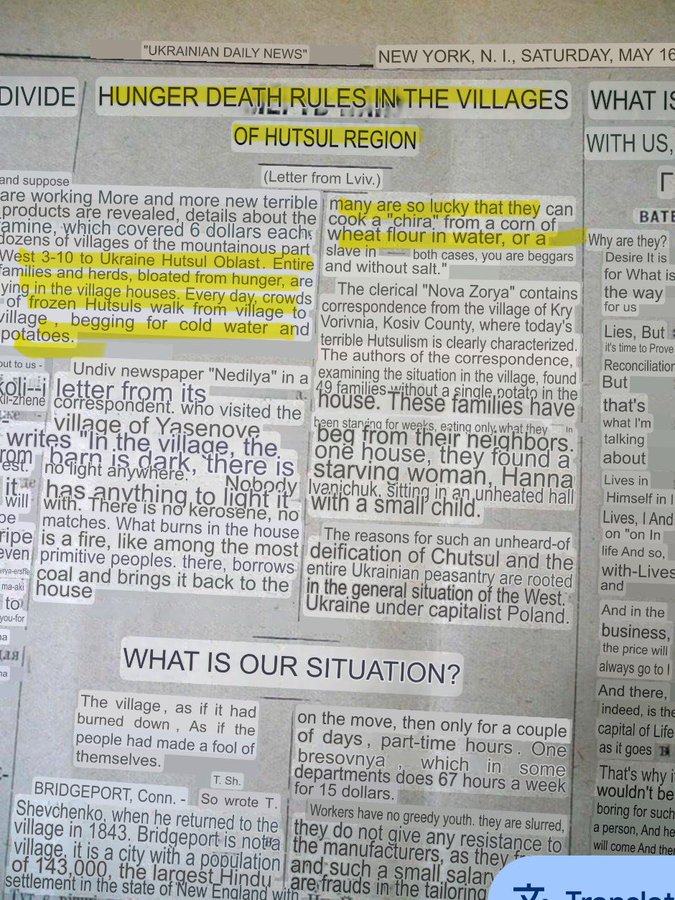
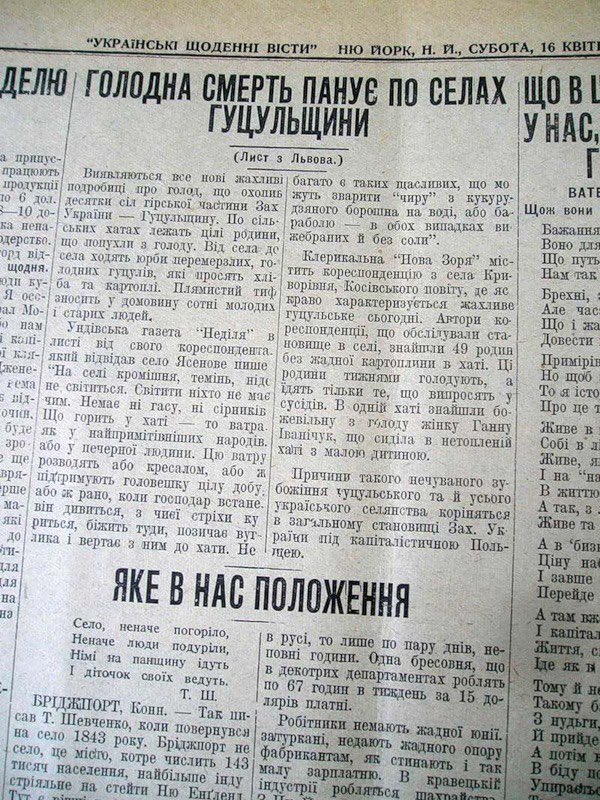
Now only in the US, but Western Ukraine suffered famine and many deaths. The problem is that during that time, that part of Ukraine was a part of independent Poland. So, Stalin had nothing to do with it even if he wanted.
No Stalin, no Bolsheviks, and yet people still died from hunger. But none of this is brought to your attention for obvious reasons.
No Stalin, no Bolsheviks, and yet people still died from hunger. But none of this is brought to your attention for obvious reasons.
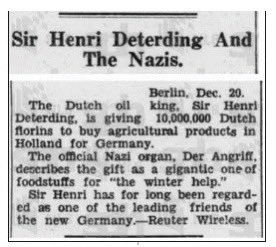
The interesting part is that in the 1930s, while famine ravaged the Soviet Union, Henri Deterding, the oil baron and the head of Royal Dutch Shell, hosted a meeting at his estate where the partitioning of the USSR into four zones was seriously discussed due to an upcoming change of government. At least that's what they thought would happen. Western elites were betting on a coup inside the Soviet Union.
At that meeting, which included oil executives and Joachim von Ribbentrop (a well-known figure), the plan was straightforward:
🔸the Caucasus and its oil would go to Britain,
🔸Ukraine to Germany,
🔸Siberia to international concessionaires,
🔸the Far East to Japan.
The fate of a sovereign state that had refused to become a Western resource colony was being casually negotiated in the drawing rooms of capital.
Here we have it: the West demands payment for necessary goods only in the form of grain, especially during the climate catastrophe that affected crops globally. A meeting of the oil magnates and Western elites who were betting on a coup inside the USSR due to food shortages problem and had a particular interest in acquiring Soviet lands. Do you get it now?
At that meeting, which included oil executives and Joachim von Ribbentrop (a well-known figure), the plan was straightforward:
🔸the Caucasus and its oil would go to Britain,
🔸Ukraine to Germany,
🔸Siberia to international concessionaires,
🔸the Far East to Japan.
The fate of a sovereign state that had refused to become a Western resource colony was being casually negotiated in the drawing rooms of capital.
Here we have it: the West demands payment for necessary goods only in the form of grain, especially during the climate catastrophe that affected crops globally. A meeting of the oil magnates and Western elites who were betting on a coup inside the USSR due to food shortages problem and had a particular interest in acquiring Soviet lands. Do you get it now?
Gareth Jones, Western journaslits visited parts of Ukraine in 1933 and reported real famine and suffering but he never called it a genocide.
He blamed economic collapse, bad harvests, and collectivization but not ethnic extermination.
Jones also acknowledged positive developments in the USSR, like industrial growth and social progress.
After his death, Ukrainian nationalists and Cold War propagandists twisted his story into something he never said.
His own grandson later confirmed: Gareth Jones never claimed Stalin targeted Ukrainians for destruction.
youtube.com/watch?si=EoWhX…
He blamed economic collapse, bad harvests, and collectivization but not ethnic extermination.
Jones also acknowledged positive developments in the USSR, like industrial growth and social progress.
After his death, Ukrainian nationalists and Cold War propagandists twisted his story into something he never said.
His own grandson later confirmed: Gareth Jones never claimed Stalin targeted Ukrainians for destruction.
youtube.com/watch?si=EoWhX…
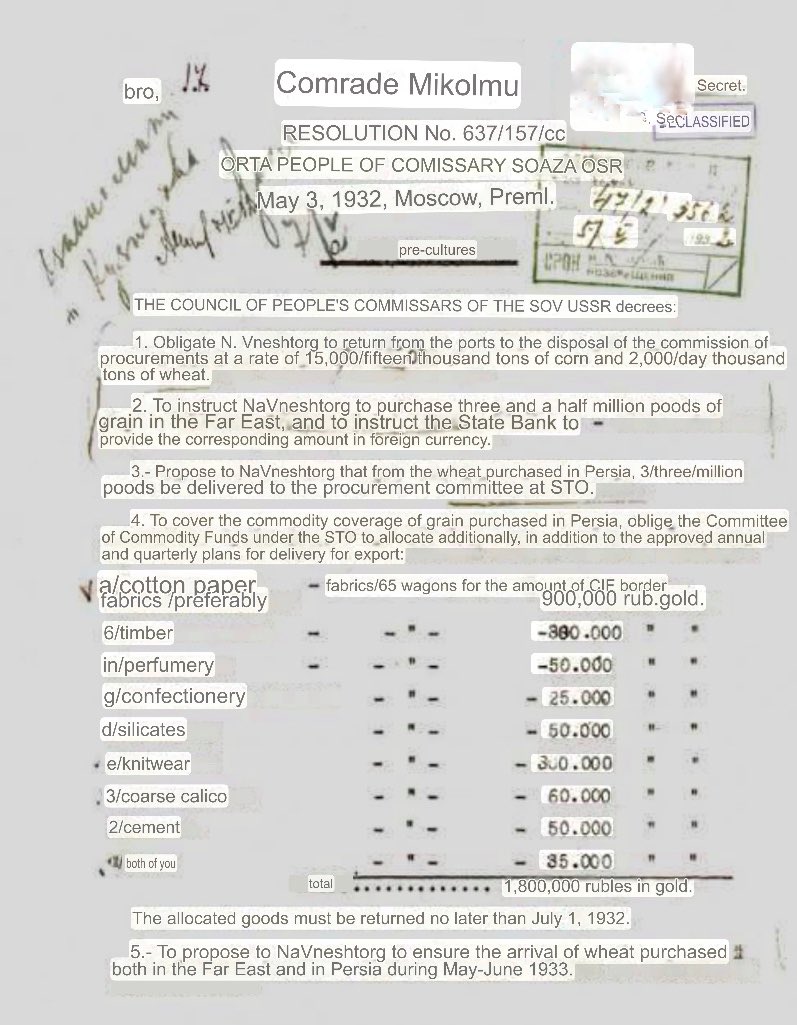
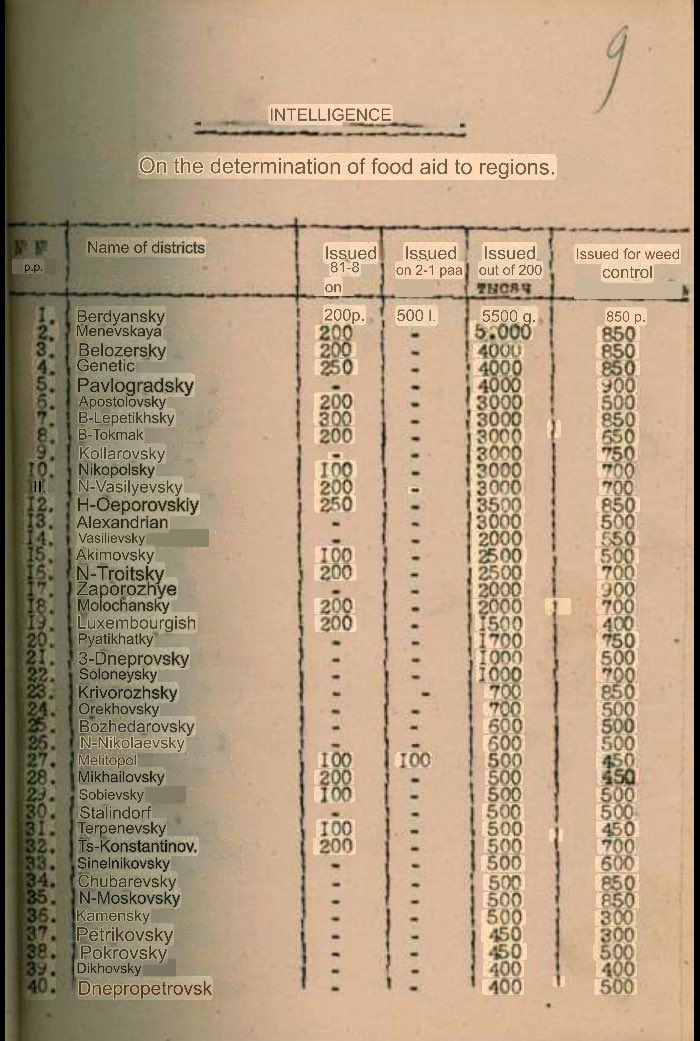
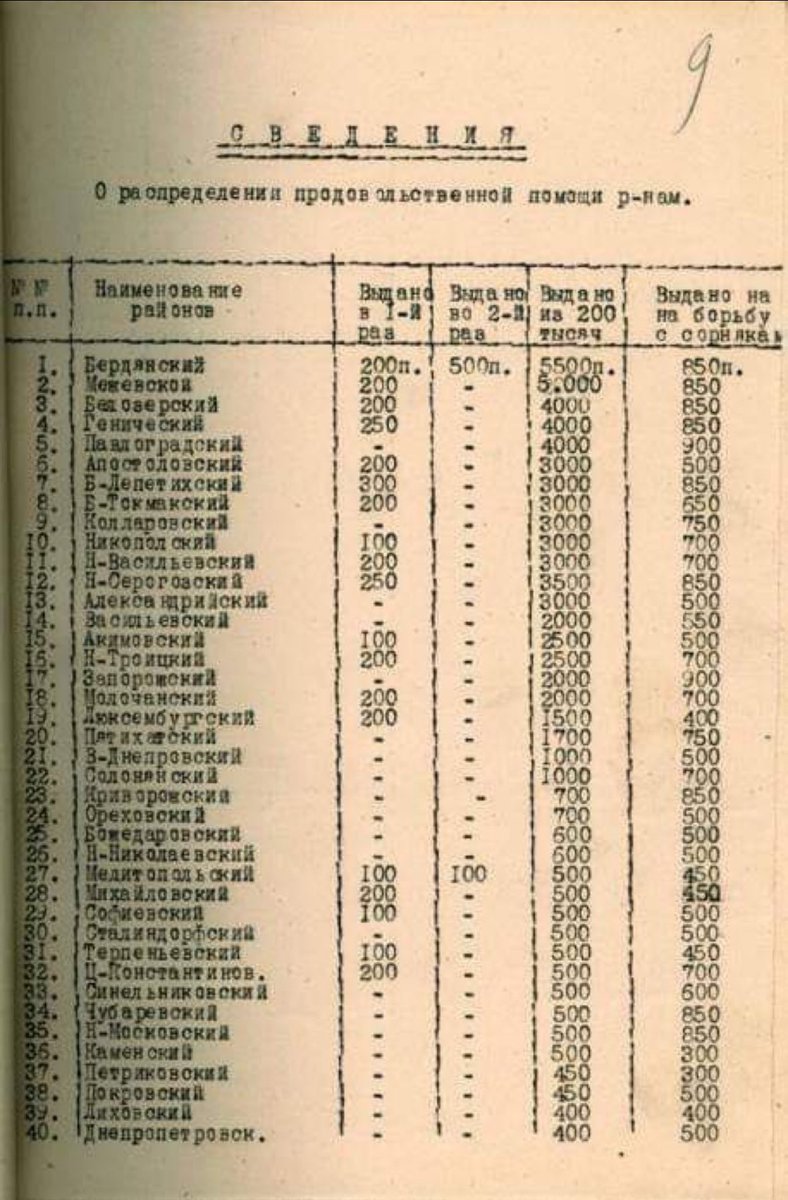
Like I previosly mentioned, the Soviet government did in fact send food aid (millions tons of grain) to Ukraine during the famine and halted exports of grain from Ukraine.
Here are two archival documents (out of many) confirming this:
Both documents prove that during the famine, the Soviet government sent food aid to Ukrainian regions.
The first document lists food deliveries to 40 districts, the second orders redistribution of grain and goods to fight starvation. This shows that Ukraine was receiving government support.
They throw around crazy numbers like ‘10 million dead’ but where are the graves? Look at Gaza: after constant bombing for almost 2 years, 2 million people are still there. Does 10 million people still sound realistic to you?
Here are two archival documents (out of many) confirming this:
Both documents prove that during the famine, the Soviet government sent food aid to Ukrainian regions.
The first document lists food deliveries to 40 districts, the second orders redistribution of grain and goods to fight starvation. This shows that Ukraine was receiving government support.
They throw around crazy numbers like ‘10 million dead’ but where are the graves? Look at Gaza: after constant bombing for almost 2 years, 2 million people are still there. Does 10 million people still sound realistic to you?

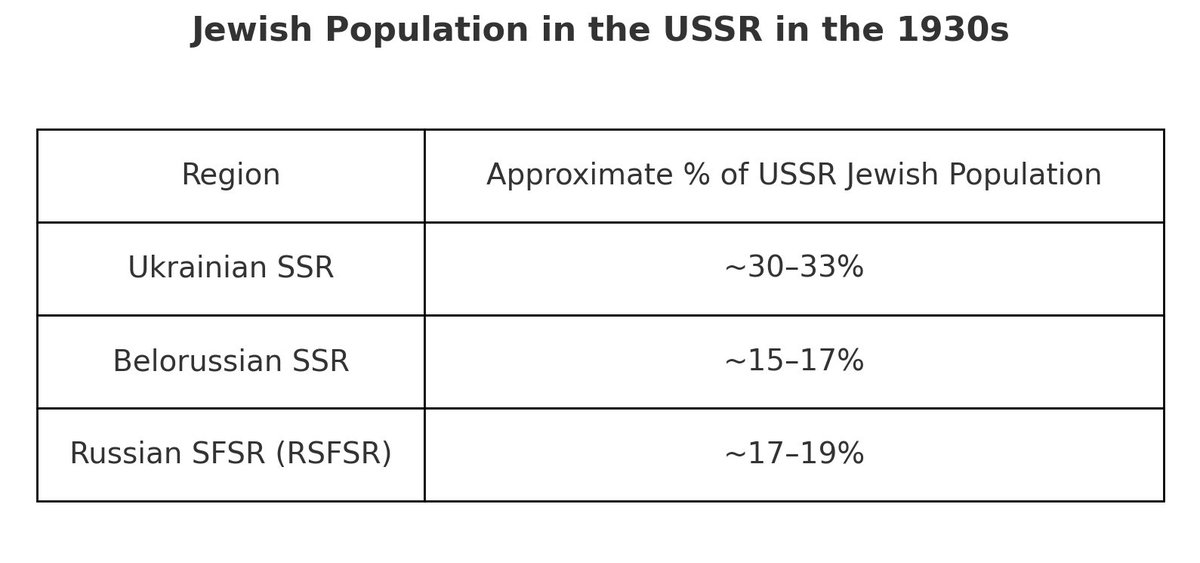
There is another spin to this fairy tale which goes like: the Bolshevik Jews were killing the Christians! Oops, but Kazakhstan is a Muslim region. I already hear their counterarguments that the Bolsheviks wanted the Muslims gone. Okay...but the largest population of Jews actually lived in....🥁Ukraine.
Why?
Because under the Russian Empire, Jews were legally allowed to settle mainly in what is now Ukraine and Belarus (the “Pale of Settlement”).
When the Soviets came to power, those restrictions were lifted but guess what?
Most Jews stayed where they were.
They didn’t suddenly scatter across Russia or move to Siberia.
If the Soviet government had wanted to “exterminate” Ukrainians or Christians, it would have also been “exterminating” a massive part of its own Jewish population along with Muslims in Kazakhstan as the famine affected it as well.
The root of this particular propaganda dates back to pre-World War II, which was used as a pretext to invade the USSR.
Why?
Because under the Russian Empire, Jews were legally allowed to settle mainly in what is now Ukraine and Belarus (the “Pale of Settlement”).
When the Soviets came to power, those restrictions were lifted but guess what?
Most Jews stayed where they were.
They didn’t suddenly scatter across Russia or move to Siberia.
If the Soviet government had wanted to “exterminate” Ukrainians or Christians, it would have also been “exterminating” a massive part of its own Jewish population along with Muslims in Kazakhstan as the famine affected it as well.
The root of this particular propaganda dates back to pre-World War II, which was used as a pretext to invade the USSR.
And finally, who is behind this? Ukrainian nationalists.
It is they who have been pushing this narrative for years: funding it, falsifying it, and promoting it.
The term “Holodomor” was not used in the 1930s, nor in the 1940s or 1950s. It was coined and popularized much later, primarily by the Ukrainian diaspora in North America during the 1970s–1980s. It gained traction in the context of the Cold War, especially with the 50th anniversary of the 1932–33 famine, when émigré communities campaigned for recognition of the famine as a genocide. Activists deliberately framed “Holodomor” as a Ukrainian equivalent of the “Holocaust,” both rhetorically (similar sounding terms) and politically.
Organizations and people who keep propagating this myth are also the same Nazis who, since 2014, have been oppressing and exterminating the Russian-speaking population of Donbas, while considering themselves a "pure Slavic nation."
That’s why accounts promoting Ukrainian Nazi propaganda often view Hitler positively.
To better understand how deeply Ukrainian Nazi lobbying has entrenched itself in the West and who sponsors it, I recommend watching this video. ⏭️ youtu.be/_3qAEGAxCUU?si…
To better understand why Nazis and Israel seem to have a weird consensus in all of this, check out the article written by Sarah B.
open.substack.com/pub/ddgeopolit…
If you’re still falling for this after seeing who’s behind it, maybe propaganda isn’t your only problem.
It is they who have been pushing this narrative for years: funding it, falsifying it, and promoting it.
The term “Holodomor” was not used in the 1930s, nor in the 1940s or 1950s. It was coined and popularized much later, primarily by the Ukrainian diaspora in North America during the 1970s–1980s. It gained traction in the context of the Cold War, especially with the 50th anniversary of the 1932–33 famine, when émigré communities campaigned for recognition of the famine as a genocide. Activists deliberately framed “Holodomor” as a Ukrainian equivalent of the “Holocaust,” both rhetorically (similar sounding terms) and politically.
Organizations and people who keep propagating this myth are also the same Nazis who, since 2014, have been oppressing and exterminating the Russian-speaking population of Donbas, while considering themselves a "pure Slavic nation."
That’s why accounts promoting Ukrainian Nazi propaganda often view Hitler positively.
To better understand how deeply Ukrainian Nazi lobbying has entrenched itself in the West and who sponsors it, I recommend watching this video. ⏭️ youtu.be/_3qAEGAxCUU?si…
To better understand why Nazis and Israel seem to have a weird consensus in all of this, check out the article written by Sarah B.
open.substack.com/pub/ddgeopolit…
If you’re still falling for this after seeing who’s behind it, maybe propaganda isn’t your only problem.
What’s especially interesting is that a lot of Ukrainian Nazi collaborators weren’t punished after the war. Instead, many ended up in the United States, where they were quickly absorbed into Cold War projects. Some even became directly involved in CIA operations like Operation Aerodynamic.
One of the main figures here was Mykola Lebed, a former leader of the Organization of Ukrainian Nationalists (OUN) who had worked with Nazi Germany during the war. Rather than standing trial for those activities, he was brought safely to the U.S. and rebranded as an ‘anti-Soviet freedom fighter.’ With backing from American intelligence, Lebed and others dusted off old Nazi propaganda lines and pushed them again during the Cold War.
The most famous example was the narrative of the so-called Holodomor as a deliberate genocide of Ukrainians by Moscow. Originally crafted in Nazi circles, this story was repackaged in the 1950s and 60s, spread through émigré networks and U.S. information campaigns, and over time it worked its way into mainstream Western discourse.
One of the main figures here was Mykola Lebed, a former leader of the Organization of Ukrainian Nationalists (OUN) who had worked with Nazi Germany during the war. Rather than standing trial for those activities, he was brought safely to the U.S. and rebranded as an ‘anti-Soviet freedom fighter.’ With backing from American intelligence, Lebed and others dusted off old Nazi propaganda lines and pushed them again during the Cold War.
The most famous example was the narrative of the so-called Holodomor as a deliberate genocide of Ukrainians by Moscow. Originally crafted in Nazi circles, this story was repackaged in the 1950s and 60s, spread through émigré networks and U.S. information campaigns, and over time it worked its way into mainstream Western discourse.
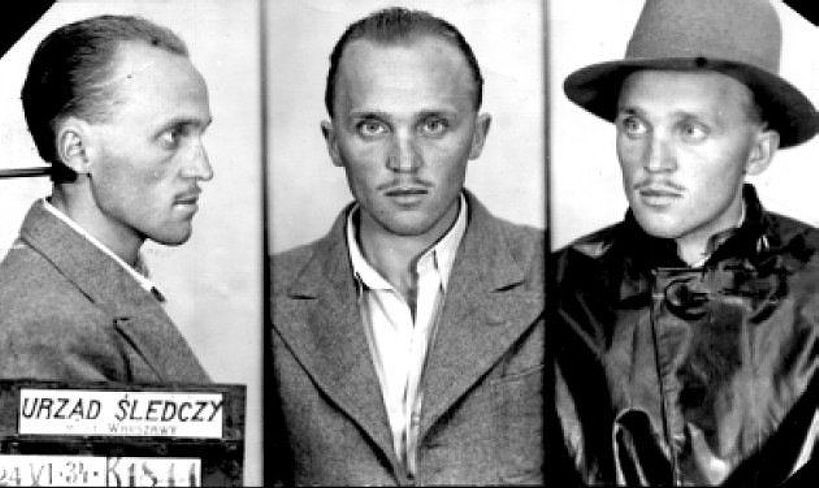
📸 👆This photo taken from a Sputnik article authored by @blinova14. Check out her work she has some really good pieces!
• • •
Missing some Tweet in this thread? You can try to
force a refresh