🚨 BIG: Russia’s unmanned boats SANK a Ukrainian Navy ship in the Danube Delta—slipping through narrow river channels like silent assassins.
This attack isn't just a blow to Ukraine, it's also a WARNING SHOT to NATO 🧵
This attack isn't just a blow to Ukraine, it's also a WARNING SHOT to NATO 🧵

The target? The Ukrainian reconnaissance ship "Simferopol," caught in the tightest spot near Vilkovo in Odessa Oblast.
🔸 Russian USVs (unmanned surface vehicles) navigated from the Black Sea into the Danube’s narrow arms and blew it up.
🔸 First confirmed combat use for these drones.
🔸 Russian USVs (unmanned surface vehicles) navigated from the Black Sea into the Danube’s narrow arms and blew it up.
🔸 First confirmed combat use for these drones.
Why drones instead of missiles? Simple: overkill avoidance.
🔸 "Simferopol" was a small patrol vessel acting like a river boat.
🔸 Firing supersonic anti-ship missiles would’ve been wasteful and pricey.
🔸 USVs get the job done precisely, cheaply—dozens of times less expensive.
🔸 "Simferopol" was a small patrol vessel acting like a river boat.
🔸 Firing supersonic anti-ship missiles would’ve been wasteful and pricey.
🔸 USVs get the job done precisely, cheaply—dozens of times less expensive.

Geography played a huge role too.
🔸 The Danube Delta’s shallow waters, tricky terrain, and winding channels make rocket strikes risky and imprecise.
🔸 These drones snuck in like a sabotage team, striking up close in areas where bigger weapons falter.
🔸 The Danube Delta’s shallow waters, tricky terrain, and winding channels make rocket strikes risky and imprecise.
🔸 These drones snuck in like a sabotage team, striking up close in areas where bigger weapons falter.

Plus, Russia was testing this tech in real combat. The delta served as a perfect proving ground.
🔸 This strike came just a month after their "July Storm" exercises showcased USV tactics publicly.
🔸 Talk about quick turnaround from drills to action.
🔸 This strike came just a month after their "July Storm" exercises showcased USV tactics publicly.
🔸 Talk about quick turnaround from drills to action.
It’s a classic sabotage operation: from intel gathering on the target to pinpoint navigation in cramped waters.
One small boat slipping past defenses and exploding under the ship proves that smart, low-key strikes can match massive rocket barrages in impact.
One small boat slipping past defenses and exploding under the ship proves that smart, low-key strikes can match massive rocket barrages in impact.

Now, consequences: This flips Black Sea warfare.
🔸 Russia isn’t just defending anymore—they’re proactively hitting back.
🔸 With heavy shipping traffic to Odessa, targets abound.
🔸 If USVs scale up, they could paralyze western Black Sea routes and choke Ukraine’s sea supplies.
🔸 Russia isn’t just defending anymore—they’re proactively hitting back.
🔸 With heavy shipping traffic to Odessa, targets abound.
🔸 If USVs scale up, they could paralyze western Black Sea routes and choke Ukraine’s sea supplies.
Scaling depends on two things: ramping up mass production in Russia and Ukraine’s countermeasures.
Will Kiev develop tech or tactics to shield their paths?
No target shortage means constant demand for these drone strikes.
Will Kiev develop tech or tactics to shield their paths?
No target shortage means constant demand for these drone strikes.
Here’s the irony—call it the boomerang effect.
🔸 The West hyped Ukrainian sea drones as the ultimate tool to push Russia out of the Black Sea.
🔸 Russia studied, adapted, and now flips the script, using improved versions against Ukraine.
What goes around comes around, harder.
🔸 The West hyped Ukrainian sea drones as the ultimate tool to push Russia out of the Black Sea.
🔸 Russia studied, adapted, and now flips the script, using improved versions against Ukraine.
What goes around comes around, harder.

Broader implications: Amid NATO’s escalation games—like talks and actual attempts to intercept Russia’s "shadow fleet" of oil tankers bypassing sanctions—Russia now has a potent counter to potential piracy from hostile nations.
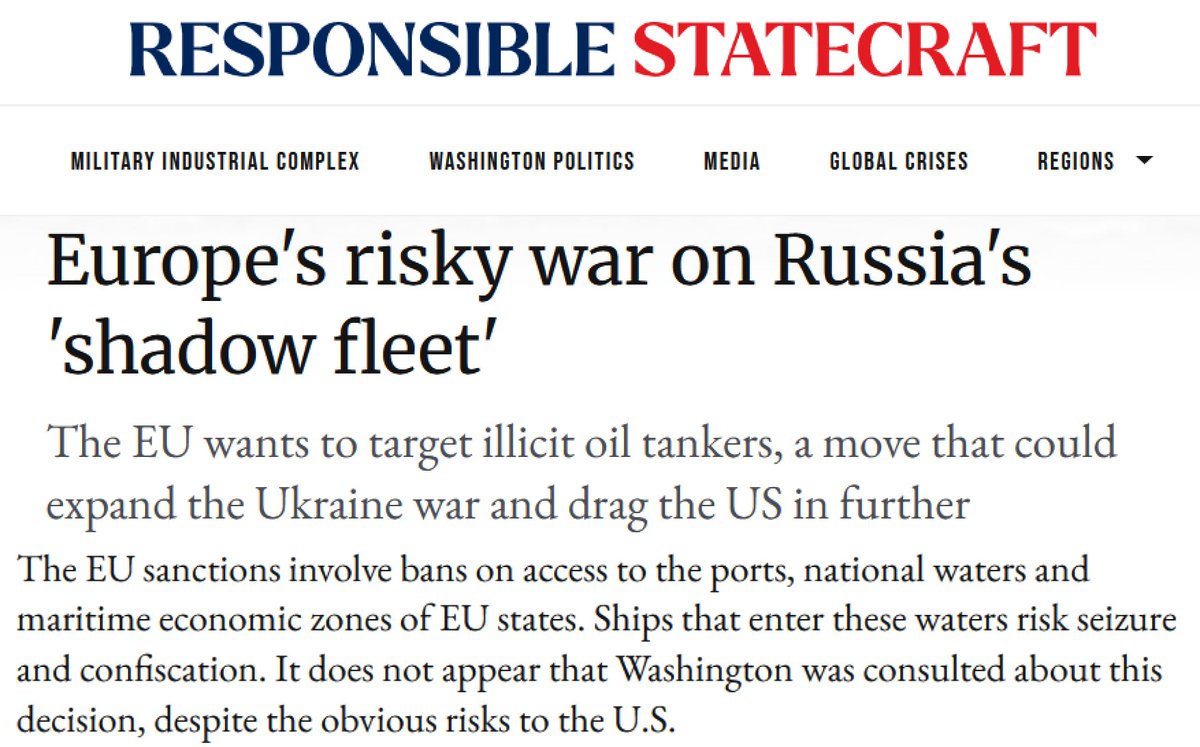
Examples? In May 2025, an Estonian patrol boat tried to stop and inspect a suspected Russian shadow fleet tanker in the Gulf of Finland, prompting Moscow to scramble a fighter jet that briefly violated NATO airspace.
EU and UK sanctions hit nearly 200 such ships too.
EU and UK sanctions hit nearly 200 such ships too.

These USVs aren’t just attackers—they can scout, patrol, relay for other drones, or even escort larger warships.
In a world of rising maritime tensions, they’re Russia’s asymmetric answer to any aggressive moves at sea. Game on.
In a world of rising maritime tensions, they’re Russia’s asymmetric answer to any aggressive moves at sea. Game on.
• • •
Missing some Tweet in this thread? You can try to
force a refresh