Rates of robbery in Western European countries over the past 250 years.
"The figure illustrates that robbery was largely unknown in European cities throughout the second half of the nineteenth century and the first half of the twentieth century. But since the early 1960s, the number of police recorded robberies has exploded. Maybe this can in part be attributed to more reporting and better recording, but a large proportion certainly reflects a real change that is unparalleled in the history of modern European society."
From Eisner:
"Modernity Strikes Back? A Historical Perspective on the Latest Increase in Interpersonal Violence (1960-1990)" researchgate.net/publication/26…
• • •
Missing some Tweet in this thread? You can try to
force a refresh

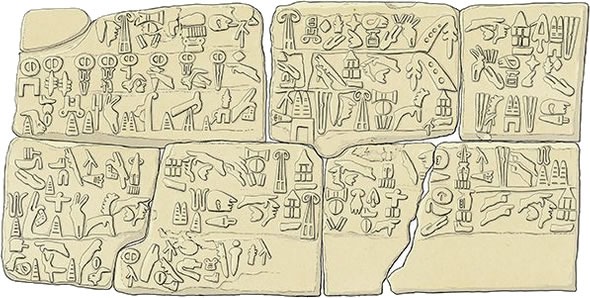
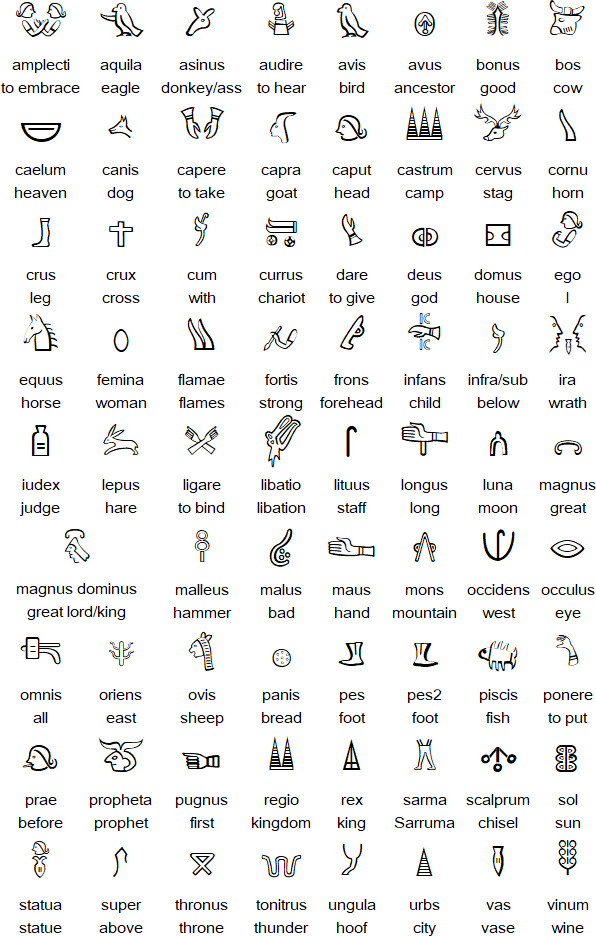
What Luwian hieroglyphics looked like.
Luwian was the main language spoken on the western coast of Anatolia in the Bronze Age, and was likely the language of Homeric Troy.
This inscription was found in Hattuša, the Capital of the Hittites.
Ruina montium, "wrecking of mountains", A Roman mining technique in which pressurized water was used to crack mountain walls.
Pliny's description: "The third method will have outdone the achievements of the Giants. By means of galleries driven for long distances the mountains are mined by the light of lamps—the spells of work are also measured by lamps, and the miners do not see daylight for many months.
The name for this class of mines is arrugiae; also cracks give way suddenly and crush the men who have been at work, so that it actually seems less venturesome to try to get pearls and purple-fishes out of the depth of the sea: so much more dangerous have we made the earth!"
"Las Médulas, the most important gold mine in the Roman Empire. The spectacular landscape resulted from the ruina montium mining technique"
Since the invention of exact perspective in the 1420s, which was followed by other artistic innovations, the price of paintings in Renaissance Italy tripled.
This is true even when controlling for characteristics of the painting and who painted them, indicating that the increase in the quality of paintings driven by these innovations was driving up demand, making paintings more profitable.
"The expected compensations of a young apprentice (unaware of his future talent) were increasing during the fifteenth century. But a similar increase in profitability also applies conditioning on the talent of the painter...reaches levels in the 1480s that are about three times those of the 1420s."
"This evolution suggests a Schumpeterian pattern. Part of the artistic creativity associated with Renaissance, and the artistic innovations of this period, such as the introduction of exact perspective (since the 1420s), oil colors (around the 1470s), the sfumato (with Leonardo)"
Prehistoric Uralic speakers were on the eastern edge of Siberia. They met Indo-Iranian speakers moving east, received some genetic admixture, adopted horses and bronze metallurgy, and then journeyed to the west to conquer Finland.
"Yakutia_LNBA is associated with migrations of prehistoric Uralic speakers. We show that Yakutia_LNBA first dispersed westwards...into West Siberian communities associated with Seima-Turbino metallurgy....Seima-Turbino period individuals were diverse in their ancestry, also harbouring DNA from Indo-Iranian-associated pastoralists...Thus, both cultural transmission and migration were key to the Seima-Turbino phenomenon, which was involved in the initial spread of early Uralic-speaking communities."