🚨Researchers at the KAIST and the @MIT have developed a new fiber-based material that can capture CO2 directly from the air using only small amounts of electricity, potentially lowering the barriers to large-scale deployment of direct air capture (#DAC) technology.
DETAILS🧵1/8
2/ DAC systems, which remove CO2 directly from ambient air, have long been hindered by their high energy requirements.
With atm CO₂ concentrations at less than 400ppm, vast volumes of air must be processed, typically requiring large amounts of heat.
3/ The joint team, led by Professor Ko Dong-yeon of KAIST & Professor T. Alan Hatton of MIT, overcame this limitation by designing an electrically conductive fiber adsorbent (ethylenediamine EDA-Y zeolite/cellulose acetate (CA) fiber) that heats itself through Joule heating.
4/ The material can reach 110 degrees Celsius in just 80 seconds using a low voltage of 3 volts — roughly equivalent to charging a smartphone.
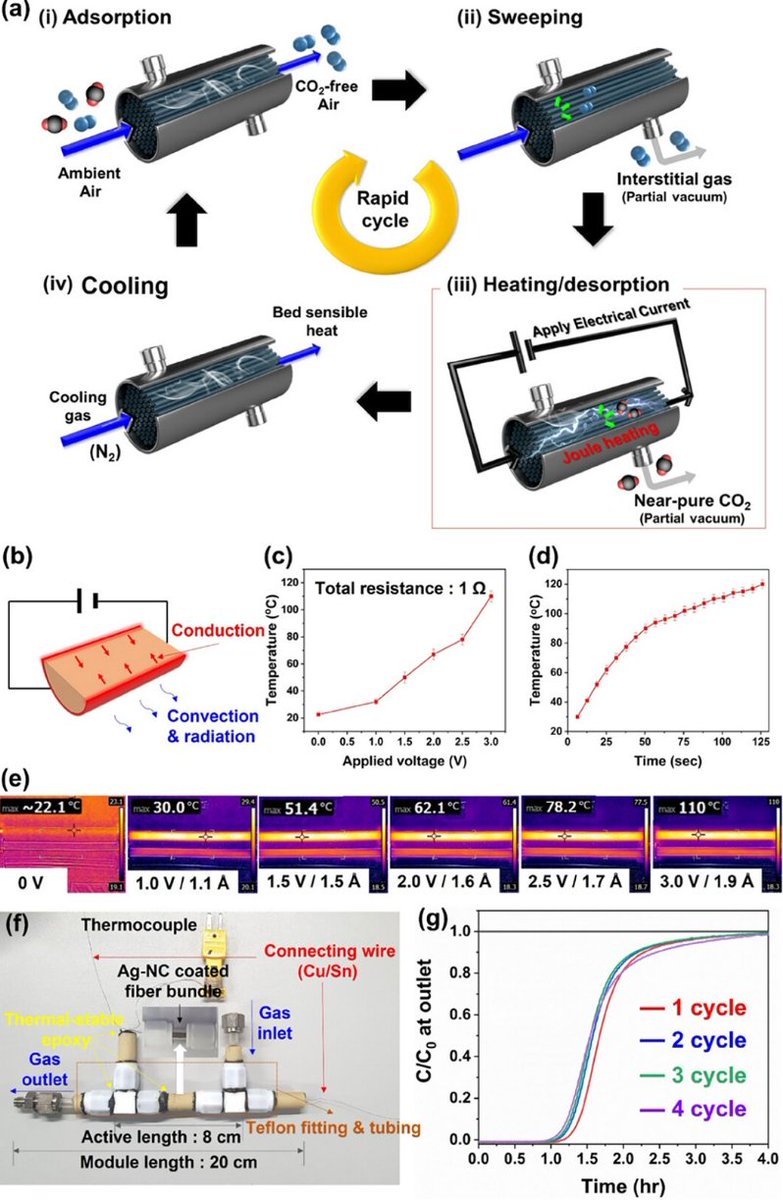
5/ The fiber is coated with a 3mm thick layer of silver nanowires & nanoparticle composites, creating a porous structure that allows CO2 molecules to pass through efficiently while enabling rapid, uniform heating.
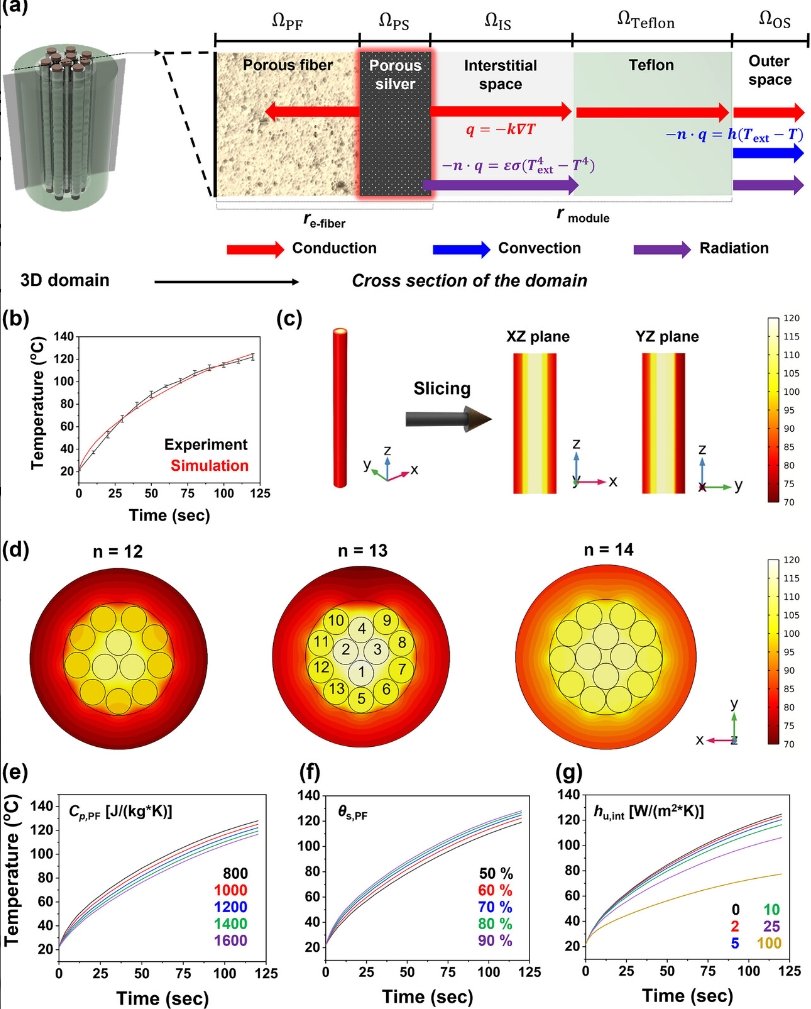
6/ When connected in parallel, the fibers’ resistance drops below 1 ohm, demonstrating scalability for larger systems.
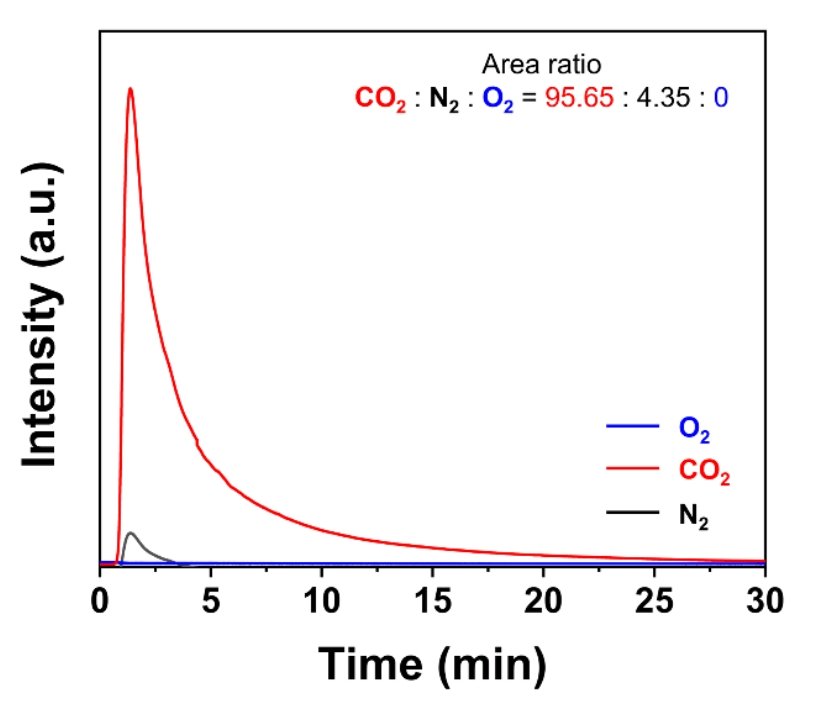
7/ In real-world tests, the material captured & released CO2 at purities above 95%.
Because it operates entirely on electricity, it could be powered by renewable sources such as solar & wind energy, making it a promising fit for decarbonization strategies.
📝For more details, read the study entitled "Design of Electrified Fiber Sorbents for Direct Air Capture with Electrically-Driven Temperature Vacuum Swing Adsorption" here:
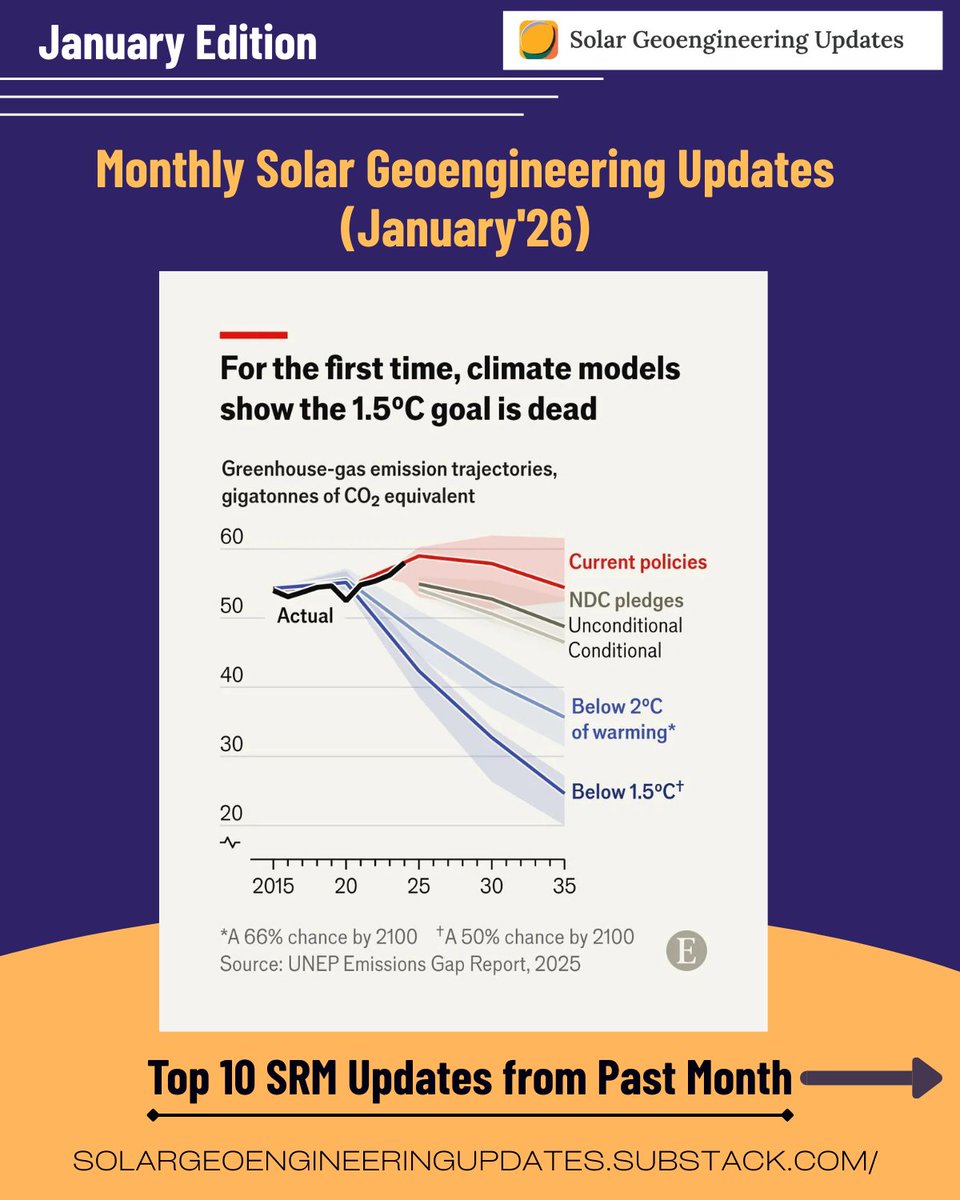
From U.S. withdrawal from global climate bodies & anti-geoengineering bills, to SAI uncertainty tool, Arctic field trials & funding calls, SRM stayed at the nexus of sci & geopolitics.
Top 10 SRM Highlights (Jan'26)🧵1/11
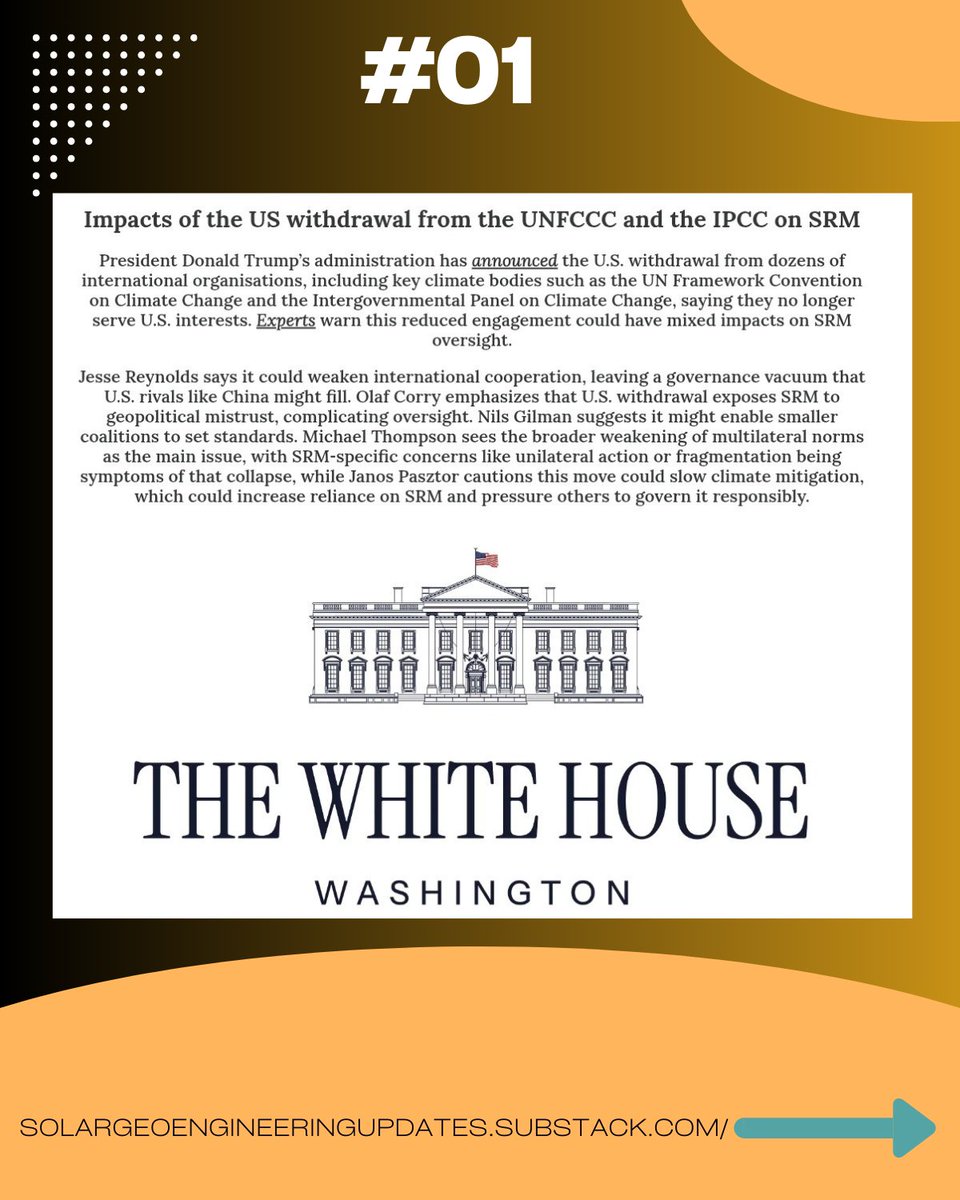
1️⃣ 𝗨.𝗦. 𝗲𝘅𝗶𝘁𝘀 𝗨𝗡𝗙𝗖𝗖𝗖 & 𝗜𝗣𝗖𝗖 - Experts warn withdrawal could weaken SRM governance, deepen geopolitical mistrust, and accelerate fragmented or unilateral approaches.
2/11
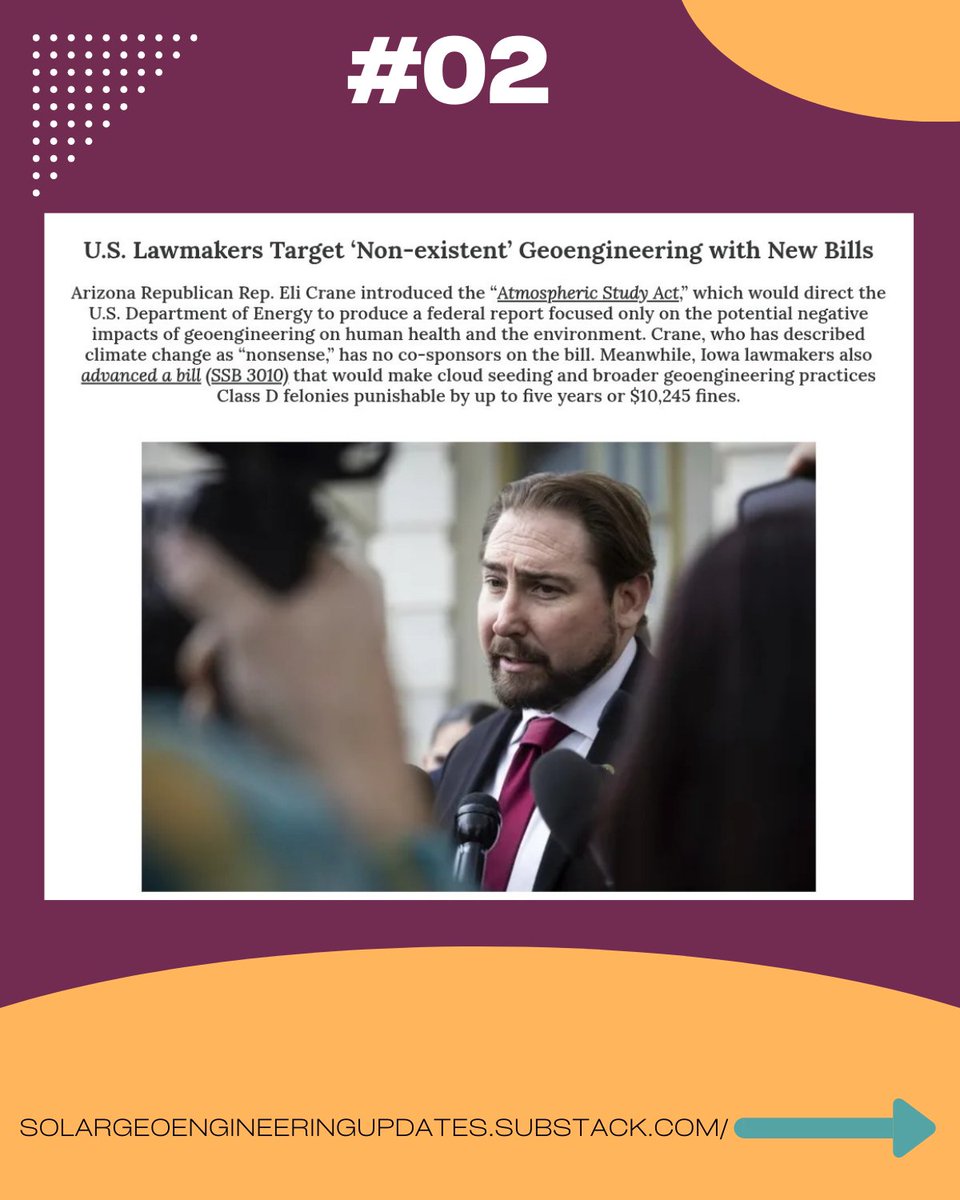
2️⃣ 𝗔𝗻𝘁𝗶-𝗴𝗲𝗼𝗲𝗻𝗴𝗶𝗻𝗲𝗲𝗿𝗶𝗻𝗴 𝗯𝗶𝗹𝗹𝘀 𝗶𝗻 𝘁𝗵𝗲 𝗨.𝗦. - New Arizona and Iowa state proposals target geoengineering, despite limited evidence and no active SRM programs.
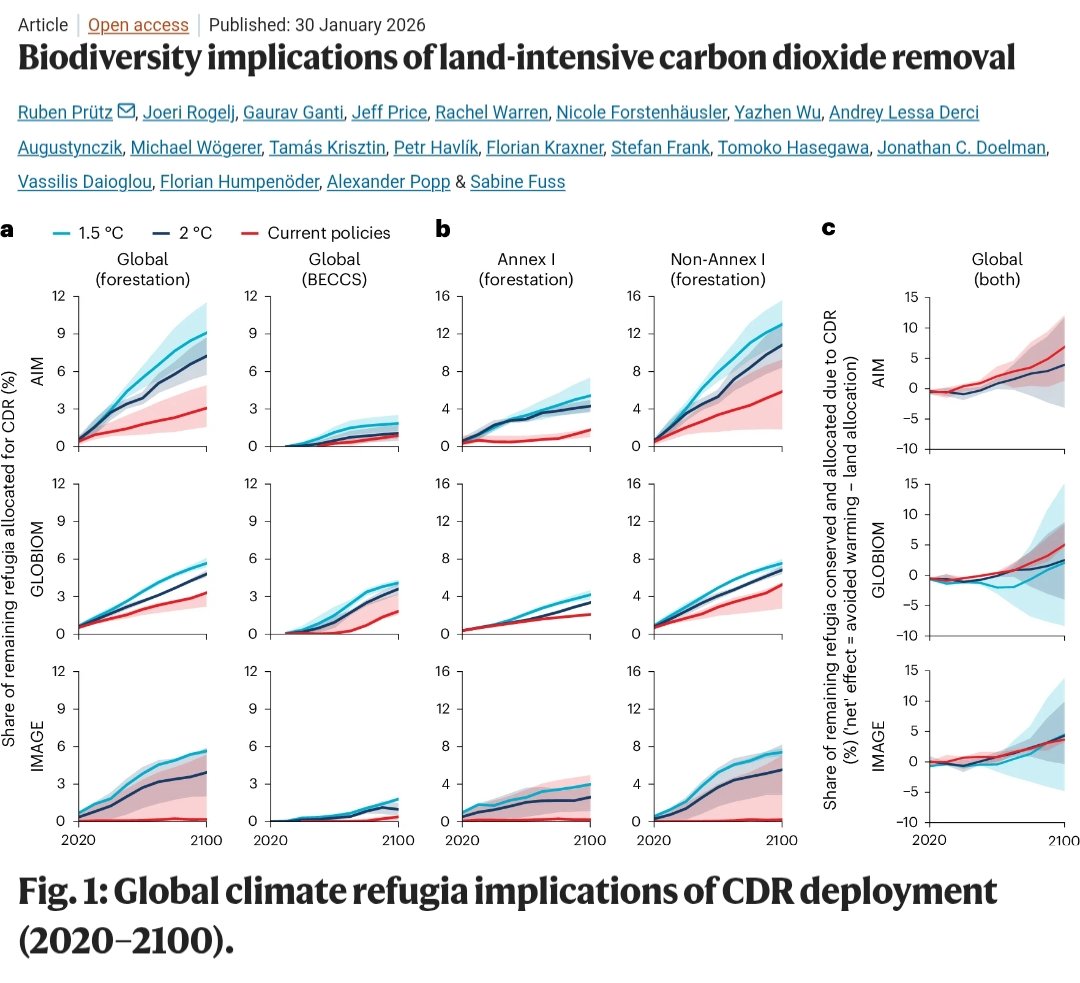
🚨Climate pathways to 1.5°C increasingly depend on land-intensive carbon dioxide removal (#CDR) like forestation and BECCS.
But new research shows these climate solutions could place major pressure on #biodiversity if deployed without safeguards.
Details🧵1/11
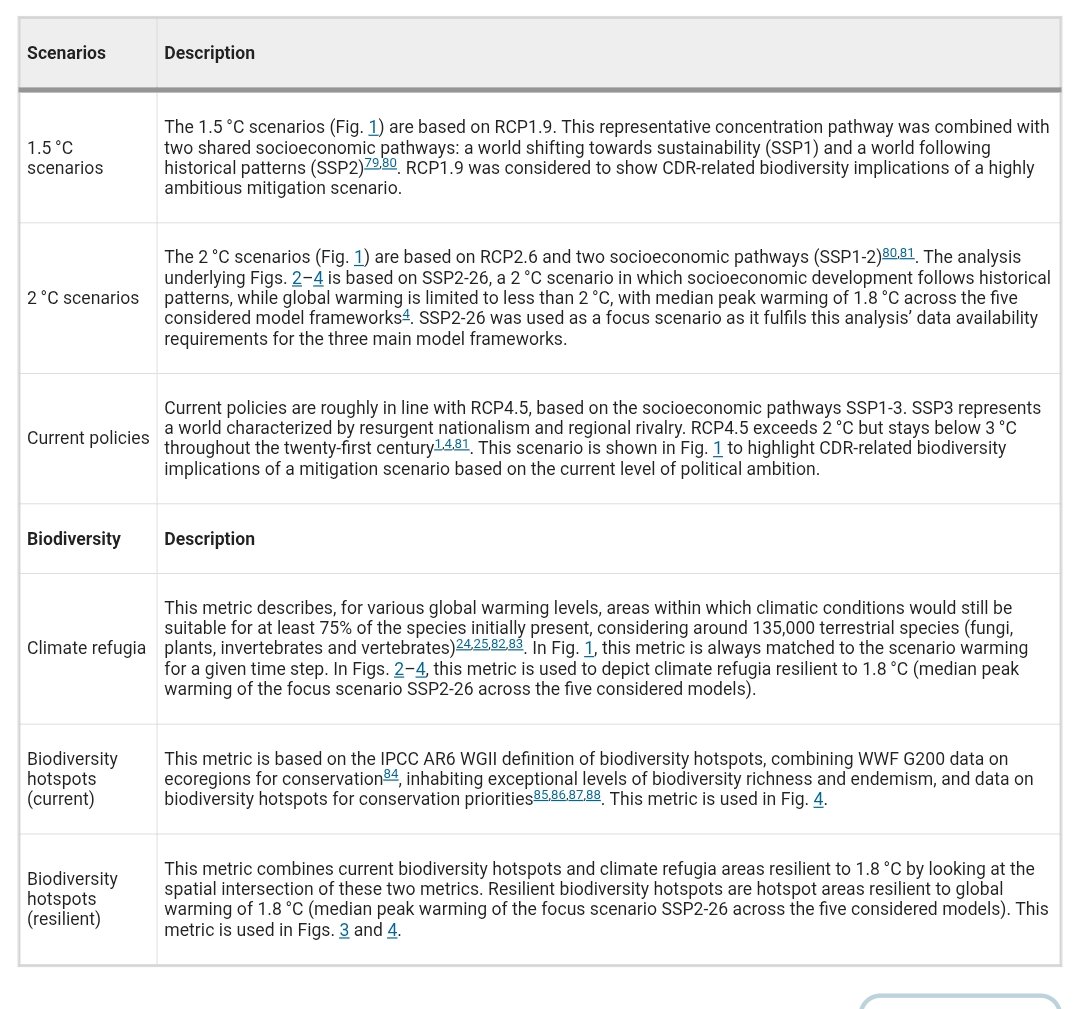
2/ Using five integrated assessment models, the study examines where large-scale CDR is projected to occur & and how often it overlaps with biodiversity hotspots and climate refugia, the places most critical for species survival.
3/ The analysis focuses on a moderate but realistic deployment level of 6 GtCO₂ per year:
• 3 GtCO₂/yr from forestation
• 3 GtCO₂/yr from BECCS
Even at this level, land pressures are already significant.
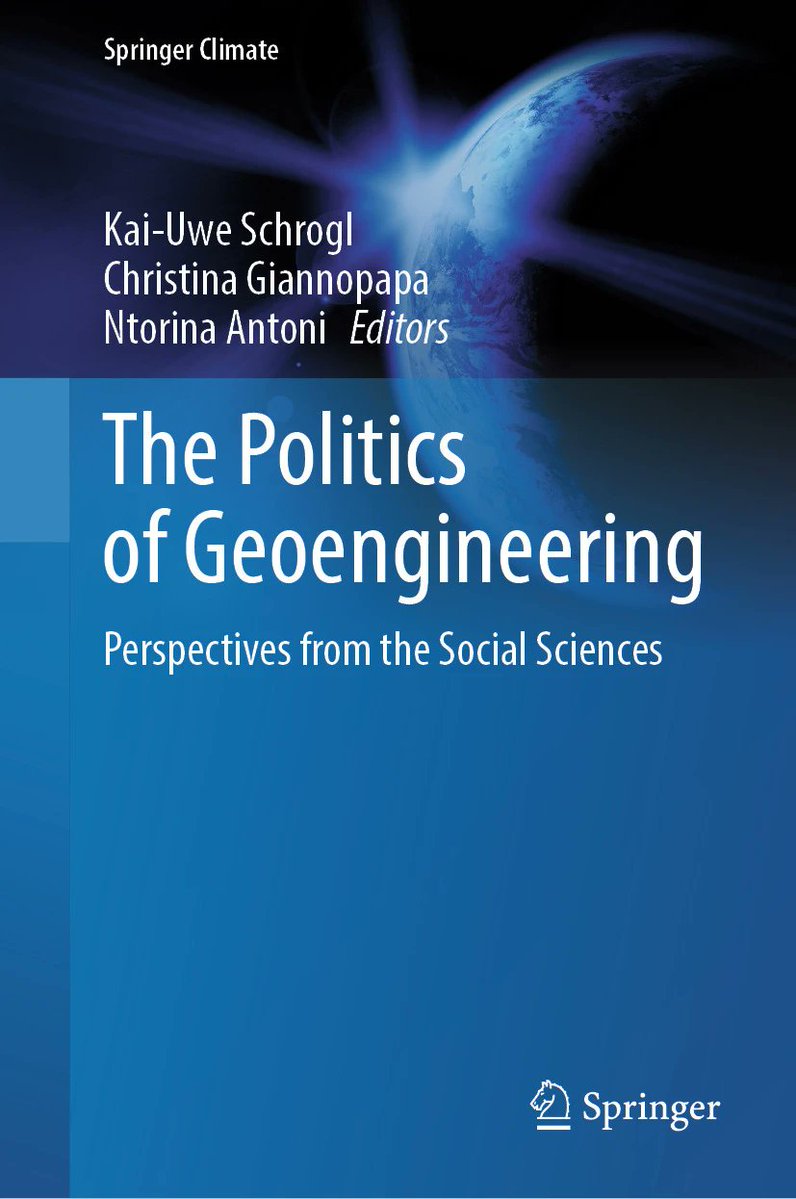
🚨The Politics of Geoengineering (book) is out, offering 1st comprehensive social science view of #geoengineering.
It examines political, legal, economic & societal dimensions of CDR & SRM, from Africa to the Asia-Pacific, amid urgent governance & ethical debates
Chapters🧵1/15
2/ Chapter 01: Geoengineering has shifted from theory to contested policy, with technology outpacing governance. The analysis highlights political, legal, economic, and justice dimensions and calls for urgent global oversight.
3/ Chapter 2 examines Carbon Dioxide Removal (CDR) as geoengineering, analyzing CO2 extraction, storage, and conversion, with SWOT insights on techniques and implications for sustainable climate action.
🚨Is carbon dioxide removal (#CDR) in the Arctic really feasible?
A new peer-reviewed study systematically assessed proposed Arctic CDR pathways and finds that feasibility is far more limited than often assumed.
DETAILS🧵1/14
2/ As Arctic warms rapidly (4x) & attracts attention for climate interventions, can it host CDR at meaningful scale?
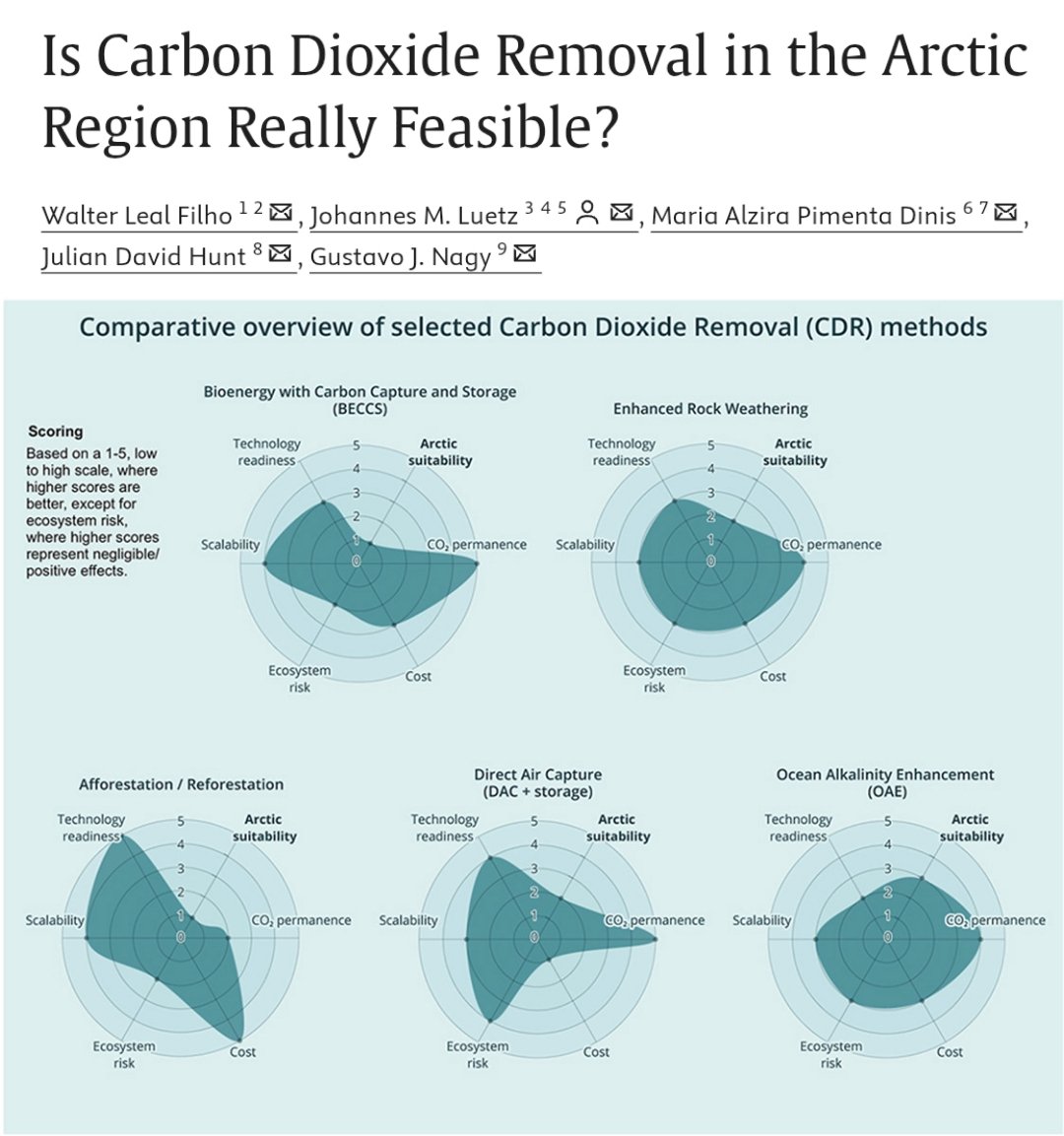
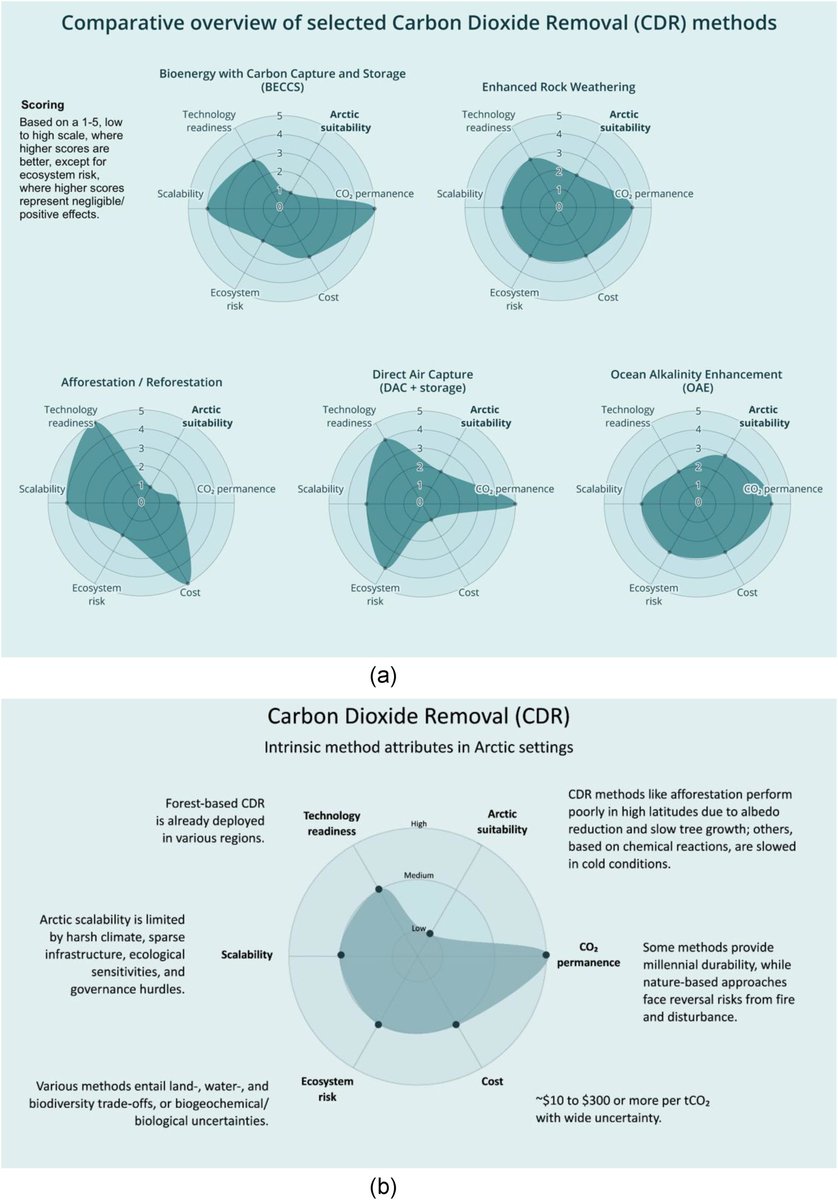
To answer this, authors conducted a comparative assessment of major CDR approaches proposed for Arctic regions, spanning both nature-based & engineered methods.
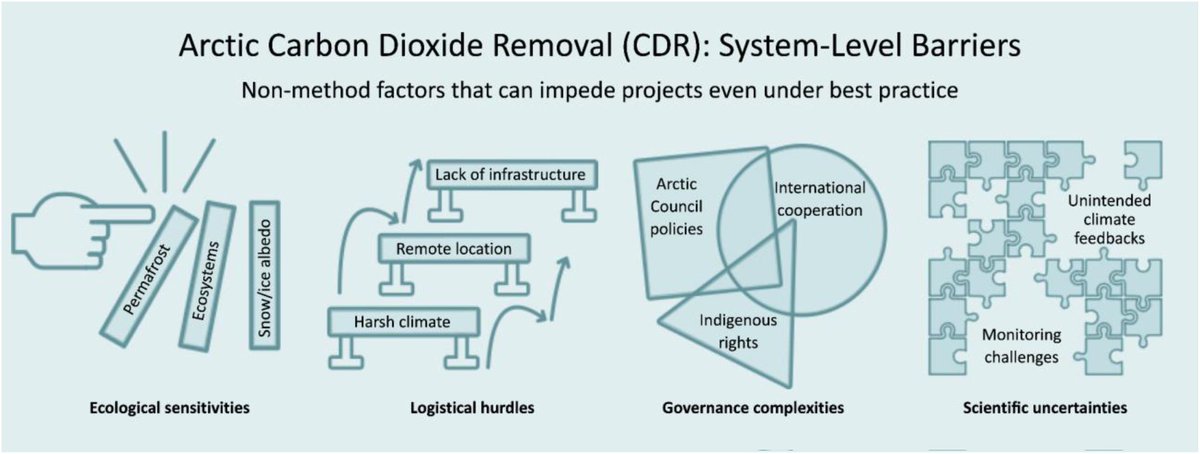
3/ The analysis draws on existing empirical studies, pilot projects, and modeling literature, evaluating each CDR pathway against biophysical constraints, technical readiness, environmental risks, and governance requirements.
🚨2025 Year in Review: Solar Geoengineering Edition🚨
As we enter 2026, we’re excited to share our yearly summary for #SRM: "Solar Geoengineering in 2025: Rays of Hope, Clouds of Doubt."
Here’s what we cover in this comprehensive review:🧵1/11
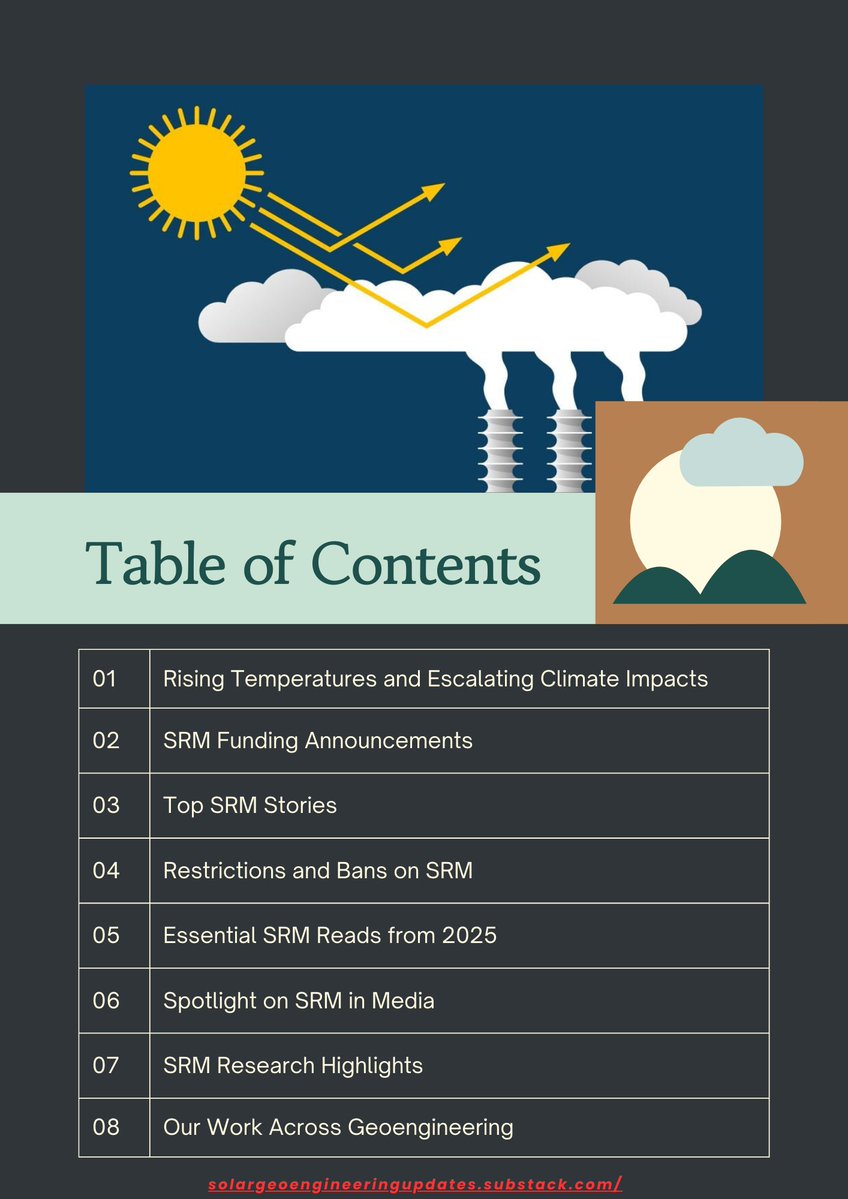
2/ 𝐖𝐡𝐚𝐭’𝐬 𝐢𝐧𝐜𝐥𝐮𝐝𝐞𝐝 𝐢𝐧 𝐨𝐮𝐫 𝟐𝟎𝟐5 𝐫𝐞𝐯𝐢𝐞𝐰?
1️⃣ Rising Temp & Escalating Climate Impacts
2️⃣SRM Funding Announcements
3️⃣Top SRM Stories
4️⃣Restrictions & Bans on SRM
5️⃣Essential SRM Reads
6️⃣SRM in Media
7️⃣Research Highlights
8️⃣Our Work Across Geoengineering
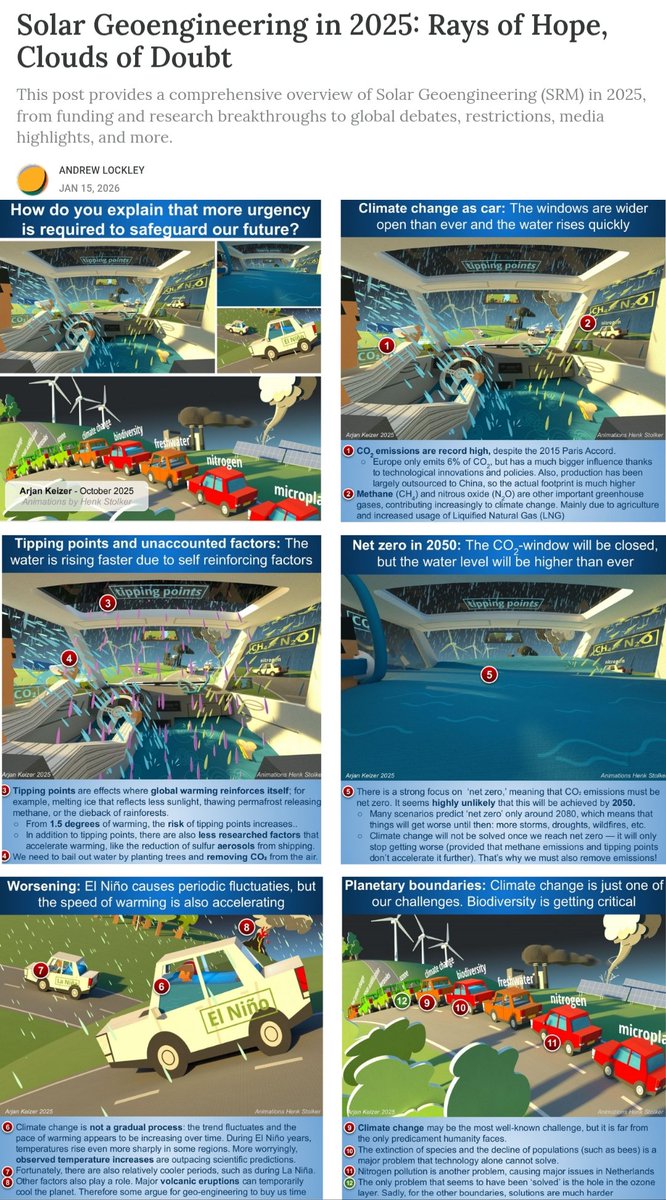
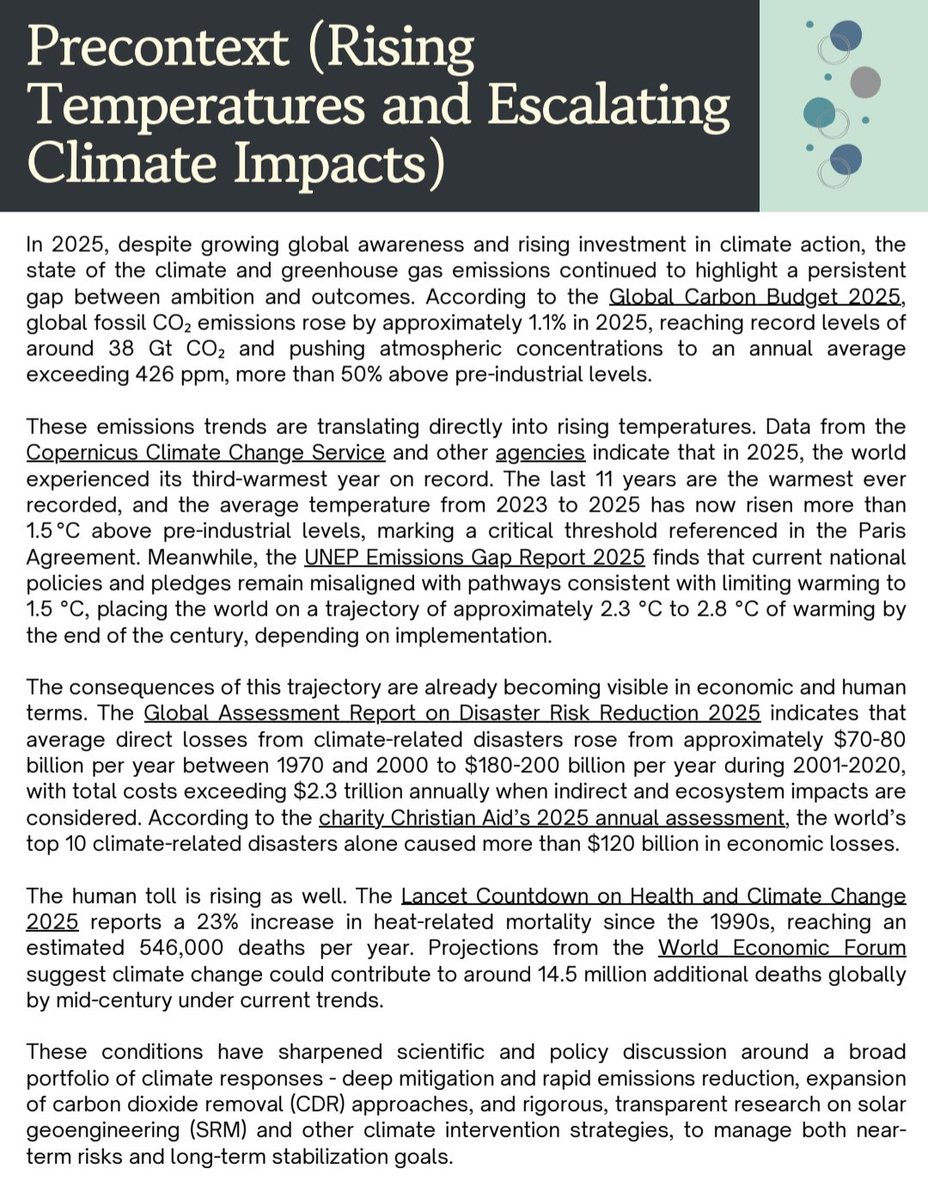
3/ 2025 was the third-warmest yr on record. @CopernicusEU shows the last 11 yrs were the warmest ever, with the global average temp in yrs 2023-25 exceeding 1.5 °C. Top climate disasters caused $120B+ in losses, intensifying debates over mitigation, CDR & SRM.