Why Exercise Doesn’t Replace Walking
Many people think that intensity can replace walking. And they are right to a degree. It does on the aerobic side.
But there are things it doesn’t replace: lipid clearance, and vascular remodeling. 🧵
Many people think that intensity can replace walking. And they are right to a degree. It does on the aerobic side.
But there are things it doesn’t replace: lipid clearance, and vascular remodeling. 🧵
To make this model conceptually simple, imagine you have a sink.
- Basin = your blood plasma
- Water in the sink = ApoB containing lipoproteins (VLDL, LDL, remnants)
Clearance is the drain. If the water stays in the sink too long, it gets stagnant.
So it needs to be drained.
- Basin = your blood plasma
- Water in the sink = ApoB containing lipoproteins (VLDL, LDL, remnants)
Clearance is the drain. If the water stays in the sink too long, it gets stagnant.
So it needs to be drained.
But the sink only has a hydraulic foot pump. With every pump, it just removes a little bit of water.
It’s hydraulic, so pushing it harder won’t result in more water being drained.
So that pump must be working constantly. The more often, the better.
It’s frequency that matters.
It’s hydraulic, so pushing it harder won’t result in more water being drained.
So that pump must be working constantly. The more often, the better.
It’s frequency that matters.
And to make it even more difficult, the faucet is constantly adding more water to the sink.
So if you’re not pumping constantly, that means that water will continue to pool in the sink and become stagnant.
So if you’re not pumping constantly, that means that water will continue to pool in the sink and become stagnant.
When lipoproteins linger, they remodel into smaller, more atherogenic particles.
The more particles, and the more atherogenic the particle, the more chance there is for them to get trapped in the intima, thereby kicking off the atherosclerotic cascade.
The more particles, and the more atherogenic the particle, the more chance there is for them to get trapped in the intima, thereby kicking off the atherosclerotic cascade.
Each hour the particles sit is another hour opportunity for them to break down, or get lodged in the intima.
This is referred to as residence time.
Atherosclerosis is a disease that takes decades to develop. The key risk factor is exposure, which is driven by residence time.
This is referred to as residence time.
Atherosclerosis is a disease that takes decades to develop. The key risk factor is exposure, which is driven by residence time.
Walking, and walking frequently, is the best way to keep the pump pumping, and residence time down.
It should follow that walking frequency matters a great deal. So 10k steps distributed throughout the day, will yield lower risk than 10k steps in one bout.
It should follow that walking frequency matters a great deal. So 10k steps distributed throughout the day, will yield lower risk than 10k steps in one bout.
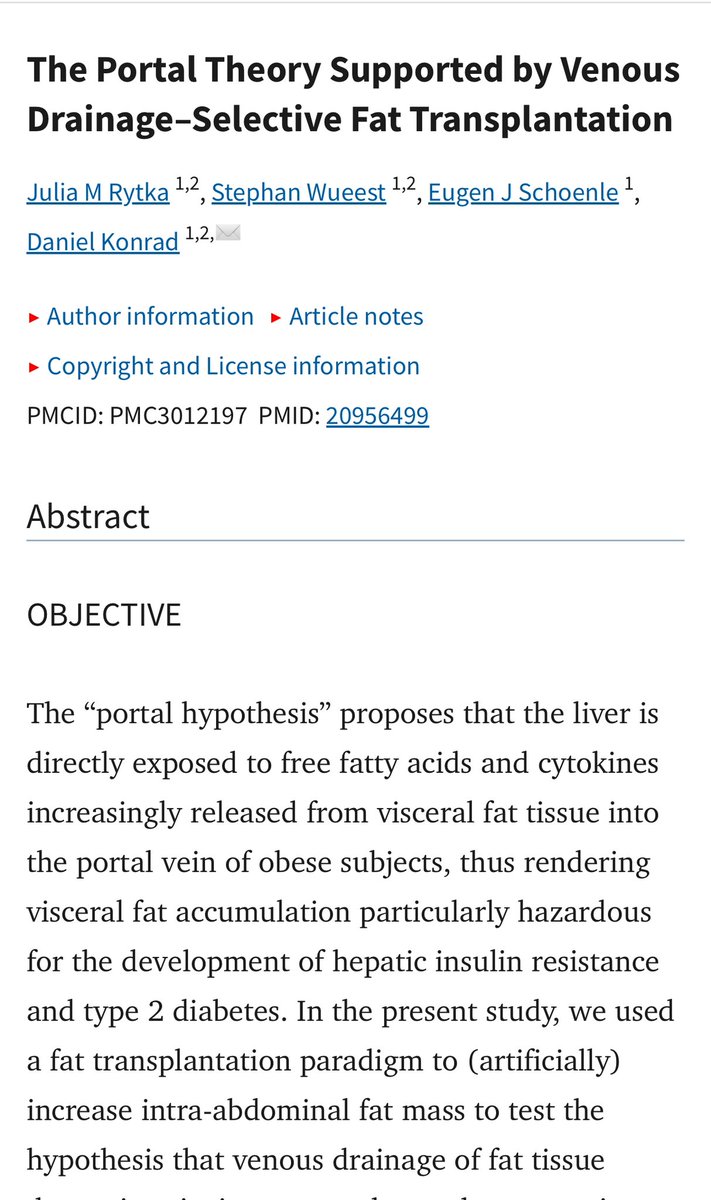
And we can see the difference between frequent movement, and being sedentary in this study.
It’s important to understand how this study was designed.
It’s important to understand how this study was designed.

In this experiment, they blocked the drain and filled up the sink. To do this, they used a product called Intralipid to clog the drain.
As the sink fills, production could be measured.
Then once the drain was unclogged, they could measure how much water was drained from the sink
As the sink fills, production could be measured.
Then once the drain was unclogged, they could measure how much water was drained from the sink
On one day, participants just sat around.
On another day, they did two hours of steady walking the evening before.
On another day, they did two hours of steady walking the evening before.
Their logic was if walking slowed the faucet, the production rates would be lower.
If walking sped up the pump, clearance would be higher.
If walking sped up the pump, clearance would be higher.
What they found
- The faucet ran at the same speed whether you pumped or not
- The pump cleared much more after walking. Nearly doubled the clearance!
This resulted in lower fasting TG and VLDL the next morning.
- The faucet ran at the same speed whether you pumped or not
- The pump cleared much more after walking. Nearly doubled the clearance!
This resulted in lower fasting TG and VLDL the next morning.
This resulted in less water in the sink, shorter residence times, and fewer particles hanging around long enough to cause issues.
But what about higher intensity and lower duration?
But what about higher intensity and lower duration?
It doesn’t appear to have the same effect.
In this study, the subjects did one hour of aerobic exercise at 60% VO₂max.
They found no difference in TG or VLDL the next morning.
In this study, the subjects did one hour of aerobic exercise at 60% VO₂max.
They found no difference in TG or VLDL the next morning.

This study compared 90 minutes of light exercise (30% VO₂max) versus 90 minutes of resistance exercise.
Gym bros won this one.
Clearance rose 30% in resistance but stayed unchanged in the light exercise.
So even resistance training will help it.
Gym bros won this one.
Clearance rose 30% in resistance but stayed unchanged in the light exercise.
So even resistance training will help it.
So to compare:
50% VO₂max for two hours (brisk walk) = 2x clearance
60% VO₂max for one hour = no change
Resistance for 90 minutes = +30% clearance
30% VO₂max for 90 minutes = no difference (probably just keeping up with the drain!)
50% VO₂max for two hours (brisk walk) = 2x clearance
60% VO₂max for one hour = no change
Resistance for 90 minutes = +30% clearance
30% VO₂max for 90 minutes = no difference (probably just keeping up with the drain!)
So there’s a sweet spot of intensity and duration.
The ideal is about two hours of brisk walking, which is almost exactly what we see in subsistence populations with low rates of heart disease.
The ideal is about two hours of brisk walking, which is almost exactly what we see in subsistence populations with low rates of heart disease.
Does this mean you shouldn’t do intense exercise?
Of course not. But if clearance is the goal, build it on a walking base.
Of course not. But if clearance is the goal, build it on a walking base.
So go forth and walk. 15–18k/day steps at a brisk pace is ideal.
And don’t forget to send your royalty checks 😉
And don’t forget to send your royalty checks 😉
• • •
Missing some Tweet in this thread? You can try to
force a refresh