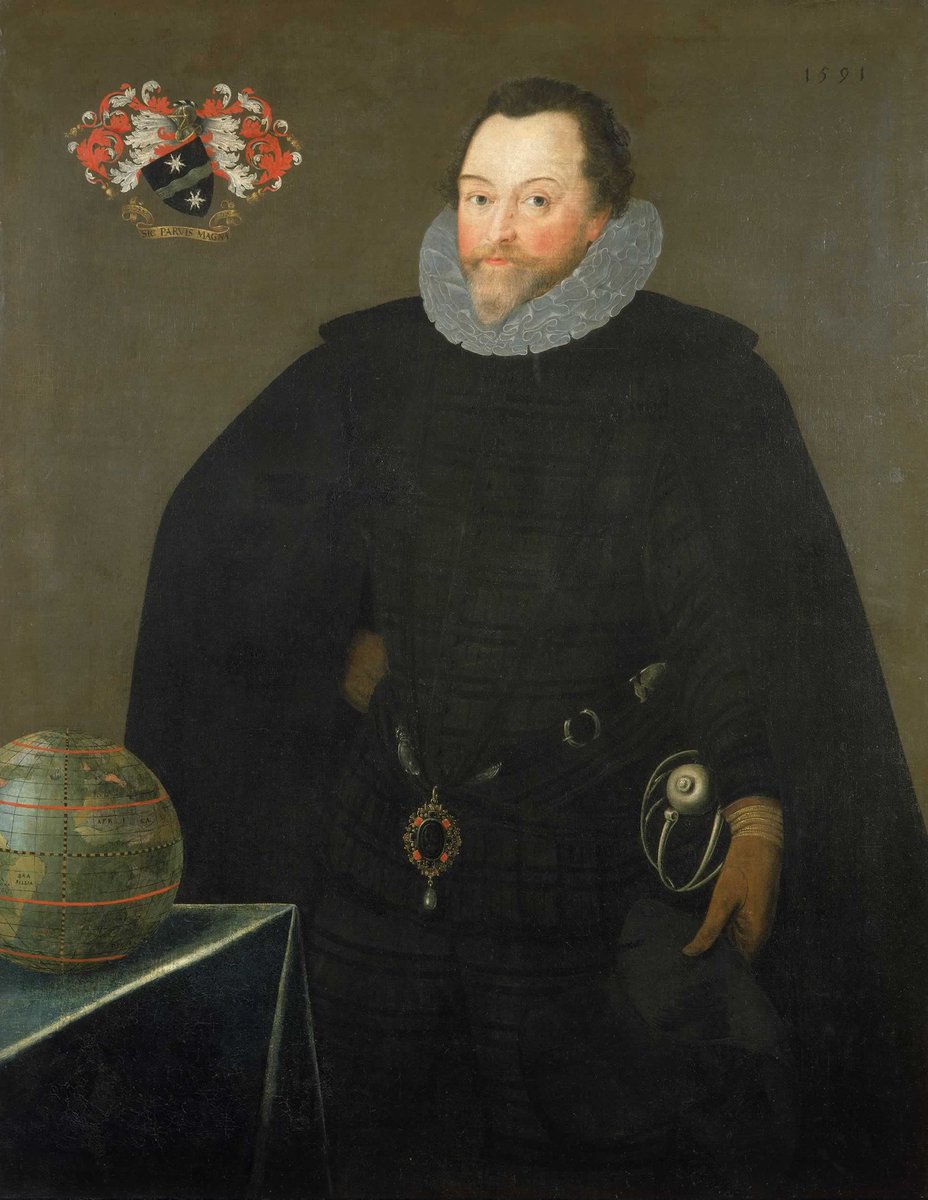
Sir Henry Morgan was a buccaneer operating out of Port Royal in the 17th century.
His legendary raids on the Spanish Main earned him the nickname "King of Buccaneers"
This is his story...
A thread 🧵
His legendary raids on the Spanish Main earned him the nickname "King of Buccaneers"
This is his story...
A thread 🧵

Morgan's background is a bit obscure, his exact birthplace is unknown, but best guess is he was born in 1635 near Llanrumney (Cardiff).
We are also not sure when he arrived in the New World but it was likely with Cromwell's forces in 1654.
We are also not sure when he arrived in the New World but it was likely with Cromwell's forces in 1654.

Morgan was likely part of the force that took possession of Jamaica for England.
Here he married his higher born cousin Mary Morgan, giving him an in with the landed gentry on Jamaica.
Here he married his higher born cousin Mary Morgan, giving him an in with the landed gentry on Jamaica.
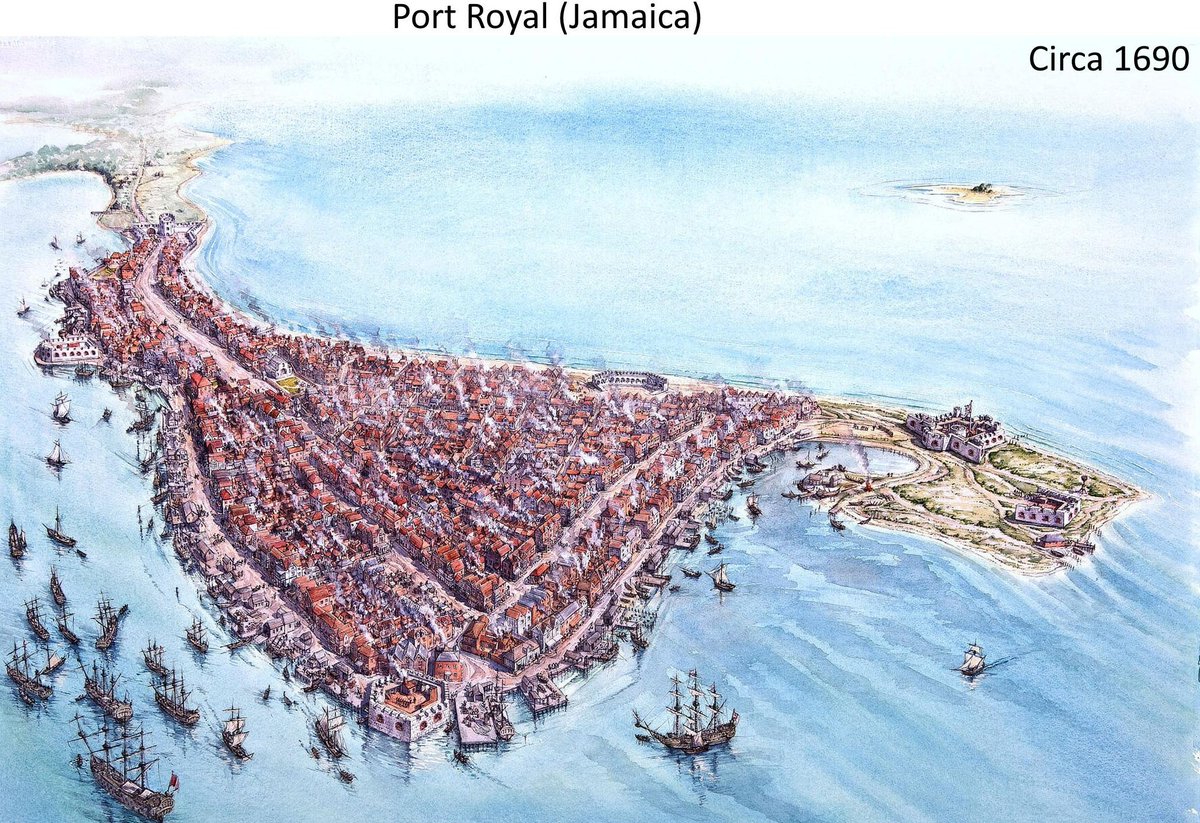
Jamaica, particularly Port Royal, was a base of operations for buccaneers, privateers and pirates alike.
It was a place where the men could sell their ill gotten lot, share tales of adventure and hatch daring new plans.
It was a place where the men could sell their ill gotten lot, share tales of adventure and hatch daring new plans.
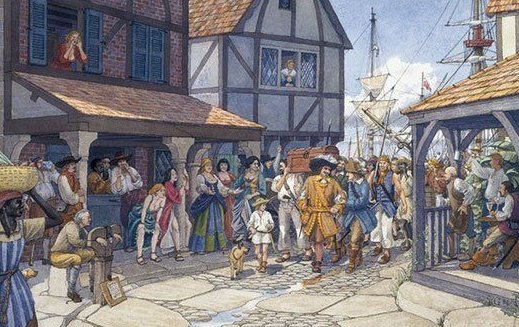
Morgan's stock was rising, and he was soon made commander of a Buccaneer force.
He led attacks against the Spanish at Puerto Príncipe.
His greatest hour came in 1668 at the storming of Portobelo on the Isthmus of Panama...
He led attacks against the Spanish at Puerto Príncipe.
His greatest hour came in 1668 at the storming of Portobelo on the Isthmus of Panama...
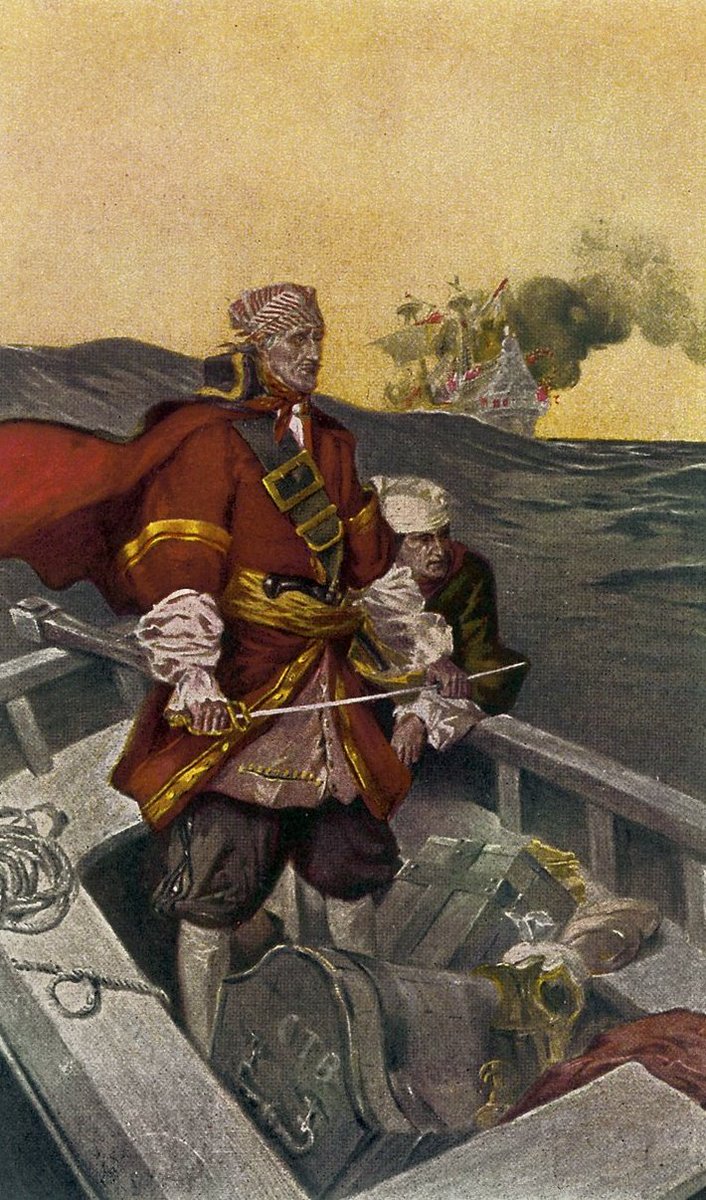
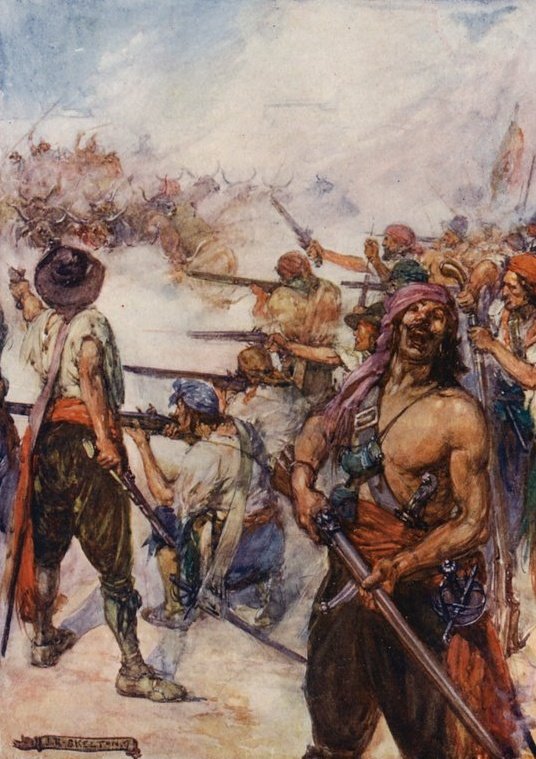
Morgan at the head of some 500 men snuck overland through the dense Panamanian jungle to the fortified settlement.
The Spanish garrison were expecting that any attack would come from the sea, so they were caught off guard and the settlement was took with ease.
The Spanish garrison were expecting that any attack would come from the sea, so they were caught off guard and the settlement was took with ease.

According to eyewitness Alexandre Exquemelin the fighting and treatment of the Spanish civilians was brutal and barbaric.
Morgan denied this and later sued, the claim was eventually redacted from Exquemelin's "Buccaneers of America".
Morgan denied this and later sued, the claim was eventually redacted from Exquemelin's "Buccaneers of America".
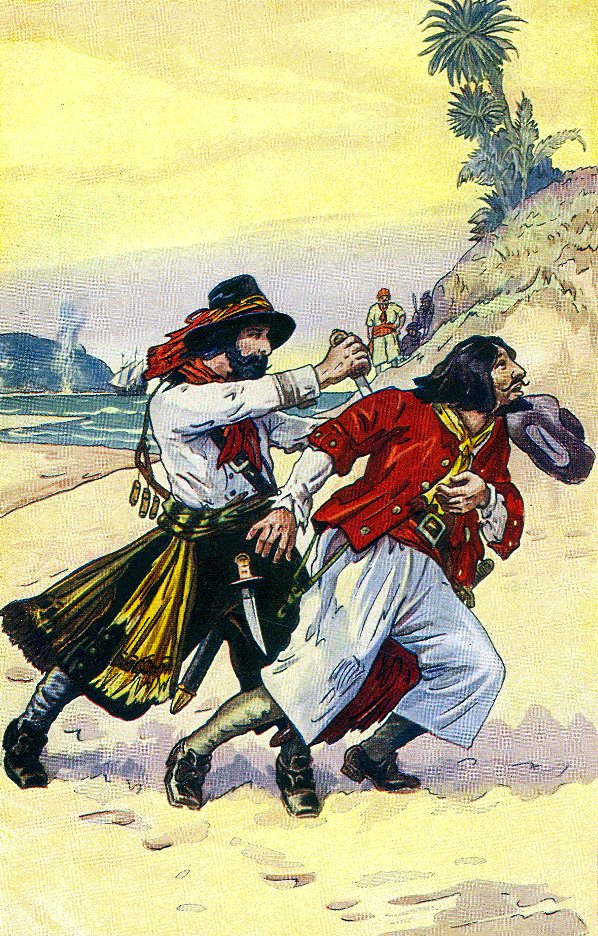
The raid on Portobelo came with a ransom of 100,000 pesos worth of gold and silver.
An enormous sum for age, even when divided between the 500 men.
An enormous sum for age, even when divided between the 500 men.
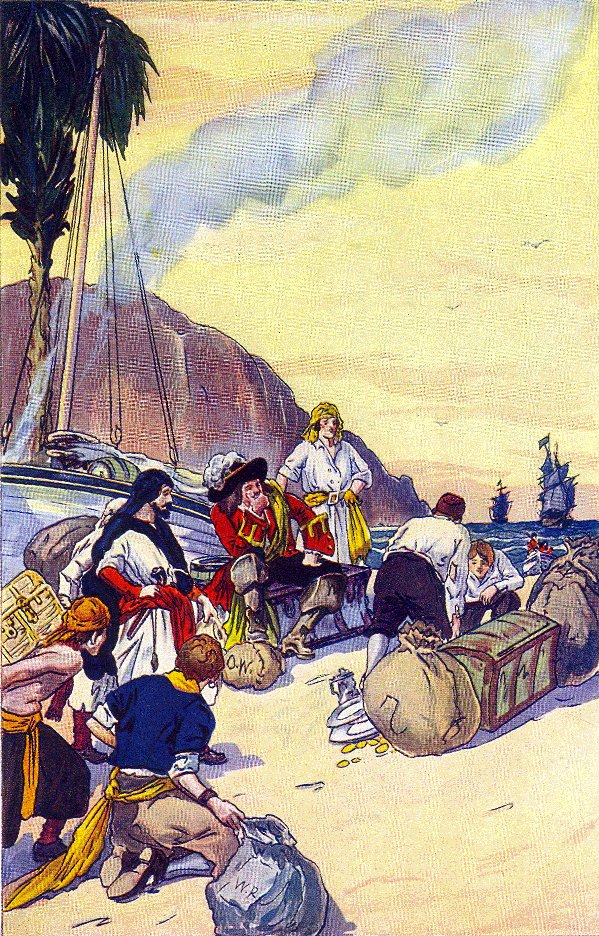
Henry Morgan was an excellent military leader.
He was creative with his attacks often catching the Spanish off guard.
The best example of his ingenuity came at Lake Maracaibo.
Here Morgan found himself outgunned and outmanned with a Spanish flotilla blocking his exit...
He was creative with his attacks often catching the Spanish off guard.
The best example of his ingenuity came at Lake Maracaibo.
Here Morgan found himself outgunned and outmanned with a Spanish flotilla blocking his exit...

Morgan outfitted a ship with planks of wood standing upright on deck adorned with hats.
This was to make the Spanish believe that the vessel was fully crewed.
Unbeknownst to the Spanish the lower decks were flooded with gunpowder and explosives.
This was to make the Spanish believe that the vessel was fully crewed.
Unbeknownst to the Spanish the lower decks were flooded with gunpowder and explosives.
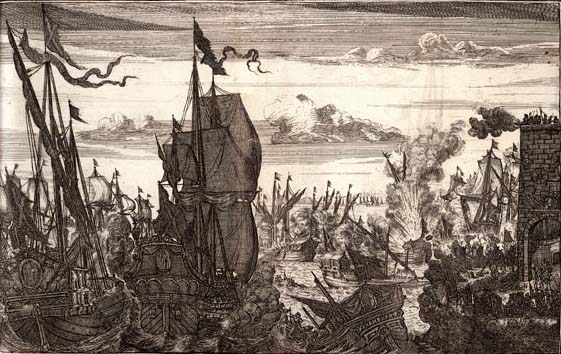
As the ship approached the Spanish line it exploded sowing chaos.
Morgan and his men had the opportunity to not only escape, but to actually capture one of the vessels.
Morgan and his men had the opportunity to not only escape, but to actually capture one of the vessels.
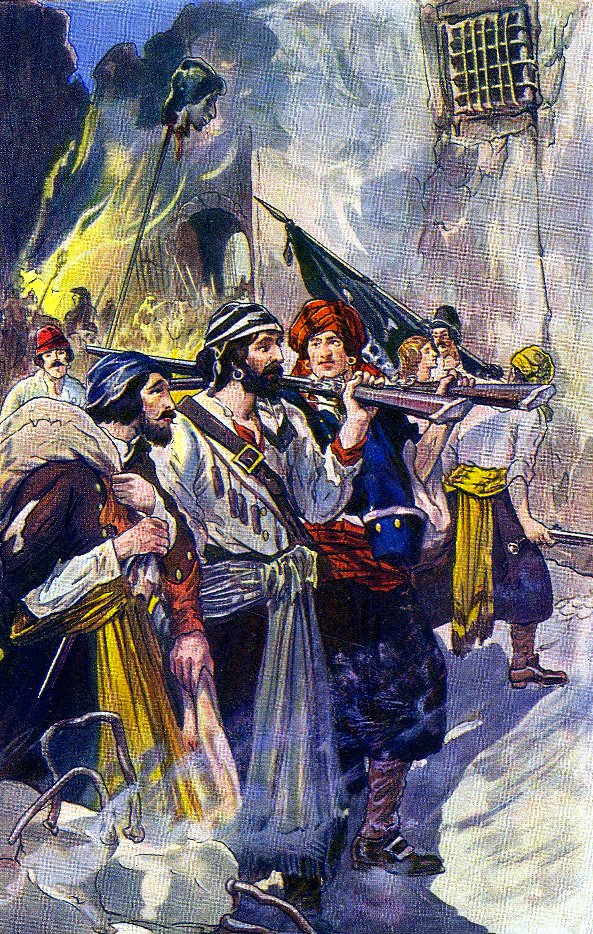
However his attacks, particularly at Panama, landed him in hot water.
In 1672, the geopolitical situation had once again changed, now the English were keen to appease the Spanish and keep the peace.
Therefore Morgan was apprehended and shipped him back to London.
In 1672, the geopolitical situation had once again changed, now the English were keen to appease the Spanish and keep the peace.
Therefore Morgan was apprehended and shipped him back to London.
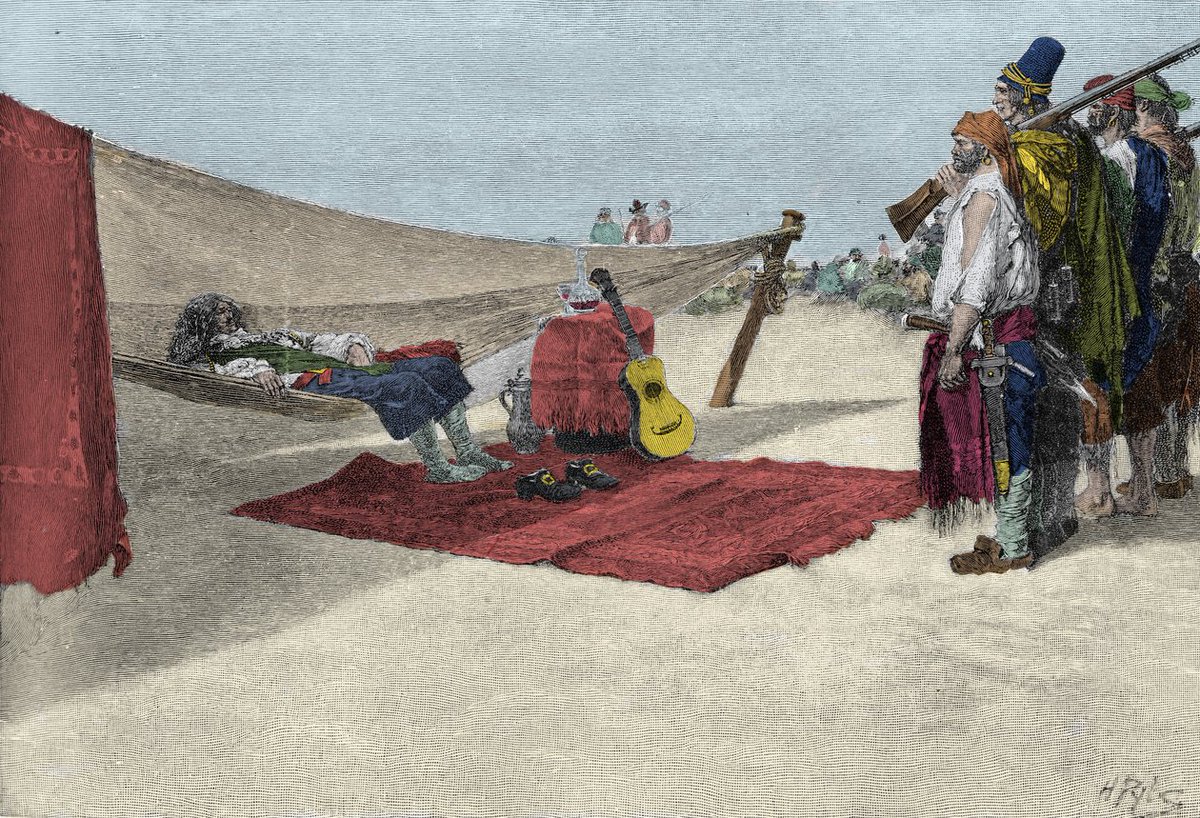
Due to his status as something of a folk hero it doesn't appear he spent any real time behind bars.
The Spanish must have been appalled when a couple of years later Morgan was Knighted by King Charles II and sent back to Jamaica back to Port Royal as Lieutenant Governor.
The Spanish must have been appalled when a couple of years later Morgan was Knighted by King Charles II and sent back to Jamaica back to Port Royal as Lieutenant Governor.

Here it appears he cleaned up his act somewhat and even attempted to stamp out some of the piratical actions of his former friends.
He instead focused on his sugar plantations, and spent the remainder of his days at the end of a bottle of rum.
He instead focused on his sugar plantations, and spent the remainder of his days at the end of a bottle of rum.
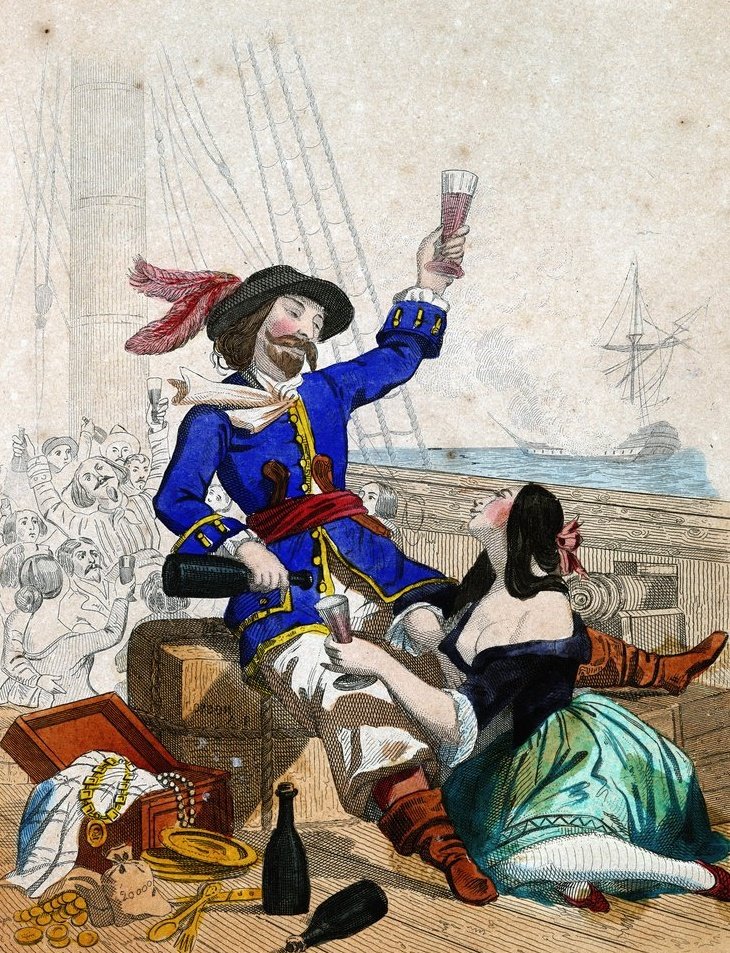
Morgan died on the 25th of August 1688 aged 52, likely from alcohol related illness.
He was, like many men of the age, a complex figure, at times brutal and barbaric at others charismatic and charming.
He is today immortalised as the face of Captain Morgans Rum.
He was, like many men of the age, a complex figure, at times brutal and barbaric at others charismatic and charming.
He is today immortalised as the face of Captain Morgans Rum.
• • •
Missing some Tweet in this thread? You can try to
force a refresh