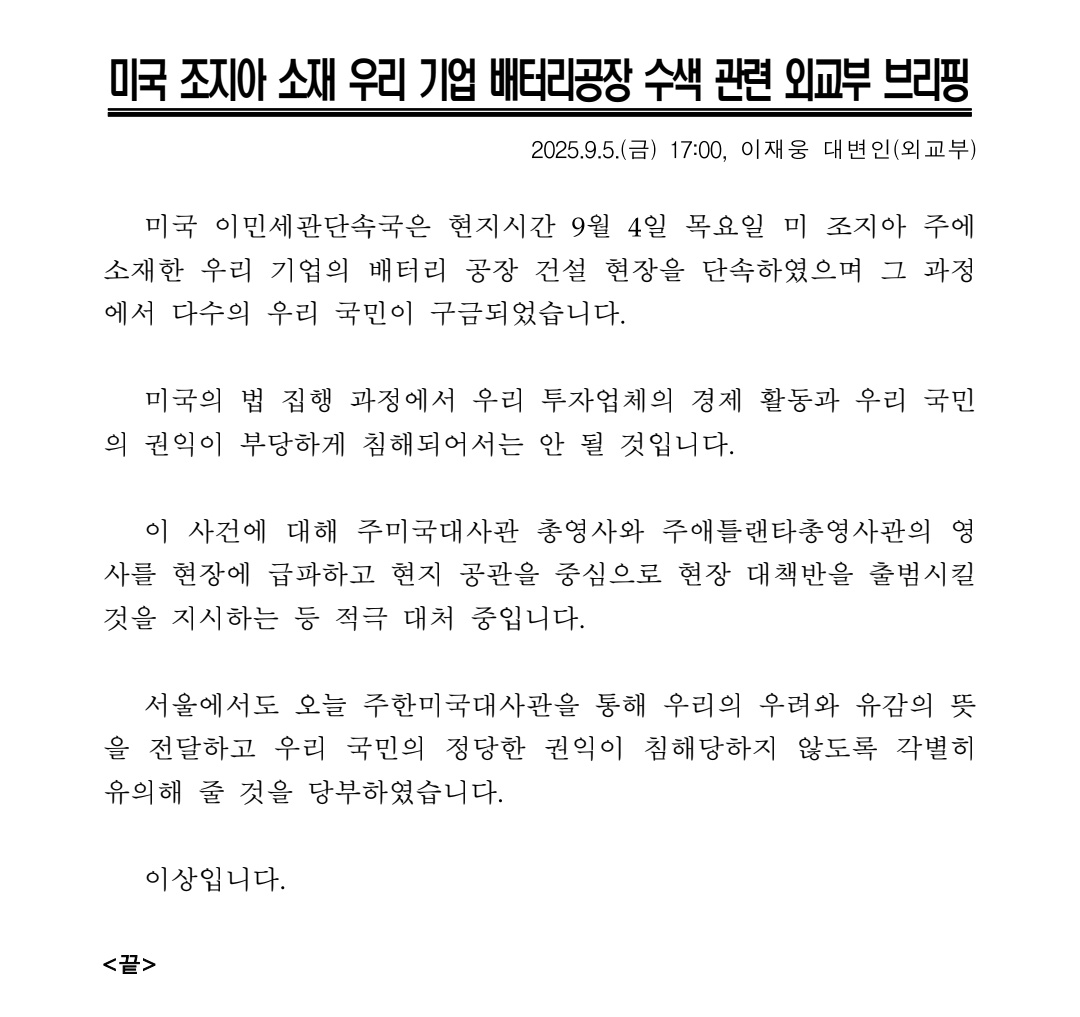
1/ Something that's not being reported much re: ICE crackdown at Hyundai-LG Georgia battery factory: Korean companies investing billions cannot get proper visas, are then criminalised for bringing skilled workers to fill gaps American labour cannot.
Sentiment is one of betrayal.
Sentiment is one of betrayal.
https://twitter.com/koryodynasty/status/1964288684204703870
2/ The language in local media is visceral.
Chosun Ilbo: "Built tens of trillions [KRW] factories for America... to then get slapped as illegal immigrants."
News1: "Told us to invest, then treated us as illegal immigrants." This isn't about law, it's about perceived duplicity.
Chosun Ilbo: "Built tens of trillions [KRW] factories for America... to then get slapped as illegal immigrants."
News1: "Told us to invest, then treated us as illegal immigrants." This isn't about law, it's about perceived duplicity.


3/ One of the core issues is that S. Korea has no country-reserved work visa. By contrast, Australia for instance gets E-3 (10,500/year) and Singapore/Chile get H-1B1 (5,400/1,400). Korea has neither, despite FTA status and massive investment commitments. koreatimes.co.kr/business/compa…
4/ The Partner with Korea Act, which would in theory allow specialty visas, has been repeatedly introduced in Congress, but never passed. This is seen as a must to facilitate even more Korean investment in batteries, semiconductors, and other industries.
csis.org/analysis/all-u…
csis.org/analysis/all-u…
5/ Then there's the cap on the highly competitive H-1B of 85,000 total (65k regular + 20k US master's). No per-country quotas. Processing takes months. Many construction trades don't qualify as "specialty occupations" requiring degrees.

6/ Another one: L1 and E2 visas for executives/investors have strict requirements. B1 business visas technically allow meetings/training but authorities now consider this "illegal employment." ESTA tourist waivers are 90-day maximum, no work permitted.
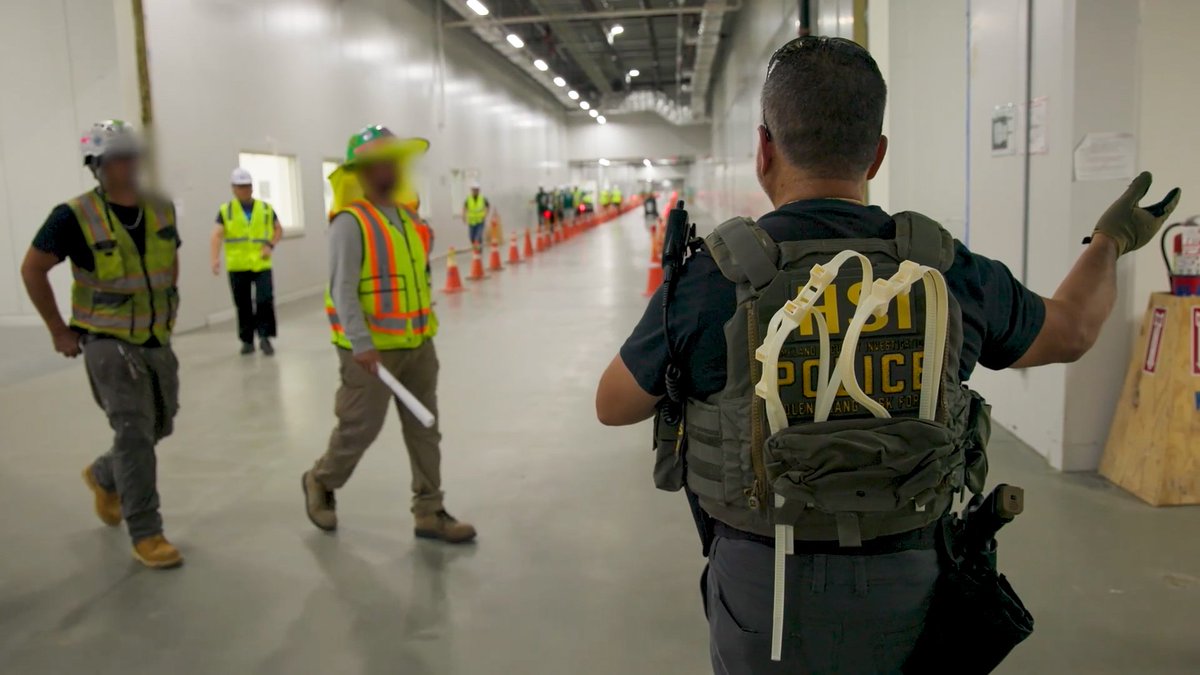
7/ Crackdown is clearly to increase American employment. Chosun Ilbo quotes a Korean construction official: "It's impossible to meet construction deadlines with only Americans. We have no choice but to urgently dispatch our technicians to solve problems." chosun.com/economy/indust…
8/ Same source continues: "They tell us to invest but won't give visas for essential personnel, I don't know what they expect us to do." This basically encapsulates the impossible situation Korean companies say they are facing. chosun.com/economy/indust…
9/ News1 reports the practical problem: "To send skilled experts on H-1B visas takes months, but construction sites need personnel constantly. We have no choice but to rely on short-term visas like ESTA." v.daum.net/v/202509061207…
10/The skills gap is real.
Chosun Ilbo describes finding qualified local workers as "like picking stars from the sky."
News1 too notes that local workers simply cannot build semiconductor, battery, or shipbuilding factories. v.daum.net/v/202509061207…
Chosun Ilbo describes finding qualified local workers as "like picking stars from the sky."
News1 too notes that local workers simply cannot build semiconductor, battery, or shipbuilding factories. v.daum.net/v/202509061207…
11/ This isn't new. In 2020, SK Innovation faced identical issues: 33 Koreans expelled at Atlanta airport, 13 more arrested later for ESTA violations at Georgia battery plant. Korean companies say the visa system creates recurring impossible situations. ajc.com/news/immigrati…
12/ "Visa terror" is now reportedly spreading through Korean communities in America. Even legal residents are reportedly avoiding travel, fearing they won't return. chosun.com/international/…
13/ This is all happening right after President Lee Jae Myung's meeting with Trump the other day and Korean firms pledging $150bn in US investments on top of the country's earlier pledge to invest $350bn. en.yna.co.kr/view/AEN202508…
14/ This factory was Biden's showcase project proving his economic policies worked. Trump now undermines it while simultaneously demanding the investments that created it. hankyung.com/article/202509…
15/ One executive reportedly said, "It's not that we're trying to steal American jobs, but that we want to quickly build factories to hire locally, yet the reward for such efforts is being treated as 'illegal immigrants', it's deflating."
chosun.com/economy/indust…
chosun.com/economy/indust…
16/ The structural contradiction: America demands massive foreign investment for "Made in America" but makes it nearly impossible to bring highly skilled workers needed to deliver those investments.
https://x.com/koryodynasty/status/1963904796814881056
17/ South Korean President Lee Jae Myung ordered all-out efforts to respond to the arrest. Foreign Minister Cho Hyun says he's willing to travel to Washington personally if necessary, expressing "heavy responsibility" over the arrests. reuters.com/world/asia-pac…
18/ FM Cho says he and his ministry will continue to do everything possible to resolve this issue as soon as possible.
https://x.com/FMChoHyun/status/1964279229983674640
19/ Finally, perhaps a small disclaimer: This thread is not to assess the specific visa status or legal situation of those detained, but rather to highlight the broader structural/systematic issues that have frustrated Korean companies for years.
• • •
Missing some Tweet in this thread? You can try to
force a refresh