🚨 Day Long Repeating Gamma Ray Burst From Beyond The Milky Way
Astronomers have spotted a gamma-ray burst that pulsed multiple times over 24 hours.
Nothing like this has been seen in 50 years of GRB research. Big telescopes (VLT, Hubble, JWST) are on it.🧵👇
Astronomers have spotted a gamma-ray burst that pulsed multiple times over 24 hours.
Nothing like this has been seen in 50 years of GRB research. Big telescopes (VLT, Hubble, JWST) are on it.🧵👇
2/
On 2 July 2025, NASA’s Fermi telescope triggered on an unusually long-lived gamma ray signal that flared three times within hours. Follow ups showed the source had already been active the day before, seen by the Einstein Probe X-ray mission. That repeat behavior is wild, classic GRBs are one shot cataclysms.
On 2 July 2025, NASA’s Fermi telescope triggered on an unusually long-lived gamma ray signal that flared three times within hours. Follow ups showed the source had already been active the day before, seen by the Einstein Probe X-ray mission. That repeat behavior is wild, classic GRBs are one shot cataclysms.
3/
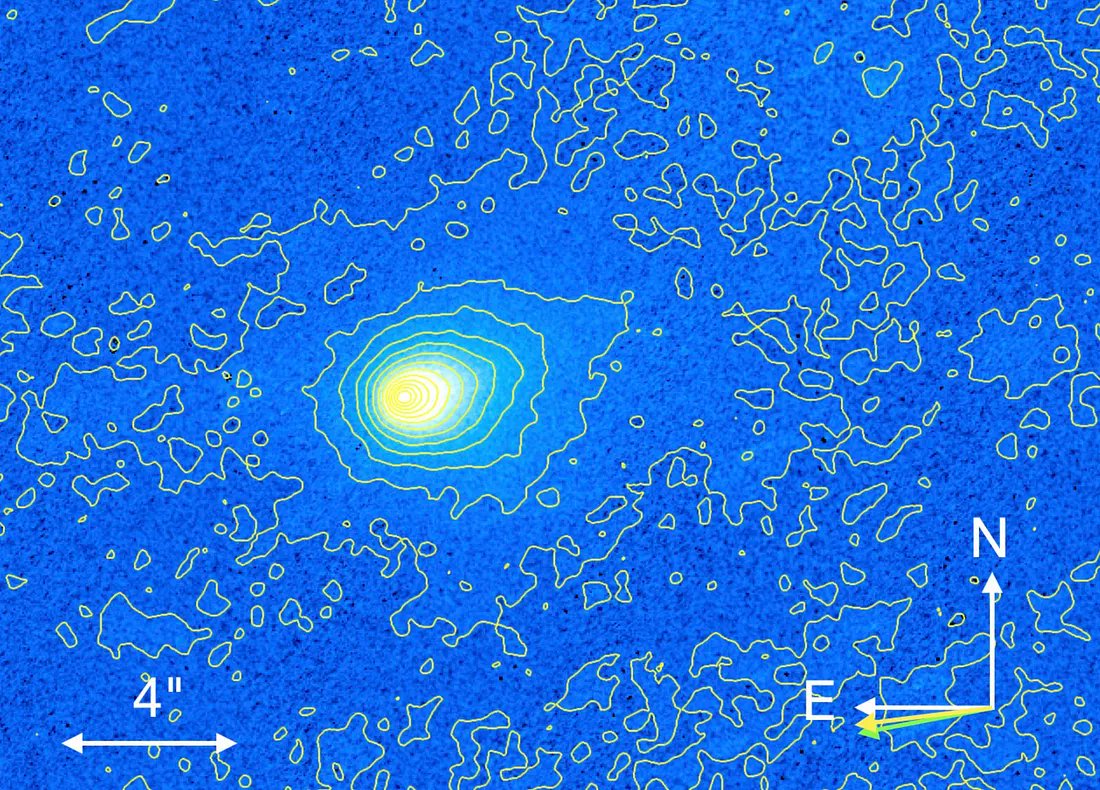
The initial alerts pointed near the crowded plane of our galaxy, but ESO’s Very Large Telescope (VLT) used its HAWK-I camera to pinpoint an external host galaxy. Hubble then confirmed it. Bottom line is this thing is extragalactic and more powerful than if it were local.
The initial alerts pointed near the crowded plane of our galaxy, but ESO’s Very Large Telescope (VLT) used its HAWK-I camera to pinpoint an external host galaxy. Hubble then confirmed it. Bottom line is this thing is extragalactic and more powerful than if it were local.
4/
GRBs usually last milliseconds to minutes and don’t repeat becuase the engine is destroyed. GRB 250702B ran roughly a day and pulsed. “Unlike any other seen in 50 years of GRB observations,” say the study leads.
GRBs usually last milliseconds to minutes and don’t repeat becuase the engine is destroyed. GRB 250702B ran roughly a day and pulsed. “Unlike any other seen in 50 years of GRB observations,” say the study leads.
5/
Authors favor a scenario where a white dwarf star was tidally shredded by an intermediate mass black hole (100–100,000× Sun’s mass). That could power a prolonged, repeating high-energy signal. But other models (extreme stellar collapse, exotic accretion) are still on the table.
Authors favor a scenario where a white dwarf star was tidally shredded by an intermediate mass black hole (100–100,000× Sun’s mass). That could power a prolonged, repeating high-energy signal. But other models (extreme stellar collapse, exotic accretion) are still on the table.
6/
The putative host looks like a galaxy a few billion light years away (exact distance pending spectra). If so, the energy output is enormous even by GRB standards.
The putative host looks like a galaxy a few billion light years away (exact distance pending spectra). If so, the energy output is enormous even by GRB standards.
7/
As we speak, teams are tracking the fading afterglow with VLT/X-shooter and JWST to nail down the redshift, environment, and any supernova/TDE-like signatures. Those data will make or break the competing models.
As we speak, teams are tracking the fading afterglow with VLT/X-shooter and JWST to nail down the redshift, environment, and any supernova/TDE-like signatures. Those data will make or break the competing models.
8/
Why you should care...
New class of cosmic explosion? If confirmed, 250702B opens a third pathway to GRB-like transients.
Missing link black holes: Intermediate mass black holes are notoriously hard to catch, this could be a rare signpost.
Multi-mission win: Fermi + Einstein Probe + VLT + Hubble (+ JWST) show how global, cross agency astronomy cracks mysteries fast.
Why you should care...
New class of cosmic explosion? If confirmed, 250702B opens a third pathway to GRB-like transients.
Missing link black holes: Intermediate mass black holes are notoriously hard to catch, this could be a rare signpost.
Multi-mission win: Fermi + Einstein Probe + VLT + Hubble (+ JWST) show how global, cross agency astronomy cracks mysteries fast.
9/
What to watch next:
A precise redshift from spectra (distance = power).
Late-time light behavior: does it match tidal disruption event physics?
Any radio or infrared surprises that point to a novel engine.
What to watch next:
A precise redshift from spectra (distance = power).
Late-time light behavior: does it match tidal disruption event physics?
Any radio or infrared surprises that point to a novel engine.
10/
GRB 250702B is a day long, repeating, extragalactic gamma ray explosion with no perfect match in current playbooks. That’s the fun part, we might be watching a brand new kind of cosmic outburst come into focus.
#GRB250702B #GammaRayBurst #Astronomy #BlackHole #TDE #ESO #VLT #Hubble #JWST #Fermi #EinsteinProbe #Space
GRB 250702B is a day long, repeating, extragalactic gamma ray explosion with no perfect match in current playbooks. That’s the fun part, we might be watching a brand new kind of cosmic outburst come into focus.
#GRB250702B #GammaRayBurst #Astronomy #BlackHole #TDE #ESO #VLT #Hubble #JWST #Fermi #EinsteinProbe #Space
• • •
Missing some Tweet in this thread? You can try to
force a refresh