49 BC.
Julius Caesar stood on the banks of a small river in northern Italy.
The Rubicon.
To cross it meant civil war. To stay meant surrender.
What followed would change Rome forever. 🧵
Julius Caesar stood on the banks of a small river in northern Italy.
The Rubicon.
To cross it meant civil war. To stay meant surrender.
What followed would change Rome forever. 🧵

How did it come to this?
For years, Caesar had risen through the ranks: brilliant general, ruthless politician, master manipulator.
He conquered Gaul, won riches, and secured loyalty from his legions.
But back in Rome, the Senate grew fearful.
For years, Caesar had risen through the ranks: brilliant general, ruthless politician, master manipulator.
He conquered Gaul, won riches, and secured loyalty from his legions.
But back in Rome, the Senate grew fearful.

The Senate, led by Pompey, once Caesar’s ally, ordered him to disband his army and return as a private citizen.
Without his legions, Caesar would be defenseless.
Trials for corruption and loss of power awaited.
It was checkmate.
Unless Caesar broke the rules.
Without his legions, Caesar would be defenseless.
Trials for corruption and loss of power awaited.
It was checkmate.
Unless Caesar broke the rules.
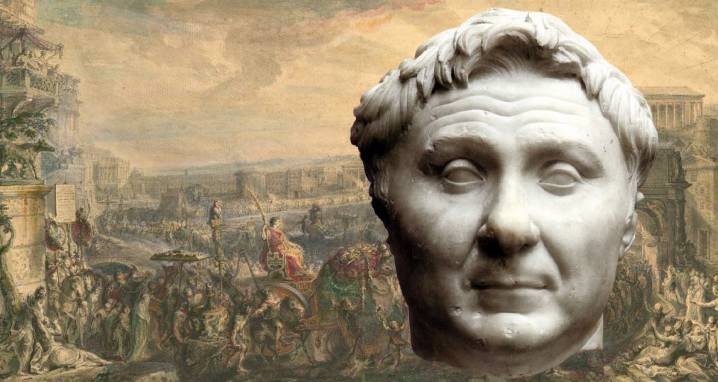
The Rubicon wasn’t just any stream.
Roman law forbade generals from crossing into Italy with legions.
It was the boundary between lawful command and open rebellion.
Cross it - and you declared war on the Republic.
Roman law forbade generals from crossing into Italy with legions.
It was the boundary between lawful command and open rebellion.
Cross it - and you declared war on the Republic.
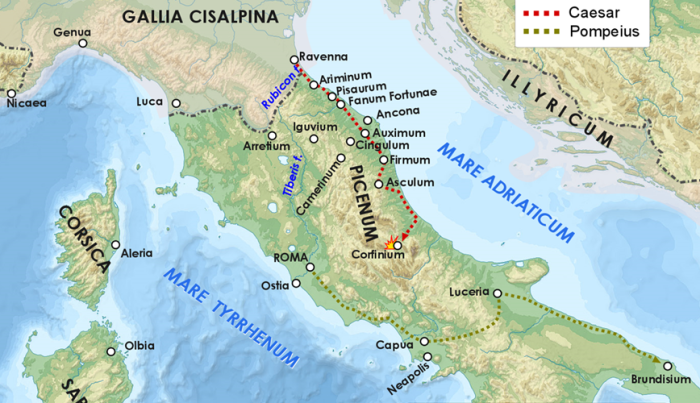
On the night of January 10th, 49 BC, Caesar hesitated.
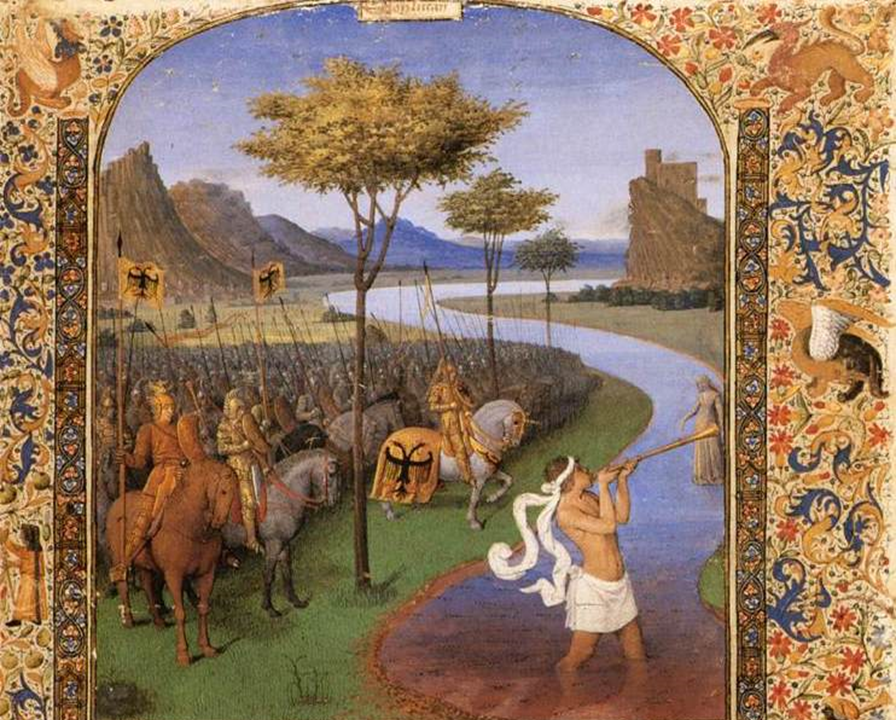
Ancient sources say he saw a vision of a giant figure playing a trumpet and urging Caesar to march across the river.
A sign from the gods?
Ancient sources say he saw a vision of a giant figure playing a trumpet and urging Caesar to march across the river.
A sign from the gods?
Finally, he made his choice.
According to Suetonius, Caesar uttered the words:
"Alea iacta est.”
“The die is cast.”
He spurred his horse forward.
The Rubicon was crossed.
According to Suetonius, Caesar uttered the words:
"Alea iacta est.”
“The die is cast.”
He spurred his horse forward.
The Rubicon was crossed.
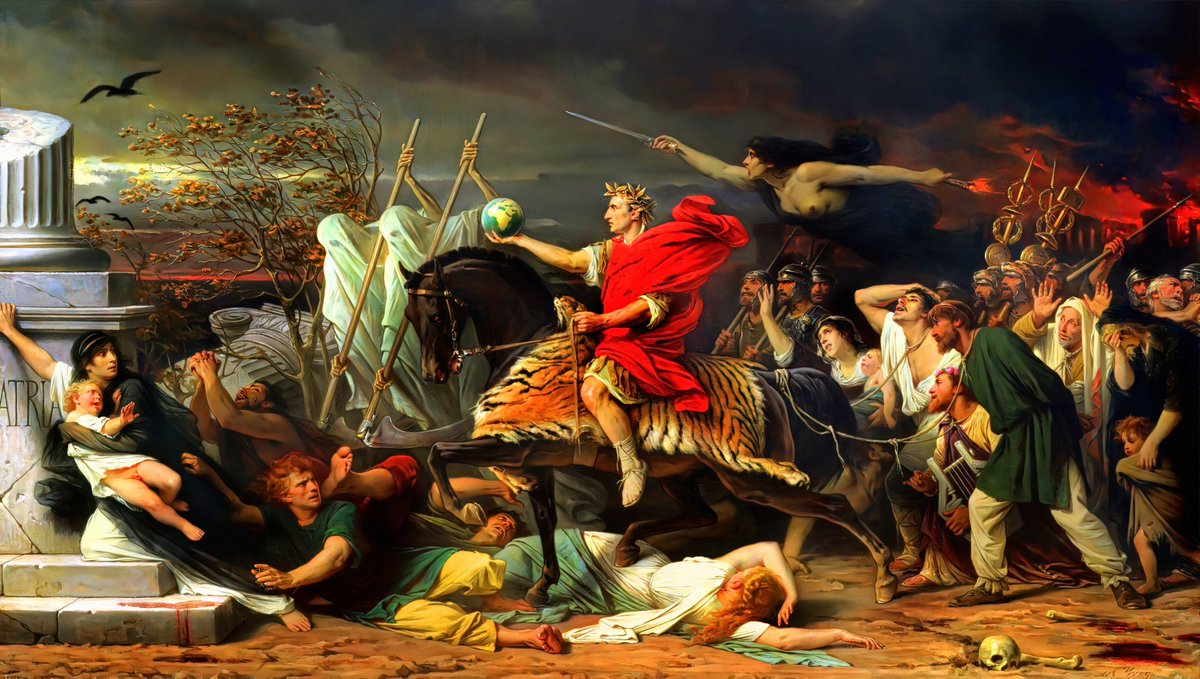
Word spread like wildfire.
Caesar’s men were loyal, battle-hardened, and adored him. They would follow him into hell.
The Senate panicked.
Pompey fled Rome. The city was abandoned without a fight.
The Republic was unraveling.
Caesar’s men were loyal, battle-hardened, and adored him. They would follow him into hell.
The Senate panicked.
Pompey fled Rome. The city was abandoned without a fight.
The Republic was unraveling.
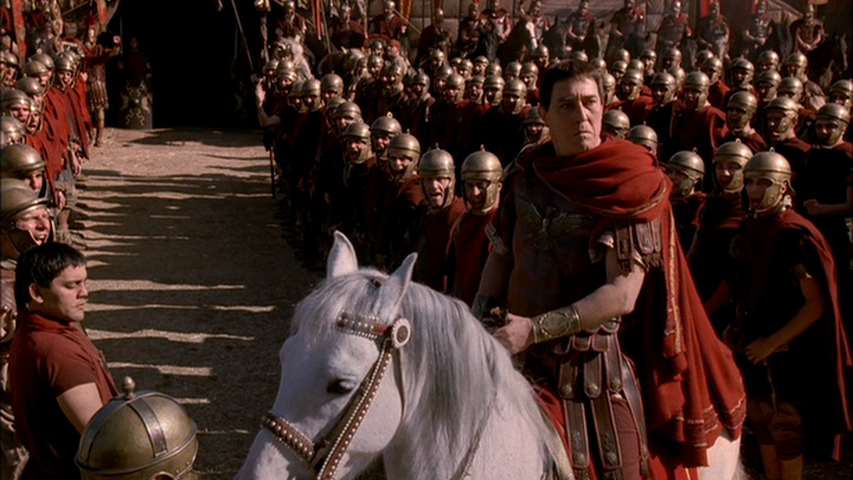
As Caesar marched south, he carefully framed the war not as rebellion, but as a fight against corruption and tyranny.
He claimed he fought for the people of Rome.
A masterstroke of propaganda.
He claimed he fought for the people of Rome.
A masterstroke of propaganda.
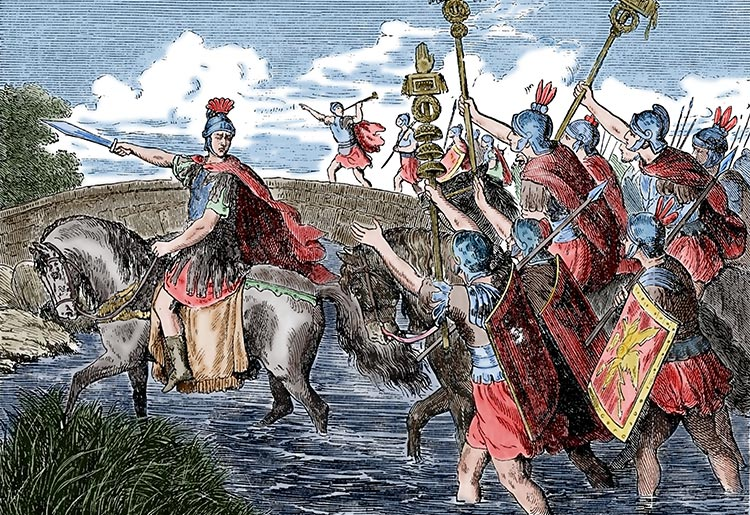
This wasn’t just a power grab.
It was the start of civil war.
Caesar vs. Pompey.
One-time allies, now bitter enemies.
The fate of the Republic was on the line.
It was the start of civil war.
Caesar vs. Pompey.
One-time allies, now bitter enemies.
The fate of the Republic was on the line.
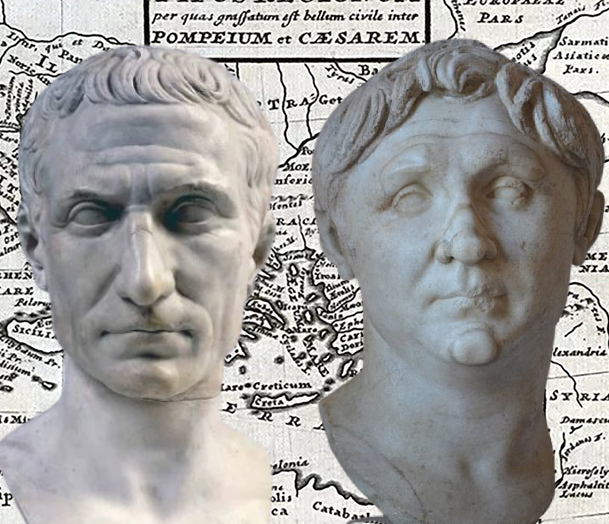
The gamble worked.
Caesar’s speed and boldness stunned his opponents.
Pompey abandoned Italy, retreating east to gather forces.
Caesar now controlled Rome.
The unthinkable had happened: the Republic’s laws meant nothing before one man’s ambition.
Caesar’s speed and boldness stunned his opponents.
Pompey abandoned Italy, retreating east to gather forces.
Caesar now controlled Rome.
The unthinkable had happened: the Republic’s laws meant nothing before one man’s ambition.
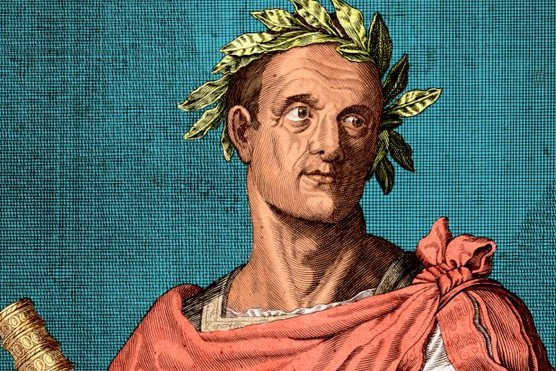
The Rubicon became more than a river.
It became a metaphor for the moment you pass the point of no return.
One small stream.
A single decision.
That brought down 500 years of the Roman Republic.
It became a metaphor for the moment you pass the point of no return.
One small stream.
A single decision.
That brought down 500 years of the Roman Republic.
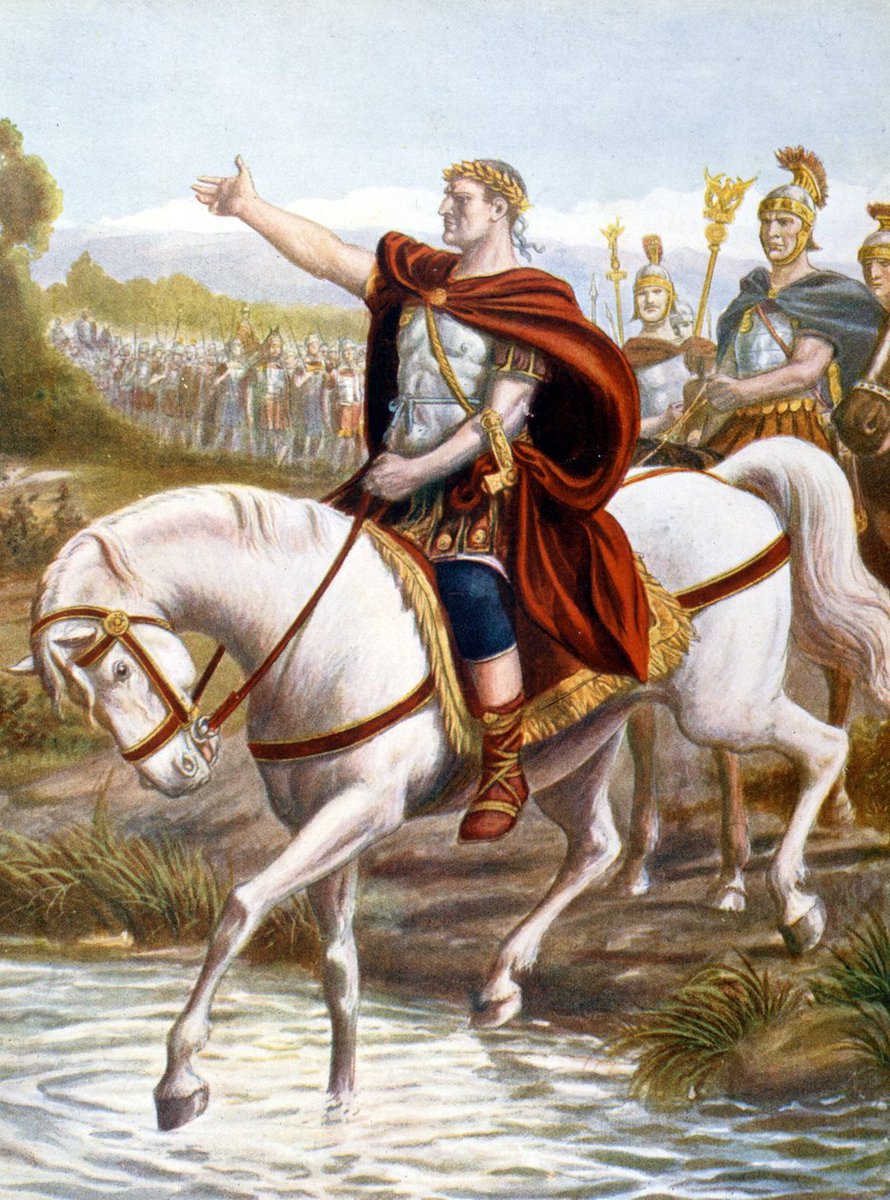
When Caesar crossed the Rubicon, he set in motion the chain of events that would crown him dictator, see him assassinated, and pave the way for Augustus and the Roman Empire.
Rome would never be the same.
The die was cast.
Finis.
Rome would never be the same.
The die was cast.
Finis.
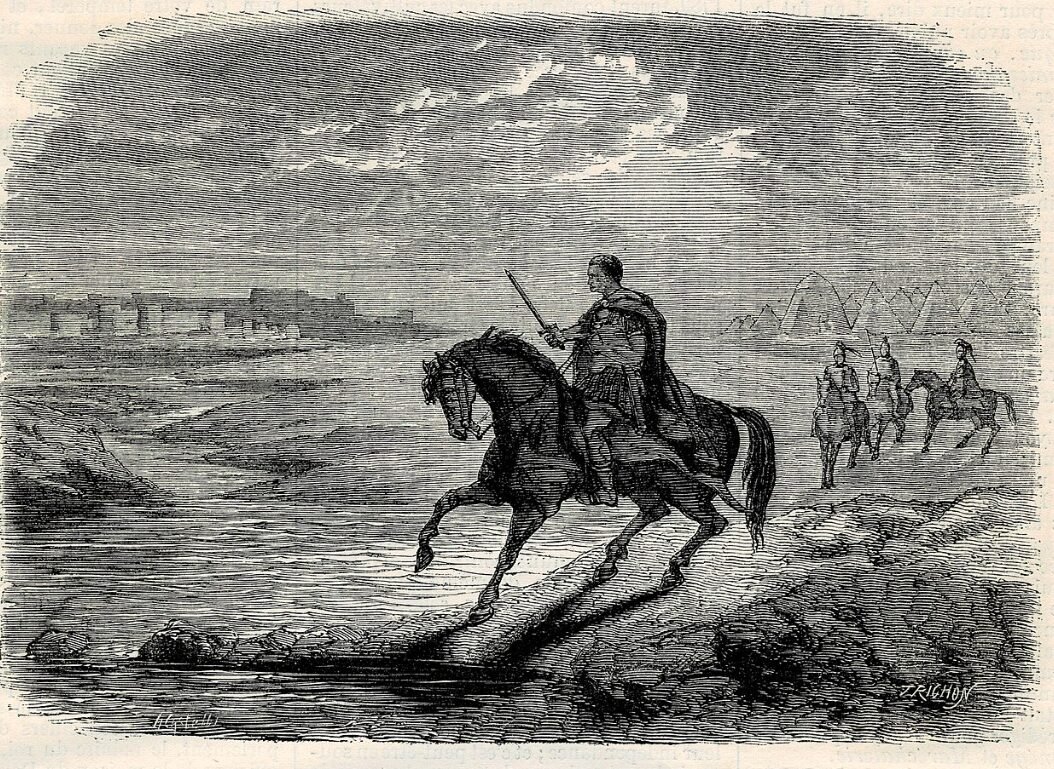
• • •
Missing some Tweet in this thread? You can try to
force a refresh