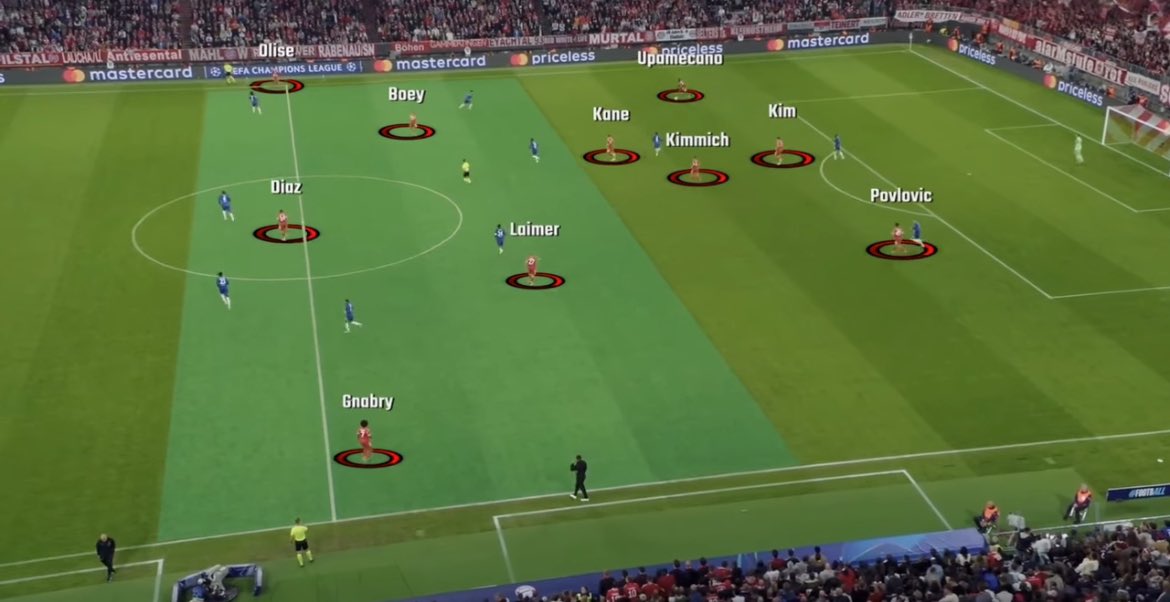
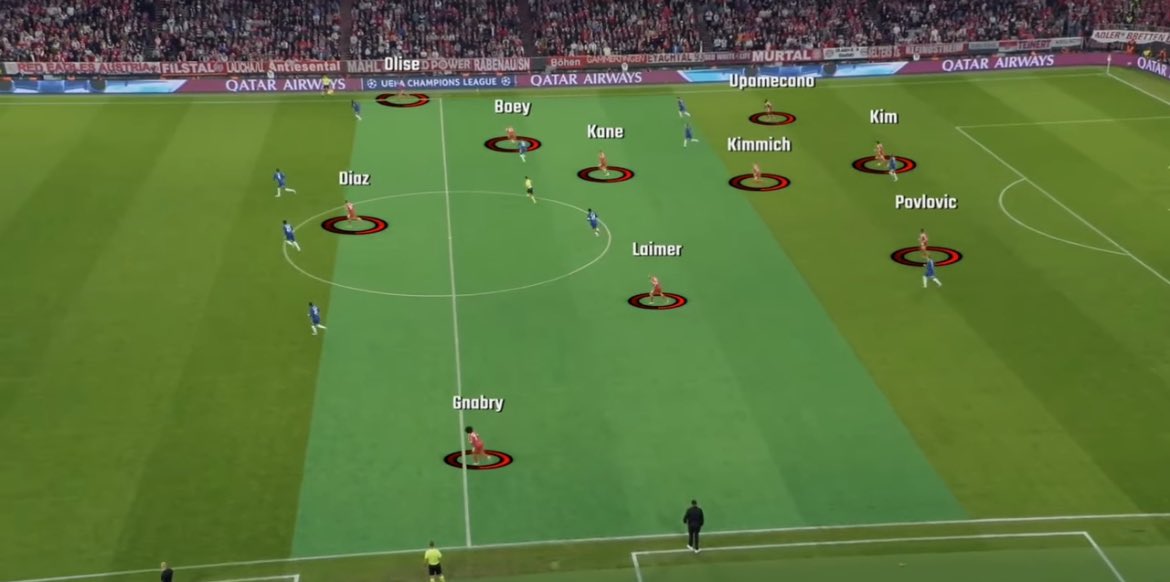
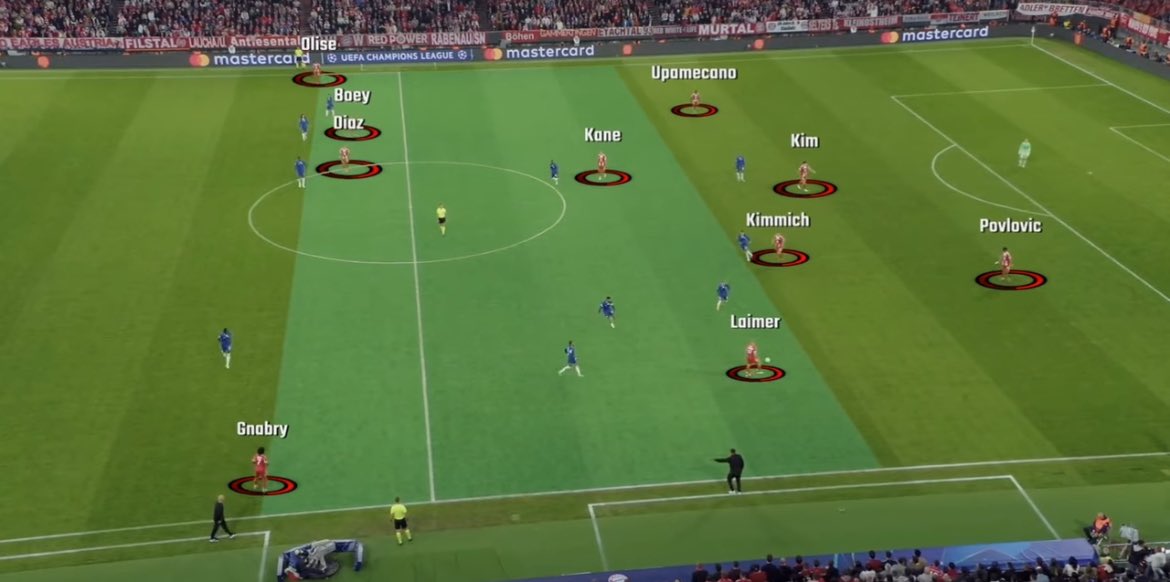
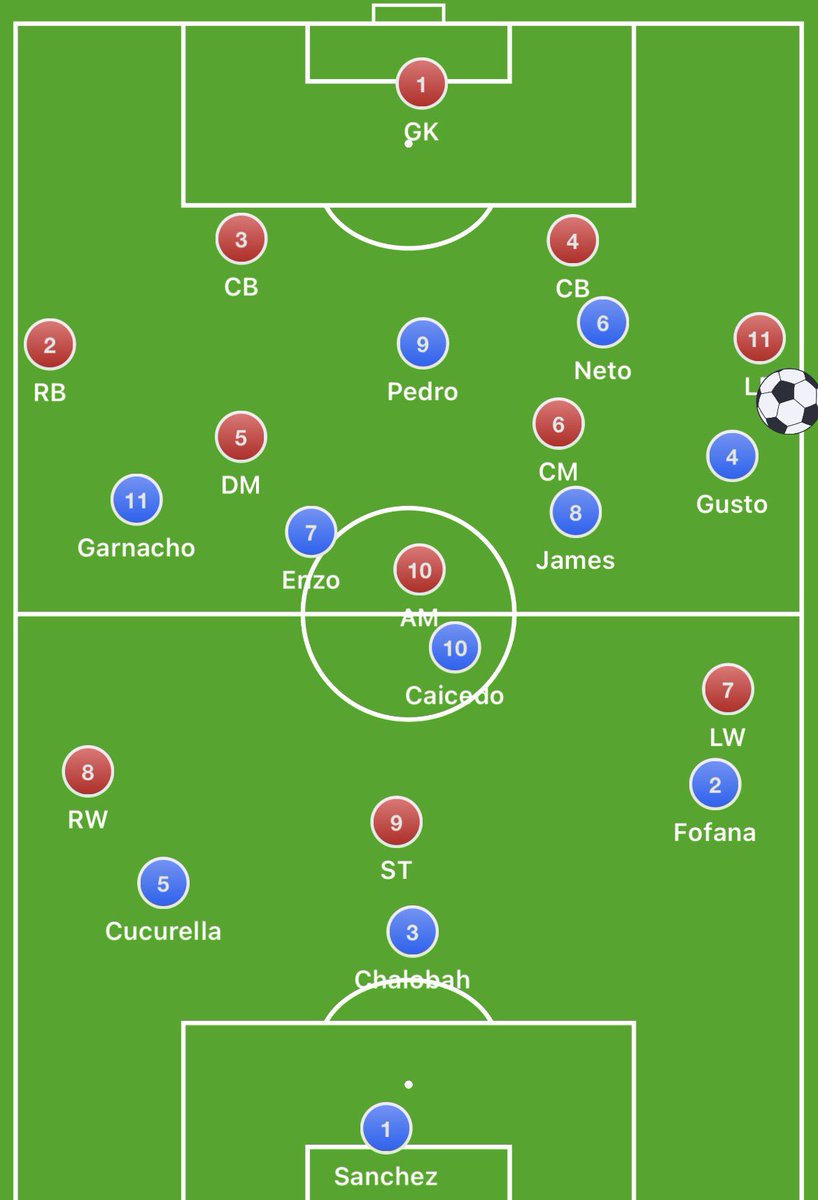
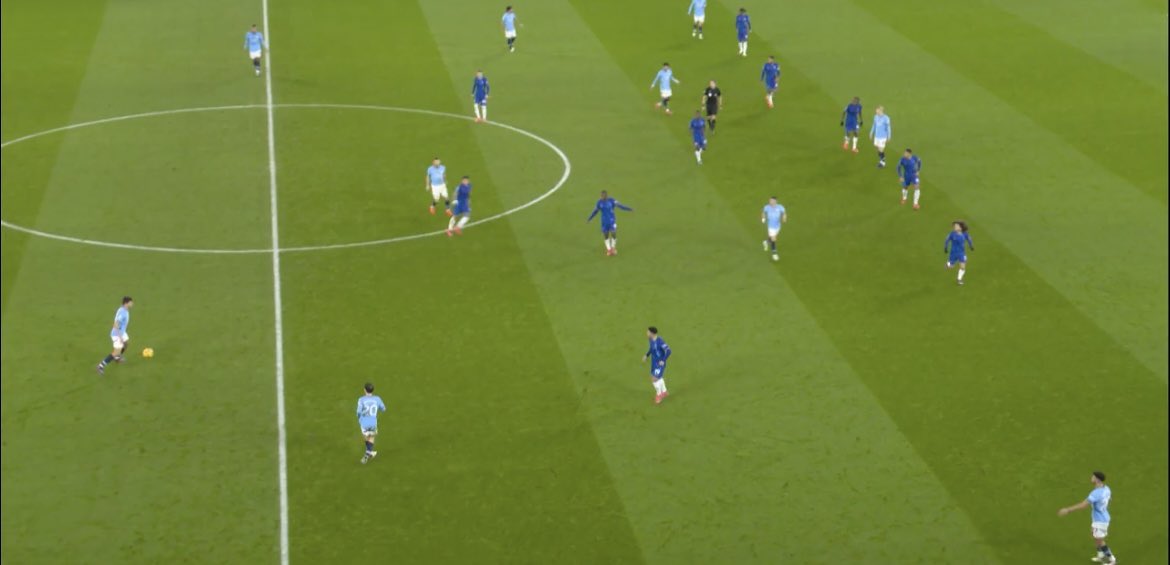
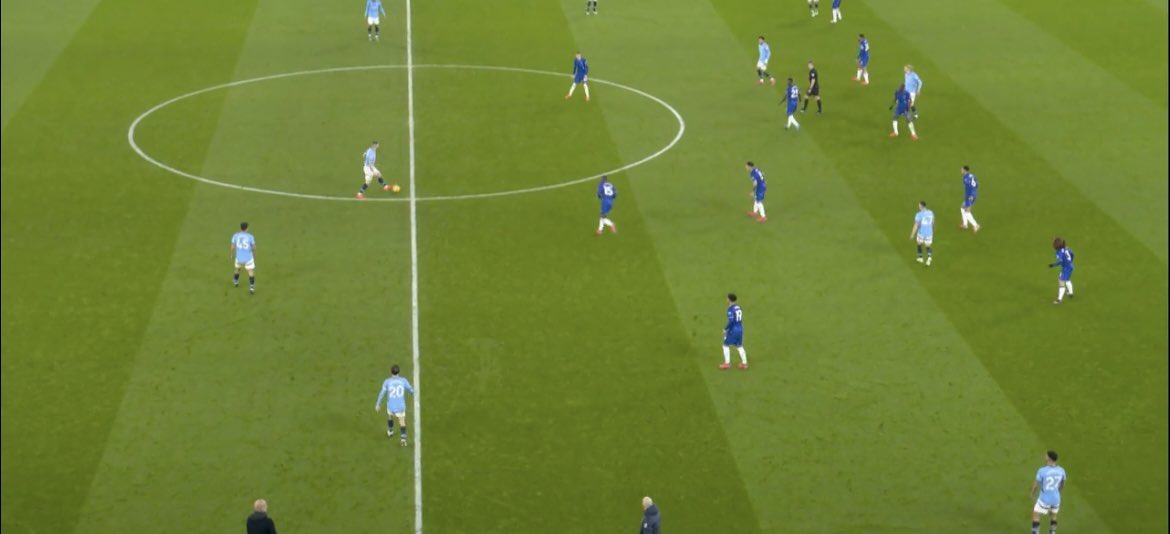
Bayern’s build up play was superb against us on Wednesday but I think there’s an area we could’ve improved on defensively, Chelsea tried to keep a +1 at the back whilst giving Bayern a +1 in their build up
(Screenshots from @Tactx_ whose video I’ll link at the end of the thread)
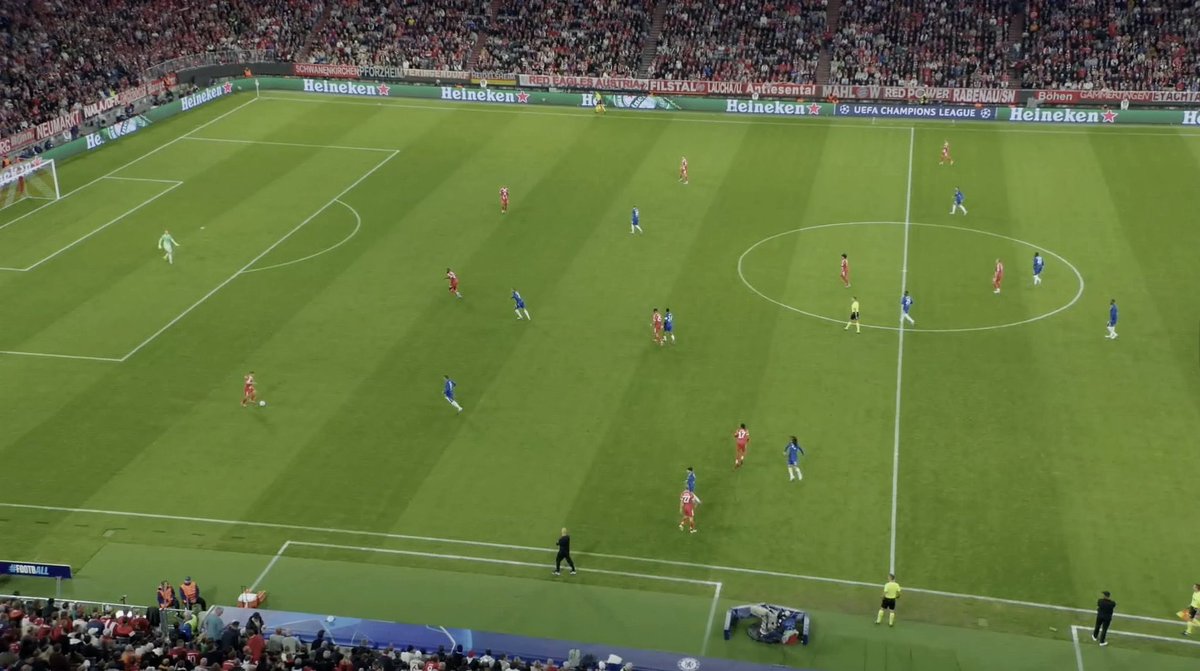
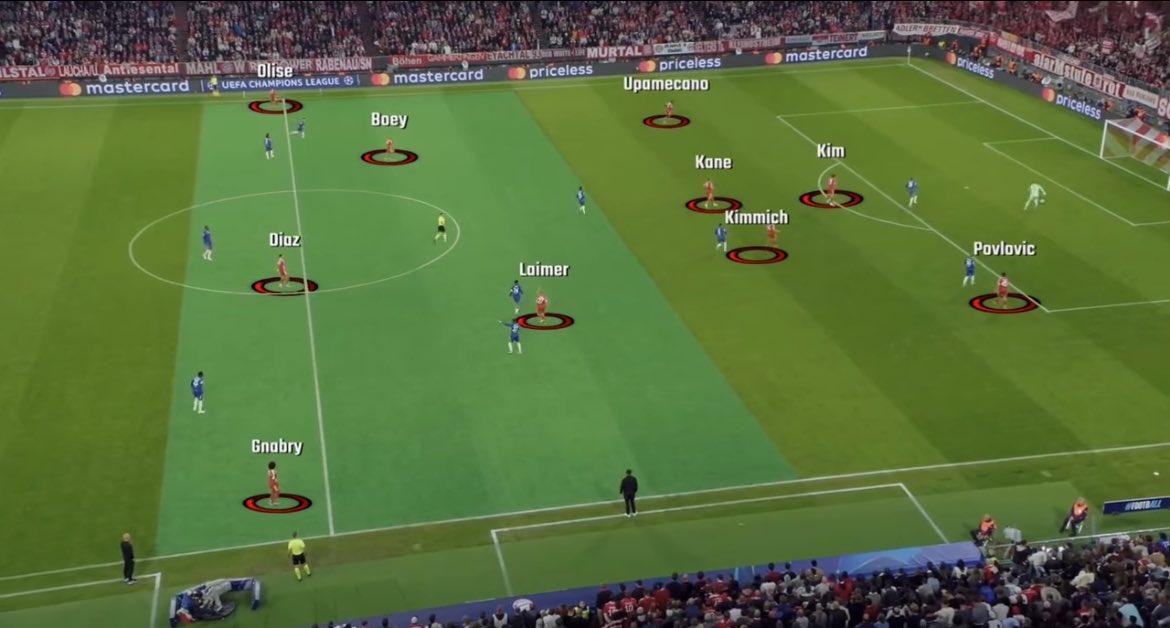
Bayern would look to constantly rotate players, mainly with Kimmich, Gnabry & Kane into deeper areas whilst others could look to attack space higher up which made it difficult for Chelsea players to decide on who to track
You can find more on this on the linked video at the end
But I think Chelsea could’ve done better when it came to recognising when the free player was going to be found & when to jump out to deny space
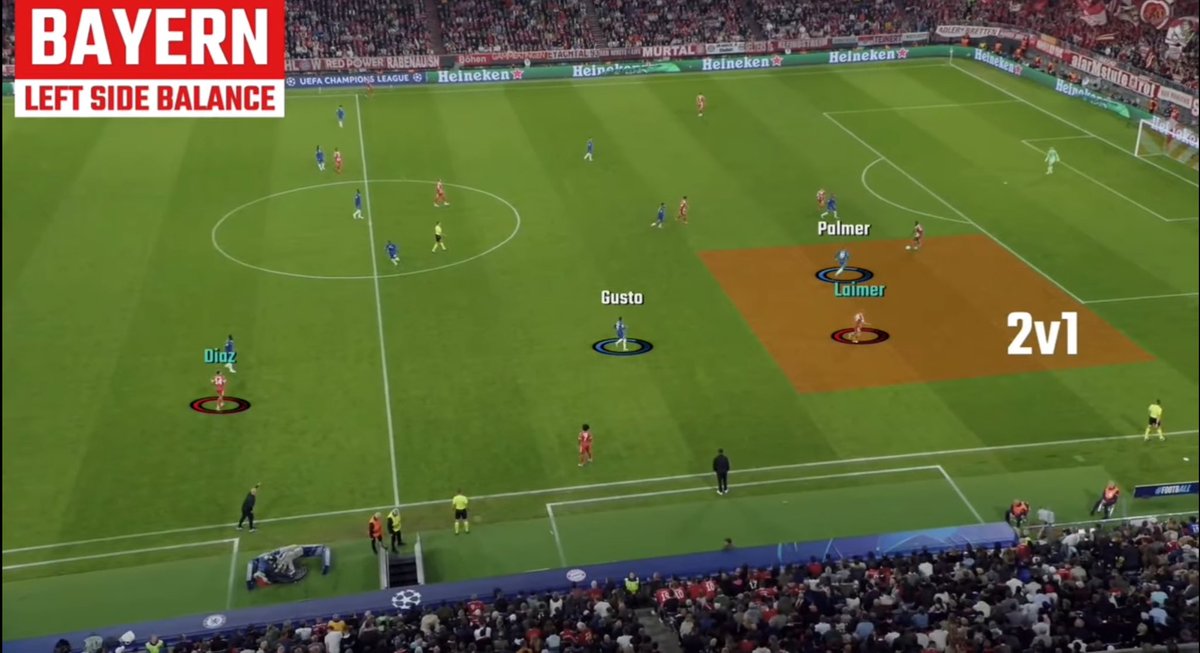
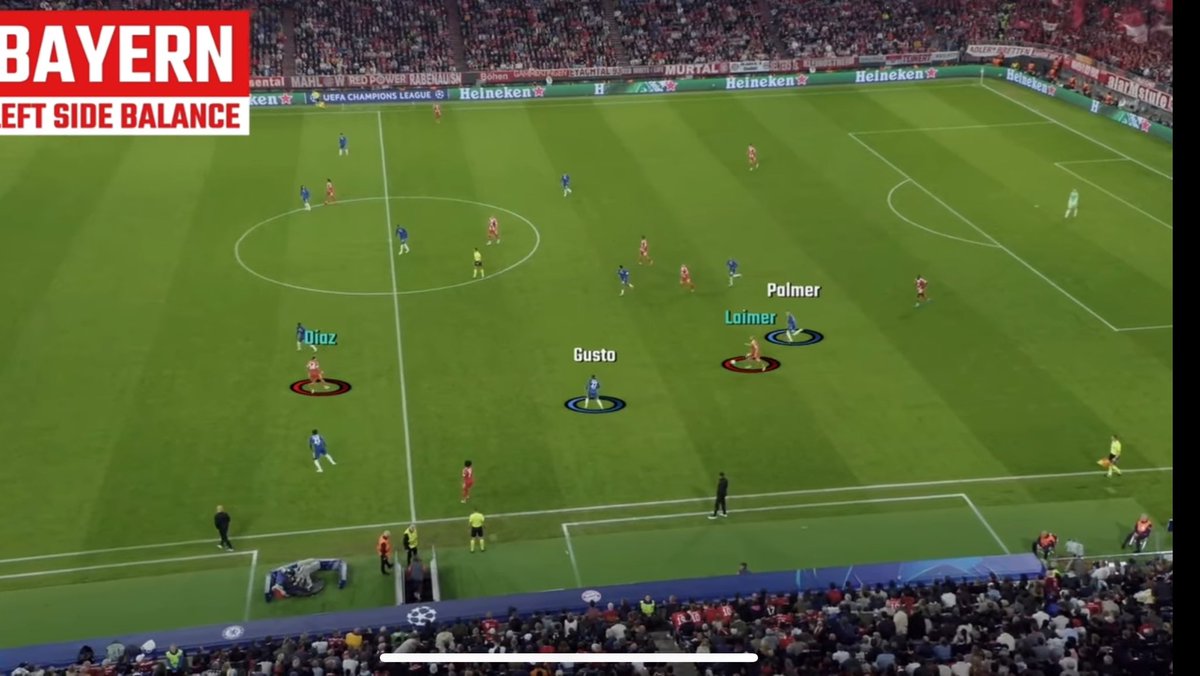
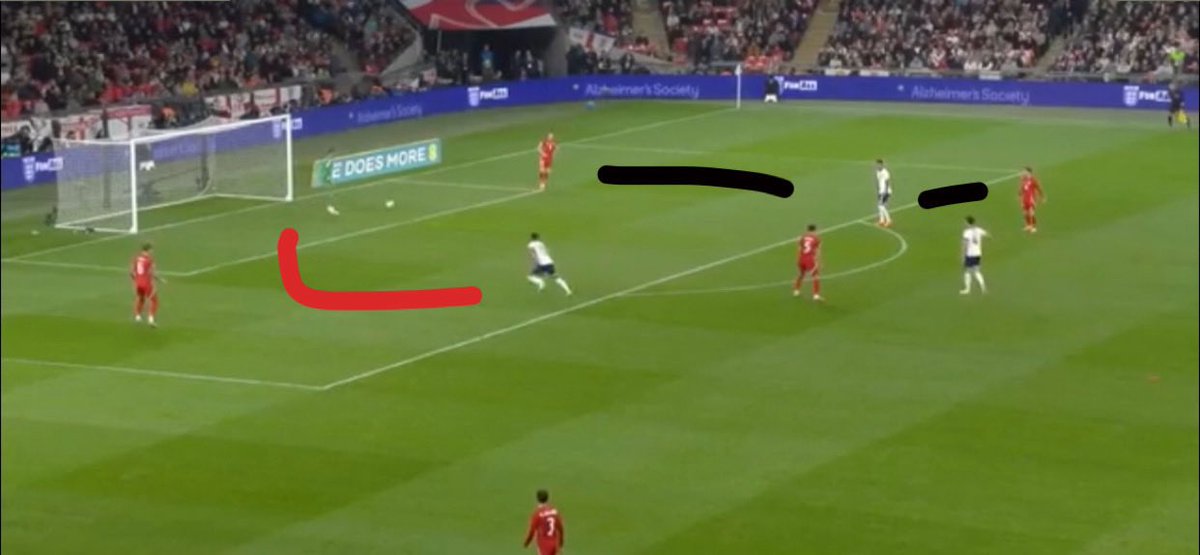
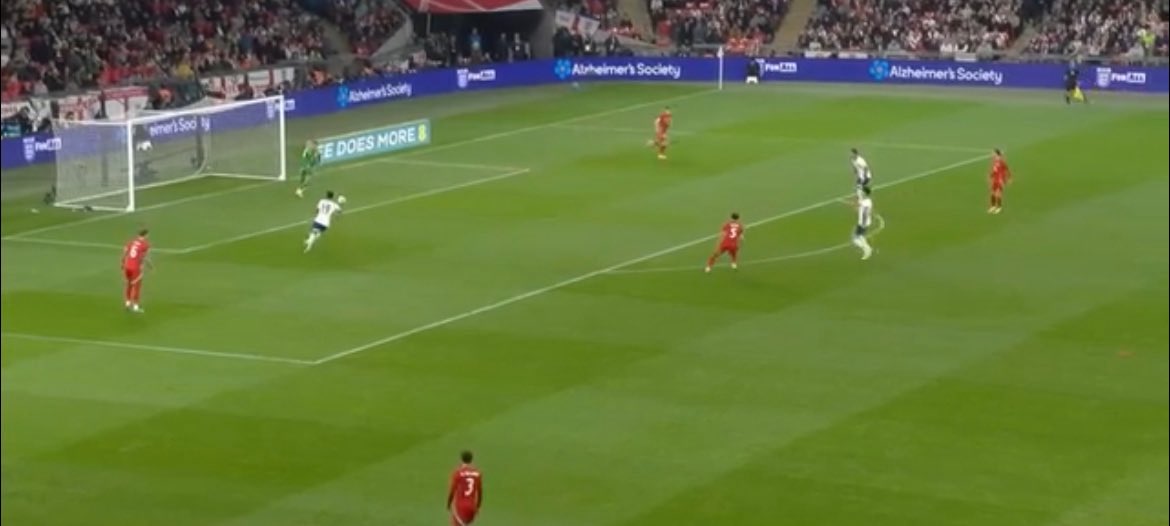
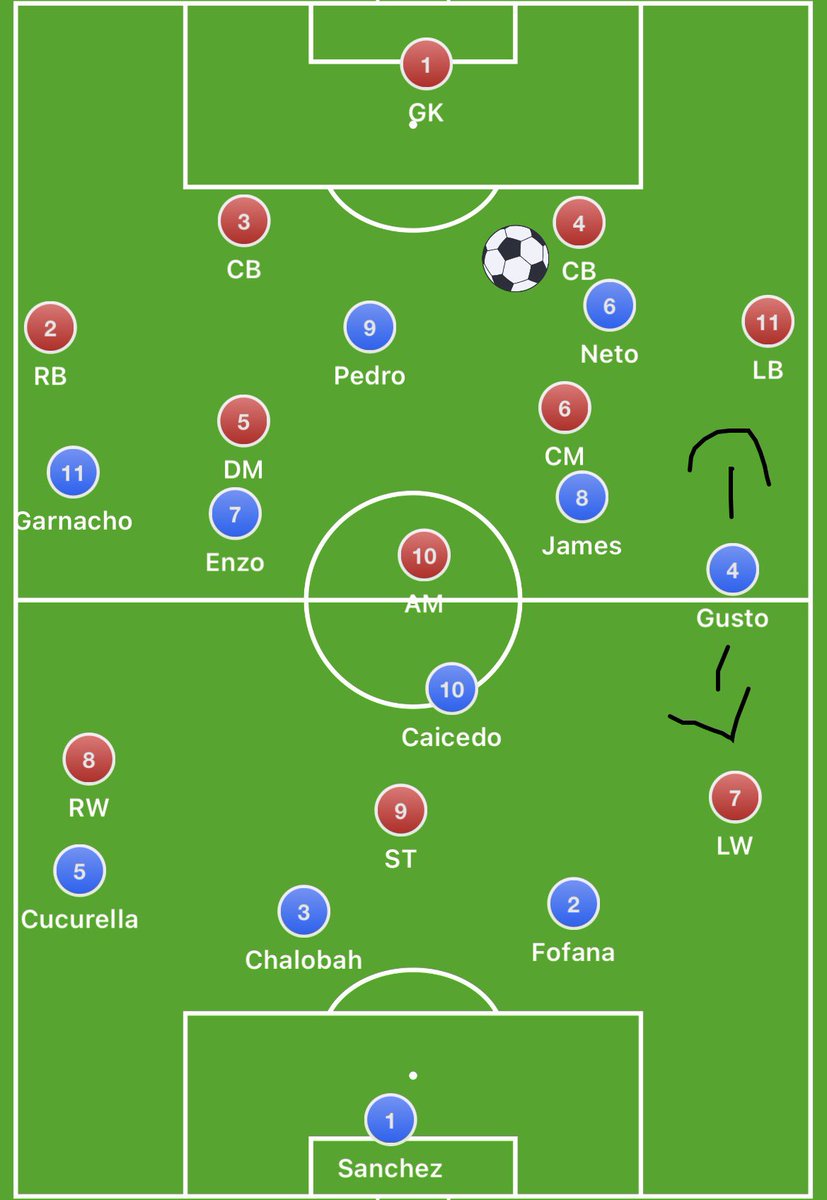
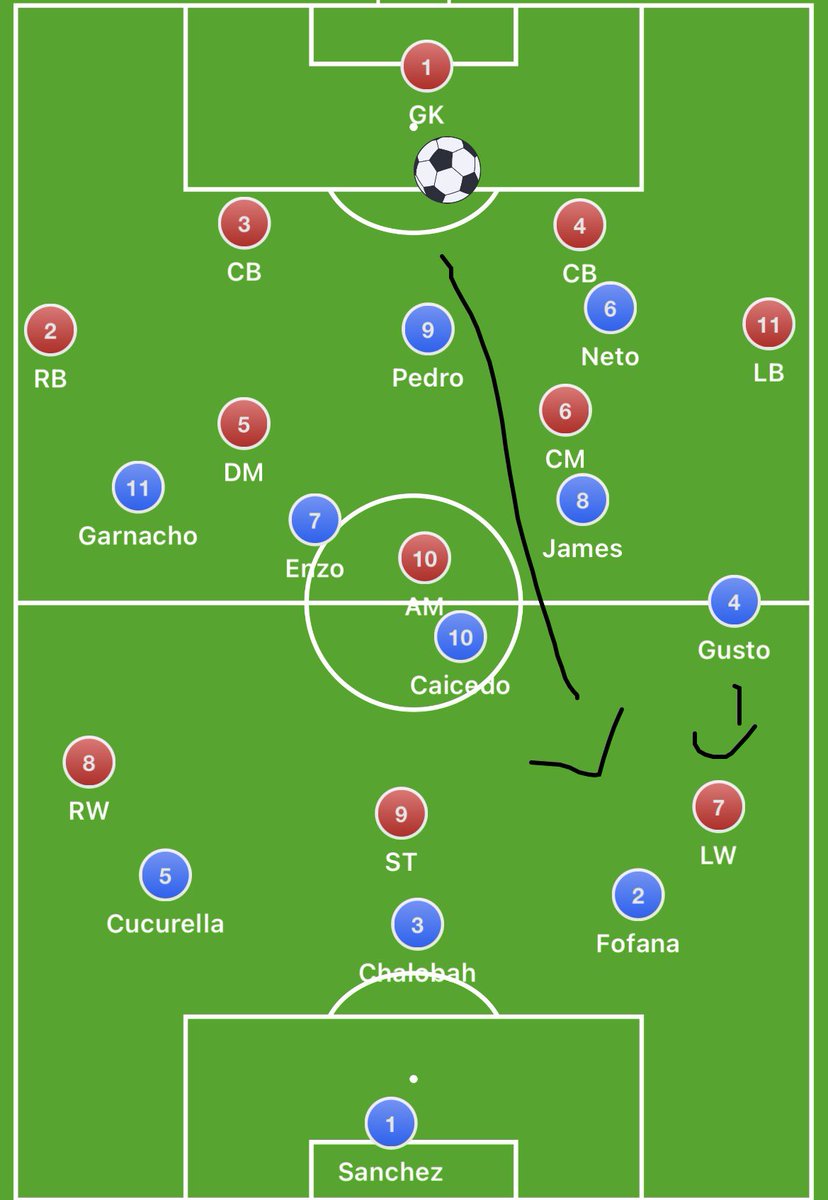
In this example Palmer leaves Laimer to press a centre back, Gusto looks ready to jump onto Laimer to deny time & space
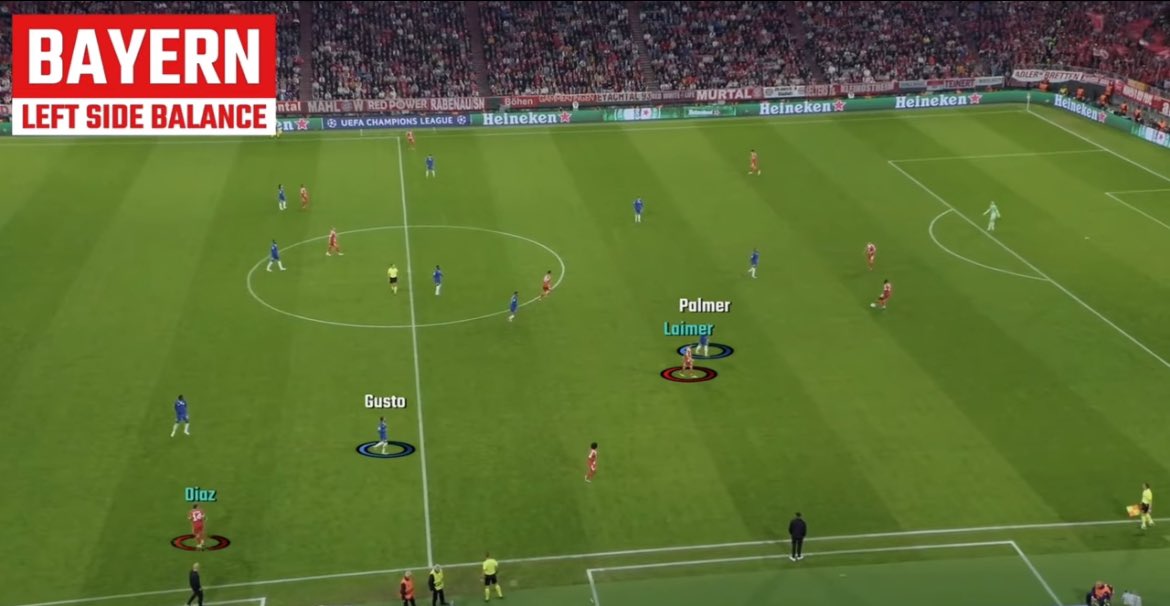
The problem is Gnabry has moved wider on the left & the defence hasn’t shuffled across so Chalobah can’t leave Diaz to press
This leads Laimer having time & space and a few seconds later he’s found running in behind our defence
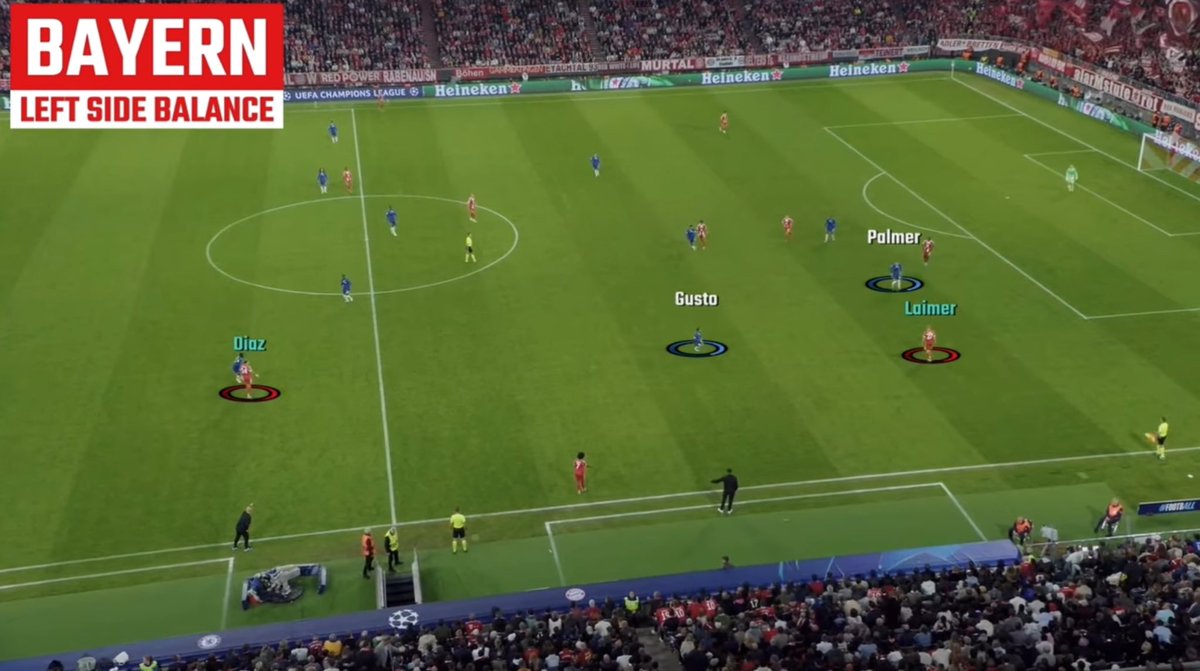
Ideally Caicedo would move to the position marked so Chalobah could be ready to step onto Gnabry once Gusto jumps
Palmer was clearly tasked to make those jumps onto their centre backs but if one player goes then everyone has to go
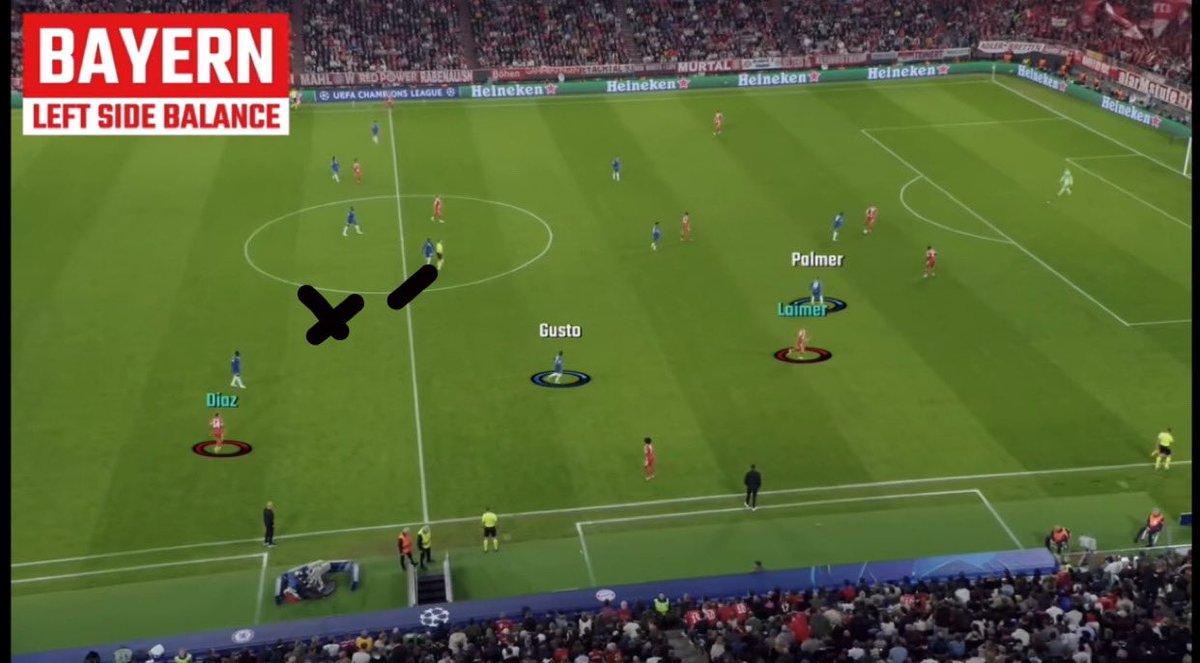
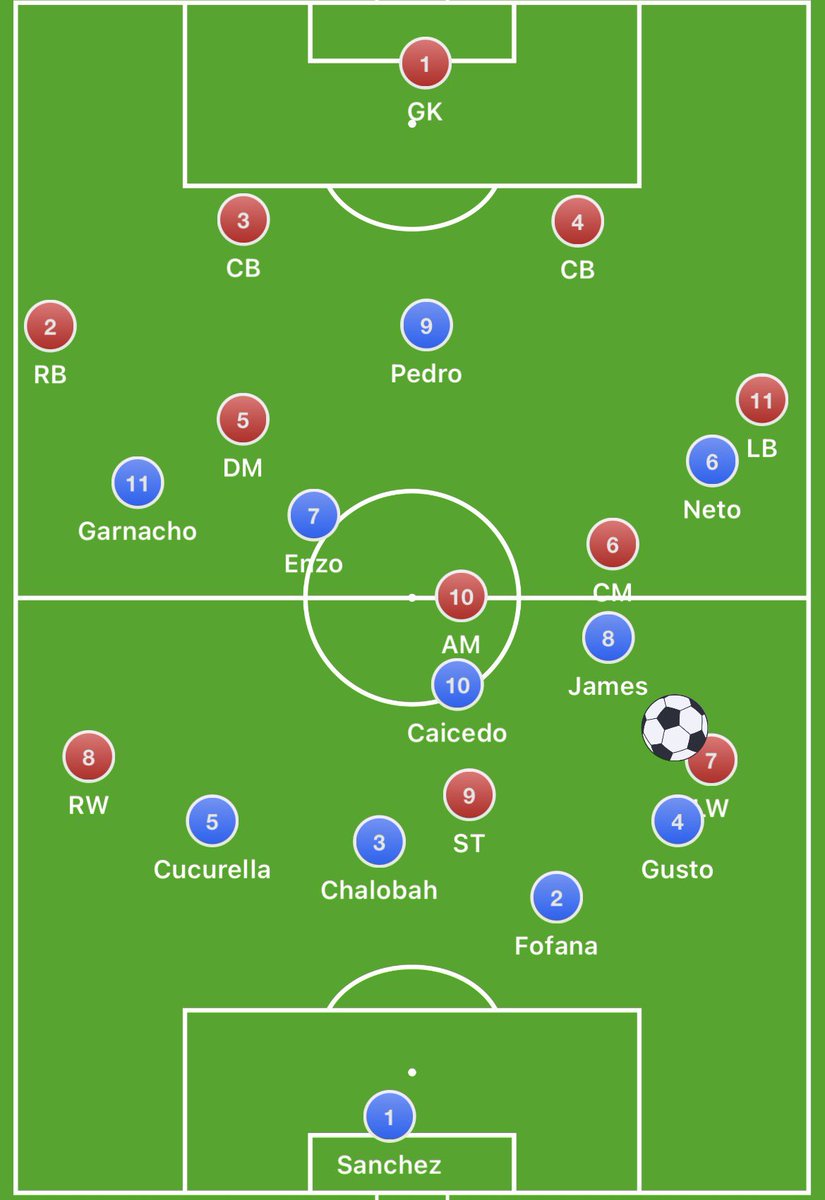
Similar issue here, Upamecano is the spare man here so Bayern will try to find him, this situation is a lot more difficult for Chelsea though, why? Well ask yourself who should press Upamecano?
No +1 in the backline this time, there’s two people on Laimer
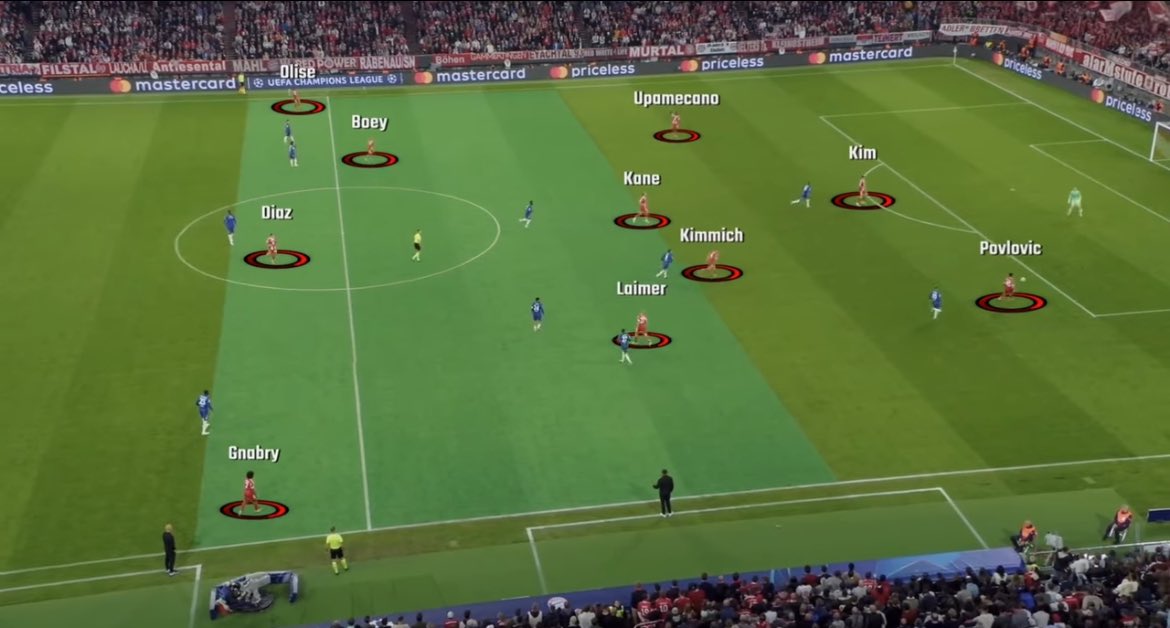
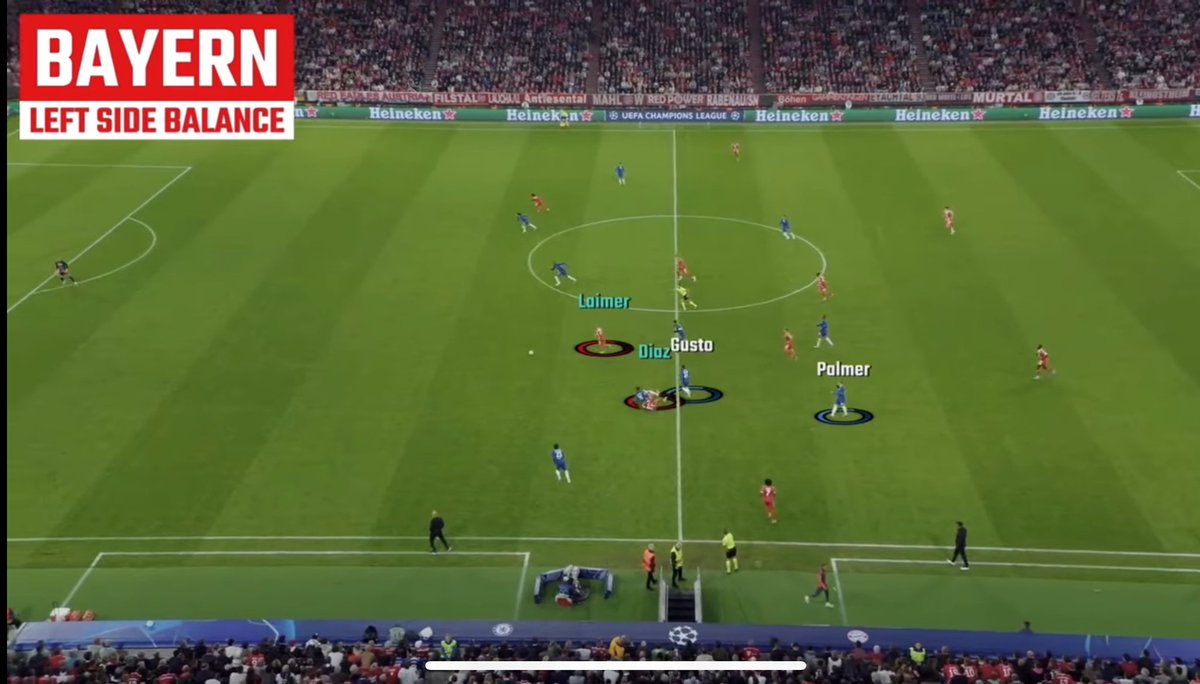
Just prior to this Chelsea did have a +1 in the backline but Bayern try to find Laimer, James should probably be the one to press him but Gusto jumps out instead
Perhaps James should then drop into defence to compensate but everything happens so quickly
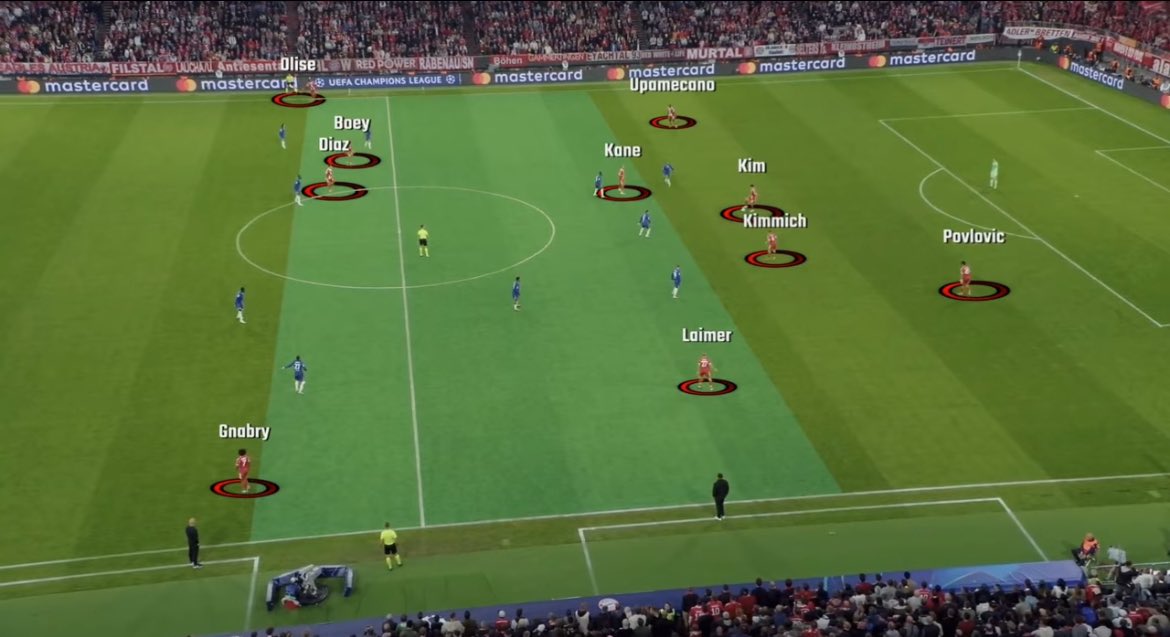
Ofc that shows how effective Bayern’s build up was, Palmer has been told to press a centre back so Gusto can then step up & go man to man
1st screenshots, Gusto should & wants to jump but can’t with others not covering
2nd screenshots, he probably shouldn’t jump but does
I do wonder if missing Colwill has a big impact here as well, someone who leads the backline & can see where the free player is so they can instruct players on when to jump & when to stay
And if you want to see more on how Bayern’s build up worked & the overall analysis of the game then you can check @Tactx_ video that I mentioned here
Arteta has used a certain pressing structure to great success from goal kicks that has been used by other top coaches like Pep & Tuchel, but Maresca managed to find an interesting tweak to bypass it, let’s take a look at how it worked
THREAD:
To understand how Maresca’s tweaks worked we first need to understand what makes Arteta’s pressing structure so good & why a lot of top coaches have used it
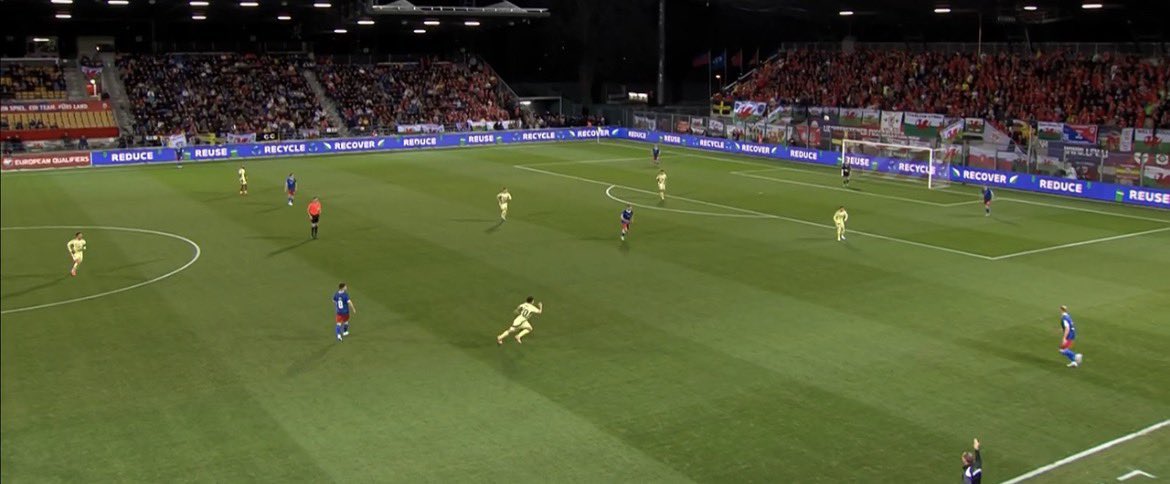
Arteta (& Bellamy’s Wales side for the 2nd screenshot) uses a press called the diamond press from goal kicks
So how does it work? Two strikers are ready to press the opposition centre backs (& try to cover passing lanes into the two DM’s if the opposition use 2)
One striker curves his run from a centre back to the goalie to force play down one side
Chelsea’s hybrid press has been great, one fullback starts in between the opposition winger & FB
If the ball is played long they drop to maintain a +1 at the back
If their FB receives then ours jumps man to man
But I wonder if there’s 2 ways opposition could deal with it:
1st way: opposition winger moves deeper & central, why would this be a problem? Because now Chelsea’s wider centre back has a lot of distance to cover to reach the winger
This is even more problematic if they’re good in tight spaces & good carriers like Foden/Musiala
Ofc the centre back could go high early, but does that mean any long ball will always make it man to man with no +1 at the back? Will the centre back be comfortable stepping out that far?
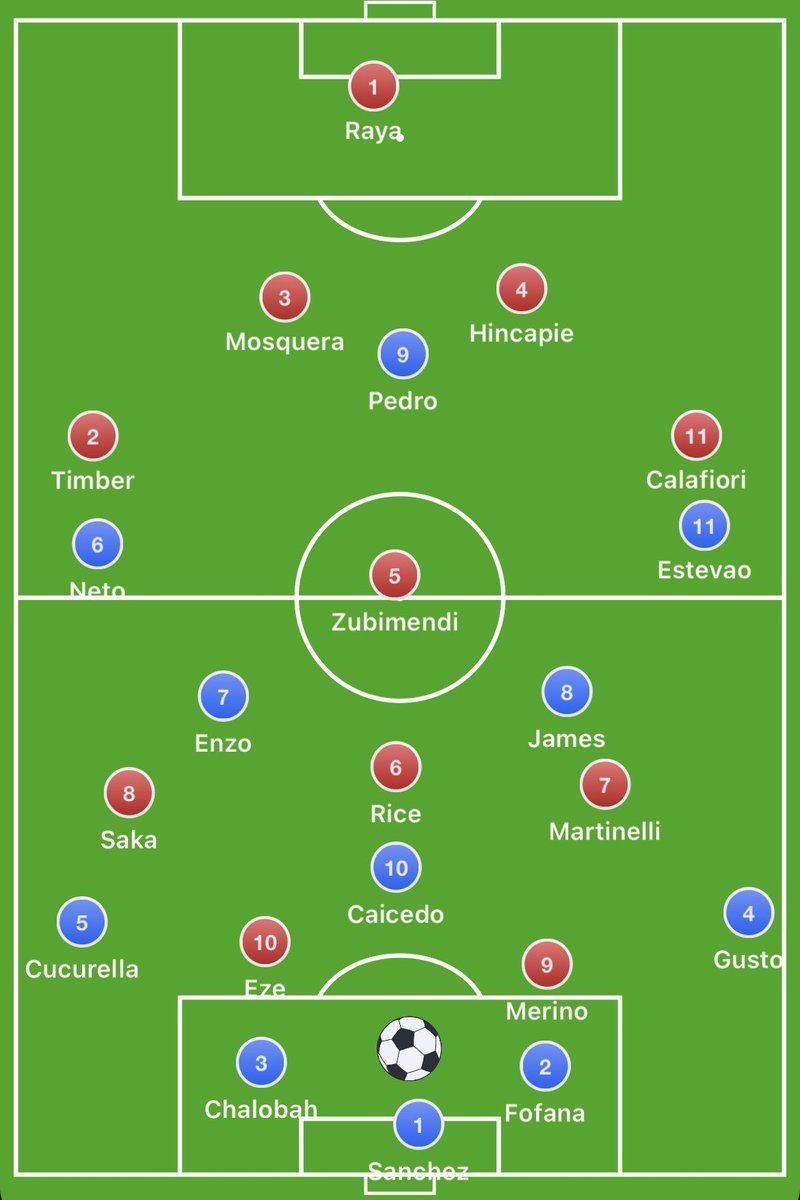
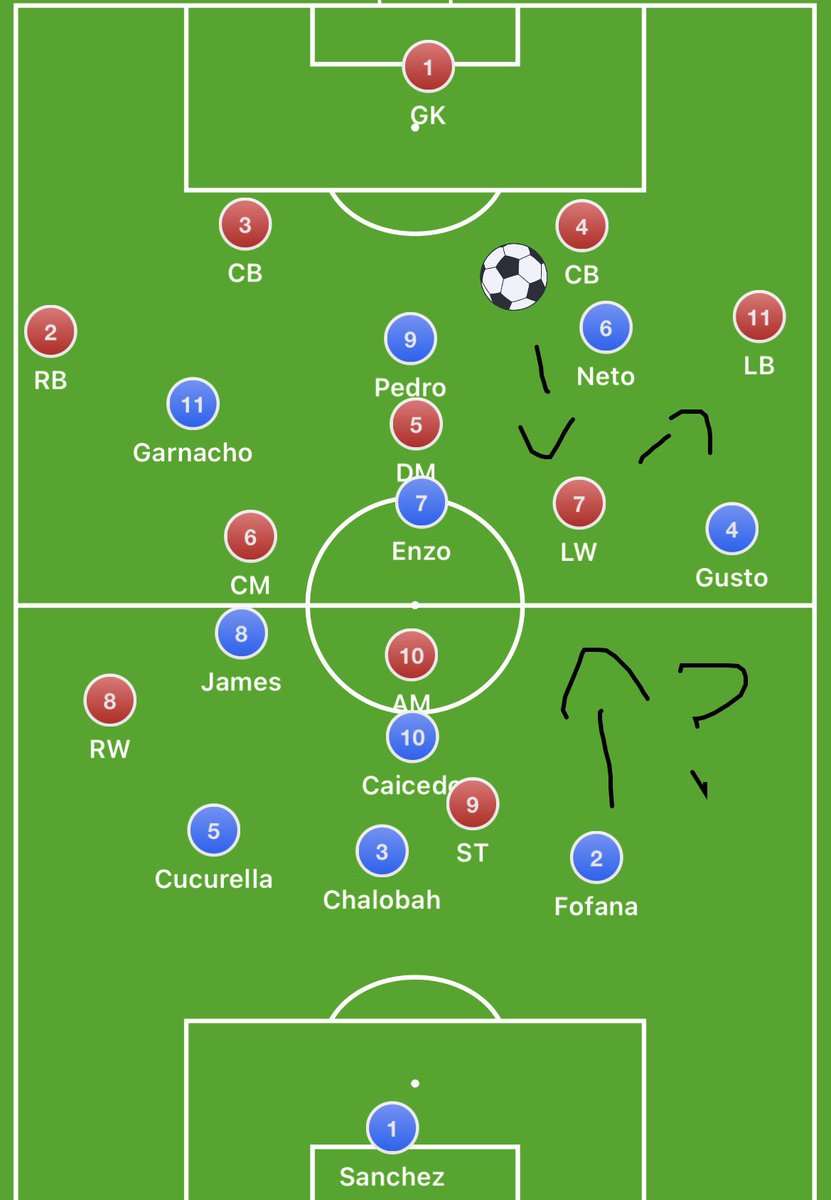
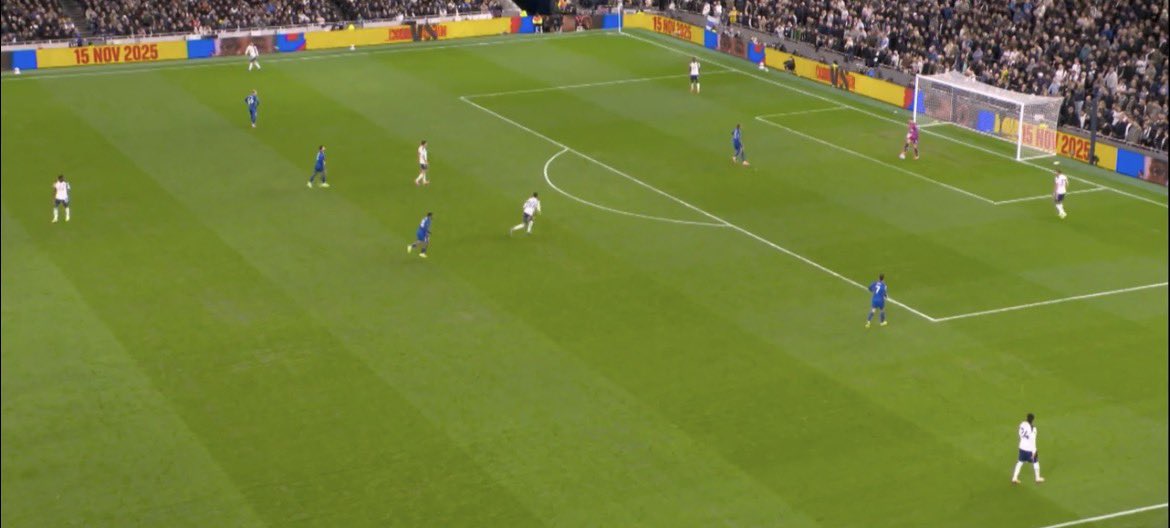
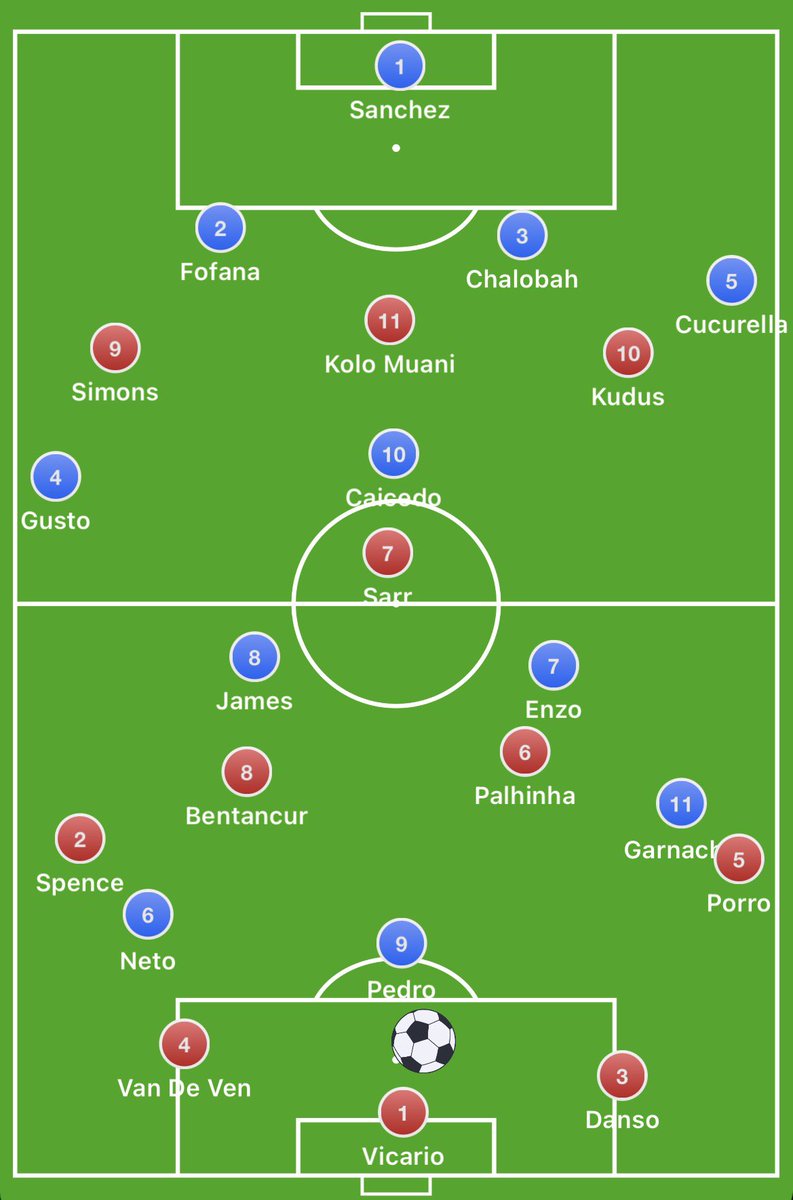
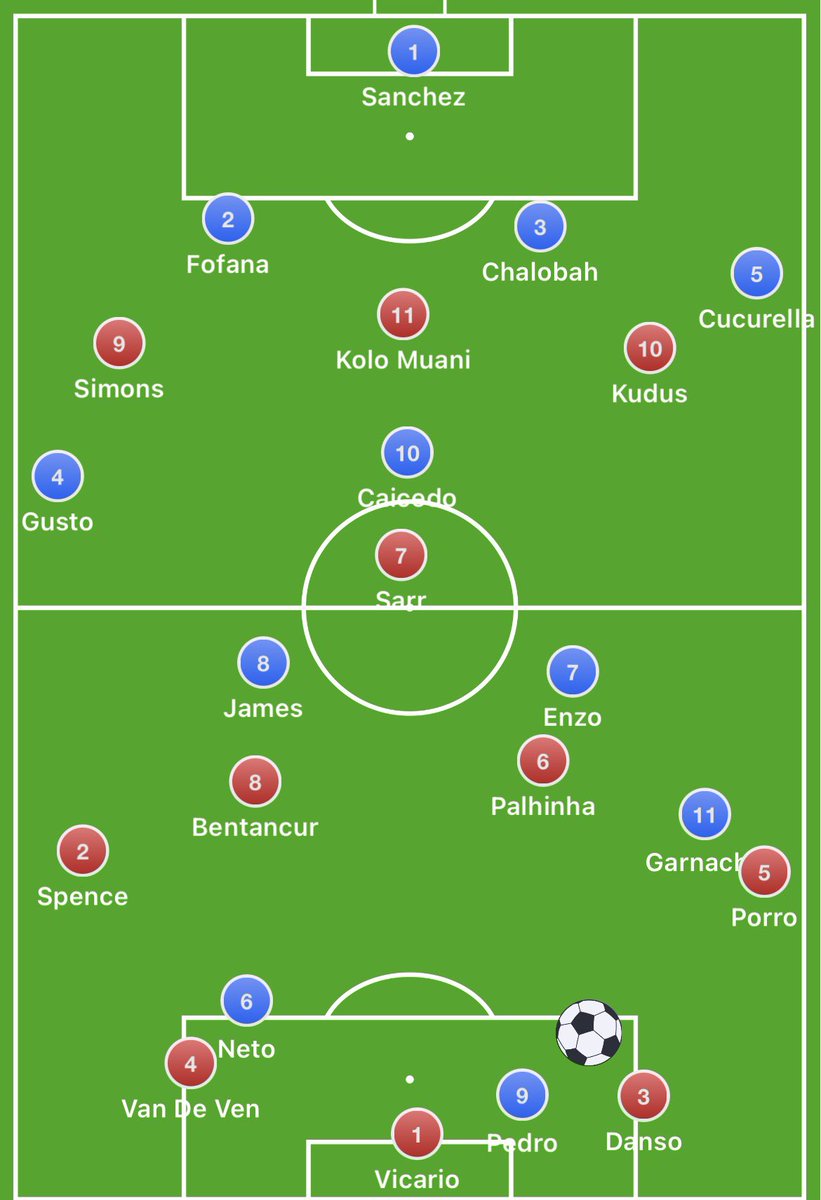
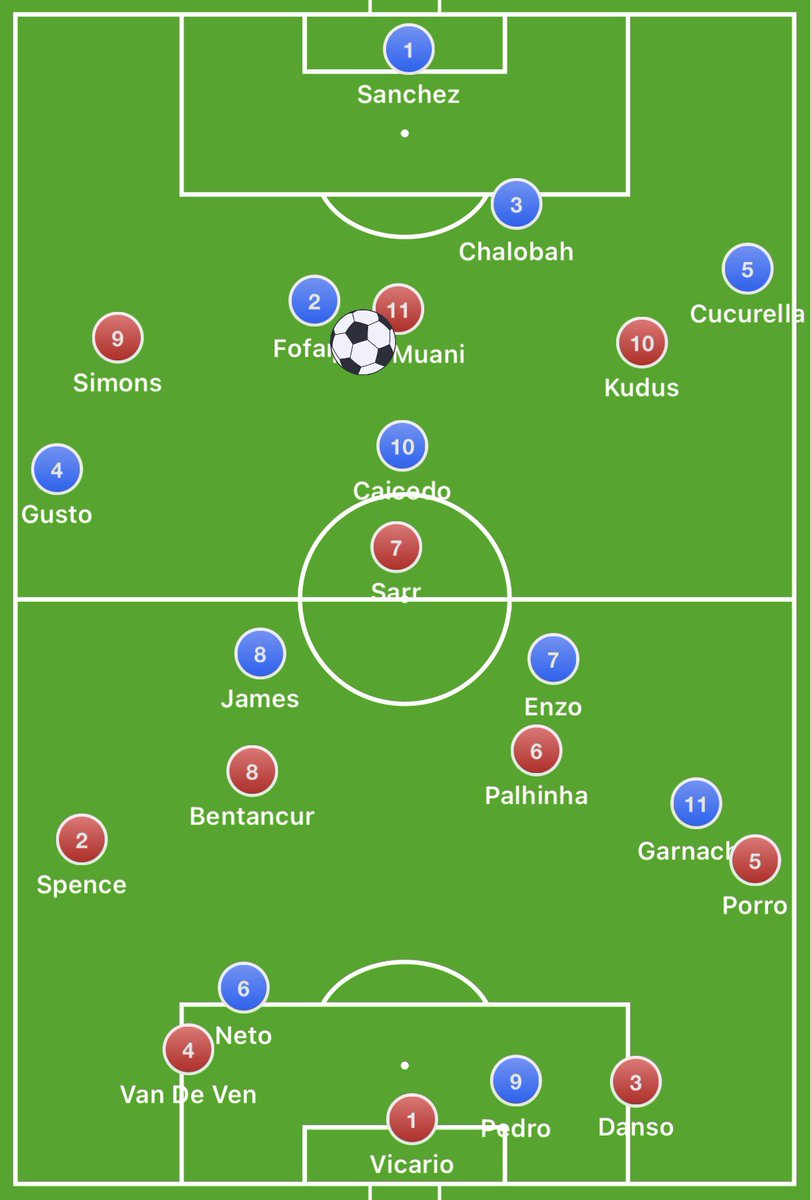
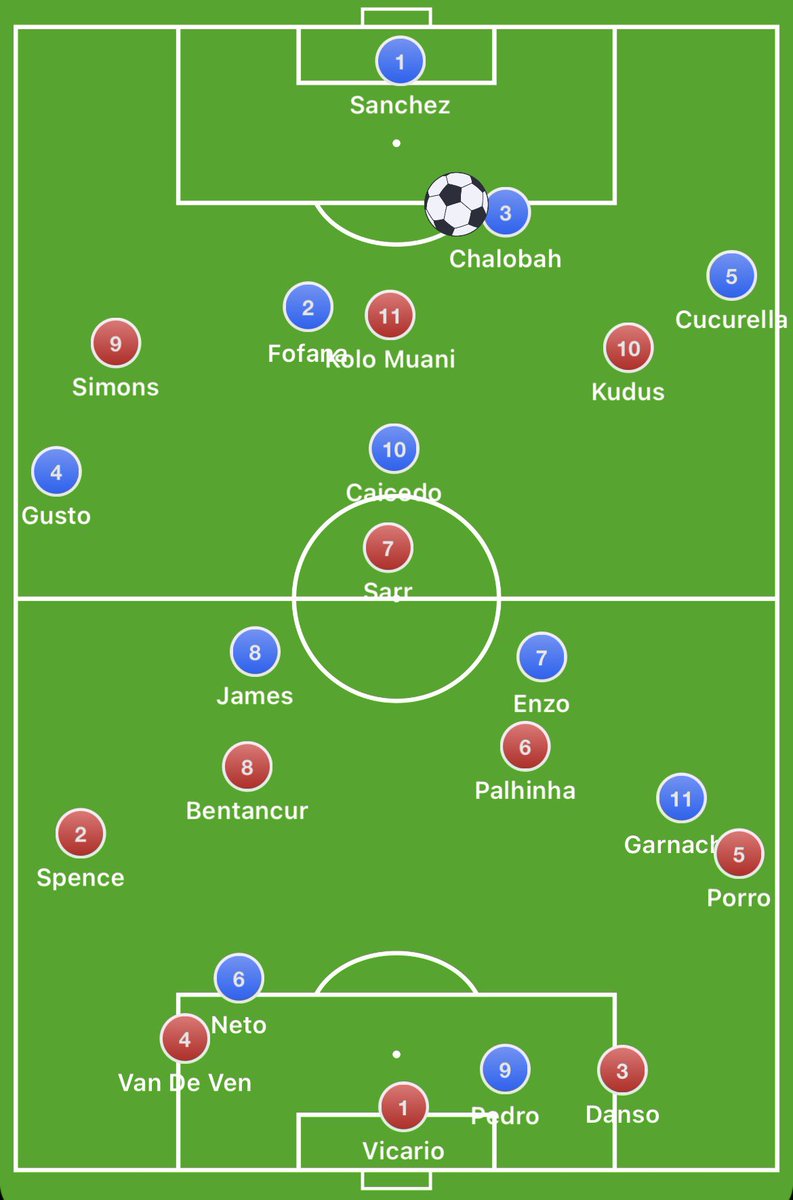
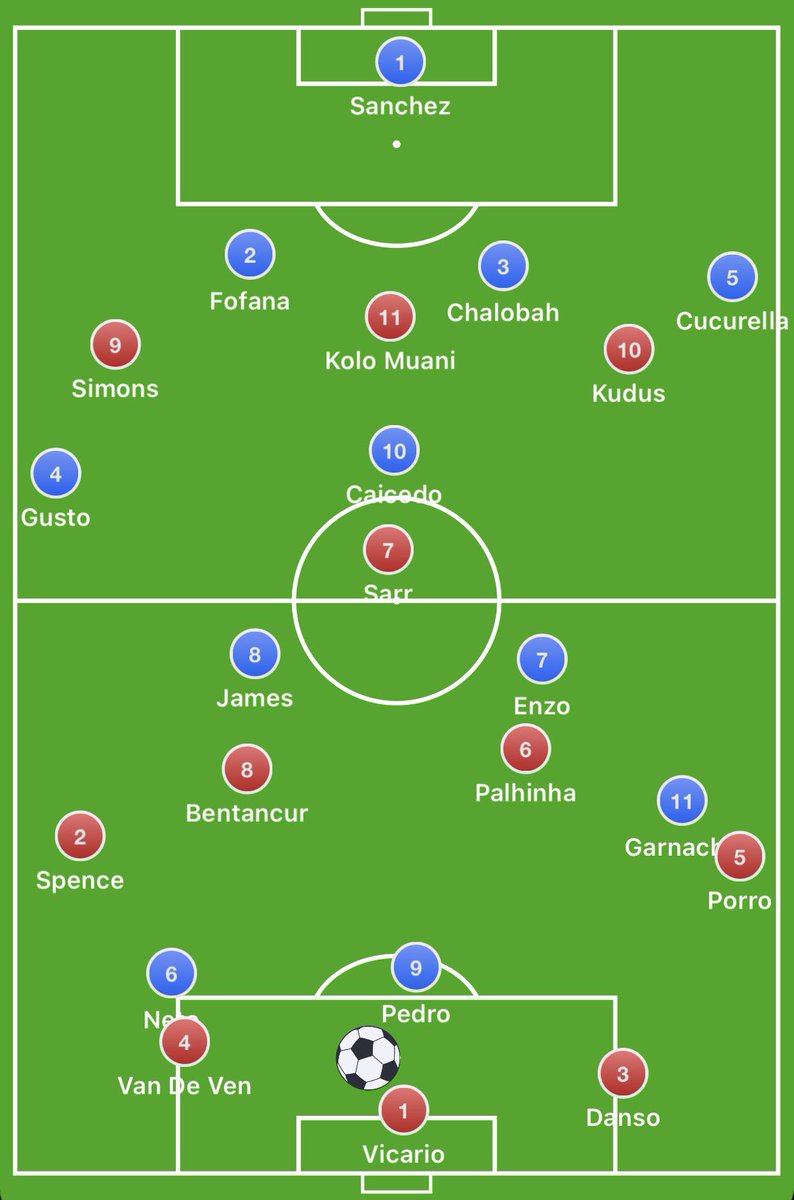
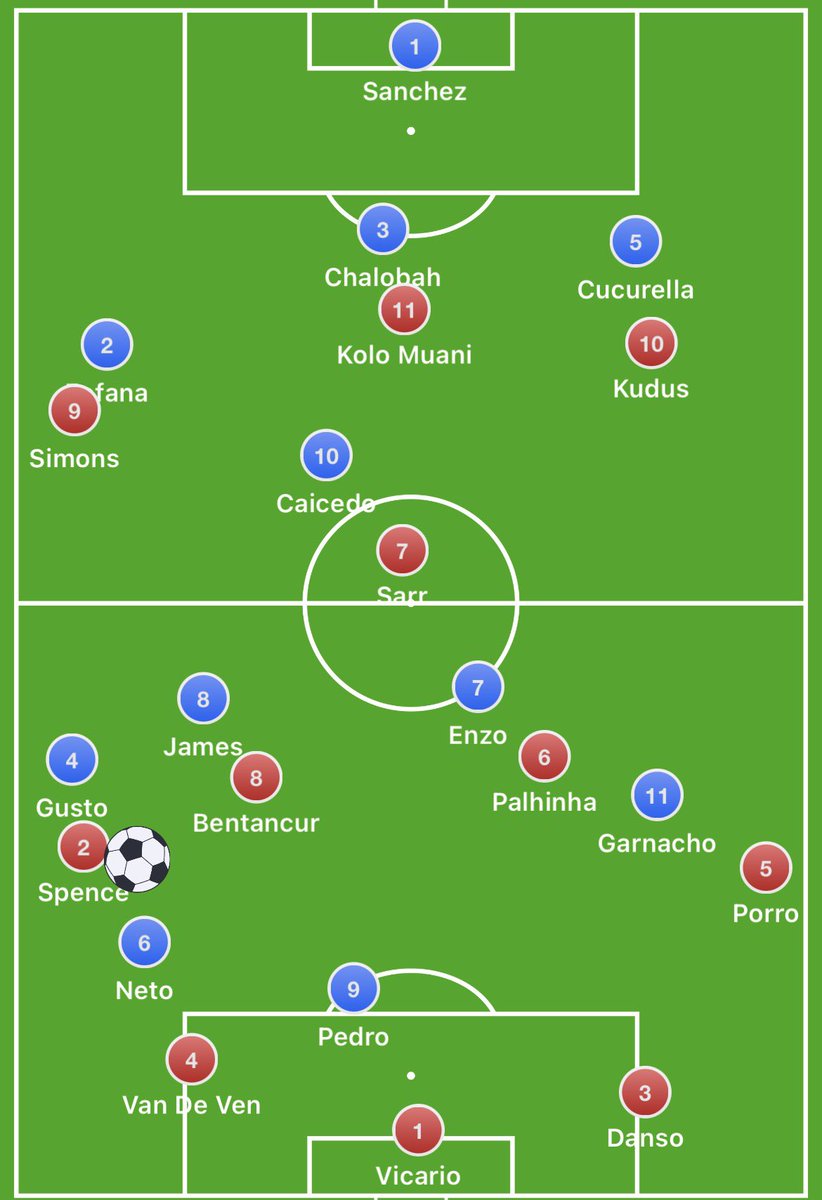
Let’s talk about Chelsea’s press against Spurs, Chelsea pressed in a 4-1-4-1 against the 4-2-3-1 of Spurs, man to man in midfield, +1 at the back, it gave Spurs an extra player at the back
Note Neto’s position, half way between Van De Ven & Spence important for later (1/9)
Chelsea tried to lock Spurs down one side of the pitch, Pedro would try to force Vicario down the right, Neto then fully commits to Danso, it leaves Spence free but he’s on the other side of the pitch
If Spurs go long Chelsea have a extra player back to win second balls (2/9
But if Spurs could find Spence then Gusto would fully commit to him with Fofana moving across to cover Simons
Chelsea clashed against Crystal Palace in a very even game which lead to the points being shared, Palace were extremely difficult to break down but why was that the case? And could we have changed anything to have a better chance of winning?
THREAD:
Chelsea lined up in a 4-2-3-1 which quickly became a 3-1-5-1 shape with Enzo & Cucurella moving between the lines to have a 3v2 against Palace’s double pivot & a 6v5 against Palace’s back 5
Palace lined up in a narrow 5-4-1/5-2-3 shape
In theory having these overloads against Palace’s midfield & defence sounds great, there’s a spare player upfield which could make it difficult for Palace on who to mark
But we struggled to get in positions to take advantage of it because of how Palace stifled our build up
The biggest improvement Maresca & Chelsea have made since the start of the year is how they work out of possession, their defensive work in their 3-0 win vs PSG & their 3-1 loss to City in January was miles apart in quality, let’s look at the changes made
THREAD:
Starting with the City game, Chelsea are 1-0 up yet are putting no pressure on the ball whilst the defensive line remains high
The problem with this is it’s too easy for the player on the ball to get their head up & have time to play runners in behind, leads to a chance
Only a few minutes later & once again there’s no pressure on the ball with the defensive line high & Gvardiol scores
It also gives the attackers too much time to keep making good runs, eventually the defence will make a mistake
Chelsea clashed against the Champions of Europe PSG to become Champions of the world, & they not only won, but did it in a very convincing fashion against arguably the best team in the world, so how did Maresca & his men make it look so easy?
THREAD:
Let’s start by looking at Chelsea’s in possession approach, Chelsea used a 3–2-5 in possession with Gusto overlapping rather than inverting as he had been doing in the Premier League whilst PSG defended in a 4-3-3
This gave us a 5v4 overload against their backline
As we’ve seen throughout the season this gives our wide players space to attack 1v1, if teams manage to get their midfielders across quickly like here, then it can open up gaps centrally to exploit
Neto & Enzo get doubled up on, which leaves Palmer free