Akshay 🚀 Profile picture
Sep 21 3 tweets 1 min read Read on X
knowledge graphs are INSANELY good at giving agents human-like memory!

today, we're building an MCP-powered memory layer that can be shared across all your AI apps like Cursor, Claude Desktop etc.

it's built using a real-time knowledge graph.

100% open-source and self-hosted.
tech stack:

- @zep_ai 's Graphiti as a memory layer
- @neo4j to store the knowledge graph
- @Docker to self host the MCP server

find all the code here: github.com/getzep/graphiti
@zep_ai @neo4j @Docker If you found it insightful, reshare with your network.

Find me → @akshay_pachaar ✔️
For more insights and tutorials on LLMs, AI Agents, and Machine Learning!

• • •

Missing some Tweet in this thread? You can try to force a refresh

 

Keep Current with Akshay 🚀

Akshay 🚀 Profile picture

Stay in touch and get notified when new unrolls are available from this author!

Read all threads

This Thread may be Removed Anytime!

PDF

Twitter may remove this content at anytime! Save it as PDF for later use!

Try unrolling a thread yourself!

how to unroll video
  1. Follow @ThreadReaderApp to mention us!

  2. From a Twitter thread mention us with a keyword "unroll"
@threadreaderapp unroll

Practice here first or read more on our help page!

More from @akshay_pachaar

Sep 19
We've all dealt with activation functions while working with neural nets.

- Sigmoid
- Tanh
- ReLu & Leaky ReLu
- Gelu

Ever wondered why they are so important❓🤔

Let me explain... 👇 Image
Before we proceed, I want you to understand something!

You can think of a layer in a neural net as a function & multiple layers make the network a composite function.

Now, a composite function consisting of individual linear functions is also linear.

Check this out👇 Image
We have a simple neural net that does binary classification.

Scenario 1:

- Linear decision boundary
- Linear Activation function

Observe how the neural net is able to quickly learn & loss converges to zero.

Watch this 👇
Read 7 tweets
Sep 12
10 MCP, AI Agents & LLM visual explainers:

(don't forget to bookmark 🔖)
1️⃣ MCP

MCP is a standardized way for LLMs to access tools via a client–server architecture.

Think of it as a JSON schema with agreed-upon endpoints.

Anthropic said, "Hey, let's all use the same JSON format when connecting AI to tools" and everyone said "Sure."

Check this👇
2️⃣ MCP vs Function calling for LLMs

Before MCPs became popular, AI workflows relied on traditional Function Calling for tool access. Now, MCP is standardizing it for Agents/LLMs.

The visual covers how Function Calling & MCP work under the hood.

Check this out👇
Read 12 tweets
Sep 11
I've put 100+ MCP apps into production!

There's one rule you can not miss if you want to do the same!

Here's the full breakdown (with code):
There are primarily 2 factors that determine how well an MCP app works:

- If the model is selecting the right tool?
- And if it's correctly preparing the tool call?

Today, let's learn how to evaluate any MCP workflow using @deepeval's MCP evaluations (open-source).

Let's go!
Here's the workflow:

- Integrate the MCP server with the LLM app.
- Send queries and log tool calls, tool outputs in DeepEval.
- Once done, run the eval to get insights on the MCP interactions.

Now let's dive into the code for this!
Read 13 tweets
Sep 9
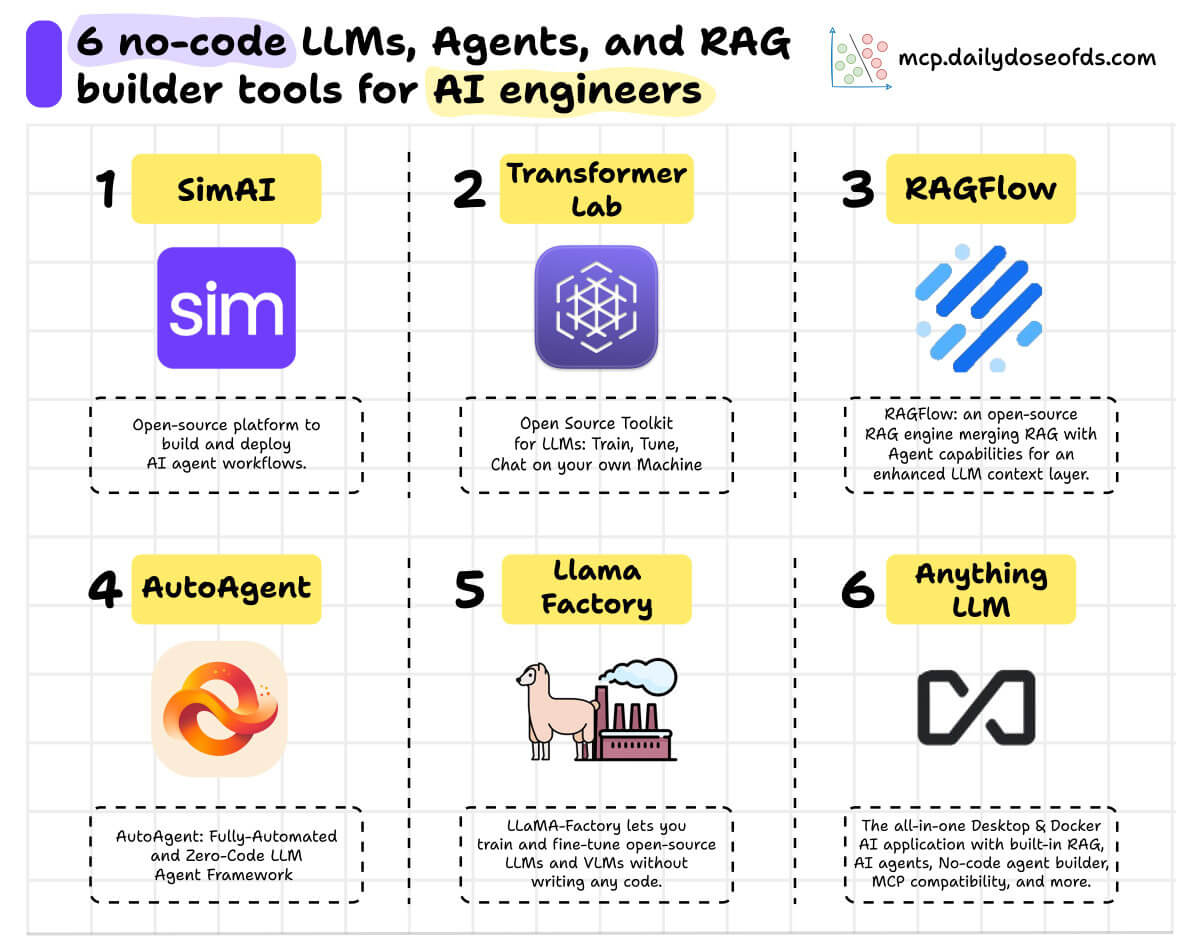
6 GitHub repositories that will give you superpowers as an AI Engineer:
You can use these 6 open-source repos/tools for:

- building an enterprise-grade RAG solution
- build and deploy multi-agent workflows
- finetune 100+ LLMs
- and more...

Let's learn more about them one by one: Image
1️⃣ Sim AI

A drag-and-drop UI to build AI agent workflows!

Sim AI is a lightweight, user-friendly platform that makes creating AI agent workflows accessible to everyone.

Supports all major LLMs, MCP servers, vectorDBs, etc.

100% open-source.

🔗 github.com/simstudioai/sim
Read 10 tweets
Sep 7
8 key skills to become a full-stack AI Engineer:
Production-grade AI systems demand deep understanding of how LLMs are engineered, deployed, and optimized.

Here are the 8 pillars that define serious LLM development:

Let's dive in! 🚀
1️⃣ Prompt engineering

Prompt engineering is far from dead!

The key is to craft structured prompts that reduce ambiguity and result in deterministic outputs.

Treat it as engineering, not copywriting! ⚙️

Here's something I published on JSON prompting:
Read 12 tweets
Sep 6
K-Means has two major problems:

- The number of clusters must be known
- It doesn't handle outliers

Here’s an algorithm that addresses both issues:
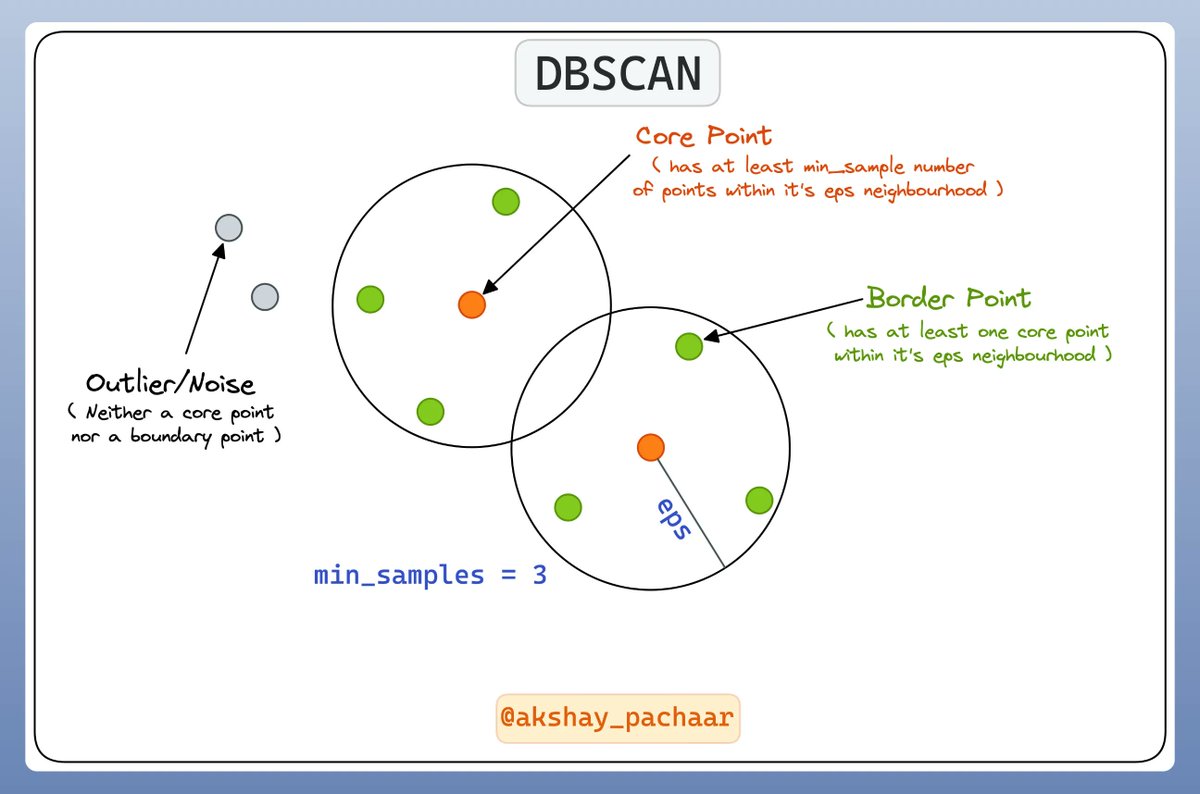
Introducing DBSCAN, a density-based clustering algorithm.

Simply put, DBSCAN groups together points in a dataset that are close to each other based on their spatial density.

It's very easy to understand, just follow along ...👇 Image
DBSCAN has two important parameters.

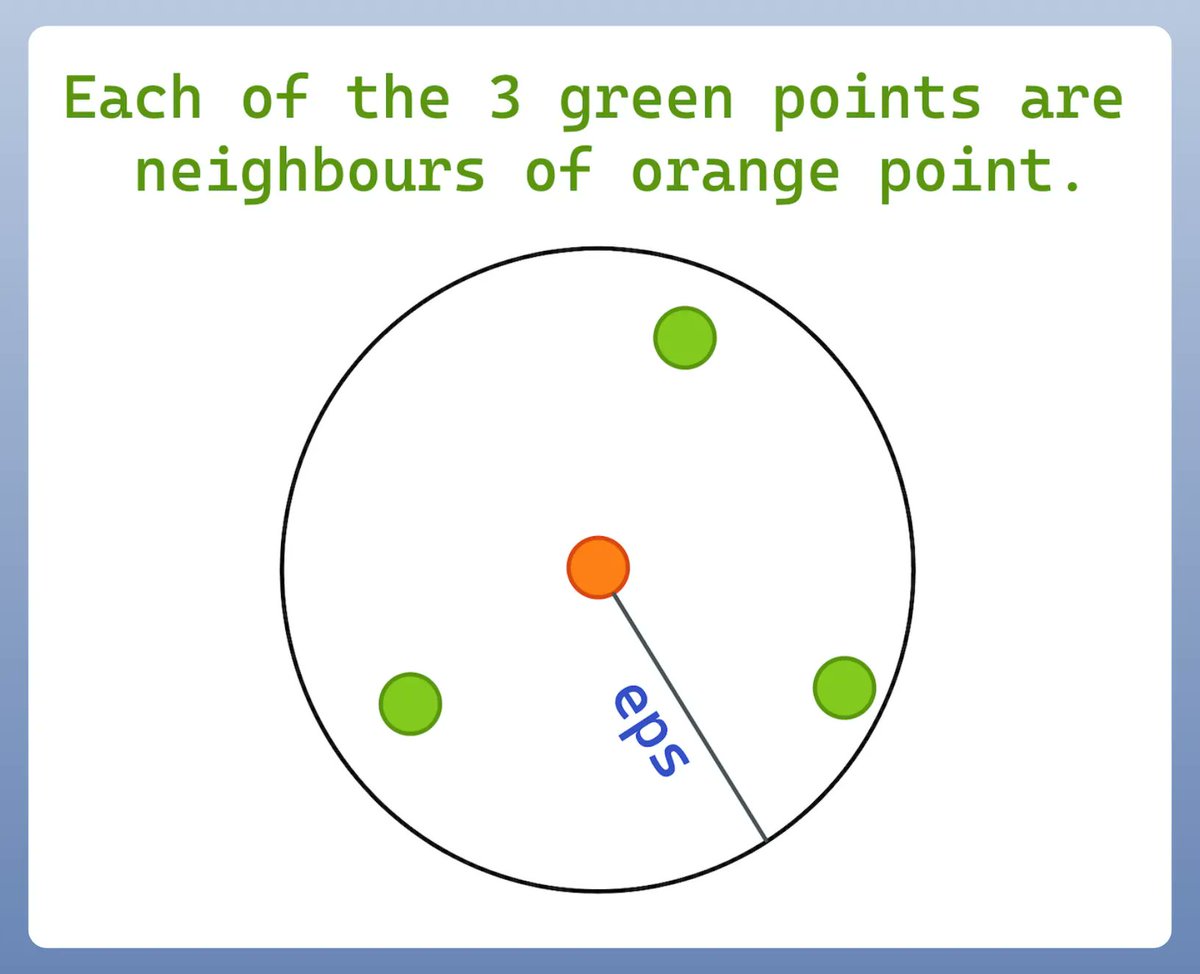
1️⃣ Epsilon (eps):

`eps`: represents the maximum distance between two points for them to be considered part of the same cluster.

Points within this distance of each other are considered to be neighbours.

Check this out 👇 Image
Read 9 tweets

Did Thread Reader help you today?

Support us! We are indie developers!


This site is made by just two indie developers on a laptop doing marketing, support and development! Read more about the story.

Become a Premium Member ($3/month or $30/year) and get exclusive features!

Become Premium

Don't want to be a Premium member but still want to support us?

Make a small donation by buying us coffee ($5) or help with server cost ($10)

Donate via Paypal

Or Donate anonymously using crypto!

Ethereum

0xfe58350B80634f60Fa6Dc149a72b4DFbc17D341E copy

Bitcoin

3ATGMxNzCUFzxpMCHL5sWSt4DVtS8UqXpi copy

Thank you for your support!

Follow Us!

:(