Before muskets fired, the war for independence began in print. The colonial press shaped minds, spread ideas, and laid the groundwork for revolution. To understand ’76, we must return to the birth of America’s newspapers.
Let’s dive in. 🇺🇸 #AmRev
The first American paper, Publick Occurrences (Boston, 1690), lasted one issue before being banned for printing without royal approval. From the start, the press and power were in conflict.
By the early 1700s, printers operated under strict licenses and censorship. Yet colonists hungered for news, from European wars to local politics. These fragile sheets became lifelines of information.
The Zenger Trial of 1735 changed everything. John Peter Zenger, jailed for criticizing New York’s governor, was acquitted. His case established truth as a defense and cracked the crown’s control over the press.
By mid-century, newspapers flourished across the colonies. Weekly issues carried essays, sermons, satire, and fiery letters. They became print republics; town halls for debate long before Congress assembled.
Benjamin Franklin turned the Pennsylvania Gazette into the gold standard. Witty, sharp, and full of essays on liberty, it carried the famous “Join, or Die” cartoon, an early icon of unity and resistance.
By the 1760s, newspapers weren’t just reporting events, they were shaping them. The Stamp Act, sugar duties, and standing armies were fought first in columns and editorials before they were fought in the streets.
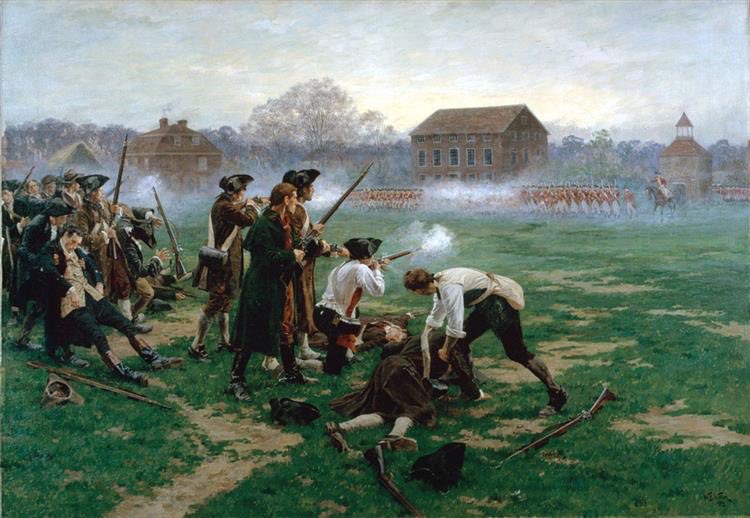
By 1775, nearly every colony had patriot or loyalist presses battling for hearts and minds. The stage was set: before muskets cracked at Lexington, the press had already carried America into revolution. 🇺🇸 #AmRev
Value for Value: if this thread gave you value, return value. Reshare it. Speak boldly. Or become a subscriber to my Substack (link in bio) of ’76. 🇺🇸
• • •
Missing some Tweet in this thread? You can try to
force a refresh

Before America, before 1776, before the idea of a self-governing people took flame, there was a moment when free men stood before a tyrant and said: No more. That moment was the Magna Carta of 1215.
Let’s dive in. 🇺🇸 #AmRev
Magna Carta was born not from theory, but from courage. England’s barons confronted King John and forced him to accept that even a monarch is not above the law. Power must bow to justice.
In its clauses, you see the seeds of every future struggle for liberty: due process, prompt justice, no sale of justice, no new taxes without consent. These weren’t abstract ideals. They were restraints forged to keep rulers from becoming gods.
Trial by jury did not start with Magna Carta. It began in 1166 when Henry II issued the Assize of Clarendon: the first great step from feudal tyranny toward justice by the people. This is where English, and later American, liberty took root.
Let’s dive in. 🇺🇸 #AmRev
England had bled through nineteen years of civil war called The Anarchy. Private castles, robber barons, no law but strength. In 1154 Henry II took the throne at twenty-one and swore to restore the king’s peace and the people’s justice.
January 1166, Clarendon Palace. Henry summons every earl and bishop and lays down sixteen iron articles. Murder, robbery, and theft now belong to royal justice, not private lords. The age of arbitrary power begins to crack.
After empire came anarchy.When Spain’s grip weakened in the Caribbean, a new breed rose: the buccaneers of Port Royal and Tortuga. Outlaws to kings yet warriors for freedom’s chaos. They built no nations, but they taught men to live unruled.
Let’s dive in. 🇺🇸 #AmRev
They were sons of war, exiled Protestants, and disinherited sailors. Many fled Cromwell’s wars or the wreckage of failed causes. On the edges of empire they found liberty in lawlessness, a rough republic of blades and broken men.
Port Royal, Jamaica, once a Spanish port, became the “wickedest city on Earth.”Yet beneath its sin and rum flowed something primal: independence. Men lived by their own compact, answered to no crown, and carved justice with cannon fire.
Before America had founders, it had pirates. Outlaws who defied kings, sailed by faith and fortune, and carved a new world from the wreckage of empire.
This begins a new series on the American & Caribbean pirates who shaped the spirit of liberty.
Let’s dive in. 🇺🇸 #AmRev
The Pirate Age was born in the fires of the Reformation. Catholic Spain claimed the seas “for God and King.” Protestant England answered with steel and sail. Men like Francis Drake and John Hawkins turned piracy into providence.
Drake was knighted by Queen Elizabeth not for prayer, but plunder. His raids shattered Spain’s monopoly, broke the fear of empire, and taught a generation that faith and fortune favored the bold.
They came from the rugged borderlands of Scotland and Ulster; tough, pious, and ungovernable. The Scots-Irish carved freedom from wilderness and tyranny alike, becoming the raw sinew of America’s revolutionary soul.
Let’s dive in. 🇺🇸 #AmRev
Their story begins in the 1600s, when King James I tried to pacify rebellious Scotland and Ireland by planting Protestant Scots in Ulster. They were promised land and peace; instead they found resentment, oppression, and persecution.
The Scots-Irish were borderlanders twice over, hardened by centuries of war with England, then harassed in Ireland for their Presbyterian faith. They refused to kneel to bishops or kings. Conscience was their only crown.
Before Jefferson penned “consent of the governed,” a Puritan preacher declared it from a Connecticut pulpit. His name was Thomas Hooker: the man who helped plant the seed of American democracy in the wilderness.
Let’s dive in. 🇺🇸 #AmRev
Born in 1586 in England, Hooker was a fiery Puritan preacher who defied conformity. His sermons emphasized not blind obedience, but the duty of men to govern themselves under God’s law; a radical notion in an age of kings and bishops.
When persecution intensified, Hooker fled England for Massachusetts. But soon he and his followers grew uneasy under the rigid theocracy of Boston. In 1636, he led his congregation west through the wilderness, toward freedom.