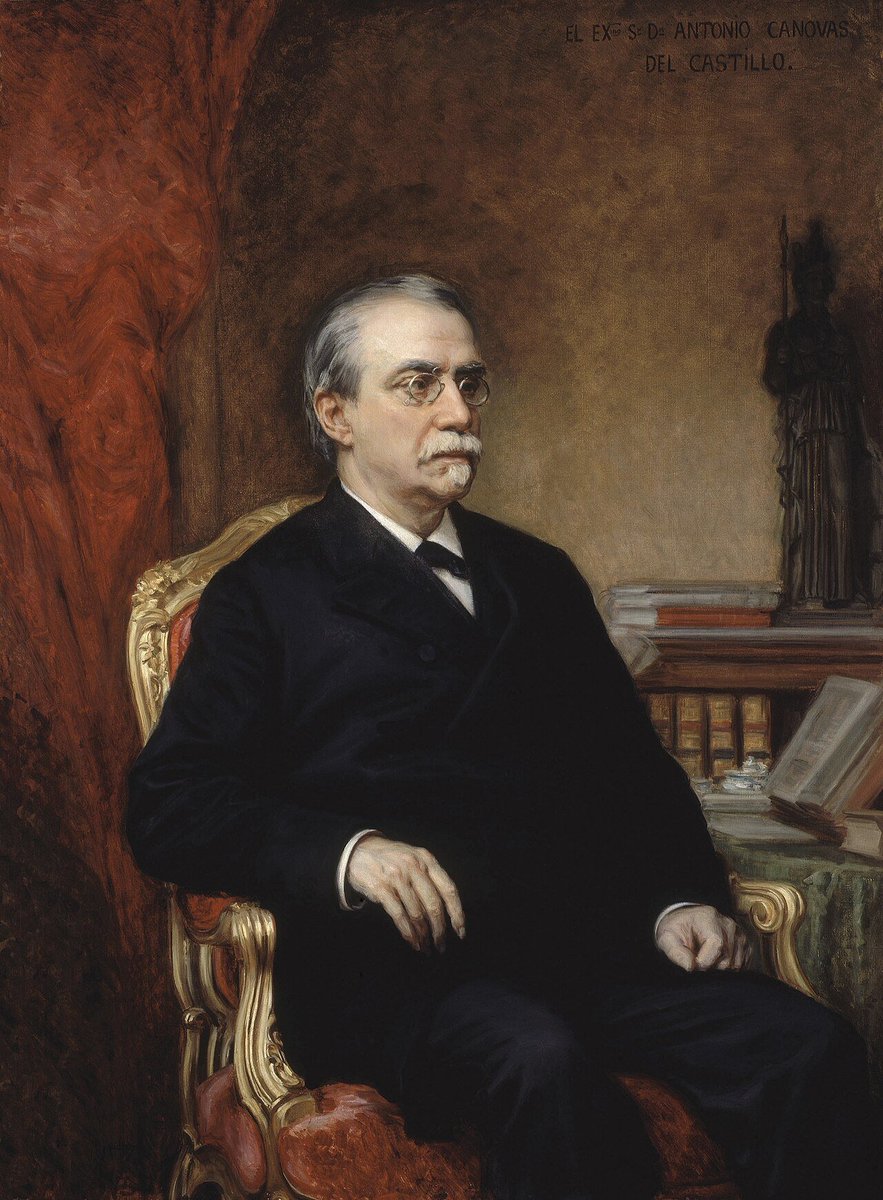
The following excerpts come from Antonio Cánovas del Castillo, a center-right liberal conservative politician who was extremely influential in late 19th-century Spain, being Prime Minister five times. 
It's interesting to compare and contrast the racial views of the 19th-century center-right with the racial views of the modern center-right with their “opportunity zones” and “minority empowerment areas.”
The excerpts come from an interview granted on November 17 1896 to the journalist Gaston Routier of the French newspaper “Le Journal.” Cánovas was the Prime Minister of Spain at the time.
Without further ado, let's begin:
Without further ado, let's begin:
“The negroes in Cuba are free; they can make commitments, work or not work, and I believe that slavery was much better for them than this freedom, which they have only taken advantage of to do nothing and form masses of unemployed.
All those who know negroes will tell you that in Madagascar, in the Congo, as in Cuba, they are lazy, savage, inclined to act badly, and that it is necessary to lead them with authority and firmness to obtain anything from them.
These savages have no other master than their own instincts, their primitive appetites.
The negroes of the United States are much more civilized than ours: they are the descendants of races implanted on American soil for several generations; they have been relatively transformed...
... while among us there are many negroes who come directly from Africa and are completely savage.
Well! Look even in the United States how the negroes are treated: they have apparent freedoms that they are allowed to use within certain limits.
The moment they wish to benefit from all their so-called rights as citizens, the whites are quick to remind them of their status and put them in their place.
I believe I know that, on the other hand, there is not a single serious and influential statesman in the United States who truly desires Cuban independence...
... since they are perfectly aware that an independent island of Cuba would become a new Dominican Republic, a second Liberia that would regress from civilization to anarchy.
If the Spanish army were to abandon Cuba, it would be the sensible, fruitful, liberal, and progressive ideas of Europe that would abandon this country, which has been the richest and most prosperous in Spanish America.
They know this so well in the United States that the exalted and “chauvinistic” spirits, which also exist there, when they demand the independence of Cuba...
... do so on the condition that this great island be immediately placed under the protectorate of the Republic of the United States, which would exercise rigorous policing…
Cuba would have done nothing more than change owners.”
• • •
Missing some Tweet in this thread? You can try to
force a refresh