
So much for the genealogical link between Puritanism and permissiveness:
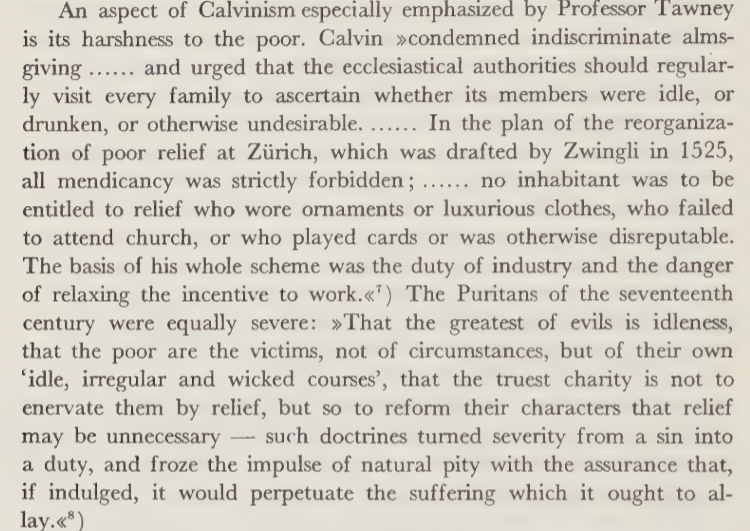
"Calvin...condemned indiscriminate alms-giving...and urged that the ecclesiastical authorities should regularly visit every family to ascertain whether its members were idle, or drunken, or otherwise undesirable."
"[T]he greatest of evils is idleness, that the poor are the victims, not of circumstances, but of their own ‘idle, irregular and wicked courses’, that the truest charity is not to enervate them by relief, but so to reform their characters that relief may be unnecessary."
"Calvin...condemned indiscriminate alms-giving...and urged that the ecclesiastical authorities should regularly visit every family to ascertain whether its members were idle, or drunken, or otherwise undesirable."
"[T]he greatest of evils is idleness, that the poor are the victims, not of circumstances, but of their own ‘idle, irregular and wicked courses’, that the truest charity is not to enervate them by relief, but so to reform their characters that relief may be unnecessary."
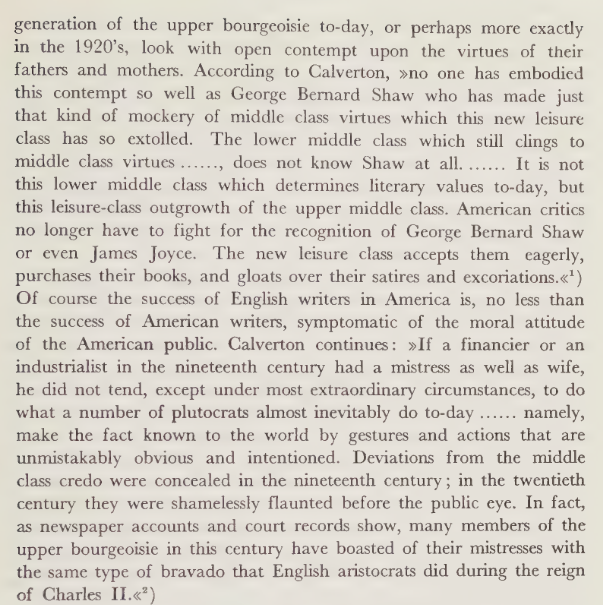
Svend Ranulf cites V.F. Calverton, a radical left writer writing in the 1920s that socialism in America was hostile to Protestant middle-class values and was entirely led by members of the areligious upper bourgeoisie. Elsewhere, he adds it was really European ideas in opposition to indigenous American values:

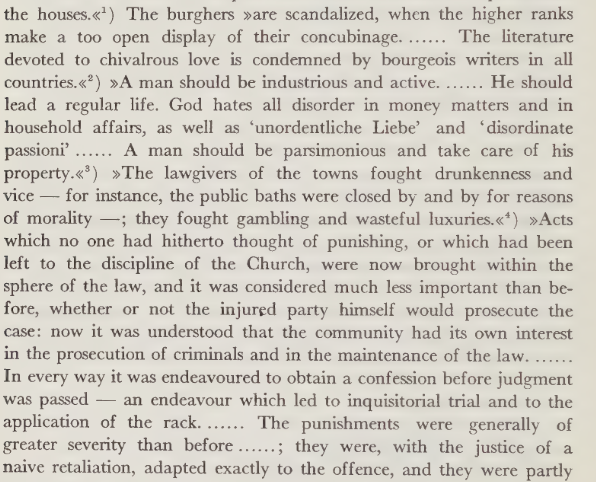
Ranulf's thesis is that permissiveness is a key feature of the upper-bourgeoisie's psychology while the "disinterested desire" to inflict punishment for lawbreaking, a rare phenomenon he only finds in Ancient Athens, the High Middle Ages and the Protestant countries, is generally only present among the lower middle classes or petite bourgeoisie.


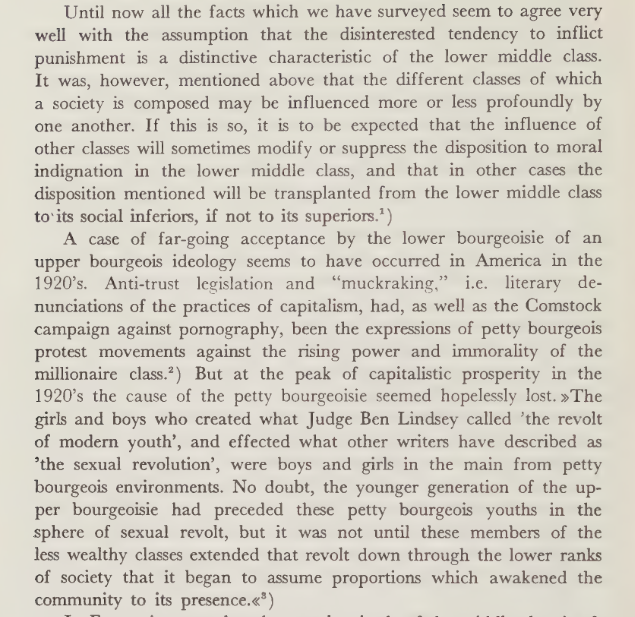
In America Puritan values, once understood as the central moral force of the American middle-class, gave way to upper bourgeois permissiveness by the 1920s. Before the War, it was understood that America's ruling elite had an imperative to at least pay lip service to Puritan moral values but once the Protestant middle-class ceased to be a decisive electoral, the "quasi-aristocracy" that has ruled the country since the Civil War made a volte face on its stated principles:
"Deviations from the middle class credo were concealed in the nineteenth century; in the twentieth century they were shamelessly flaunted before the public eye."
"Deviations from the middle class credo were concealed in the nineteenth century; in the twentieth century they were shamelessly flaunted before the public eye."

• • •
Missing some Tweet in this thread? You can try to
force a refresh




