🚨An analysis of forest-based projects funded through the sale of #CarbonCredits shows that 10% of them may have a net warming effect on the climate because of the way they alter the Earth’s #albedo, or how much sunlight is reflected back into space.
DETAILS🧵1/12
DETAILS🧵1/12
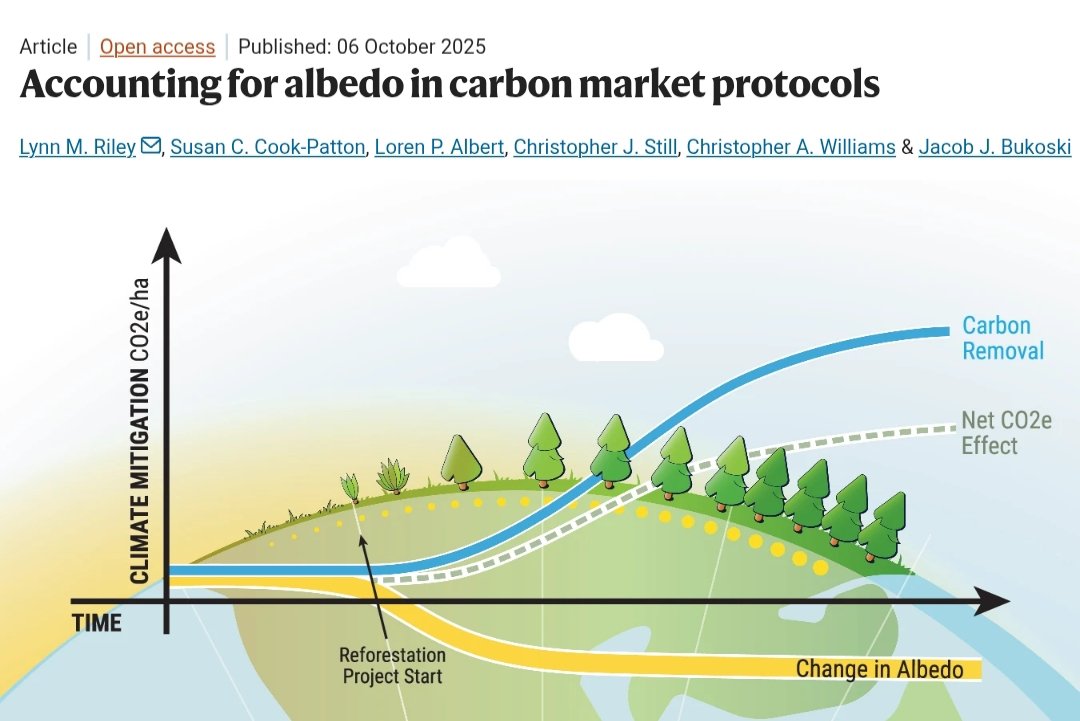
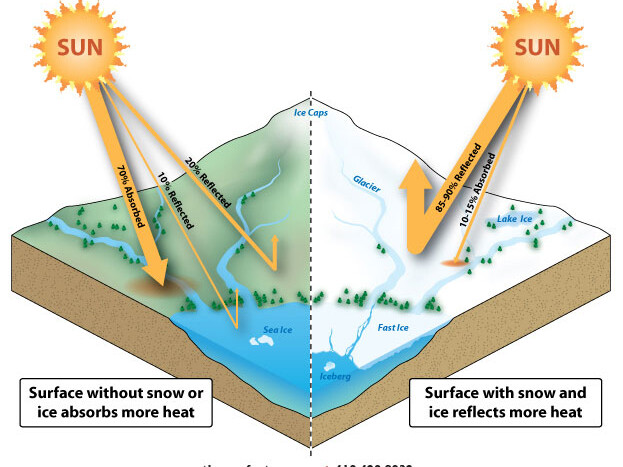
2/ Albedo is how much sunlight Earth’s surface reflects vs. absorbs
Forests are darker than grass or snow, meaning they absorb more heat
So when grasslands or snowy areas are turned into forests, Earth’s surface can absorb more heat, partly cancelling out cooling effect of #CDR
Forests are darker than grass or snow, meaning they absorb more heat
So when grasslands or snowy areas are turned into forests, Earth’s surface can absorb more heat, partly cancelling out cooling effect of #CDR
3/ So, this study analyzed 172 Afforestation, Reforestation & Revegetation projects in the Voluntary Carbon Market - projects that collectively aim to deliver nearly 800 million tons of CDR over the next century.
But none of these projects’ standards account for albedo change.
But none of these projects’ standards account for albedo change.

4/ FINDINGS
12% of projects are in areas where albedo completely negates climate benefit
25% occur where albedo cuts benefit by half
Only 9% of projects are in regions where albedo actually enhances cooling
This means some “C neutral” projects might not be climate +ve at all
12% of projects are in areas where albedo completely negates climate benefit
25% occur where albedo cuts benefit by half
Only 9% of projects are in regions where albedo actually enhances cooling
This means some “C neutral” projects might not be climate +ve at all
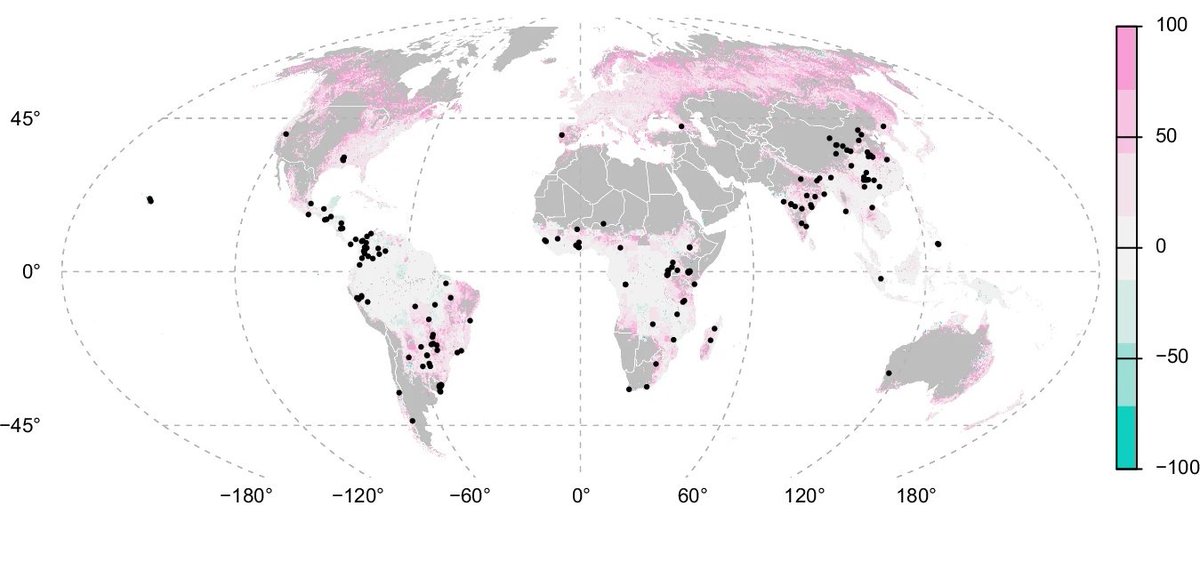
5/ These projects are spread across 5 continents and various ecosystems.
Albedo losses were highest in deserts, arid regions & temperate forests, where new trees darken bright land surfaces.
Albedo losses were highest in deserts, arid regions & temperate forests, where new trees darken bright land surfaces.
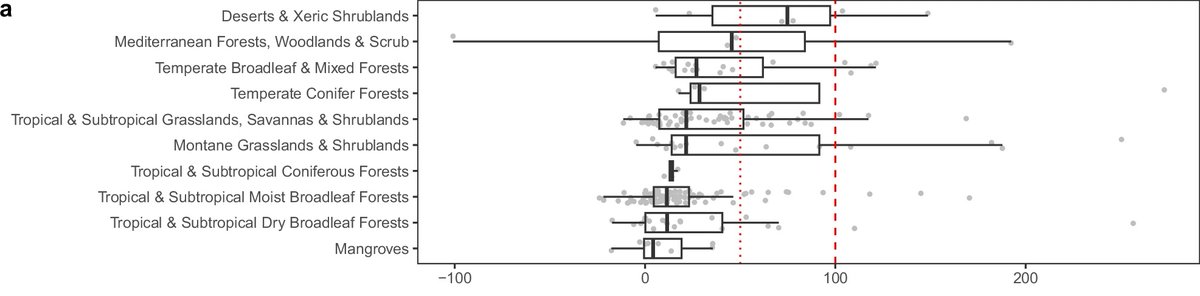
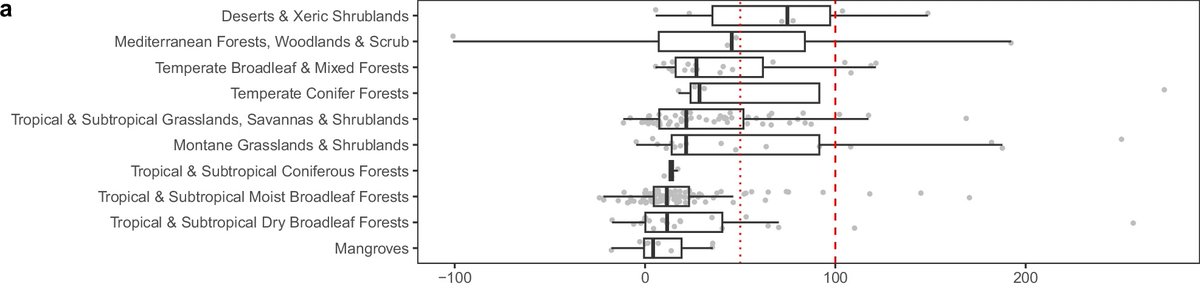
6/ In contrast, tropical regions, like moist and dry broadleaf forests or savannas, showed moderate or even positive effects.
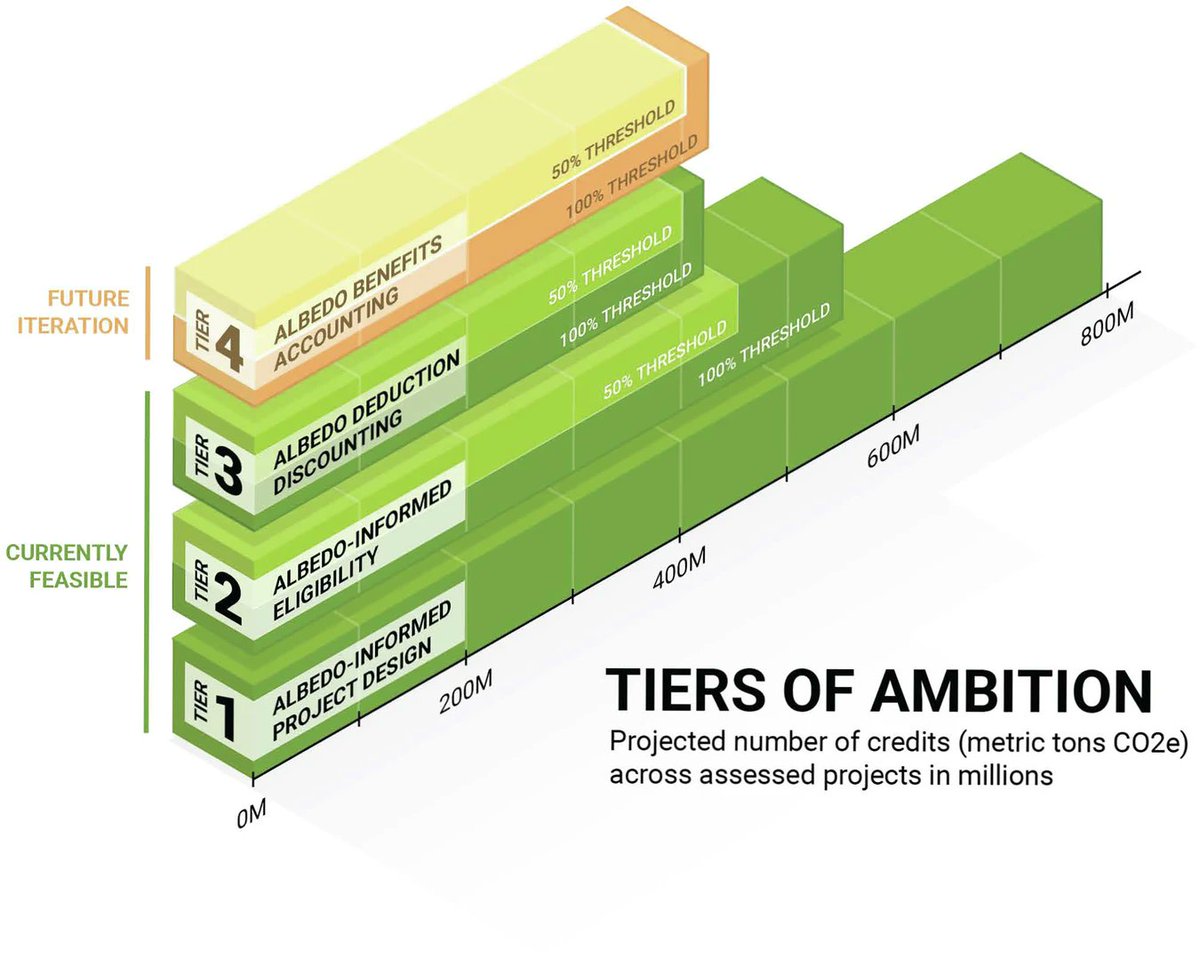
7/ The researchers propose a 4-tier framework to help C markets correct for albedo impacts & improve integrity:
Tier 1️⃣: Prioritize planting in regions where albedo effects are minimal or positive.
Tier 2️⃣: Exclude projects if albedo cancels out ≥50–100% of the CO₂ benefit.
Tier 1️⃣: Prioritize planting in regions where albedo effects are minimal or positive.
Tier 2️⃣: Exclude projects if albedo cancels out ≥50–100% of the CO₂ benefit.
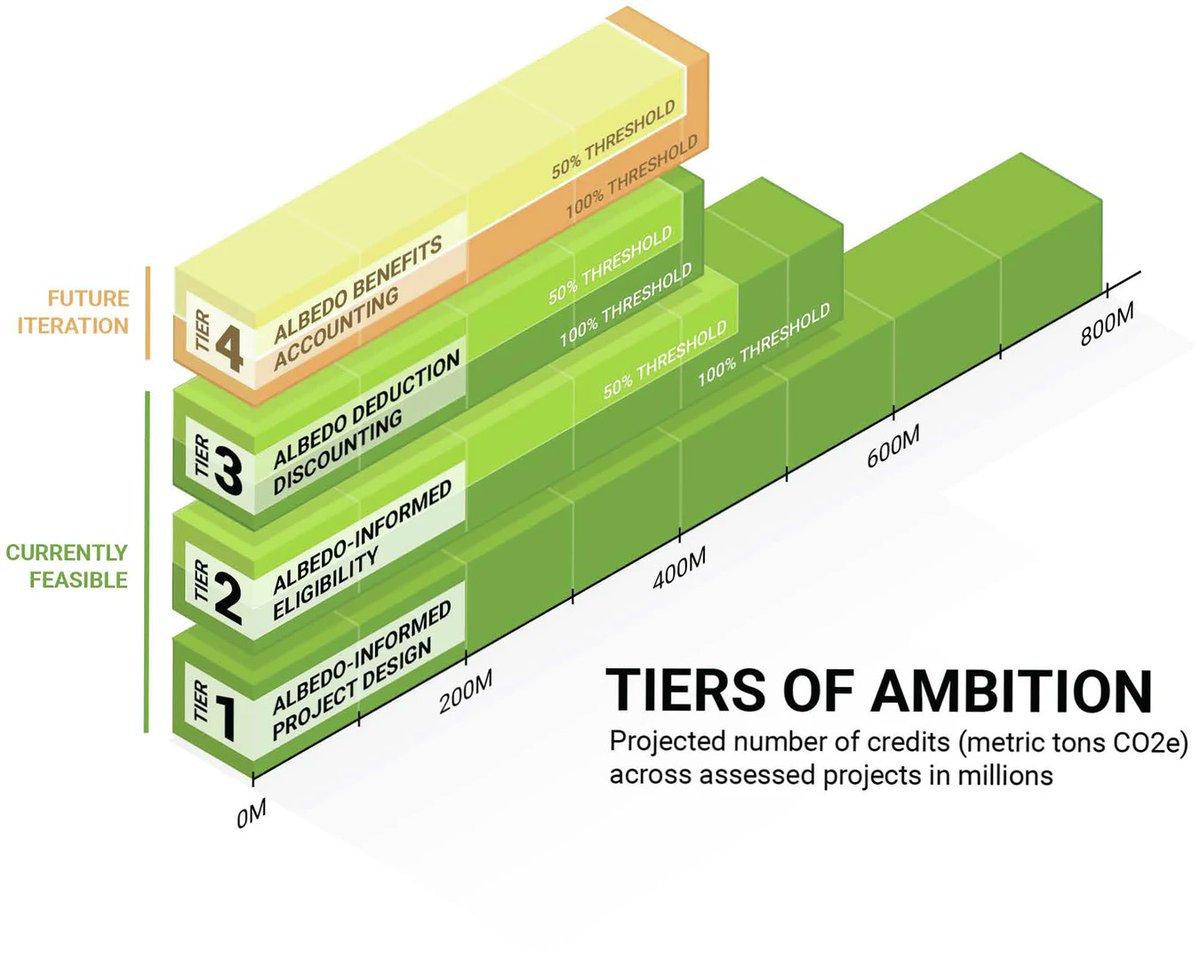
8/ Tier 3️⃣: Apply credit “discounts” based on each site’s albedo data.
Tier 4️⃣: Reward projects with albedo benefits (net cooling).
Tier 4️⃣: Reward projects with albedo benefits (net cooling).
9/ If these adjustments were applied:
Global carbon credits from the 172 projects could drop by 30–49%, reflecting their true climate impact.
However, projects with albedo benefits could gain $59 million in extra value from their additional cooling effects.
Global carbon credits from the 172 projects could drop by 30–49%, reflecting their true climate impact.
However, projects with albedo benefits could gain $59 million in extra value from their additional cooling effects.

10/ Currently, C markets only measure biochemical effects (like CO₂ captured by trees)
But biophysical effects (albedo, evapotranspiration & cloud formation) also change the planet’s energy balance
Ignoring them means overcrediting projects & undermining real climate progress
But biophysical effects (albedo, evapotranspiration & cloud formation) also change the planet’s energy balance
Ignoring them means overcrediting projects & undermining real climate progress
11/ Because of new remote sensing tools & global datasets, albedo accounting is now practical.
That means standards like Verra’s Verified Carbon Standard or Isometric’s protocols could start integrating albedo right away to improve transparency, study recommended.
That means standards like Verra’s Verified Carbon Standard or Isometric’s protocols could start integrating albedo right away to improve transparency, study recommended.
📝For more details, read the study entitled "Accounting for albedo in carbon market protocols" here:
🧵12/12
#CarbonRomoval #CarbonMarket #CarbonOffset #Albedonature.com/articles/s4146…
🧵12/12
#CarbonRomoval #CarbonMarket #CarbonOffset #Albedonature.com/articles/s4146…
"unroll" @threadreaderapp
• • •
Missing some Tweet in this thread? You can try to
force a refresh