1. What happens when women, for the first time in history, gain real cultural power? I explore this question in “From Worriers to Warriors: The Cultural Rise of Women,” now in press at @JConIdeas:
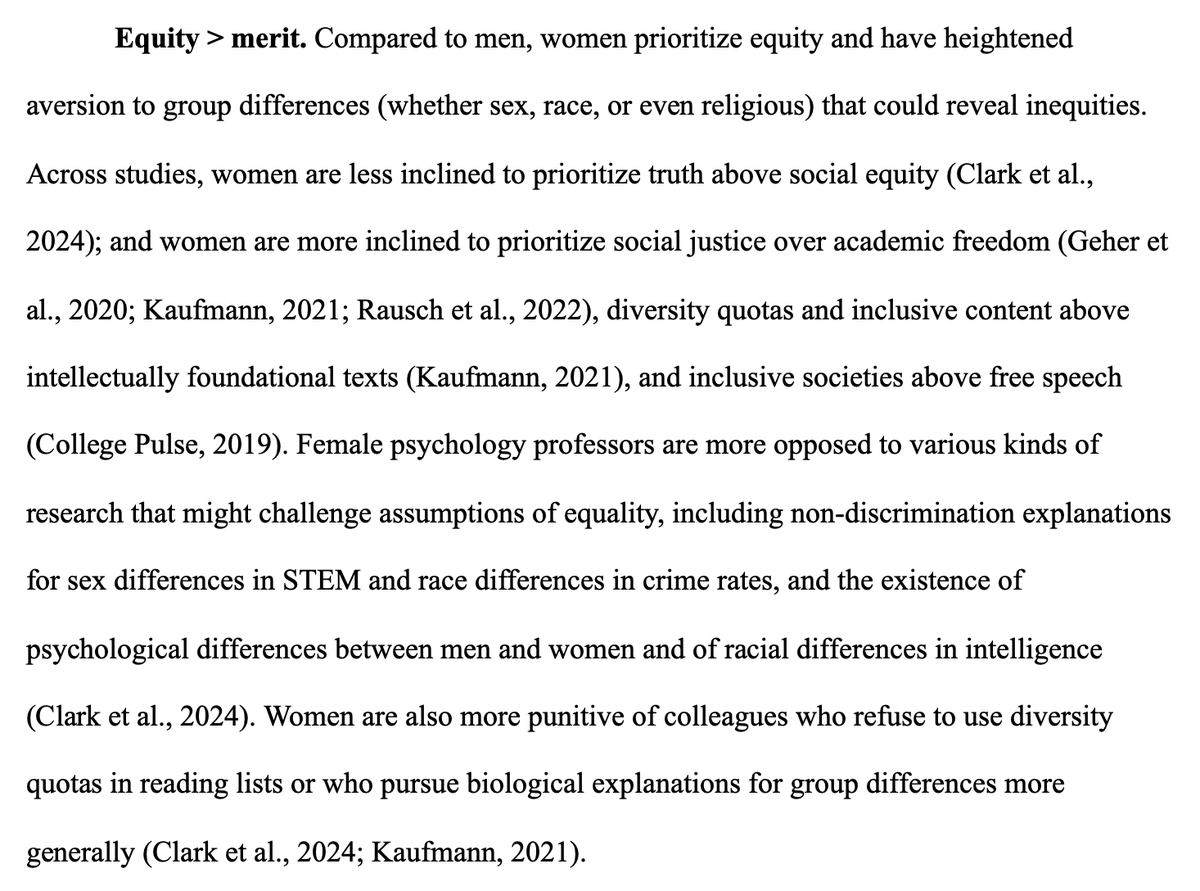
2. Men and women differ, on average, in their values. Women are more risk-averse and egalitarian, more concerned with protecting the vulnerable, and more inclined to resolve conflict through social exclusion. When sex ratios shift, cultures shift too.
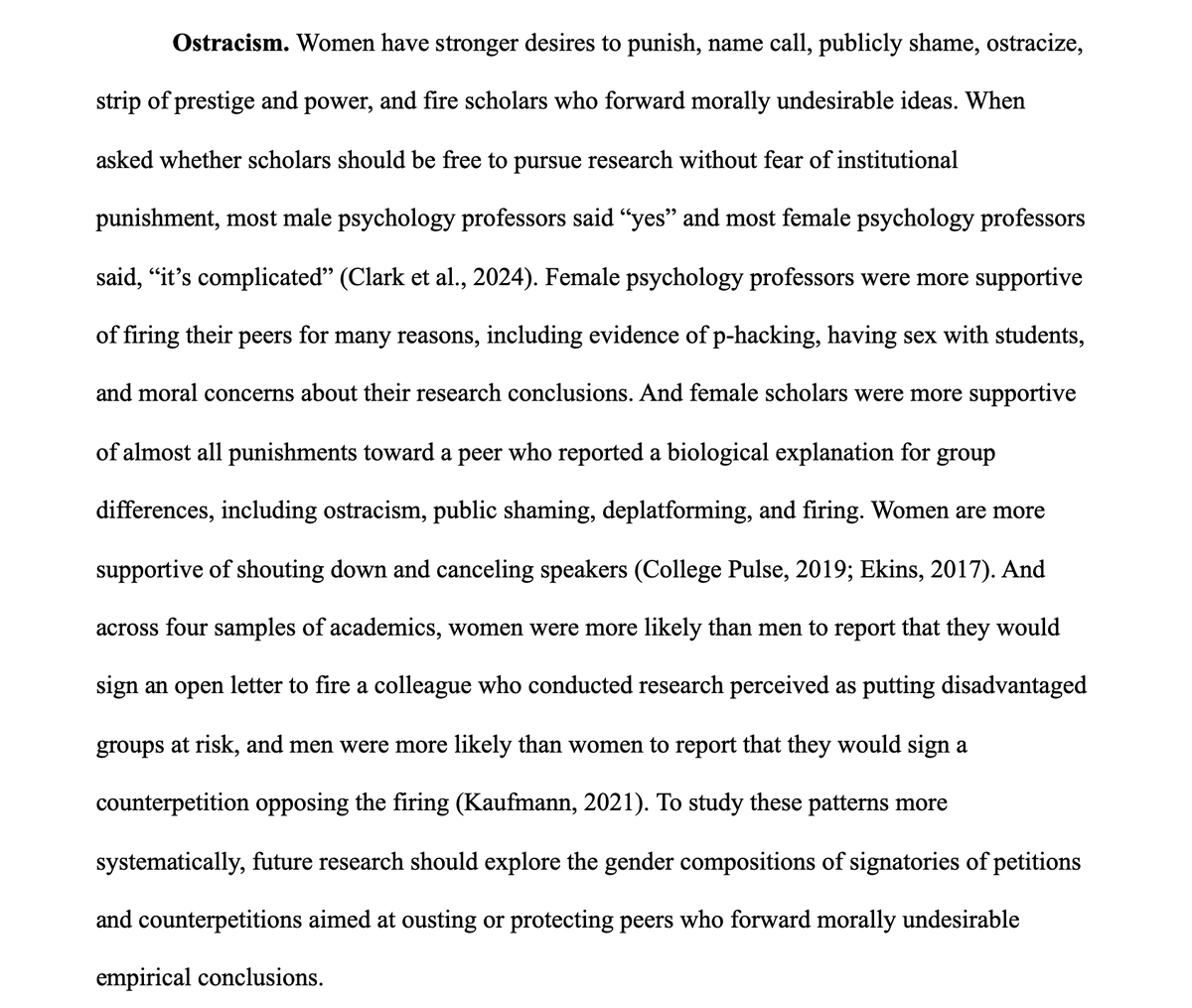
3. Academia is a perfect case study. Women were once almost entirely excluded and now constitute majorities. This shift increased the prioritization of equity (e.g., DEI initiatives), harm-avoidance (e.g., harm-based censorship), and ostracism (e.g., cancel culture).
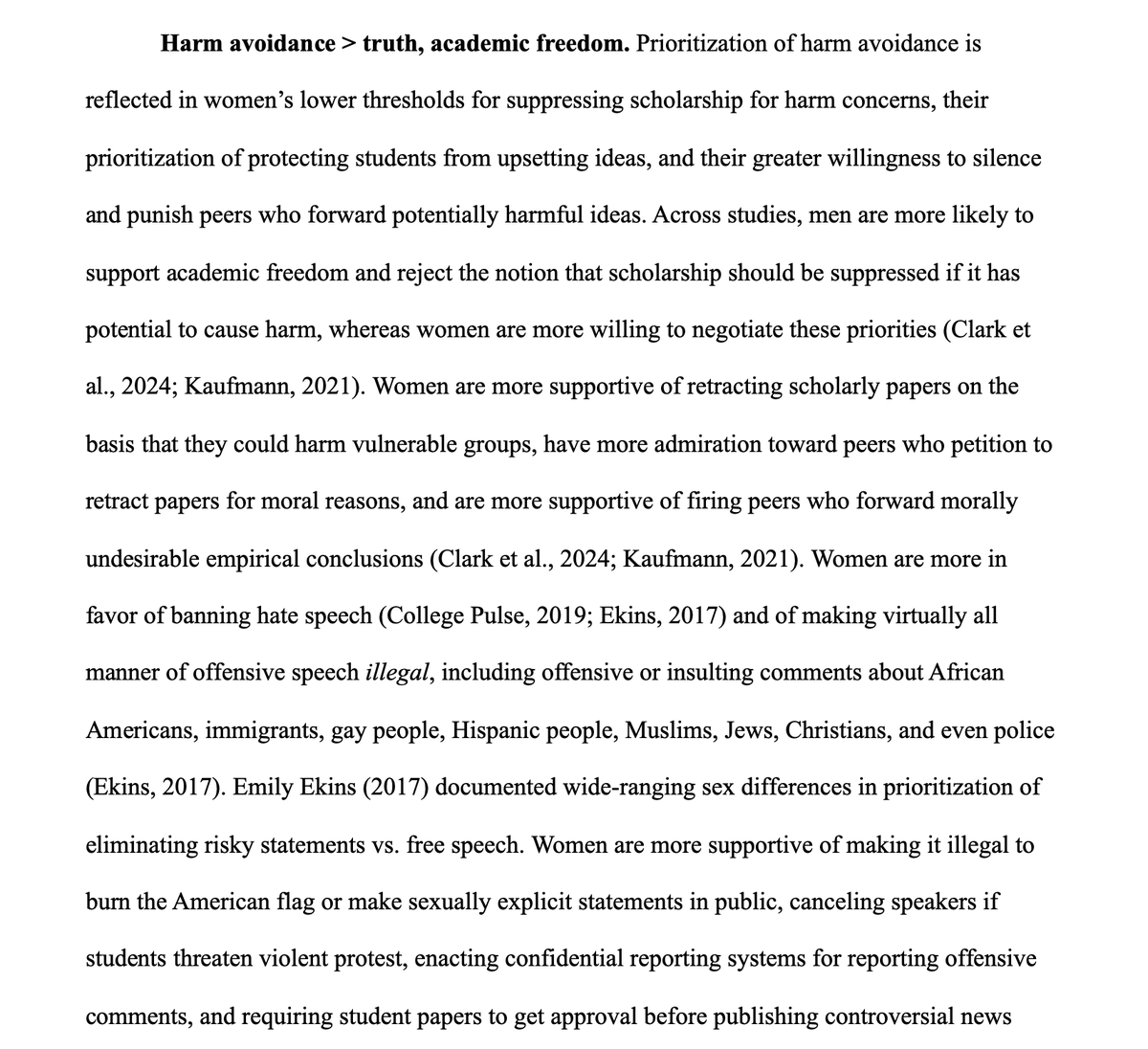
4. Multiple studies document these sex differences in academia. Women report more support for equity, social justice, diversity quotas, banning offensive speech and research, and punishing, ostracizing, and firing peers who forward “harmful” conclusions.
5. The cultural rise of women has likely shaped many modern trends. For a few other possibilities:
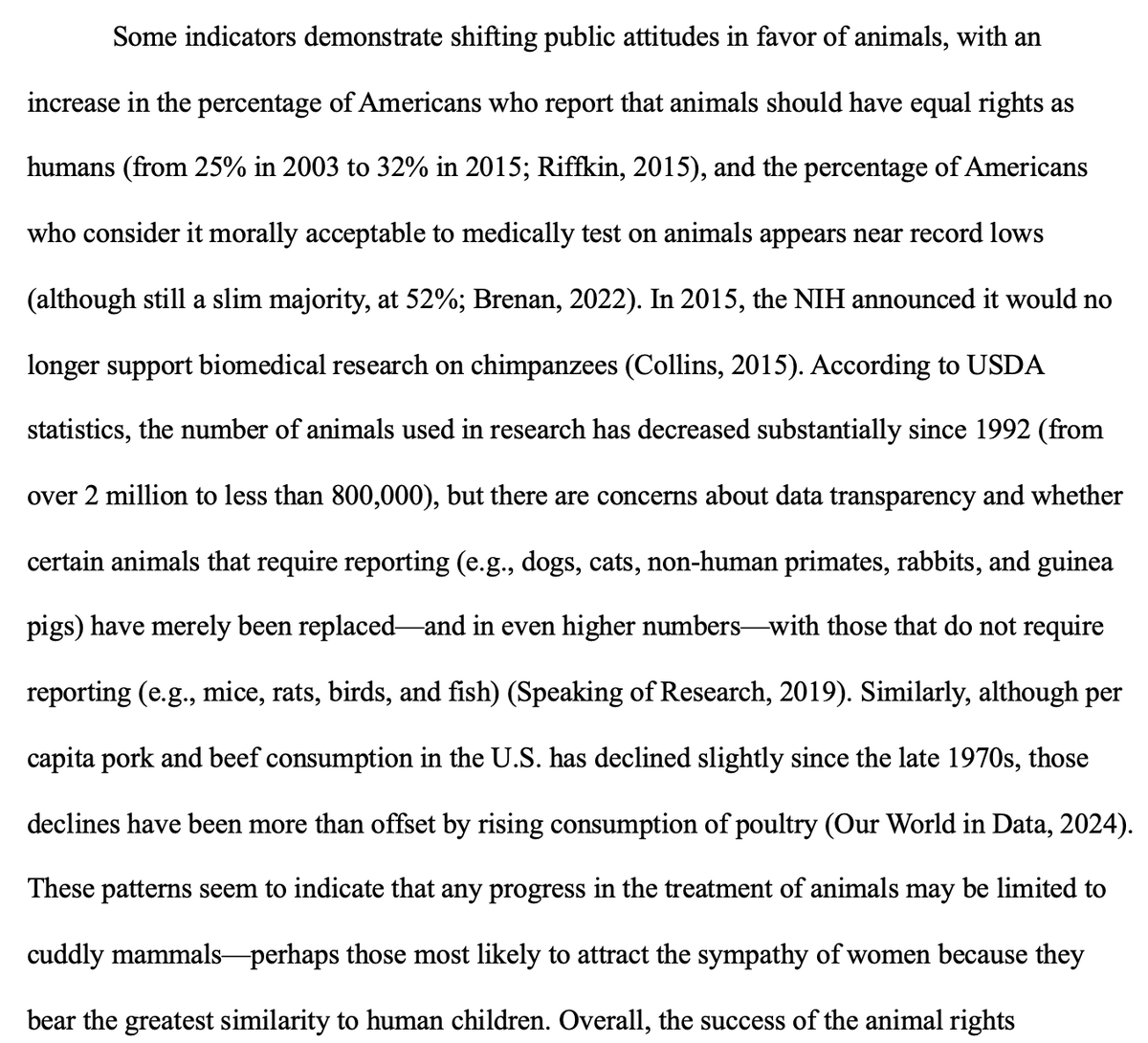
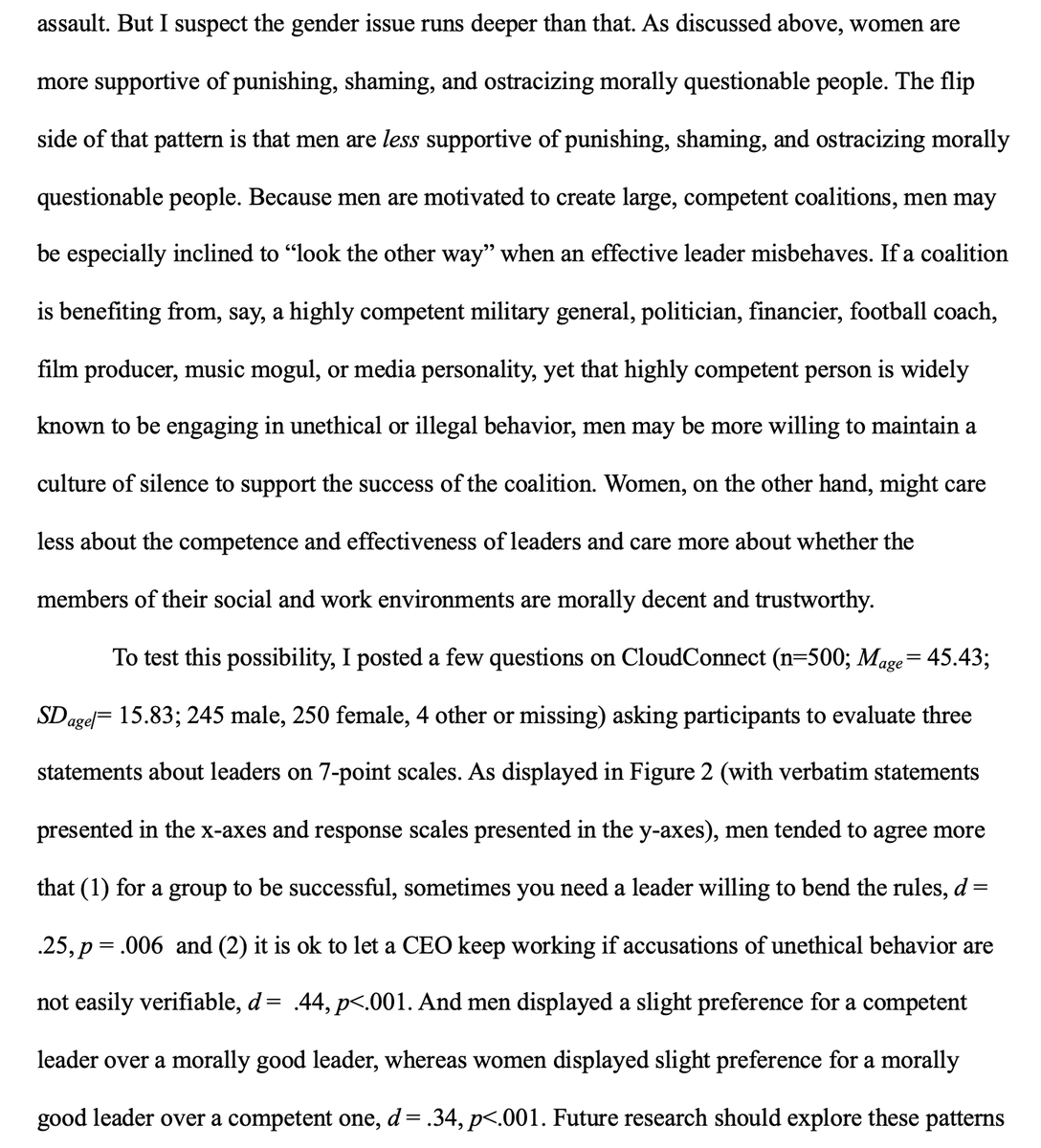
the rapid success of the LGBT movement, animal rights progress, rising mental health concerns, and increased accountability for competent but unethical leaders.
6. The clash between the emerging female moral order and the male-oriented status quo has been acrimonious, but it offers a chance to test which norms work best in which contexts. Through this discovery, societies may benefit from the best aspects of both male & female psychology
• • •
Missing some Tweet in this thread? You can try to
force a refresh

1. In 2003, Kahneman published an article in American Psychologist describing the magic of collaborating with Tversky but also lamenting how current modes of scientific disagreement were unnecessarily hostile and unproductive. He hoped for a better way: Adversarial Collaborations
2. 21 years later, these procedures remain rare. Ceci, Williams, @PsychRabble and I just published an article (also in American Psychologist) explaining why ACs are needed to improve scientific outputs and restore credibility to behavioral science: psycnet.apa.org/doiLanding?doi…
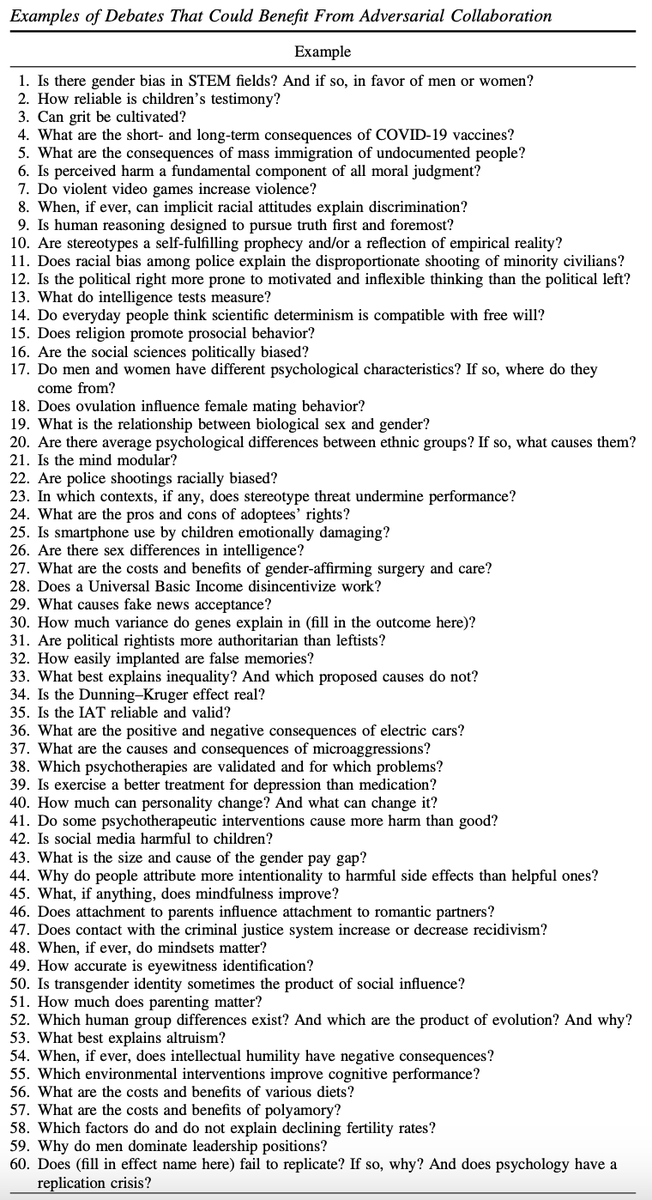
3. We include a list of 60 debates that would benefit from ACs (adapted from an earlier list made w/@PTetlock). But this is a drop in the bucket of potentially millions of published papers that contradict other published papers.
In a sample of psych profs, we identify points of conflict & consensus regarding (1) controversial empirical claims & (2) normative preferences for how controversial scholarship & scholars should be treated: journals.sagepub.com/doi/full/10.11…
2. Off-limits research conclusions tend to involve group differences in socially important outcomes, and particularly when differences are attributed to genetic or otherwise natural differences between groups (as opposed to social or environmental causes).
3. Professors strongly disagreed on the truth status of 10 candidate taboo research conclusions–for each conclusion, some professors reported 100% certainty in the veracity and others 100% certainty in the falsehood.
1. My latest now out in @PNASNews w/38 all-star co-authors. Scientists censor themselves and each other largely for prosocial reasons, to protect reputations from public scrutiny & to protect vulnerable groups from potentially harmful scientific findings: pnas.org/doi/10.1073/pn…
2. However these harm concerns are largely based on intuitive assumptions rather than empirical evidence, and the immediate and downstream costs of censorship are rarely weighed against the supposed harms.
3. Scientific censorship distorts understanding of empirical reality, can turn well-intentioned interventions into little more than a waste of time & resources (or worse), and gives the public good reason to distrust and disregard scientific findings and recommendations.
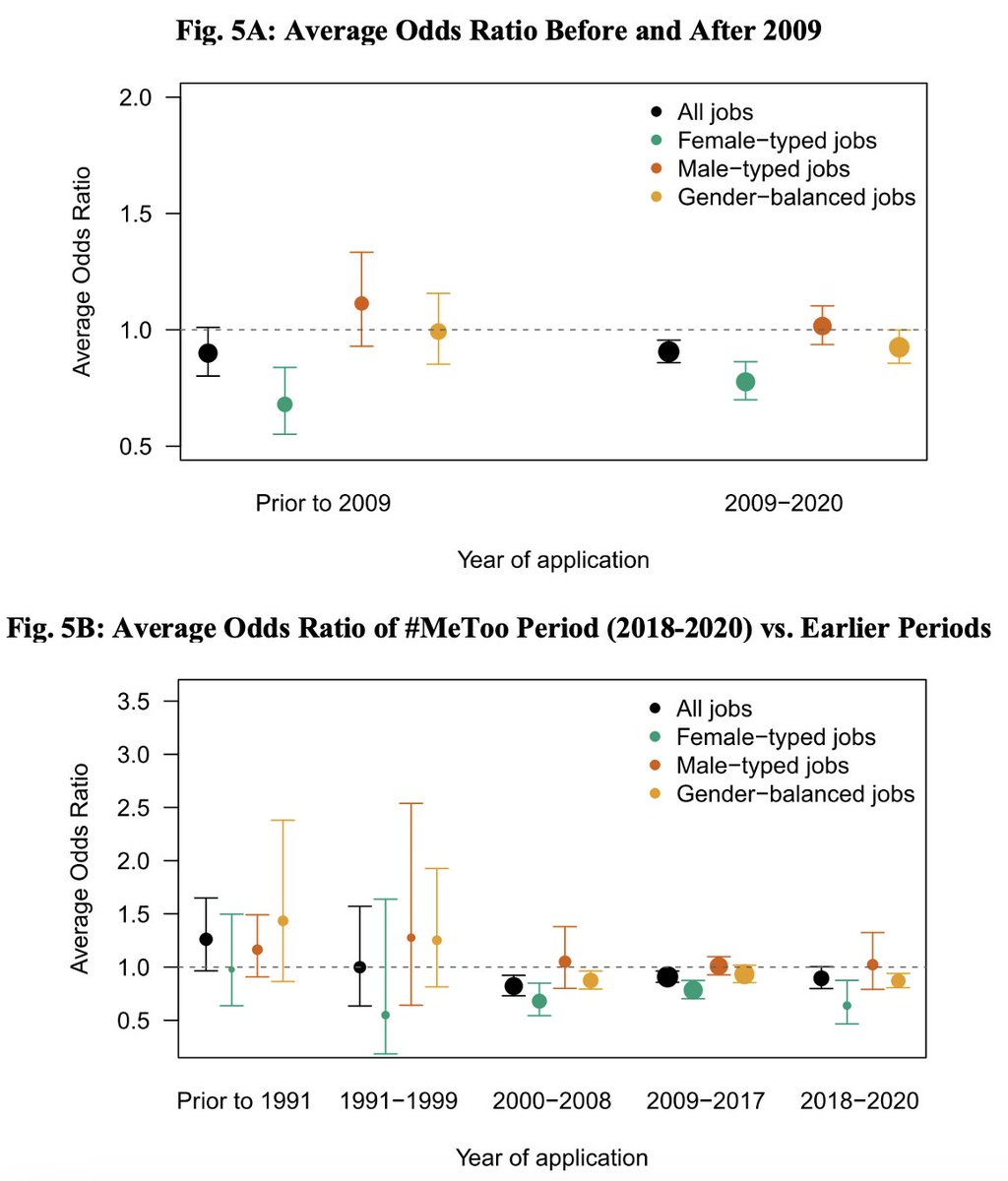
1. New meta-analysis of 85 studies testing gender bias in hiring practices & forecasting surveys asking scientists & laypeople to predict the results found:
2. This meta included 44 years of field audit studies (in which carefully-matched female & male job applications are sent to real orgs) testing for gender biases in callback rates for female-
stereotypical, gender neutral, & male-stereotypical jobs
3. For male-typed jobs, males used to be favored & now no gender bias is observed
For gender neutral jobs, males used to be favored & now females are
For female-typed jobs, females were & are still favored
2. Subjects read summaries of 6 potentially controversial findings (e.g., that female mentees benefit when they have more male than female mentors). One group reported whether they support various behavioral reactions. The other estimated the % of people who support each reaction
3. People consistently overestimated support for all harmful reactions (e.g., "Discourage young females from approaching female mentors") & underestimated support for all helpful reactions (e.g., "Invest in programs that help women develop as mentors.")
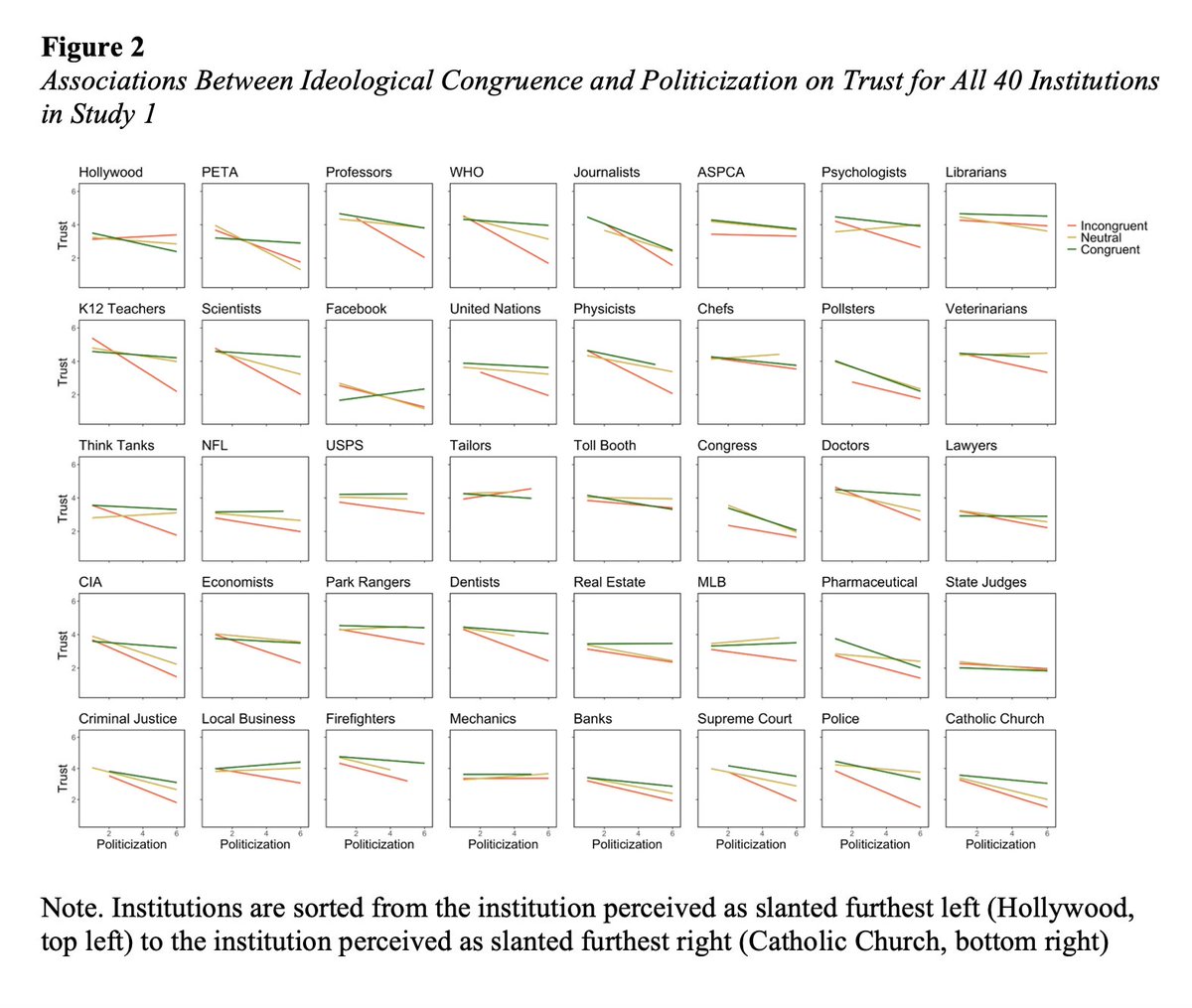
1. Even when ideologies align, people distrust politicized institutions:
In 3 studies & across 40 institutions, @calvinisch2 @JimACEverett @azimshariff & I find evidence that perceived politicization is strongly associated with lower trust in institutions
https://t.co/aYts6O1h1Qpsyarxiv.com/sfubr
2. This was observed on an individual difference level: When people perceived institutions as politicized, they trusted them less.
& This was observed between institutions: Institutions perceived as the most politicized were also the least trusted, with a large effect, r = -0.76
3. This pattern was observed even when participants shared the perceived ideology of the institution. For example, even left-leaning participants tended to trust left-leaning institutions less if they perceived them as politicized.