¹ The shape‑shifting story of Hind Rajab: how a fog‑of‑war tragedy was recast as a deliberate execution 🧵
The death of six‑year‑old Hind Rajab has become one of the most emblematic stories of this war, told and retold as an archetypal tale of ultimate atrocity — Israeli tanks supposedly executing, at point‑blank range, the children trapped in a car.
This thread examines how that narrative was manufactured — through shifting testimonies, selective omissions, and partisan “forensic” analysis — and shows why this framing, when examined closely, completely falls apart.
Fair warning: it’s a rather long read — but the devil, as always, is in the details.⏬
The death of six‑year‑old Hind Rajab has become one of the most emblematic stories of this war, told and retold as an archetypal tale of ultimate atrocity — Israeli tanks supposedly executing, at point‑blank range, the children trapped in a car.
This thread examines how that narrative was manufactured — through shifting testimonies, selective omissions, and partisan “forensic” analysis — and shows why this framing, when examined closely, completely falls apart.
Fair warning: it’s a rather long read — but the devil, as always, is in the details.⏬

² First, a few key facts about this incident:
• On the morning of 29 January 2024, residents of Tel al‑Hawa neighborhood were urged to evacuate south. Nevertheless, several testimonies indicate that the car carrying Hind Rajab was driving north.
• Starting from early morning, heavy clashes broke out between Hamas and IDF forces in the area.
• Photos and videos taken after the car was discovered show that its windows were sealed with plastic sheeting.
• According to Hind’s mother, it was raining that day, so visibility was poor.
• Early Al Jazeera reporting explicitly stated that the car was first shot at while it was on the move.
In other words, a car with plastic-covered windows was moving through a combat zone toward Israeli positions, in poor visibility conditions, heading north — the opposite direction of the evacuation order.
Taken together, these details show why the car could have been understandably perceived by the IDF forces as an obvious hostile threat. ⏬
• On the morning of 29 January 2024, residents of Tel al‑Hawa neighborhood were urged to evacuate south. Nevertheless, several testimonies indicate that the car carrying Hind Rajab was driving north.
• Starting from early morning, heavy clashes broke out between Hamas and IDF forces in the area.
• Photos and videos taken after the car was discovered show that its windows were sealed with plastic sheeting.
• According to Hind’s mother, it was raining that day, so visibility was poor.
• Early Al Jazeera reporting explicitly stated that the car was first shot at while it was on the move.
In other words, a car with plastic-covered windows was moving through a combat zone toward Israeli positions, in poor visibility conditions, heading north — the opposite direction of the evacuation order.
Taken together, these details show why the car could have been understandably perceived by the IDF forces as an obvious hostile threat. ⏬
³ Unsurprisingly, the first major change Al Jazeera made in its next retelling — the reconstruction published on 22 February 2024 — was to claim that the car wasn't moving, but already stopped near a gas station, when tanks opened fire.
That single adjustment — from a moving car in the middle of a combat zone to a parked civilian vehicle — removed a key part of the context that explained why the car could plausibly be perceived as a hostile threat and instead made it appear as deliberate execution of an unmistakably civilian car.⏬
That single adjustment — from a moving car in the middle of a combat zone to a parked civilian vehicle — removed a key part of the context that explained why the car could plausibly be perceived as a hostile threat and instead made it appear as deliberate execution of an unmistakably civilian car.⏬
⁴ This was far from the only “adjustment” Al Jazeera made.
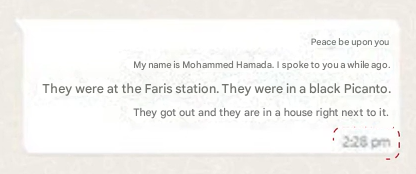
Their own screenshots of WhatsApp messages between Hind’s uncle and the Red Crescent show that at 2:28 p.m. the uncle wrote (in Arabic):
“They were at the Faris station. They were in a black Picanto. They got out and they are in a house right next to it.”
And yet, that crucial line was never mentioned in the English narration.
However, if some or all members of the family had left the car, the entire “children trapped inside” premise collapses — and with it, the foundation of the alleged execution story. ⏬
Their own screenshots of WhatsApp messages between Hind’s uncle and the Red Crescent show that at 2:28 p.m. the uncle wrote (in Arabic):
“They were at the Faris station. They were in a black Picanto. They got out and they are in a house right next to it.”
And yet, that crucial line was never mentioned in the English narration.
However, if some or all members of the family had left the car, the entire “children trapped inside” premise collapses — and with it, the foundation of the alleged execution story. ⏬

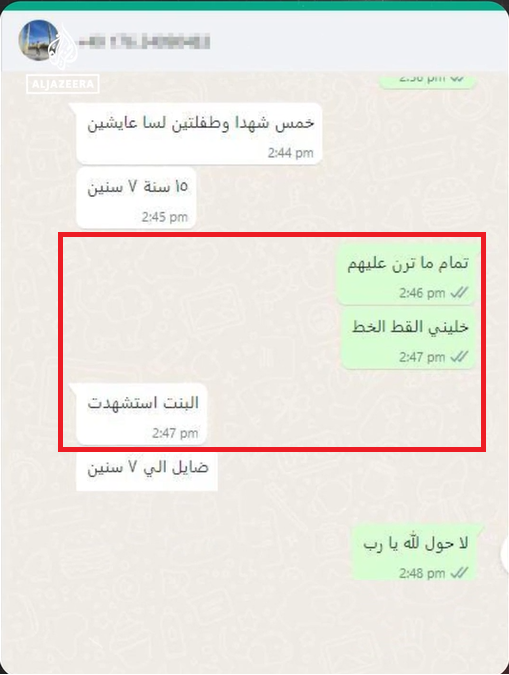
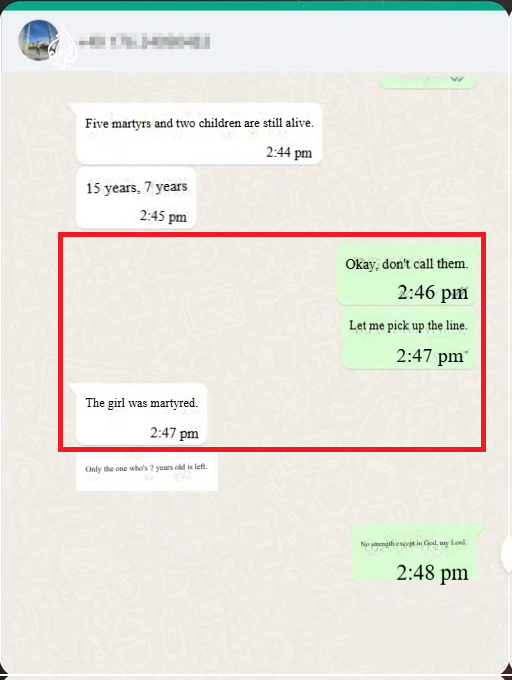
⁵ Another critical part of the same WhatsApp exchange omitted in English narration is the last two messages in which Hind’s uncle notifies the Red Crescent that Hind's cousin Layan was killed. These messages were sent immediately after the Red Crescent asked the uncle to keep the line open so they could reach the family — something they had not managed to do until that point.
Nevertheless, Al Jazeera truncated its English narration at the message just before that, claiming that at that moment the Red Crescent - not Hind's uncle - reached Layan and heard her being shot on the call, contrary to what the Arabic messages show.
The recording of this alleged call played a central role in dramatizing the story, shaping much of its emotional impact and being replayed across media platforms. If that call never happened as described, the audio recording circulated worldwide becomes unverified at best — and potentially fabricated. And since much of the “forensic analysis” used to construct the canonical narrative relied on that recording, its credibility — and the conclusions drawn from it — are fatally undermined.
Perhaps that was the reason why these key messages was never mentioned by Al Jazeera English — and why the entire exchange was omitted from all subsequent reconstructions, both by Al Jazeera and others.⏬
Nevertheless, Al Jazeera truncated its English narration at the message just before that, claiming that at that moment the Red Crescent - not Hind's uncle - reached Layan and heard her being shot on the call, contrary to what the Arabic messages show.
The recording of this alleged call played a central role in dramatizing the story, shaping much of its emotional impact and being replayed across media platforms. If that call never happened as described, the audio recording circulated worldwide becomes unverified at best — and potentially fabricated. And since much of the “forensic analysis” used to construct the canonical narrative relied on that recording, its credibility — and the conclusions drawn from it — are fatally undermined.
Perhaps that was the reason why these key messages was never mentioned by Al Jazeera English — and why the entire exchange was omitted from all subsequent reconstructions, both by Al Jazeera and others.⏬
⁶ The alleged call with Layan became the linchpin of Forensic Architecture’s investigation — the foundation of the “deliberate execution” claim. Yet even assuming the recording is genuine, the full audio tells a very different story.
First, FA claimed that only one weapon type was audible, with the firing rate supposedly matching Israeli rifles or a tank-mounted gun. However, their analysis was limited only to the second half of the recording, ignoring two shorter bursts a few seconds earlier.
One of these bursts was long enough to allow an estimate of its firing rate — roughly 10 shots per second (≈ 600 rpm) — matching that of the AK‑47, Hamas’s standard rifle.
This indicates that at least two different weapons were fired in sequence, reflecting an ongoing firefight between Israeli forces and Hamas — not a one‑sided, deliberate volley at a civilian car.
Furthermore, FA identified 64 gunshots in the audio track but only about 30 bullet holes along the line they used for trajectory modelling — which they assumed corresponded to the shots heard in the recording.
In other words, at least half of the rounds must have struck elsewhere, at a target near or behind the car, further reinforcing the crossfire scenario.
This conclusion is further supported by reports from the same day describing intense clashes in Tel al‑Hawa, and by another recording in which a dispatcher asks Hind, “Is there gunfire around you?”
Together, these details suggest that the car was caught between opposing lines of fire, not deliberately targeted — directly contradicting the accusatory narrative Forensic Architecture helped promote.⏬
First, FA claimed that only one weapon type was audible, with the firing rate supposedly matching Israeli rifles or a tank-mounted gun. However, their analysis was limited only to the second half of the recording, ignoring two shorter bursts a few seconds earlier.
One of these bursts was long enough to allow an estimate of its firing rate — roughly 10 shots per second (≈ 600 rpm) — matching that of the AK‑47, Hamas’s standard rifle.
This indicates that at least two different weapons were fired in sequence, reflecting an ongoing firefight between Israeli forces and Hamas — not a one‑sided, deliberate volley at a civilian car.
Furthermore, FA identified 64 gunshots in the audio track but only about 30 bullet holes along the line they used for trajectory modelling — which they assumed corresponded to the shots heard in the recording.
In other words, at least half of the rounds must have struck elsewhere, at a target near or behind the car, further reinforcing the crossfire scenario.
This conclusion is further supported by reports from the same day describing intense clashes in Tel al‑Hawa, and by another recording in which a dispatcher asks Hind, “Is there gunfire around you?”
Together, these details suggest that the car was caught between opposing lines of fire, not deliberately targeted — directly contradicting the accusatory narrative Forensic Architecture helped promote.⏬
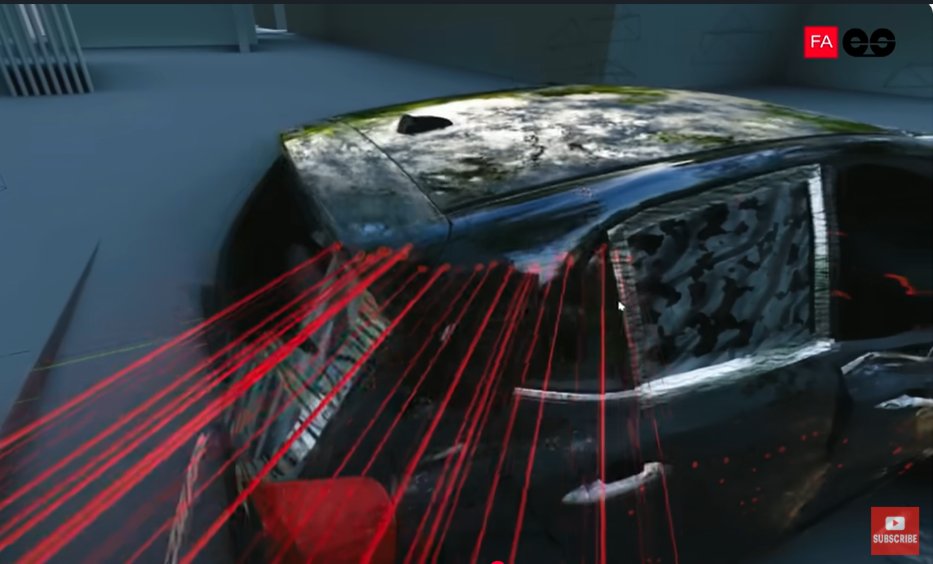
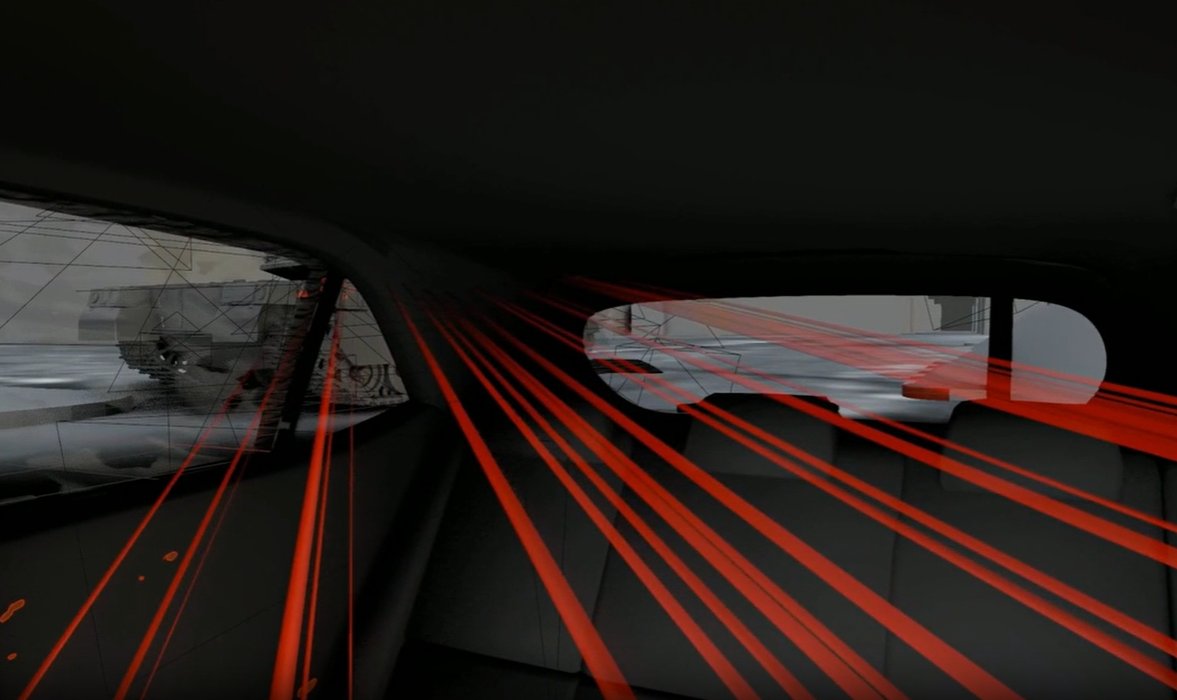
⁷ FA also claimed — based on their 3D reconstruction — that Israeli tank crews had a “clear line of sight” to the children inside the car, implying a deliberate execution at close range.
Yet multiple reports note that the girls were seated in the back, and in the recorded call, Layan can be heard saying, “We are hiding in the car", suggesting they were crouched low behind the front seats.
In addition, FA’s reconstruction indicates that the fire came from the rear-right direction — given that geometry and the plastic-covered windows, the gunner could not have seen the children, especially under the rainy, cloudy conditions described by witnesses.
In short, FA’s “clear line of sight” claim collapses under the combined weight of physical and visual constraints — the firing angle, plastic-covered windows, poor weather, and interior seating position all make it impossible that the gunner could have seen the children inside the car.⏬
Yet multiple reports note that the girls were seated in the back, and in the recorded call, Layan can be heard saying, “We are hiding in the car", suggesting they were crouched low behind the front seats.
In addition, FA’s reconstruction indicates that the fire came from the rear-right direction — given that geometry and the plastic-covered windows, the gunner could not have seen the children, especially under the rainy, cloudy conditions described by witnesses.
In short, FA’s “clear line of sight” claim collapses under the combined weight of physical and visual constraints — the firing angle, plastic-covered windows, poor weather, and interior seating position all make it impossible that the gunner could have seen the children inside the car.⏬
⁸ As a sidenote, it’s worth mentioning that FA’s “investigation” was commissioned by Al Jazeera, and that FA were among the last “experts” still blaming the Al-Ahli hospital explosion on Israel — long after U.S. and French intelligence, as well as AP — and even HRW — concluded it was most likely a misfired Islamic Jihad rocket.
This pattern of bias perhaps explains their consistent disregard for evidence contradicting the narratives they set out to promote.⏬
This pattern of bias perhaps explains their consistent disregard for evidence contradicting the narratives they set out to promote.⏬
⁹ Another aspect of the story that kept shifting was the car’s supposed destination — variously described as al-Ahli Hospital, the family’s home in northern Gaza City, or, in a later Al Jazeera interview with Hind’s mother, as “a town that’s further out”.
The one thing common to all those different destinations was the same initial direction: north, not south, opposite to IDF evacuation orders.
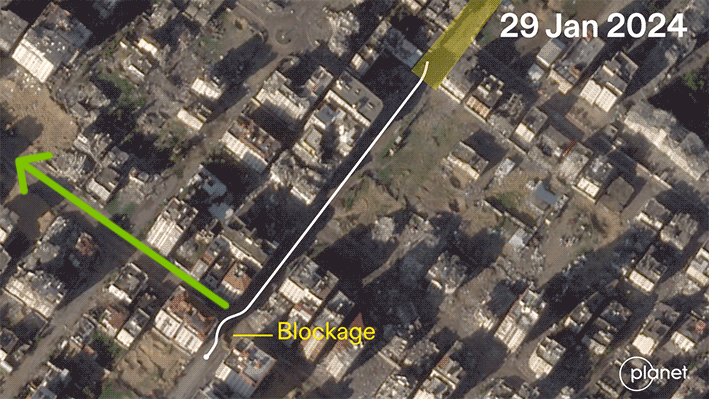
Forensic Architecture were the only ones to acknowledge this contradiction, but excused it by claiming the southern route was blocked. Yet their own map shows a clear alternative path via Beirut Street (green arrow) leading straight to al-Rashid Road — the designated evacuation corridor.
Even if one junction was obstructed, the route south was still open. The family went the other way — north, contrary to the evacuation order — not because of any blockage, but by choice.⏬
The one thing common to all those different destinations was the same initial direction: north, not south, opposite to IDF evacuation orders.
Forensic Architecture were the only ones to acknowledge this contradiction, but excused it by claiming the southern route was blocked. Yet their own map shows a clear alternative path via Beirut Street (green arrow) leading straight to al-Rashid Road — the designated evacuation corridor.
Even if one junction was obstructed, the route south was still open. The family went the other way — north, contrary to the evacuation order — not because of any blockage, but by choice.⏬
¹⁰ Equally, the timeline kept shifting.
Early reports placed the start of the incident — the family’s departure and the firing on the car by Israeli forces — in the early afternoon, placing the first contact with the Red Crescent soon after the incident began.
Forensic Architecture’s June report shifted the beginning of the event to the “early hours” of 29 January, while Sky News Oct 2024 article for a first time quoted Hind’s mother giving a precise time for the attack — 8:10 a.m., said to be ten minutes after departure.
This revision of the timeline creates a six-hour gap between the alleged shooting (8:10 a.m.) and the first documented PRCS contact (~2:30 p.m.).
What happened in those missing hours, and why did neither FA nor Sky News address it?
And why did the mother share this key piece of information only several months later — after months of reports placing the event in the early afternoon — with a “morning” version first surfacing in June, and the precise hour only emerging in October?
Viewed alongside her evolving statements about the family’s destination — first supposedly walking east to al-Ahli Hospital, then waiting for Bashar to return from another town — the constant revision of such core facts undermines the credibility of her account in general.⏬
Early reports placed the start of the incident — the family’s departure and the firing on the car by Israeli forces — in the early afternoon, placing the first contact with the Red Crescent soon after the incident began.
Forensic Architecture’s June report shifted the beginning of the event to the “early hours” of 29 January, while Sky News Oct 2024 article for a first time quoted Hind’s mother giving a precise time for the attack — 8:10 a.m., said to be ten minutes after departure.
This revision of the timeline creates a six-hour gap between the alleged shooting (8:10 a.m.) and the first documented PRCS contact (~2:30 p.m.).
What happened in those missing hours, and why did neither FA nor Sky News address it?
And why did the mother share this key piece of information only several months later — after months of reports placing the event in the early afternoon — with a “morning” version first surfacing in June, and the precise hour only emerging in October?
Viewed alongside her evolving statements about the family’s destination — first supposedly walking east to al-Ahli Hospital, then waiting for Bashar to return from another town — the constant revision of such core facts undermines the credibility of her account in general.⏬
¹¹ In summary, the inconsistencies outlined throughout this thread demonstrate how a battlefield encounter clouded by uncertainty in the midst of crossfire was gradually reframed into a narrative of deliberate atrocity.
The evidence instead suggests a chaotic encounter in which poor visibility, miscommunication, and the pressures of combat likely resulted in tragic misidentification and the deaths of civilians caught in the crossfire.
Recognizing these complexities does not diminish the human loss; rather, it restores factual integrity to a dramatic event that has been repeatedly weaponized for political ends.
The evidence instead suggests a chaotic encounter in which poor visibility, miscommunication, and the pressures of combat likely resulted in tragic misidentification and the deaths of civilians caught in the crossfire.
Recognizing these complexities does not diminish the human loss; rather, it restores factual integrity to a dramatic event that has been repeatedly weaponized for political ends.
The full investigation, in article form with links to all the sources, can be found here:
markzlochin.substack.com/p/the-shape-sh…
markzlochin.substack.com/p/the-shape-sh…
• • •
Missing some Tweet in this thread? You can try to
force a refresh