Saw this last week but didn't see much commentary, there should be more, because it's an example of how industry concerns about the workability of regulation are often shot down, but ultimately prove true.
Solid reporting by @egreechee
Solid reporting by @egreechee
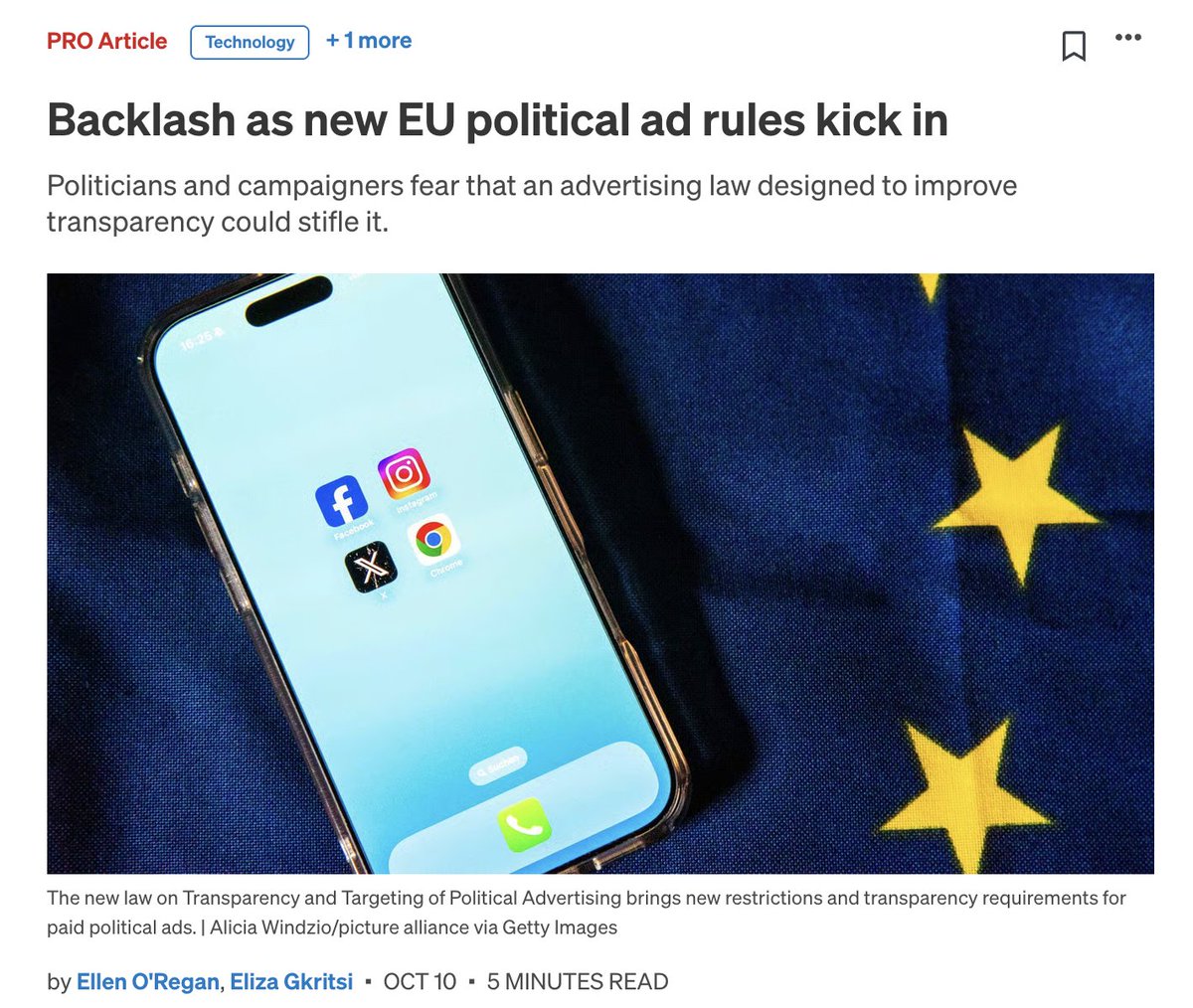
The EU regulation on the transparency and targeting of political advertising (TTPA) (Regulation 2024/900) was proposed all the way back in 2021, and had a few years of negotiations before it was finalised. eur-lex.europa.eu/legal-content/…
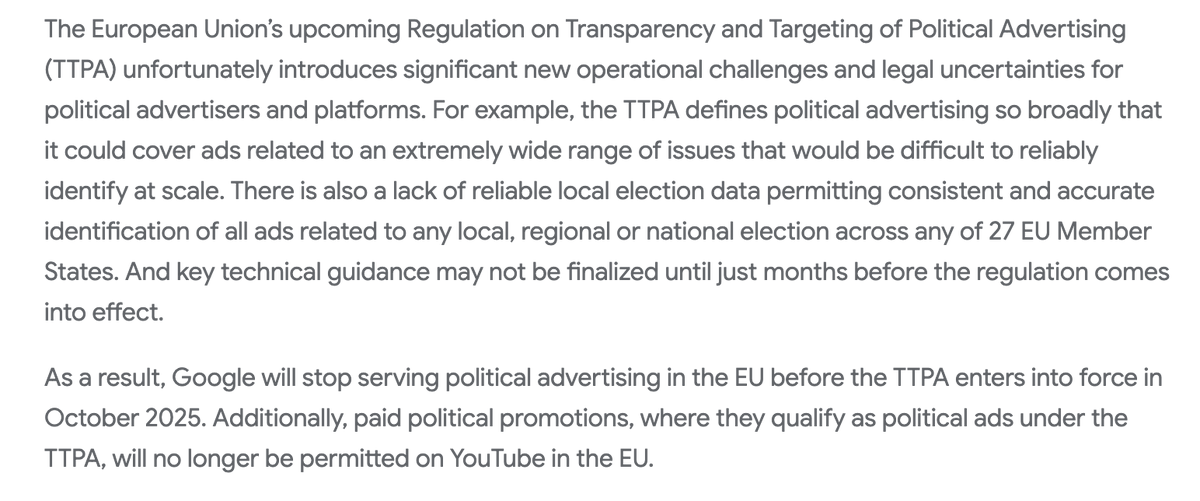
After participating in the consultation process and not getting very far, Google shared concerns publicly on how some of the TTPA drafting left too much uncertainty and unknowns for easy compliance, especially given the massive penalties for non-compliance (6% of global revenue).

These concerns weren't addressed, so already last year Google announced that they were pulling all kinds of "political ads" from Europe (an overbroad category given the uncertainty in the law's definitions. blog.google/around-the-glo…
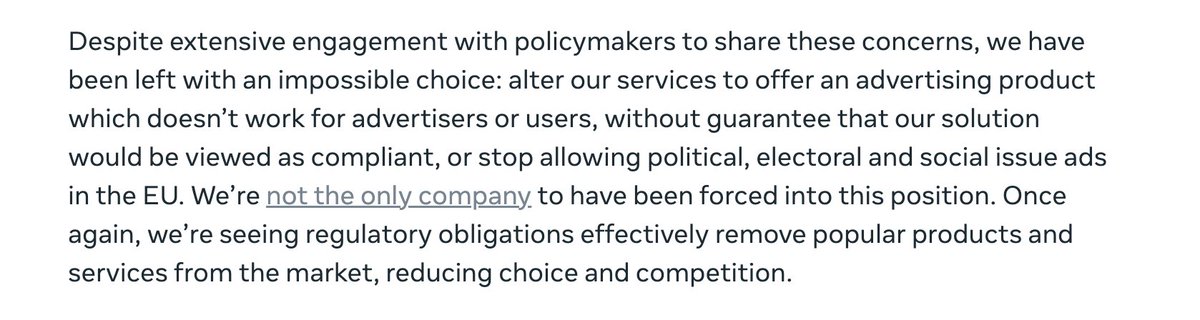
Meta followed suit, as the other big digital advertising platform, also highlighting the uncertainty and lack of necessary legal guidance from enforcers (complicated here by the multiplicity of national issues) about.fb.com/news/2025/07/e…
Predictably, European lawmakers are now raising concerns, that the law that was said to be unworkable, is actually unworkable, and that the companies aren't able to offer their services in Europe anymore, as they had previously predicted and warned.

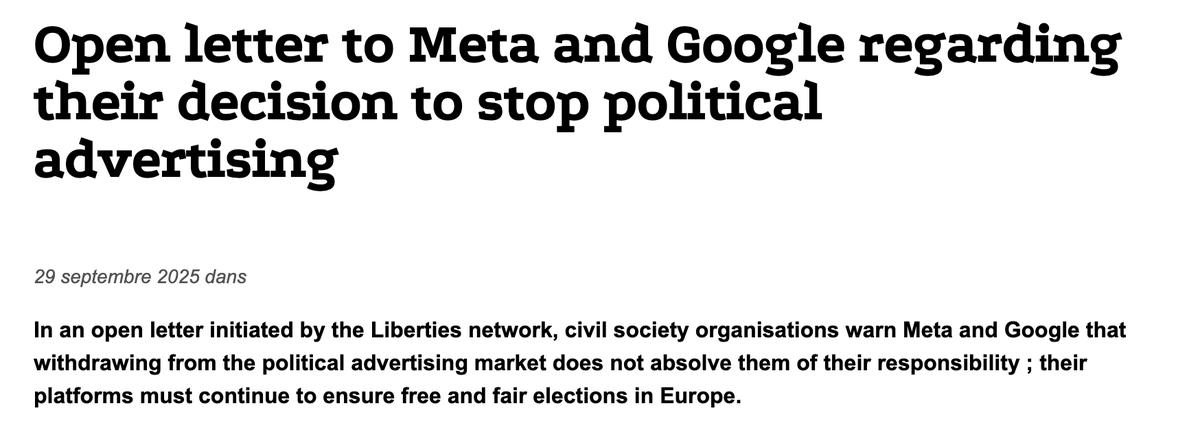
Civil society groups which also pushed for the law are now aghast that the companies are withdrawing from the market rather than trying to comply with vagaries of the law and accepting the uncertainty. voxpublic.org/Open-letter-to…
Politico notes that Guidelines from the Commission came woefully late. They still don't provide the clarity that companies need.

Euractiv journalist @anupriyadatta96 picked up the story as well euractiv.com/news/big-techs…
She notes that even civil society groups that advocate for transparency recognise that vagaries of the law make it difficult to "properly identify political ads", especially when backed by a fine that could reach tens of billions of euros.
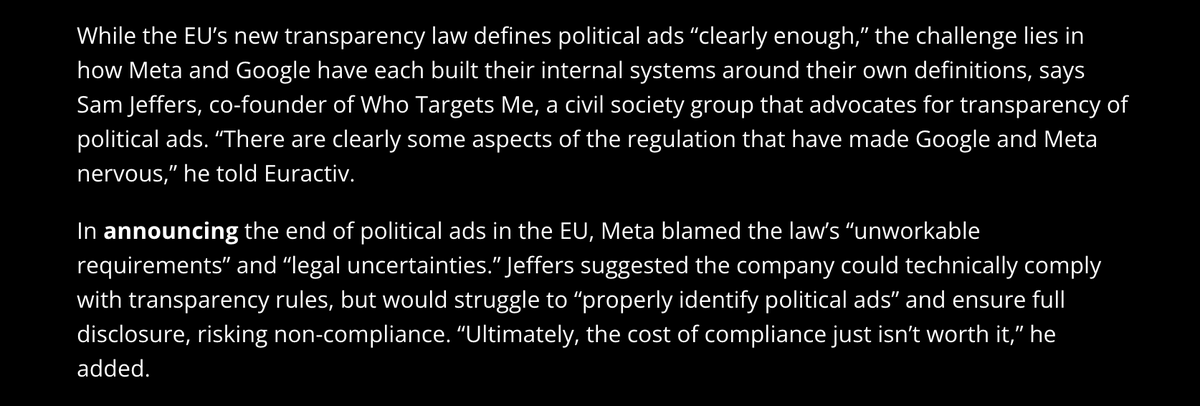
To me, this is another example of #nerdharder, where policymakers dismiss industry concerns by thinking that technical challenges can just be overcome by more engineering and technical efforts.
Forgetting that sometimes the opportunity cost just isn't worth it.
Forgetting that sometimes the opportunity cost just isn't worth it.

When the cost (or in this case legal liability) is high, and the value is low, it's mostly easier to just sunset a service, rather than go through the efforts (and risk) of trying to comply (especially when Commission services aren't being helpful along the way).
But in the end, that's one of the main costs of regulation. Services that Europeans miss out on, because they're just not profitable or worth deploying in Europe anymore.
You can use legislation to prohibit anything but the perfectly desirable digital service, but if that perfectly desirable digital service can't actually be deployed, you'll just end up without any service to begin with.
And for what it's worth, I don't think we're going to have European alternatives popping up to provide these services in a way that can fill the gap of the big platforms withdrawing from the market.
So what we end up with is less service at the end of the day.
That's a loss.
So what we end up with is less service at the end of the day.
That's a loss.
• • •
Missing some Tweet in this thread? You can try to
force a refresh