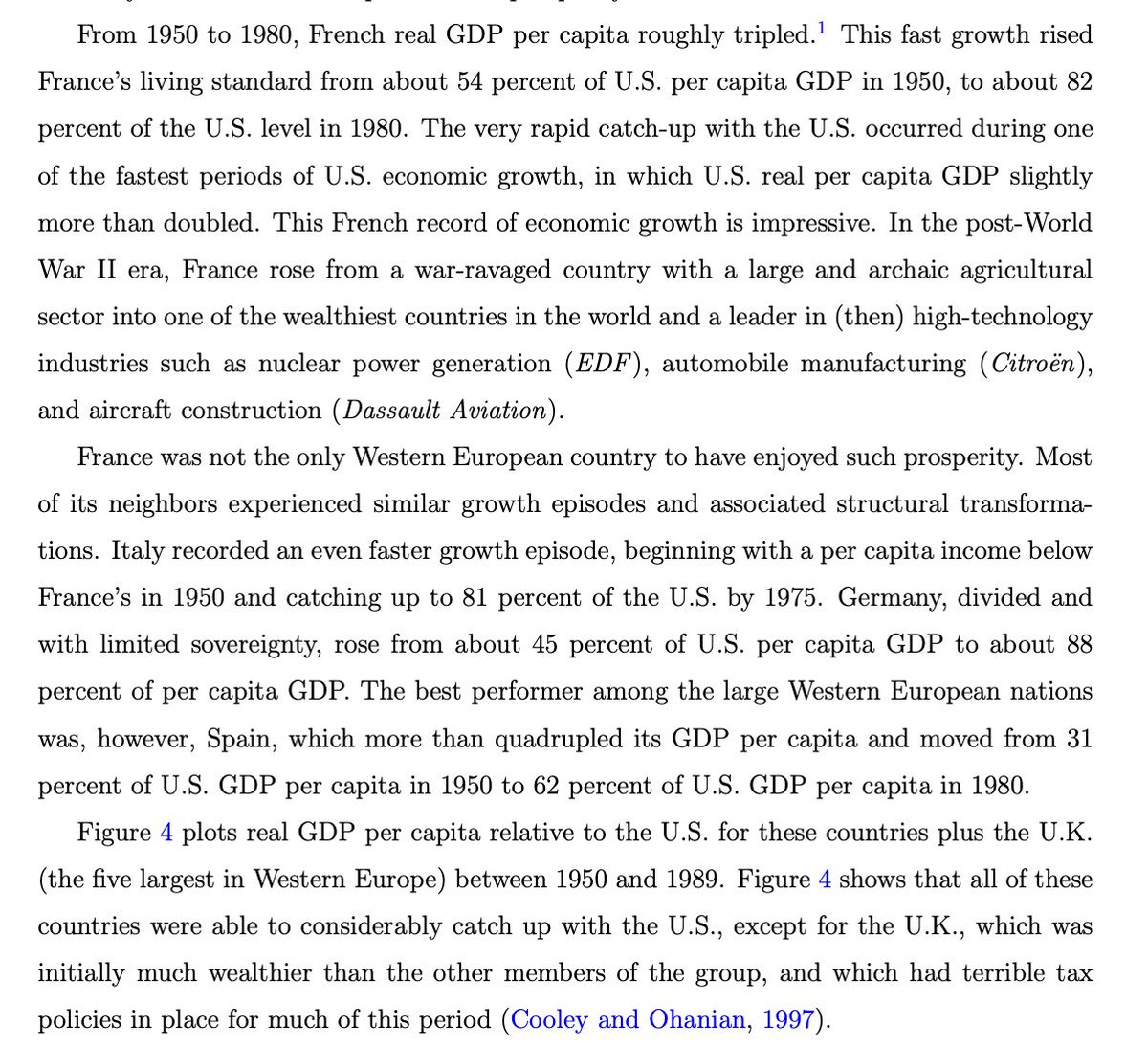
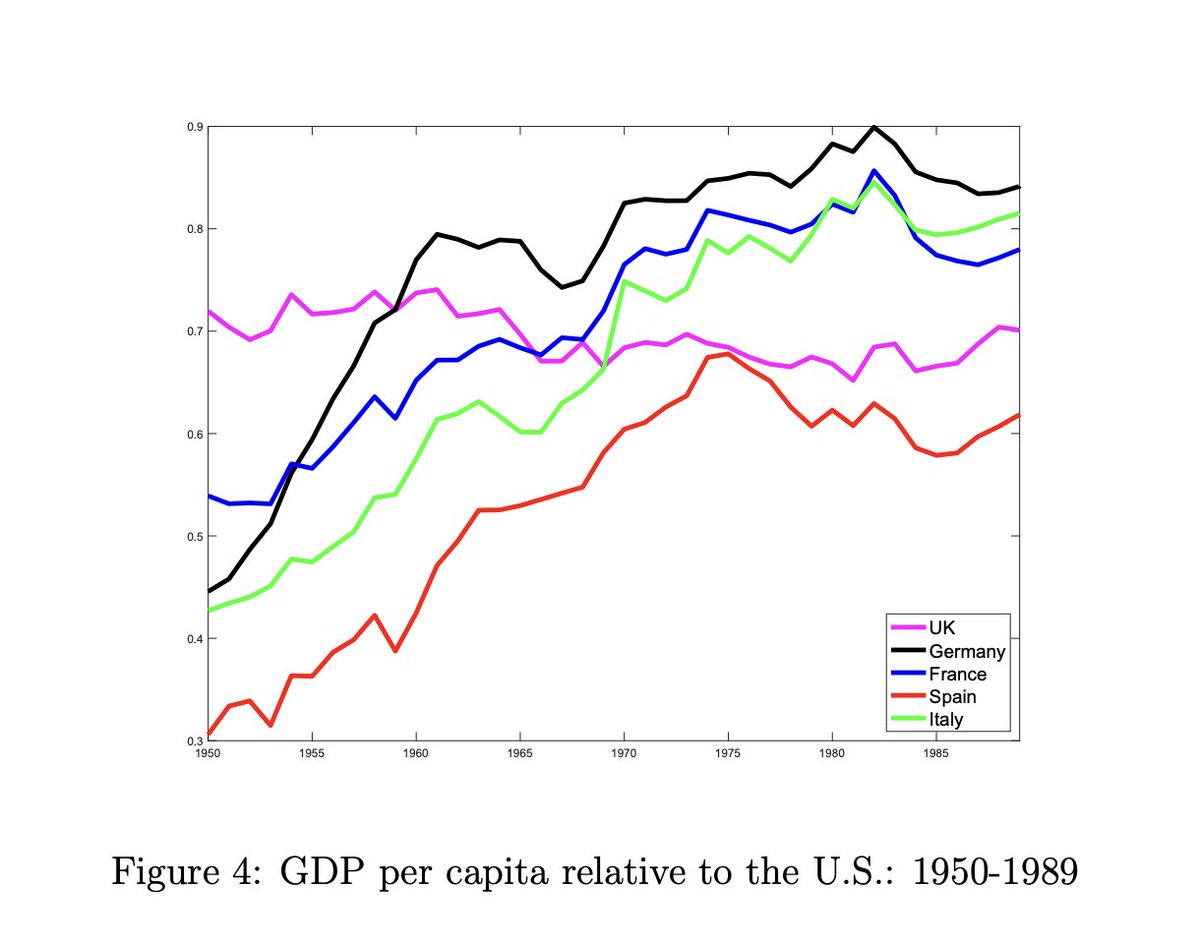
UK threw away its commanding post-WW2 advantage, which was itself just the continuation of 250 years of dominance, with the worst economic policy of any major country in free Europe. Many are saying it!
• • •
Missing some Tweet in this thread? You can try to
force a refresh

- A woman raped to death recovering from a stroke on an NHS ward
- Expected to make full recovery
- Nobody reported or noticed any of the massive blood loss in her bed after the rape (for 48 hours)
- She died from blood loss
- All the evidence destroyed
The evidence destruction worked. After six years, they've given up on finding out who did it (and who destroyed the evidence). 'All possible lines of inquiry had been examined and exhausted.'
Cars use a lot of land. Despite this, many cities depend entirely on the car and get by fine. This can all be explained with one 1963 paper by RJ Smeed, the British transport planner who invented 'Smeed's Law'. This paper shocked me and changed my worldview! 🧵
Start by assuming *everyone* commutes to work by car. This is the land-hungriest option possible. Going by rail, because it is faster than walking, uses the least – 1 sqft. Then walking. then a bus. All the way to a car with driver only which needs up to 100 sqft.
Let's assume that everyone works in the city centre, which is a circle, and lives in the suburbs, which are a doughnut around that circle.
Since 1990, France has built more motorway than the entirety we have in the UK. None of this has cost the French government a centime – private companies fronted the capital, and those driving pay for them through tolls. And their top speed limit is 11mph higher!
This relentless drive to build is why France is more productive than the UK per hour, and approximately as rich as the UK, despite regulation, taxes, and unions
Toll roads are not foreign to Britain. In 1600 Britain’s roads had deteriorated so far that they were worse than during the reign of King Alfred. By 1750 we had the finest roads in Europe. All due to tolling.
Before 1940, housing in the UK got cheaper like any other good, as technology made land more productive (steel frames, reinforced concrete, electric lifts), and more interchangeable (buses, trams, cars, roads, railways). That all stopped after the Second World War. 🧵
In 1938, local councils had the power to plan, and the right to refuse any development they liked, just as now. But after the Second World War, two things changed. Both dramatically reduced the incentive for councils to grant permissions. The results are famous.
Before 1938, councils were obliged to pay compensation if they reduced development rights below the national standard of (roughly) development. They could do this in the country, where land was inaccessible and low value, but it was expensive to refuse permission near cities.
In just five years, the UK's Central Electricity Board built the National Grid, with 4,000 miles of cables, and 26,000 pylons. In 1937, a group of impatient, rebellions engineers switched the connections on without permission. The price of electricity collapsed.
By 1932 our government scrapped mortgage regulations and First World War-era rent controls, leading to ourmost dramatic ever housing boom. Growth was so rapid (and America's Great Depression so deep) that for one year, we were the richest country in the world again.
During the same time we built an enormous number of new roads, extended tubes and railways, and more.
The main two ways that cities have expanded in history are speculative outward growth, and steady urban and suburban intensification. But there is a third way: masterplanned new towns. If done well, new towns can be a brilliant way of growing cities. 🧵
Everyone is familiar with speculative developer-led outward growth, of which there are thousands of acres around all major cities, from London’s Victorian and Edwardian railway suburbs to American ‘sprawl’.
Urban and suburban intensification are familiar too, having created the revered apartment blocks of New York’s Upper West Side, the mansion apartments of Chelsea and Marylebone, and these pictured blocks in Vienna.