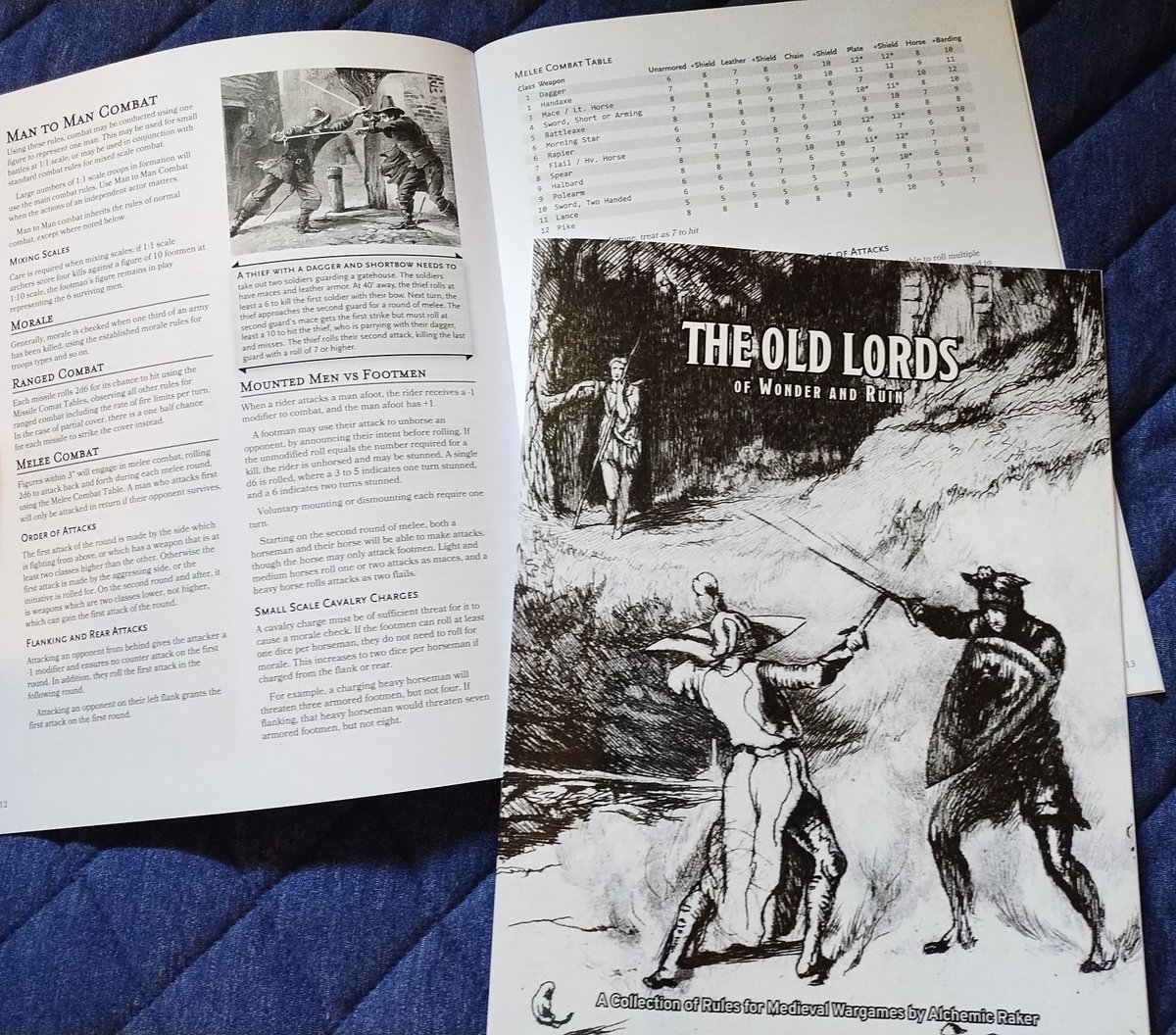
The prevailing belief is that the ACS included in OD&D replaces Chainmail.
What is missed is that the "normal" combat system in Chainmail is its Mass Combat, while the derived systems are given clear titles like "Man to Man".🧵
What is missed is that the "normal" combat system in Chainmail is its Mass Combat, while the derived systems are given clear titles like "Man to Man".🧵
https://twitter.com/AlchemicRaker/status/1983357449890312470

Chainmail begins by launching into its "normal" / core combat system, which is what we tend to qualify as "mass combat". While it never receives a name, we can recognize it by certain cues, such as referring to 1:20 or 1:10 figure scale combats.

The normal / core combat system in Chainmail is the most thorough when it comes to rules.
Turn Sequence, Movement, Ranged Combat rules, Morale, etc
These are given thorough, multi-page definitions in the "default" system which is simply referred to as "Chainmail".
Turn Sequence, Movement, Ranged Combat rules, Morale, etc
These are given thorough, multi-page definitions in the "default" system which is simply referred to as "Chainmail".
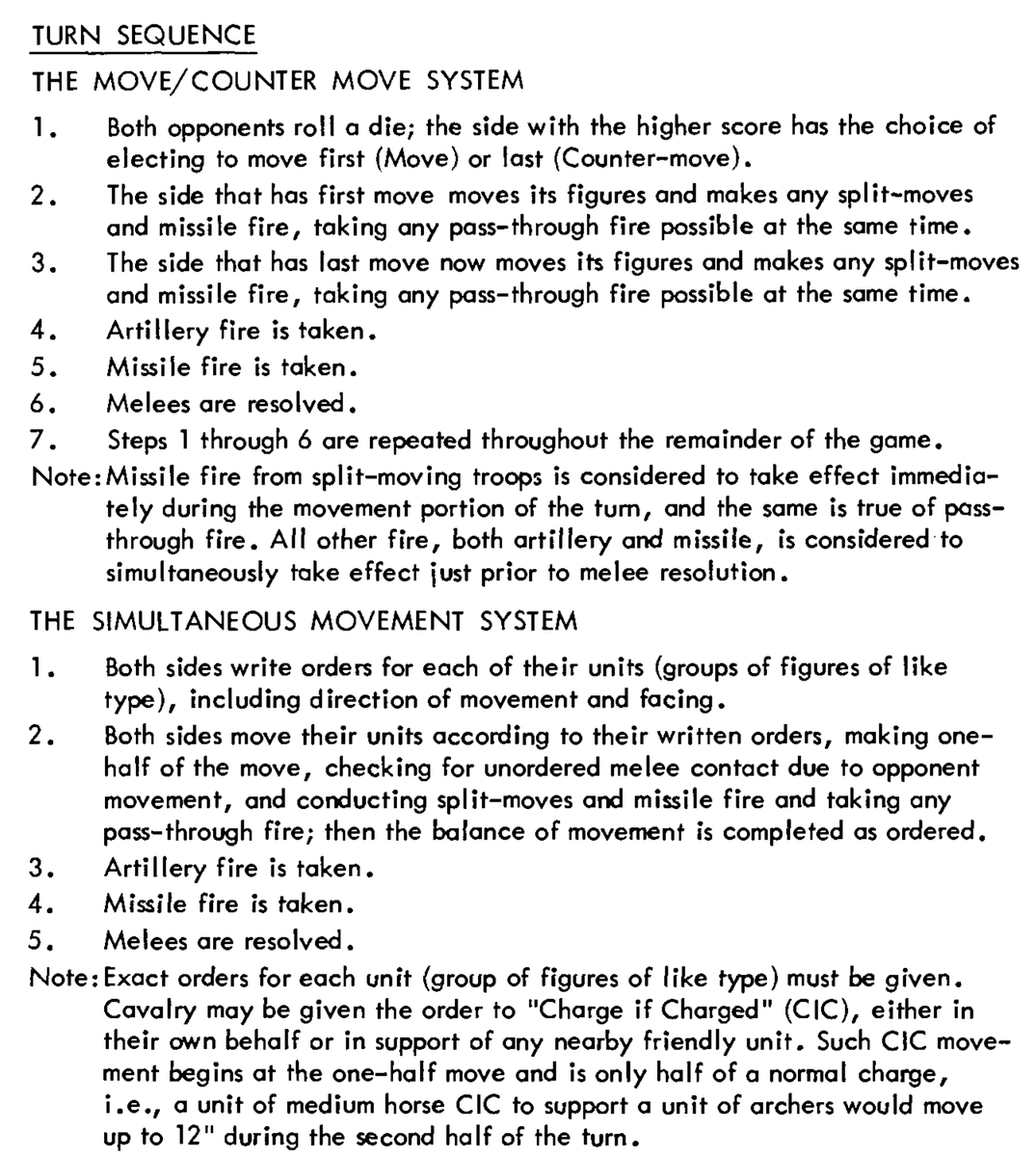
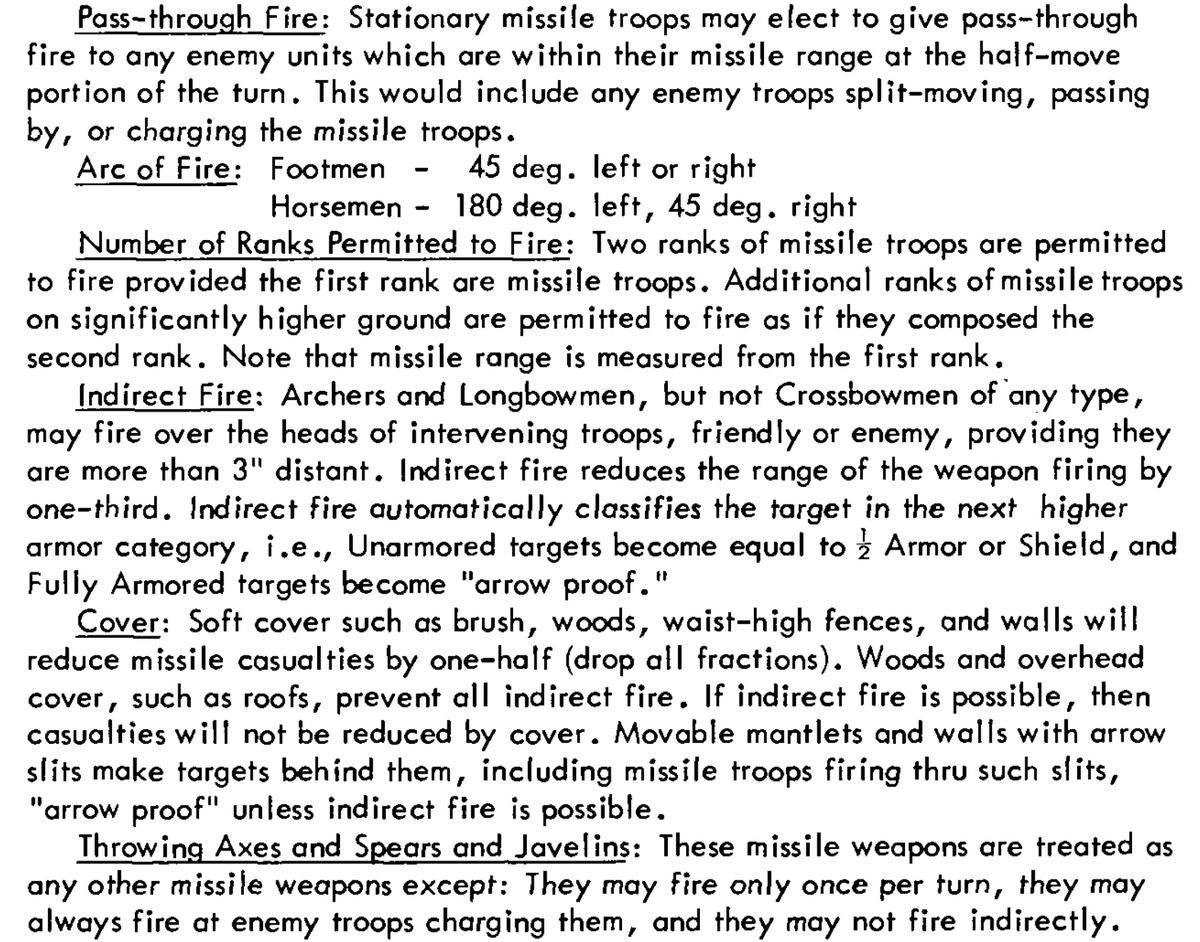
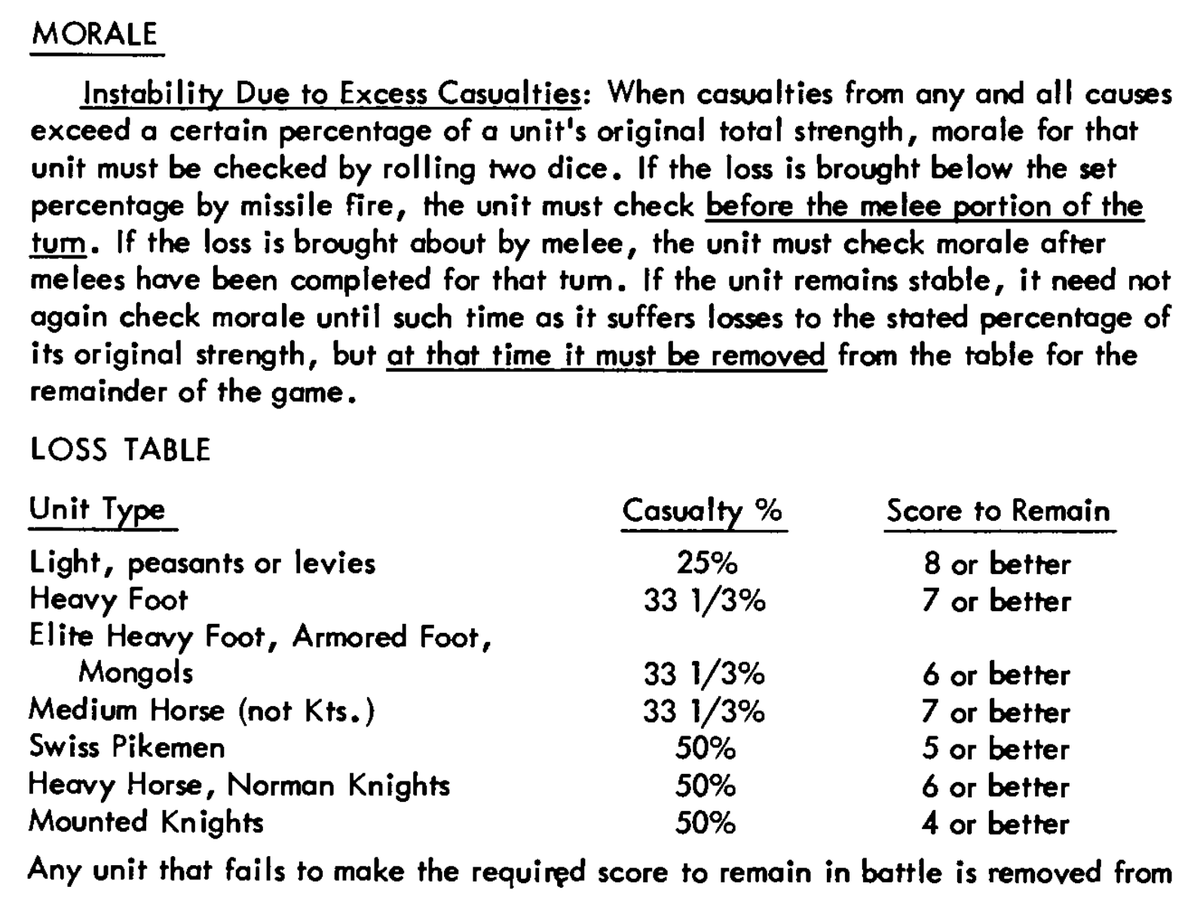
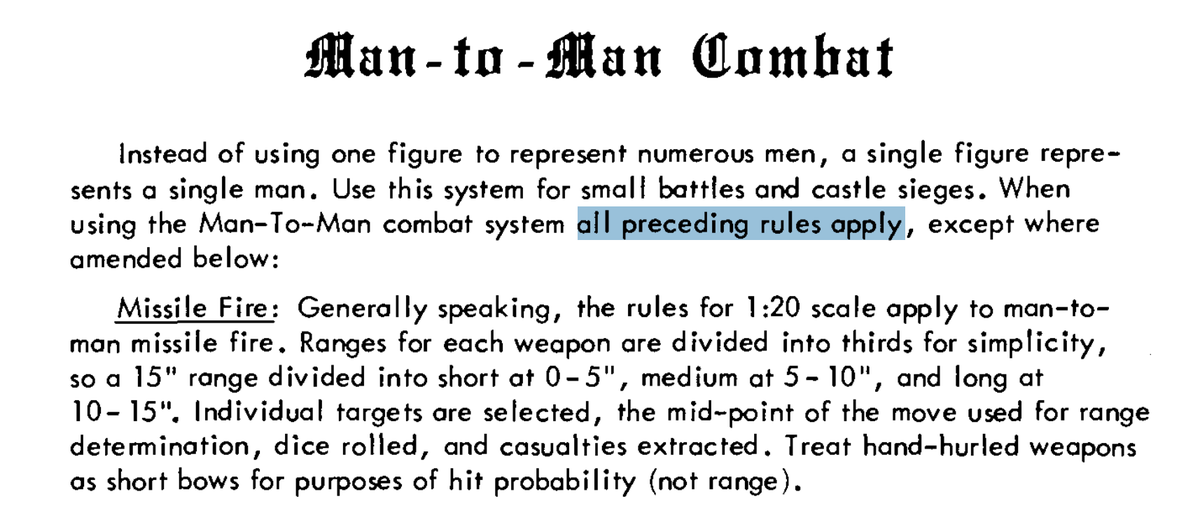
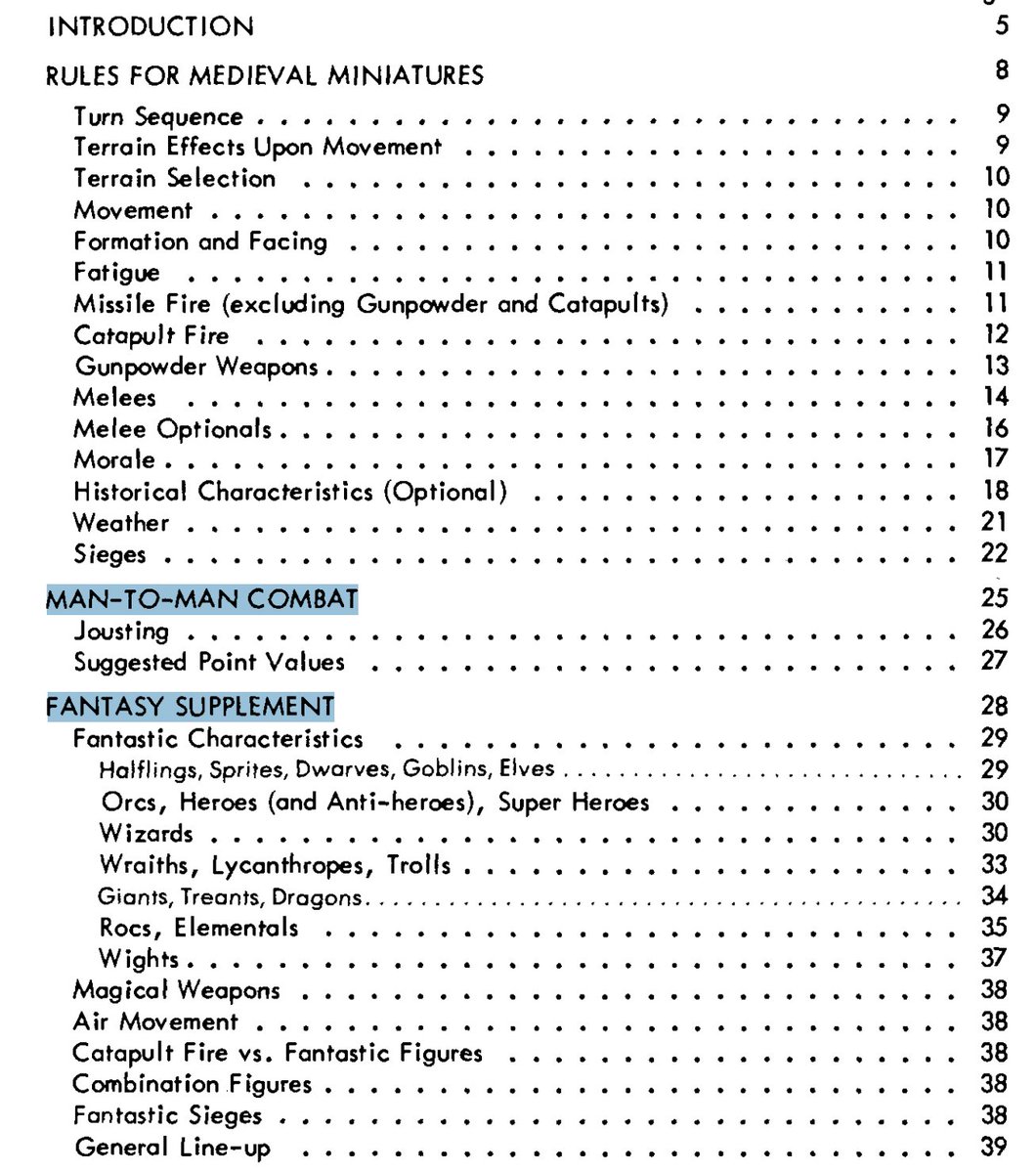
When we get to Man-to-Man Combat, we are told "all preceding rules apply", and that these use a 1:1 figure scale, and that it is "for small battles".
Missile Fire (ranged combat) gets only a single paragraph of revision.
Ranks Firing, Firing Arc, Cover, etc, are all inherited.
Missile Fire (ranged combat) gets only a single paragraph of revision.
Ranks Firing, Firing Arc, Cover, etc, are all inherited.
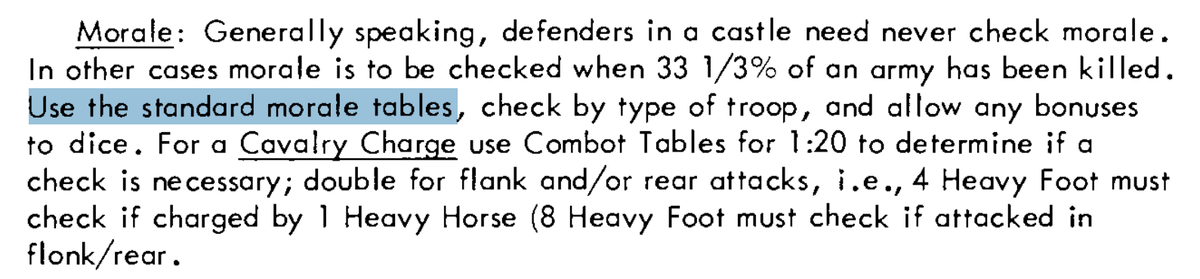
The prevailing pattern within the Man to Man secondary system, is to utilize the established precedent (from the normal 1:20 scale rules) and adapt them for the 1:1 scale.
Notice how it is only adjectivally referred to as "the standard ___" or "___ for 1:20".
Notice how it is only adjectivally referred to as "the standard ___" or "___ for 1:20".
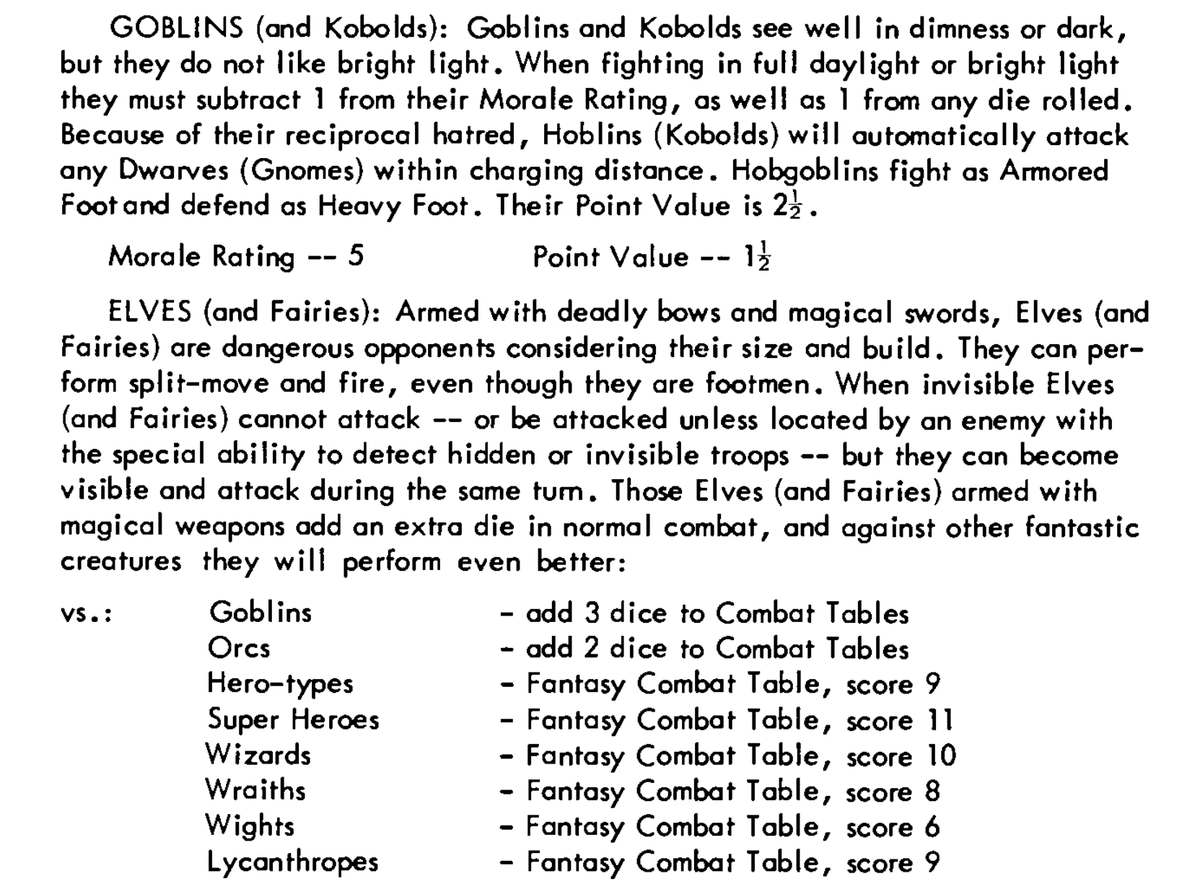
Within the Fantasy Supplement, we are given the stats for creatures which can be used for either 1:20 or 1:1 combat.
Note Elves utilizing (normal) "Combat Tables" for 1:20 troop combat, and the Fantasy Combat Table for Heroic-tier 1:1 matchups.
Note Elves utilizing (normal) "Combat Tables" for 1:20 troop combat, and the Fantasy Combat Table for Heroic-tier 1:1 matchups.
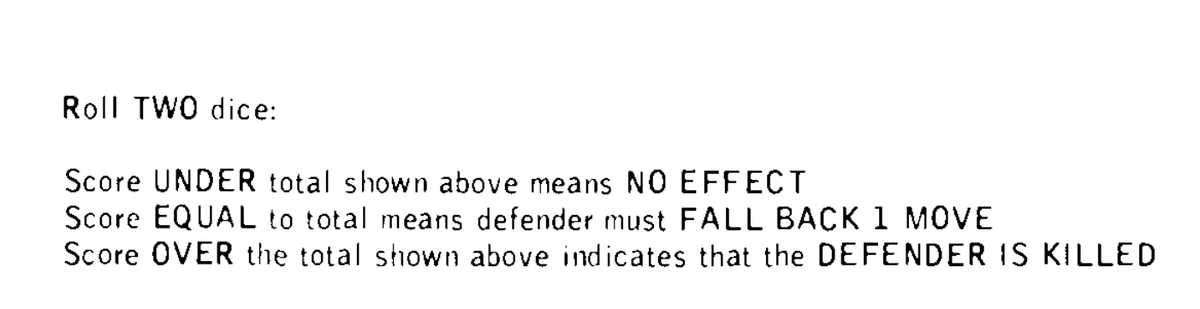
We must briefly touch on the rules for Fantastic Combat. Two dice are rolled when attacking, with the results being Nil, Falls Back, or Killed.
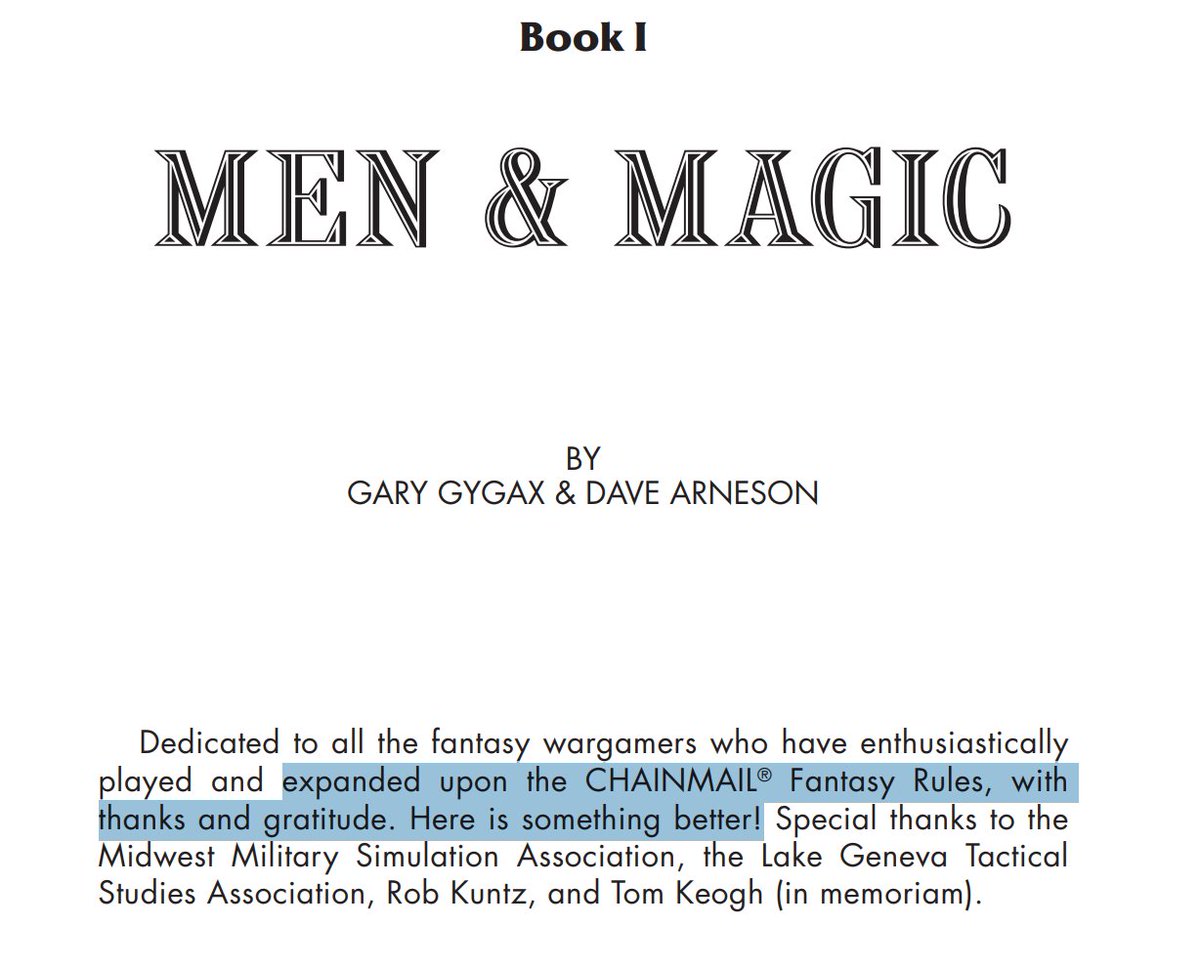
In OD&D Book I, we open with a reference to Chainmail Fantasy Rules (note the Fantasy Rules qualification!). OD&D is replacing the Fantasy Rules (supplementing actually, but we'll get to that).
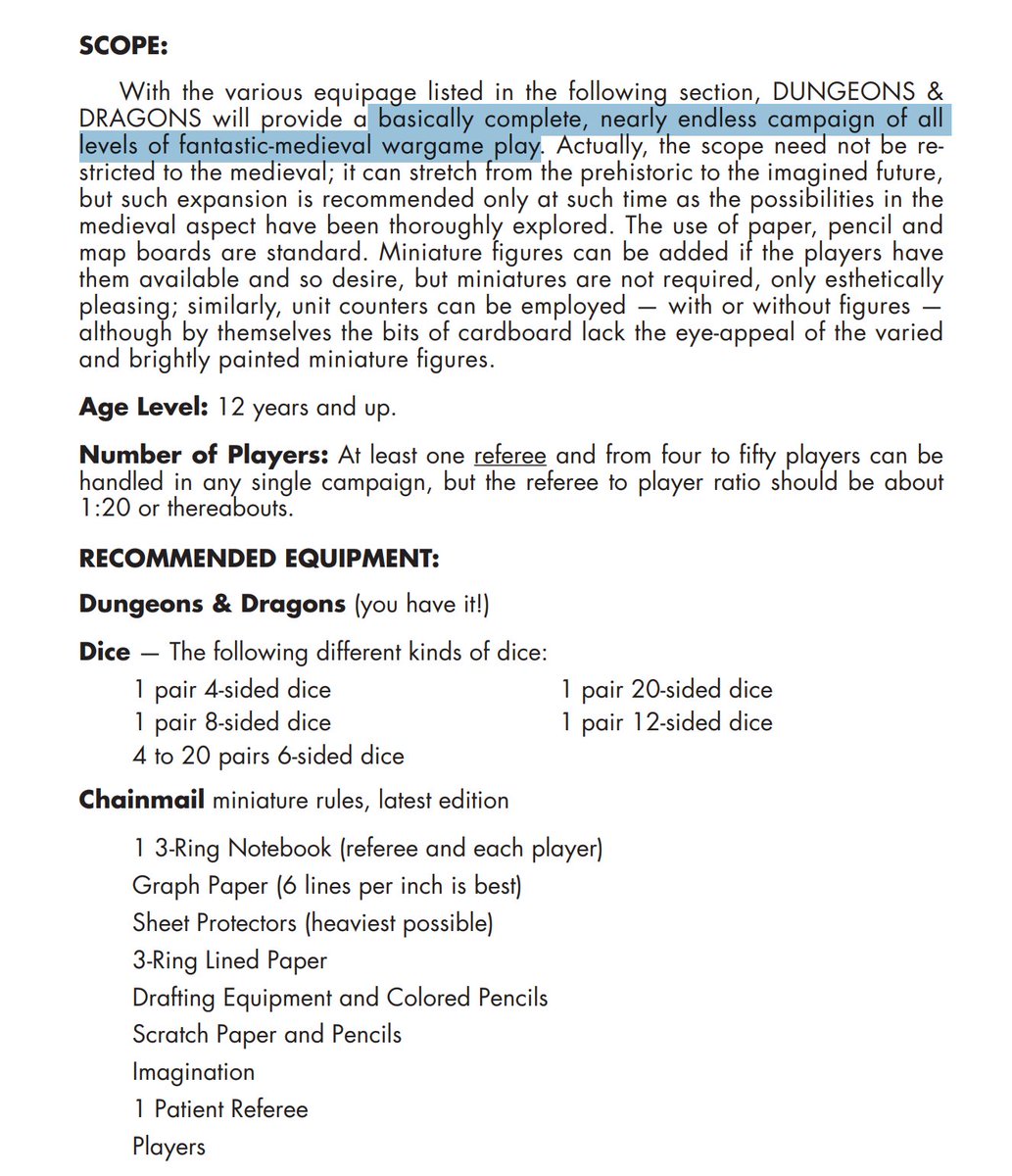
OD&D tells us that the "equipage listed" here will provide a "basically complete" experience for all levels of fantastic "wargame play". Figures are noted to be a positive addition, but are OPTIONAL, and hence NOT listed in the "Recommended Equipment".
In the Races, we begin to see that these rules are augmenting Chainmail's rules, for instance the significant Elven advantages versus certain fantastic creatures shown earlier in this thread.

OD&D Book I gives us Fighting Capability for every individual level, allowing this Even Better Fantasy Supplement to be used in both "normal" and "Fantasy" Chainmail combat!

The portion of Fighting Capability for use in conjunction with Chainmail's FANTASY rules, may be replaced with a different method: OD&D's Alternative Combat System.
This is not deprecating Chainmail wholesale.
It is simply replacing Chainmail's Fantasy Combat Table.
This is not deprecating Chainmail wholesale.
It is simply replacing Chainmail's Fantasy Combat Table.

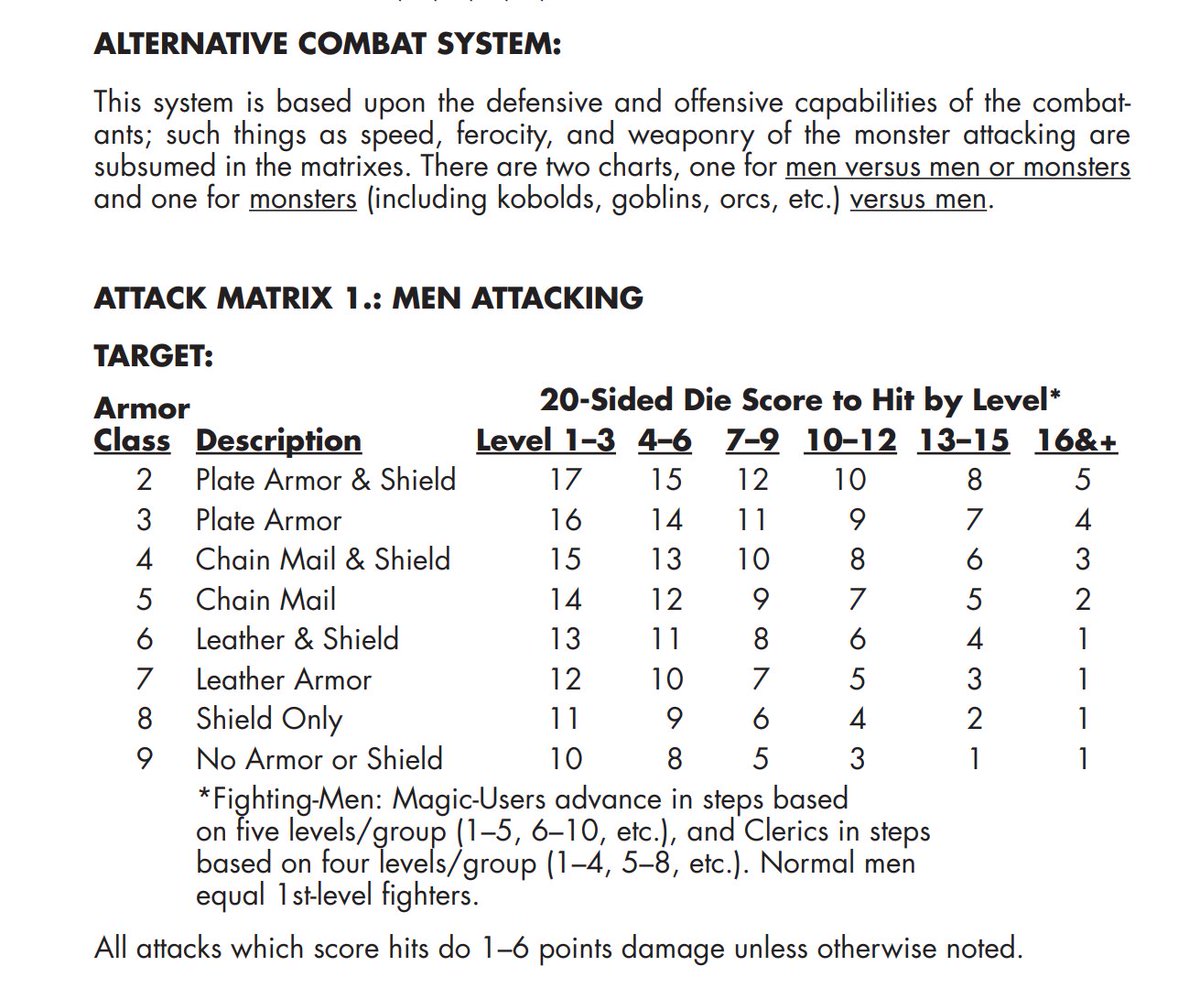
In the Alternative Combat system we are given a new method fantastic combat.
This assigns numbers to Chainmail's Armor categories, giving each one a numeric AC to be used for Fantasy Creatures.
Curiously scores are not given for every character level, so there are larger gaps.
This assigns numbers to Chainmail's Armor categories, giving each one a numeric AC to be used for Fantasy Creatures.
Curiously scores are not given for every character level, so there are larger gaps.
Throughout the remainder of OD&D, things like spells and creatures continue to refer to Chainmail with augmentary information, as though it expects you to be using Chainmail - not with any of the other missing details for if you're NOT using it.

OD&D Book 2 spells it out for us again: Special Abilities of fantasy creatures in Chainmail are used BY DEFAULT, and ONLY new, contradictory information in these books will take precedence over those.

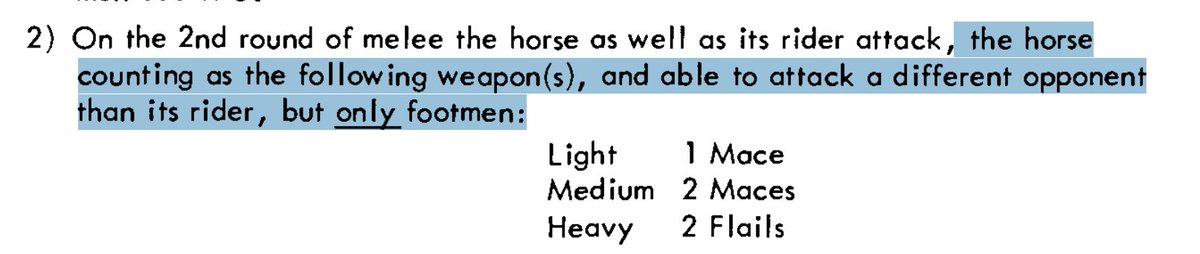
"War horses melee" as per Chainmail.
And without Chainmail ...??? No indication.
But let's look at what Chainmail says about horses attacking.
It acts as attacks using the Man to Man table!
And without Chainmail ...??? No indication.
But let's look at what Chainmail says about horses attacking.
It acts as attacks using the Man to Man table!
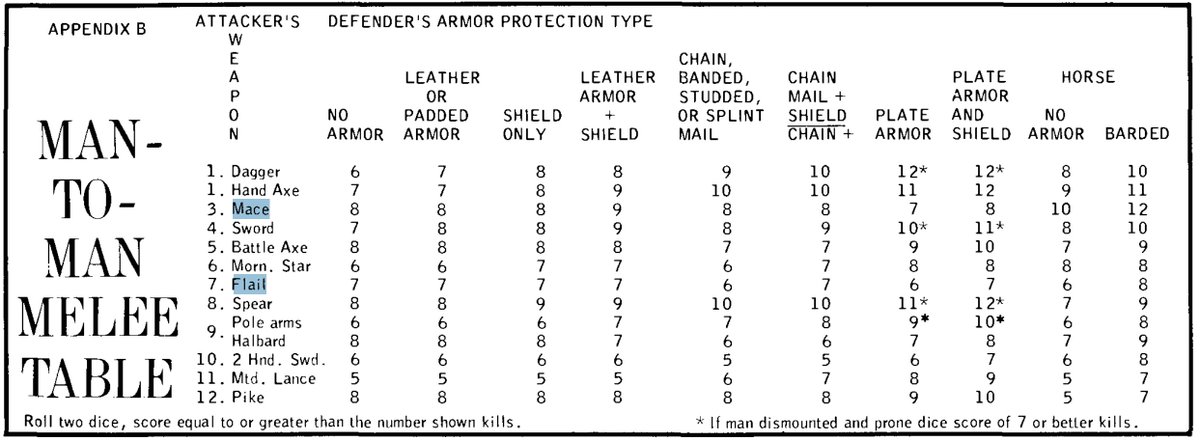
Information like this is perfectly opaque and useless unless you're familiar with and using Chainmail.
But if you've been paying attention in this thread, you know exactly what this next entry means now, and how easy it would have been to miss or disregard otherwise.
But if you've been paying attention in this thread, you know exactly what this next entry means now, and how easy it would have been to miss or disregard otherwise.
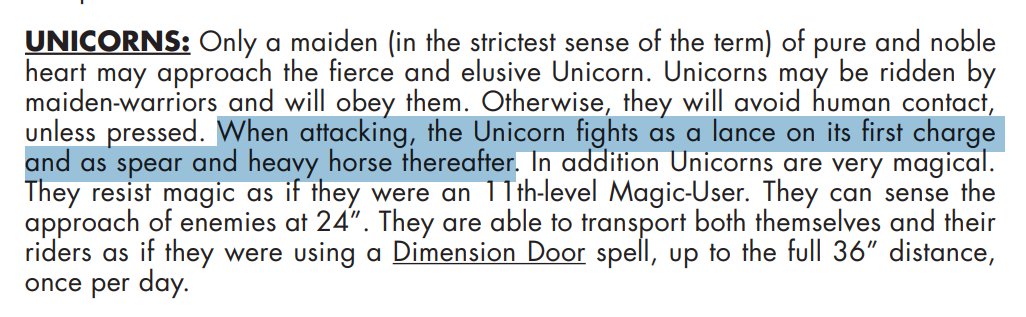
The "basic system" is Chainmail, with 1:1 scale.
Conduct Melee with Book I (ACS) or Chainmail's combat (noting "Drive Back" or "Kill" - this is Fantasy Combat!).
Larger battles can be fought at 1:20 ratio (normal Chainmail), with some additional considerations for 1:1 figures.
Conduct Melee with Book I (ACS) or Chainmail's combat (noting "Drive Back" or "Kill" - this is Fantasy Combat!).
Larger battles can be fought at 1:20 ratio (normal Chainmail), with some additional considerations for 1:1 figures.

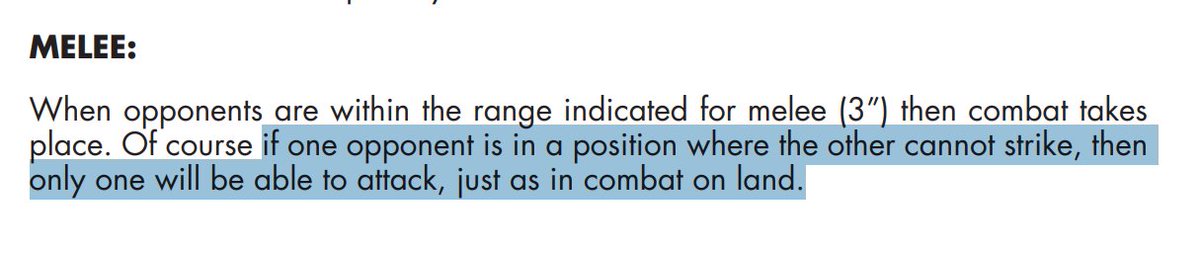
In Aerial Combat we get notes like this - referencing the initiative order between two figures in 1:1 melee. This initiative order is not detailed in OD&D, but can be found in Chainmail's Man to Man combat:

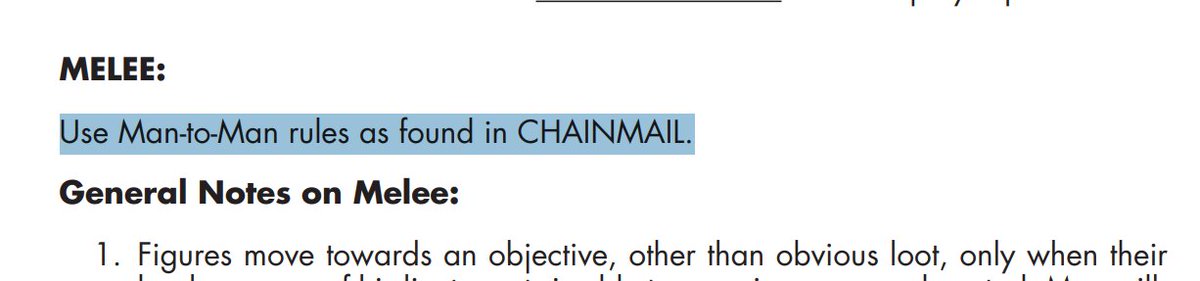
In Naval Combat, the Melee from Boarding procedures straight up uses the Man to Man rules.
Because ship crews are not going to be using heroic/fantasy combat, obviously.
The ACS from OD&D Book I is also NOT referenced here, for the exact same reason.
Because ship crews are not going to be using heroic/fantasy combat, obviously.
The ACS from OD&D Book I is also NOT referenced here, for the exact same reason.
When you understand Chainmail and then read OD&D, you recognize that OD&D is a Chainmail expansion. OD&D primarily expands on the Fantasy Supplement, adds an Alternative Combat System (for Fantasy combat), as well as totally new Naval and Aerial Combat systems for Chainmail.

Thanks for reading this far, I hope you appreciated the thread, and go back and like the posts so more people will be able to see it too!
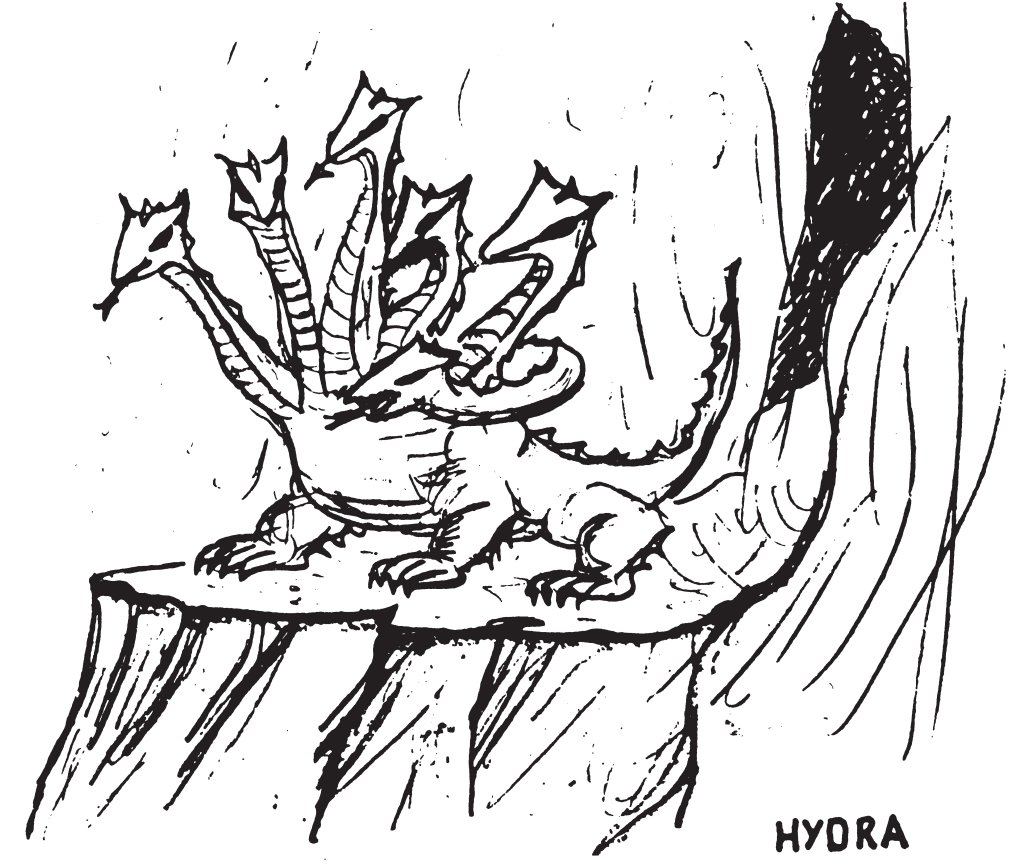
Oh yeah, and if you're interested in playing OD&D the way it was meant to be played (with the admittedly difficult-to-learn Chainmail system), check out The Old Lords, which I have made FREE so ANYONE can play OD&D the way it was designed to be played!
https://x.com/AlchemicRaker/status/1943761423756370269
• • •
Missing some Tweet in this thread? You can try to
force a refresh