1/ A new working paper claims that non-EU migrants in Europe have a less negative fiscal position than natives - in other words, that they contribute more relative to what they receive.
Like every single one of these papers, the methodology is deeply misleading.
🧵
Like every single one of these papers, the methodology is deeply misleading.
🧵
https://twitter.com/Blizzox2/status/1986436994927383007

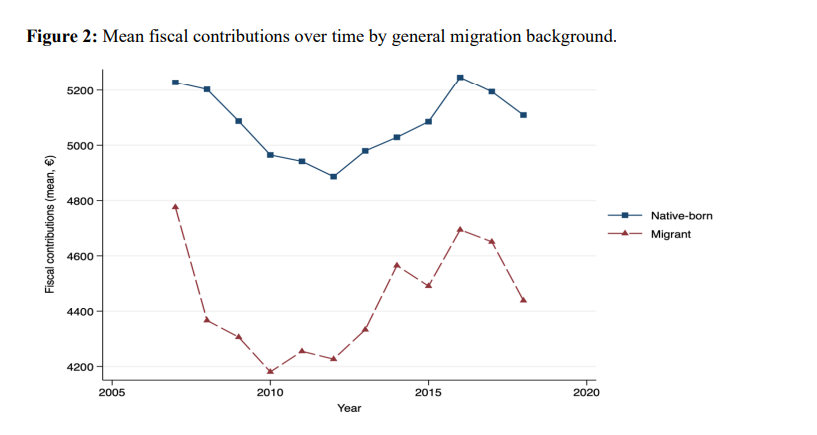
2/ First thing to note is that in all but four nations (Czechia, Greece, Ireland and Portugal), non-EU migrants contribute less than natives.
This is despite having a younger age and in theory, being positively selected.
This is despite having a younger age and in theory, being positively selected.

3/ To highlight what 'positive selection' means, let's look at Britain and Denmark.
In the UK, Danish migrants earn considerably more per capita than the British population.
In Denmark, British migrants earn more than the Danish population (and are the highest performers).
In the UK, Danish migrants earn considerably more per capita than the British population.
In Denmark, British migrants earn more than the Danish population (and are the highest performers).


4/ So migrants should out-earn natives, but don't.
So how can they have a lower 'Negative Fiscal Position' than the 'natives?'
According to the paper, this is because they apparently receive less in benefits.
So how can they have a lower 'Negative Fiscal Position' than the 'natives?'
According to the paper, this is because they apparently receive less in benefits.
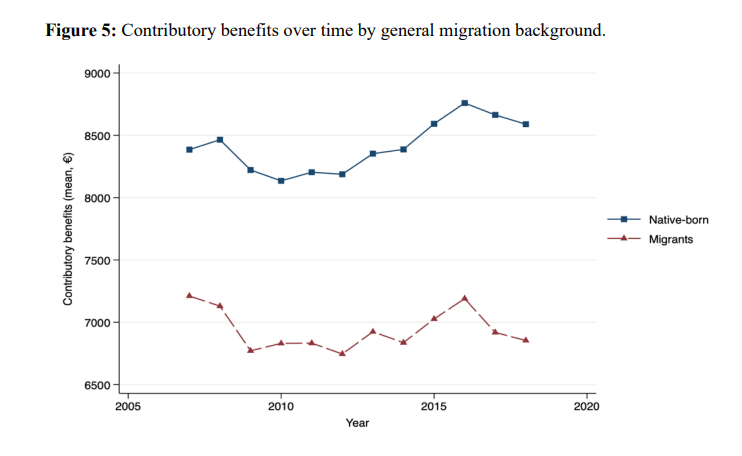
5/ There are two types of benefits; contributory and non-contributory.
Contributory benefits are payments tied to previous employment or payroll contributions such as pensions and healthcare.
So for benefits where people have paid into the system, natives claim more.
Contributory benefits are payments tied to previous employment or payroll contributions such as pensions and healthcare.
So for benefits where people have paid into the system, natives claim more.
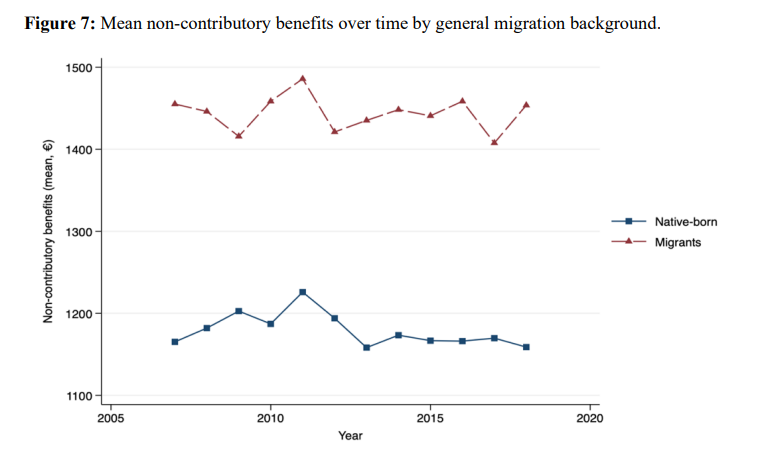
6/ Non-contributory benefits are child benefits, housing benefits, and social exclusion benefits.
These benefits mean you don't need to have paid into the system.
For these benefits, migrants claim more.
These benefits mean you don't need to have paid into the system.
For these benefits, migrants claim more.
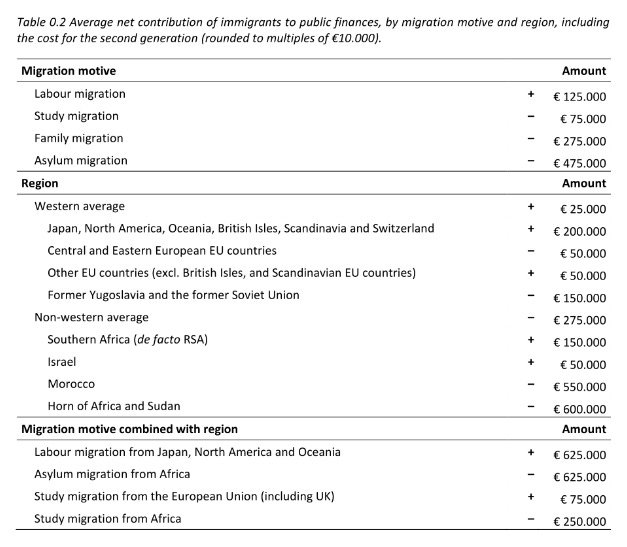
7/ Note that, children born in the host country to migrant parents are counted as natives
So the costs of education/healthcare for migrants’ children are shifted out of the migrant group & into the 'native' one
Around 75% of migrants’ children fall into this 'native-born' group
So the costs of education/healthcare for migrants’ children are shifted out of the migrant group & into the 'native' one
Around 75% of migrants’ children fall into this 'native-born' group
8/ Not only does the paper not include the cost of migrant children, but it also doesn't consider lifecycle costs.
It is a snapshot of the migrant population which has an average age of 33-years-old and comparing it with a native population which includes the old and infirm.
It is a snapshot of the migrant population which has an average age of 33-years-old and comparing it with a native population which includes the old and infirm.
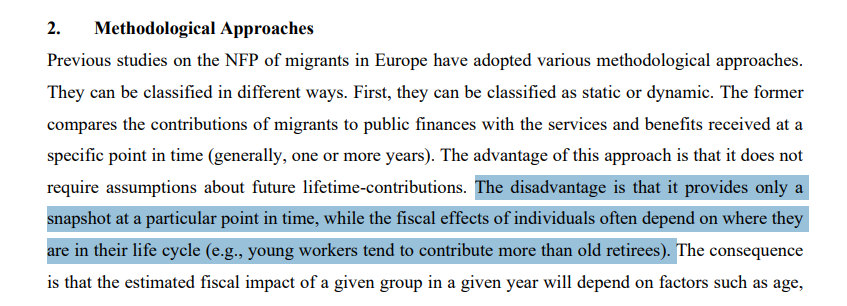
9/ In other words, the study compares a 'native' population that includes pensioners, the elderly, children, and the disabled (as well the overwhelming majority of migrant children) with a predominantly working-age migrant population who are in their prime economic years.
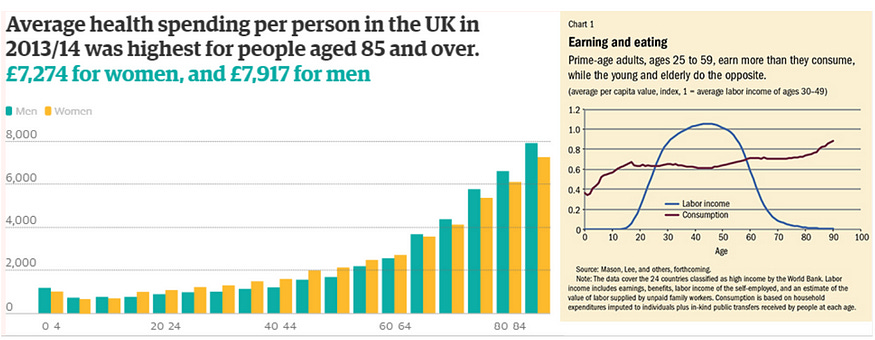
10/ I put the word 'native' in scare quotes is because this category is defined as 'having been born in the host country.'
A large cohort of this category will be 2nd and 3rd generation immigrants from outside of Europe who will be a fiscal drain on the actual native population.
A large cohort of this category will be 2nd and 3rd generation immigrants from outside of Europe who will be a fiscal drain on the actual native population.
• • •
Missing some Tweet in this thread? You can try to
force a refresh