1/ Making #ASH25 myeloma abstract list getting tougher than ever!
My rubric for this 'Top 10' list: Abstracts that challenge how I think about #MMsm.. well worth the trek to Orlando!
Kudos to all authors for excellent research, including of many abstracts not mentioned here 👏
My rubric for this 'Top 10' list: Abstracts that challenge how I think about #MMsm.. well worth the trek to Orlando!
Kudos to all authors for excellent research, including of many abstracts not mentioned here 👏

2/ #ASH25 Abstract 99: COBRA trial of KRd vs VRd (Dytfeld et al) in NDMM.
Story doesn't end with ENDURANCE! When using K56-QW instead of K36-BIW (other differences vs ENDURANCE too)...
Both MRD-neg CR and PFS better with KRd vs VRd.
K the comeback kid in ND #MMsm? We'll see!
Story doesn't end with ENDURANCE! When using K56-QW instead of K36-BIW (other differences vs ENDURANCE too)...
Both MRD-neg CR and PFS better with KRd vs VRd.
K the comeback kid in ND #MMsm? We'll see!

3/ #ASH25 Abstract 363: t(11;14) behaves differently in modern-era NDMM (@End_myeloma et al)
Everything 👑 MIDAS touched, it can turn to golden MRD-neg... except for t(11;14).
Here, even with quad induction + ASCT, t(11;14) #MMsm slower to achieve MRD neg. But good prognosis!
Everything 👑 MIDAS touched, it can turn to golden MRD-neg... except for t(11;14).
Here, even with quad induction + ASCT, t(11;14) #MMsm slower to achieve MRD neg. But good prognosis!

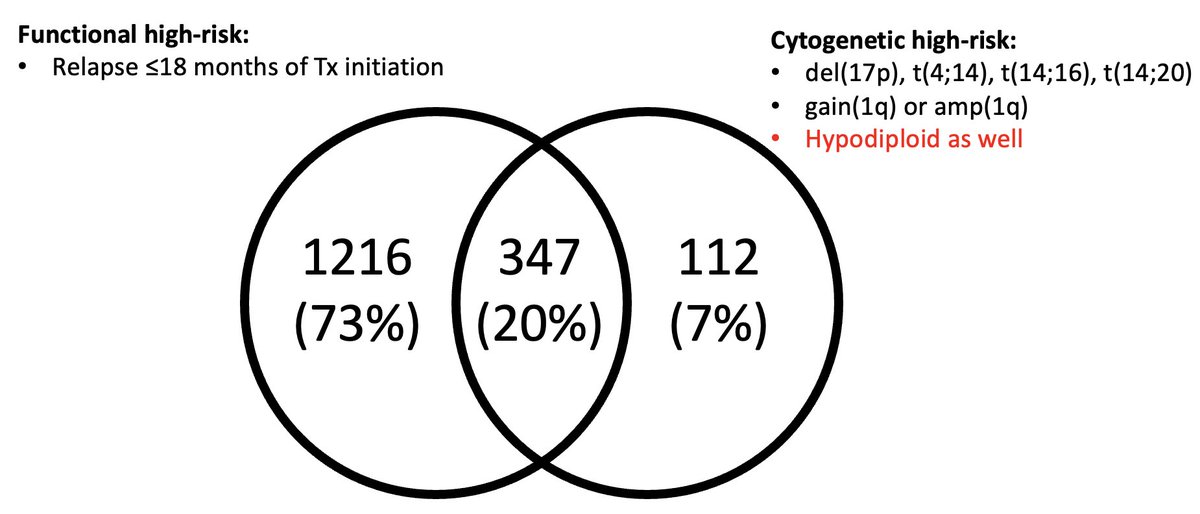
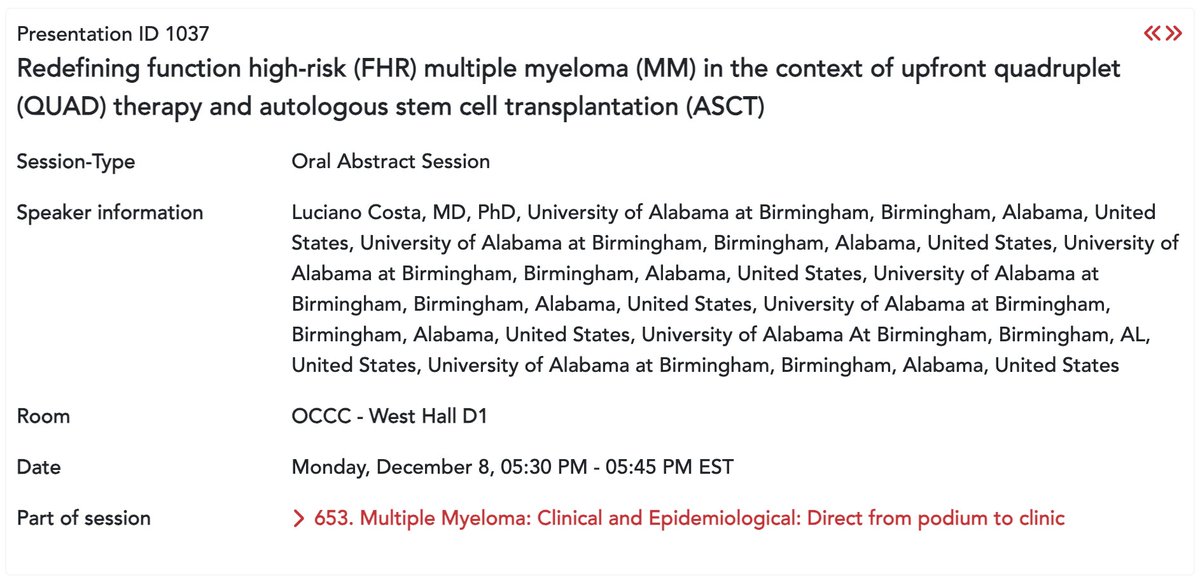
4/ #ASH25 Abstract 1037: New FHRMM definition in modern era (also by @End_myeloma: as many excellent abstracts as affiliations in info below 🤣)
If t(11;14) #MMsm does well, who doesn't?
Best cutpoint for FHRMM with quad + ASCT in terms of ⬇️ OS: 36 mo. Move to CAR-T or bsAb!
If t(11;14) #MMsm does well, who doesn't?
Best cutpoint for FHRMM with quad + ASCT in terms of ⬇️ OS: 36 mo. Move to CAR-T or bsAb!
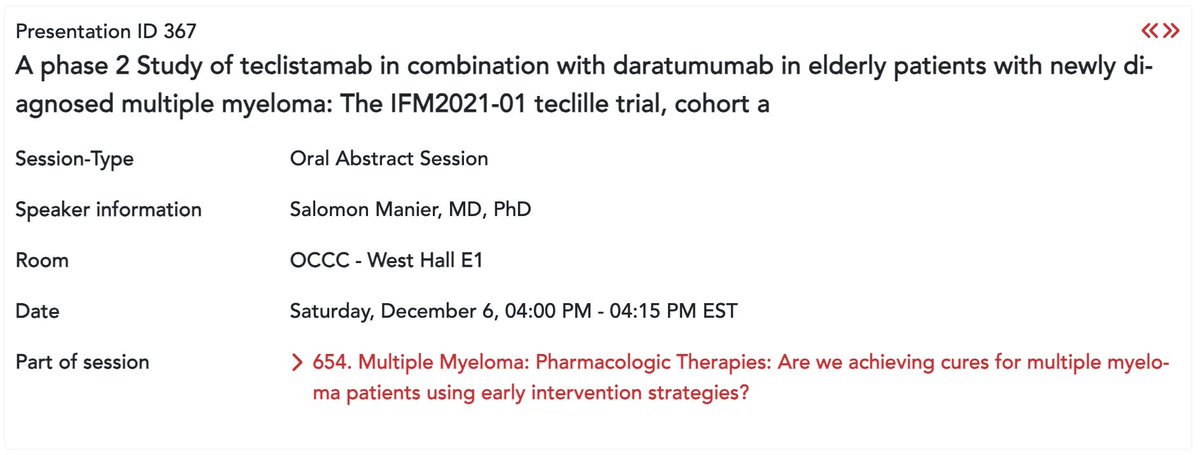
5/ #ASH25 Abstract 367: IFM 2021-01 tec-dara induction in ASCT-ineligible #MMsm (Manier et al)
With BCMA bsAb + CD38 mAb: 100% ORR, 100% MRD-neg whenever checked 👏
Will we return from triplets & quads to [new] doublets?
PS: 100% IVIG primary PPx: music to my ears!
With BCMA bsAb + CD38 mAb: 100% ORR, 100% MRD-neg whenever checked 👏
Will we return from triplets & quads to [new] doublets?
PS: 100% IVIG primary PPx: music to my ears!
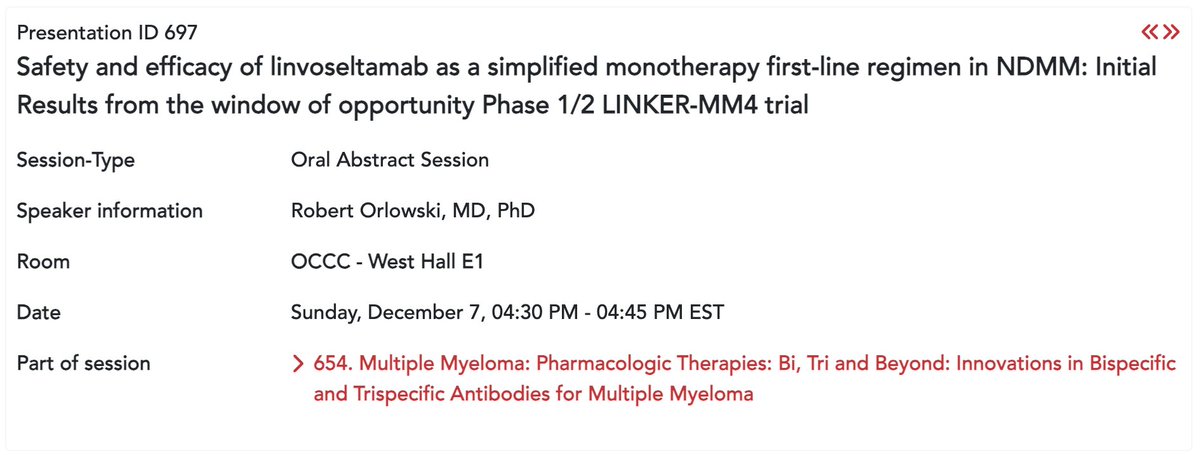
6/ #ASH25 Abstract 697: LINKER-MM4 trial in NDMM by @Myeloma_Doc @cjferreriMD et al:
Very helpful abstract for field to set goalposts: with linvo (BCMA bsAb) monotherapy + ASCT in #MMsm, 86% ORR at RP2D, MRD-neg 92%.
My takeaway: *Not* 100% and 100%. BCMA bsAbs need friends!
Very helpful abstract for field to set goalposts: with linvo (BCMA bsAb) monotherapy + ASCT in #MMsm, 86% ORR at RP2D, MRD-neg 92%.
My takeaway: *Not* 100% and 100%. BCMA bsAbs need friends!
7/ #ASH25 now pivoting to RRMM.
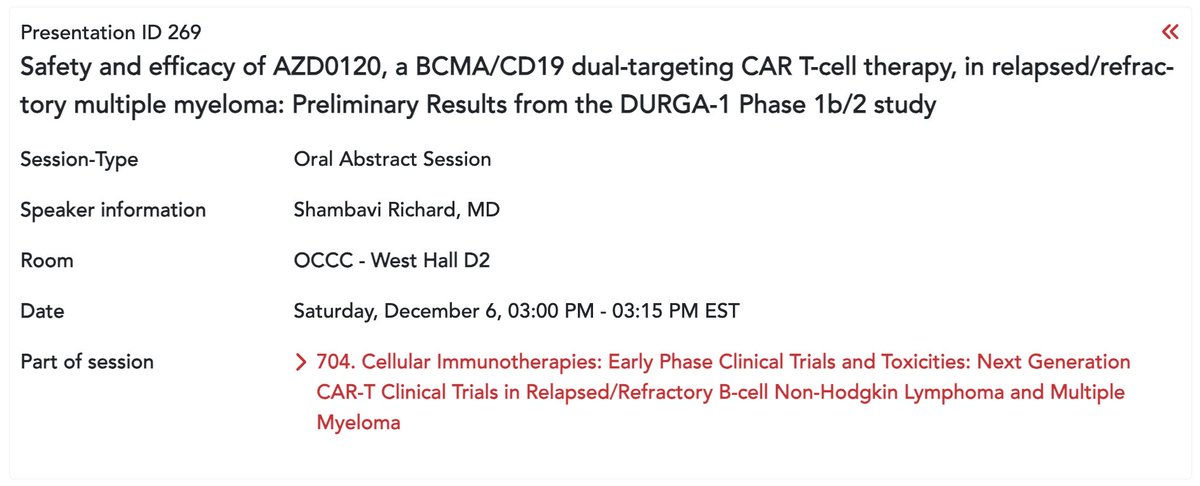
Abstract 269: AZD0120 / GC012F, dual-targeting rapid-manufacturing #MMsm CAR-T (@ShambaviRichard et al)
Vein-to-vein ≤1 mo (only 20% of 25 pts even needed bridging), 100% ORR, 100% MRD-neg when checked.
Small n, but this drug is headed places!
Abstract 269: AZD0120 / GC012F, dual-targeting rapid-manufacturing #MMsm CAR-T (@ShambaviRichard et al)
Vein-to-vein ≤1 mo (only 20% of 25 pts even needed bridging), 100% ORR, 100% MRD-neg when checked.
Small n, but this drug is headed places!
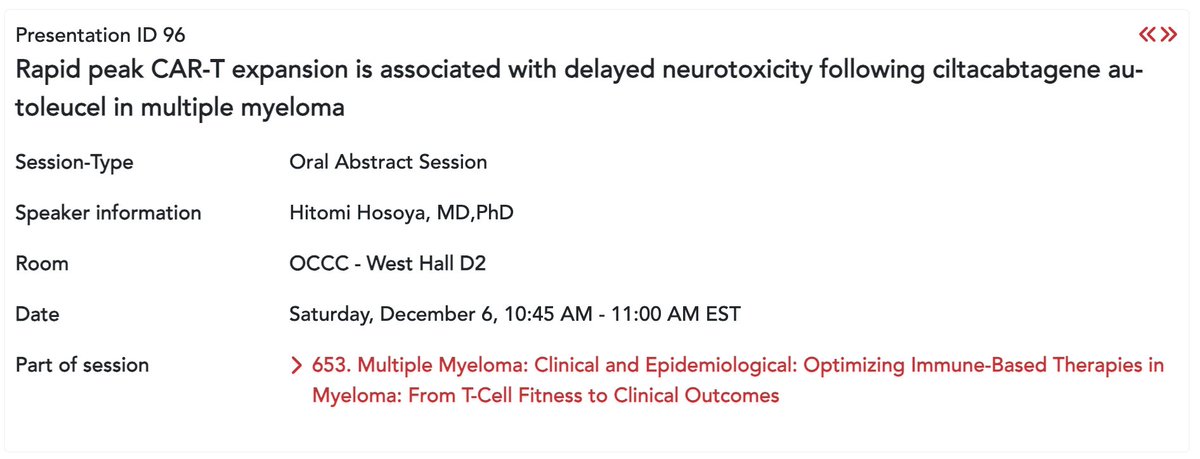
8/ #ASH25 Abstract 96: ALC cutoffs to predict MNTs with cilta-cel in #MMsm (Hosoya et al)
Despite no pubs yet, ALC 3K has rocketed into practice based on abstracts. Here:
- ALC 2500 if ≥2x rise also predictive
- Confirmed that ALC reflects CAR T-cells
Best treatment: ????
Despite no pubs yet, ALC 3K has rocketed into practice based on abstracts. Here:
- ALC 2500 if ≥2x rise also predictive
- Confirmed that ALC reflects CAR T-cells
Best treatment: ????
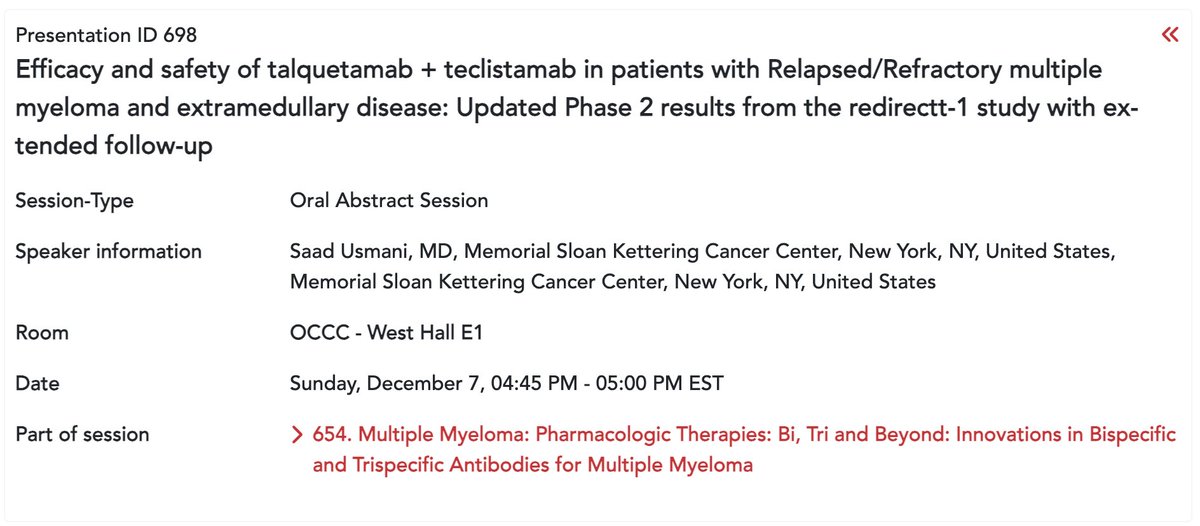
9/ #ASH25 Abstract 698: Tal-tec deep dive specifically into visceral EMD (@szusmani et al):
ORR 78% in all-comers, including ORR 66% in pts with >50 cm^3 worth of EMD by PET.
12-month DOR 61%. May truly beat CAR-T therapy in #MMsm pts with EMD, even if very high EMD burden!
ORR 78% in all-comers, including ORR 66% in pts with >50 cm^3 worth of EMD by PET.
12-month DOR 61%. May truly beat CAR-T therapy in #MMsm pts with EMD, even if very high EMD burden!
10/ #ASH25 Abstract 720: 1st-line CRS Tx with dex in #MMsm bsAbs (McElwee @thisisJamesD et al)
"Pocket dex": equal efficacy, way cheaper / simpler than toci, albeit >1 dose more likely.
This makes outpt bsAb SUD *way* easier for pts.
As I now say:
#Downwithdex
#ExceptforCRS !
"Pocket dex": equal efficacy, way cheaper / simpler than toci, albeit >1 dose more likely.
This makes outpt bsAb SUD *way* easier for pts.
As I now say:
#Downwithdex
#ExceptforCRS !

11/ #ASH25 and finally, a supportive care abstract!
Abstract 1038 by Terpos et al: Retrospective analysis of denosumab in pts with eGFR < 30 (where hypocalcemia quite risky despite tangible benefits of bone-modifying agents in #MMsm).
60 mg Q4W (not 120 mg) may be sweet spot!
Abstract 1038 by Terpos et al: Retrospective analysis of denosumab in pts with eGFR < 30 (where hypocalcemia quite risky despite tangible benefits of bone-modifying agents in #MMsm).
60 mg Q4W (not 120 mg) may be sweet spot!

• • •
Missing some Tweet in this thread? You can try to
force a refresh