Most CRMs fail because they force manual typing, so data rots the moment a meeting ends -yet CRM’s core job is the vital, grueling task of logging every customer touchpoint, and in the AI era this human bottleneck turns dynamic relationships into a slow, error-filled slog that no team can sustain. Lightfield fixes that by auto-capturing all interactions—calls, emails, Slack, notes - so it’s the first CRM that truly knows your relationships as well as you do.
2/ Imagine querying a CRM with something tough, like “What are my 3 biggest opportunities right now?“—it would sift through tables, objects, and conversations to deliver a clear, evidence-backed response. This shifts beyond basic dashboards toward something more like a reasoning layer for pipeline insights.
3/ Beyond just spotting patterns, consider asking for accounts that mentioned “Slack integration” - the tool could pull them up and even suggest tailored outreach emails for each. It’s an attempt to close the loop from data discovery to real action, all through simple natural language prompts, in a matter of seconds.
4/ With video calls recorded and touchpoints synced automatically, the hours spent on note-taking or follow-ups could drop off. Automatic meeting summaries, CRM field updates, and next-step assignments to the team might cut out the busywork while catching details that slip through cracks.
5/ What if you could ask, “How has my ideal customer shifted?” and pull an answer rooted in actual conversations? Tracking changes in behavior and sentiment over months of data could help spot go-to-market adjustments early, before they register in broader metrics.
6/ Deals often slip away from overlooked follow-ups—querying “Who have we dropped the ball with?” could quickly highlight at-risk accounts. From there, creating tasks or reassigning owners right in the interface might prevent those quiet losses.
7/ Picture a CRM that works more like Notion or Figma than traditional setups: collaborative spaces for proposals, tasks, or emails, backed by accurate data from real interactions. If you’re curious to test it out (especially as it’s just launching), there’s a free 3-month trial with code UYQASUTZ → lightfield.app/?utm_source=su…
• • •
Missing some Tweet in this thread? You can try to
force a refresh

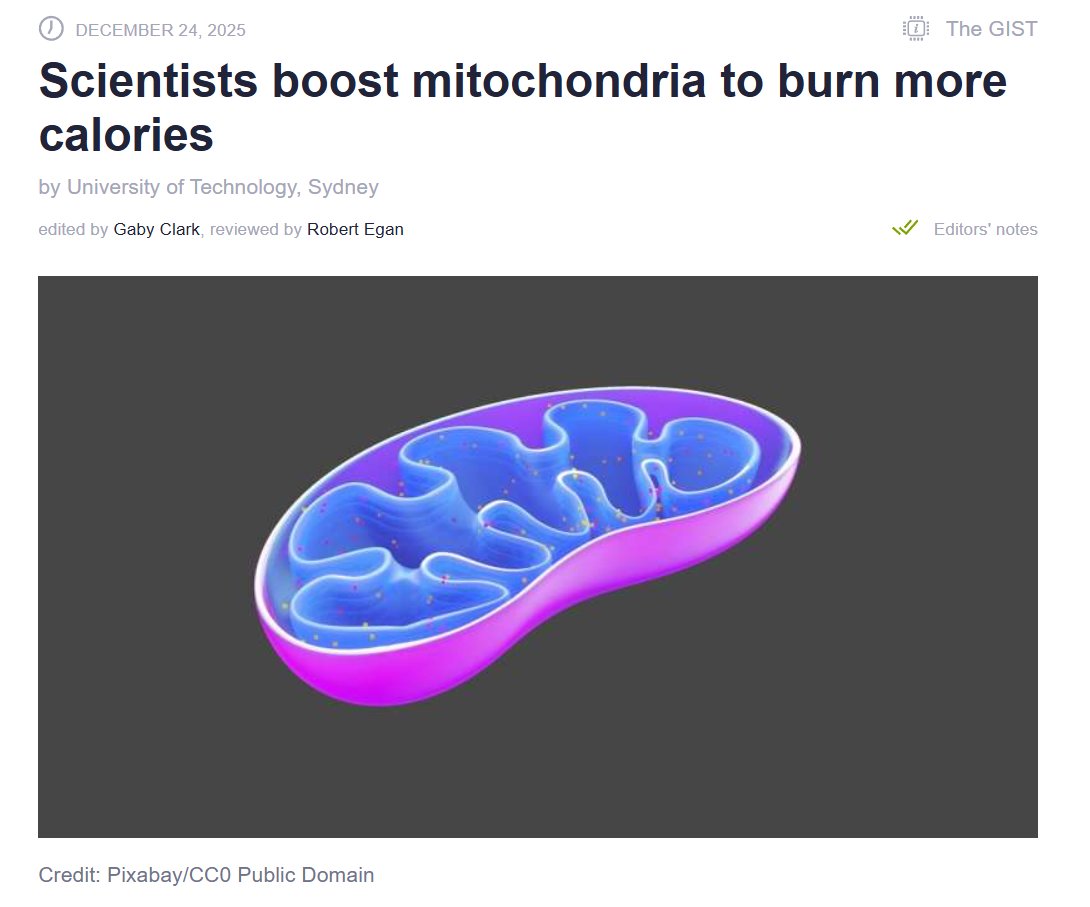
1/ Ozempic was yesterday's news; today, weight loss is achieved through increased calorie consumption via mitochondria!
Scientists made new “proton shuttle” molecules that slightly loosen how mitochondria make energy, which could help treat obesity, diabetes, and cancer, without the usual toxicity.
Here is how this revolutionary tweak works 🧵:
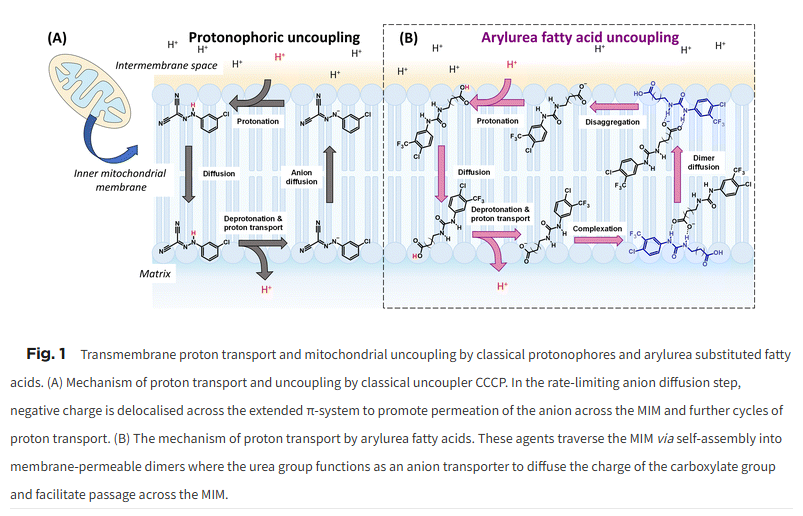
2/ Mitochondria make energy (ATP) by using a proton gradient, think of it like water behind a dam powering a turbine. When protons flow in a controlled way, cells get steady energy. This balance is essential for healthy metabolism and survival.
3/ Uncouplers let some protons leak back without making ATP, causing mitochondria to burn more fuel and release energy as heat. Strong uncouplers work too fast and can be dangerous, but mild uncoupling nudges the system safely. The new molecules slow this proton flow just enough to boost metabolism without harming cells.
1/ “Vibecoding” was undeniably the word of the year.
But as 2024 ends, I kept wondering:
Did anyone actually build something serious with it? Or is it just demos?
Then I saw Tristan’s project.
The results are undeniable. 🧵
2/ Tristan isn’t a senior dev. He’s a physiology student.
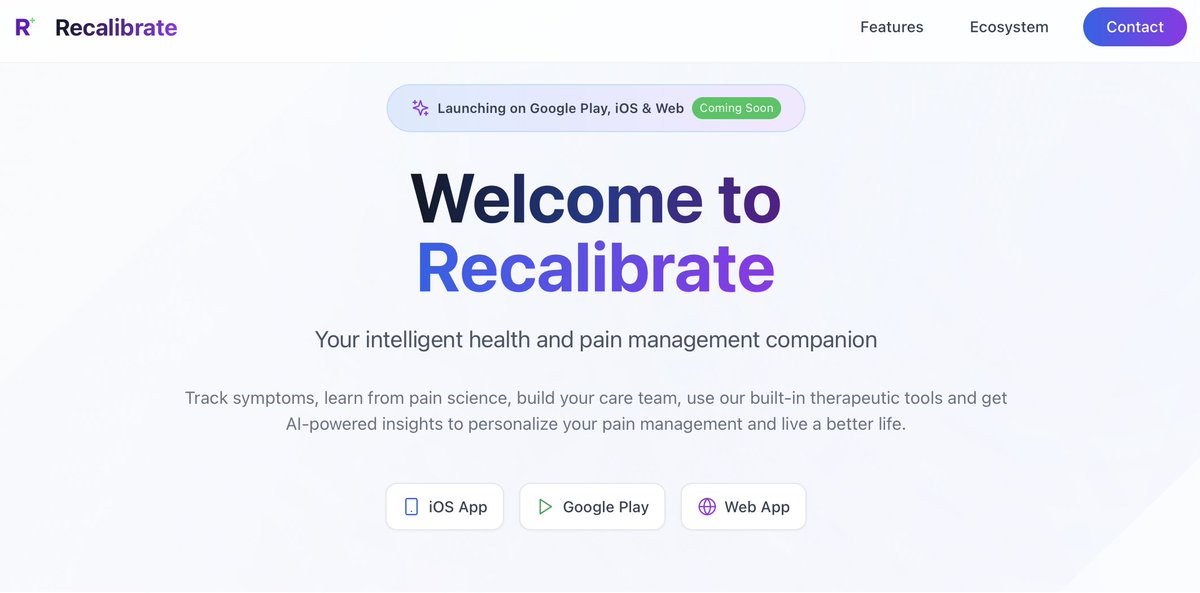
Yet, he built Recalibrate – a comprehensive digital health app.
Think Duolingo, but for pain management.
This isn’t a landing page. It’s a full-stack medtech platform designed to help real patients.
3/ The "Receipts":
• ~230,000 lines of code.
• total build cost roughly $700
Someone experienced said it would normally cost close to 1 million rand to make.
He leveraged the feedback loop of seeing UI/UX changes live to iterate 10x faster than traditional dev cycles.
1/ ChatGPT is great, but increasingly more competitors are entering the market - and they have features that make OpenAI and Anthropic look somewhat outdated.
@genspark_ai is Silicon Valley’s first AI agent unicorn - 30 people, $1B valuation in 6 months - and it’s built as an all-in-one AI workspace where work actually gets done for you.
Now with 3 new amazing features:
• AI Inbox – talk to your email in text or voice, auto-summaries + replies, scheduled AI agents
• Teams – shared projects where your team + AI co-edit slides/docs/sheets/designs
• AI Sheets 2.0 – fully-automated, Excel-native data superpowers.
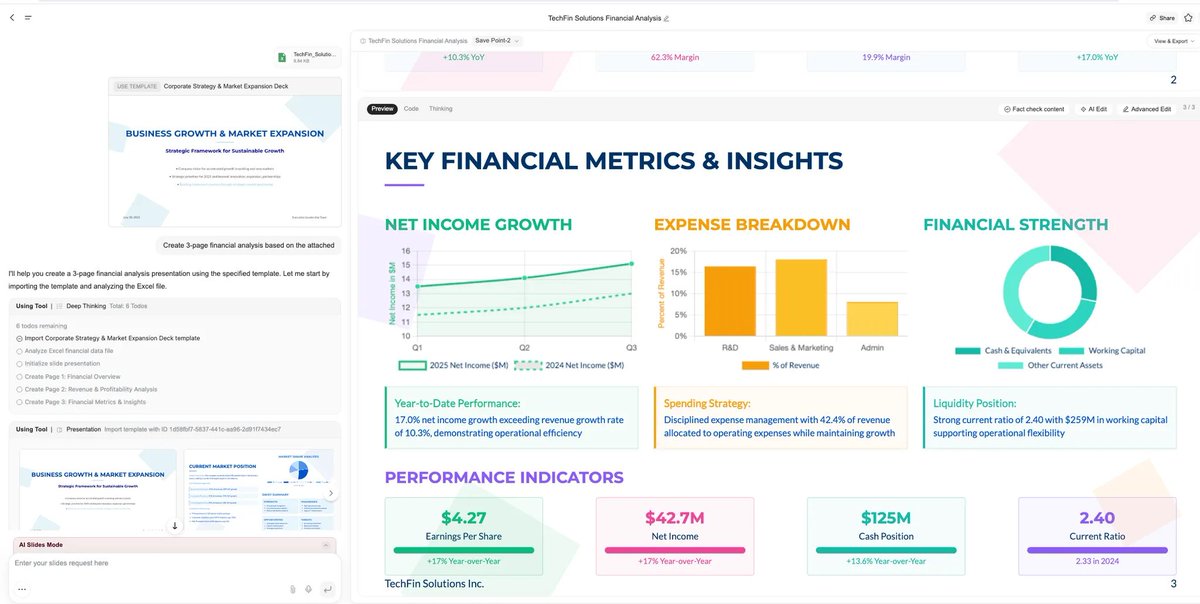
In this example, I used Slides to create an overview of NVIDIA's earnings. It's incredible how detailed and with how many graphs it was presented!
2/ Instead of juggling ChatGPT, Canva, Sheets, Notion & 20 tabs, Genspark orchestrates GPT, Claude, Gemini, Veo and more in one place. AI agents research, write, design, code and ship real outputs: decks, sites, docs, calls, podcasts and more.
3/ Concrete workflow: In this example, a summary was created from the inbox data – including an analysis!
1/ This changes everything: scientists have created a protein-based gel that can regrow natural tooth enamel - the hardest tissue in the human body and one we thought could never heal. It’s not repair in the old sense, it’s true biological regeneration.
2/ Until now, enamel loss was permanent. Acid, brushing, or aging would wear it down - leaving us with cavities, pain, and expensive treatments. Humans can heal bone and skin, but not enamel, which made dental decay one of humanity’s most persistent flaws.
3/ The breakthrough: researchers designed a gel built from peptides that mimic the proteins forming enamel during tooth development. When applied to teeth, it attracts calcium and phosphate from saliva and assembles them into a dense crystal layer, effectively rebuilding the surface.
1/ Everyone’s talking about trillion-dollar labs and billion-dollar compute.
But a 50-person team just ranked among the top 3 AI video models in the world.
2/ Artificial Analysis just ranked LTX-2 Pro #3 in Image-to-Video and #4 in Text-to-Video — shoulder to shoulder with OpenAI, Google, and Alibaba.
3/ That ranking wasn’t bought with billions.
It was earned through precision, efficiency, and a decade of mastering how pixels, motion, and light truly work.