Quite unrelated, but this is a major reason of why users who say that Spain's prime mistake while colonizing the Americas was not doing what Britain did don't know what they are talking about.
https://twitter.com/DeGroyper28971/status/1990417165644697699
Spain didn't have the logistical capacity to do what the British did across a much larger swath of land.
An even larger factor at play is population, this was a two-angle issue in our case, firstly, the Amerindian density in regions that we colonized (such as Méjico and the Andes) was far higher than in the Thirteen Colonies. 

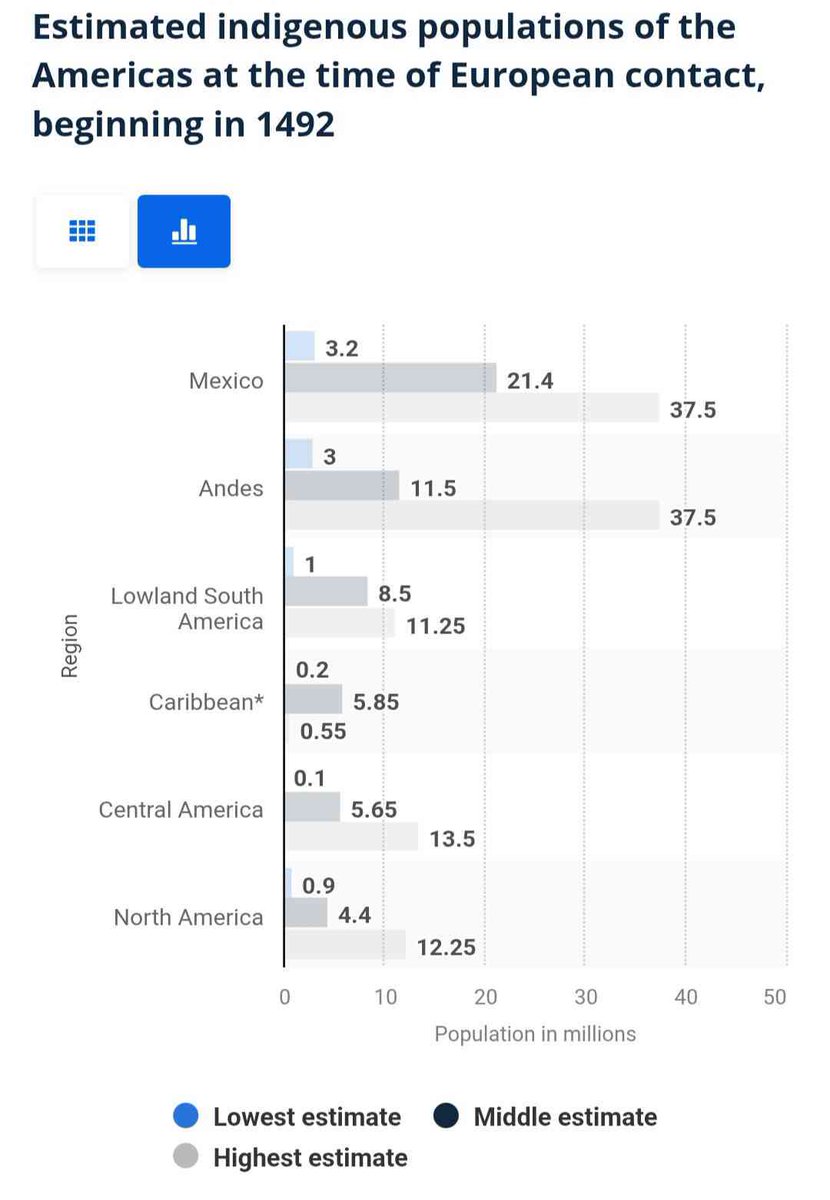
Secondly, for most of the time we lacked population while the British had an excess (hence the Thirteen Colonies), in addition to having to repopulate the Morisco areas after we expelled them in 1609.
Colonialism was a pressure release valve for England. Populations that were dissatisfied simply moved to the colonies. Castille on the other hand suffered population decline as early as the 16th century.
With regards to miscegenation, although race-mixing did indeed begin under Spanish rule, the bulk of it occurred after independence, where the new republics proceded to engage in widespread racial levelling. A particularly extreme case of this is that of Dr. Francia in Paraguay.


Although to be fair, many of these republics later attempted to improve the racial demographical situation with blanqueamiento immigration policies that explicitly favoured European immigration, which was a successful policy where it was attempted.


Q. JAG, how do you think that a hypothetical British of Central and South America in the same time period would have looked like?
A. As I said before, I think that the closest real-life equivalent was the Anglo-Dutch colonization of South Africa, since the situation with regards to the pre-colonization population was far closer to that of Central and South America than the Thirteen Colonies were.
In South Africa, White cities, mines, and plantations controlled large territories and populations of natives, which was very similar to Spanish colonization of South and Central America in that regard.
• • •
Missing some Tweet in this thread? You can try to
force a refresh