🇸🇩 THREAD: Why Trump Won’t Confront the UAE Over Its Support for Sudan’s Genocidal RSF
Sudan’s Rapid Support Forces (RSF) have spent the past month carrying out a genocidal massacre in al-Fasher, where satellite analysis suggests as many as 200,000 people are now unaccounted for. The RSF’s mass executions, village burnings, ethnic cleansing, and systematic starvation rank among some of the worst atrocities of the 21st century.
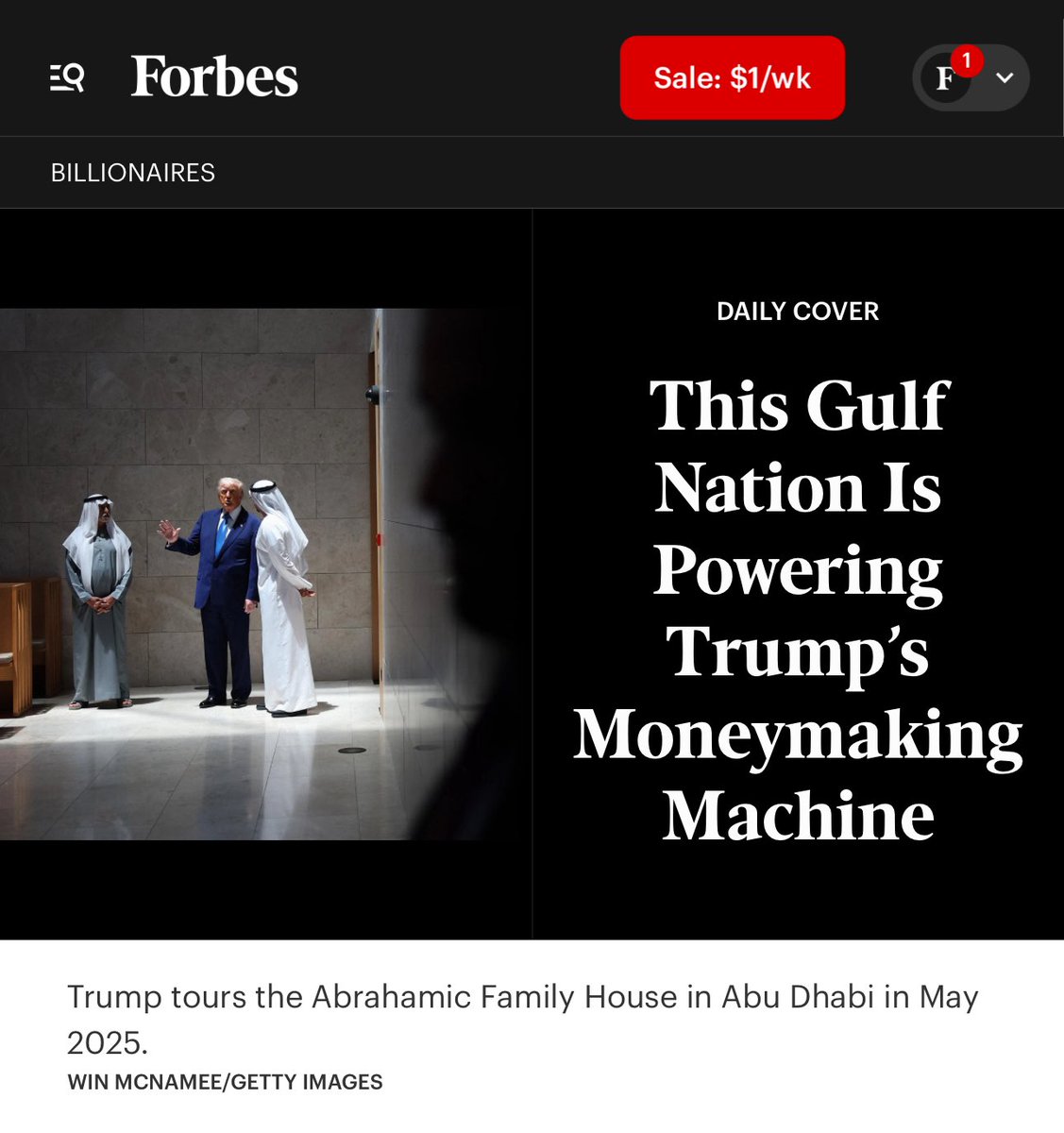
Yet the United States, under Donald Trump, has shown no sign of pressuring RSF’s chief external backer: the United Arab Emirates (UAE). A recent report by Forbes details why - The UAE is Trump’s biggest foreign revenue source.
Trump’s current financial entanglements with the Emirates create powerful personal incentives for the President to look away as a genocide unfolds rather than pressure Abu Dhabi.
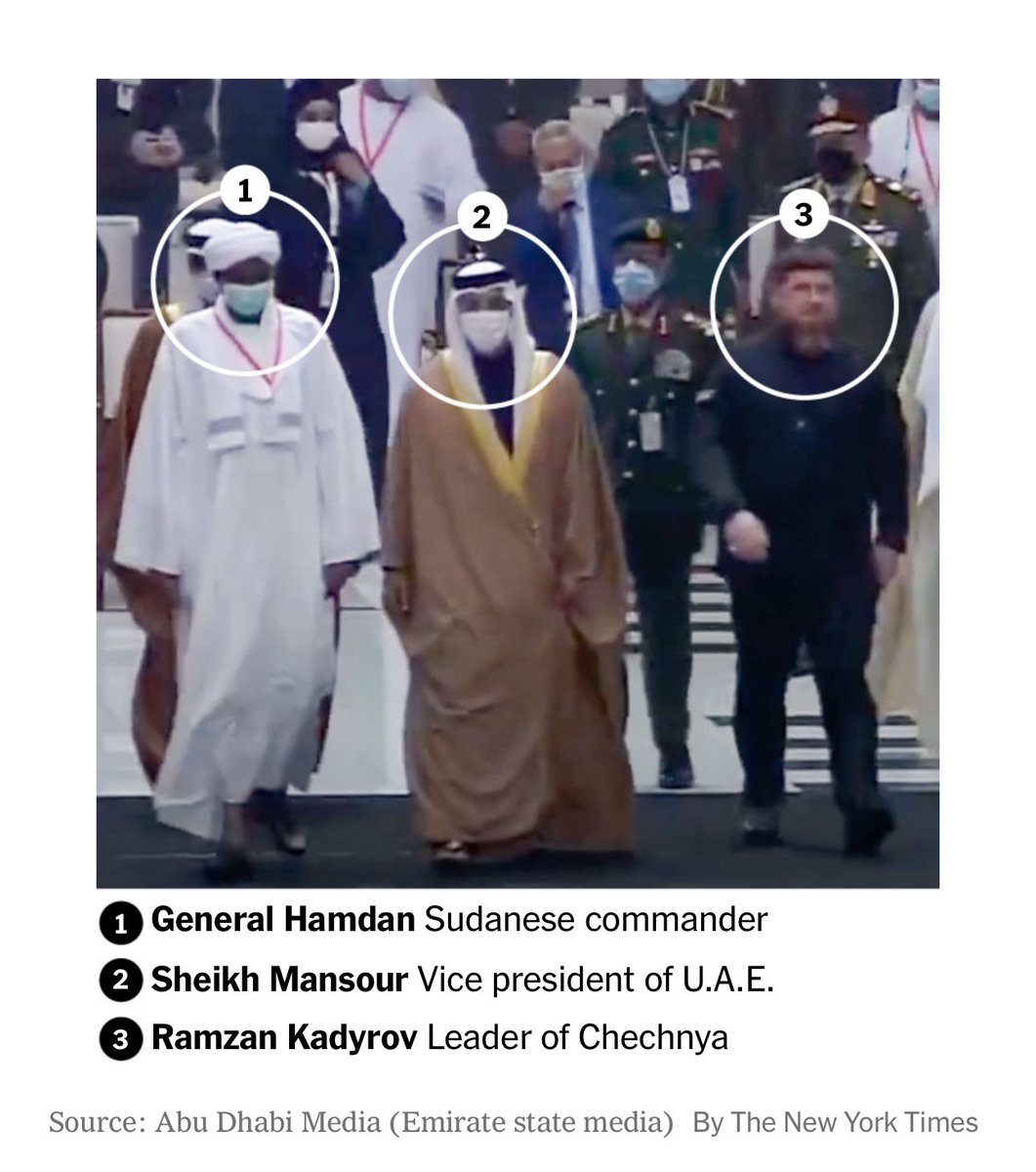
📸🎥 “A lot of cash. Unlimited cash.” — President Trump could hardly help himself from saying out loud as he stood next to UAE Vice-President Sheikh Mansour bin Zayed Al Nahyan at the Sharm el-Sheikh summit in Egypt on October 13. A New York Times investigation, citing U.S. intelligence, identified Sheikh Mansour as the senior Emirati official overseeing the UAE’s outreach to Sudan’s RSF — including communications with RSF commander Hemedti and the networks moving money, supplies, and political support to the militia. The Times also published a photo of Sheikh Mansour meeting with Hemedti, as he stands accused of mass killings, mass rapes, and ethnic cleansing across Darfur and beyond. 🧵⬇️

Sudan’s Rapid Support Forces (RSF) have spent the past month carrying out a genocidal massacre in al-Fasher, where satellite analysis suggests as many as 200,000 people are now unaccounted for. The RSF’s mass executions, village burnings, ethnic cleansing, and systematic starvation rank among some of the worst atrocities of the 21st century.
Yet the United States, under Donald Trump, has shown no sign of pressuring RSF’s chief external backer: the United Arab Emirates (UAE). A recent report by Forbes details why - The UAE is Trump’s biggest foreign revenue source.
Trump’s current financial entanglements with the Emirates create powerful personal incentives for the President to look away as a genocide unfolds rather than pressure Abu Dhabi.
📸🎥 “A lot of cash. Unlimited cash.” — President Trump could hardly help himself from saying out loud as he stood next to UAE Vice-President Sheikh Mansour bin Zayed Al Nahyan at the Sharm el-Sheikh summit in Egypt on October 13. A New York Times investigation, citing U.S. intelligence, identified Sheikh Mansour as the senior Emirati official overseeing the UAE’s outreach to Sudan’s RSF — including communications with RSF commander Hemedti and the networks moving money, supplies, and political support to the militia. The Times also published a photo of Sheikh Mansour meeting with Hemedti, as he stands accused of mass killings, mass rapes, and ethnic cleansing across Darfur and beyond. 🧵⬇️
⭕️ *The UAE is Trump’s biggest foreign revenue source*
Since 2022, Trump businesses have entered at least nine UAE-linked deals. Five are Trump Organization licensing agreements that pay ongoing fees for the use of the Trump name on golf courses, hotels, and residential projects. Licensing contracts require no construction or ownership from Trump. They are pure cash streams. New filings estimate these UAE-connected deals will bring in about 500 million dollars in 2025 alone, with at least 50 million in recurring annual income. No other foreign country provides comparable revenue to the Trump family.
Since 2022, Trump businesses have entered at least nine UAE-linked deals. Five are Trump Organization licensing agreements that pay ongoing fees for the use of the Trump name on golf courses, hotels, and residential projects. Licensing contracts require no construction or ownership from Trump. They are pure cash streams. New filings estimate these UAE-connected deals will bring in about 500 million dollars in 2025 alone, with at least 50 million in recurring annual income. No other foreign country provides comparable revenue to the Trump family.
⭕️ Key Emirati businessmen directly fund Trump enterprises
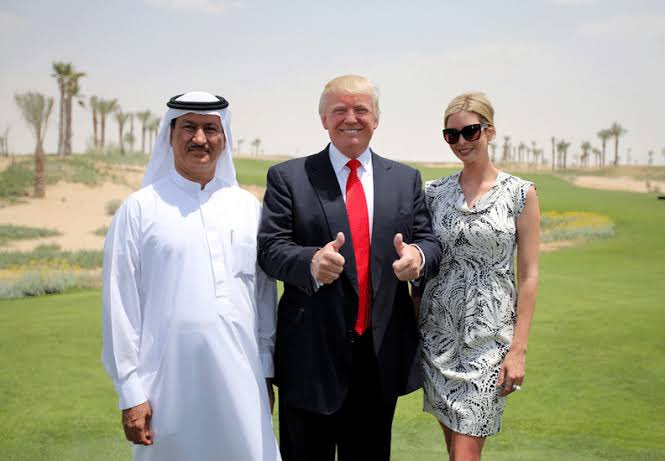
Chief example is Hussain Sajwani - the Emirati billionaire founder of Damac Properties who built Trump International Golf Club Dubai and Trump-branded communities in Damac Hills. His companies reportedly pay Trump about 6 million dollars per year in licensing and management fees. He celebrated Trump’s 2016 victory at Trump’s DC hotel and met Trump at Mar-a-Lago again in January, promising 20 billion dollars in US investment. Damac remains positioned to benefit from new Trump-branded developments across the Gulf.
Chief example is Hussain Sajwani - the Emirati billionaire founder of Damac Properties who built Trump International Golf Club Dubai and Trump-branded communities in Damac Hills. His companies reportedly pay Trump about 6 million dollars per year in licensing and management fees. He celebrated Trump’s 2016 victory at Trump’s DC hotel and met Trump at Mar-a-Lago again in January, promising 20 billion dollars in US investment. Damac remains positioned to benefit from new Trump-branded developments across the Gulf.
⭕️ Government-adjacent Emirati firms are now inside Trump’s crypto world
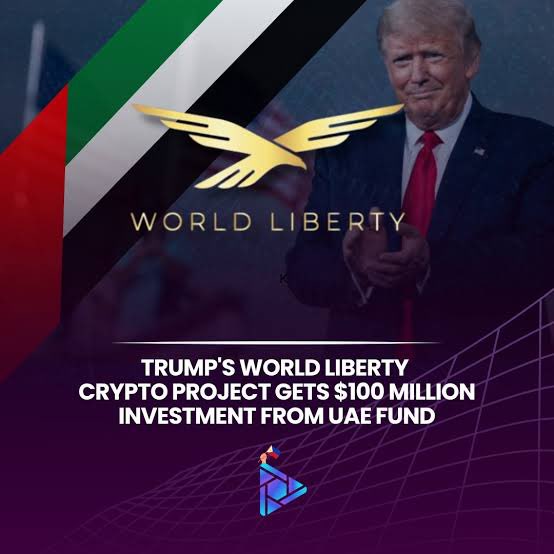
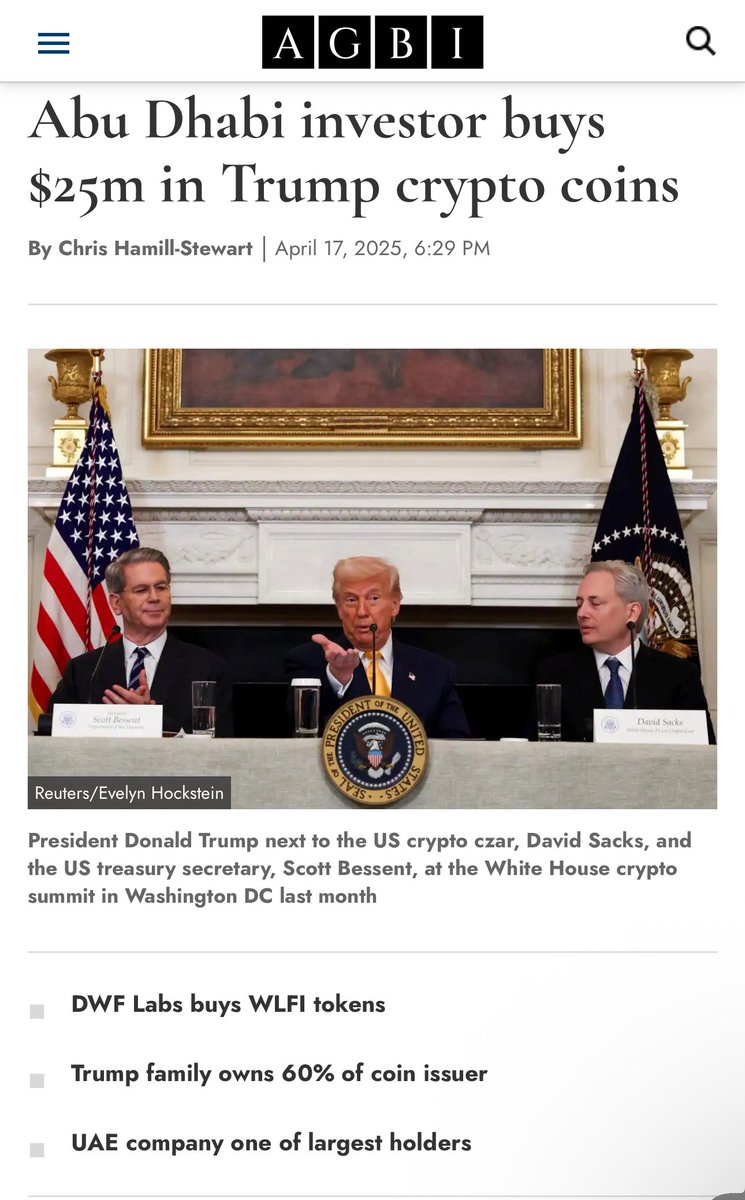
World Liberty Financial, a crypto stablecoin company co-founded by Trump and real estate friend Steve Witkoff shortly before the 2024 election, surged after Trump won. A UAE-based high frequency trading outfit, DWF Labs, bought 25 million dollars worth of tokens. Another 100 million came from the Aqua1 Foundation, a mysterious UAE-based investment entity whose public materials highlight alignment with Abu Dhabi’s government-led development strategy.
Forbes reports those two purchases alone delivered 94 million dollars into Trump family accounts and 16 million into the Witkoff family.
World Liberty Financial, a crypto stablecoin company co-founded by Trump and real estate friend Steve Witkoff shortly before the 2024 election, surged after Trump won. A UAE-based high frequency trading outfit, DWF Labs, bought 25 million dollars worth of tokens. Another 100 million came from the Aqua1 Foundation, a mysterious UAE-based investment entity whose public materials highlight alignment with Abu Dhabi’s government-led development strategy.
Forbes reports those two purchases alone delivered 94 million dollars into Trump family accounts and 16 million into the Witkoff family.
⭕️ “American Bitcoin,” Eric Trump’s new company, has clear financial incentives tied to the UAE
Eric and Don Jr., along with Trump Organization executives, launched American Data Centers in early 2025, then shifted the business into cryptocurrency mining and renamed it American Bitcoin. Eric Trump now holds an estimated 400-plus million dollar stake. Its CEO, Mike Ho, told Arabian Gulf Business Insight that the company had discussed potential expansion into the UAE, including talks with Taqa and ADQ — both state-controlled Abu Dhabi entities that oversee energy generation, infrastructure, and major investment portfolios.
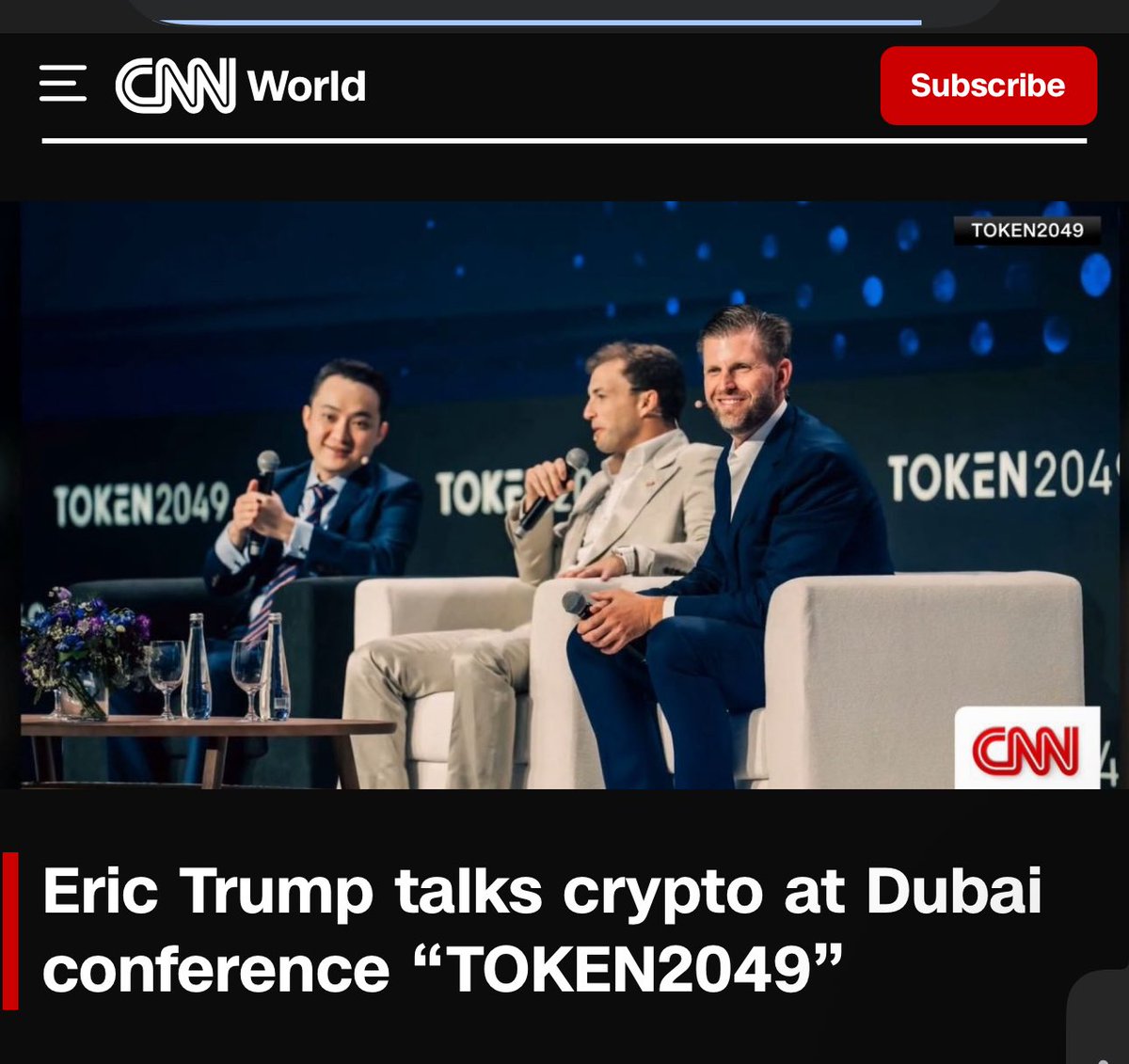
Eric Trump spoke at the Dubai conference “TOKEN2049” in May 2025.
Eric and Don Jr., along with Trump Organization executives, launched American Data Centers in early 2025, then shifted the business into cryptocurrency mining and renamed it American Bitcoin. Eric Trump now holds an estimated 400-plus million dollar stake. Its CEO, Mike Ho, told Arabian Gulf Business Insight that the company had discussed potential expansion into the UAE, including talks with Taqa and ADQ — both state-controlled Abu Dhabi entities that oversee energy generation, infrastructure, and major investment portfolios.
Eric Trump spoke at the Dubai conference “TOKEN2049” in May 2025.

⭕️ Abu Dhabi’s ruling elite are now directly linked to Trump financial products
At a Dubai crypto conference earlier this year, Eric Trump and Zach Witkoff announced that MGX — a financial firm chaired by Sheikh Tahnoon bin Zayed Al Nahyan, the powerful national security adviser and brother of the UAE ruler — plans to use World Liberty Financial’s stablecoin to facilitate a 2 billion dollar investment in Binance. That multibillion-dollar deposit allows the Trump-affiliated company to earn tens of millions annually in interest, and exponentially increased its valuation.
(Days later, Trump granted a presidential pardon to Binance founder Changpeng Zhao.)
At a Dubai crypto conference earlier this year, Eric Trump and Zach Witkoff announced that MGX — a financial firm chaired by Sheikh Tahnoon bin Zayed Al Nahyan, the powerful national security adviser and brother of the UAE ruler — plans to use World Liberty Financial’s stablecoin to facilitate a 2 billion dollar investment in Binance. That multibillion-dollar deposit allows the Trump-affiliated company to earn tens of millions annually in interest, and exponentially increased its valuation.
(Days later, Trump granted a presidential pardon to Binance founder Changpeng Zhao.)


⭕️ Trump’s future wealth expansion now runs through the Emirates
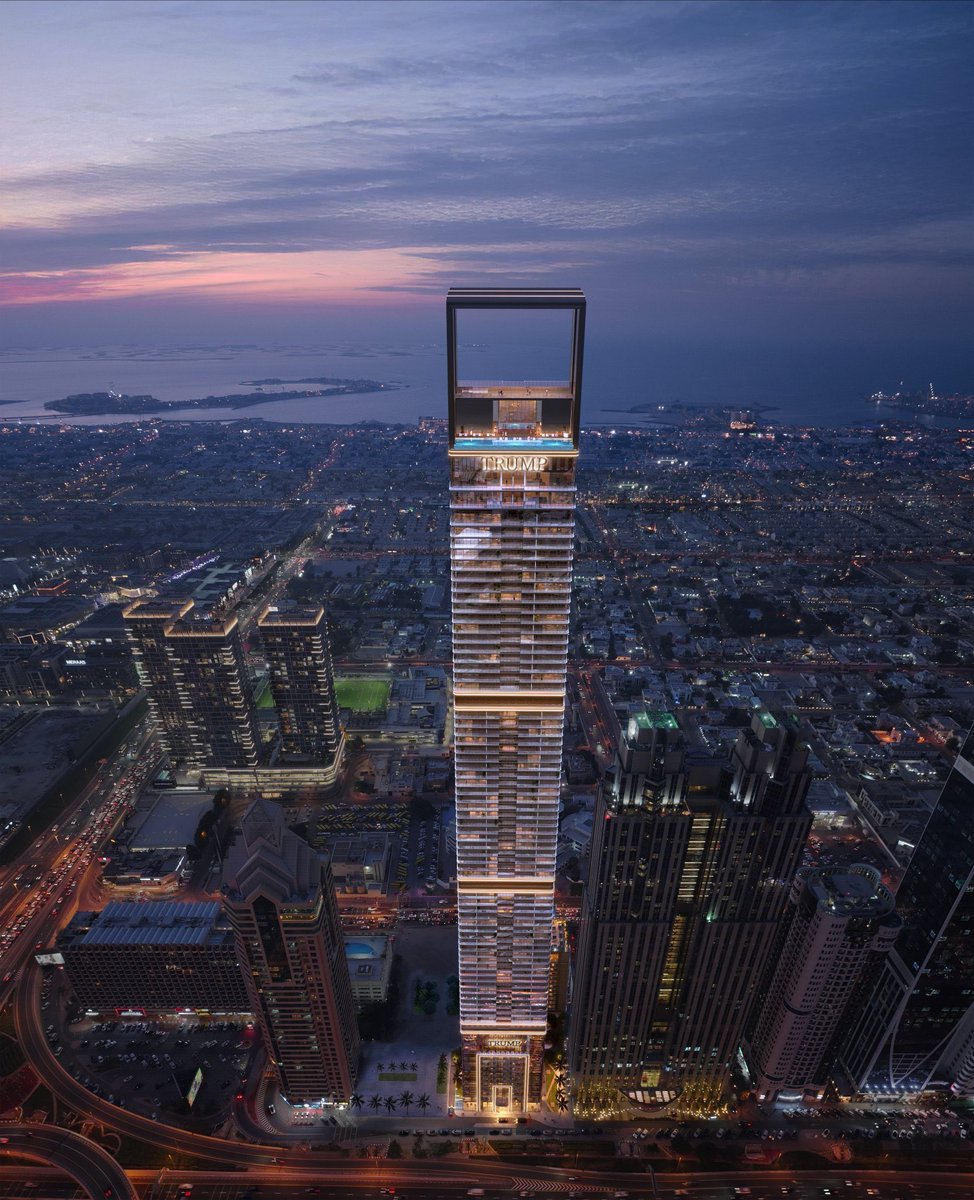
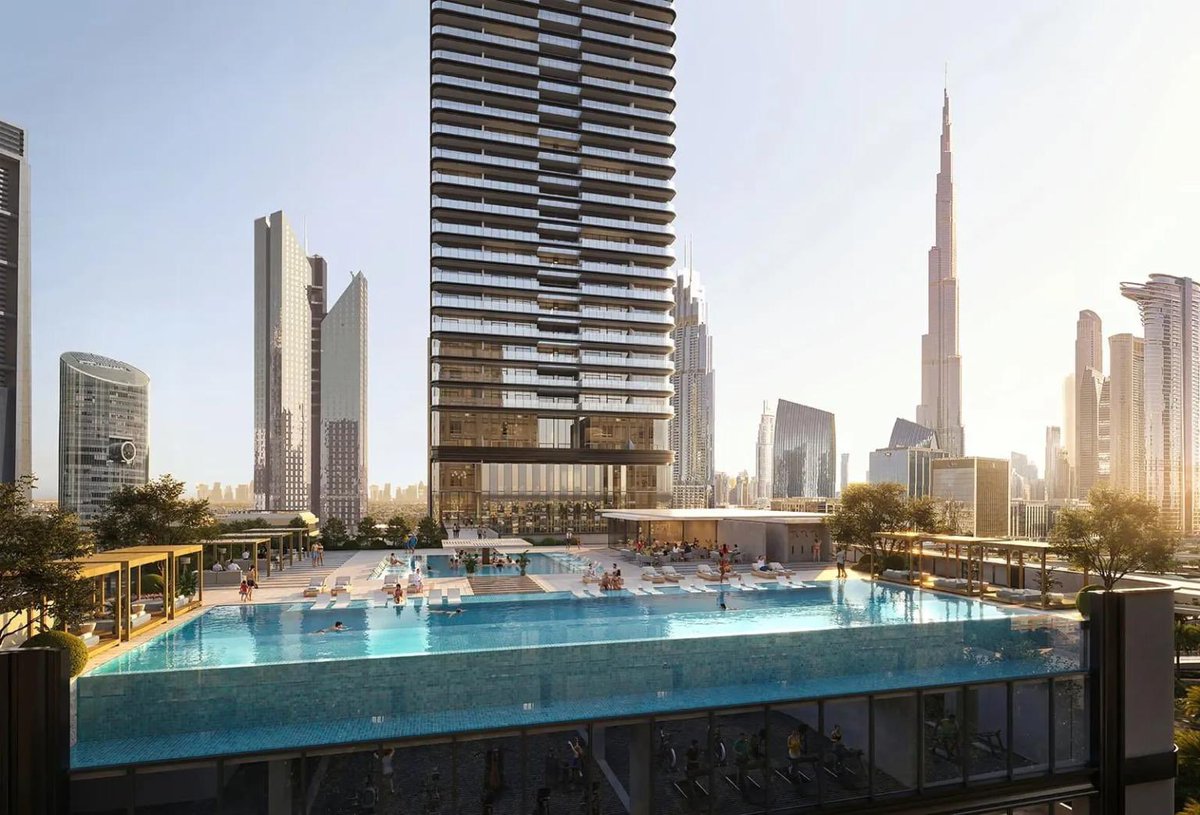
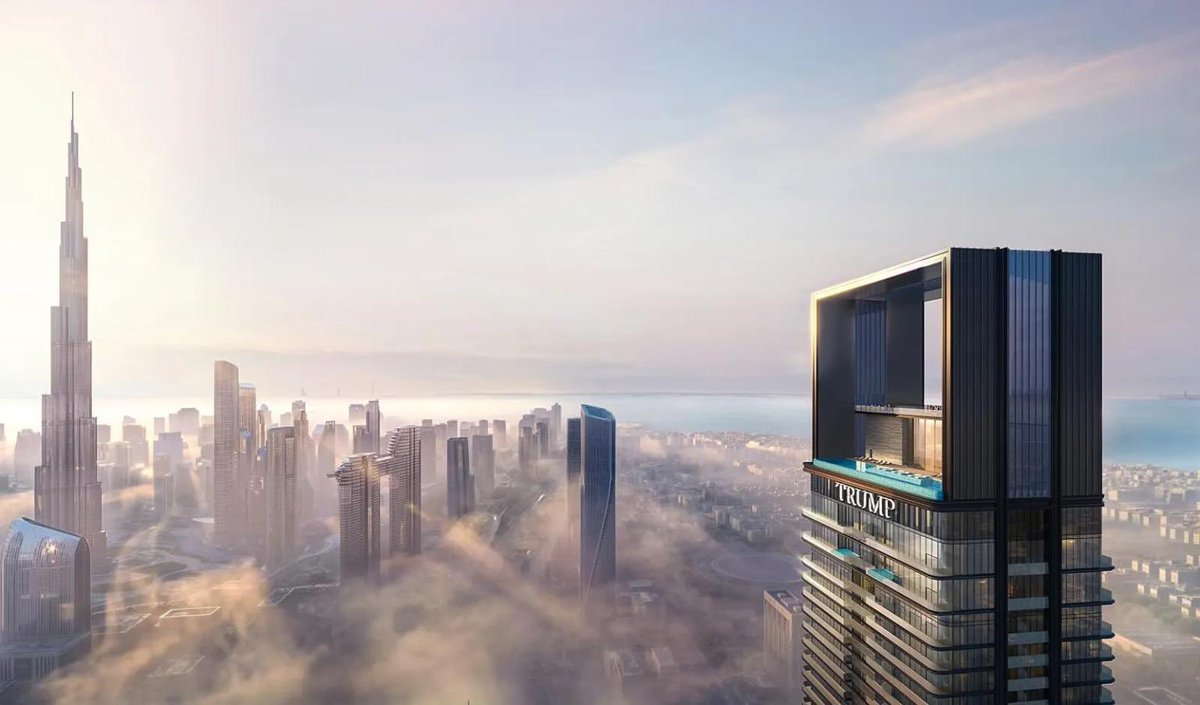
Corporate filings point to a forthcoming Trump real-estate development in Abu Dhabi, likely in the Al Raha Beach district — a project that would require long-term cooperation with state-aligned developers, land authorities, and regulators. Meanwhile, Dubai-based developers have already announced an 80-story Trump Tower slated to begin construction in late 2025, with projected completion around 2031. That project is being led by longtime Trump licensing partner Ziad El Chaar, who has spent years publicly advocating tokenized real estate — converting buildings into fractional digital ownership assets. Eric Trump has confirmed he is actively working to tokenize at least one Trump property, meaning Dubai or Abu Dhabi could become the proving grounds for a brand-new Trump revenue model. These ventures require sustained political and financial goodwill from the UAE.
Photos: Rendering of the Trump Tower in Dubai, published by Dar Global.
Corporate filings point to a forthcoming Trump real-estate development in Abu Dhabi, likely in the Al Raha Beach district — a project that would require long-term cooperation with state-aligned developers, land authorities, and regulators. Meanwhile, Dubai-based developers have already announced an 80-story Trump Tower slated to begin construction in late 2025, with projected completion around 2031. That project is being led by longtime Trump licensing partner Ziad El Chaar, who has spent years publicly advocating tokenized real estate — converting buildings into fractional digital ownership assets. Eric Trump has confirmed he is actively working to tokenize at least one Trump property, meaning Dubai or Abu Dhabi could become the proving grounds for a brand-new Trump revenue model. These ventures require sustained political and financial goodwill from the UAE.
Photos: Rendering of the Trump Tower in Dubai, published by Dar Global.
⭕️ Diplomat-business hybrids reinforce the alignment
Steve Witkoff, Trump’s business partner in World Liberty Financial, now functions as a presidential envoy, blurring the line between diplomacy and deal-making. Jared Kushner’s 5.4 billion dollar private-equity fund is heavily financed by Gulf sovereign wealth, including the UAE, giving Abu Dhabi access not just to Trump but to the broader policymaking orbit surrounding him.
Both men appeared on 60 Minutes defending these arrangements, arguing that what critics call conflicts of interest are really “experience and trusted relationships.” That framing also defines Trump’s foreign policy posture — especially toward the UAE that invests directly in Trump-linked enterprises.
Steve Witkoff, Trump’s business partner in World Liberty Financial, now functions as a presidential envoy, blurring the line between diplomacy and deal-making. Jared Kushner’s 5.4 billion dollar private-equity fund is heavily financed by Gulf sovereign wealth, including the UAE, giving Abu Dhabi access not just to Trump but to the broader policymaking orbit surrounding him.
Both men appeared on 60 Minutes defending these arrangements, arguing that what critics call conflicts of interest are really “experience and trusted relationships.” That framing also defines Trump’s foreign policy posture — especially toward the UAE that invests directly in Trump-linked enterprises.
https://x.com/DropSiteNews/status/1980053915803562219
⭕️ TLDR: The UAE is not just another foreign partner for the Trump White House. It is the political, financial, real-estate, and crypto ecosystem powering the Trump family’s current and future wealth. Pressuring Abu Dhabi over its arming, financing, and enabling of a genocidal paramilitary force in Sudan would risk billions, jeopardize ongoing deals, collapse upcoming ventures, and damage Trump’s most important business relationships.
Nathaniel Raymond, Executive Director of Yale’s Humanitarian Research Lab, says that is precisely what is needed. Trump should call UAE President Mohammed bin Zayed and threaten sanctions unless the UAE stops arming the RSF.
💥After spending 18 months briefing the UN and both Biden and Trump officials, warning of what has unfolded in Al-Fasher, he describes the past month as “the most exquisitely precisely warned mass atrocity in human history,” and one that was “entirely predictable.”
Nathaniel Raymond, Executive Director of Yale’s Humanitarian Research Lab, says that is precisely what is needed. Trump should call UAE President Mohammed bin Zayed and threaten sanctions unless the UAE stops arming the RSF.
💥After spending 18 months briefing the UN and both Biden and Trump officials, warning of what has unfolded in Al-Fasher, he describes the past month as “the most exquisitely precisely warned mass atrocity in human history,” and one that was “entirely predictable.”
• • •
Missing some Tweet in this thread? You can try to
force a refresh