
The World of Soylent Green Is Closer Than We Admit
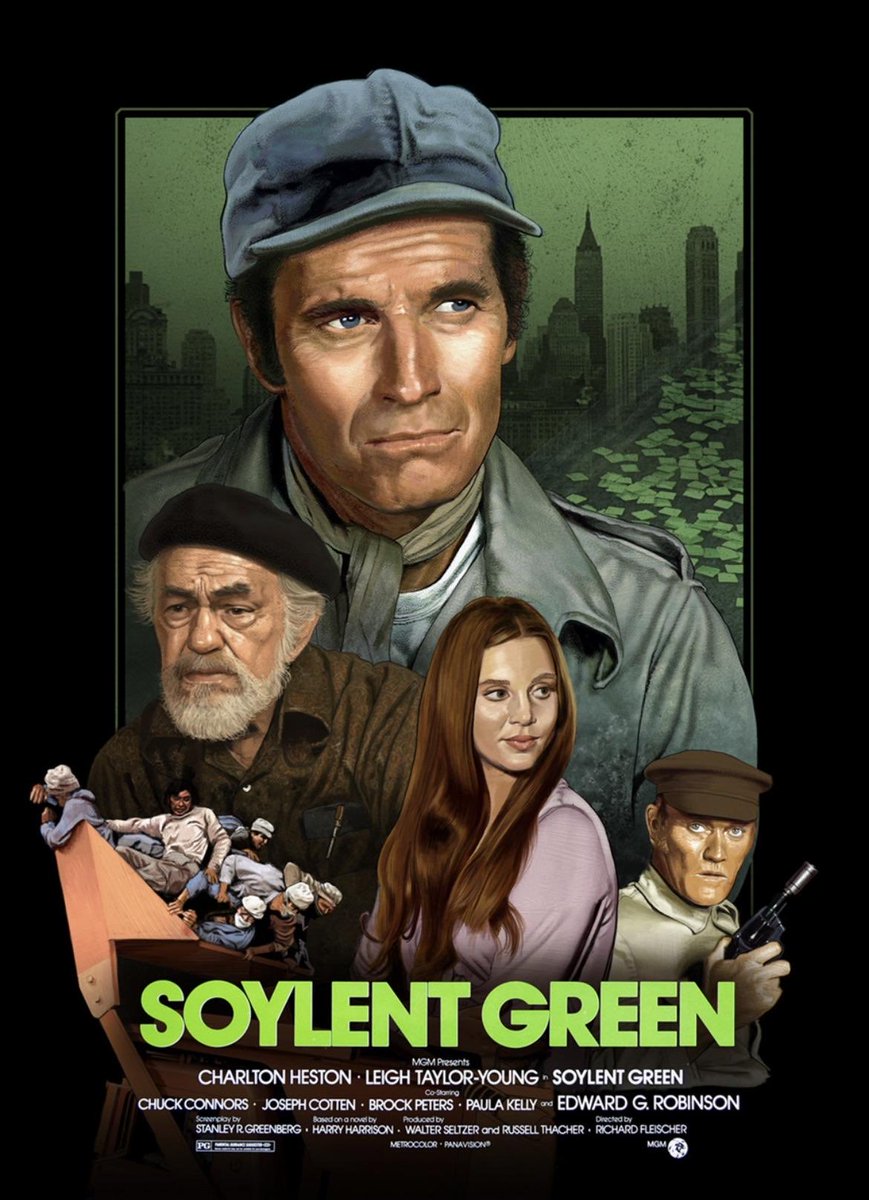
There’s a moment in Soylent Green that never leaves you.
An old man — tired, gentle, defeated — walks willingly into a euthanasia chamber. The lights dim, the music swells, and he’s given a “beautiful” ending that hides an unbearable truth: his society decided he was no longer worth the effort it would take to keep him alive.
That is the heartbreak at the centre of the film.
Not the twist.
Not the dystopia.
But the quiet acceptance that some lives matter less.
Watching it today, in a world reshaped by COVID, that theme hits harder than ever.
Because whether we admit it or not, we’ve seen our own version of that indifference.
When the pandemic took the elderly, the disabled, the chronically ill — the people who needed protection the most — far too many shrugged and said, “Well… they were old.”
As if age cancels out humanity.
As if frailty makes someone less deserving of breath.
As if love and connection somehow expire when you cross a statistical threshold.
That’s what makes Soylent Green feel so painfully relevant:
It shows a society that doesn’t hate its vulnerable.
It simply stops seeing them.
The deaths become normal.
The losses become background noise.
And eventually, the people who disappear are spoken of in past tense before they’re even gone.
Isn’t that what happened when “pre-existing conditions” became a punchline?
When “they had limited life expectancy” became a defence rather than a tragedy?
When tens of thousands of families were told, implicitly or aloud, that their grief didn’t count?
In the film, the euthanasia room is warm and peaceful — a lie wrapped in beauty.
Our version is colder:
a shrug,
a statistic,
a comment online that writes whole lives off as “inevitable.”
But the end result is the same.
A life ends, and those who should have valued it look the other way.
Soylent Green isn’t just a warning about the future.
It’s a mirror held up to our present.
A society’s true moral foundation is revealed in how fiercely it defends its most vulnerable.
There’s a moment in Soylent Green that never leaves you.
An old man — tired, gentle, defeated — walks willingly into a euthanasia chamber. The lights dim, the music swells, and he’s given a “beautiful” ending that hides an unbearable truth: his society decided he was no longer worth the effort it would take to keep him alive.
That is the heartbreak at the centre of the film.
Not the twist.
Not the dystopia.
But the quiet acceptance that some lives matter less.
Watching it today, in a world reshaped by COVID, that theme hits harder than ever.
Because whether we admit it or not, we’ve seen our own version of that indifference.
When the pandemic took the elderly, the disabled, the chronically ill — the people who needed protection the most — far too many shrugged and said, “Well… they were old.”
As if age cancels out humanity.
As if frailty makes someone less deserving of breath.
As if love and connection somehow expire when you cross a statistical threshold.
That’s what makes Soylent Green feel so painfully relevant:
It shows a society that doesn’t hate its vulnerable.
It simply stops seeing them.
The deaths become normal.
The losses become background noise.
And eventually, the people who disappear are spoken of in past tense before they’re even gone.
Isn’t that what happened when “pre-existing conditions” became a punchline?
When “they had limited life expectancy” became a defence rather than a tragedy?
When tens of thousands of families were told, implicitly or aloud, that their grief didn’t count?
In the film, the euthanasia room is warm and peaceful — a lie wrapped in beauty.
Our version is colder:
a shrug,
a statistic,
a comment online that writes whole lives off as “inevitable.”
But the end result is the same.
A life ends, and those who should have valued it look the other way.
Soylent Green isn’t just a warning about the future.
It’s a mirror held up to our present.
A society’s true moral foundation is revealed in how fiercely it defends its most vulnerable.
• • •
Missing some Tweet in this thread? You can try to
force a refresh




