
This thread will be the first amongst many that document the regularized violence in the feudal Gangetic plain from the late Middle Ages to early modern period. 
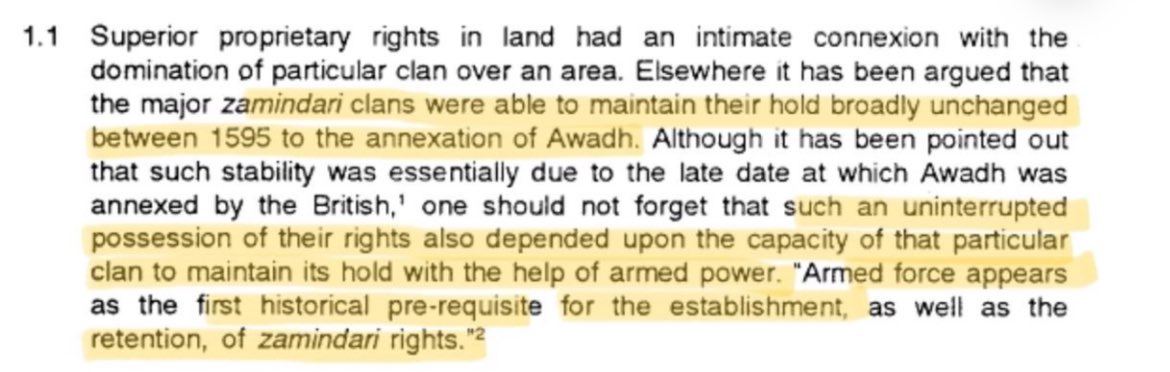
Zamindari power was virtually unchanged from 1595 to the annexation of Oudh by Johnny Company in 1858. The establishment and maintenance of it depended heavily upon armed power, as violence is the
ultimate denominator of power, especially in a place as unstable as the North Indian plain.
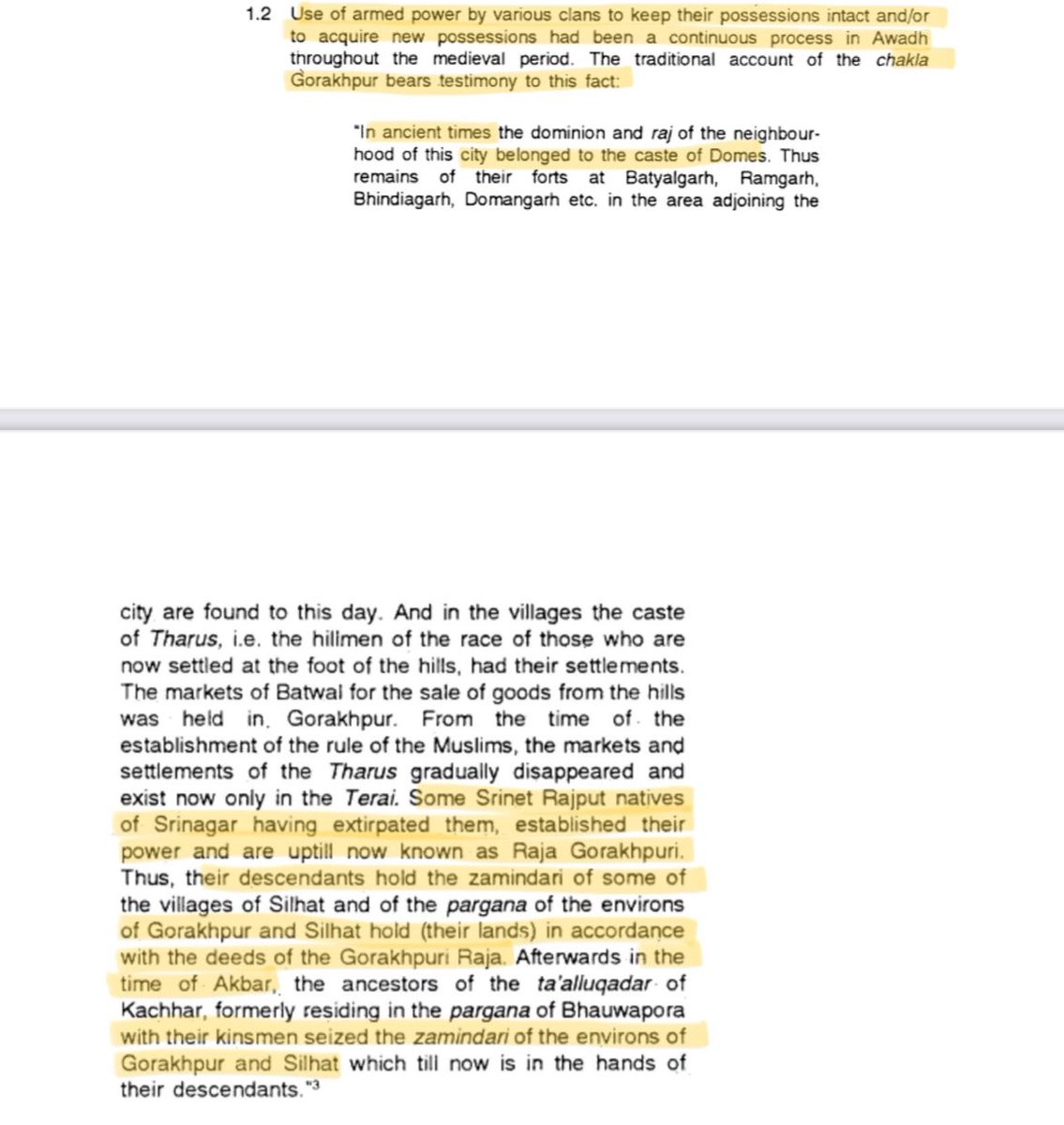
An archetypical example of the establishment of such fiefdoms. The Dom tribals of Gorakhpore and its
environs were subjugated by migratory Rajpoots, who then held the lands, until they too were similarly conquered by Rajputs of Kacchar.
ultimate denominator of power, especially in a place as unstable as the North Indian plain.
An archetypical example of the establishment of such fiefdoms. The Dom tribals of Gorakhpore and its
environs were subjugated by migratory Rajpoots, who then held the lands, until they too were similarly conquered by Rajputs of Kacchar.
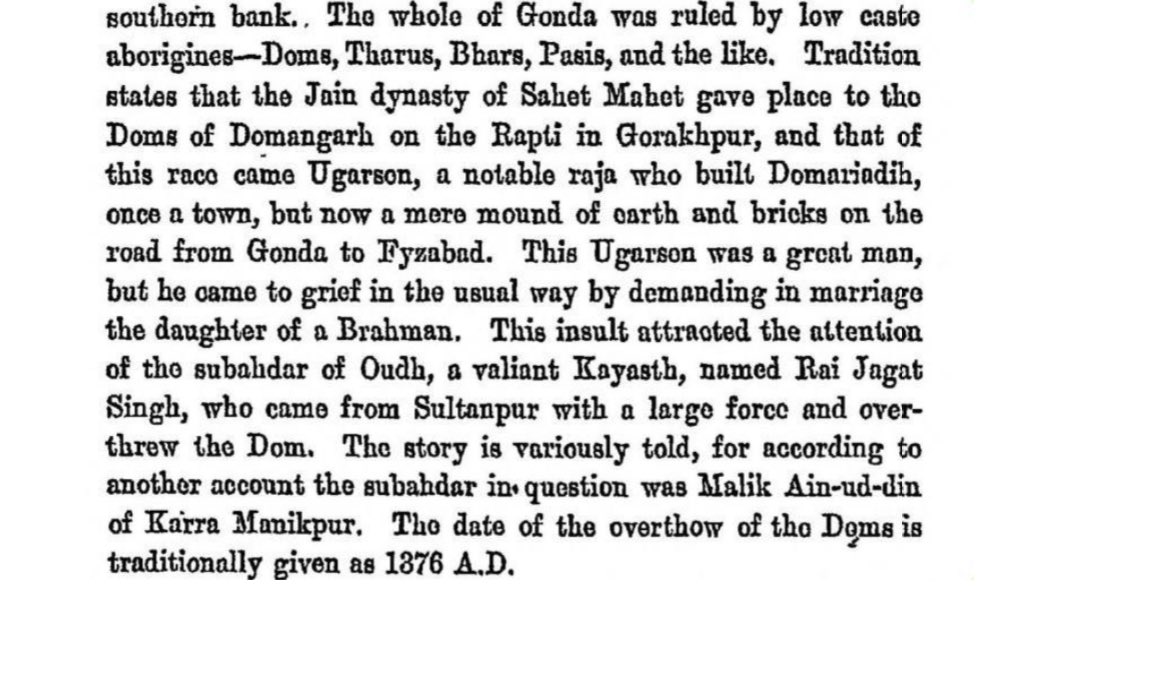
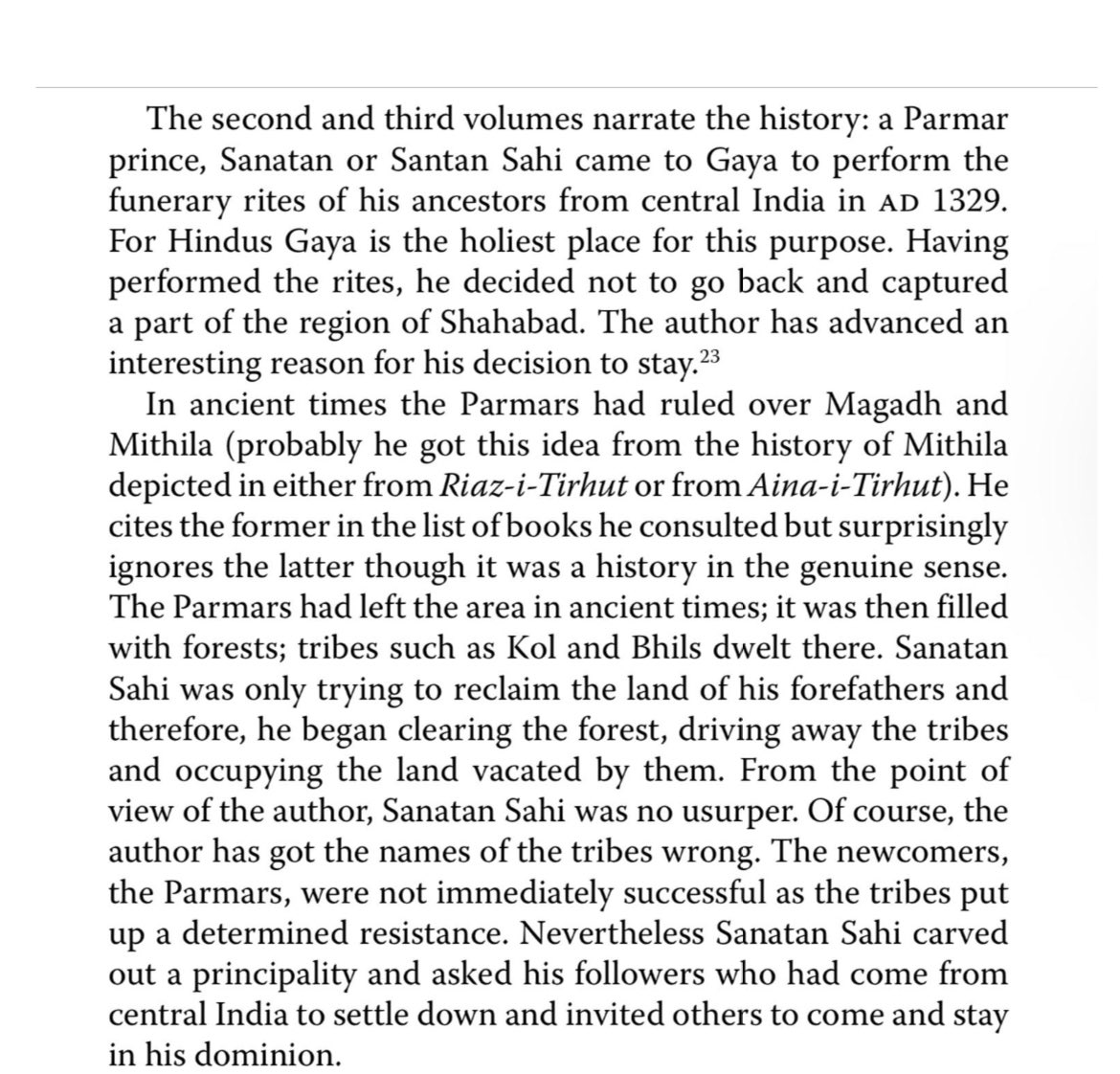
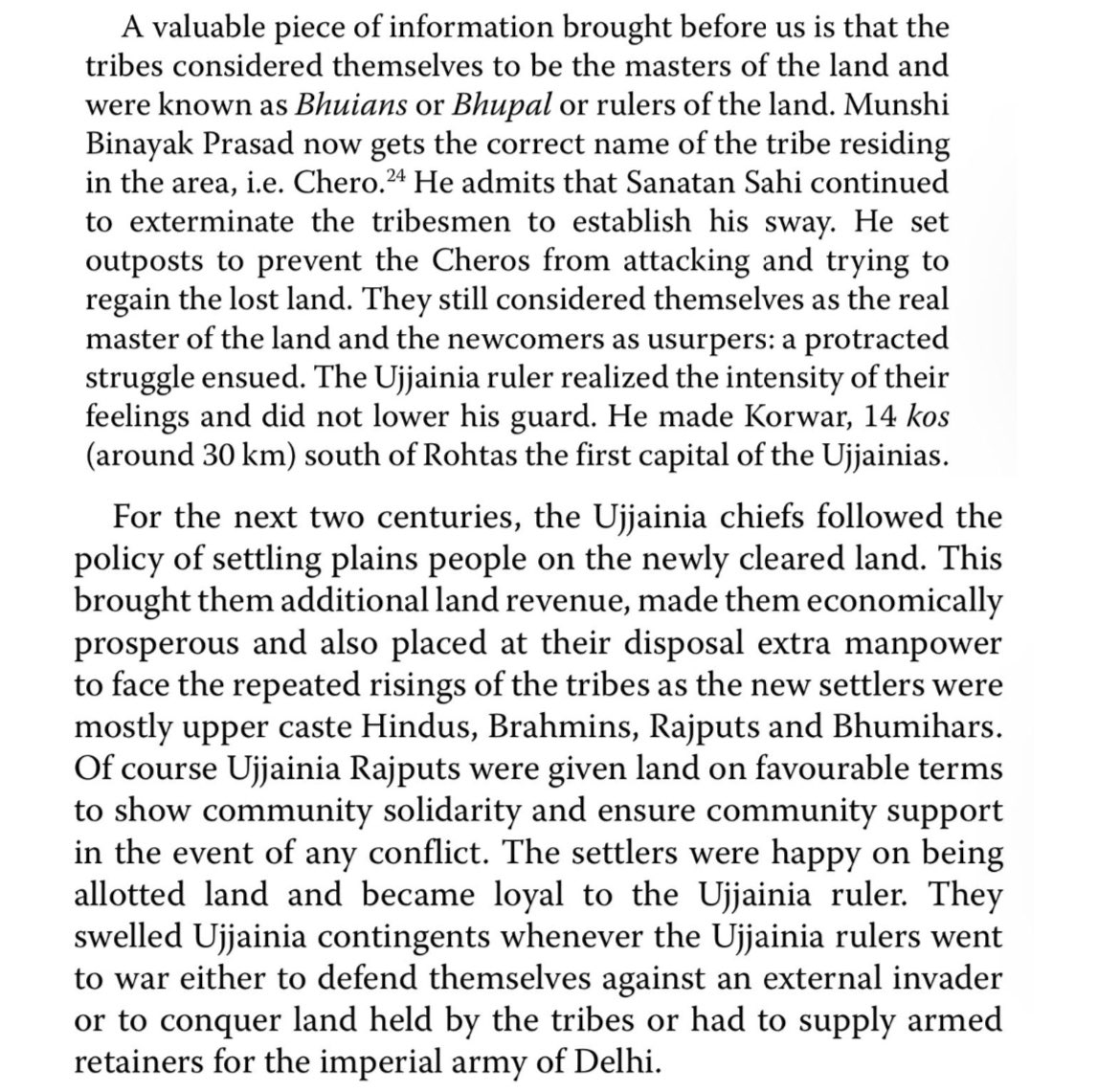
As an aside, it was common for feudatories in the Eastern Gangetic Basin being established via the
overthrowal of local kingdoms ruled by tribals, which often functioned in a similar manner to those
ruled by caste Hindus. These conquests usually took the form of a band of itinerant warriors setting
out and conquering new fiefs from the tribals, then inviting more of their clansmen to settle. Many
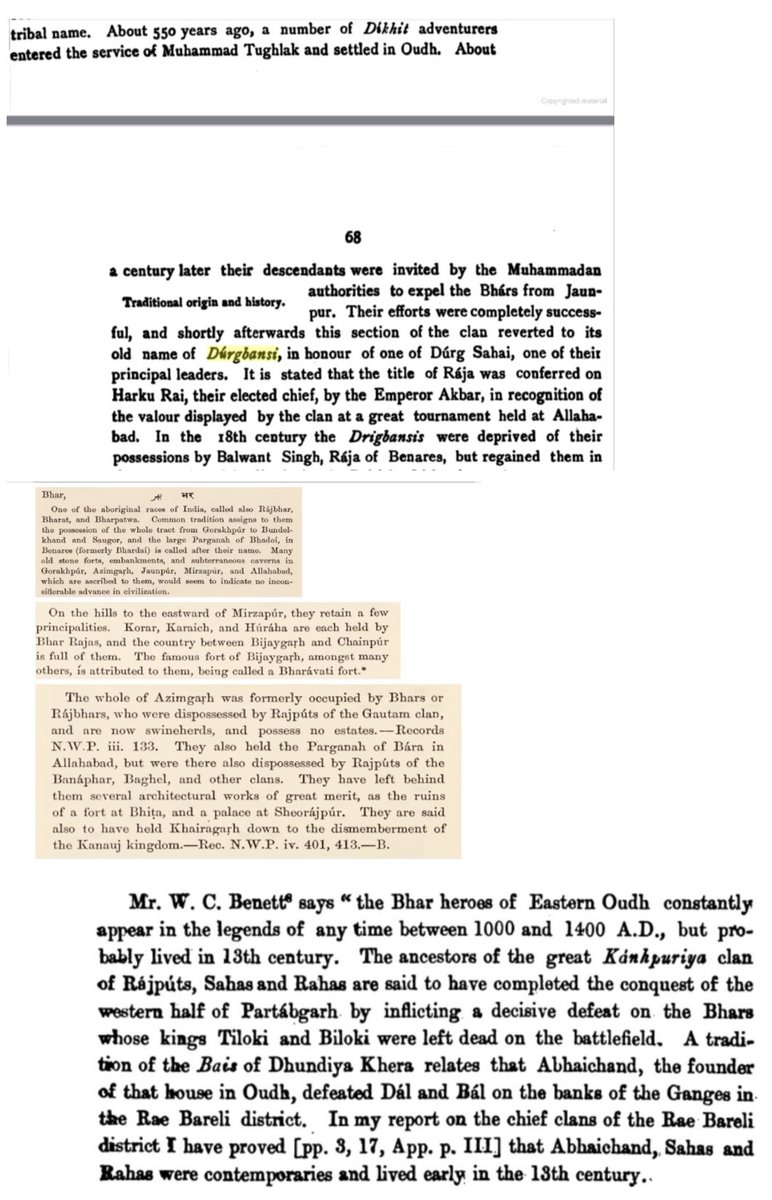
modern Dalit castes of this region such as Doms, Pasis, Bhars, Musahars, and others are descended
from these erstwhile ruling tribes. The Cheros remained the last great tribal kingdom until its final
overthrowal by the Ujjainiya Rajputs of western Bihar. The Bhars ruled a large tract from
Gorakhpore to Bundelkhand, but were overthrown by various warbands of Rajputs.
overthrowal of local kingdoms ruled by tribals, which often functioned in a similar manner to those
ruled by caste Hindus. These conquests usually took the form of a band of itinerant warriors setting
out and conquering new fiefs from the tribals, then inviting more of their clansmen to settle. Many
modern Dalit castes of this region such as Doms, Pasis, Bhars, Musahars, and others are descended
from these erstwhile ruling tribes. The Cheros remained the last great tribal kingdom until its final
overthrowal by the Ujjainiya Rajputs of western Bihar. The Bhars ruled a large tract from
Gorakhpore to Bundelkhand, but were overthrown by various warbands of Rajputs.
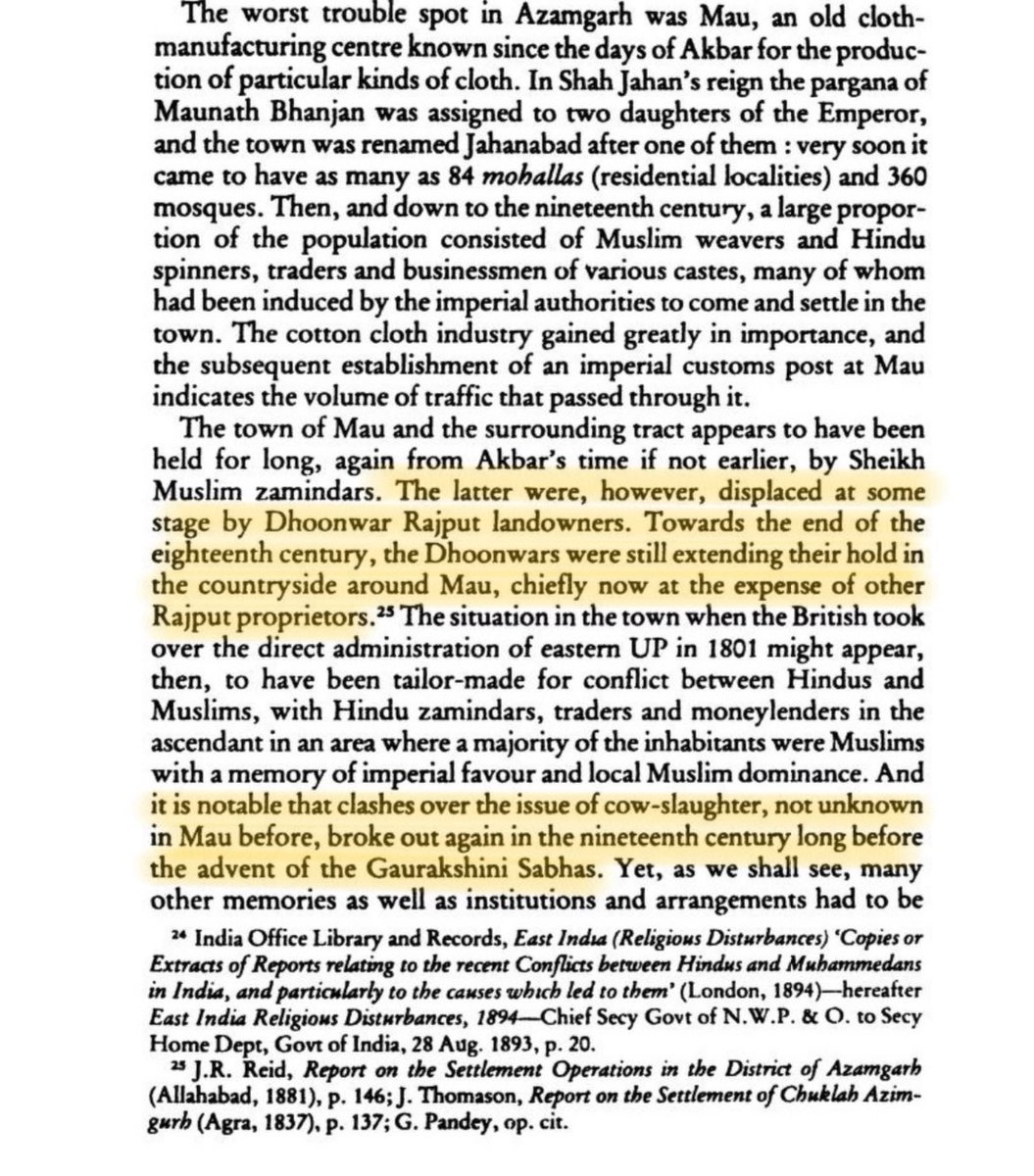
Here in fact is an example of Rajpoot feudatories in a region being set up via the overthrowal of
non tribal rulers of a region, in this case the Dhonwar Rajputs overthrowing local Mahomeddan
proprietors in Mau, rather than any aboriginal race
non tribal rulers of a region, in this case the Dhonwar Rajputs overthrowing local Mahomeddan
proprietors in Mau, rather than any aboriginal race
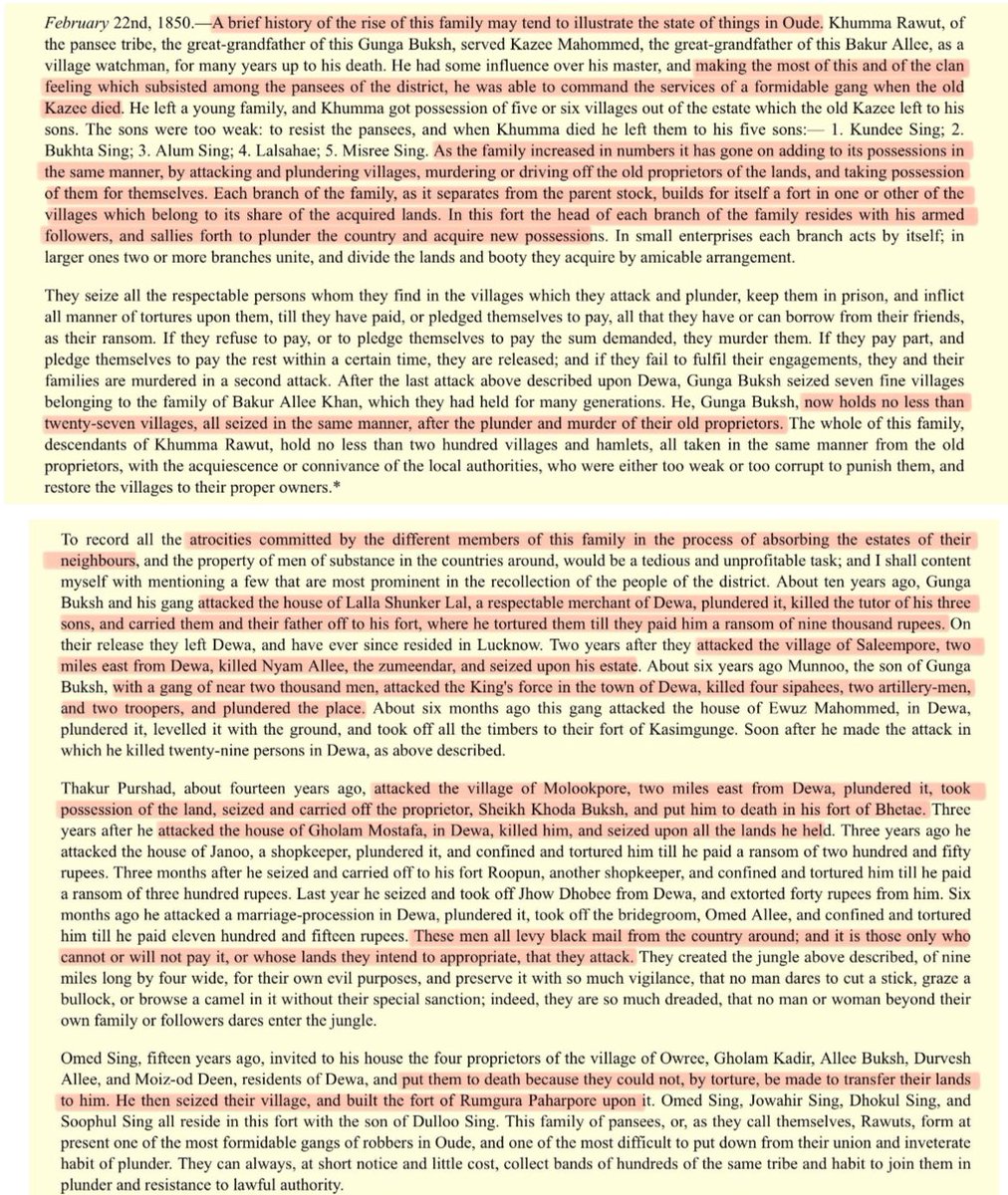
As in the above case, new lineages often carved out their fiefdoms by displacing earlier proprietors.
Below is a typical example of how that occurred. Warbands, often organized on a clan basis, would
raid and usurp the lands of the old owners of the land, then cement their rule by building forts and
adding to their possessions by preying on weaker elements, raiding or charging blackmail in a
protection racket to shore up their coffers. They then seek to legitimize their rule by passing
themselves off as members of various hegemonic groups. In the case below, they would
attempt to pass themselves off as Rajputs despite being Pasis. We shall see how this came about and
more from this clan later on in the thread, as it is a very useful case study of how these feudal
lineages operated in relation to each other and the Government.
Below is a typical example of how that occurred. Warbands, often organized on a clan basis, would
raid and usurp the lands of the old owners of the land, then cement their rule by building forts and
adding to their possessions by preying on weaker elements, raiding or charging blackmail in a
protection racket to shore up their coffers. They then seek to legitimize their rule by passing
themselves off as members of various hegemonic groups. In the case below, they would
attempt to pass themselves off as Rajputs despite being Pasis. We shall see how this came about and
more from this clan later on in the thread, as it is a very useful case study of how these feudal
lineages operated in relation to each other and the Government.
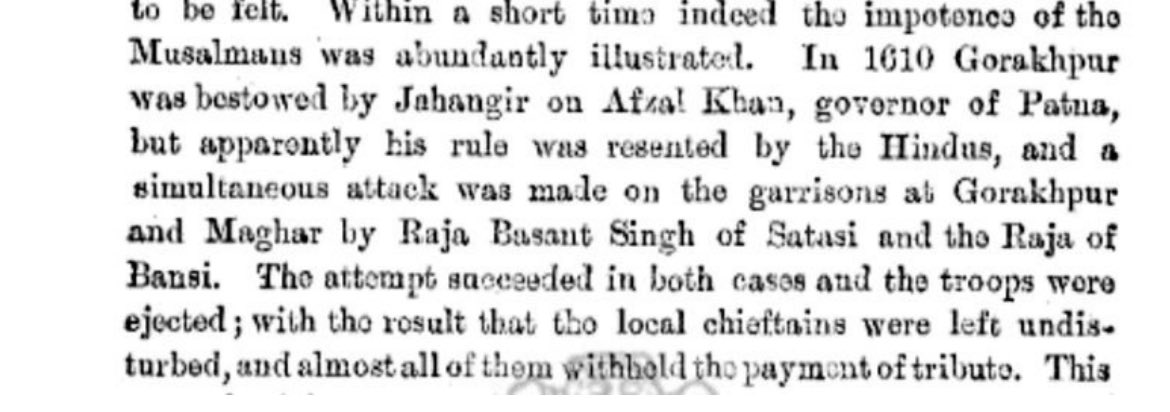
Warfare was not merely between minor lords and principalities, but also by these feudal chieftains
against Imperial authorities. Here is an example. In 1610, Gorakhpur was bestowed by Jahangir on
Afzal Khan, the governor of Patna, but the local Srinet Rajputs of Satsi & Bansi attacked the
Mughal garrison stationed at Gorakhpur and Maghar and completely routed them, hence
Gorakarpore remained independent under local chieftains.
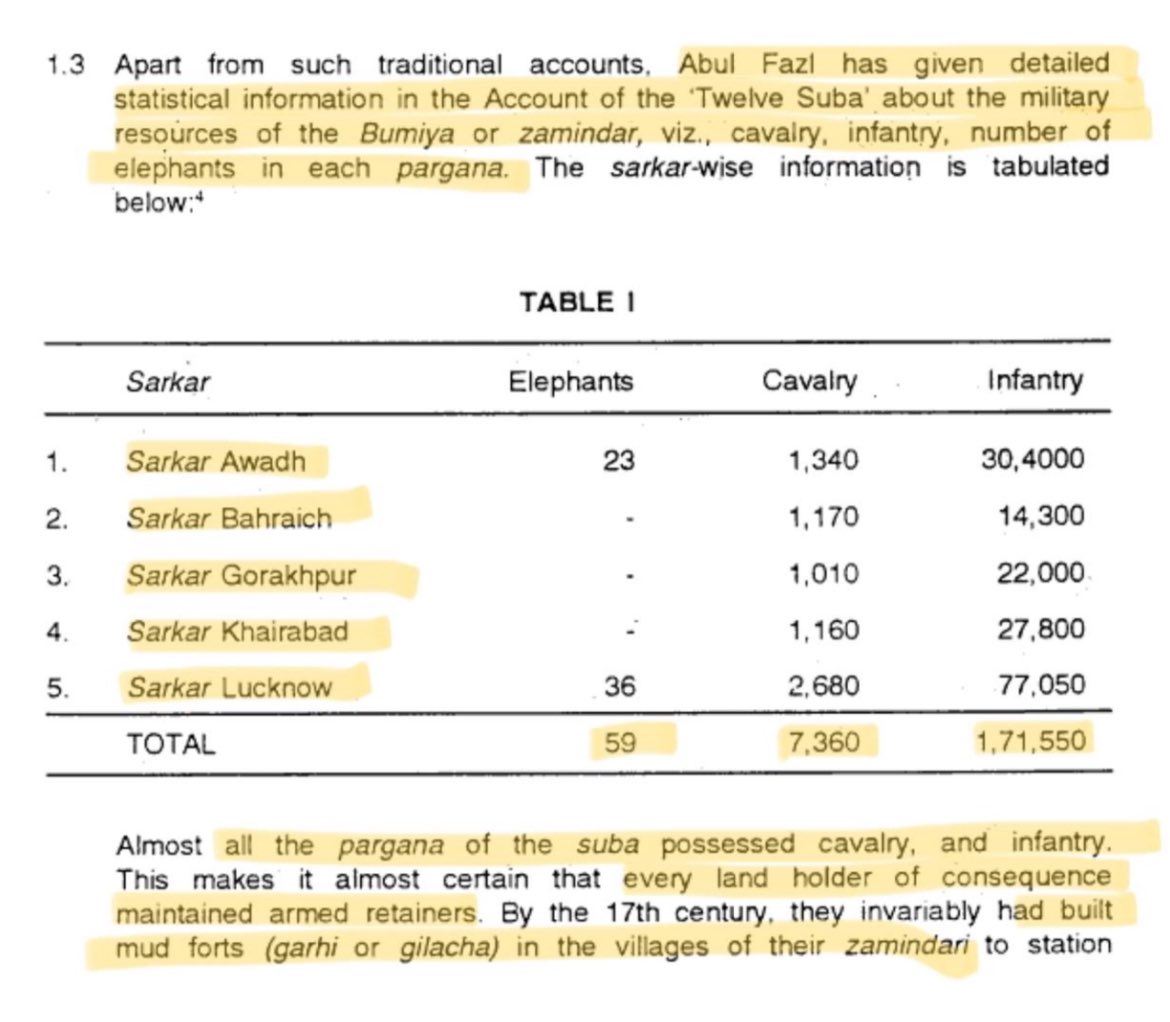
Below is a table of total military capabilities of zamindars in each Subah of the Gangetic plains. Much like the castles of medieval Europe, the mud forts known as garhis or kilachas played a vital role in
these feudal disputes, both between zamindars as well between zamindars and governmental
authorities. The expertise of Company Artillery in neutralizing these forts made them more
effective tax collectors than the forces of the Nabobs of Oudh.
against Imperial authorities. Here is an example. In 1610, Gorakhpur was bestowed by Jahangir on
Afzal Khan, the governor of Patna, but the local Srinet Rajputs of Satsi & Bansi attacked the
Mughal garrison stationed at Gorakhpur and Maghar and completely routed them, hence
Gorakarpore remained independent under local chieftains.
Below is a table of total military capabilities of zamindars in each Subah of the Gangetic plains. Much like the castles of medieval Europe, the mud forts known as garhis or kilachas played a vital role in
these feudal disputes, both between zamindars as well between zamindars and governmental
authorities. The expertise of Company Artillery in neutralizing these forts made them more
effective tax collectors than the forces of the Nabobs of Oudh.
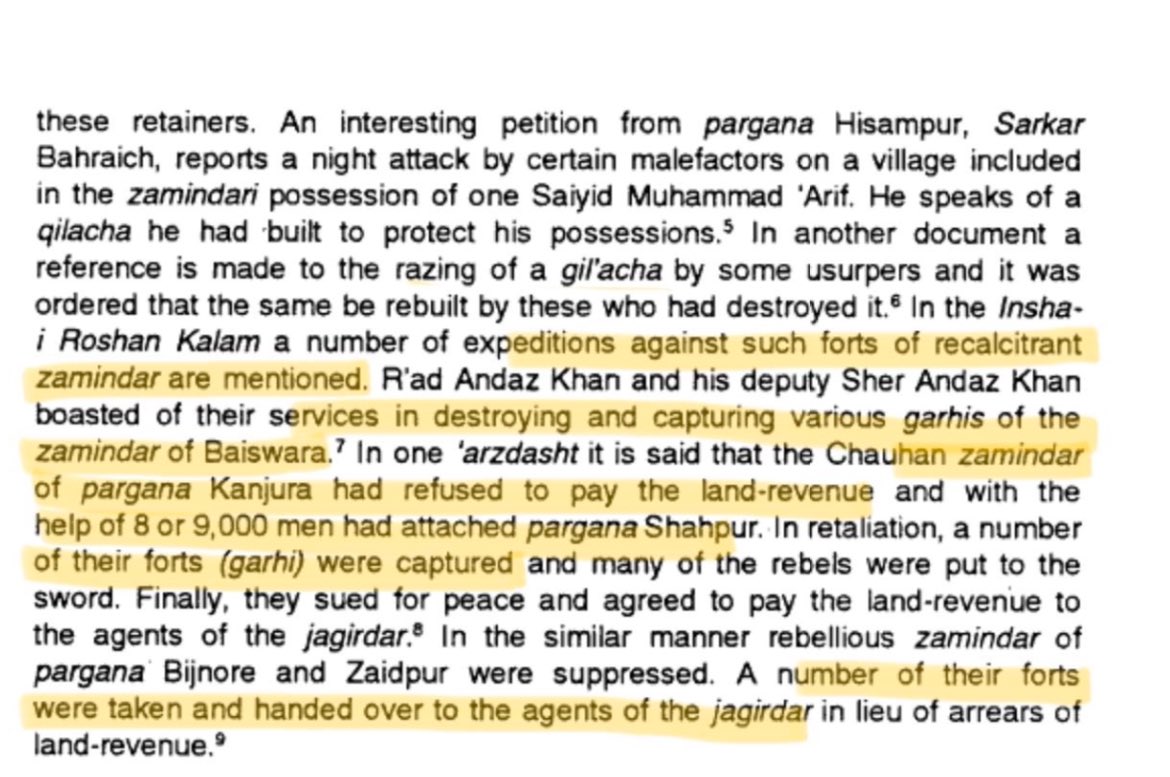
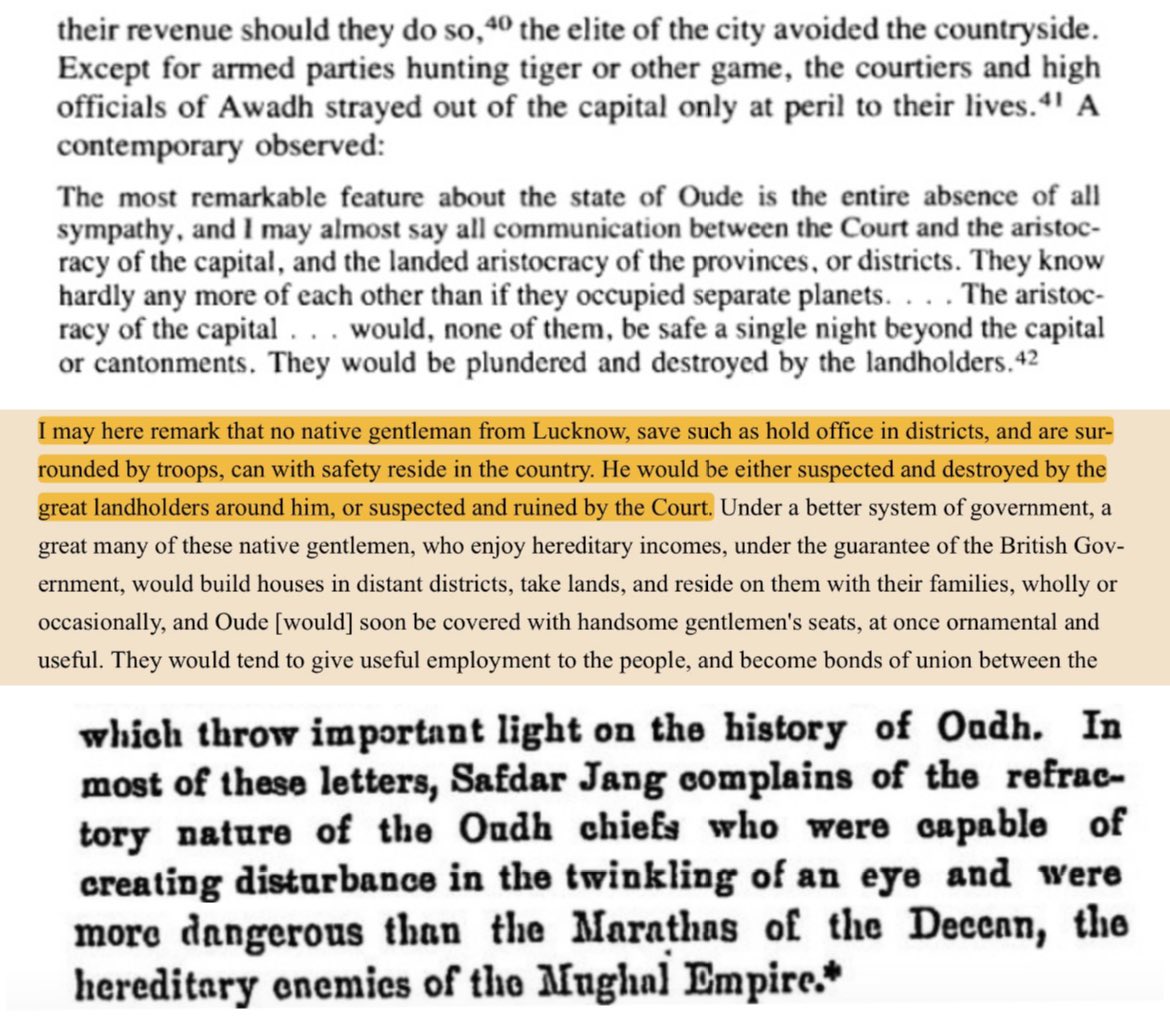
Provincial authorities like the faujdars (district garrison-commanders), subedars, nazims, amils, etc had to often field massive forces and heavy artillery to counter these rebellious magnates.
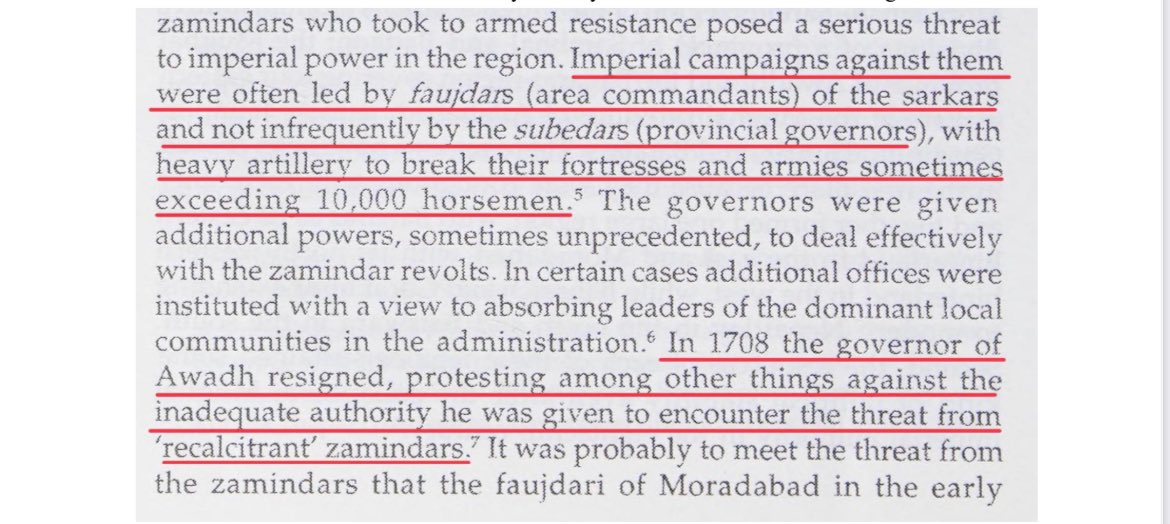
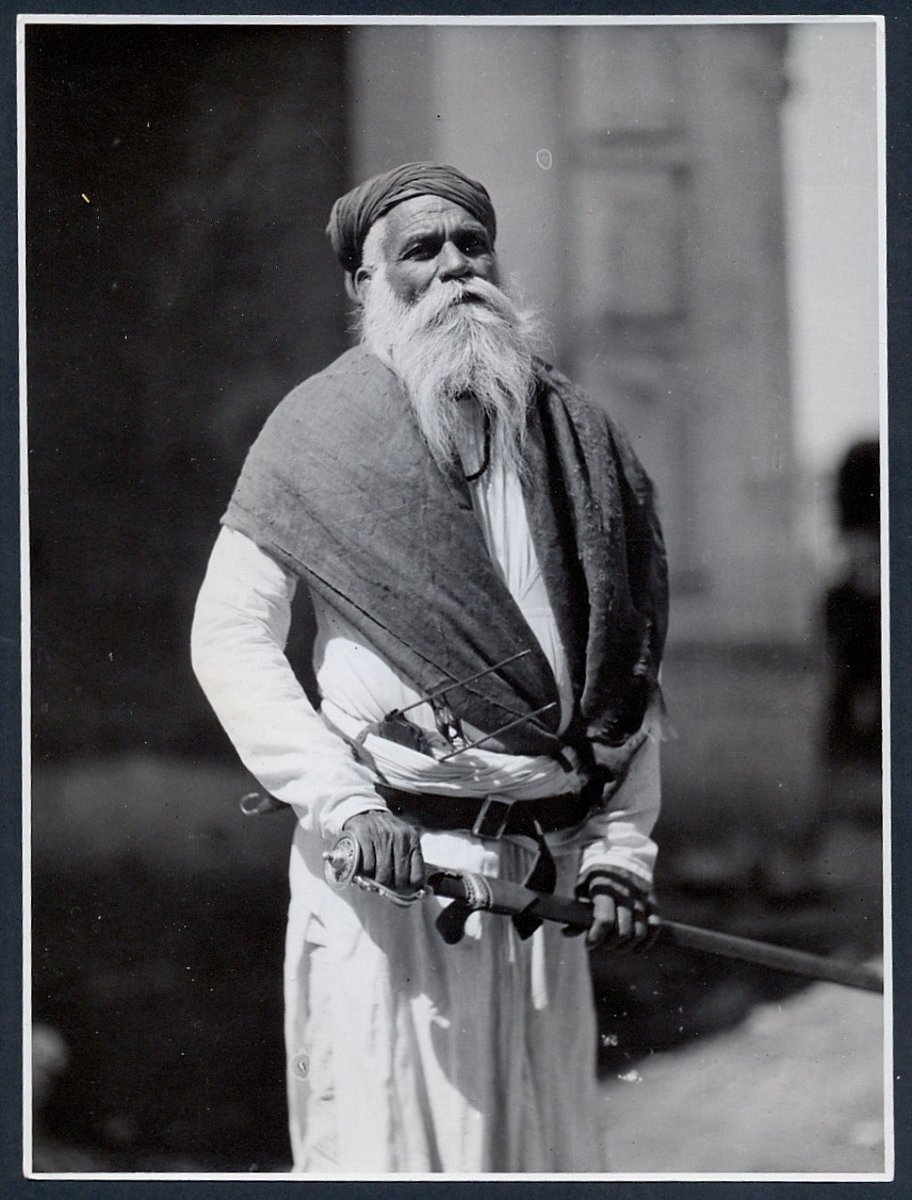
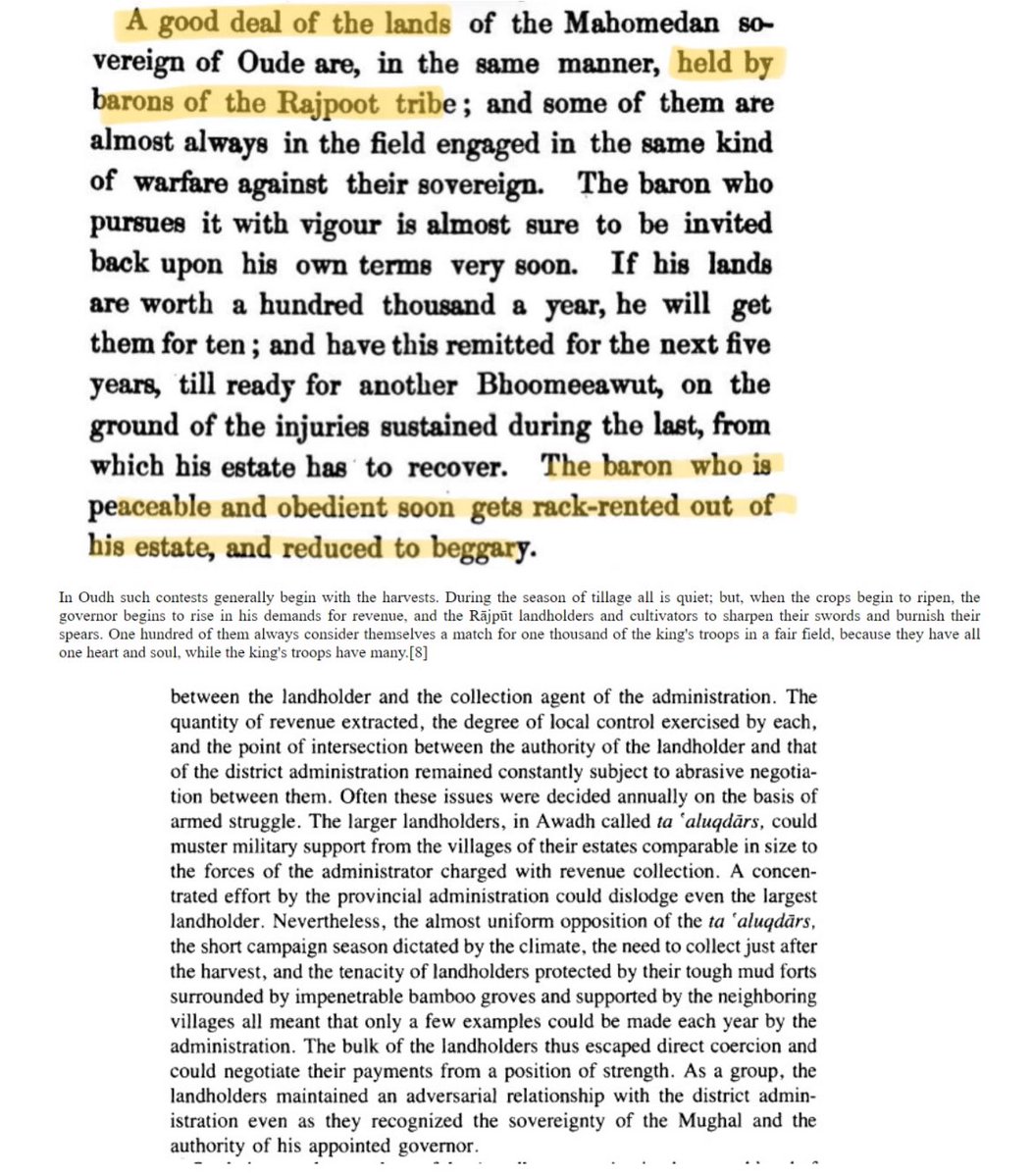
Eventuallt of the lands in the Gangetic Plains were held by Rajputs, and they revolted seasonally due to wanting to dodge revenue payments to the governmental authorities centered in the cities. The zamindars of the Northern Plain held much contempt for Imperial authorities from the capital, who never hazarded a trip into the countryside unless they were in small and armed hunting parties.
Even the Nabob, Safdar Jung has been recorded complaining to the emperor that these seasonally rebellious feudal barons are more
of a threat than the Marathas. An exaggeration perhaps, but still indicative of the nature of the threat posed by turbulent and predatory Zamindars.
Even the Nabob, Safdar Jung has been recorded complaining to the emperor that these seasonally rebellious feudal barons are more
of a threat than the Marathas. An exaggeration perhaps, but still indicative of the nature of the threat posed by turbulent and predatory Zamindars.
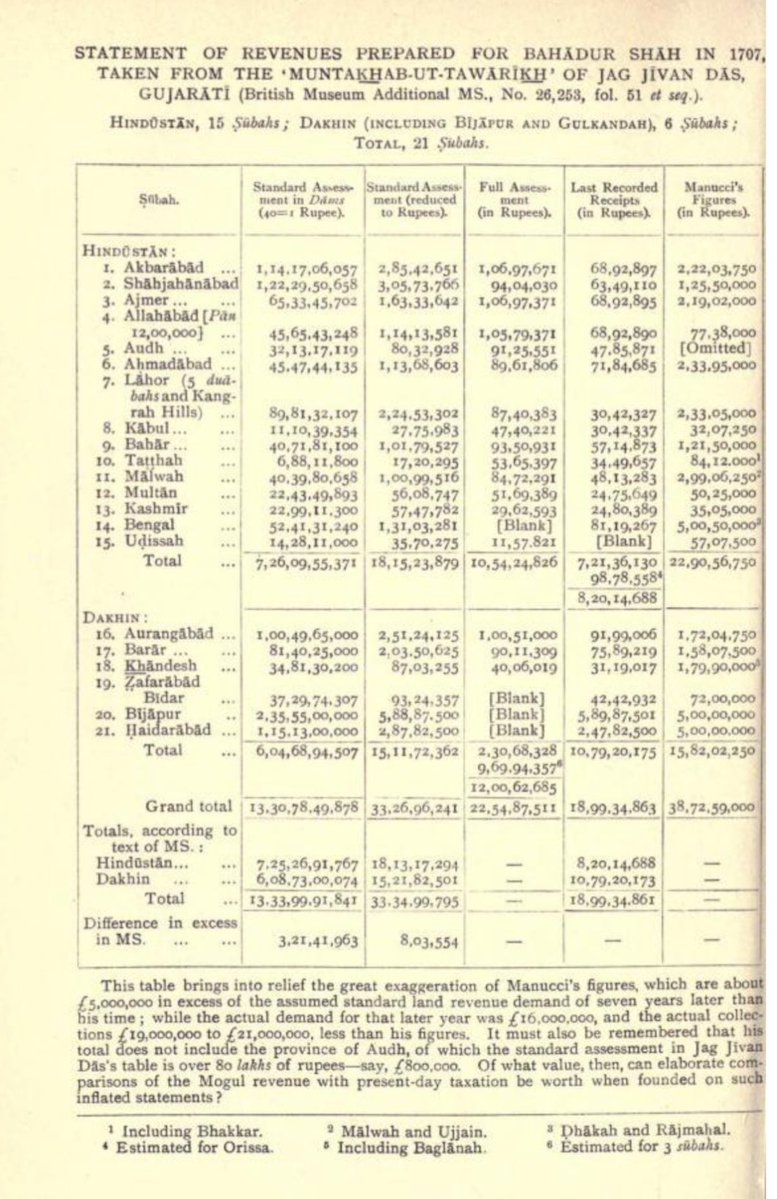
The fiscal impact of such revolts is quite noticeable in the Moghul exchequer. Collected revenue
was often a fraction of assessed revenue. Take a look at the full assessment column vs the last
recorded receipt column. For Oudh for example, the assessed revenue is 91 crores, yet collected
revenue is only 47, little more than half the assessed revenue. Mere graft does not explain such a
great gap.
was often a fraction of assessed revenue. Take a look at the full assessment column vs the last
recorded receipt column. For Oudh for example, the assessed revenue is 91 crores, yet collected
revenue is only 47, little more than half the assessed revenue. Mere graft does not explain such a
great gap.
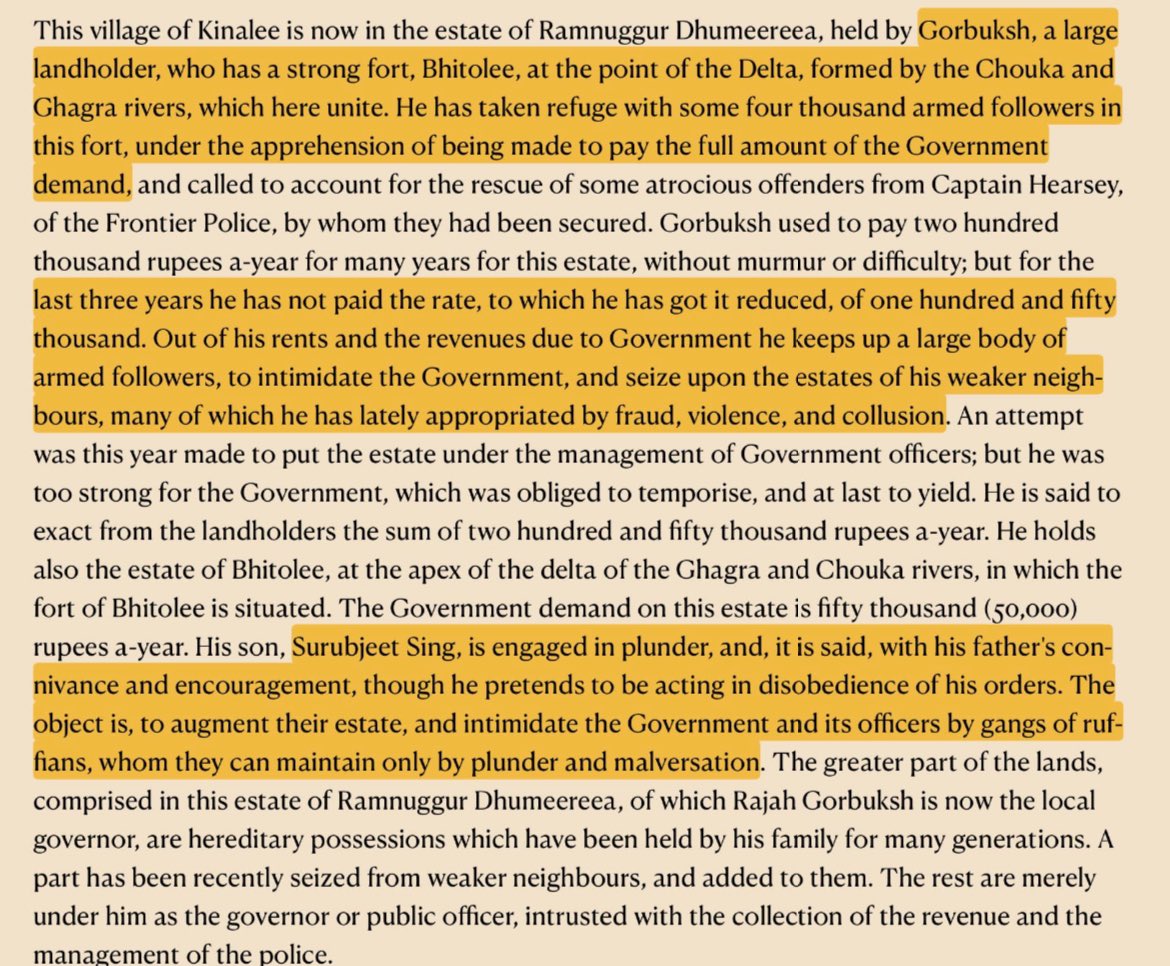
case of the archetypical feudal magnate in Oudh and the rest of the feudal Gangetic Plains is
represented by one Raja Gurbaksh Singh, taluqdar (baron) of Ramnagar-Dhumeerea. He held s fort
garrisoned by his warbands, which he used to defy the authority of the Oudh Government and
plunder the countryside and expand his holdings at the expense of his weaker neighbors.
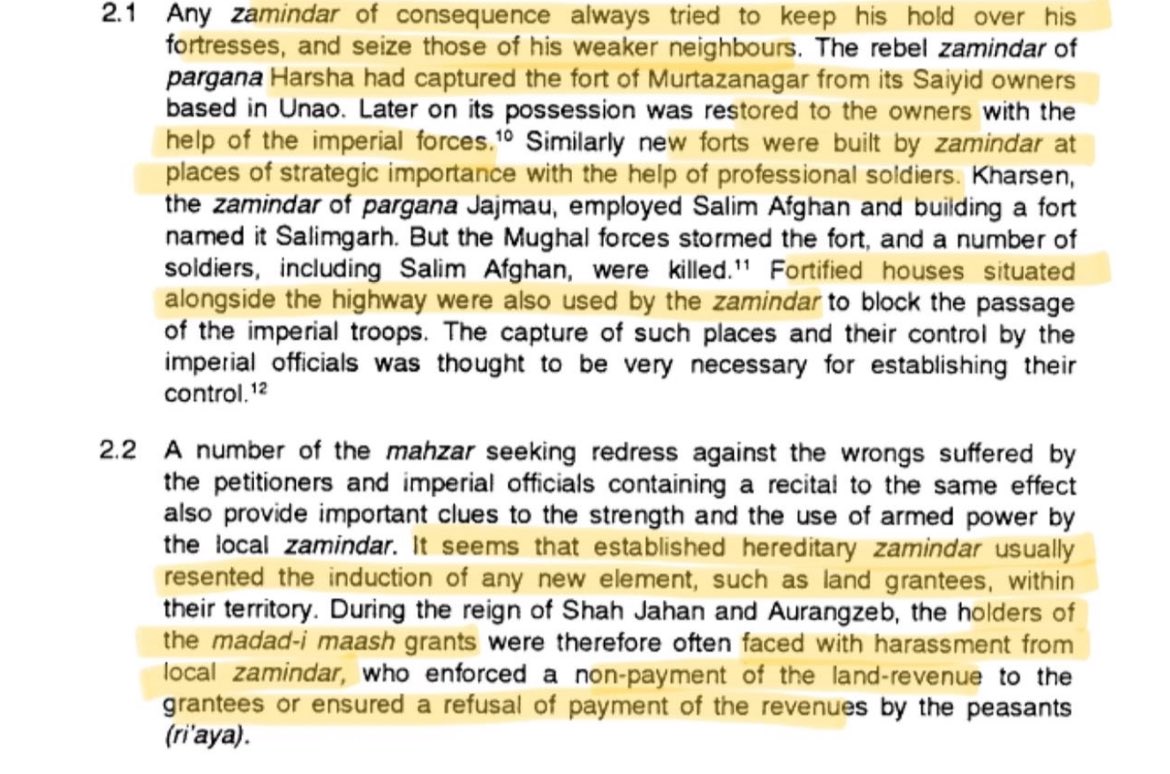
These forts were vital to feudal control exercised by the zamindari Rajas, and were part of their
disputes with each other and governmental forces as stated previously. Professional mercenaries
were also hired to help construct and man these forts, and fortified strong houses were also set up
on strategic points to impede the flow of enemy troops, thus creating a sort of defense in depth.
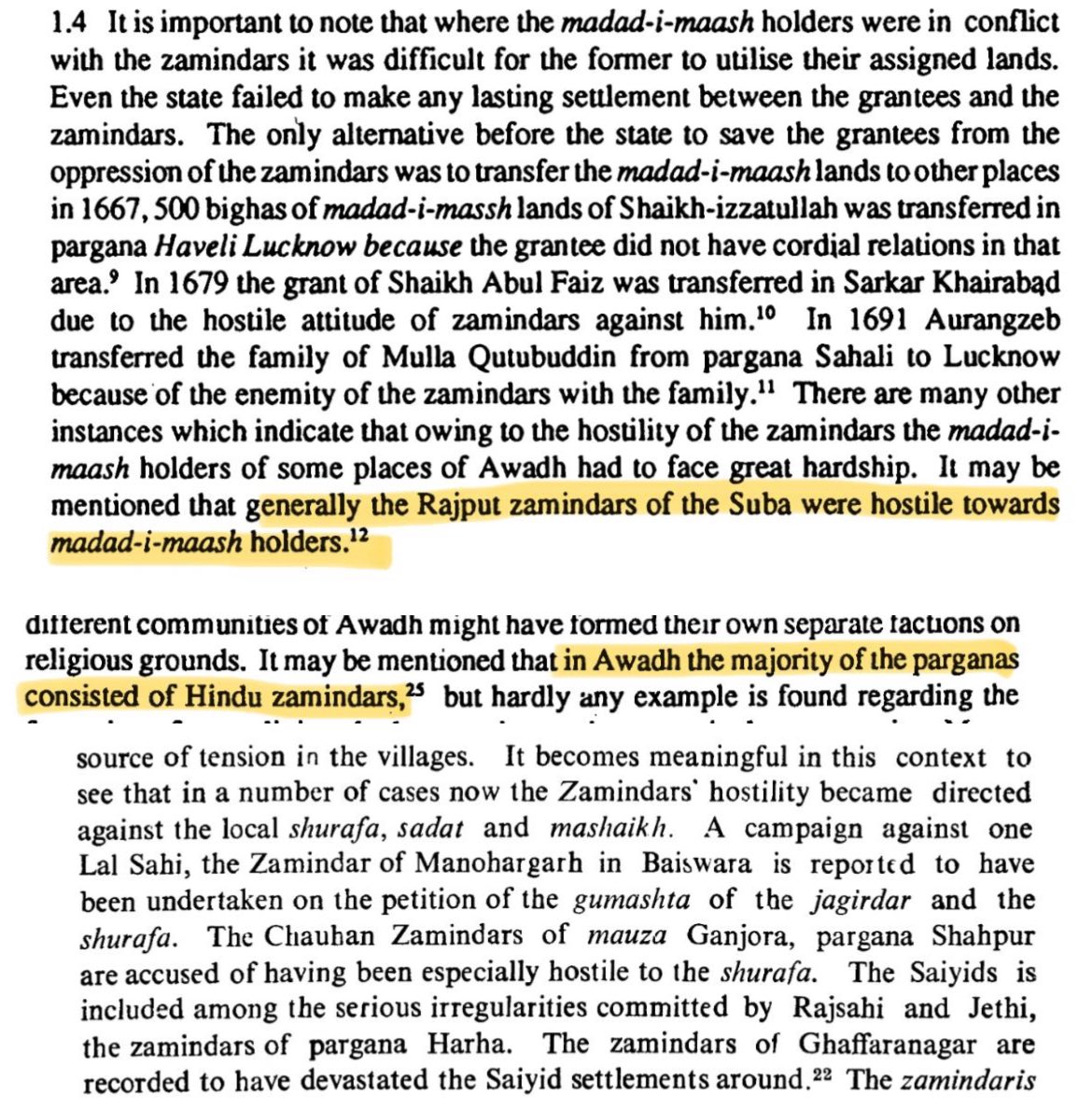
The Taluqdars/zamindars resented paying revenues, and often harrassed imperial revenue collectors and officials (often going to war with the empire, and later the Nawab, as a result). They also raided
and attacked the territories of those who were thought to represent external authority, such as
madad-i-mash revenue grants given to members of the shurafa and ulema, who comprised the
Moslem clergy.
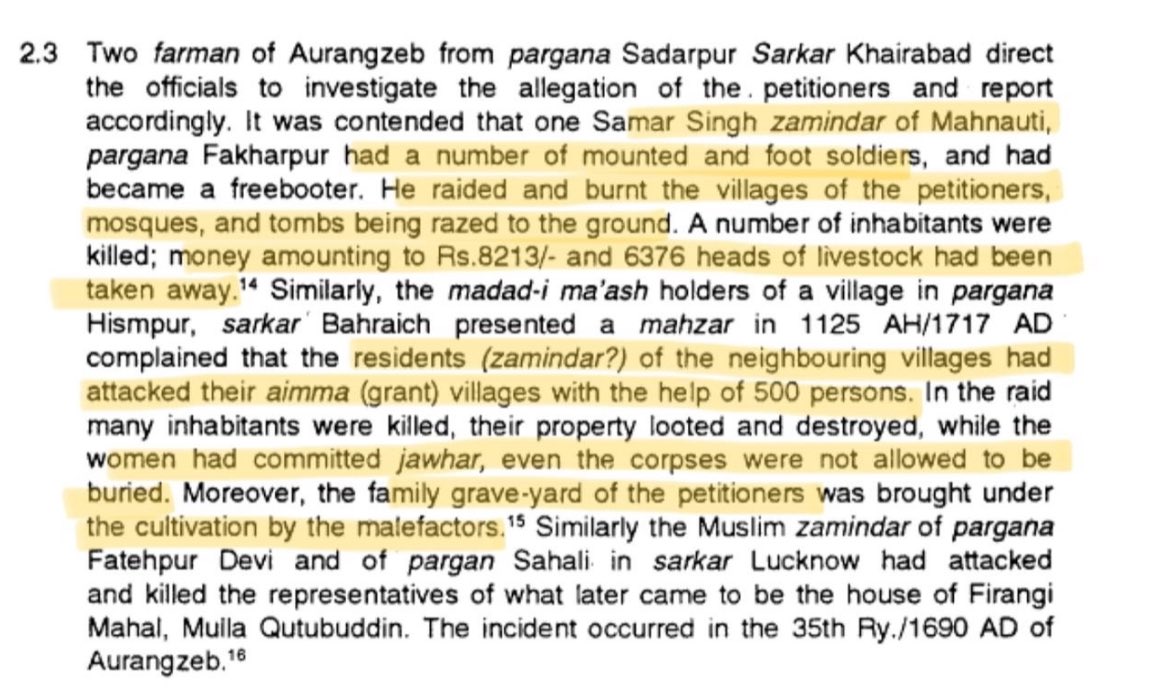
An archetypical example of such depredations against government officials by Zamindars and their
retinues, wholesale murder and pillage of anyone thought to represent governmental authority by
Samar Singh, similar acts done by the zamindars of Bahraich against the same. The women
committed jauhar, but it is assumed their corpses too were despoiled. The graveyards of the
Musulmans became fields for cultivation.
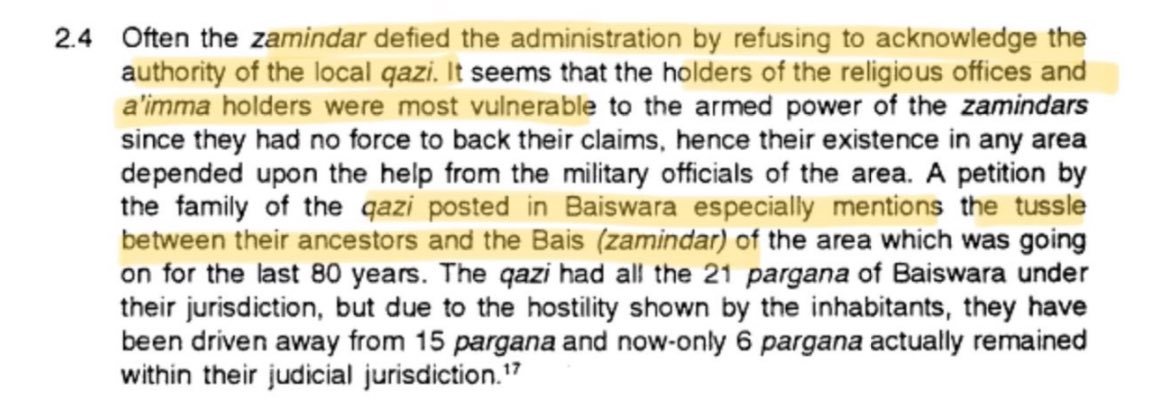
Much like bureaucratic offices, religious offices also bore the brunt of Zamindari hubris. For
example, the Qadi of Baiswara reports being harrassed by the Bais Rajputs of the area over multiple
generations (80 years).
represented by one Raja Gurbaksh Singh, taluqdar (baron) of Ramnagar-Dhumeerea. He held s fort
garrisoned by his warbands, which he used to defy the authority of the Oudh Government and
plunder the countryside and expand his holdings at the expense of his weaker neighbors.
These forts were vital to feudal control exercised by the zamindari Rajas, and were part of their
disputes with each other and governmental forces as stated previously. Professional mercenaries
were also hired to help construct and man these forts, and fortified strong houses were also set up
on strategic points to impede the flow of enemy troops, thus creating a sort of defense in depth.
The Taluqdars/zamindars resented paying revenues, and often harrassed imperial revenue collectors and officials (often going to war with the empire, and later the Nawab, as a result). They also raided
and attacked the territories of those who were thought to represent external authority, such as
madad-i-mash revenue grants given to members of the shurafa and ulema, who comprised the
Moslem clergy.
An archetypical example of such depredations against government officials by Zamindars and their
retinues, wholesale murder and pillage of anyone thought to represent governmental authority by
Samar Singh, similar acts done by the zamindars of Bahraich against the same. The women
committed jauhar, but it is assumed their corpses too were despoiled. The graveyards of the
Musulmans became fields for cultivation.
Much like bureaucratic offices, religious offices also bore the brunt of Zamindari hubris. For
example, the Qadi of Baiswara reports being harrassed by the Bais Rajputs of the area over multiple
generations (80 years).
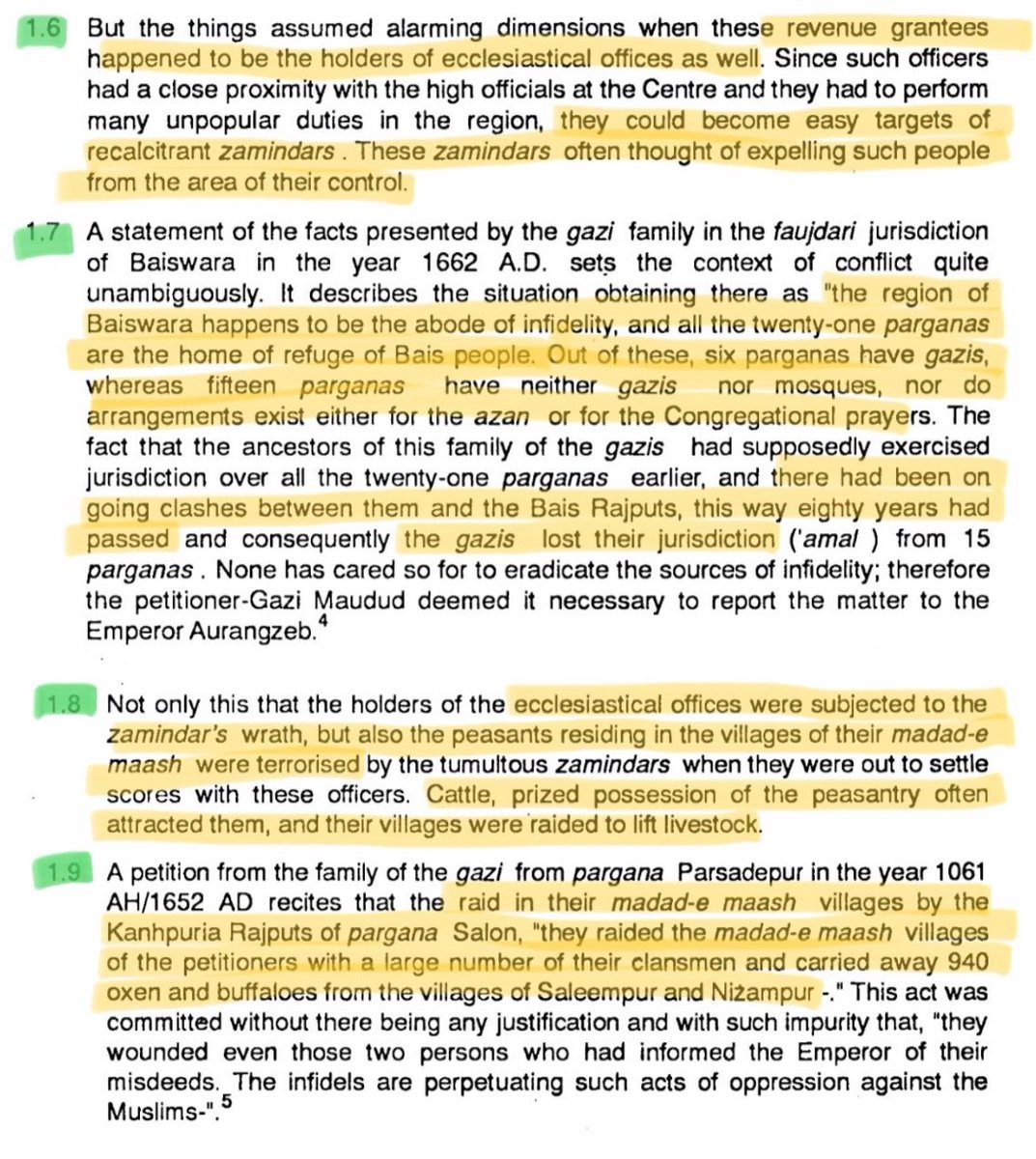
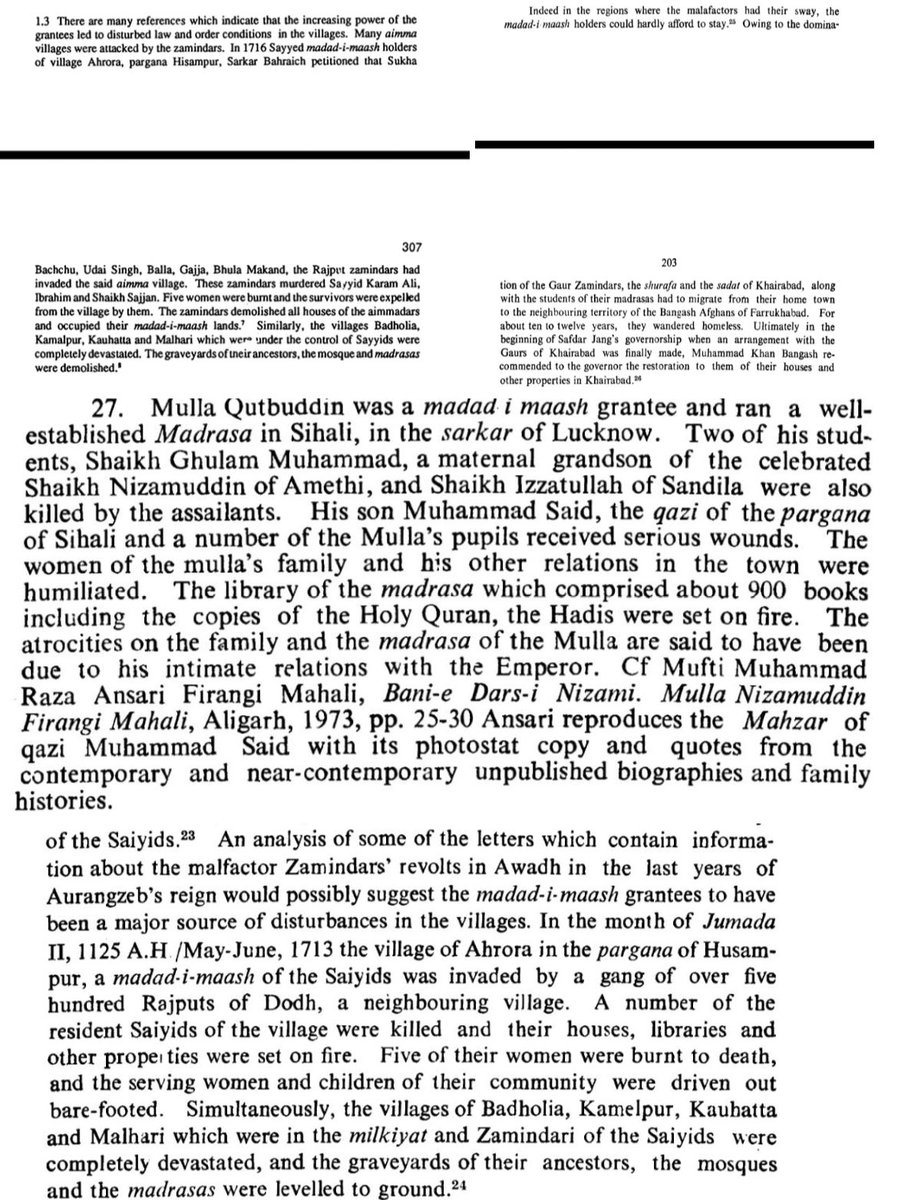
The raids and violence upon the holders of these religious offices extended to both the clergymen
and the peasants from whom they collected revenue.
and the peasants from whom they collected revenue.
• • •
Missing some Tweet in this thread? You can try to
force a refresh






