Dr. Stephen Hussey was 34.
He exercised.
He ate clean.
His Coronary Calcium Score was 0.
Then he had a widowmaker—a heart attack so deadly only ~12% survive it outside a hospital.
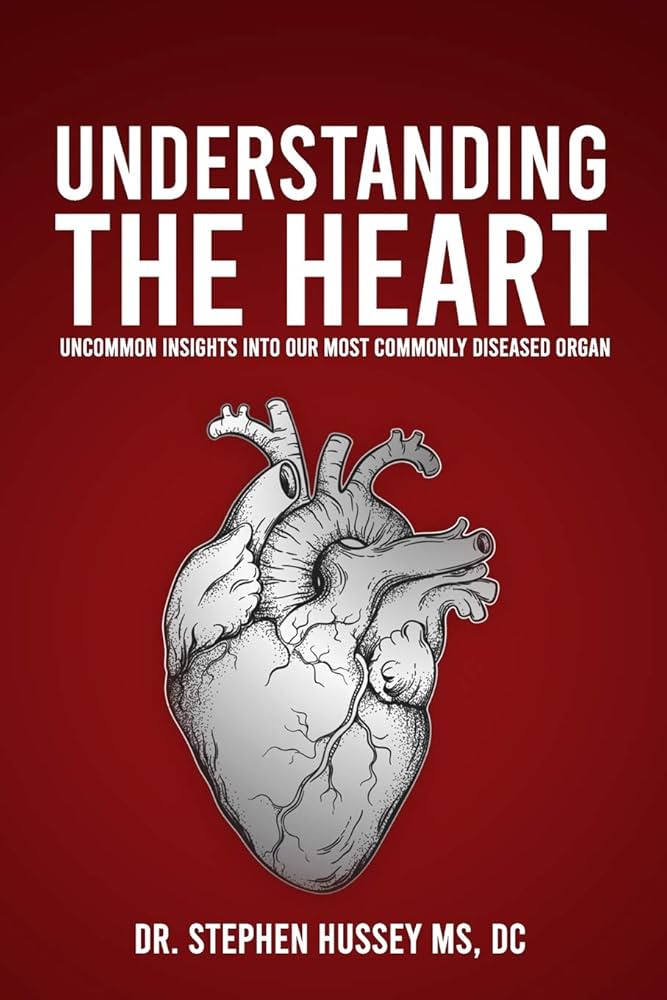
He survived & wrote a book.
His case exposes a brutal truth:
The LDL-based model of heart disease is incomplete.
It can't explain why heart disease keeps rising despite more statins, more scans & more "prevention" than ever.
So Hussey went deeper.
What he found overturns decades of assumptions about what actually damages arteries, what collapses blood flow & why modern life is uniquely good at causing heart disease:
1. The LDL story doesn't match reality
2. Arteries are protected by structured water (EZ)
3. Plaque is repair tissue, not fat buildup
4. Heart attacks are clotting failures, not blockages
5. How EZ water neutralizes all 3 clotting triggers
6. What destroys EZ water
7. What builds EZ water
8. Why Hussey had a heart attack (& how he reversed plaque)
Let's start with the first problem:
1. The LDL Story Doesn't Match Reality
For decades we've been told a simple model:
Saturated fat raises LDL → LDL builds up in arteries → arteries clog → heart attack.
So cardiology kept lowering "acceptable" LDL: 300 → 250 → 200 → 150 → now "optimal" is <100.
But the real-world data never supported the story.
Many heart attack victims have little or no plaque—Hussey included, with a Coronary Calcium Score of 0.
Many people with severe plaque have zero symptoms.
Some die with "perfect" LDL.
Some live with high LDL & clean arteries.
When 136,905 heart attack patients had cholesterol measured within 24 hours of admission:
- 75% had normal LDL (<130 mg/dL)
- 50% had "optimal" LDL (<100 mg/dL)
If LDL were the initiating cause, this pattern wouldn't exist.
But instead of questioning the LDL hypothesis, the study's authors reached the opposite conclusion: the LDL targets must be "not low enough."
Another paradox: veins never develop plaque, even though LDL concentration is identical.
They only develop plaque when a vein is surgically grafted into an artery—meaning it's not LDL concentration but arterial conditions that determine plaque.
Hussey's conclusion:
LDL doesn't initiate plaque.
LDL shows up after something has already damaged the artery.
So the real question becomes:
What breaks the artery in the first place?
To see that, you have to understand one thing mainstream cardiology ignores:
In a healthy artery, lipoproteins can't even reach the wall.
Something must collapse that protection first.
2. Arteries Are Protected by Structured Water (EZ Water)
Hussey builds on Gerald Pollack's work.
In a healthy artery, blood never actually touches the artery wall.
The inner surface of every artery is hydrophilic (water loving).
When water touches that surface & receives radiant energy (sunlight, infrared), it forms a different phase:
Structured water—the Exclusion Zone (EZ).
This structured water forms a gel-like layer across the endothelial surface & excludes almost everything.
Pollack's experiments show:
- Albumin (~3.8 nm) cannot cross it
- Bacteria cannot cross it
- Red blood cells cannot cross it (~6000-8000 nm)
- Only tiny ions like potassium can (~0.25 nm)
This matters because of size:
- HDL: ~7–12 nm
- LDL: ~22–28 nm
- apoB particles: similar range
If the EZ excludes albumin (~3.8 nm), then particles in the 7–28 nm lipoprotein range are excluded too.
Meaning: If EZ water is intact, nothing in the blood ever touches the artery wall.
No contact → no injury.
No injury → no inflammation.
No inflammation → no plaque.
This is the part the LDL model never accounted for:
Lipoproteins never reach the artery wall unless the EZ shield is destroyed first.
EZ loss is upstream of every step that follows.
3. Plaque Is Not "Fat Buildup." It's Repair Tissue.
When the EZ layer collapses, the arterial wall becomes exposed for the first time.
Blood components that were previously excluded can now touch the endothelium.
The body responds the only way it can:
repair → patch → stabilize.
When researchers analyze plaque, it isn't a pipe filled with fat.
It's overwhelmingly:
- clot material
- fibrous collagen
- smooth muscle repair tissue
- trapped cholesterol that arrived after damage
- inflammatory cells cleaning up the debris
Histology shows plaque is ~87% clot-derived tissue (±8%), confirming the sequence:
Injury → clot → repair → plaque.
Not: cholesterol → plaque → blockage.
This explains why:
- plaque forms only at specific high-stress arterial sites
- veins do not plaque unless surgically grafted into arterial pressure
- plaque often appears after a flow disturbance or oxidative injury
- people like Hussey can have clean arteries & still suffer massive heart attacks
Because plaque is not the main event.
Clotting is.
4. Heart Attacks Are Clotting + Flow Failures, Not "Blocked Pipes"
In 1856, Rudolf Virchow identified the three conditions that create pathological clotting:
- Damage to the arterial lining
- Stagnant or disrupted blood flow
- Blood that becomes more prone to clot
This triad matches the real world far better than the "blocked pipe" story:
- You can have severe narrowing & no heart attack
- You can have clean arteries & die suddenly
The fatal moment is always the same:
A clot at the wrong time in the wrong place.
Hussey adds two major corrections that modern cardiology ignores.
(1) Flow disturbances alone can trigger plaque formation
After his heart attack, a catheter closure device altered blood flow in his femoral artery.
Within weeks, plaque formed at that exact site.
No LDL change.
No diet change.
Just disturbed flow → plaque.
When he restored EZ water & flow mechanics, the plaque reversed—which his doctors had never seen.
This shows:
Plaque forms where flow becomes abnormal—not where LDL is high.
(2) You can have a heart attack with zero blockage (MINOCA)
This is Myocardial Infarction with Non-Obstructive Coronary Arteries—& it's not rare, it accounts for 6-15% of all heart attacks.
Hussey explains the mechanism this way:
The heart prefers fatty acids & ketones & burns them cleanly.
Under acute stress, the autonomic nervous system shifts the heart into a glucose-burning state at the worst possible moment.
Burning mostly glucose produces more free radicals.
This increases local acidity, swelling, & pressure inside heart tissue.
Blood cannot enter effectively.
Collapse in flow without obstruction & tissue death follows.
In parallel, acute stress increases thrombotic potential, making clot formation more likely.
No plaque required.
No LDL required.
(3) Why some people with severe plaque feel fine
Giorgio Baroldi's autopsy work in 1956 showed that when arteries narrow chronically, the body builds collateral vessels—small bypass channels that restore blood supply.
He found that in areas with ≥70% narrowing, collaterals increase dramatically—fully compensating for reduced flow.
Separate studies in dogs confirmed the speed of this adaptation: full collateral networks formed within 4–7 days when an artery was slowly occluded.
Meaning:
The body automatically builds bypasses. It restores supply on its own.
This explains why:
- severe plaque can exist without symptoms (collaterals already restored flow)
- stents don't reduce future heart attacks in stable disease (the body already compensated)
- bypass surgery rarely extends lifespan in chronic cases (natural bypasses already exist)
Flow adapts—unless metabolic & energetic conditions collapse.
The danger is in acute metabolic collapse that happens too fast for collaterals to form.
(4) So does plaque matter at all?
Yes, but not the way we were told.
Hussey is clear: "Plaque is not what causes heart attacks."
But calcified plaque still increases risk because it disturbs flow → creates turbulence → increases clot probability. Not because it "blocks." Because it changes the physics of blood movement.
The real causal chain: EZ loss → endothelial exposure → flow disturbance → hypercoagulability → clot → heart attack.
5. How EZ Water Neutralizes All 3 Clotting Triggers
Hussey's key insight: EZ water defends against all three conditions that create clots.
(1) EZ prevents endothelial injury
When radiant energy (sunlight, infrared) hits the arterial surface, water forms a gel-like EZ layer that excludes everything larger than tiny ions.
If EZ is intact, blood components never touch the wall.
No contact → no injury → no clot initiation.
(2) EZ prevents disturbed or stagnant flow
EZ doesn't just protect—it moves fluid.
When EZ forms, it separates charge:
- EZ becomes strongly negative
- bulk water becomes positive (H⁺-rich)
This creates an electrical pressure that pushes water forward.
Pollack demonstrated that:
- water moves through hydrophilic tubing with no pump
- chick embryo blood keeps flowing even after the heart stops
- adding infrared increased flow by ~300%
- blocking infrared stopped flow
When EZ collapses: flow slows, residence time increases, clot risk rises.
(3) EZ prevents hypercoagulable, "sticky" blood
EZ forms on hydrophilic surfaces within blood: RBCs, platelets, lipoproteins.
This creates zeta potential—a strong negative charge around each particle.
Cells repel instead of clump, RBCs don't stack, platelets don't activate prematurely.
When EZ breaks down: zeta potential drops, cells stick, blood becomes hypercoagulable.
6. What Destroys EZ Water (& Opens the Artery to Damage)?
Hussey is blunt about the upstream trigger: oxidative stress breaks down fourth phase water in the arteries, damages the arterial wall, & depletes nitric oxide (NO), which is vital for ANS signaling to the heart.
He frames the problem as three imbalances: metabolic inflexibility (inability to burn fat), oxidative stress, & ANS dysfunction.
He believes these three, "especially when complicated by nutrient deficiencies, are the underlying causes of most chronic disease."
Imbalance #1—Metabolic Inflexibility
The heart prefers ketones.
In one experiment: when ketones fell below 34 mg/100 ml, the heart was forced to burn more glucose; when ketones were 34–80 mg/100 ml, the heart switched to burning primarily ketones; providing more ketones reduced use of other fuels by 30–60%.
Dietary fat is also packaged into chylomicrons & delivered directly to the heart via the lymphatic system.
The heart even has a signaling pathway to fat cells so it can call for more fuel.
Hussey's conclusion: "The heart prefers to burn ketones. To provide it with this fuel, we have to restrict carbohydrates enough so the body learns to burn fat. Heart attacks without a blockage happen when a series of events force the heart to burn predominantly glucose—metabolic inflexibility makes this more likely."
Imbalance #2—Oxidative Stress (The EZ Breaker)
Everything that steals electrons collapses EZ:
- Insulin resistance, chronic glucose-heavy metabolism, poor fat oxidation
- AGEs (Advanced Glycation End Products) which initiate atherosclerosis independently of cholesterol
- Endotoxemia from leaky gut/gum disease/root canals
- Heavy metals: mercury (35% thicker plaque), lead, arsenic, cadmium, aluminum
- BPA (increased lesion size 104-120%)
- Air pollution, pesticides (glyphosate shrinks EZ)
- Seed oils
- Chronic stress
- Circadian disruption
- Low sunlight, lack of infrared
- No grounding
- EMF exposure (WiFi reduces EZ by 15-20%)
Imbalance #3—ANS Dysfunction (Stress System Out of Balance)
The autonomic nervous system dysfunction matters.
The best measure is HRV.
In one study, 95% of ischemic events were preceded by almost complete HRV suppression.
HRV changes before ischemia, suggesting this is causal, not consequence.
Your nervous system destabilizes before your heart does.
7. What Builds EZ Water (and Protects the Heart)?
If oxidative stress & modern life collapse EZ water, prevention starts with restoring it.
Radiant Energy
- Sunlight & infrared build structured water in arteries, improve flow, lower pressure
- Sauna mimics sun's IR & charges EZ
- Grounding connects body to Earth's charge
- Nature exposure removes urban stressors
- Spring/mineral water provides better EZ substrate
- Circadian alignment: morning light + darkness at night enable endothelial repair via melatonin
Reduce Oxidative Stress
- Remove seed oils
- Lower processed carbs & avoid AGEs (AGEs alone initiate atherosclerosis)
- Heal gut to reduce endotoxemia
- Fix dental infections (gum disease, root canals, cavitations)
- Reduce toxins: heavy metals increase plaque, BPA increases lesions 104-120%
- Prefer mineral salts over table salt
Restore Metabolic Flexibility
- Restrict processed carbs
- Prefer animal fats
- Keep Trigicerydes/HDL <1.5, HOMA-IR <1.5
- Use fasting strategically
- A heart fueled by fat & ketones is stable. A heart forced into glucose is vulnerable.
Balance the ANS
- Meditation, nature, infrared, cold exposure, proper sleep, social connection, grounding, gut healing, omega-3, EMF reduction, sunlight
- Breathing: ~5.5-6 breaths/min with longer exhales produced best ANS balance
Train Correctly
- Marathon runners: edema, decreased function, scarring (100+ marathons)
- Marathon deaths: 93% heart attacks
- Recommended: strength 1-2×/week, short bursts 1-2×/week, stretching/yoga, avoid chronic high volume endurance (ultras etc.)
When EZ is strong: endothelium is shielded, flow is smooth, blood stays separated, clotting is harder.
8. Why Hussey Had a Heart Attack (& How He Reversed Plaque)
Hussey doesn't know the exact cause. He believes it was a perfect storm:
- Type 1 diabetic (already increased risk despite managing with diet/exercise)
- Dehydration (thought bone broth was enough)
- Constipation (considered it normal)
- COVID-19 worry
- Stressful family event couple days before
- Two nights of bad sleep
- High-intensity exercise to failure: uphill sprints, push-ups, lunges
No plaque. Just the conditions for clot formation.
Then something unexpected happened.
After his heart attack, a catheter closure device altered blood flow in his femoral artery. Within weeks, plaque formed at that exact site: 70-99% blockage.
No LDL change. No diet change. Just disturbed flow → plaque.
He focused on sunlight, infrared sauna, grounding, & circadian optimization.
One year later: 0-50% blockage.
Two years later: completely normal artery.
Three years later: still normal.
His vascular surgeon: "We can't say it's better because we don't see these things get better."
But he did get better. This was unheard of.
9. Bottom Line
Modern medicine saves lives after heart attacks happen.
But prevention requires understanding what actually causes them.
Heart disease isn't an LDL problem:
- LDL can't initiate plaque
- Plaque is 87% clot-derived repair tissue
- Heart attacks are clot events (Virchow's triad)
- EZ water protects against all three triggers
- Modern life destroys EZ first
Don't blame LDL. Understand the clot. Protect the EZ.
Prevention comes down to one principle: Stop breaking EZ water. Start building it.
How? Sunlight. Sauna. Grounding. Circadian Alignment. Metabolic flexibility. ANS balance. Low oxidative stress.
Do this & you target the real mechanism Hussey argues drives heart disease.
Not the decoy.
He exercised.
He ate clean.
His Coronary Calcium Score was 0.
Then he had a widowmaker—a heart attack so deadly only ~12% survive it outside a hospital.
He survived & wrote a book.
His case exposes a brutal truth:
The LDL-based model of heart disease is incomplete.
It can't explain why heart disease keeps rising despite more statins, more scans & more "prevention" than ever.
So Hussey went deeper.
What he found overturns decades of assumptions about what actually damages arteries, what collapses blood flow & why modern life is uniquely good at causing heart disease:
1. The LDL story doesn't match reality
2. Arteries are protected by structured water (EZ)
3. Plaque is repair tissue, not fat buildup
4. Heart attacks are clotting failures, not blockages
5. How EZ water neutralizes all 3 clotting triggers
6. What destroys EZ water
7. What builds EZ water
8. Why Hussey had a heart attack (& how he reversed plaque)
Let's start with the first problem:
1. The LDL Story Doesn't Match Reality
For decades we've been told a simple model:
Saturated fat raises LDL → LDL builds up in arteries → arteries clog → heart attack.
So cardiology kept lowering "acceptable" LDL: 300 → 250 → 200 → 150 → now "optimal" is <100.
But the real-world data never supported the story.
Many heart attack victims have little or no plaque—Hussey included, with a Coronary Calcium Score of 0.
Many people with severe plaque have zero symptoms.
Some die with "perfect" LDL.
Some live with high LDL & clean arteries.
When 136,905 heart attack patients had cholesterol measured within 24 hours of admission:
- 75% had normal LDL (<130 mg/dL)
- 50% had "optimal" LDL (<100 mg/dL)
If LDL were the initiating cause, this pattern wouldn't exist.
But instead of questioning the LDL hypothesis, the study's authors reached the opposite conclusion: the LDL targets must be "not low enough."
Another paradox: veins never develop plaque, even though LDL concentration is identical.
They only develop plaque when a vein is surgically grafted into an artery—meaning it's not LDL concentration but arterial conditions that determine plaque.
Hussey's conclusion:
LDL doesn't initiate plaque.
LDL shows up after something has already damaged the artery.
So the real question becomes:
What breaks the artery in the first place?
To see that, you have to understand one thing mainstream cardiology ignores:
In a healthy artery, lipoproteins can't even reach the wall.
Something must collapse that protection first.
2. Arteries Are Protected by Structured Water (EZ Water)
Hussey builds on Gerald Pollack's work.
In a healthy artery, blood never actually touches the artery wall.
The inner surface of every artery is hydrophilic (water loving).
When water touches that surface & receives radiant energy (sunlight, infrared), it forms a different phase:
Structured water—the Exclusion Zone (EZ).
This structured water forms a gel-like layer across the endothelial surface & excludes almost everything.
Pollack's experiments show:
- Albumin (~3.8 nm) cannot cross it
- Bacteria cannot cross it
- Red blood cells cannot cross it (~6000-8000 nm)
- Only tiny ions like potassium can (~0.25 nm)
This matters because of size:
- HDL: ~7–12 nm
- LDL: ~22–28 nm
- apoB particles: similar range
If the EZ excludes albumin (~3.8 nm), then particles in the 7–28 nm lipoprotein range are excluded too.
Meaning: If EZ water is intact, nothing in the blood ever touches the artery wall.
No contact → no injury.
No injury → no inflammation.
No inflammation → no plaque.
This is the part the LDL model never accounted for:
Lipoproteins never reach the artery wall unless the EZ shield is destroyed first.
EZ loss is upstream of every step that follows.
3. Plaque Is Not "Fat Buildup." It's Repair Tissue.
When the EZ layer collapses, the arterial wall becomes exposed for the first time.
Blood components that were previously excluded can now touch the endothelium.
The body responds the only way it can:
repair → patch → stabilize.
When researchers analyze plaque, it isn't a pipe filled with fat.
It's overwhelmingly:
- clot material
- fibrous collagen
- smooth muscle repair tissue
- trapped cholesterol that arrived after damage
- inflammatory cells cleaning up the debris
Histology shows plaque is ~87% clot-derived tissue (±8%), confirming the sequence:
Injury → clot → repair → plaque.
Not: cholesterol → plaque → blockage.
This explains why:
- plaque forms only at specific high-stress arterial sites
- veins do not plaque unless surgically grafted into arterial pressure
- plaque often appears after a flow disturbance or oxidative injury
- people like Hussey can have clean arteries & still suffer massive heart attacks
Because plaque is not the main event.
Clotting is.
4. Heart Attacks Are Clotting + Flow Failures, Not "Blocked Pipes"
In 1856, Rudolf Virchow identified the three conditions that create pathological clotting:
- Damage to the arterial lining
- Stagnant or disrupted blood flow
- Blood that becomes more prone to clot
This triad matches the real world far better than the "blocked pipe" story:
- You can have severe narrowing & no heart attack
- You can have clean arteries & die suddenly
The fatal moment is always the same:
A clot at the wrong time in the wrong place.
Hussey adds two major corrections that modern cardiology ignores.
(1) Flow disturbances alone can trigger plaque formation
After his heart attack, a catheter closure device altered blood flow in his femoral artery.
Within weeks, plaque formed at that exact site.
No LDL change.
No diet change.
Just disturbed flow → plaque.
When he restored EZ water & flow mechanics, the plaque reversed—which his doctors had never seen.
This shows:
Plaque forms where flow becomes abnormal—not where LDL is high.
(2) You can have a heart attack with zero blockage (MINOCA)
This is Myocardial Infarction with Non-Obstructive Coronary Arteries—& it's not rare, it accounts for 6-15% of all heart attacks.
Hussey explains the mechanism this way:
The heart prefers fatty acids & ketones & burns them cleanly.
Under acute stress, the autonomic nervous system shifts the heart into a glucose-burning state at the worst possible moment.
Burning mostly glucose produces more free radicals.
This increases local acidity, swelling, & pressure inside heart tissue.
Blood cannot enter effectively.
Collapse in flow without obstruction & tissue death follows.
In parallel, acute stress increases thrombotic potential, making clot formation more likely.
No plaque required.
No LDL required.
(3) Why some people with severe plaque feel fine
Giorgio Baroldi's autopsy work in 1956 showed that when arteries narrow chronically, the body builds collateral vessels—small bypass channels that restore blood supply.
He found that in areas with ≥70% narrowing, collaterals increase dramatically—fully compensating for reduced flow.
Separate studies in dogs confirmed the speed of this adaptation: full collateral networks formed within 4–7 days when an artery was slowly occluded.
Meaning:
The body automatically builds bypasses. It restores supply on its own.
This explains why:
- severe plaque can exist without symptoms (collaterals already restored flow)
- stents don't reduce future heart attacks in stable disease (the body already compensated)
- bypass surgery rarely extends lifespan in chronic cases (natural bypasses already exist)
Flow adapts—unless metabolic & energetic conditions collapse.
The danger is in acute metabolic collapse that happens too fast for collaterals to form.
(4) So does plaque matter at all?
Yes, but not the way we were told.
Hussey is clear: "Plaque is not what causes heart attacks."
But calcified plaque still increases risk because it disturbs flow → creates turbulence → increases clot probability. Not because it "blocks." Because it changes the physics of blood movement.
The real causal chain: EZ loss → endothelial exposure → flow disturbance → hypercoagulability → clot → heart attack.
5. How EZ Water Neutralizes All 3 Clotting Triggers
Hussey's key insight: EZ water defends against all three conditions that create clots.
(1) EZ prevents endothelial injury
When radiant energy (sunlight, infrared) hits the arterial surface, water forms a gel-like EZ layer that excludes everything larger than tiny ions.
If EZ is intact, blood components never touch the wall.
No contact → no injury → no clot initiation.
(2) EZ prevents disturbed or stagnant flow
EZ doesn't just protect—it moves fluid.
When EZ forms, it separates charge:
- EZ becomes strongly negative
- bulk water becomes positive (H⁺-rich)
This creates an electrical pressure that pushes water forward.
Pollack demonstrated that:
- water moves through hydrophilic tubing with no pump
- chick embryo blood keeps flowing even after the heart stops
- adding infrared increased flow by ~300%
- blocking infrared stopped flow
When EZ collapses: flow slows, residence time increases, clot risk rises.
(3) EZ prevents hypercoagulable, "sticky" blood
EZ forms on hydrophilic surfaces within blood: RBCs, platelets, lipoproteins.
This creates zeta potential—a strong negative charge around each particle.
Cells repel instead of clump, RBCs don't stack, platelets don't activate prematurely.
When EZ breaks down: zeta potential drops, cells stick, blood becomes hypercoagulable.
6. What Destroys EZ Water (& Opens the Artery to Damage)?
Hussey is blunt about the upstream trigger: oxidative stress breaks down fourth phase water in the arteries, damages the arterial wall, & depletes nitric oxide (NO), which is vital for ANS signaling to the heart.
He frames the problem as three imbalances: metabolic inflexibility (inability to burn fat), oxidative stress, & ANS dysfunction.
He believes these three, "especially when complicated by nutrient deficiencies, are the underlying causes of most chronic disease."
Imbalance #1—Metabolic Inflexibility
The heart prefers ketones.
In one experiment: when ketones fell below 34 mg/100 ml, the heart was forced to burn more glucose; when ketones were 34–80 mg/100 ml, the heart switched to burning primarily ketones; providing more ketones reduced use of other fuels by 30–60%.
Dietary fat is also packaged into chylomicrons & delivered directly to the heart via the lymphatic system.
The heart even has a signaling pathway to fat cells so it can call for more fuel.
Hussey's conclusion: "The heart prefers to burn ketones. To provide it with this fuel, we have to restrict carbohydrates enough so the body learns to burn fat. Heart attacks without a blockage happen when a series of events force the heart to burn predominantly glucose—metabolic inflexibility makes this more likely."
Imbalance #2—Oxidative Stress (The EZ Breaker)
Everything that steals electrons collapses EZ:
- Insulin resistance, chronic glucose-heavy metabolism, poor fat oxidation
- AGEs (Advanced Glycation End Products) which initiate atherosclerosis independently of cholesterol
- Endotoxemia from leaky gut/gum disease/root canals
- Heavy metals: mercury (35% thicker plaque), lead, arsenic, cadmium, aluminum
- BPA (increased lesion size 104-120%)
- Air pollution, pesticides (glyphosate shrinks EZ)
- Seed oils
- Chronic stress
- Circadian disruption
- Low sunlight, lack of infrared
- No grounding
- EMF exposure (WiFi reduces EZ by 15-20%)
Imbalance #3—ANS Dysfunction (Stress System Out of Balance)
The autonomic nervous system dysfunction matters.
The best measure is HRV.
In one study, 95% of ischemic events were preceded by almost complete HRV suppression.
HRV changes before ischemia, suggesting this is causal, not consequence.
Your nervous system destabilizes before your heart does.
7. What Builds EZ Water (and Protects the Heart)?
If oxidative stress & modern life collapse EZ water, prevention starts with restoring it.
Radiant Energy
- Sunlight & infrared build structured water in arteries, improve flow, lower pressure
- Sauna mimics sun's IR & charges EZ
- Grounding connects body to Earth's charge
- Nature exposure removes urban stressors
- Spring/mineral water provides better EZ substrate
- Circadian alignment: morning light + darkness at night enable endothelial repair via melatonin
Reduce Oxidative Stress
- Remove seed oils
- Lower processed carbs & avoid AGEs (AGEs alone initiate atherosclerosis)
- Heal gut to reduce endotoxemia
- Fix dental infections (gum disease, root canals, cavitations)
- Reduce toxins: heavy metals increase plaque, BPA increases lesions 104-120%
- Prefer mineral salts over table salt
Restore Metabolic Flexibility
- Restrict processed carbs
- Prefer animal fats
- Keep Trigicerydes/HDL <1.5, HOMA-IR <1.5
- Use fasting strategically
- A heart fueled by fat & ketones is stable. A heart forced into glucose is vulnerable.
Balance the ANS
- Meditation, nature, infrared, cold exposure, proper sleep, social connection, grounding, gut healing, omega-3, EMF reduction, sunlight
- Breathing: ~5.5-6 breaths/min with longer exhales produced best ANS balance
Train Correctly
- Marathon runners: edema, decreased function, scarring (100+ marathons)
- Marathon deaths: 93% heart attacks
- Recommended: strength 1-2×/week, short bursts 1-2×/week, stretching/yoga, avoid chronic high volume endurance (ultras etc.)
When EZ is strong: endothelium is shielded, flow is smooth, blood stays separated, clotting is harder.
8. Why Hussey Had a Heart Attack (& How He Reversed Plaque)
Hussey doesn't know the exact cause. He believes it was a perfect storm:
- Type 1 diabetic (already increased risk despite managing with diet/exercise)
- Dehydration (thought bone broth was enough)
- Constipation (considered it normal)
- COVID-19 worry
- Stressful family event couple days before
- Two nights of bad sleep
- High-intensity exercise to failure: uphill sprints, push-ups, lunges
No plaque. Just the conditions for clot formation.
Then something unexpected happened.
After his heart attack, a catheter closure device altered blood flow in his femoral artery. Within weeks, plaque formed at that exact site: 70-99% blockage.
No LDL change. No diet change. Just disturbed flow → plaque.
He focused on sunlight, infrared sauna, grounding, & circadian optimization.
One year later: 0-50% blockage.
Two years later: completely normal artery.
Three years later: still normal.
His vascular surgeon: "We can't say it's better because we don't see these things get better."
But he did get better. This was unheard of.
9. Bottom Line
Modern medicine saves lives after heart attacks happen.
But prevention requires understanding what actually causes them.
Heart disease isn't an LDL problem:
- LDL can't initiate plaque
- Plaque is 87% clot-derived repair tissue
- Heart attacks are clot events (Virchow's triad)
- EZ water protects against all three triggers
- Modern life destroys EZ first
Don't blame LDL. Understand the clot. Protect the EZ.
Prevention comes down to one principle: Stop breaking EZ water. Start building it.
How? Sunlight. Sauna. Grounding. Circadian Alignment. Metabolic flexibility. ANS balance. Low oxidative stress.
Do this & you target the real mechanism Hussey argues drives heart disease.
Not the decoy.
P.S. Thanks for reading!
If you enjoyed this, you'll enjoy my 5-day email course showing you how to build stable energy & mental clarity by aligning your biology with the environment it evolved for.
Get it here (it's free) ↓
energy.no-mind.io
If you enjoyed this, you'll enjoy my 5-day email course showing you how to build stable energy & mental clarity by aligning your biology with the environment it evolved for.
Get it here (it's free) ↓
energy.no-mind.io
• • •
Missing some Tweet in this thread? You can try to
force a refresh