Urban India is furious at IndiGo.
If only it was this angry when millions of migrants were walking home on foot.
Thread. 1/18
If only it was this angry when millions of migrants were walking home on foot.
Thread. 1/18

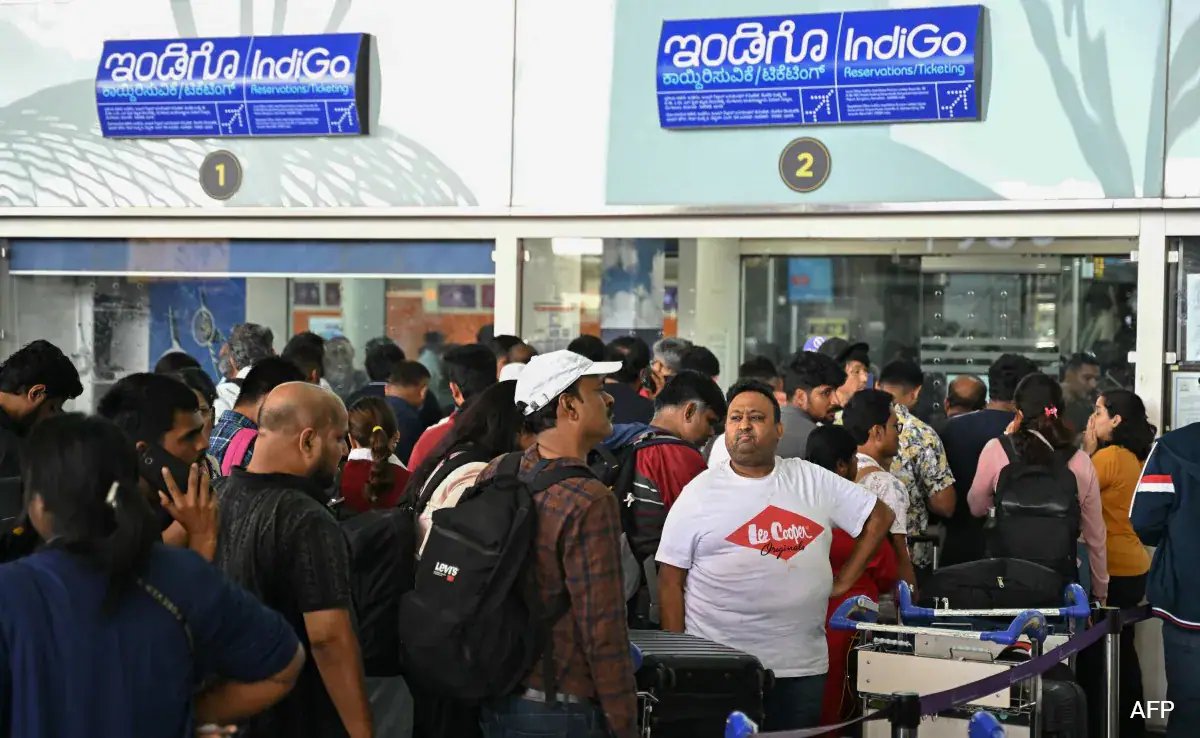
For a country that prides itself on moving fast, India was strangely unprepared for the week in 2025 when IndiGo—the airline that had become shorthand for middle-class mobility—simply stopped working. 2/18
Aviation in India has always been a performance—a stage where the country acts out its idea of arrival. If the railways carry everyone, aviation is meant to carry those who imagine they have moved beyond the crowds of railway platforms.
3/18
3/18

IndiGo became the face of that performance. Many passengers caught in the 2025 chaos framed the meltdown as a betrayal. But the IndiGo fiasco was not merely an aviation failure.
It was a class moment. 4/18
It was a class moment. 4/18
Because this was not the first time mobility in India had collapsed.
It was just the first time the collapse had affected people who assume uninterrupted movement is the natural order of things, not a privilege. 5/18
It was just the first time the collapse had affected people who assume uninterrupted movement is the natural order of things, not a privilege. 5/18
For the first time, urban India was experiencing a version of what it had conveniently ignored when millions of migrant workers walked home during the 2020 lockdown. Uncertainty, exhaustion, and the collapse of a system they had trusted—this time it was happening to them. 6/18
In 2020, India witnessed the largest mass displacement since Partition. When the national lockdown was announced, millions of migrant labourers—masons, carpenters, factory workers, domestic workers, loaders, rickshaw drivers—were abandoned. 7/18
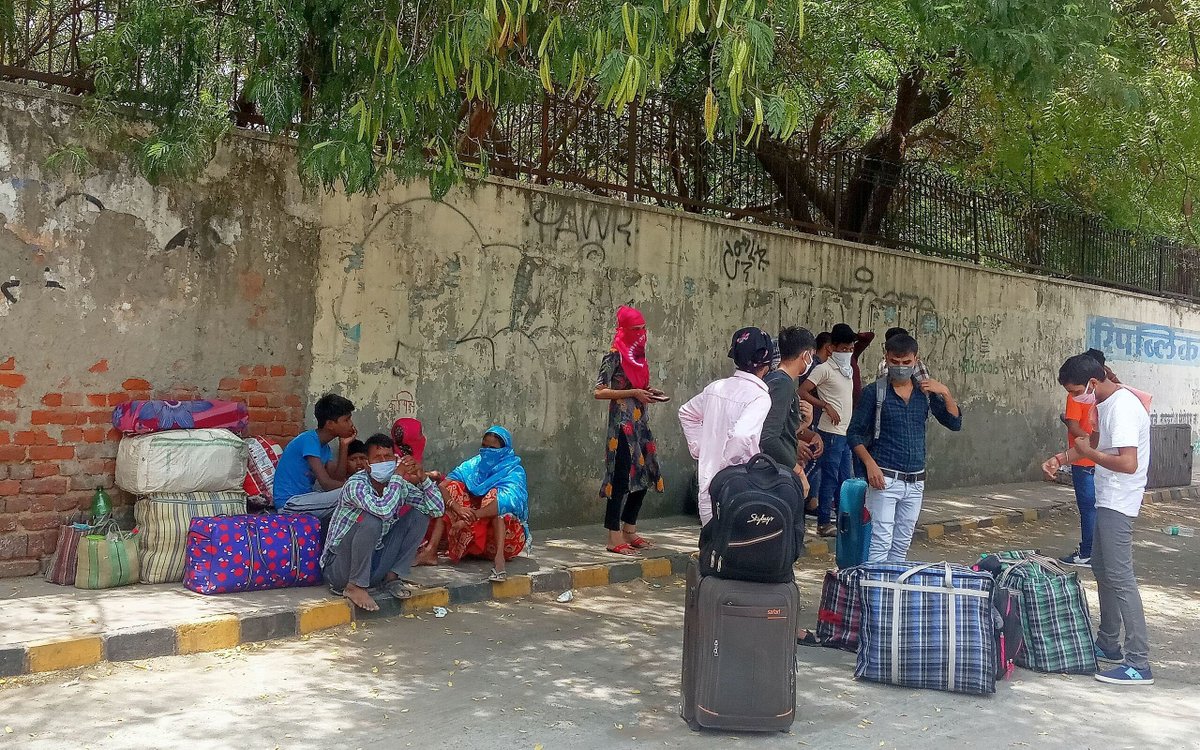
The 2025 IndiGo fiasco did not resemble the migrant crisis in scale, stakes, or suffering. It would be obscene to pretend the two were equivalent. But the emotional grammar of helplessness, of being abandoned by a system built for your convenience, came unbearably close. 8/18
The passengers ground down by this airline meltdown were largely the same demographic that once watched stranded workers trudge down highways indifferently. Urban India never imagined that the fragile system could one day touch their own lives. This time, it did. 9/18
If IndiGo’s crisis feels dystopian to you, imagine living like this every day. That is the reality of India’s migrant workforce. The deeper question, then, is: does India learn only when a crisis touches its elites? 10/18
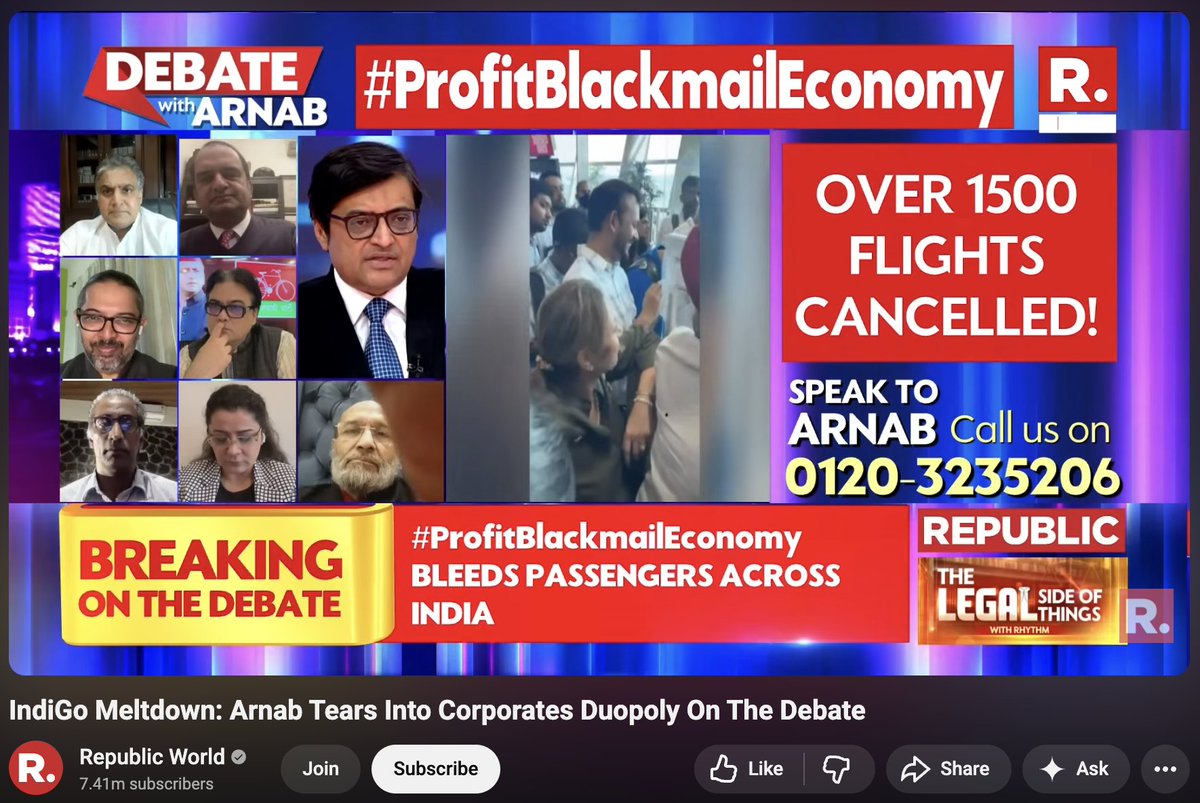
The political calculus that followed, the migrant crisis remained a moral event, not an electoral one. Migrants did not become a constituency.
However, the Airports did. Somehow, the shining terminals became campaign backdrops visited by a sliver of the population. 11/18
However, the Airports did. Somehow, the shining terminals became campaign backdrops visited by a sliver of the population. 11/18

The fact is, Indian elections do not revolve around labour justice. They revolve around spectacle. And that is precisely why when governments advertised GDP, they used images of aircraft, not workers. 12/18
It was easy for urban India to ignore who builds the runways and who cleans the planes, because aviation allowed them to float above the very systems that make their mobility possible.
Until 2025, when those systems stopped obeying them. 13/18
Until 2025, when those systems stopped obeying them. 13/18
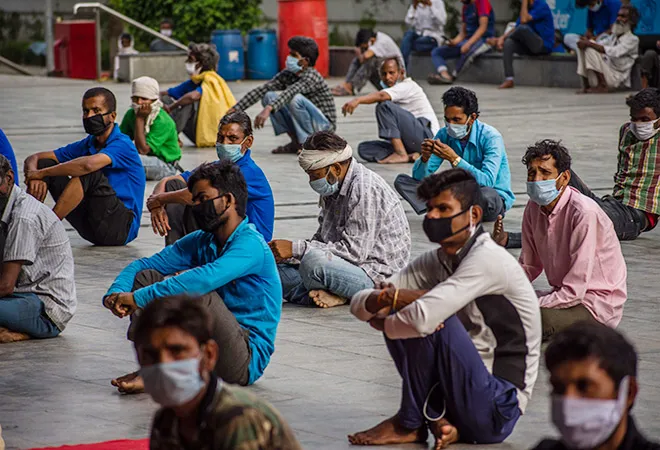
Among the loudest voices stranded in airports were IT professionals flying between Bangalore, Pune, Hyderabad, and Gurgaon. They described themselves as “victims” of IndiGo’s incompetence. They were right. They were also missing the irony. Most of them are migrants too. 14/18
The only difference is narrative. Urban professionals rarely see themselves as labour—they are "talent resources." As a result, the daily struggles of migrant workers hardly register, and their voices seldom resonate in the corridors these professionals occupy. 15/18
That fantasy shattered in a single week.
Passengers who had never experienced institutional neglect were suddenly tasting it.
"How can a system simply stop working? ... How can no one be accountable? ... How can we be this disposable?"
16/18
Passengers who had never experienced institutional neglect were suddenly tasting it.
"How can a system simply stop working? ... How can no one be accountable? ... How can we be this disposable?"
16/18
Urban India will forget this crisis quickly. Markets have short memories; crowd have even shorter ones. But for a brief, uncomfortable moment, privilege failed. For once, privilege could not quiet the questions we avoid: how long until we, too, are forced to suffer?
17/18
17/18
For those who had been grounded, we feel your trauma. We are with you in the frustration. But for once, we also want you to pause and think of those who face uncertainty every day — raise questions for them, because the system often listens only to the privileged.
18/18
18/18

• • •
Missing some Tweet in this thread? You can try to
force a refresh