
Did @HyperliquidX autodeleverage (ADL) $650m of PNL that it didn’t have to?
Was this 28x more than the minimal necessary?
Did almost every exchange (incl. @binance) copy-pasta a Huobi heuristic from 2015?
Can we do better in 2026?
𝐘𝐞𝐬 (+ a new paper)
Was this 28x more than the minimal necessary?
Did almost every exchange (incl. @binance) copy-pasta a Huobi heuristic from 2015?
Can we do better in 2026?
𝐘𝐞𝐬 (+ a new paper)
https://twitter.com/53836928/status/1998451653154906236
On 10/10, a Truth Social post shocked the market and set off the largest liquidation cascade in history
This forced Hyperliquid and others to 𝗿𝗲𝗽𝗲𝗮𝘁𝗲𝗱𝗹𝘆 trigger ADL
ADL is a worst-case loss socialization: winning trader profits are haircut to cover bad debt
This forced Hyperliquid and others to 𝗿𝗲𝗽𝗲𝗮𝘁𝗲𝗱𝗹𝘆 trigger ADL
ADL is a worst-case loss socialization: winning trader profits are haircut to cover bad debt

But what is ADL and why did it fail so badly? @0xdoug covered the basics, but to quantify why the ADL algorithm common to both Hyperliquid and Binance failed so spectacularly, we first need to describe ADL in geometric, mathematical terms via 𝘸𝘢𝘵𝘦𝘳-𝘧𝘪𝘭𝘭𝘪𝘯𝘨 𝘢𝘭𝘨𝘰𝘳𝘪𝘵𝘩𝘮𝘴
Water-filling algorithms are easy to draw
Below is the set of equity values (= cash + PNL) for each position ranked from smallest to highest
Negative equity = bad debt (e.g. lost more in PNL than collateral)
ADL haircuts winning traders ("removes water") to cover bad debt
Below is the set of equity values (= cash + PNL) for each position ranked from smallest to highest
Negative equity = bad debt (e.g. lost more in PNL than collateral)
ADL haircuts winning traders ("removes water") to cover bad debt
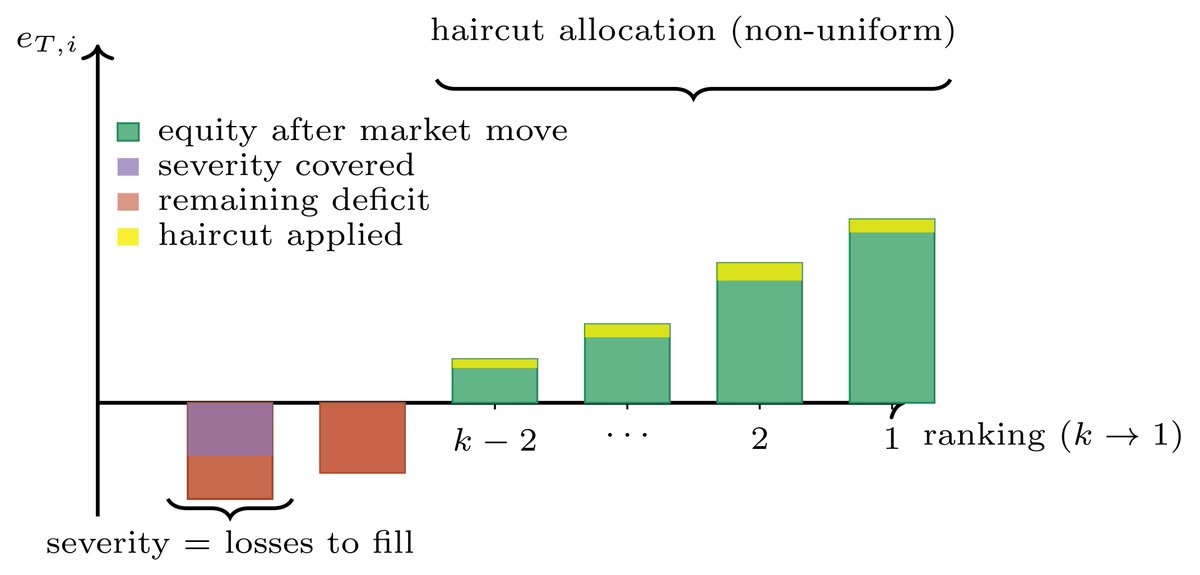
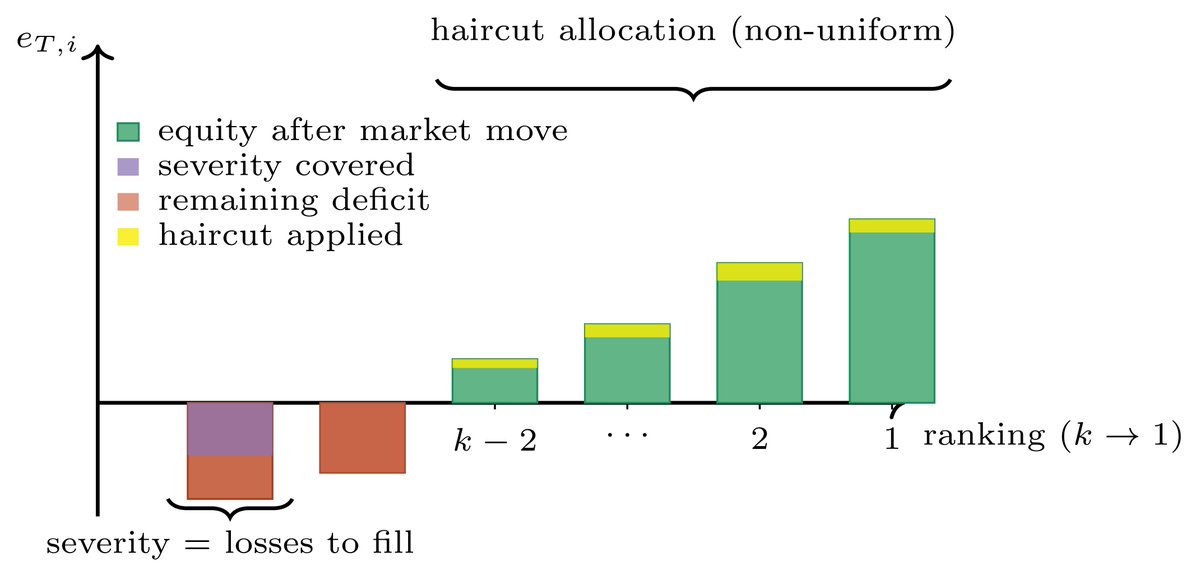
ADL algorithms have 2 parameters:
1. Severity: Fraction of debt that is socialized
2. Haircut vector: What % of profit is haircut from each winner
Water-filling constraint:
area of the yellow haircuts (water outflow) = area of the purple bad debt covered (water inflow)
1. Severity: Fraction of debt that is socialized
2. Haircut vector: What % of profit is haircut from each winner
Water-filling constraint:
area of the yellow haircuts (water outflow) = area of the purple bad debt covered (water inflow)
What water-filling algorithm do @HyperliquidX and @binance use?
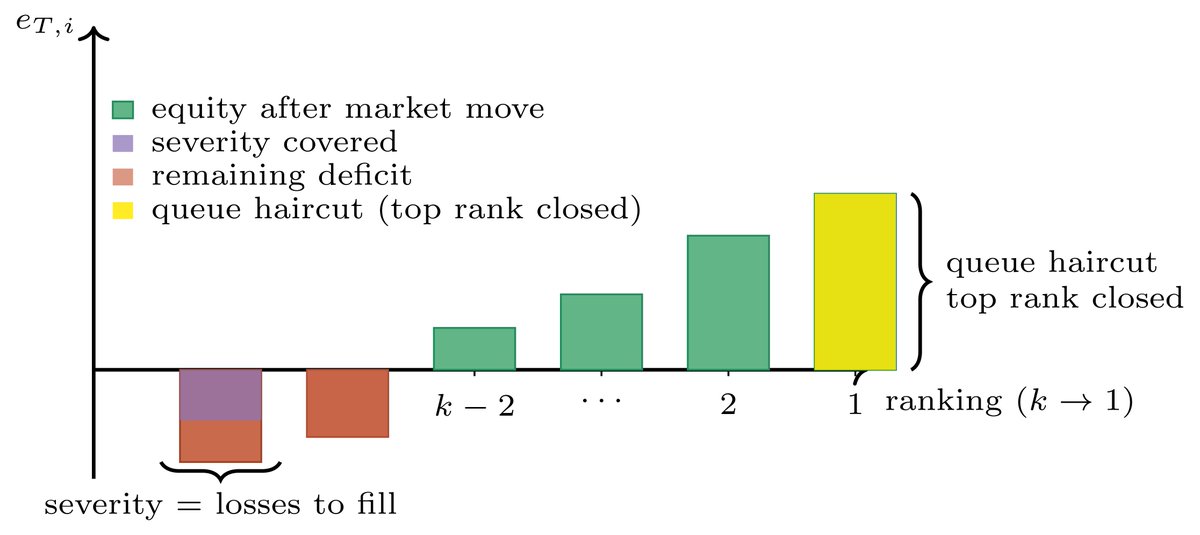
Greedy Queue algorithm:
1. Rank traders by PNL % x Leverage
2. Fully close positions until the deficit is covered
This algorithm 𝐨𝐯𝐞𝐫𝐬𝐡𝐨𝐨𝐭𝐬 (e.g. liquidates more PNL than the deficit requires)
Greedy Queue algorithm:
1. Rank traders by PNL % x Leverage
2. Fully close positions until the deficit is covered
This algorithm 𝐨𝐯𝐞𝐫𝐬𝐡𝐨𝐨𝐭𝐬 (e.g. liquidates more PNL than the deficit requires)
Why do they use this algorithm?
As @CryptoHayes details in his latest post, Huobi first created this algorithm as a heuristic for dated crypto futures
BitMEX later repurposed it for perpetuals futures and since then most exchanges copy-pasta'd it
cryptohayes.substack.com/p/adapt-or-die
As @CryptoHayes details in his latest post, Huobi first created this algorithm as a heuristic for dated crypto futures
BitMEX later repurposed it for perpetuals futures and since then most exchanges copy-pasta'd it
cryptohayes.substack.com/p/adapt-or-die
Why is this algorithm bad, especially on decentralized exchanges?
1. If ADL is used repeatedly, overshoot 𝗰𝗼𝗺𝗽𝗼𝘂𝗻𝗱𝘀 (much like a liquidation cascade)
2. Not Sybil resistant — can split positions to avoid being ADL'd
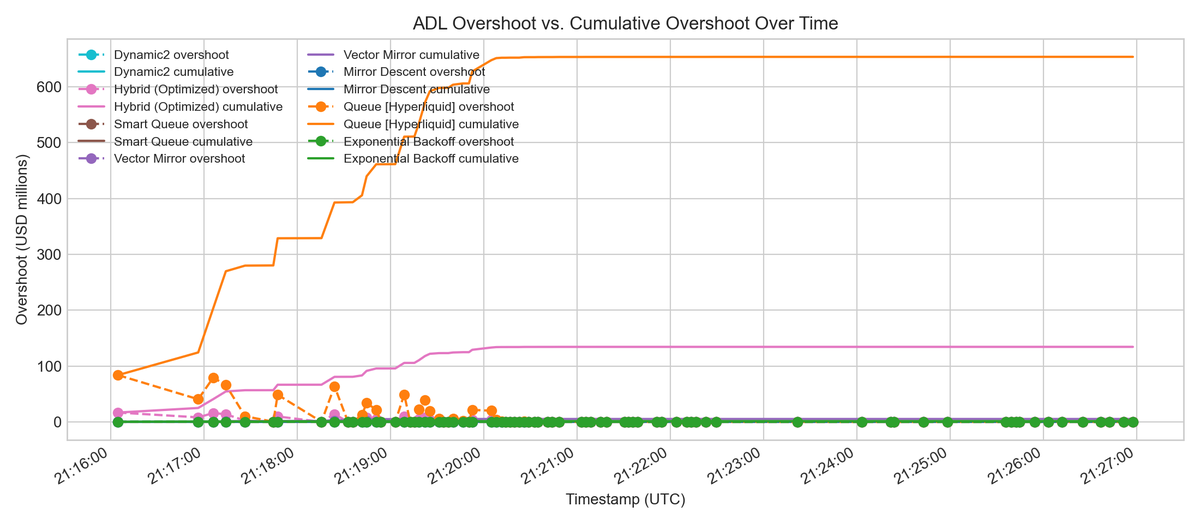
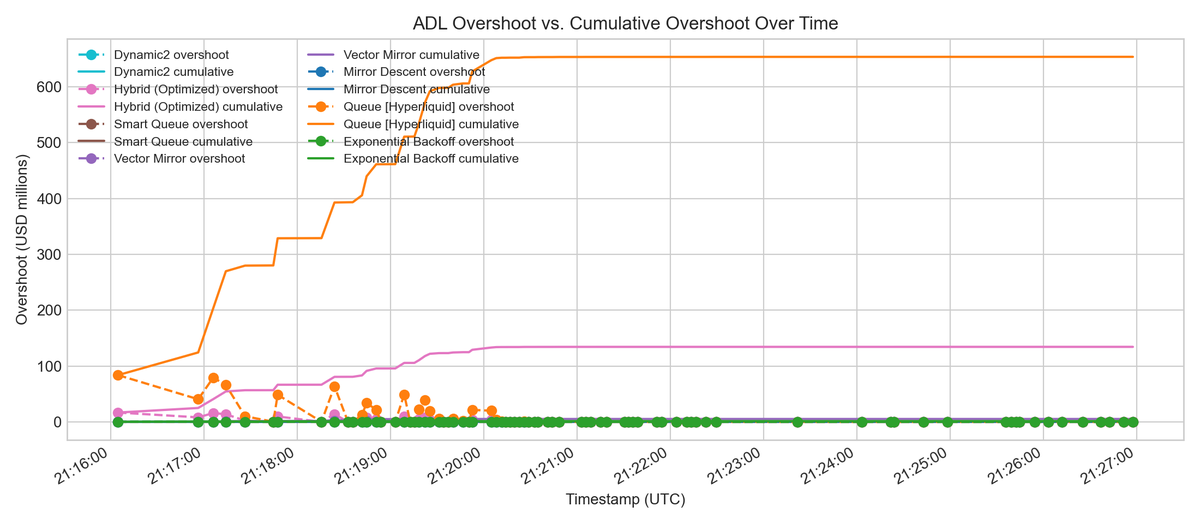
On 10/10 the overshoot was 𝗺𝗮𝘀𝘀𝗶𝘃𝗲 ($650M)
1. If ADL is used repeatedly, overshoot 𝗰𝗼𝗺𝗽𝗼𝘂𝗻𝗱𝘀 (much like a liquidation cascade)
2. Not Sybil resistant — can split positions to avoid being ADL'd
On 10/10 the overshoot was 𝗺𝗮𝘀𝘀𝗶𝘃𝗲 ($650M)
You might be asking: but wait, I thought I saw a viral post that claimed "traders made money" on Hyperliquid
This analysis was statistically misleading at best, malicious at worst
It measured 𝘤𝘰𝘯𝘥𝘪𝘵𝘪𝘰𝘯𝘢𝘭 PNL of surviving traders — conditioning on the Queue mechanism
This analysis was statistically misleading at best, malicious at worst
It measured 𝘤𝘰𝘯𝘥𝘪𝘵𝘪𝘰𝘯𝘢𝘭 PNL of surviving traders — conditioning on the Queue mechanism
https://twitter.com/1427859040671911939/status/1978179475776147482
Making a causal claim about profitability requires:
1) Counterfactual comparison (how would the optimal ADL algorithm have done?)
2) Comparison of the qty of bad debt relative to profit closed by ADL (did the exchange ADL more PNL than needed for solvency?)
@yudapearl would give this poor attempt at causal analysis a D-
1) Counterfactual comparison (how would the optimal ADL algorithm have done?)
2) Comparison of the qty of bad debt relative to profit closed by ADL (did the exchange ADL more PNL than needed for solvency?)
@yudapearl would give this poor attempt at causal analysis a D-
When you do analyze these, you find that the Queue algorithm spectacularly overshot by 28x — there was only ~$23m of bad debt, yet the ADL mechanism closed $650m of PNL
This is not "trader PNL was increased" in aggregate (not only conditioning on survivors), this was a net loss
This is not "trader PNL was increased" in aggregate (not only conditioning on survivors), this was a net loss
Unlike the bombast of this abysmal analysis, @chameleon_jeff had a measured response with a research challenge:
ADL should be improved, but it seems like you can't do it in a 𝘱𝘳𝘪𝘰𝘳-𝘪𝘯𝘥𝘦𝘱𝘦𝘯𝘥𝘦𝘯𝘵 manner (e.g. not relying on historical correlations/vol).. right?
ADL should be improved, but it seems like you can't do it in a 𝘱𝘳𝘪𝘰𝘳-𝘪𝘯𝘥𝘦𝘱𝘦𝘯𝘥𝘦𝘯𝘵 manner (e.g. not relying on historical correlations/vol).. right?
https://twitter.com/1622260212798291972/status/1979591612704723253
Challenge accepted!
Can we beat the Queue algorithm? Two other approaches are used:
- Pro-Rata [used by @DriftProtocol, @paradex]
- Central Clearing [used by crypto exchanges prior to 2015]
Both of these have pros and cons that differ from Queue
arxiv.org/abs/2512.01112
Can we beat the Queue algorithm? Two other approaches are used:
- Pro-Rata [used by @DriftProtocol, @paradex]
- Central Clearing [used by crypto exchanges prior to 2015]
Both of these have pros and cons that differ from Queue
arxiv.org/abs/2512.01112
Pro-Rata takes the deficit and splits it across all winners based how much profit they contribute
It can be viewed as haircutting everyone by a constant percentage and it is what @paradex and @DriftProtocol do with "socialized losses"
It can be viewed as haircutting everyone by a constant percentage and it is what @paradex and @DriftProtocol do with "socialized losses"
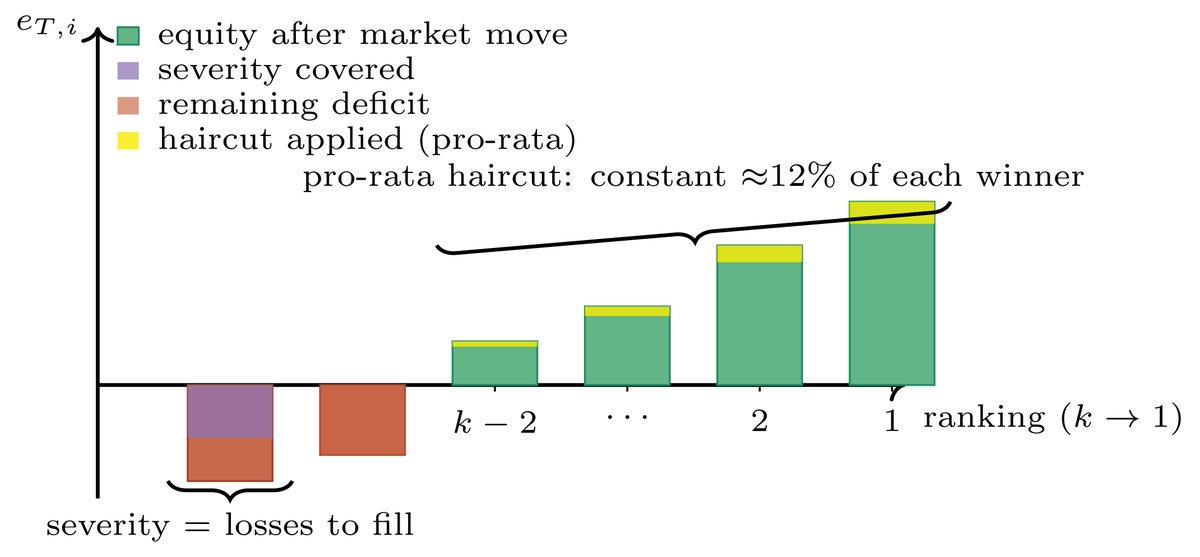
It satisfies three properties:
- Sybil Resistant
- Scale Invariant — scaling up all positions doesn't change haircuts
- Monotone — if you had the kth highest profit before ADL, you have the kth highest profit after ADL
These are 𝘧𝘢𝘪𝘳𝘯𝘦𝘴𝘴 properties that benefit traders
- Sybil Resistant
- Scale Invariant — scaling up all positions doesn't change haircuts
- Monotone — if you had the kth highest profit before ADL, you have the kth highest profit after ADL
These are 𝘧𝘢𝘪𝘳𝘯𝘦𝘴𝘴 properties that benefit traders
But it has one fatal flaw: not robust to multiple price shocks
Main reason: Pro-rata isn't risk-aware
2 positions: same size, one has 10x the leverage of the other
Haircut the same by pro-rata
But if there is another shock, the 10x leverage one is more likely to have bad debt
Main reason: Pro-rata isn't risk-aware
2 positions: same size, one has 10x the leverage of the other
Haircut the same by pro-rata
But if there is another shock, the 10x leverage one is more likely to have bad debt
Also, by the way, pro-rata (which @paradex calls socialized loss) *is actually* an ADL algorithm despite what you might read
This becomes clear once you see it via the lens of water-filling algorithms— its just one that makes different trade-offs than Queue
This becomes clear once you see it via the lens of water-filling algorithms— its just one that makes different trade-offs than Queue
https://twitter.com/4260536128/status/1978750722901762321
What about central clearing? This is where the exchange holds the bad debt on their balance sheet. It has the positive of not liquidating your best customers — so revenue is preserved.
But it is fundamentally not 𝘴𝘤𝘢𝘭𝘢𝘣𝘭𝘦: as the exchange grows, its ability to successfully preserves solvency decays
@cryptohayes documents that exchanges doing this faced an enormous amount of adverse selection and 𝘮𝘰𝘳𝘢𝘭 𝘩𝘢𝘻𝘢𝘳𝘥 [and blew up]
But it is fundamentally not 𝘴𝘤𝘢𝘭𝘢𝘣𝘭𝘦: as the exchange grows, its ability to successfully preserves solvency decays
@cryptohayes documents that exchanges doing this faced an enormous amount of adverse selection and 𝘮𝘰𝘳𝘢𝘭 𝘩𝘢𝘻𝘢𝘳𝘥 [and blew up]

So where does that leave us?
- Queue: Horrible overshoot, lowers revenue (e.g. liquidates high revenue generating customers)
- Pro-Rata: fair to traders, not robust
- Central Clearing: Not scalable, not decentralized, but preserves revenue
Can we get the best of all three?
- Queue: Horrible overshoot, lowers revenue (e.g. liquidates high revenue generating customers)
- Pro-Rata: fair to traders, not robust
- Central Clearing: Not scalable, not decentralized, but preserves revenue
Can we get the best of all three?
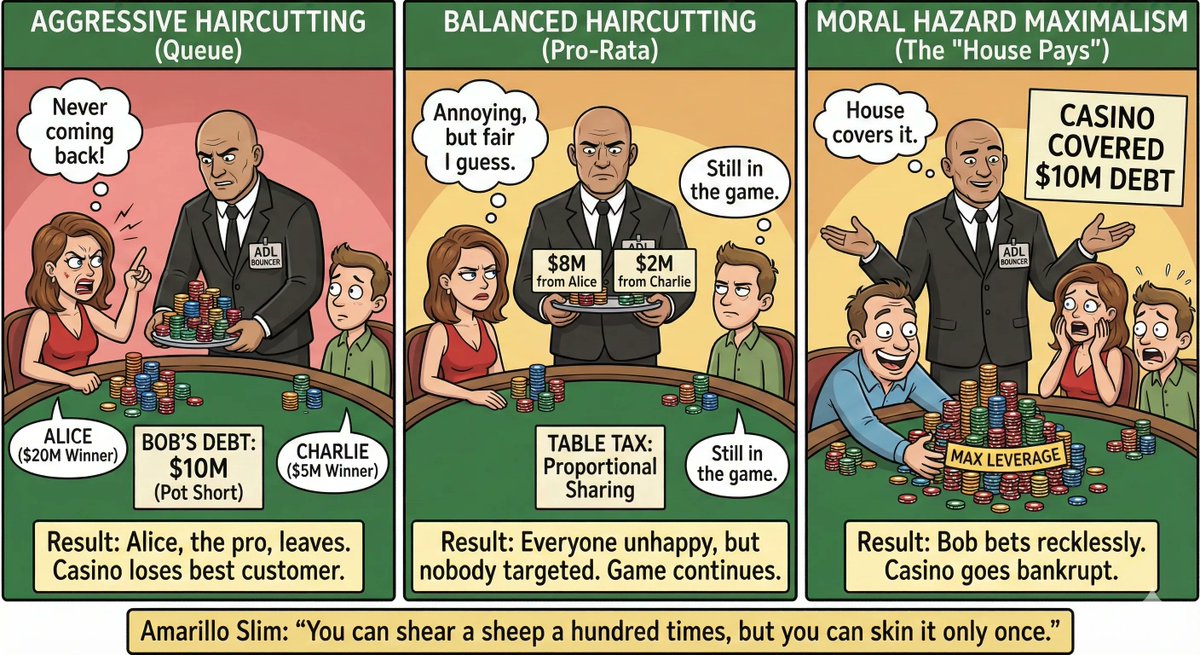
Surprisingly, the answer is 𝒏𝒐.
In my new paper, I prove an 𝗔𝗗𝗟 𝗧𝗿𝗶𝗹𝗲𝗺𝗺𝗮: no ADL mechanism can simultaneously optimize for:
- Solvency
- Fairness
- Long-Term Revenue
This is a fundamental limit on ADL!
arxiv.org/abs/2512.01112
In my new paper, I prove an 𝗔𝗗𝗟 𝗧𝗿𝗶𝗹𝗲𝗺𝗺𝗮: no ADL mechanism can simultaneously optimize for:
- Solvency
- Fairness
- Long-Term Revenue
This is a fundamental limit on ADL!
arxiv.org/abs/2512.01112
Does this negative result mean its time to pack it all up and follow @vladtenev + @drwconvexity into the land of centralized clearing?
Not so fast: crypto is a place where a trilemma never stopped anyone
The blockchain trilemma is beat with probabilistic strategies — same here?
Not so fast: crypto is a place where a trilemma never stopped anyone
The blockchain trilemma is beat with probabilistic strategies — same here?
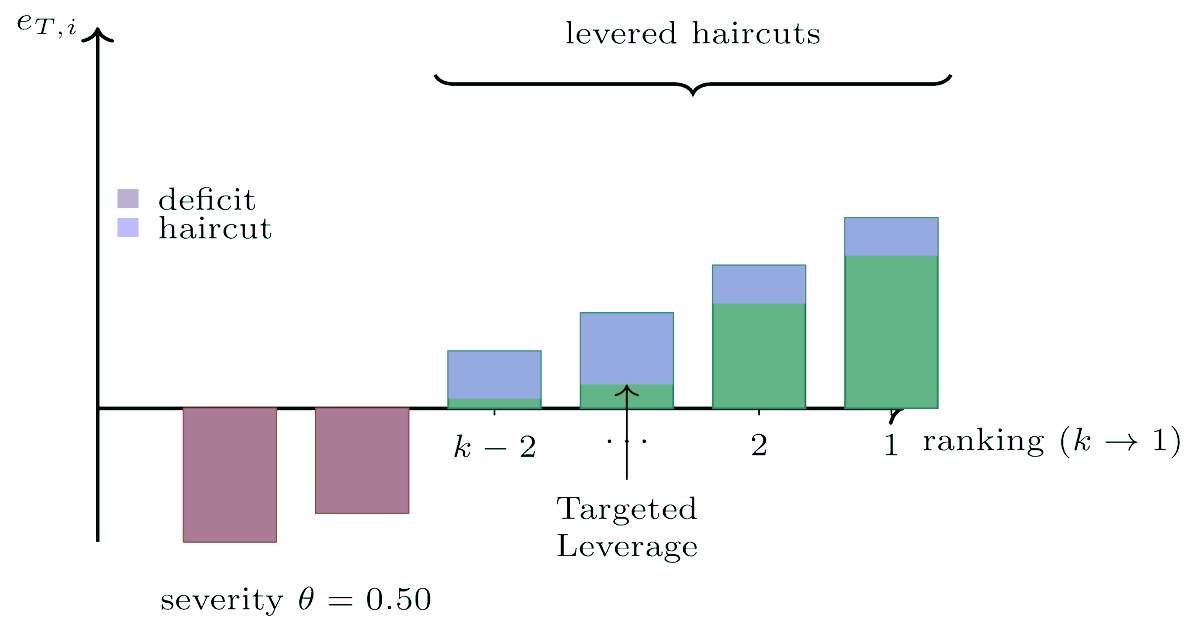
We show that one can construct an infinite set of easy to compute risk-aware strategies that non-uniformly haircut winners (see below) and both theoretically and practically outperform Queue and Pro-Rata in terms of solvency, fairness, and revenue
Moreover, we backtest a number of these strategies against the real data from @HyperliquidX on 10/10 and show that virtually all of these algorithms would have 𝐬𝐚𝐯𝐞𝐝 >$𝟓𝟎𝟎𝐌 𝐨𝐟 𝐭𝐫𝐚𝐝𝐞𝐫 𝐏𝐍𝐋
We also show that these algorithms outperform on fairness and revenue
The trilemma implies that they have to trade-off solvency for this(e.g. the exchange has to hold some bad debt on its balance sheet)
But the magnitude of loss is 10x smaller with optimized ADL algorithms
The trilemma implies that they have to trade-off solvency for this(e.g. the exchange has to hold some bad debt on its balance sheet)
But the magnitude of loss is 10x smaller with optimized ADL algorithms
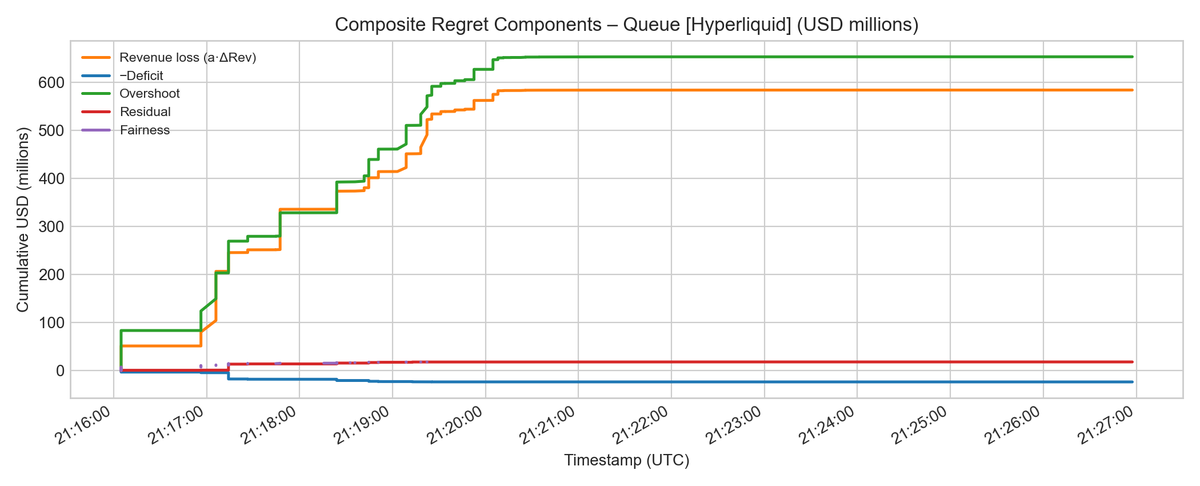
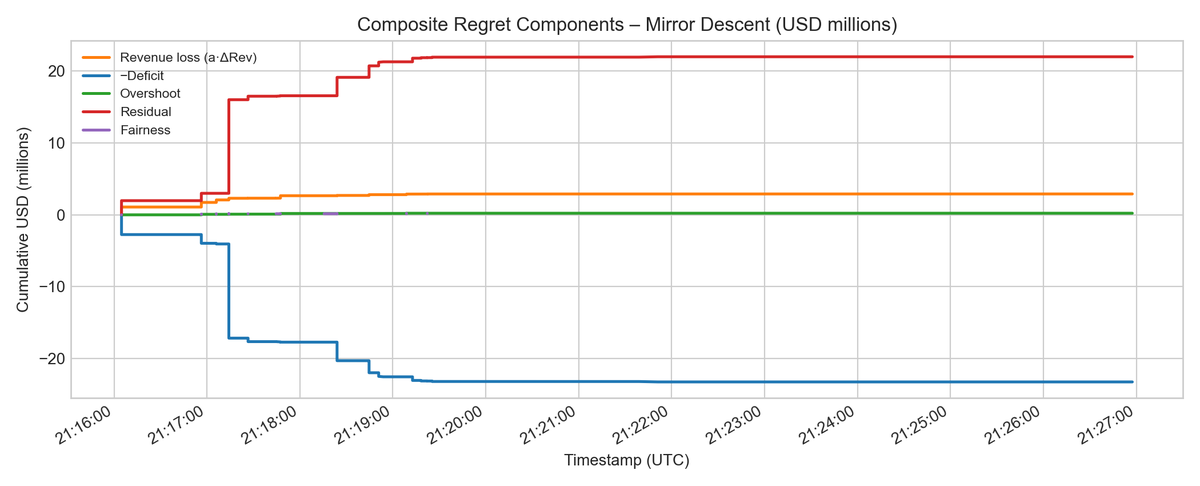
What does this mean for real exchanges?
- Counter to the intuition @chameleon_jeff initially had, there 𝐞𝐱𝐢𝐬𝐭 𝐩𝐫𝐢𝐨𝐫-𝐢𝐧𝐝𝐞𝐩𝐞𝐧𝐝𝐞𝐧𝐭 ADL mechanisms that are easy to implement
- These methods trade-off solvency, revenue, and fairness to traders in different manner
- Exchanges can choose to optimize within this trade-off space — with the limits to optimization bounded by the trilemma
- The trilemma, by the way, is so close to formally verifiable that maybe @jessemhan / @llllvvuu can prove it for more generic set of revenue functions
- Both CEXs and DEXs benefit from this research!
- Counter to the intuition @chameleon_jeff initially had, there 𝐞𝐱𝐢𝐬𝐭 𝐩𝐫𝐢𝐨𝐫-𝐢𝐧𝐝𝐞𝐩𝐞𝐧𝐝𝐞𝐧𝐭 ADL mechanisms that are easy to implement
- These methods trade-off solvency, revenue, and fairness to traders in different manner
- Exchanges can choose to optimize within this trade-off space — with the limits to optimization bounded by the trilemma
- The trilemma, by the way, is so close to formally verifiable that maybe @jessemhan / @llllvvuu can prove it for more generic set of revenue functions
- Both CEXs and DEXs benefit from this research!
Takeaway: we don't need to be in the dark forest of central clearing, even if @RobinhoodApp just bought LedgerX (best central clearing IMO)
We can use math to design better verifiable mechanisms that
will 𝘢𝘤𝘵𝘶𝘢𝘭𝘭𝘺 𝘣𝘦 𝘢𝘣𝘭𝘦 𝘵𝘰 𝘩𝘰𝘶𝘴𝘦 𝘢𝘭𝘭 𝘰𝘧 𝘧𝘪𝘯𝘢𝘯𝘤𝘦
We can use math to design better verifiable mechanisms that
will 𝘢𝘤𝘵𝘶𝘢𝘭𝘭𝘺 𝘣𝘦 𝘢𝘣𝘭𝘦 𝘵𝘰 𝘩𝘰𝘶𝘴𝘦 𝘢𝘭𝘭 𝘰𝘧 𝘧𝘪𝘯𝘢𝘯𝘤𝘦
https://twitter.com/605700792/status/1993765804903682479
Paper: arxiv.org/abs/2512.01112
I want to thank @conejocapital, @hydromancer_xyz, @sonarx_hq, and @xulian_hl for helping me procure, verify, and clean data from October 10.
The dataset used can be found on @conejocapital’s Github.
I want to also thank @jdmaturen, @theo_diamandis, @victatorships, @MaxResnick1, @hosseeb, @alexhevans, @theyisun, @ani_pai, @conejocapital, @dara_khan, @perpsjesus, @udaiparvatha, @MatheusVXF, @vnovakovski, Murat, and @angeris for helpful feedback on the paper or this post.
If you made it this far, you don’t want to know how much longer it was before @hosseeb and @MaxResnick1 yelled at me
The dataset used can be found on @conejocapital’s Github.
I want to also thank @jdmaturen, @theo_diamandis, @victatorships, @MaxResnick1, @hosseeb, @alexhevans, @theyisun, @ani_pai, @conejocapital, @dara_khan, @perpsjesus, @udaiparvatha, @MatheusVXF, @vnovakovski, Murat, and @angeris for helpful feedback on the paper or this post.
If you made it this far, you don’t want to know how much longer it was before @hosseeb and @MaxResnick1 yelled at me
@ConejoCapital @SonarX_HQ @xulian_hl @jdmaturen @theo_diamandis @victatorships @MaxResnick1 * @hydromancerxyz
@ConejoCapital @SonarX_HQ @xulian_hl @jdmaturen @theo_diamandis @victatorships @MaxResnick1 @hydromancerxyz I also forgot @RiskRinger !
• • •
Missing some Tweet in this thread? You can try to
force a refresh






