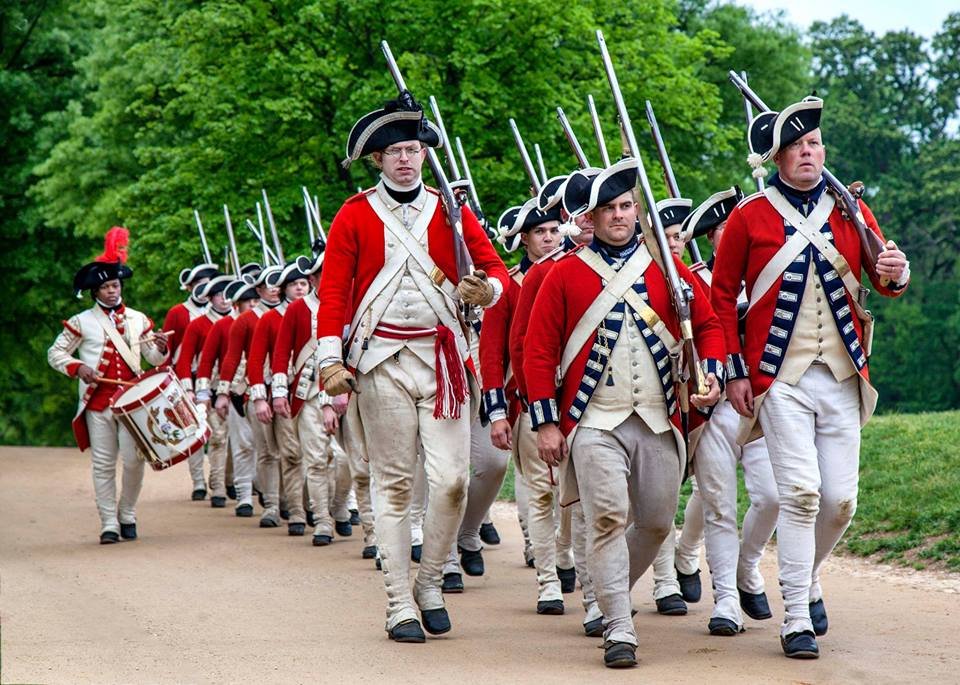
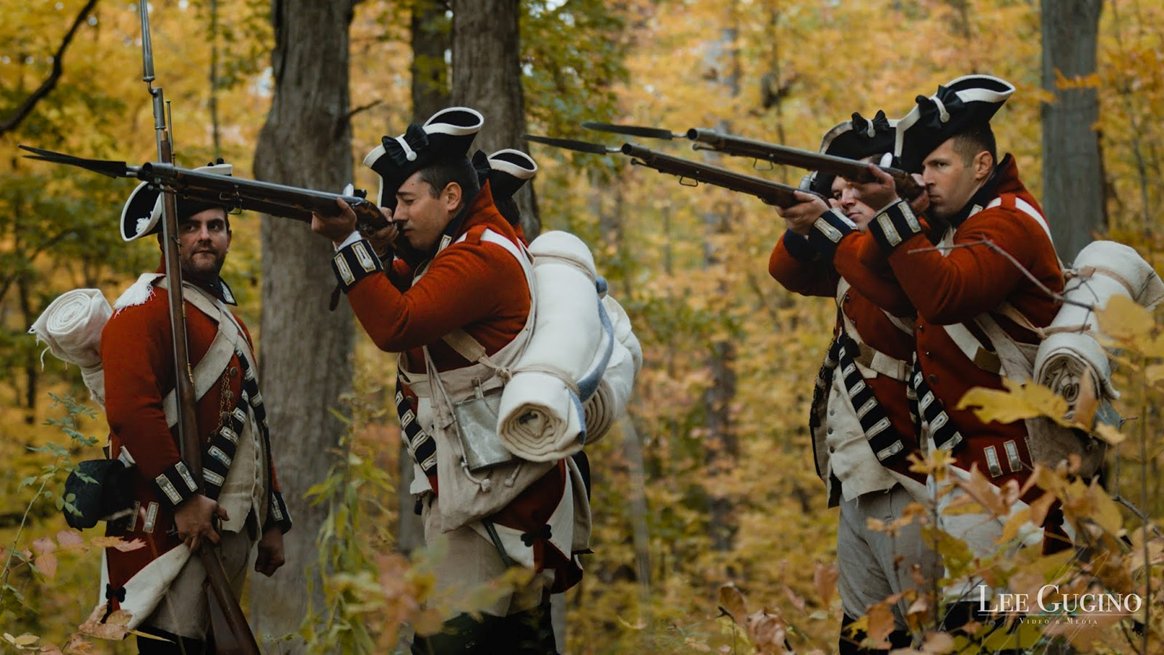
Barry Lyndon, Stanley Kubrick's eighteenth-century epic, premiered fifty years ago this week (December 11).
In celebration, I am doing a watchthrough thread on the film. I'll link my previous threads on Barry Lyndon below.
Here we go.
1/many
In celebration, I am doing a watchthrough thread on the film. I'll link my previous threads on Barry Lyndon below.
Here we go.
1/many

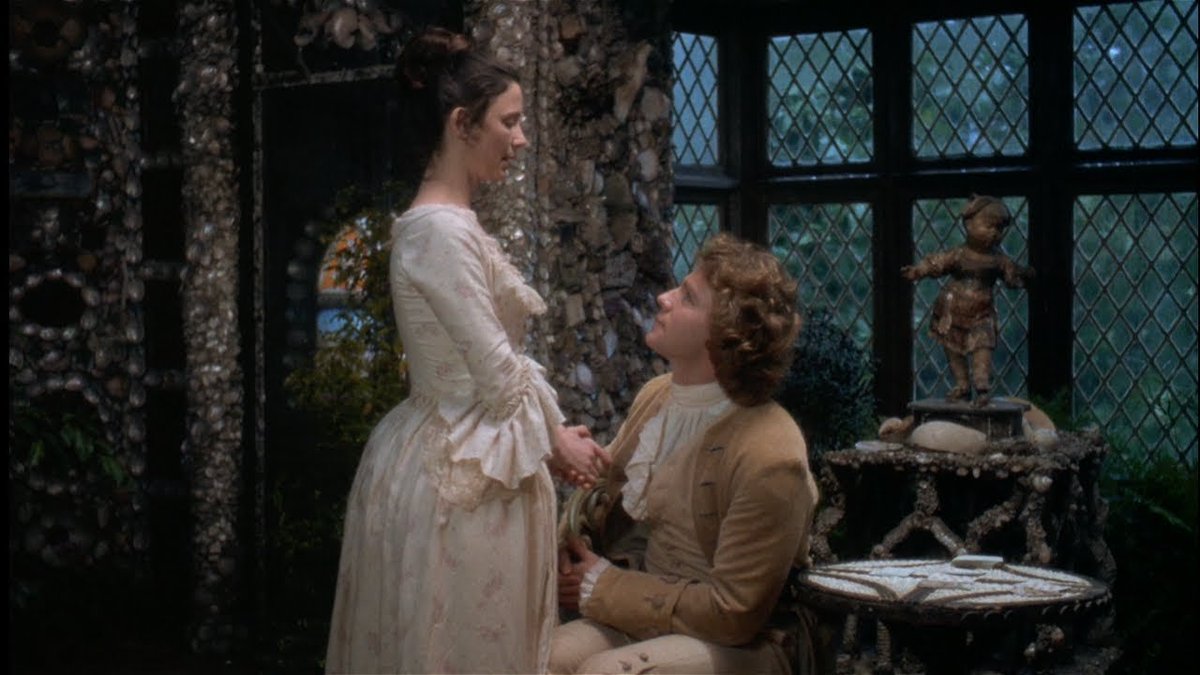
People complain that this movie is slow but six minutes in Redmond Barry's (Ryan O'Neal) dad has been killed a gunfight and he has been seduced by his cousin (stay classy, eighteenth-century Ireland). 2/
Alright and we are already onto the first military scene, which let's be honest, is why you are reading this thread.
I have lingering questions about the maneuvering going on here: supposedly it is a company, but they have two colours. 3/
I have lingering questions about the maneuvering going on here: supposedly it is a company, but they have two colours. 3/
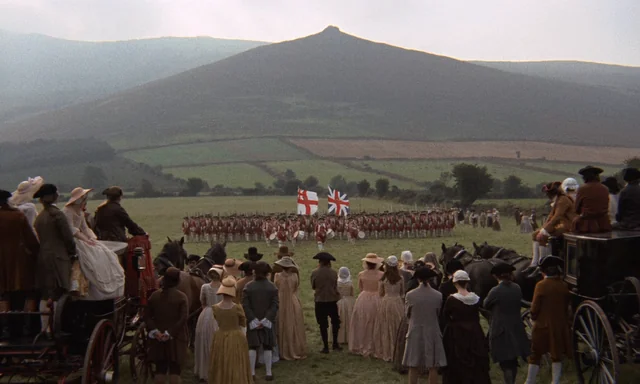
One of my favorite parts of this scene is that it is so hard for the Closed Caption writers to understand the orders Captain Quinn (Leonard Rossiter) is giving that they actually get it wrong.
"Present" is rendered as "Set" because he is doing such a bit.
4/
"Present" is rendered as "Set" because he is doing such a bit.
4/

I can't emphasize enough that this is a beautiful movie. Obviously, numbers and authentic uniforms aside, it's not a 1:1 recreation, but you can see bits of paintings like Morier's Review of the Norfolk Militia in the film.
5/
5/


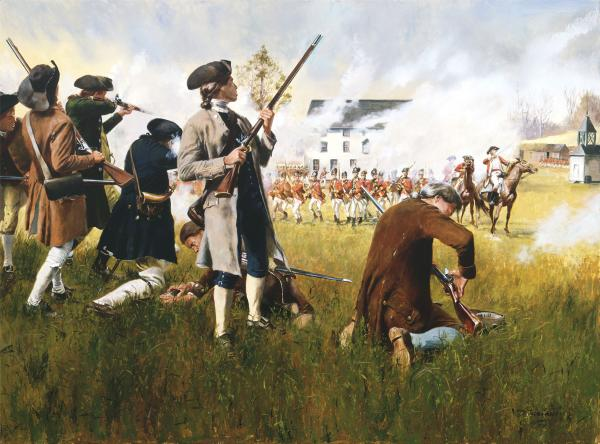
They are firing in four ranks and not locking on (which is weird/wrong) also, this is likely a militia unit, which doesn't make sense because militia units weren't deployed to Germany/HRE in the Seven Years War but I digress.
6/
6/

I literally can't get over how over the top Leonard Rossiter plays John Quinn.
Also, Cousin Nora (Gay Hamilton), you hussy
7/
Also, Cousin Nora (Gay Hamilton), you hussy
7/

Also the fact that Quinn confesses that he has never been in love with anyone like this before "except for...4 others" is incredible. Absolutely cinema, Stanley.
This film is absolutely underrated as a comedy.
8/
This film is absolutely underrated as a comedy.
8/

One of Nora's brothers has a beard but that's ok we'll move past it.
Predictably, Barry challenges Quinn to duel over his planned marriage to Nora.
On the upside, we do get introduced to one of the film's best characters, Captain Grogan, as a result.
9/
Predictably, Barry challenges Quinn to duel over his planned marriage to Nora.
On the upside, we do get introduced to one of the film's best characters, Captain Grogan, as a result.
9/
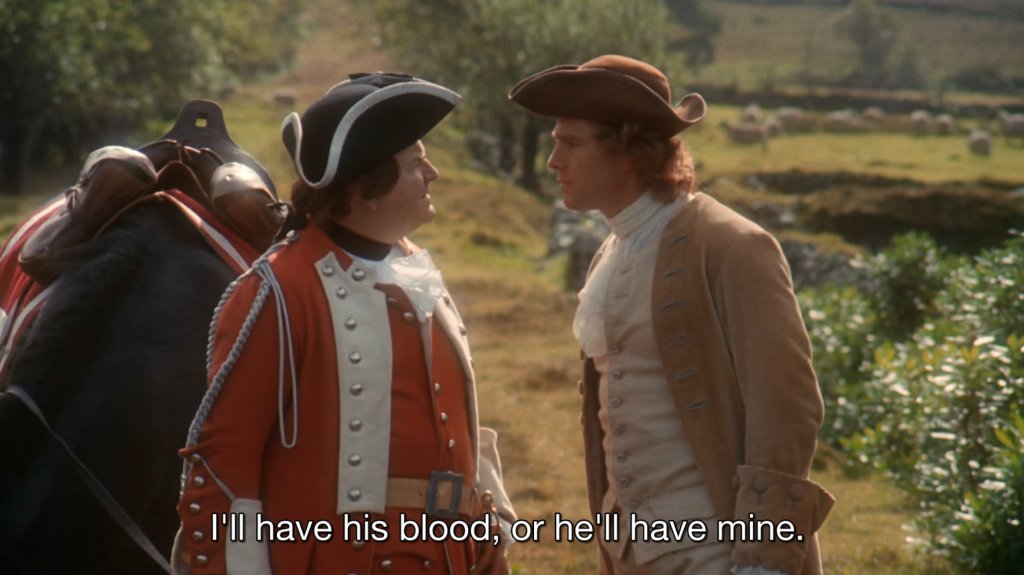
They duel. Barry's guns aren't loaded with shot, but he doesn't know that.
Quinn is terrified, and Barry wins the duel.
We first hear that the police are on their way (police didn't exist), but are then told "the bailiffs may be already on their way" (more accurate).
10/
Quinn is terrified, and Barry wins the duel.
We first hear that the police are on their way (police didn't exist), but are then told "the bailiffs may be already on their way" (more accurate).
10/

Barry flees, and is immediately held up by Captain Feeney, a highwayman.
He loses his money and his horse.
11/
He loses his money and his horse.
11/

This leads to him running into a recruiting party, and joining Gale's Regiment of Foot (fictitious).
He then gets into a altercation with a enormous bearded corporal (Pat Roach).
12/
He then gets into a altercation with a enormous bearded corporal (Pat Roach).
12/
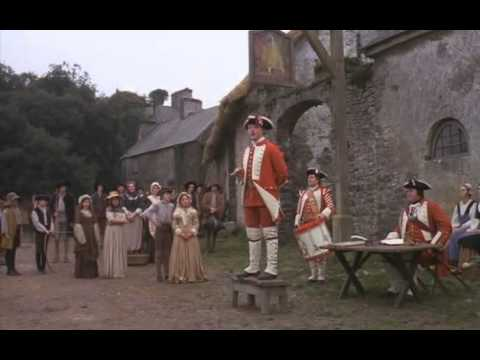
Barry defeats the corporal in a fist fight, giving him what eighteenth-century soldier John Robert Shaw called "an Irishman's coat of arms": two black eyes and a bloody nose.
It is weirded that the corporal is the only bearded man in the regiment.
13/
It is weirded that the corporal is the only bearded man in the regiment.
13/


Captain Grogan then turns up (which is weird, because he before seemed to be in a militia or provincial regiment, but clearly acts like an officer in Gale's Regiment).
14/
14/

Grogan then explains that the duel was a sham, that Barry should have written to his mother to tell her what happened to him, and since he was paid off in the duel, Barry will not lack for cash. It's honestly one of the most hopeful moments of the whole film.
15/
15/

Gale's Regiment then goes to Germany (the HRE) and is thrown into combat during the Seven Years War. I have a whole thread on the combat sequences, so I won't rehash that, you can find it below.
16/
16/
https://x.com/KKriegeBlog/status/1887539706969075741
Tragically, in the first skirmish, Captain Grogan is killed. He peaces out with one of the most memorable lines in cinema.
17/
17/

The film takes an intensely dim view of the idea of limitation in eighteenth-century warfare. Which oddly, matches pretty well with recent scholarship, but I find irksome. You can find some of the reasons why in the thread below:
18/
18/
https://x.com/KKriegeBlog/status/1658886177464745984


Barry makes his escape from the British army, stealing clothes from an officer. (Prince Henry of Prussia referenced).
19/
19/

Barry escapes into territory controlled by the Prussians, and meets peasant woman (diana körner) who has got to be one of the most impressive bilingual peasants (English rather than French or Dutch) in the Holy Roman Empire at this time.
20/
20/

Andddd I already have a whole thread on the film's depiction of the Prussian army. Link below. Barry gets dragooned into joining the Prussians when Captain Potzdorf realizes that he is not who he claims to be.
21/
21/
https://x.com/KKriegeBlog/status/1890501133984026857
We actually get a timestamp here that it is 1760 (or at least five years into the war).
22/
22/

So, skipping on past the war, (which you can read about fully in the two linked threads above), Barry is garrisoned in Berlin and now employed as a spy.
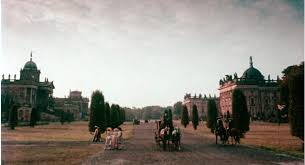
There are some incredible shots of the Neues Palais, which is in Potsdam and not completed until 1769, but it's fine.
23/
There are some incredible shots of the Neues Palais, which is in Potsdam and not completed until 1769, but it's fine.
23/
Barry is enlisted by Potzdorf's uncle, the minister of police, to spy upon the Chevalier du Balibari (who in the 1844 novel is Barry's uncle) and Barry immediately breaks down crying and spills the whole spy thing to Balibari. Worst spy ever.
24/
24/

Hijinks ensue, and the two Irishmen (Balibari and Barry) flee Berlin and make it safely across the frontier. As you can see below, the shade being thrown at Prussia has reached epic proportions.
I've run out of tweets in this thread, but I will continue to add stuff live.
25/
I've run out of tweets in this thread, but I will continue to add stuff live.
25/
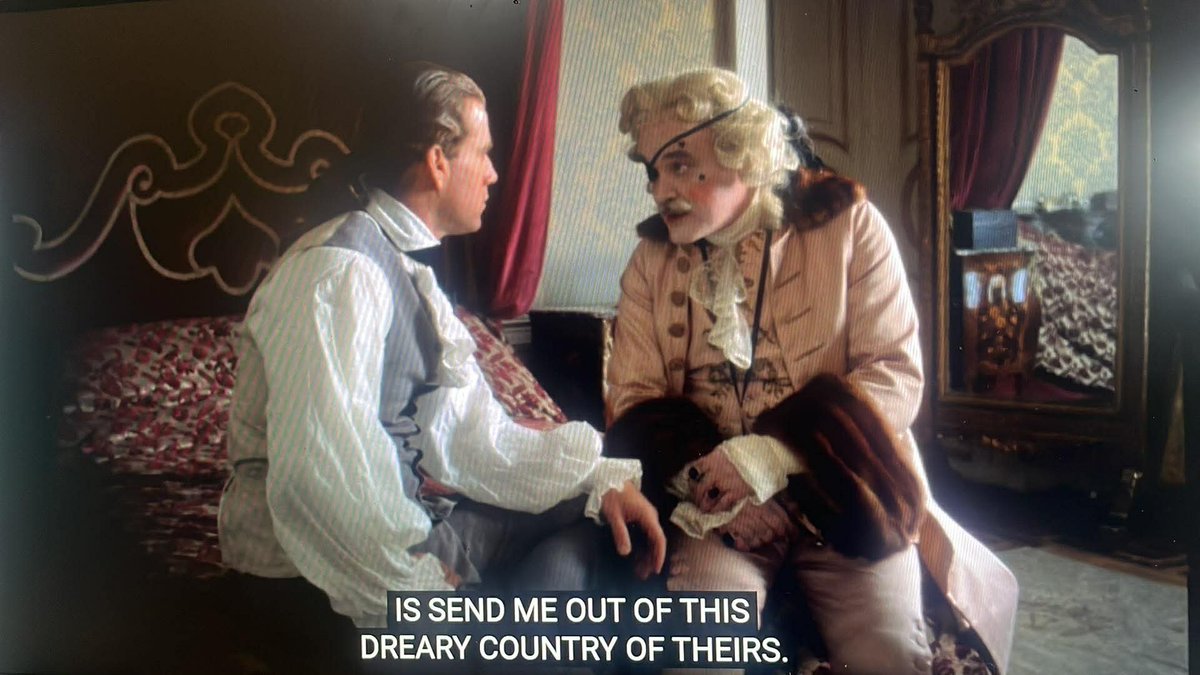
Barry and Balibari take up the exciting life of professional gamblers, travelling, gambling, and duelling their way across European high society. Barry meets Lady Lyndon.
26/
26/


Barry seduces Lady Lyndon and bullies her husband into dying of a heart attack. An impressive feat, to be sure.
27/
27/

Ok I will admit it drags on a little.

The Anglican chaplain being named Runt has me in stitches.
If you think this wedding service is passive aggressive, I've got to tell you the one about the time a Lutheran minister compared my cousin (the bride) to Gomer in the homily. Still gotta call in a hit on him
29/
If you think this wedding service is passive aggressive, I've got to tell you the one about the time a Lutheran minister compared my cousin (the bride) to Gomer in the homily. Still gotta call in a hit on him
29/

Barry has now been elevated into the highest echelons of society, becoming Barry Lyndon rather than Redmond Barry.
A reminder that men will marry a woman who looks like this and still blow pipe smoke into her face and cheat on her constantly.
30/
A reminder that men will marry a woman who looks like this and still blow pipe smoke into her face and cheat on her constantly.
30/

A reminder that Lord Bullingdon (Lady Lyndon's son by her first marriage) is not only the smartest man in the room, he is also, at least according the book, a gigachad AWI combat vet.
But the movie contrived to make him a sniveling little weasel, for reasons
31/
But the movie contrived to make him a sniveling little weasel, for reasons
31/


Perhaps shocking no one, married life turns out to be a catastrophe, for everyone but Barry, who uses his newfound station to spend enormous amounts of money, on everything from women to "coats of the finest velvet, cunningly worked"
32/
32/

At the behest of his mother, Barry attempts to gain a peerage via Lord Wendover, seemingly to no avail.
33/
33/

Barry raises "a company" of troops to go fight in America against the rebels. In book, as I suggested, his stepson Lord Bullingdon leads them to America (at least in Barry's mind, in hopes that he will be killed). Barry meets HM King George III.
34/
34/

A public display of violence between stepfather and stepson lead to Barry becoming a pariah among high society.
35/
35/
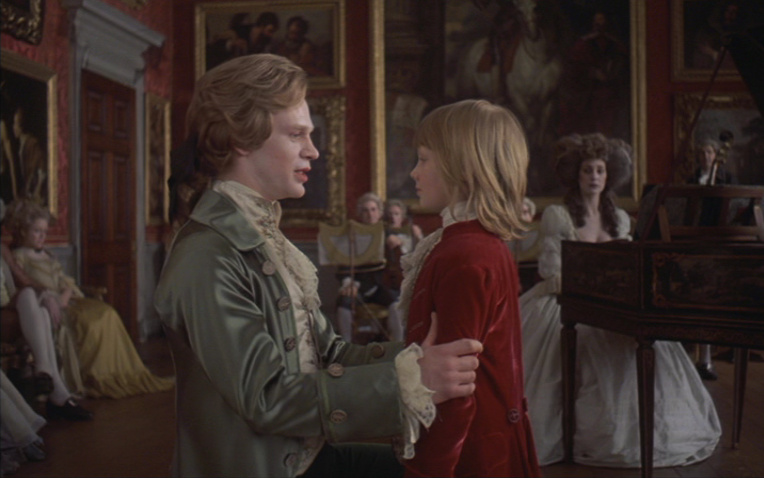
In the classic tradition of European nobility (at least from my time playing EU4/5) Barry's son with Lady Lyndon, Bryan, dies in a riding accident.
36/
36/
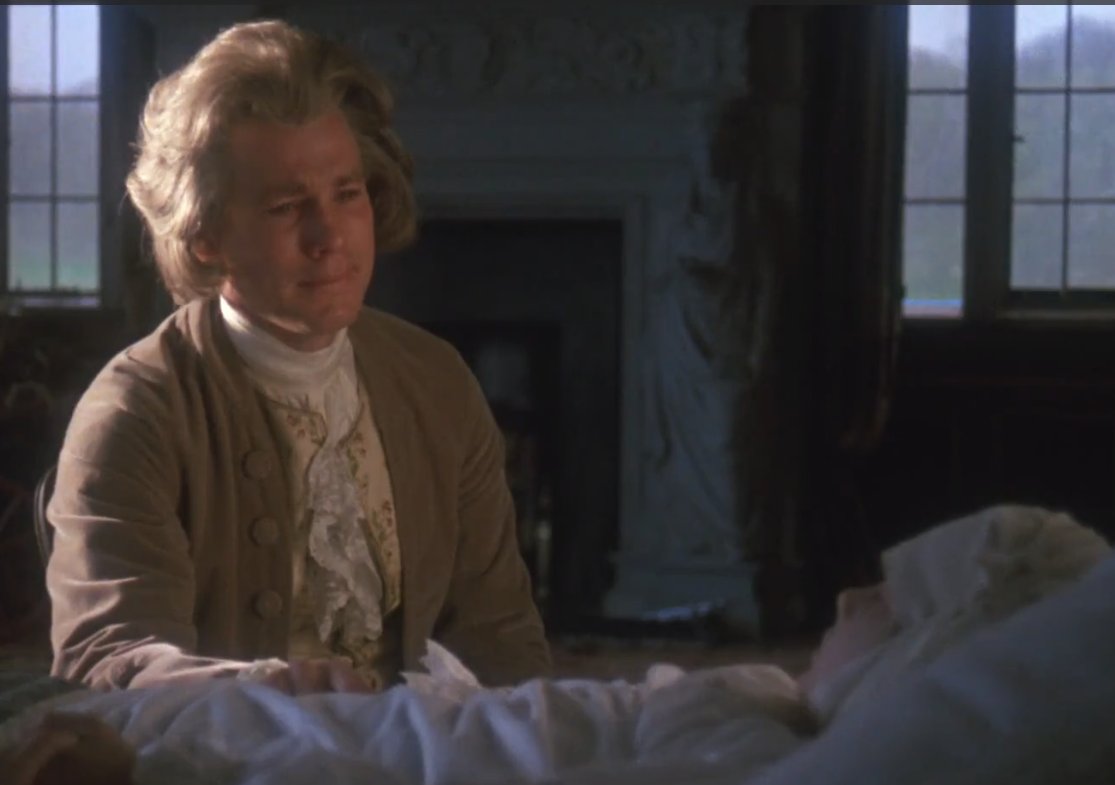
The night after the squad got turnt up (Lord Bullingdon arrives to confront Barry). I'm starting to think my main take away from this is how much cooler Bullingdon is in the book, where he is fighting on the front lines at Camden in 1780.
37/
37/

Ya we go from a man who is captured (presumably at Yorktown) and escapes back to British lines, and is later killed fighting in Spain in 1811 (presumably at Albuera) to a guy who accidentally discharges his pistol in a duel.
And then shoots Barry after he delopes.
38/
And then shoots Barry after he delopes.
38/
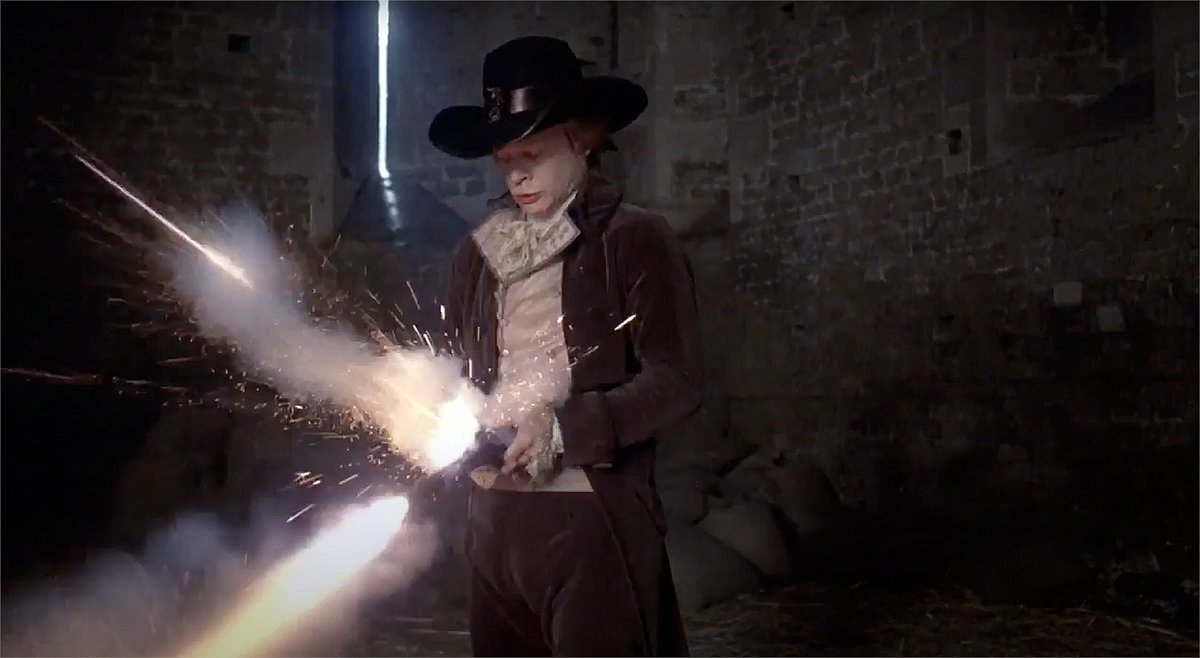
It is a little frustrating that we are in the mid-1780s now, and for the main characters, fashion has been updated, but the common soldiers shown outside the inn where Barry is convalescing are still clearly in the 1750s.

Barry loses the leg that Bullingdon shot in their duel, and retired to Ireland on an annuity of 5000 Pounds per year with his mother.
39/
39/

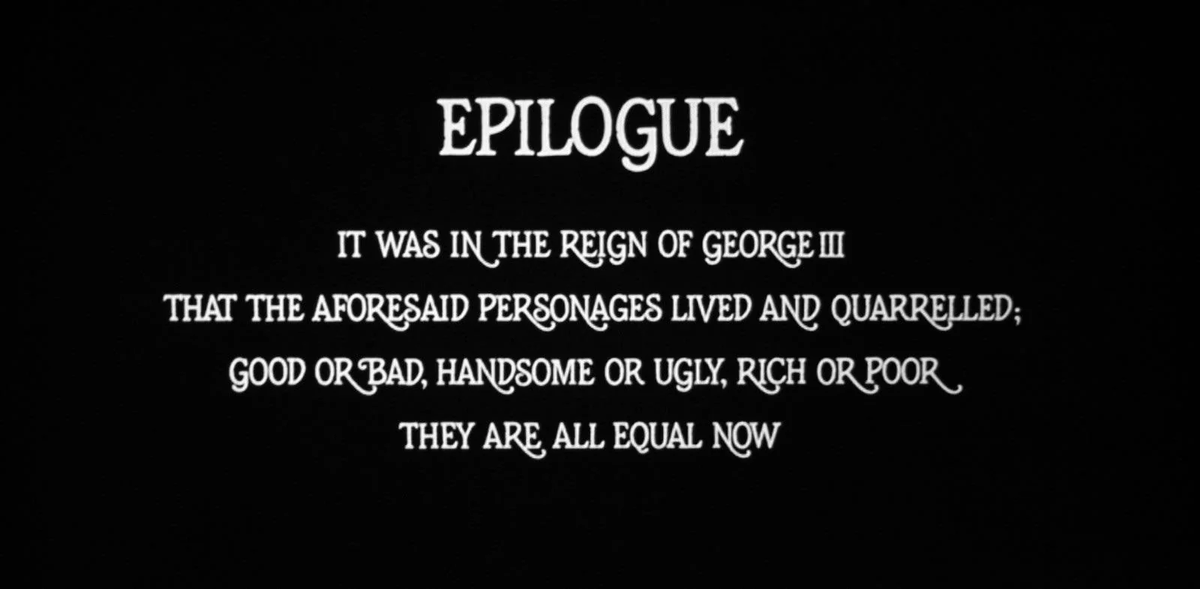
And the film ends with the greatest title card in the history of cinema.
I hope you enjoyed the thread, it consumed a lot more of my day than I initially anticipated.
40/fin
I hope you enjoyed the thread, it consumed a lot more of my day than I initially anticipated.
40/fin
• • •
Missing some Tweet in this thread? You can try to
force a refresh