Very excited to see rapid movement on addressing the issues with speed on Finch LRT & the streetcars too, including today's TTC motions. This is a huge opportunity to fix longstanding problems, mirroring what we recommended in our @TorontoStar article. thestar.com/opinion/contri…
@TorontoStar Transit signal priority (TSP) is essential but not a silver bullet. Simple fixes like letting streetcars/LRVs move ahead of left-turning traffic are no-brainers. Today, streetcars can extend greens but true TSP does much more.
@TorontoStar The best systems actively manage the whole signal cycle, trimming red time for transit and adjusting subsequent cycles to keep traffic moving smoothly. The biggest gains come when the system can predict when the vehicle reaches the intersection.
@TorontoStar That’s why reliability + TSP reinforce each other: more consistent service = more effective priority. Line management matters. if vehicles leave terminals bunched, you can’t fix it down the line. We need monitoring departures, adding recovery time, and even redesigning terminals.
@TorontoStar Streets like Finch, Spadina & St. Clair are so wide that red lights are extremely long. European cities solve this with multi-stage crossings—pedestrians wait safely halfway across, shortening the whole cycle. Both pedestrians and transit get quicker green lights.
@TorontoStar Streetcars/LRVs are capped at speeds below parallel cars and buses. On Queensway, a right-of-way designed for 80kph now crawls at 30 even where there are no sidewalks. On Finch, the signalling forces operators to keep a buffer under already low limits.
@TorontoStar Antiquated switch tech is holding back the streetcar network. Operators still stop to visually confirm switch positions because the legacy control system is obsolete.
@TorontoStar Single-point switches also force slow crossings. Virtually every modern system—including our LRTs and Leslie Barns—uses double-point switches + modern controls. We shouldn’t be installing 1930s tech in 2025.
@TorontoStar None of these changes require megaprojects. They’re operational and technical choices—but they can transform the rider experience.
Faster trips don’t just make transit more appealing. They free up vehicles and operators, effectively increasing frequency at no added cost.
• • •
Missing some Tweet in this thread? You can try to
force a refresh

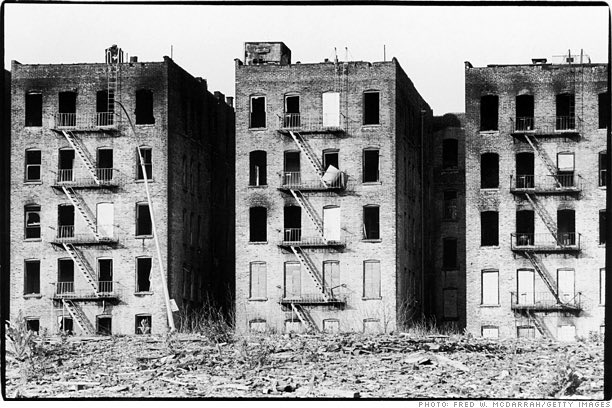
One of the things that’s really hard for our generation to wrap our heads around is that until quite recently, the US had such a severe housing surplus that homes were literally being abandoned because nobody wanted to live in them in big cities all over the country, incl NYC 1/
People obviously know about places like Detroit but take Charlotte St in the Bronx (made famous by Jimmy Carter visit). It had apartment buildings that were abandoned & burned out. Was rebuilt as suburban style houses. Nobody could imagine there’d ever be demand for apartments 2/
One of the most notable elements of Ed Koch’s mayoralty was that they renovated a lot of abandoned apartments into affordable housing. Many of the buildings had been seized by the city for unpaid taxes since they had effectively no property value. 3/
Well this is the day I've been awaiting a long time! The deal is signed to move forward on GO Rail Expansion and Electrification. It's a pretty high-powered consortium. Who better than Deutsche Bahn to bring S-Bahn to North America? infrastructureontario.ca/Partner-Select…
Includes reconstruction of tracks & platforms at Union Station. WSP, already in charge of platform expansion, is now in consortium. Union Station the keystone of the whole network. Better platforms can unlock its capacity. My article gives possible idea: urbantoronto.ca/news/2012/08/c…
Since our @TorontoRBOT fare plan is getting discussed, I thought it would make sense to do a review of what it actually entails in a short thread. You can read the details all here: bot.com/Portals/0/Tran…
The key to it is that nobody ever pays for less than 2 zones, meaning that since Toronto is split into 2 zones, all TTC riders keep the same flat fare they pay today.
Riders across the TTC-905 boundary, from places like Scarborough, North York, and Etobicoke to Mississauga, Vaughan, Markham, Brampton get their fares cut roughly in half since they don’t get hit with a double fare anymore.
So @GovKathyHochul apparently made link today btw Interborough and Cross-Harbour Freight tunnel. This actually could make some sense. A short thread...
The Cross-Harbour Freight Tunnel has long been proposed (esp by @RepJerryNadler), but it's hard to make work since it's a multi-billion $$ project and freight rail traffic to NYC is very limited for many reasons.
It would likely never be financially viable to build a dedicated freight rail tunnel from Jersey to Brooklyn for a few trains a day. But if it could have a dual purpose as a passenger rail tunnel, the combined funding streams could potentially make a challenging project viable.
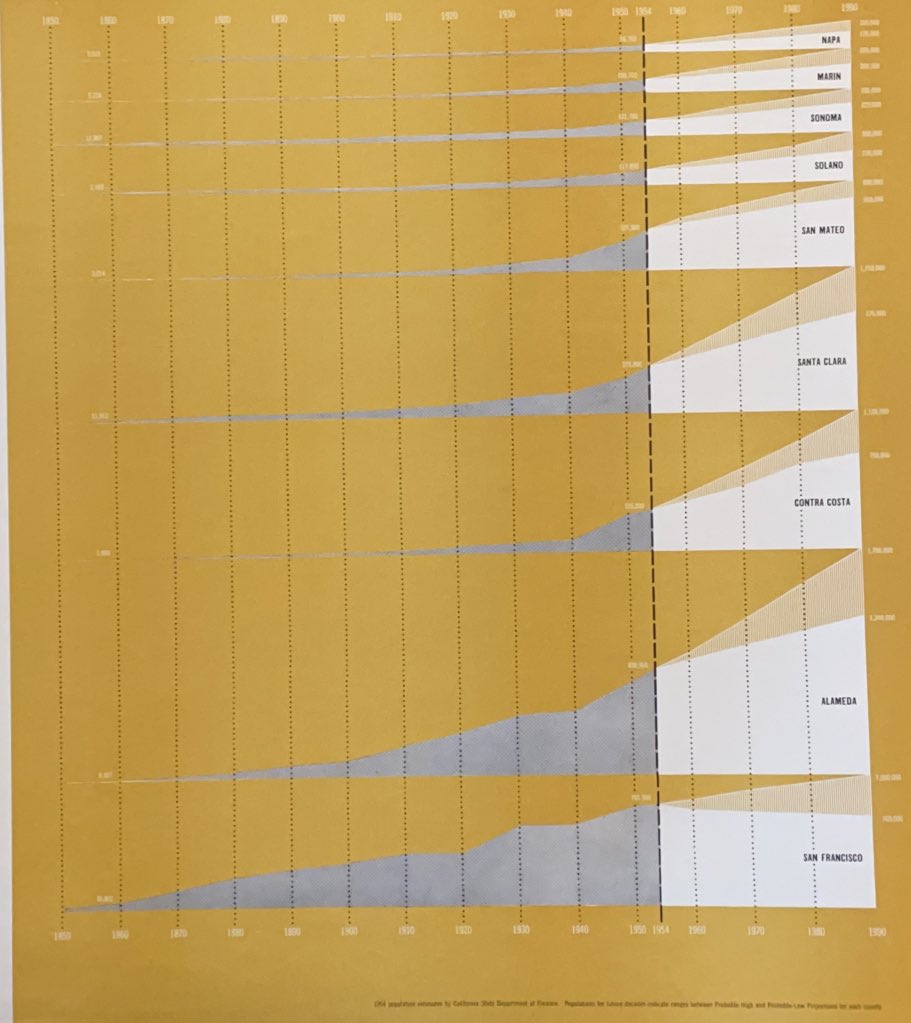
Continuing with the old plans theme but moving across the continent, here is a plan for regional rapid transit in the Bay Area from 1955. Would’ve done a lot more to serve the areas that became major employment centers.
Here are travel times in 1955 and if the proposed system were built.
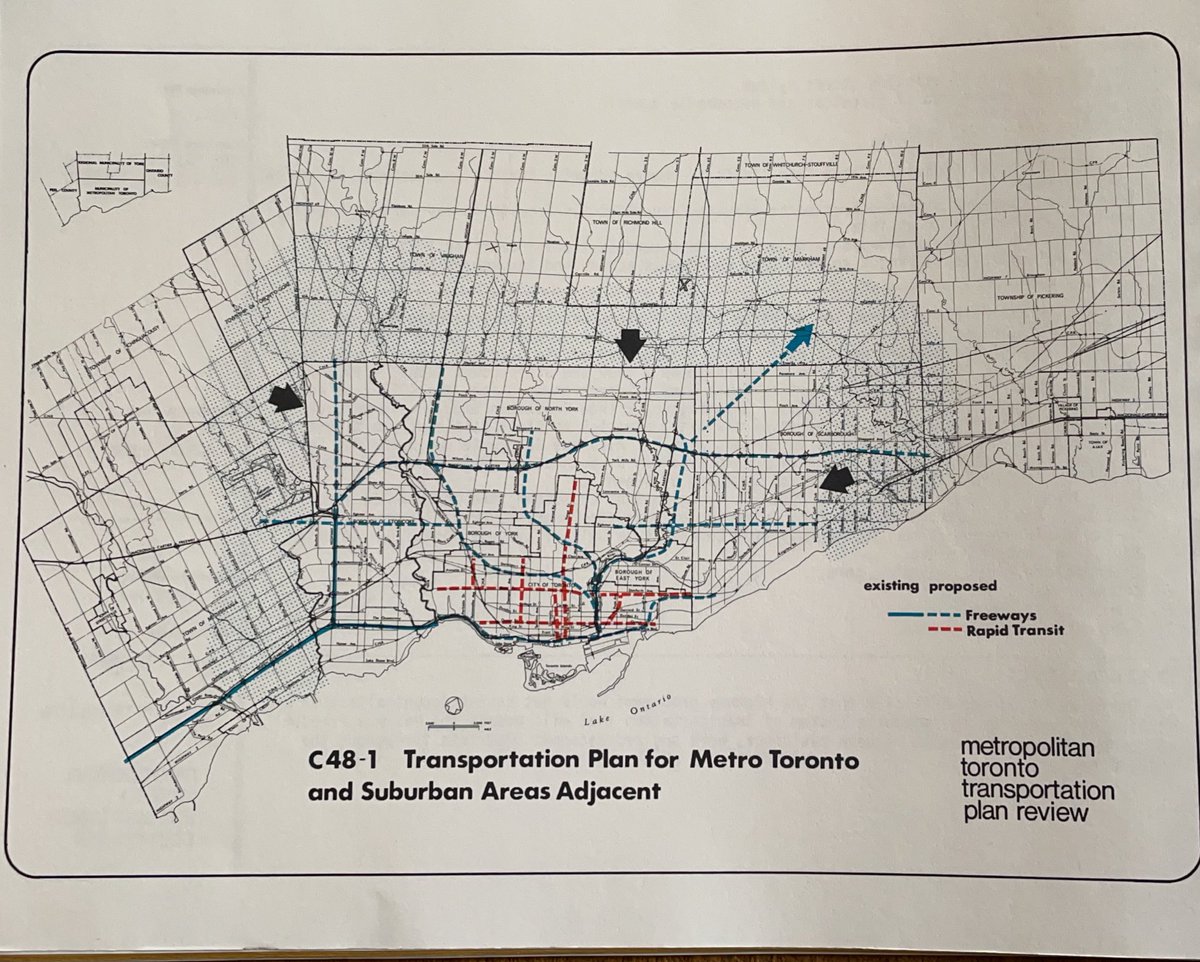
Before I finally have to return these to the library, I thought I’d tweet some images from these old reports, like these maps of old plans collected for the Metro Toronto Transportation Plan Review in 1973. Here is a map of the master plan from 1943.
The 43 plan already had an extensive freeway network, as well as the familiar Yonge, University, and Bloor (west) subway. The latter would’ve been shared with a freeway along Bloor, a concept which wasn’t finally dropped till the 50s.
Here’s 1948 plan from Norman Wilson, the TTC’s transportation guru. Highway network already looks familiar (of course with many things that never happened) plus Bloor, Danforth, University subways (plus Queen and some interesting branches).