All I want for Christmas is…a painting of a mouse riding a lobster.
Christmas cards during the Victorian Era tended to be rather unusual, reflecting an offbeat sense of humor before Christmas iconography had solidified into what it is today.
Let’s shake this tree down. 🧵⬇️
Queen Victoria, whose mother and husband were born in Germany, is credited with bringing German holiday traditions like Christmas trees and card-giving to England in the 1830s.
The first Christmas card is thought to have been designed in England in 1843, the EXACT SAME YEAR that Charles Dickens wrote ‘A Christmas Carol.’
Christmas (snow, big feasts, family cheer) was becoming a thing.
1,000 hand-colored copies of the card were sold in London.
With the advancement of printing processes, cards became cheaper and more accessible.
Card companies began commissioning artists to create designs specifically for Christmas cards.
To keep up with competition, the designs became more original.
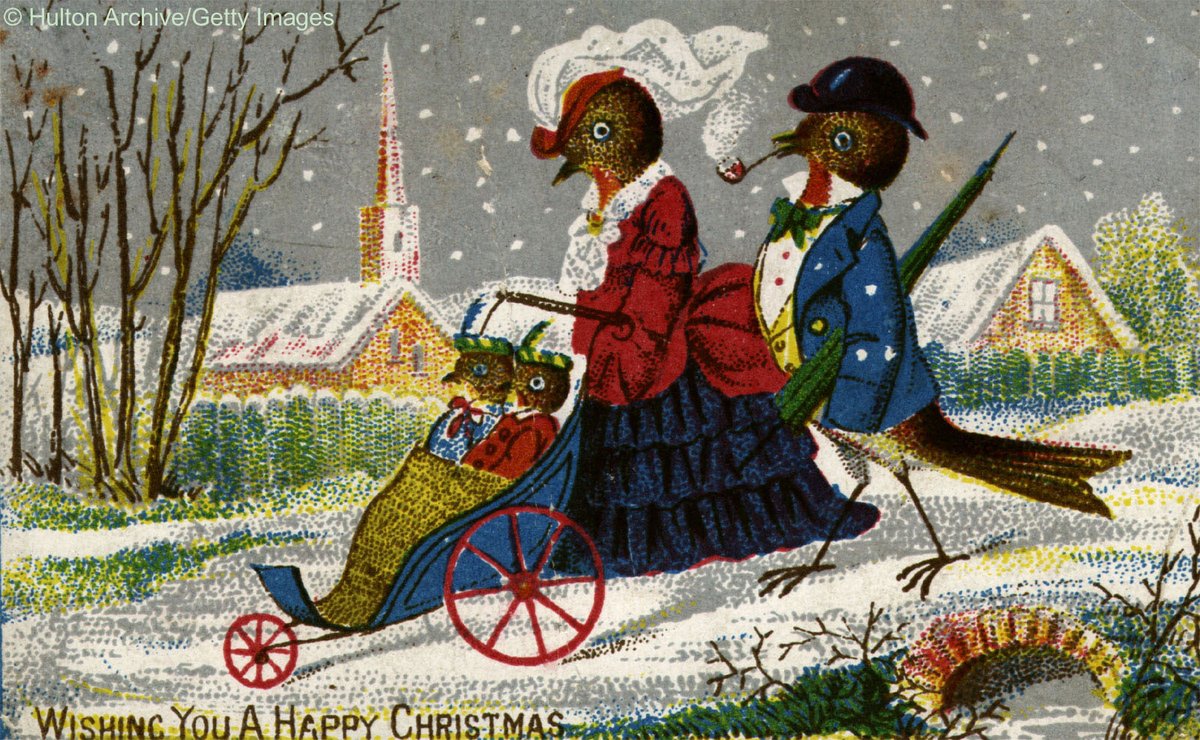
Although the church and rigid social codes dominated Victorian culture, there are remarkably few religious themes.
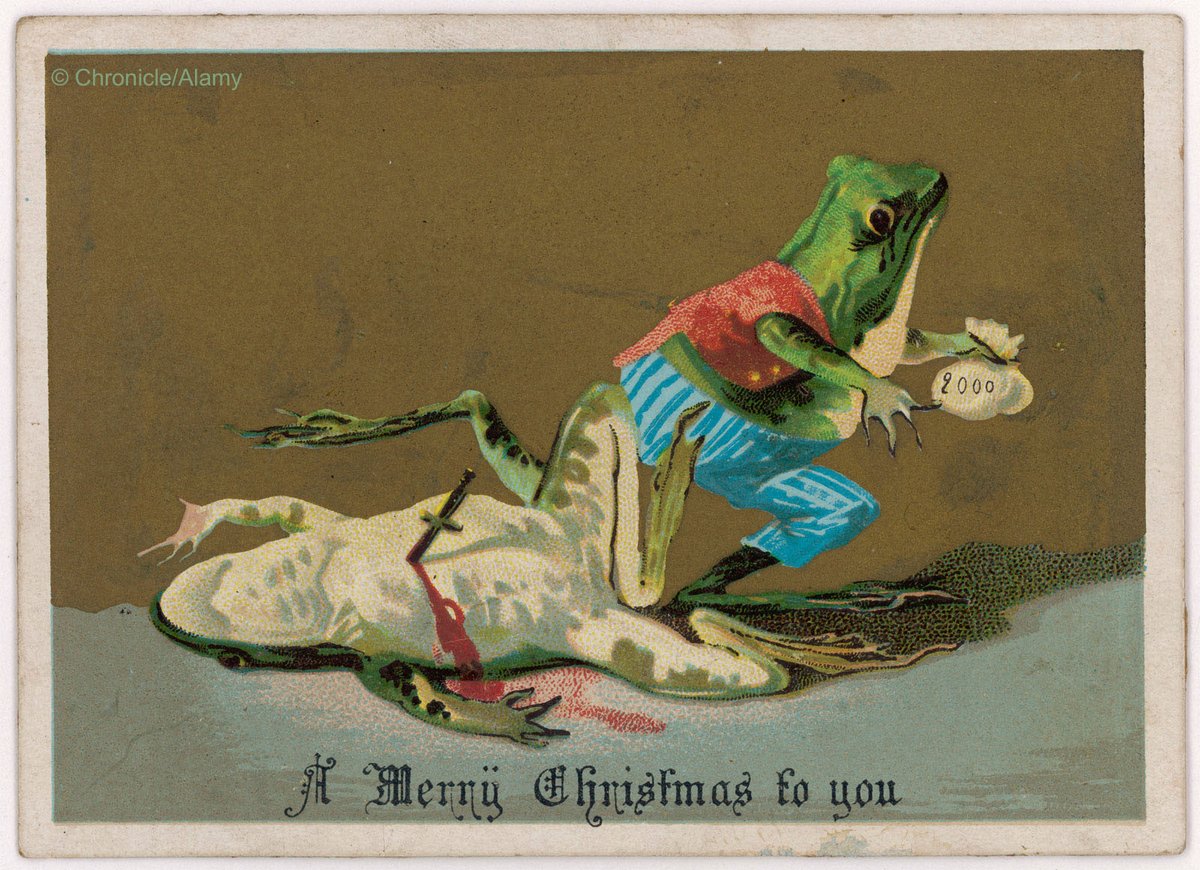
Instead, dark humor found its way into the designs.
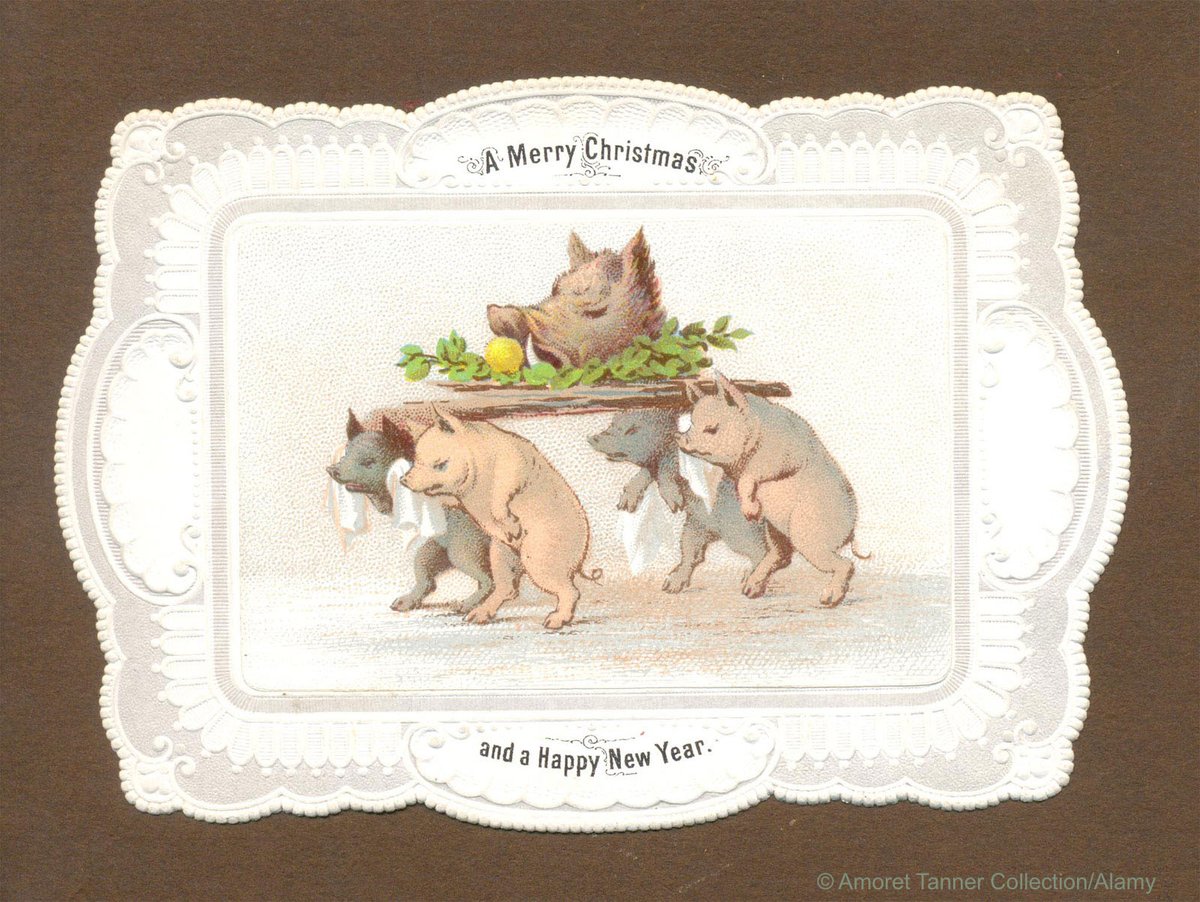
The increased popularity of novelty cards also meant that middle-class families could own a piece of art to display in their homes.
And who wouldn’t want a coy boot-wearing onion hanging on your wall??
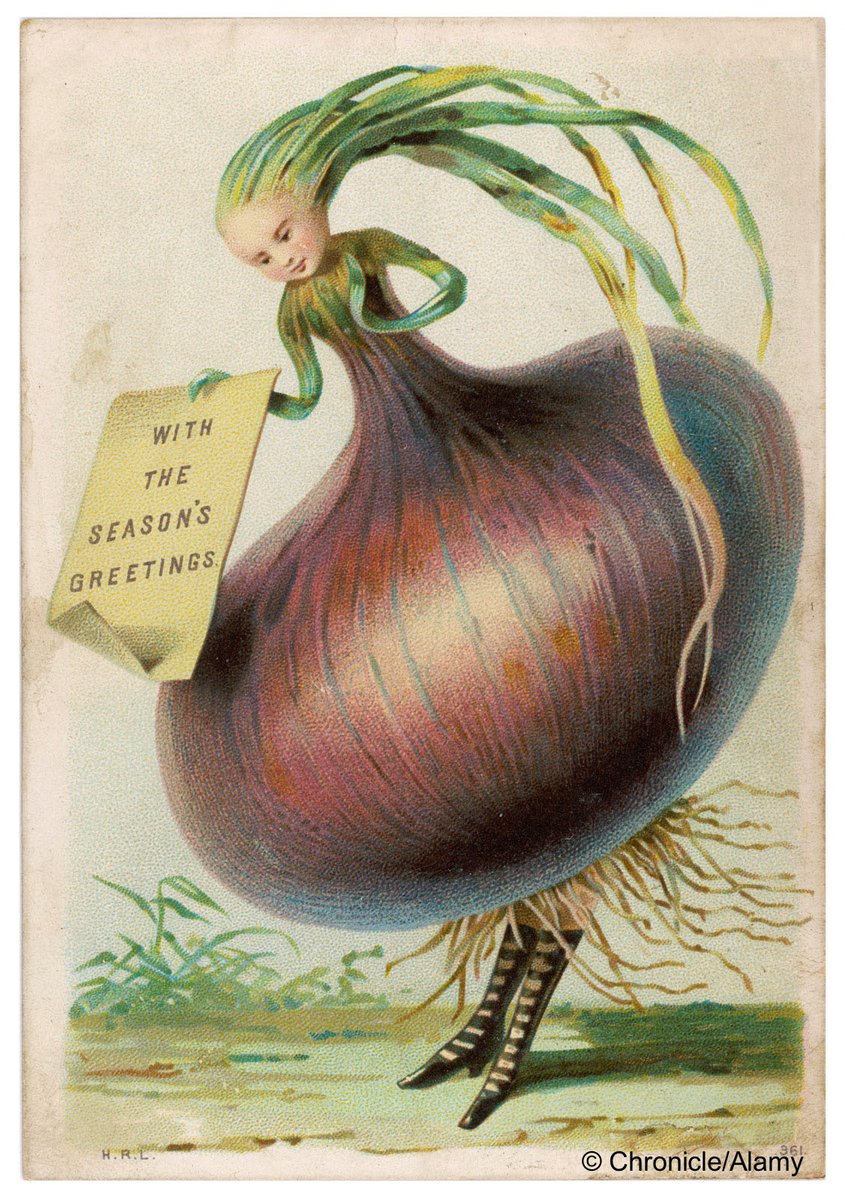
During the height of the Victorian era, many Brits delighted in the bizarre and macabre, even during the holidays.
We have them to thank for the quintessentially odd Christmas cards that still delight (and freak us out) today.
God bless us, everyone.
• • •
Missing some Tweet in this thread? You can try to
force a refresh

The Michelin company is responsible for both rubber tires and restaurant guides.
How they got there is an interesting trip. 🧵⬇️
The tire company was founded in 1888 by the Michelin brothers, André and Édouard, in a small French town.
At that time, there were fewer than 3,000 cars in France, total.
This begged the question: How do you sell tires when no one is driving?
The solution? Get people excited about road trips.
More driving = more tire sales
The company created the first pocket-sized “Red Guide” in 1900, which contained helpful info for drivers, like maps, instructions on how to change a tire, and locations of mechanics and hotels.
The tomato, which was first grown, consumed, and named by the Aztecs, had a dangerous reputation among Europe and American colonies for many years before it was considered safe to eat. 🧵⬇️
In the 16th century, when the fruit was first brought to Europe by Spanish and Portuguese colonists, it was not welcomed with open arms.
The color red, seen as sinful and supernatural, kicked the tomato’s reputation off to a rocky start.
Throughout the 16th century, European herbalists wrote of the dangers of tomatoes, referring to them as “corrupt,” or “of rank and stinking savor.”
The latest update to ChatGPT allows users to generate images in the iconic style of Studio Ghibli.
Studio Ghibli co-founder Miyazaki Hayao has raised concerns over AI-generated art as well as general unauthorized editing of his work in the West. 🧵⬇️
In 1984, Miyazaki Hayao made his second feature film, “Kaze no tani no Naushika” (“Nausicaä of the Valley of the Wind”), which was based on his own popular manga strip.
The following year he, Takahata Isao, and producer Suzuki Toshi established Studio Ghibli.
Years later, “Nausicaä of the Valley of the Wind” was badly edited for release in the United States under the name “Warriors of the Wind” (1986).
Following the debacle, Miyazaki did not allow his films to be released in the West for many years.
Encyclopædia Britannica will continue to use ‘Gulf of Mexico’ for a few reasons:
-We serve an international audience, a majority of which is outside the U.S.
-The Gulf of Mexico is an international body of water, and the U.S.’s authority to rename it is ambiguous.
🧵⬇️
-It has been called the ‘Gulf of Mexico’ for more than 425 years.
But it’s important to note the distinction between international and domestic areas.
President Trump has also signed an executive order to change the name of the Alaskan mountain called ‘Denali’ back to its former name, ‘Mount McKinley.’
Pro #1
Preserving the penny keeps consumer prices down and avoids harming low-income households.
The U.S. Federal Reserve found that minorities and low-income people are more likely to use cash than credit cards.
Raymond Lombra, professor of economics at Pennsylvania State University, says the extra rounding charges would exceed $600 million annually and would “be regressive, affecting the poor and other disadvantaged people groups disproportionately.”
Con #1
The penny has practically no value and should be taken out of circulation just as other coins have been in U.S. history.
You can’t buy anything for a penny; vending machines and parking meters won’t accept them.



