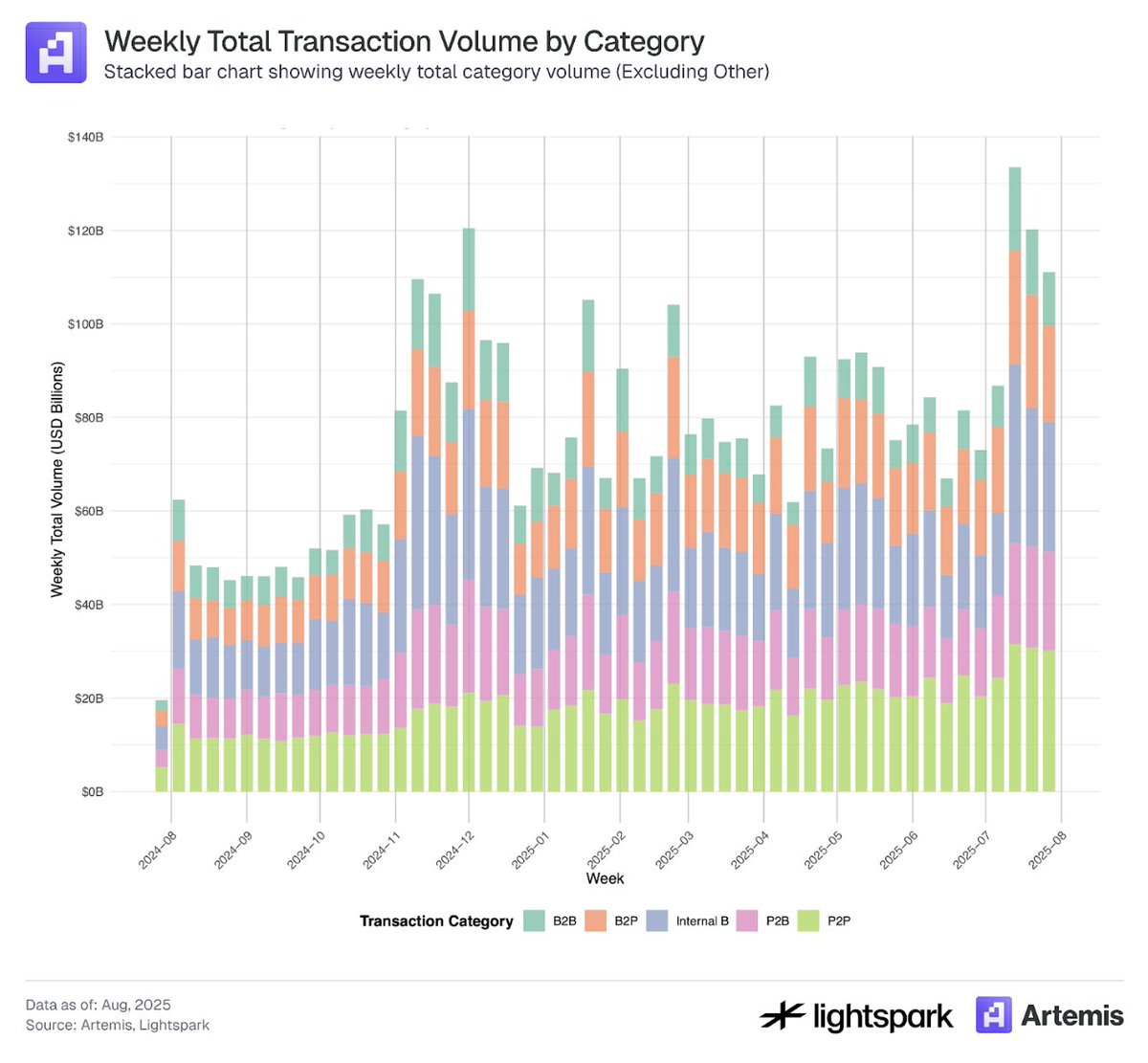
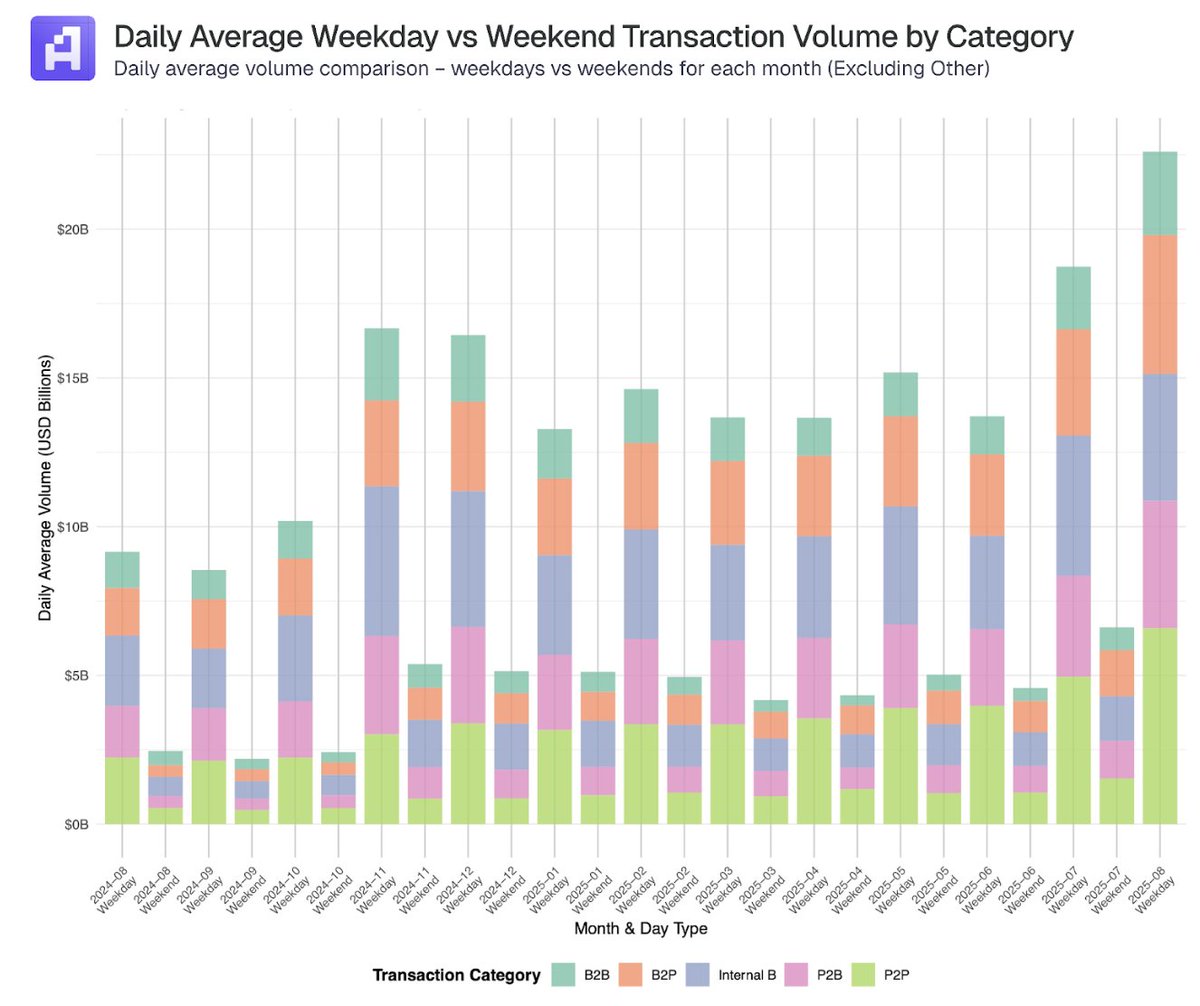
1/ How are stablecoins actually being used? New research by @lightspark and @artemis unpacks the data. Volume has doubled year-over-year, but it’s not driven by retail adoption...
2/ It’s mostly B2B settlement and internal transfers. People often ask what the utility of crypto is, and the answer provided by the market so far is doing the things that banks and traditional rails do, but 24/7, faster, and cheaper. The killer app is simply better settlement.
1/ "Open always, eventually wins." Money is the last closed network. The next step is neutral, permissionless rails anyone can build on. Full talk ⬇️
2/ The temptation today is to build shiny new CorpChains with higher walls. We’re here to build roads. Why? Because open compounds builders. Open accelerates progress. Open crushes costs.
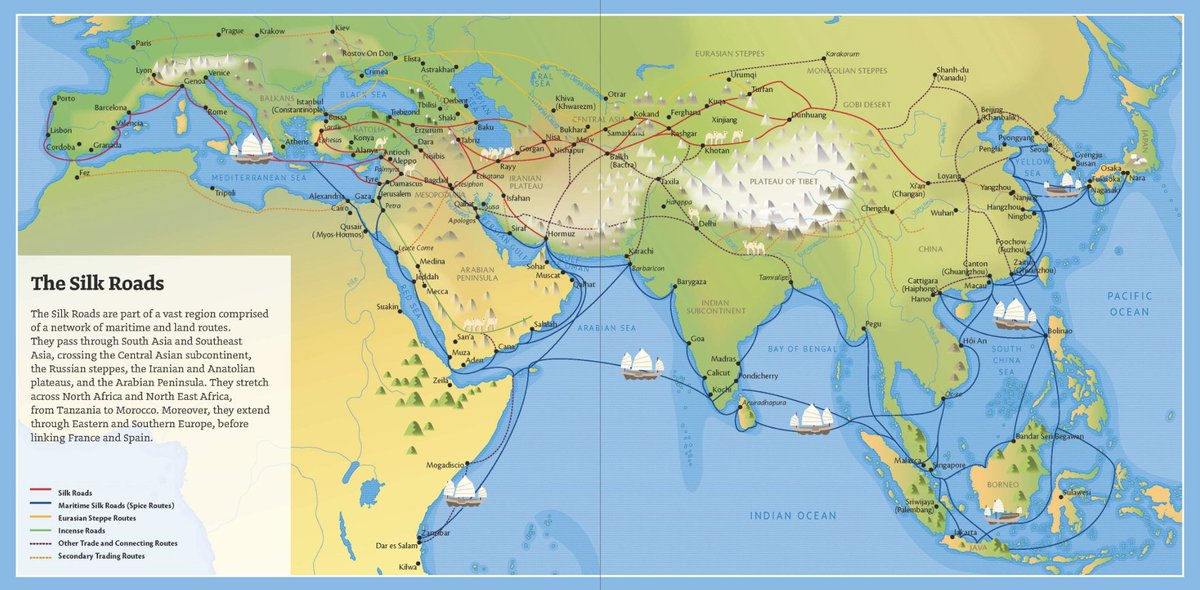
3/ The Silk Road wasn’t a road. It was a network. Nobody owned it, so it routed around emperors, taxes, and bandits—and moved ideas as easily as silk. That’s what open does.
1/ @Stripe just pulled back the curtain on @tempo, its corporate blockchain, and the pitch is a classic. You get an all-star team, state-of-the-art tech, an impressive roster of partners—including one of the card networks the whole thing is designed to replace—and "neutrality."
2/ The price for this grand bargain? Just handing the fintech giant the keys to global payments. If this gives you a powerful sense of déjà vu, you're not alone. The only question is if Stripe can write a different ending for the movie Meta already showed us.
3/ There's a cliché in tech and finance that being too early is indistinguishable from being wrong. Looking back on Libra, the stablecoin project I helped design inside Meta, I can confirm we weren't just early; we were also comically, spectacularly wrong.
1/ Fintech powerhouse Stripe is secretly building a high-performance blockchain called "Tempo," per a now-removed job posting and Fortune’s reporting.
2/ Stablecoins promise to make crypto mainstream by delivering faster, cheaper, more interconnected global payments. The paradox: the same move could undercut what the technology set out to achieve.
3/ Add the rush to branded rails and we could end up close to where we started, just with block explorers. Worse, market concentration may rise if a few players use stablecoins to reach previously unimaginable scale.
1/ Stablecoins were graduating from the playpen of crypto traders and DeFi “degens” to the main stage of mainstream payments. That fight is now on—albeit mostly off-camera—as a new wave of challengers readies its lines against incumbents Tether and Circle.
2/ With flawless execution, a determined stablecoin CEO could still pull off the Herculean feat of turning a plain dollar-jar into something unmistakably special...
3/ Short of that breakthrough, though, the industry faces a long slog of competition and fragmentation that could squeeze margins until they’re as thin—and as invisible—as your household electricity bill.
1/ The Internet Of Money Wants To Be Free—Yesterday, @Coinbase unveiled a bold new white paper, proposing permissionless networks as the key to transforming payments, finance, and beyond. But to grasp why this is significant, we have to travel back in time.
2/ When Satoshi Nakamoto released the Bitcoin whitepaper on October 31, 2008, he likely could not have fully foreseen the profound impact his invention would have on the world.
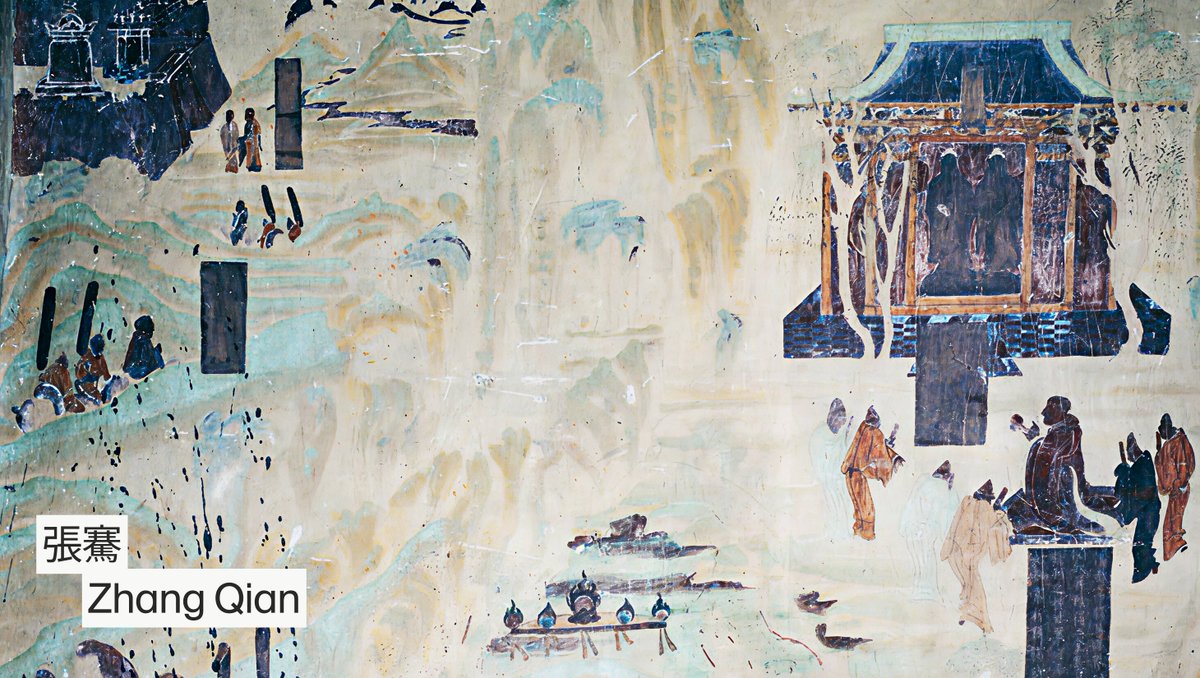
3/ In history, this had occurred only twice: in 138 BC, when Emperor Wu of Han dispatched diplomat Zhang Qian to establish trade with the Western regions, and in 1989, when Tim Berners-Lee introduced his technical proposal for a hypertext system—the foundation of the modern web.
1/ AI and Crypto (Part I): Decentralizing AI—Big Dreams, Bigger Hype? This is the first thread 🧵and article in a four-part series delving into the intersection of crypto and AI. Buckle Up!
2/ As Steve Jobs allegedly said, “The most powerful person in the world is the storyteller,” and nowhere is this more evident than in the crypto space.
3/ If you’ve spent any time in the crypto space, you’ve likely witnessed the ebb and flow of narratives and memes—each wave elevating potential winners, only to crash ashore with the next market correction.