0️⃣BlackBetty ⚓️ Profile picture
Dec 29, 2025 1 tweets 6 min read Read on X
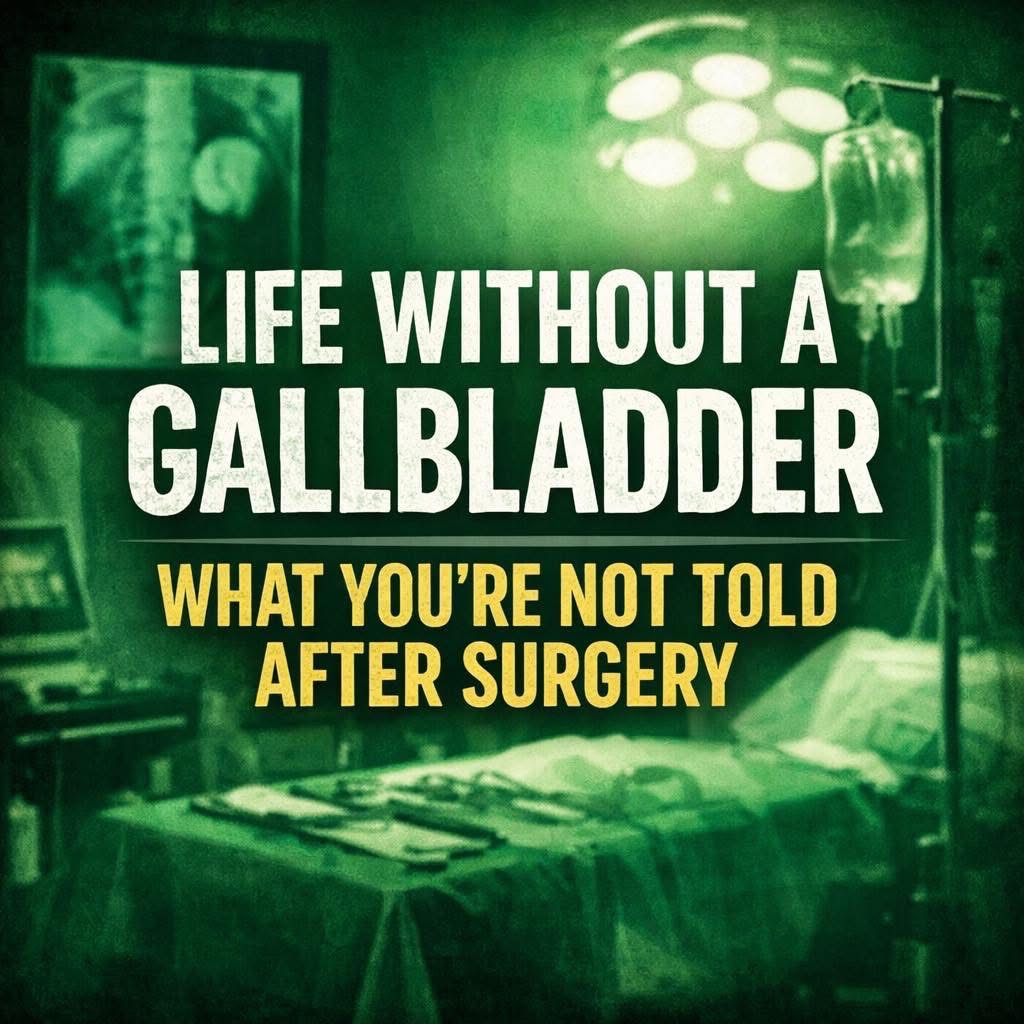
Gallbladder removal is one of the most common surgeries performed today.
It’s often offered as a “simple fix” for gallstones, pain, or sluggish digestion.

But the truth is: your gallbladder wasn’t optional.
And once it’s gone, your body undergoes a cascade of changes that most people are never told about.

Let’s dive into what the gallbladder actually does, what happens when it’s removed, and how to support your digestion, hormones, and terrain for the long haul.

💚 𝐖𝐡𝐚𝐭 𝐃𝐨𝐞𝐬 𝐭𝐡𝐞 𝐆𝐚𝐥𝐥𝐛𝐥𝐚𝐝𝐝𝐞𝐫 𝐀𝐜𝐭𝐮𝐚𝐥𝐥𝐲 𝐃𝐨?
The gallbladder is a small pear-shaped organ that sits just beneath the liver.
Its job is simple — but vital:

➡️ It stores and concentrates bile.

Bile is a bitter, yellow-green fluid made by the liver, and it plays several critical roles:
• Emulsifies fats so they can be digested and absorbed
• Carries out toxins, excess hormones, heavy metals, cholesterol, and bile-soluble waste
• Triggers peristalsis in the gut (bowel movements)
• Regulates the gut microbiome and prevents bacterial overgrowth

It also helps:
• Absorb fat-soluble vitamins (A, D, E, K)
• Balance cholesterol levels
• Clear old estrogens and stress hormones
• Maintain proper gut pH and motility

🔁 Bile is your body's built-in detergent, detoxifier, and digestive stimulant — and the gallbladder controls how much is released and when.

Without it, your body's timing, flow, and fat metabolism become dysregulated.

🩻 𝐖𝐡𝐚𝐭 𝐇𝐚𝐩𝐩𝐞𝐧𝐬 𝐖𝐡𝐞𝐧 𝐭𝐡𝐞 𝐆𝐚𝐥𝐥𝐛𝐥𝐚𝐝𝐝𝐞𝐫 𝐈𝐬 𝐑𝐞𝐦𝐨𝐯𝐞𝐝?
When the gallbladder is taken out, your liver still makes bile…
But instead of storing it and releasing it in response to food, the bile now drips continuously into the small intestine — in a weaker, less concentrated form.

This disrupts a finely tuned system and creates several downstream problems:

🔻 1. Fat Digestion Becomes Impaired
Without the gallbladder’s timing and potency, bile can’t break down fats efficiently.
Even healthy fats may trigger discomfort or go undigested.

➡️ Symptoms:
• Bloating after eating
• Floating or pale stools
• Diarrhea or loose stools
• Greasy or sticky bowel movements
• Nausea, especially after rich meals
• Feeling full or heavy in the upper right abdomen

This leads to fat-soluble nutrient deficiencies — especially vitamins A, D, E, and K, as well as omega-3s, choline, and coenzyme Q10.

Over time, this can affect:
• Hormone production
• Vision
• Brain health
• Bone strength
• Immune resilience

🔻 2. Toxins Aren’t Eliminated Properly
Bile is also a major detox pathway. It binds and carries out:
• Estrogen metabolites
• Excess cholesterol
• Mold toxins
• Parasite debris
• Medications and environmental chemicals
• Liver byproducts and metabolic waste

Without healthy bile flow, these toxins can be:
• Reabsorbed into the bloodstream
• Recirculated via enterohepatic recycling
• Stored in fat and tissue — worsening inflammation

This raises the risk of:
• Hormonal imbalances
• Brain fog
• Autoimmunity
• Rashes, breakouts, and itchy skin
• Liver congestion and fatigue

🔻 3. Hormone Imbalances Can Worsen
Poor bile flow = poor clearance of used-up hormones.

Especially for women, this may look like:
• Estrogen dominance
• PMS, fibroids, endometriosis
• Weight gain around hips, thighs, and lower belly
• Mood swings or irritability
• Histamine sensitivity, migraines, or breast tenderness

Bile also influences thyroid hormone conversion in the liver and gut — meaning sluggish bile can mimic or worsen thyroid issues (fatigue, cold hands, hair loss, slow metabolism).

🔻 4. Gut Imbalance & SIBO Risk Increases
Bile has natural antimicrobial effects that keep the gut ecosystem in check.

Without proper bile release:
• Undigested fats feed opportunistic bacteria
• Bile acid imbalance encourages overgrowth
• Gut motility slows, increasing fermentation and bloating
• The risk of SIBO, candida, methane overgrowth, and leaky gut increases

This contributes to:
• Gas, distention, burping
• Constipation or loose stools
• Reflux
• Nutrient malabsorption
• Chronic inflammation

🔻 5. Liver Congestion Worsens
When bile flow is altered, the liver has to work harder to excrete waste.
This creates a backlog of toxins, leading to symptoms that are often misdiagnosed.

This may show up as:
• Headaches (especially over the eyes or crown)
• Skin rashes, eczema, or acne
• Chemical sensitivity (perfumes, cleaners)
• Eye floaters, tension behind the eyes
• Anxiety, irritability, or restlessness
• Elevated liver enzymes on labs
• Worsening reactions to medications or supplements

Over time, this can impact mitochondrial health, detox capacity, and lymphatic drainage.

❗ 𝐁𝐮𝐭 𝐖𝐡𝐲 𝐖𝐚𝐬 𝐈𝐭 𝐑𝐞𝐦𝐨𝐯𝐞𝐝 𝐢𝐧 𝐭𝐡𝐞 𝐅𝐢𝐫𝐬𝐭 𝐏𝐥𝐚𝐜𝐞?
Gallbladders don’t just “go bad” out of nowhere.
They become inflamed, sluggish, or develop stones because of terrain-level breakdowns, including:
• Low stomach acid (which fails to signal bile release)
• Processed, low-fat diets (which stop the gallbladder from ever emptying)
• High estrogen levels (from birth control, pregnancy, or HRT)
• Mold exposure, parasites, and stealth infections (which clog bile ducts)
• Taurine, choline, magnesium, and bile salt deficiencies
• Trauma, stress, and nervous system freeze states (which slow digestion)

Stones, sludge, or inflammation are symptoms, not root causes.
And if those terrain imbalances aren’t addressed, symptoms may continue or worsen elsewhere — even after surgery.

🛠️ 𝐇𝐎𝐖 𝐓𝐎 𝐒𝐔𝐏𝐏𝐎𝐑𝐓 𝐘𝐎𝐔𝐑 𝐁𝐎𝐃𝐘 𝐀𝐅𝐓𝐄𝐑 𝐆𝐀𝐋𝐋𝐁𝐋𝐀𝐃𝐃𝐄𝐑 𝐑𝐄𝐌𝐎𝐕𝐀𝐋
You can still live a healthy life without a gallbladder but you must compensate for what was lost.
Here’s how to support your body, step by step:

✅ 𝐒𝐮𝐩𝐩𝐨𝐫𝐭 𝐁𝐢𝐥𝐞 𝐅𝐥𝐨𝐰 𝐃𝐚𝐢𝐥𝐲
• Take bile salts (ox bile) with meals containing fat
• Use bitter herbs before meals: dandelion, gentian, artichoke, burdock
• Drink lemon water or diluted apple cider vinegar 15 min before meals
• Supplement phosphatidylcholine to support bile viscosity and flow
• Support cofactors: magnesium, taurine, glycine, molybdenum
• Consider adding TUDCA (tauroursodeoxycholic acid), a bile acid that helps thin stagnant bile, protect liver cells, and improve bile flow when the gallbladder is no longer present.

Bile is 95% water — so hydration is critical.

✅ 𝟐. 𝐃𝐢𝐠𝐞𝐬𝐭𝐢𝐯𝐞 𝐄𝐧𝐳𝐲𝐦𝐞𝐬 𝐀𝐫𝐞 𝐄𝐬𝐬𝐞𝐧𝐭𝐢𝐚𝐥
• Use a broad-spectrum enzyme blend with high lipase content
• Choose formulas with ox bile, betaine HCl, lipase, pancreatin, amylase
• Adjust dosing based on meal size and fat content
• Consider HCl support if low stomach acid is suspected (common post-cholecystectomy)

✅ 𝟑. 𝐄𝐚𝐭 𝐟𝐨𝐫 𝐘𝐨𝐮𝐫 𝐍𝐞𝐰 𝐏𝐡𝐲𝐬𝐢𝐨𝐥𝐨𝐠𝐲
• Eat smaller, more frequent meals — avoid large fatty meals
• Focus on quality fats, not quantity — avocado, ghee, olive oil, egg yolks
• Avoid fried, processed, and oxidized oils
• Add fiber-rich vegetables to bind excess bile acids
• Stay well-hydrated throughout the day (filtered water with mineral salt)

✅ 𝟒. 𝐑𝐞𝐬𝐭𝐨𝐫𝐞 𝐅𝐚𝐭-𝐒𝐨𝐥𝐮𝐛𝐥𝐞 𝐍𝐮𝐭𝐫𝐢𝐞𝐧𝐭𝐬
You are now at higher risk of A, D, E, K deficiency.

• Use emulsified or micellized versions of vitamins A, D3/K2, and E
• Test vitamin D and retinol levels
• Include nutrient-dense foods: pasture-raised liver, egg yolks, wild fish, grass-fed butter
• Use cod liver oil for bioavailable A and D (in balance)

✅ 𝟓. 𝐃𝐞𝐭𝐨𝐱 𝐒𝐥𝐨𝐰𝐥𝐲 𝐚𝐧𝐝 𝐈𝐧𝐭𝐞𝐥𝐥𝐢𝐠𝐞𝐧𝐭𝐥𝐲
Your bile-dependent detox pathways are more fragile now.

• Focus on opening drainage before any deep detox
• Use gentle binders: activated charcoal, bentonite clay, modified citrus pectin
• Apply castor oil packs over the liver 3–5x/week
• Incorporate infrared sauna, dry brushing, and lymphatic massage
• Avoid fasting, extreme cleanses, or intense parasite protocols until stable

✅ 𝟔. 𝐀𝐝𝐝𝐫𝐞𝐬𝐬 𝐭𝐡𝐞 𝐄𝐦𝐨𝐭𝐢𝐨𝐧𝐚𝐥 𝐓𝐞𝐫𝐫𝐚𝐢𝐧
In Chinese medicine, the gallbladder governs:
• Courage, clarity, and decision-making
• The ability to “digest life” and move forward boldly

After removal, many people report:
• Indecisiveness
• Fear of change
• Rage or resentment
• Difficulty setting boundaries or expressing emotion

🌀 Emotional release work, nervous system healing, breathwork, and somatic therapy are often overlooked — but deeply supportive.

❤️ 𝐅𝐢𝐧𝐚𝐥 𝐓𝐡𝐨𝐮𝐠𝐡𝐭𝐬
Your gallbladder may be gone —
But your power to support your body is still fully intact.

This organ wasn’t removed by accident.
It was responding to deeper imbalances in your digestion, stress, mineral status, liver health, hormones, and nervous system.

By restoring what it used to do, compensating wisely, and listening deeply to your terrain…
…you can live in greater health and harmony than before — not despite the surgery, but because you finally began to support the body in the way it always needed.

© 2025 Pete Wurst — All Rights Reserved. This content is for educational purposes only and is not intended as medical advice.Image

• • •

Missing some Tweet in this thread? You can try to force a refresh

 

Keep Current with 0️⃣BlackBetty ⚓️

0️⃣BlackBetty ⚓️ Profile picture

Stay in touch and get notified when new unrolls are available from this author!

Read all threads

This Thread may be Removed Anytime!

PDF

Twitter may remove this content at anytime! Save it as PDF for later use!

Try unrolling a thread yourself!

how to unroll video
  1. Follow @ThreadReaderApp to mention us!

  2. From a Twitter thread mention us with a keyword "unroll"
@threadreaderapp unroll

Practice here first or read more on our help page!

More from @BabyD1111229

May 28
Patent for Flock Cameras, they're not only tracking license plates.

U.S. patent 11,416,545 B1

Patented Aug 16, 2022

By Garret Langley and Matt Fuery of FLOCK Safety, based in Atlanta GA (next tweet)

According to Figure 5A, it can detect pedestrians and bicyclists down to clothing, height/weight and color of clothing.

The system also has an auto-alert when it "detects a target" with high confidence.

Along with the most seen and known FLOCK Camera "Falcon", they now have a family of cameras called "Condor, Raven," an aerial surveillance drone "AreoDome" and its linked to a system called "Wing"

#Throwback

Here's the web page with 29 pages of the patent.

ppubs.uspto.gov/api/pdf/downlo…Image
Image
Image
Image
Garrett Langley
FOUNDER & CEO, FLOCK SAFETY O WEST MIDTOWN
WHAT DOES FLOCK SAFETY DO?
Flock Safety is an all-in-one technology solution to eliminate crime and keep your community safe. Our intelligent platform combines the power of communities at scale - including cities, businesses, schools, and law enforcement agencies - to shape a safer future together.Image
Apparently the link has been scrubbed idk. Says unauthorized…
Here is another link.

patentimages.storage.googleapis.com/77/9a/03/7b3b2…Image
Read 4 tweets
May 20
Parasite 🪱in the Gut is called IBS

Parasite 🪱 in the Liver is called Hepatitis

Parasite 🪱 in the Blood is called Anemia

Parasite 🪱 in the Brain is called MS

Parasite 🪱 in the Hands is called RA

Parasite 🪱in the Skin is called Rash

Parasite 🪱 in the Muscles is called Fibromyalgia

Parasite 🪱 in the Eyes is called Floaters

Parasite🪱 in the
Intestines is called Colitis

The #TruthImage
IN A RECENT AUTOPSY STUDY OF MULTIPLE SCLEROSIS (MS) PATIENTS WHO DIED FROM THE DISEASE,
10 OUT OF 10 (100%)
ACTUALLY HAD PARASITES
INSIDE THE CENTRAL NERVOUS SYSTEM, INCLUDING NEMATODE WORMS IN THE BRAIN. Image
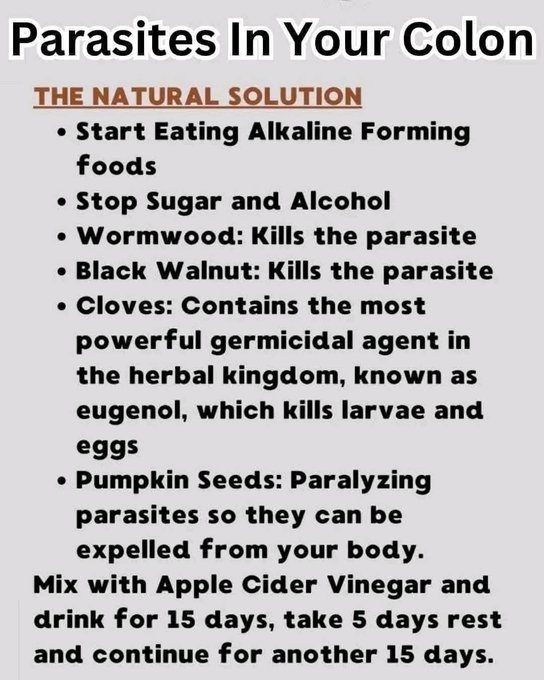
Parasites In Your Colon
THE NATURAL SOLUTION
• Start Eating Alkaline Forming foods
• Stop Sugar and Alcohol
• Wormwood: Kills the parasite
• Black Walnut: Kills the parasite
• Cloves: Contains the most powerful germicidal agent in the herbal kingdom, known as eugenol, which kills larvae and eggs
• Pumpkin Seeds: Paralyzing parasites so they can be expelled from your body.
Mix with Apple Cider Vinegar and drink for 15 days, take 5 days rest and continue for another 15 days.

Never medical advice ~ just sharing ☺️Image
Read 6 tweets
May 18
THE ADMIRALTY LAW:

Have you ever heard of the admiralty Law?

Listen up!

They took your footprint (sole) at birth to claim your soul before you stepped on soil, depriving your birth right as a living soul to a dead entity.

We are all considered “legally dead”at birth because our pair-rents unknowingly signed us (placed sigils) to the government as a Corporation.

When we’re born the government created this corporation in our name written in all CAPS, replacing it with the living spiritual flesh & blood you, so they can do business with us. This is why 99% of the time anything from a corporation (corpse-ration) has your name written in all caps, your bills, ID, birth certificate—it’s your strawman.

Our birth certificates also have numbers that represent our stock numbers on the stock market.

The connection with Commerce is it’s an energy battery matrix used to further control/drain us which is why we are CHARGED. Money is used as a medium for the dead/debt, no matter what country your in, anything to do with money is under Maritime Law or Law of the Sea. We are sovereign & can’t be owned, however when our parents signed our “birth certificate” our humanity was taken from us.

All of this is just scratching the surface. Don’t just take my word for any of it. Look into it for yourself.

1933: The year they turned YOU into collateral.

When you register a birth, car, or home—you’re not claiming ownership.
You’re abandoning it.
The government takes legal title.
You get permission to use it.

That’s why your mortgage calls you a tenant, not the owner.
That’s why they can seize your car.

It’s all under maritime admiralty law.
They adopted the abandoned child—you.

A great Visual Thread 🪡 ⬇️
#TruthImage
The word bank is related to the word river What does a river have on its two sides to prevent water from flowing out of it?

Riverbanks! Corporate banks are like river banks because they regulate the currency/ current sea. In other words they regulate the flow of energy, just like riverbanks regulate the flowing energy of water. All of this has to do with the "Law Of The Sea"Image
Money is used as a medium used by corporations to pay their employees. One of the definitions of currency is "something that is used as a medium to exchange" The word medium means "an intervening substance, as air through which a force acts or an effect is produced" Medium can also mean a person thought to have power to communicate with spirits of the dead. To connect the dots currency/current-sea/current-chi is used as a medium to communicate with & transfer life force energy to the Dead.Image
Read 7 tweets
May 12
🚢 The Cruise Ship was at sea for 33 days.

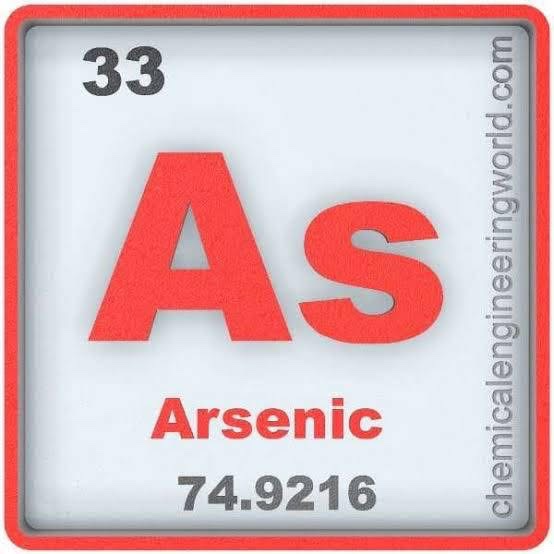
🚢 Arsenic is 33 on the periodic table.

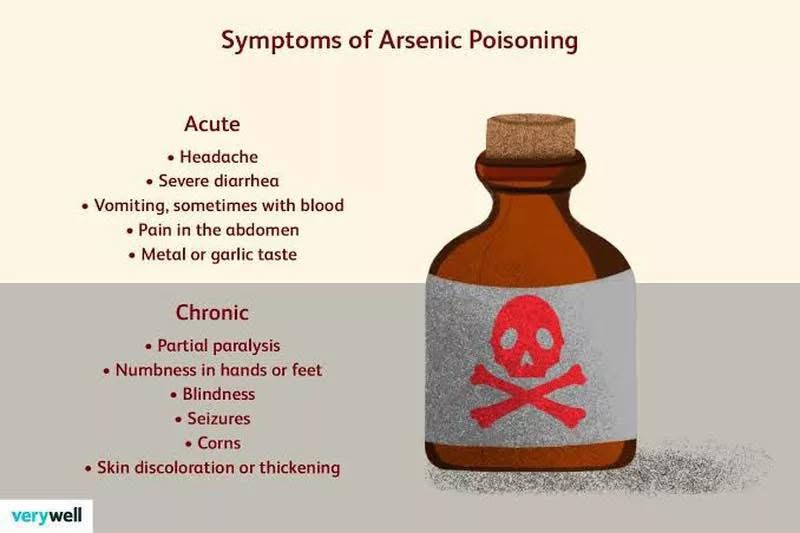
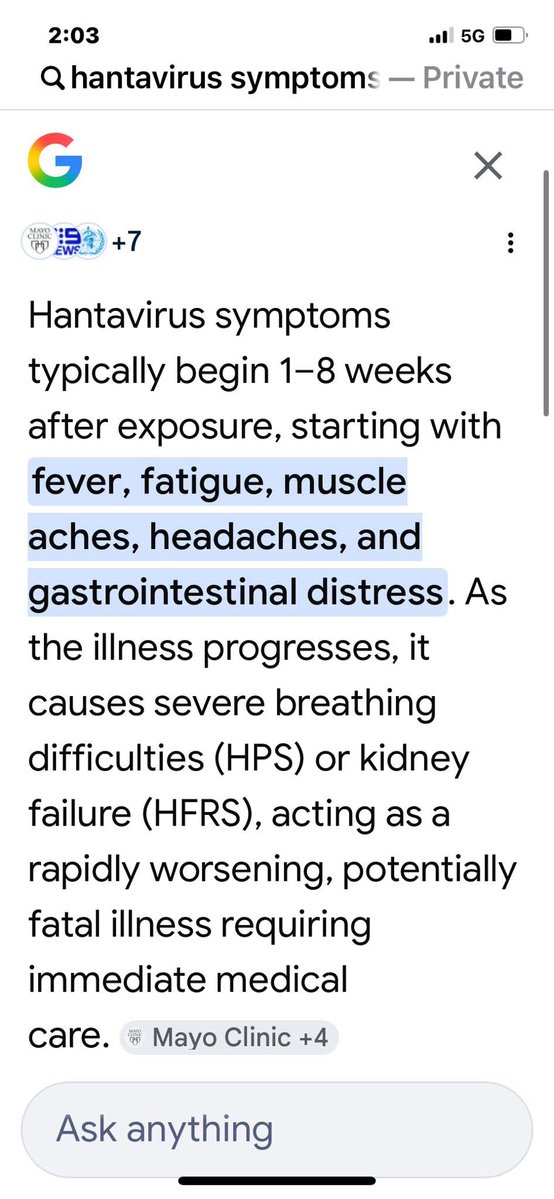
🚢 Arsenic and “ Hanta virus” (🦠 🤥) symptoms are exactly the same..🤔

🚢 Canary Islands in Afrikaans is “Canary Eilands,” see the word “Arsenic” in “Canary Eilands” 🤔

Arsenic in the Lao language is “Sannu” See “Sannu” in “Hantavirus”.

The Alchemical symbol for Arsenic is associated with a Swan. 🦢 🜺
Dr Norman “Swan” 🦢 has been covering the “ Hantavirus” 🤥 News 📰 on the ABC. 📺 🤔
Swan in Hindi is “Hans”
Hans is found in the word
“HANtaviruS”

“Washing Han[d]s”🖐️ 🧼 and Han[d]s Sanitizer was a major thing during the Convid Hoax. 🦠

Some Hand Sanitizers produced in Mexico have been known to contain Arsenic, lead, and Cadmium.

Arsenic trioxide is used in
“Chemotherapy” and other pharmaceutical products.

Trace amounts of Arsenic are in Silicone and Saline Breast Implants.

Arsenic was used in Cosmetics during the Victorian Era.

Arsenic is an insecticide used in Agriculture.

Arsenic is an ingredient in chemtrails ✈️

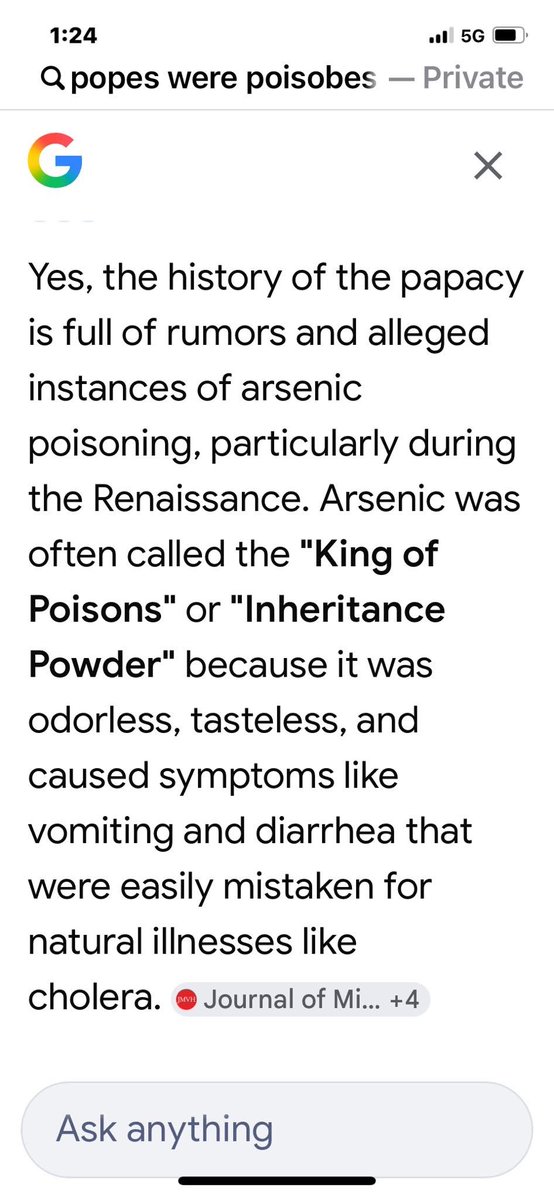
Arsenic has been used to murder Popes and Priests throughout history. ☠️

Arsenic is known as King of the Poisons, due to it being tasteless, odorless and colourless.

Arsenic is an ingredient in Rat Poison ☠️ 🐀

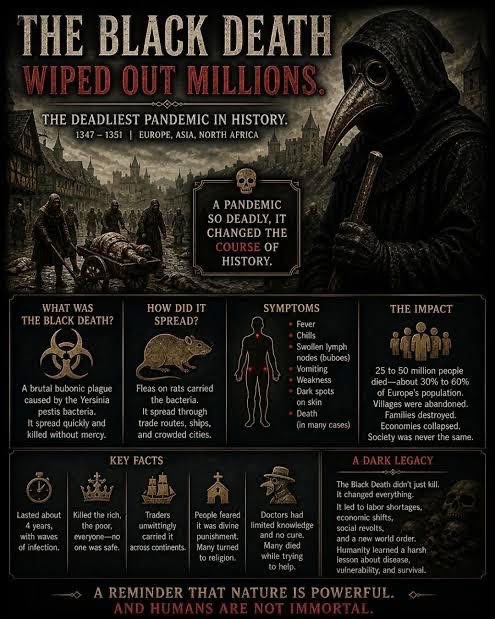
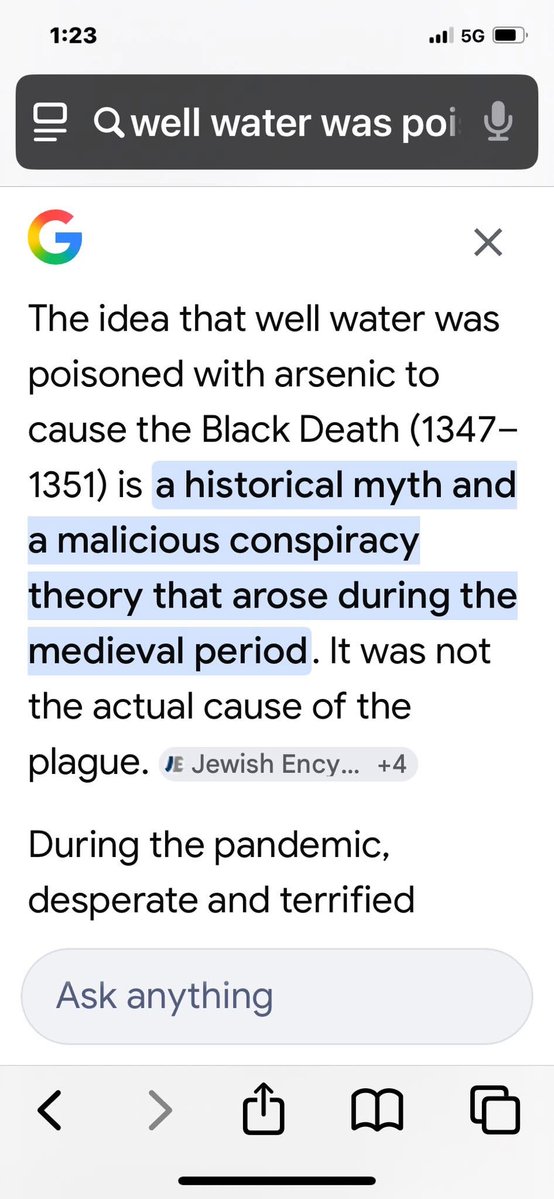
It was believed during Medieval times, that Arsenic was the cause of the Black Death. (Bubonic Plague)

The well water was poisoned with Arsenic.🐀
But they blamed it on Rats 🐀

Thread 🪡 see next pics.

🎩Thanks Jay ✨Image
Image
Image
Hantavirus symptoms typically begin 1-8 weeks after exposure, starting with fever, fatigue, muscle aches, headaches, and gastrointestinal distress. As the illness progresses, it causes severe breathing difficulties (HPS) or kidney failure (HFRS), acting as a rapidly worsening, potentially fatal illness requiring immediate medical care.Image
Image
Image
The idea that well water was poisoned with arsenic to cause the Black Death (1347-
1351) is a historical myth and a malicious conspiracy theory that arose during the medieval period. It was not the actual cause of the
plague.

Yes, the history of the papacy is full of rumors and alleged instances of arsenic poisoning, particularly during the Renaissance. Arsenic was often called the "King of Poisons" or "Inheritance Powder" because it was odorless, tasteless, and caused symptoms like vomiting and diarrhea that were easily mistaken for natural illnesses like cholera.

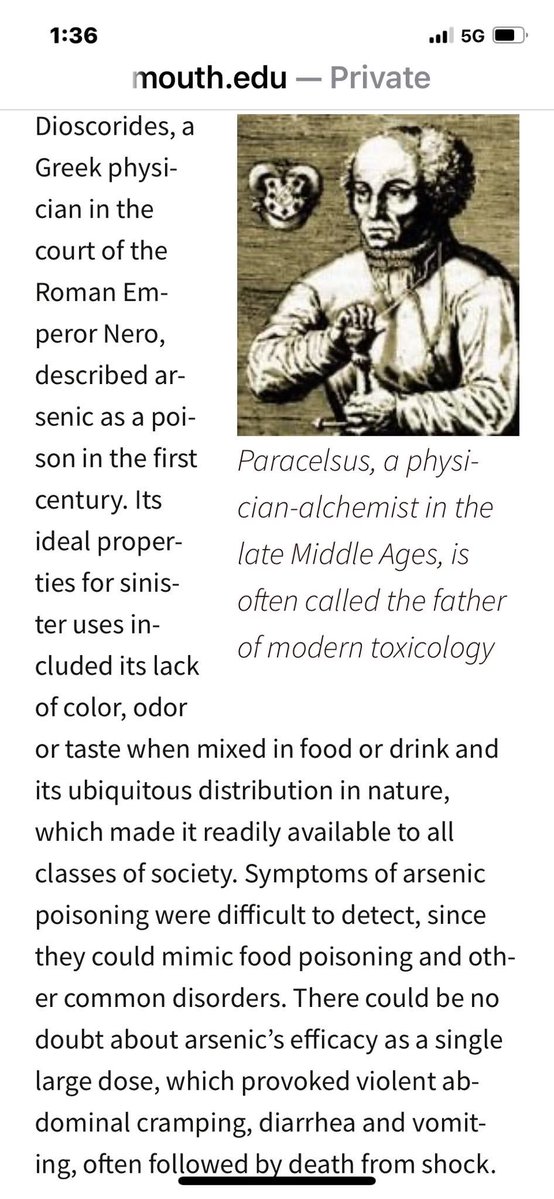
Dioscorides, a Greek physician in the
court of the Roman Emperor Nero, described arsenic as a poison in the first century. Its ideal properties for sinister uses included its lack of color, odor
or taste when mixed in food or drink and its ubiquitous distribution in nature, which made it readily available to all classes of society. Symptoms of arsenic poisoning were difficult to detect, since they could mimic food poisoning and other common disorders. There could be no doubt about arsenic's efficacy as a single large dose, which provoked violent abdominal pains, often followed by death from shock.Image
Image
Image
Read 4 tweets
Mar 16
Every link I shared with this has been removed…

What are they trying to
Hide? 🙈
Next tweet shows they’ve been removed..

An unassuming single-celled organism called Toxoplasma gondii is one of the most successful parasites on Earth, infecting an estimated 11 percent of Americans and perhaps half of all people worldwide.
It's just as prevalent in many other species of mammals and birds. In a recent study in Ohio, scientists found the parasite in three-quarters of the white-tailed deer they studied.
One reason for Toxoplasma's success is its ability to manipulate its hosts.
The parasite can influence their behavior, so much so that hosts can put themselves at risk of death.
Scientists first discovered this strange mind control in the 1990s, but it's been hard to figure out how they manage it. Now a new study suggests that Toxoplasma can turn its host's
genes on and off - and it's possible other parasites use this strategy, too.

theatlantic.com/science/archiv

frontiersin.org/journals/psych

usnews.com/news/articles/Image
What are they afraid of…. Image
Image
Image
Parasites Practicing Mind Control
The New York Times, August 28, 2014

Link

An unassuming single-celled organism called Toxoplasma gondii is one of the most successful parasites on Earth, infecting an estimated 11 percent of Americans and perhaps half of all people worldwide. It’s just as prevalent in many other species of mammals and birds. In a recent study in Ohio, scientists found the parasite in three-quarters of the white-tailed deer they studied.

One reason for Toxoplasma’s success is its ability to manipulate its hosts. The parasite can influence their behavior, so much so that hosts can put themselves at risk of death.

Scientists first discovered this strange mind control in the 1990s, but it’s been hard to figure out how they manage it. Now a new study suggests that Toxoplasma can turn its host’s genes on and off — and it’s possible other parasites use this strategy, too.

Toxoplasma manipulates its hosts to complete its life cycle. Although it can infect any mammal or bird, it can reproduce only inside of a cat. The parasites produce cysts that get passed out of the cat with its feces; once in the soil, the cysts infect new hosts.

Toxoplasma returns to cats via their prey. But a host like a rat has evolved to avoid cats as much as possible, taking evasive action from the very moment it smells feline odor.

Experiments on rats and mice have shown that Toxoplasma alters their response to cat smells. Many infected rodents lose their natural fear of the scent. Some even seem to be attracted to it.

Manipulating the behavior of a host is a fairly common strategy among parasites, but it’s hard to fathom how they manage it. A rat’s response to cat odor, for example, emerges from complex networks of neurons that detect an odor, figure out its source and decide on the right response in a given moment.

Within each of the neurons in those networks, thousands of genes are producing proteins and other molecules essential for relaying all of the necessary information throughout the body. Simple Toxoplasma seems ill-equipped to take over such a complicated system.

But a new study published in the journal Molecular Ecology hints that the parasite can do so by relying on an eerily elegant strategy. Think of the genes in a host as keys on a piano. Toxoplasma, it seems, simply plays some of the keys differently to produce a new melody.

A rat is made up of lots of different kinds of cells, from the neurons in its brain to the bone-producing cells in its skeleton to the insulin-making cells in its pancreas. Yet all of them carry the same 20,000 genes. Depending on the function of a particular cell, some of its genes are switched on and others are shut down.

Genes may be switched off, or silenced, by the attachment of molecular caps called methyl groups, a process called methylation. In order to switch a gene on again, the caps are removed.

Methylation does more than just allow cells to develop into a variety of organs. It lets them change the way they work in response to signals from the outside. In the brain, for example, neurons rely on this process to lay down long-term memories and change how an animal responds to its environment.

Ajai Vyas, a neurobiologist at Nanyang Technological University in Singapore, wondered if Toxoplasma might wreak changes on rats by changing methylation in the rat brain — an idea “just hiding in plain sight,” he said.

In earlier research, Dr. Vyas and his colleagues had found that infected rats produced extra amounts of a neurotransmitter called arginine vasopressin. The neurotransmitter is manufactured by a small set of neurons buried in a structure of the brain called the medial amygdala.

Perhaps, Dr. Vyas thought, the parasite switched on the gene for arginine vasopressin in those cells. To find out, he and his colleagues ran a series of tests.

First they looked at the gene for arginine vasopressin in the medial amygdala of rats. In infected rats, they found, many of the molecular caps were missing, suggesting that Toxoplasma had “unsilenced” the gene in order to increase production of the neurotransmitter. The arginine vasopressin then might alter their response to cats.

If that were true, Dr. Vyas reasoned, then counteracting the parasite’s strategy should change the rat’s behavior.

He and his colleagues injected an extra supply of the molecular caps into infected rats. Some of the caps attached to the arginine vasopressin gene, and the rats became more fearful of the odor of cats.

That experiment led Dr. Vyas to see if he could make the rats behave as if they were being controlled by parasites — but without the parasites.

He and his colleagues removed molecular caps from the arginine vasopressin gene, mimicking what Toxoplasma might be doing to its hosts. The rats became reckless, feeling no fear at the whiff of cats.

“The animals looked like they were infected, even though there was no parasite around,” said Dr. Vyas.

“I think they could be on to something interesting,” said Michael Eisen, a biologist at the University of California, Berkeley, who has researched Toxoplasma in mice and was not involved in the new study. But he thought more experiments would have to be done to make a compelling case that the parasites really are using methylation to control their hosts.

Kami Kim of Albert Einstein College of Medicine, who also was not involved in the study, was more enthusiastic about the research. She also suggested that the strategy may be not be uncommon. In a review published this spring in the American Journal of Pathology, Dr. Kim and her colleagues survey a number of species that may use methylation to turn host genes on and off.

The bacteria that cause leprosy, for example, invade certain kinds of neurons and change some of their molecular caps. This methylation causes the neurons to change into stem cells much like those in an embryo. In this new state, the infected cells leave the nervous system and migrate through the body, spreading the bacteria with them.

“It looks like it will be a general strategy used by pathogens,” said Dr. Kim.

Copyright 2014 The New York Times Company

carlzimmer.com/parasites-prac…Image
Read 5 tweets
Mar 16
Someone Changed Jeffrey Epstein’s Harvard DNA Consent Date the Day After DOJ Released 3 Million Files. His Cell Lines Are Still Alive.

It is 9:47 on a Tuesday morning in the summer of 2013. A young scientist named Mad Ball walks into a laboratory at Harvard Medical School, ties on her lab coat, and pulls up a database on a computer screen. A colleague had asked her, casually, almost offhandedly, if she could check on a DNA sample that had been sitting in the refrigerator for a few weeks. Could it be prioritized for sequencing? Could it be bumped to the front of the line?

Ball types an ID number into the system. A name appears.

She doesn’t recognize it at first. So she does what any curious twenty-something scientist would do. She opens a new tab and types the name into Google.
What comes back stops her cold.

Jeffrey Epstein. Sex offender. Florida. Young girls. Dozens of victims. A sweetheart plea deal that prosecutors had quietly engineered to make most of it disappear. Ball stares at the screen for a long moment. Then she closes her laptop, packs up her things, and walks straight out of the lab — shaking.

She will later describe the moment this way: “It was such a shock to me. I didn’t even have words.”

That afternoon, one of the most bizarre, troubling, and still-unresolved chapters in modern science begins. And it does not end — not in 2013, not in 2019 when Epstein dies in a federal jail cell, not in 2026 when the Department of Justice dumps 3 million pages of Epstein files onto the public internet.

Because on January 31, 2026 — the morning after the DOJ releases those files — someone quietly logs into Harvard’s Personal Genome Project database and changes the date on Jeffrey Epstein’s consent record.

From 2013.

To January 31, 2026.

Nobody says a word. Nobody sends a press release. Nobody explains why.

His cell lines are still sitting in a Harvard refrigerator somewhere. His DNA is still catalogued. His blood still exists — coaxed, cultured, and kept alive — more than six years after the man himself died.

And no one — not Harvard, not George Church, not the DOJ — will say who made that change, or why.

A Man Who Wanted to Live Forever

To understand what makes this story so deeply unsettling, you need to understand who Jeffrey Epstein really was. Not just the man in the headlines. Not just the predator who trafficked and abused hundreds of young women and girls over decades. You need to understand what he believed about himself — and what he intended to do about it.

Epstein believed, with a fervor that bordered on religious conviction, that he was genetically special. That his DNA was worth preserving, worth studying, worth spreading. He spoke openly about this to scientists, to businessmen, to the rotating cast of brilliant minds he invited to his Manhattan mansion for lavish dinner parties where the wine was expensive and the conversation was carefully curated to flatter his ego.

He wanted to seed the human race with his DNA. Literally.

Multiple sources, first reported by the New York Times in July 2019, described how Epstein had laid out his plan in remarkable detail. He intended to use his sprawling 33,000-square-foot Zorro Ranch in New Mexico — the same property where investigators believe he committed some of his most serious crimes — as a kind of personal breeding facility. He wanted to impregnate twenty women at a time. He wanted to create children who carried his genetic material into the next century. He modeled the idea, without apparent irony, on the Repository for Germinal Choice, a California sperm bank from 1980 that was stocked with Nobel laureates’ donations before quietly shutting down in 1999.

He was not embarrassed about this. He talked about it at dinner parties.

He called it, at various points in his career, an interest in eugenics. By the time his emails were released to the public in early 2026, he had rebranded it with a Silicon Valley–flavored spin: “genetic altruism.” The idea, as he explained it in emails, was that men of superior intelligence and genetic makeup had a social obligation to spread their seed as widely as possible — not for selfish reasons, but for the good of humanity.

The narcissism is so breathtaking it almost distracts from how dangerous it is.

But here’s the thing that makes his Harvard DNA story more than just a historical footnote: Epstein didn’t just talk about this stuff. He acted on it. He cultivated relationships with the most brilliant geneticists in the world. He hosted them. He funded them. He bought his way into their laboratories and their databases and their refrigerators.

And in 2013, he put his blood in one of those refrigerators at Harvard Medical School — and asked for special treatment.

The Personal Genome Project

To understand how Epstein’s DNA ended up at Harvard, you first need to understand what the Personal Genome Project actually is — because it’s genuinely important science buried inside a genuinely troubling scandal.

The PGP was founded in 2005 by George Church, one of the most celebrated geneticists alive. Church is not a fringe figure. He is a towering presence in modern biology — a professor at Harvard Medical School, a pioneer in CRISPR gene editing, a man whose name appears on dozens of the most important papers in his field. He is also famously accessible and famously eccentric, a man who has spoken publicly about plans to resurrect woolly mammoths and who admits, with self-deprecating humor, that he sometimes moves too fast and asks too few questions.

The Personal Genome Project was his brainchild: an open-science initiative designed to create the world’s largest public database of human genetic information. Participants would donate their DNA. They would donate their medical records. They would do this voluntarily, understanding that their genetic information would be publicly posted online — stripped of traditional privacy protections — in the hopes that researchers around the world could use it to unlock the secrets of human disease, aging, and biology.

It was radical. It was controversial. And it was exactly the kind of thing Jeffrey Epstein found irresistible.

The project attracted thousands of participants over the years. Scientists. Professors. Ordinary citizens. People who wanted to contribute to something meaningful. They signed consent forms. They gave blood. They gave saliva. They waited.

Among them, beginning in 2013, was Jeffrey Epstein.

How he got in is a story that takes you straight to the heart of what made Epstein so effective and so dangerous. He didn’t knock on the front door. He never did. He found a side entrance — a back channel, a warm introduction, a financial connection that made the door swing open before anyone thought to ask whether it should.

He had been funding George Church’s research. Not secretly — Church later confirmed this, acknowledging in his 2019 apology that Epstein had made unrestricted donations to his lab between 2005 and 2007. In the world of academic science, that kind of early-stage, no-strings-attached funding is called “angel money.” It lets researchers pursue ideas too speculative to attract traditional grants. It buys goodwill. It opens doors.

And in 2013, one of those doors led directly to the PGP refrigerator.

A sample arrived. It was processed. It was logged. Cell lines were created — meaning living cells derived from Epstein’s blood were coaxed to multiply in culture, creating a renewable biological resource. His DNA was catalogued. His profile was added to the database. He was, on paper, just another participant in an open-science project.

Except he wasn’t. And within weeks, people inside the lab knew it.

Thread 🪡 link 🔗 to source below. ⬇️Image
The Morning Mad Ball Walked Out

The summer of 2013 is hot in Boston. The Charles River shimmers. The brick buildings of Harvard Medical School sit quiet and purposeful on Longwood Avenue, a campus that hums with the specific, concentrated energy of people who believe — correctly, mostly — that the work they are doing matters.

Mad Ball is at her bench when a colleague approaches. There’s a sample in the fridge. Can it be prioritized? It’s only been there a few weeks, but someone wants it moved to the front of the sequencing queue.

Ball goes to check.

She types the ID number.

She reads the name.

She Googles it.

By the time the search results load, her hands are already reaching for her bag.

“It looked like a quid pro quo sort of thing,” she told STAT News reporter Megan Molteni more than a decade later. “Which would have been upsetting but not super upsetting if it wasn’t a bad person but just a rich person. But this was a rich, bad person, and it looked awful.”

She walks out. Not for a coffee break. Out. She needs air. She needs to think. She is one person in a lab full of scientists who have all just had a registered sex offender’s DNA quietly slipped into their collection without their knowledge.

What follows is a crisis. Not a public one — there are no news cameras, no press releases, no official statements. But inside the lab, something breaks. Scientists argue. Emails fly. People feel violated. A registered sex offender — a man who had already pleaded guilty to soliciting a minor for prostitution in Florida in 2008 — has donated his biological material to their scientific project. And someone, it appears, had tried to ensure his sample got special attention.

The internal pushback was fierce enough that it worked. Epstein’s sample was not prioritized. No one jumped the queue for him. The sequencing request was denied.

But here is the thing that nobody says aloud at the time, the thing that will matter enormously years later: the sample stays.

The blood stays in the fridge. The cell lines stay alive. The DNA profile stays in the database. Jeffrey Epstein remains, quietly and officially, a participant in the Personal Genome Project at Harvard Medical School.

For thirteen years.

What George Church Knew — And When He Knew It

George Church has been telling a particular story about his relationship with Jeffrey Epstein for several years now. It is a story about “nerd tunnel vision.” About a brilliant scientist who was so focused on the work, so deep inside the research, that he failed to properly investigate the character of the man funding it. It is, in its way, a sympathetic story — or at least an understandable one.

It is also, based on what STAT News uncovered in February 2026, significantly incomplete.

The 2013 incident — the one where Mad Ball walked out of the lab after googling Epstein’s name — was not a minor administrative blip. It was a full-blown internal crisis. Scientists were upset. Emails were sent. The project’s director of research was so disturbed she had to leave the building.

And according to the interviews and emails obtained by STAT, George Church learned about it.

He was told that his lab had a problem. He was told who the problem was. He was given more information about Epstein’s activities — his crimes, his victims, his ongoing behavior — than he has previously acknowledged having.

And yet, in the years that immediately followed, Church continued to have contact with Epstein. The DOJ files, released in January 2026, contain evidence that Church received funding from Epstein or through his associates after the 2013 blowup. There is a reference to a planned meeting in 2014, just months after the Miami Herald investigation began revealing the true scale of Epstein’s crimes to the world.

Church issued an apology in 2019 after Epstein’s arrest, calling his continued meetings with the financier a product of “nerd tunnel vision.” He told 60 Minutes: “You don’t always know your donors as well as you would like.” When the show’s anchor Scott Pelley asked him if he regretted taking Epstein’s money, Church responded: “I regret not knowing more about the donor.”

The 2026 STAT investigation suggests he knew more than he let on.

Church has not responded to the latest round of questions. Harvard has issued no new statement. The records show what they show.

Meanwhile, the cell lines keep living.

The Obsession with Immortality

To understand why Epstein’s DNA mattered so much to him — why he didn’t just write checks and attend dinner parties but actually put his blood in a Harvard refrigerator — you need to go deeper into his worldview. And it is a worldview that, once you see it clearly, explains almost everything.

Epstein was terrified of death.

This is not unusual among the ultra-wealthy. Silicon Valley is full of billionaires spending hundreds of millions of dollars on life-extension research, on supplements, on young blood transfusions, on anything that might slow the clock. But Epstein’s obsession went further, and it took on a specifically genetic dimension that his Harvard entanglement makes suddenly, starkly real.

He dabbled in cryonics — the practice of having your body or head frozen after death in the hopes that future technology might revive you. He told at least one associate that he intended to have his head and his penis frozen upon dying, preserved for what he imagined would be a future reboot of Jeffrey Epstein.

He funded longevity research at multiple institutions. He was interested in stem cells, in CRISPR gene editing, in the emerging science of epigenetics. He paid for his own genome to be sequenced. He paid a Harvard-affiliated physician named Joseph Thakuria — first publicly linked to Epstein in the 2026 DOJ file release — to explore the possibility of using CRISPR to introduce longevity-enhancing mutations into his cells in culture.

In one email, Thakuria wrote to Epstein about this plan with barely contained excitement. He described the possibility of modifying Epstein’s stem cells to carry mutations thought to be associated with longer life, using gene-editing techniques then in their infancy. He wrote: “I’m exclusively offering this to Jeffrey. Due to the extensive labor involved, I simply cannot extend this opportunity to more than a few individuals at present.”

Epstein paid. A check for $2,000 was issued for DNA sequencing.

And somewhere in the middle of all this — the longevity research, the CRISPR experiments, the eugenics fantasies — Epstein’s blood went into the PGP fridge at Harvard. Living cells, taken from his body, multiplied into a permanent biological archive. Cell lines that, unlike their donor, do not age. Do not die of natural causes. Do not end up in a jail cell at the Metropolitan Correctional Center on a humid August morning in 2019.

They just keep growing. Division by division. Quietly. In the cold.
January 30, 2026: The Files Drop

By the time the DOJ announces the release of the Epstein files, the country has been waiting years for this moment. Every major outlet has reporters on standby. Activists, survivors, and attorneys are ready to comb through every page. The Justice Department promises over 3 million pages of documents — emails, financial records, photographs, flight logs, interview transcripts, internal memos — the most comprehensive public accounting of Epstein’s criminal enterprise ever assembled.

Deputy Attorney General Todd Blanche stands at a podium and calls it a fulfilment of the department’s obligations under the Epstein Files Transparency Act. He says the release will be the final major drop. He says names of powerful men associated with Epstein were not redacted. He says the team examined more than six million records during the review process.

The files go live on January 30, 2026.

Within hours, buried among the millions of pages, reporters find what they’ve been looking for — and some things they weren’t. There are flight logs that expand the list of names on the Lolita Express. There are emails detailing financial transactions with academics and researchers. There are references to the Harvard Personal Genome Project. There are references to George Church. There are emails connecting Epstein’s money to multiple research institutions, multiple scientists, multiple projects he had quietly funded over the years.

And among those references is this: cell lines containing Jeffrey Epstein’s DNA were created in 2013 as part of the Personal Genome Project at Harvard Medical School.

His DNA is still there. His cell lines are still alive.

The internet collectively inhales.

It is January 30, 2026. The story is already enormous.

The next morning, it gets stranger.

January 31: Someone Moves in the Dark

It is sometime on January 31, 2026. The exact hour is not known. What is known is that someone — a human being with access credentials to the Personal Genome Project’s public participant database — logs into the system and opens Jeffrey Epstein’s profile page.

They make a change. A small change. A change that, on its face, looks almost like routine data maintenance. They update the field that records the date of the participant’s consent to join the project.

The original date: 2013.

The new date: January 31, 2026.

The date of the change: January 31, 2026. The day after the DOJ released 3 million pages of files revealing that Epstein’s DNA was in the Harvard database.

The change is quiet. No announcement. No email. No press release. Just a cursor clicking into a database field, a new date typed in, a save button pressed.

STAT News reporter Megan Molteni discovers it on March 3, 2026, and publishes it the following morning in a piece that lands like a thunderclap.

The story is this: while the world was focused on the 3 million pages of documents the DOJ had just released — while journalists were sifting through flight logs and financial records and photographs — someone was inside Harvard’s database, quietly changing a date on a dead man’s consent record.

Nobody explains why.

Nobody says who.

Nobody from Harvard issues a statement.

George Church does not respond to questions.

The DOJ does not comment.

The Personal Genome Project, one of the most celebrated open-science initiatives in modern research history, offers nothing.Image
What Does a Changed Consent Date Mean?

Here’s where the story gets genuinely strange — because the implications of the changed date spiral in multiple directions, and each direction is more disturbing than the last.

The first possibility: it was a clerical correction. Maybe the original date was logged incorrectly. Maybe someone at the PGP was doing routine database maintenance, noticed an error, and fixed it. The timing — one day after the DOJ files — was pure coincidence.

But here’s why that explanation doesn’t hold up. The Personal Genome Project has records going back to 2005. The original consent date for Epstein’s participation was 2013 — consistent with every other piece of evidence about his enrollment in the project. There is no reason why a 13-year-old record would suddenly need a date correction. Not on January 31. Not the morning after 3 million pages of DOJ files reveal that Epstein’s DNA is in the database.

The second possibility: someone changed the date to make it look like Epstein had recently — posthumously — re-consented to his participation in the project. This is almost more disturbing than simple fraud. It would mean that someone wanted to create a paper trail suggesting the dead man’s inclusion in the database was somehow current, somehow freshly authorized. But why? And authorized by whom? Jeffrey Epstein has been dead since August 2019.

The third possibility — and this is the one that has researchers and legal experts genuinely unsettled — is that the changed date relates to something about what can be done with the DNA. Consent forms in scientific research are not just bureaucratic formalities. They define what researchers are permitted to do with biological samples. Under certain institutional frameworks, a current consent date might open doors that an expired or historical consent date would close. If someone wanted to access, sequence, or use Epstein’s cell lines for a purpose not originally contemplated in 2013, updating the consent record to a current date might — depending on the specific language of the PGP’s data-sharing agreements — create a pathway to do so.

In other words: the changed date might not be about covering something up. It might be about opening something up.

What, exactly? That is the question no one will answer.

The Cell Lines That Will Not Die

Let’s talk about the cell lines, because this is where the story stops being abstract and becomes viscerally, biologically real.

When Jeffrey Epstein joined the Personal Genome Project, he did not merely give a cheek swab. He gave blood. And from that blood, scientists created something that genetic researchers call a “cell line” — a collection of living cells coaxed to grow and multiply in a laboratory culture, indefinitely sustained by a carefully controlled chemical environment.

Cell lines are extraordinary things. Once established, they can be maintained essentially forever. They don’t age the way the body ages. They don’t carry the epigenetic damage of stress, disease, or time. They are, in a sense, a permanent biological archive of the person who donated them — a frozen slice of their biology, preserved in perpetuity, available for study whenever researchers choose to reach into the freezer and use them.

Epstein’s cell lines were created in 2013. They are, as of the writing of this article in early 2026, somewhere between twelve and thirteen years old. Which means they could still be growing. Still alive. Still sitting in a refrigerator in a Harvard lab, dividing quietly in the cold.

What can you do with a cell line? In 2013, when Epstein’s cells were first collected, the answer was: quite a lot, but not everything. You could sequence the genome. You could study genetic variants associated with disease. You could look for markers of specific traits.

But in 2026, the answer is different. In the twelve years since Epstein’s cells were collected, gene-editing technology has undergone a revolution. CRISPR, which Epstein was already enthusiastically funding in its earliest days, has matured into a precise, powerful, and widely available tool. Researchers can now do things with a cell line that would have seemed like science fiction in 2013. They can edit specific genes. They can create organoids — miniature organs grown in a dish. They can, in theory, derive certain types of stem cells from an existing cell line and use those stem cells to grow tissues, or to study developmental processes.

And there is one more possibility that exists in 2026 that did not meaningfully exist in 2013: the theoretical framework for human cloning — not practical, not legal in most jurisdictions, not something any reputable institution would openly pursue — has nonetheless advanced considerably. A cell line containing the complete genome of a human being is, from a purely biological standpoint, a starting point.

This is not to say anyone at Harvard is planning to clone Jeffrey Epstein. There is no evidence of that. But it does mean that a cell line containing his DNA is a fundamentally different object in 2026 than it was in 2013.

And someone, on January 31, 2026, went into a database and changed a date.

The Architect: George Church

George Church is 71 years old. He is tall, broad-shouldered, with a beard that has gone fully white and the specific, slightly distracted energy of a person whose mind is always partially somewhere else — somewhere in a genome, somewhere in a sequence, somewhere in the future he is building four base pairs at a time.

He is one of the most important scientists of his generation. He contributed foundational work to the Human Genome Project. He pioneered techniques for reading and writing DNA that underlie billions of dollars of modern biotechnology. He has started more than 30 companies. He is a MacArthur Fellow. He has been called, without exaggeration, the father of modern genomics.

He also accepted money from Jeffrey Epstein for at least seven years. He also attended meetings with Epstein after the man’s 2008 guilty plea. He also remained in contact — regular phone calls, the new files suggest, as recently as 2014 — with a man who had been convicted of soliciting a minor for prostitution.

He also ran the Personal Genome Project, the database where Epstein’s DNA lived.

And in 2026, his lab’s refrigerators still contain biological material that Epstein donated.
Church’s public explanation for all of this has evolved over time. In 2019, it was “nerd tunnel vision.” He didn’t know. He didn’t pay attention. He was too focused on the science. This explanation was accepted, mostly, by a press corps exhausted by Epstein coverage and by an academic community that understood, at some level, how a brilliant but unworldly scientist might miss something a layperson would catch immediately.

But the 2026 investigation by STAT changes the calculus. The new reporting shows that Church was told about the 2013 crisis. He was informed about Mad Ball’s discovery. He knew that his project’s director of research had walked out of the lab in distress after learning Epstein’s identity. The emails obtained by STAT suggest that he received detailed information about Epstein’s crimes at that time — more information than he acknowledged in his 2019 apology.

And after receiving that information, he continued to accept money that, the new DOJ files show, came from Epstein or from Epstein-connected sources.

Church has not responded to the latest round of questions. His lab has not issued a statement. Harvard’s communications office, asked repeatedly about the changed consent date and the status of Epstein’s cell lines, has offered nothing.

Harvard’s Long Silence

Harvard University and Jeffrey Epstein have a complicated and deeply uncomfortable history that goes well beyond George Church and the Personal Genome Project.

In 2003, Harvard quietly accepted $6.5 million from Epstein — the largest individual donation the university had received in years. The money went, in part, to establish the Program for Evolutionary Dynamics, a research initiative led by mathematical biologist Martin Nowak. For years, the university maintained that Epstein’s connection to the program was essentially that of a donor — generous, enthusiastic, but operating at arm’s length from the actual research.

The new DOJ files complicate this story in multiple ways. Emails show that Epstein was more involved in the intellectual direction of the program than previously acknowledged. He attended meetings. He suggested research directions. He brought scientists together. He used Harvard’s name — and his connection to it — as a credential in other contexts, telling financial contacts and associates that he was “sponsored” by Harvard, that Harvard scientists endorsed his ideas.

In 2008, after Epstein’s guilty plea in Florida, Harvard quietly decided it would refuse future donations from him. The decision was not announced. It was not explained publicly. It was simply made — a bureaucratic door quietly closed while Epstein’s existing funding continued to flow through existing programs.

The 2019 revelations prompted a round of internal reviews and public statements. Harvard convened a working group. It issued statements about taking Epstein’s crimes seriously. It acknowledged mistakes.

But through all of it — through the 2019 crisis, through the 2023 ongoing coverage, through the January 2026 DOJ file release — one question has never been fully answered: what exactly is the status of Jeffrey Epstein’s biological material at Harvard Medical School?

Are the cell lines still alive? Are they stored? Are they being used? Under what terms? With what oversight? With what safeguards?

And now, as of March 2026, there is a new question layered on top of all the others: who changed the consent date?

Harvard will not say.

The Eugenics Emails

While the consent-date mystery dominates the headlines in March 2026, it exists within a broader context of revelations from the DOJ file release that make Epstein’s presence in the Harvard DNA database even more disturbing.

Among the millions of documents released on January 30, 2026, are emails in which Epstein discusses his genetic and eugenics interests in remarkable detail. Mother Jones, reviewing the files in February 2026, describes emails in which Epstein explicitly lays out what he called his “genetic altruism” theory — the idea that men of superior intelligence and genetic quality had an obligation to reproduce as widely as possible.

These are not abstract philosophical musings. They are operational discussions. Epstein writes about specific mechanisms. He references specific scientific projects. He names specific researchers. He talks about what he wants to do — not just what he believes.

And woven through these emails is the thread that connects everything: his relationship to his own DNA. He is obsessed with it. He wants it sequenced, studied, preserved, and propagated. He pays for experimental procedures involving his own cells. He funds the research of scientists who are working on the very technologies that could, in theory, be used to extend the biological reach of his genome beyond his own lifetime.

In this context, the Personal Genome Project is not just a philanthropic gesture or a vanity scientific project. It is a piece of a strategy. A strategy for biological immortality. A strategy for leaving a genetic legacy that outlives the man — or, more precisely, outlives the legal problems that might otherwise contain him.

He put his blood in that Harvard refrigerator for a reason.

He kept in touch with George Church for a reason.

He funded research into CRISPR and longevity and stem cells for a reason.

The reason is sitting in a freezer in Boston. And on January 31, 2026, someone decided that the date on that reason needed to be updated.

The People Who Tried to Stop It

Lost in the swirl of conspiracies and cover stories and celebrity names is the fact that some people, when confronted with Jeffrey Epstein, said no.

Mad Ball said no. A young scientist, early in a career that depended on institutional goodwill and professional relationships, looked at what was happening in her lab and walked out. She didn’t stay quiet. She didn’t rationalize. She set off a crisis because she believed a crisis was warranted.

Other lab members supported her. The internal pushback was strong enough that Epstein’s sample didn’t get special treatment. No one jumped the queue. The quid pro quo, if that’s what it was, didn’t work.

These are the people whose names don’t appear on the grants, don’t get quoted in the admiring profiles, don’t get credit for the discoveries. They are the ones who saw something wrong and said so — at real professional risk, in an environment where powerful donors have powerful friends.

Their story is part of this story too.

And it raises a question that gets sharper and more pointed with every passing year: if a junior scientist in 2013 could look at a database entry, google a name, and immediately understand that something was very wrong — why couldn’t the people above her? Why couldn’t the professor whose lab she worked in? Why couldn’t the institution whose campus they all shared?

Or did they understand? And decide, for reasons of their own, that the cell lines were worth more than the discomfort?

The Night Epstein Died

It is the early hours of August 10, 2019. Jeffrey Epstein is in a private cell at the Metropolitan Correctional Center in lower Manhattan, awaiting trial on federal sex trafficking charges. The charges are serious. The evidence is substantial. After years of near-misses and sweetheart deals and legal maneuvers that kept him free, he is finally, genuinely exposed.

At some point before dawn, he dies.

The official ruling is suicide by hanging. The Bureau of Prisons says he was supposed to be checked on every thirty minutes but wasn’t. His cellmate had been transferred the day before. The cameras outside his cell were not functioning. The two guards on duty had both fallen asleep — or so they later claimed. They had falsified their check logs.

The circumstances are so spectacularly convenient — for so many spectacularly powerful people whose names appear in his files, his flight logs, his contact lists — that a significant portion of the country simply refuses to accept the official explanation.

But regardless of what you believe about how he died, one fact is undisputed: his cell lines at Harvard did not die with him.

They kept growing. They kept dividing. They kept existing, quietly and persistently, in the cold of a university laboratory, waiting.

For what?

The Open Question

Here is what we know for certain as of March 2026.

Jeffrey Epstein joined the Harvard Personal Genome Project in 2013. His enrollment caused an internal crisis in George Church’s lab. Cell lines containing his DNA were created and stored. The crisis was contained but the samples remained. Epstein continued to fund research at Harvard and affiliated institutions for years after the 2013 incident. He died in 2019.

In January 2026, the DOJ released 3 million pages of Epstein files, among which were documents revealing his participation in the PGP and the existence of his cell lines. The next morning — January 31, 2026 — someone changed the consent date in his PGP profile from 2013 to January 31, 2026.

No one will say who did it.

No one will say why.

Harvard will not comment. George Church will not comment. The DOJ will not comment. The Personal Genome Project, whose entire existence is premised on radical transparency and open science, has not offered an explanation for why a dead man’s consent record was updated the morning after the biggest Epstein document release in history.

The cell lines may still be alive. Living cells, thirteen years old, coaxed from the blood of one of the most reviled figures in modern American history, sitting in a refrigerator at one of the world’s most celebrated universities.

The science of what can be done with those cells has changed enormously since 2013. CRISPR is mature. Organoids are real. The theoretical conversations about human cloning are closer to practical reality than they have ever been.

And someone, on a January morning, updated a date.Image
Read 4 tweets

Did Thread Reader help you today?

Support us! We are indie developers!


This site is made by just two indie developers on a laptop doing marketing, support and development! Read more about the story.

Become a Premium Member ($3/month or $30/year) and get exclusive features!

Become Premium

Don't want to be a Premium member but still want to support us?

Make a small donation by buying us coffee ($5) or help with server cost ($10)

Donate via Paypal

Or Donate anonymously using crypto!

Ethereum

0xfe58350B80634f60Fa6Dc149a72b4DFbc17D341E copy

Bitcoin

3ATGMxNzCUFzxpMCHL5sWSt4DVtS8UqXpi copy

Thank you for your support!

Follow Us!

:(