
Dear Bitcoiners,
If Bitcoin is the lead dog of the crypto world, what has happened to the “digital gold” thesis?
Gold and silver have risen as expected in response to monetary debasement, geopolitical stress, and macro uncertainty. Bitcoin, by contrast, has not recently moved commensurately as a store of value against the U.S. dollar or global turmoil.
That divergence raises a fair question: if Bitcoin is meant to be crisis-resilient money, why is it not behaving like one in this cycle?
Gold earns its status by surviving and strengthening through repeated stress tests. Each crisis reinforces its role. Bitcoin, however, appears not to be passing the same test today.
Compounding this, the Bitcoin narrative itself feels unusually quiet. The once-dominant “number go up” defense seems muted. Has that story stalled? Has it evolved? If so, where is the updated articulation?
Absent a clear answer, leadership is up for grabs.
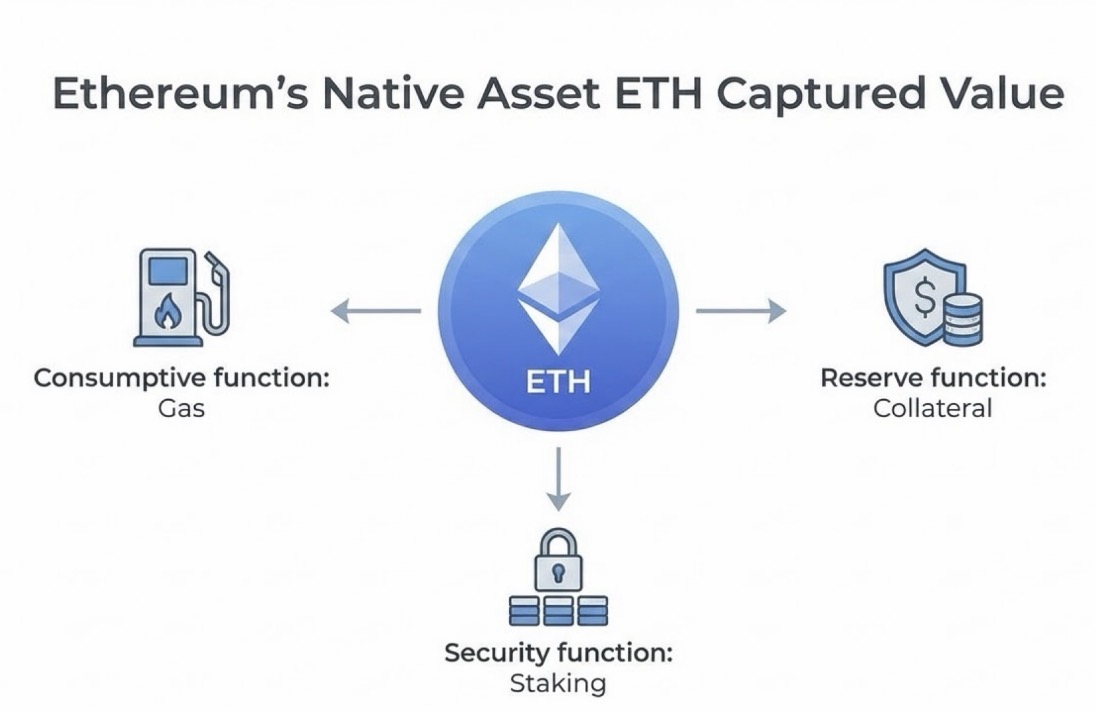
Ethereum is increasingly positioned to take that mantle, not through rhetoric, but through function. ETH has a coherent, durable, and internally consistent asset story built on three pillars:
1/ Reserve asset: ETH functions as the primary reserve asset for DeFi and an expanding universe of on-chain applications.
2/ Security asset: ETH underwrites network security through staking, converting trust into measurable economic value.
3/ Consumptive asset: ETH is consumed as gas (oil equivalency), powering real economic and monetary activity across a global settlement layer.
In aggregate, ETH is not only a credible store of value, but also a highly productive asset with embedded yield dynamics.
Notably, a significant portion of idle BTC could already be wrapped and deployed into Ethereum’s roughly $100 billion DeFi economy where actual financial activity, liquidity, and innovation are concentrated.
So the request is simple: update the narrative. Clarify the thesis. Explain the divergence. Provide a credible evolution of the Bitcoin story.
Or, risk seeing Ethereum closing the gap even further.
Because the Ethereum story has not wavered. It is accelerating.
Happy New Year.
cc: @saylor @APompliano @jackmallers
If Bitcoin is the lead dog of the crypto world, what has happened to the “digital gold” thesis?
Gold and silver have risen as expected in response to monetary debasement, geopolitical stress, and macro uncertainty. Bitcoin, by contrast, has not recently moved commensurately as a store of value against the U.S. dollar or global turmoil.
That divergence raises a fair question: if Bitcoin is meant to be crisis-resilient money, why is it not behaving like one in this cycle?
Gold earns its status by surviving and strengthening through repeated stress tests. Each crisis reinforces its role. Bitcoin, however, appears not to be passing the same test today.
Compounding this, the Bitcoin narrative itself feels unusually quiet. The once-dominant “number go up” defense seems muted. Has that story stalled? Has it evolved? If so, where is the updated articulation?
Absent a clear answer, leadership is up for grabs.
Ethereum is increasingly positioned to take that mantle, not through rhetoric, but through function. ETH has a coherent, durable, and internally consistent asset story built on three pillars:
1/ Reserve asset: ETH functions as the primary reserve asset for DeFi and an expanding universe of on-chain applications.
2/ Security asset: ETH underwrites network security through staking, converting trust into measurable economic value.
3/ Consumptive asset: ETH is consumed as gas (oil equivalency), powering real economic and monetary activity across a global settlement layer.
In aggregate, ETH is not only a credible store of value, but also a highly productive asset with embedded yield dynamics.
Notably, a significant portion of idle BTC could already be wrapped and deployed into Ethereum’s roughly $100 billion DeFi economy where actual financial activity, liquidity, and innovation are concentrated.
So the request is simple: update the narrative. Clarify the thesis. Explain the divergence. Provide a credible evolution of the Bitcoin story.
Or, risk seeing Ethereum closing the gap even further.
Because the Ethereum story has not wavered. It is accelerating.
Happy New Year.
cc: @saylor @APompliano @jackmallers
• • •
Missing some Tweet in this thread? You can try to
force a refresh




